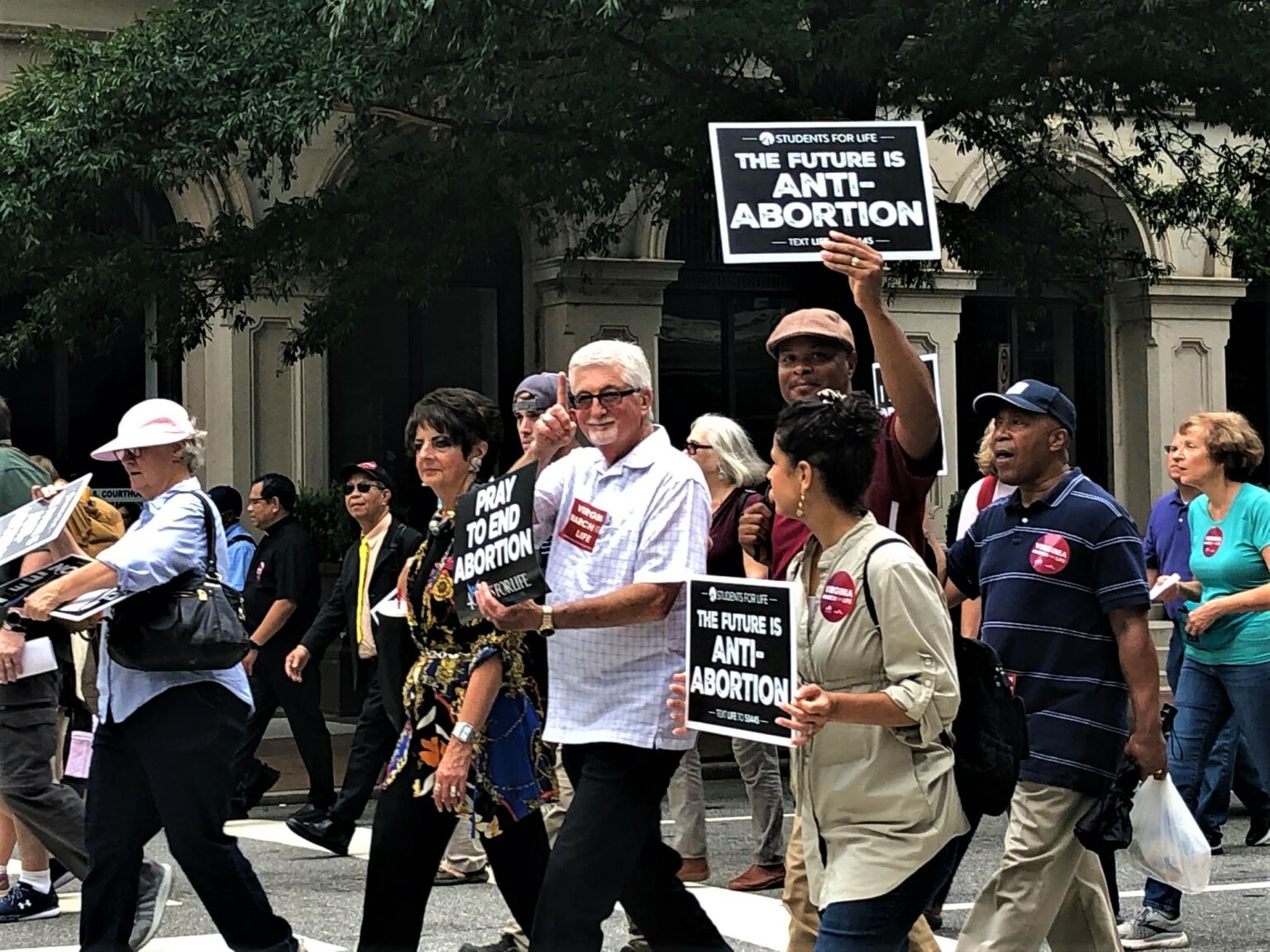
Anti-abortion demonstrators march. (Photo by Robert Zullo/ States Newsroom).
The Ohio House will consider a new abortion regulation that would keep some doctors from being able to work with abortion clinics and could cause felony charges for doctors working on complicated pregnancies.
Russo furthered an argument made by abortion rights proponents in previous testimony against the bill by saying the regulation “effectively bans and removes access to abortion,” particularly in Southwest Ohio, where two abortion clinics are located.
Senate Bill 157 passed through the House Families, Aging and Human Services Committee on Tuesday, approved along party lines. It has already been approved in the Ohio Senate.
The bill would expand the charge of abortion manslaughter, already on the books in Ohio, to include a physicians’ failure to “take measures to preserve the health of a child born alive after abortion,” according to the bill documents.
There is also a provision in the bill that requires the Ohio Department of Health to develop a “child survival form” for a physician to complete if a child is born alive after an attempted abortion, and for ambulatory surgical facilities to submit monthly and annual reports to the ODH.
The ODH already compiles an annual abortion report based on medical reports signed by physicians of abortions conducted in the state. The report also includes complications, including “failed abortions” that happen in the state and a narrative on the complications.
The bill’s sponsors referred to an abortion in which a child is born alive as a “botched abortion,” but state data shows the occurrence as a “failed abortion.” According to the most recent years of data on abortions in the state, “failed abortions” are rare, and did not happen in any pregnancies that were viable.
An amendment made while the bill was in the Ohio Senate prohibits physicians who are funded through a public institution’s medical school from being a part of abortion clinics written transfer agreement variances, which allow a patient to be transferred to a hospital where the physician practices in the case of emergencies.
Physicians who teach at public medical schools are also not allowed to serve as a consulting physician for abortion-related surgical facility, or the variance can be rescinded, according to the bill.
Democrats attempted to insert amendments into the bill, including one from state Rep. Allison Russo, D-Upper Arlington, that would remove the transfer agreements variance regulation. Russo furthered an argument made by abortion rights proponents in previous testimony against the bill by saying the regulation “effectively bans and removes access to abortion,” particularly in Southwest Ohio, where two abortion clinics are located.
“These are medically unnecessary agreements, but on top of that, because of the broad language, this does ban and remove abortion access for one part of the state in Southwest Ohio,” Russo said.
State Rep. Beth Liston, D-Dublin, introduced an amendment that would take away the word “health” from the bill, leaving the bill to involve a baby’s “life,” which Liston said gives doctors more freedom to do what they feel is best in complicated births and pregnancy plans. Her amendment also sought to remove a requirement that a physician be charged with a third-degree felony for failing to file forms.
“I think that these changes would minimize the downstream impacts and harm that we might see from this legislation in some small ways,” Liston said.
Both amendments were quickly voted down along party lines without further discussion.
The bill now heads for full House consideration, scheduled for 1 p.m. Wednesday.
Abortion is legal in the state of Ohio up to 22 weeks gestation.
The stress and strain of Covid-19 has impacted families on so many levels this year. As you know, sheltering in place or quarantine has placed us all with family members or significant others more so than ever before. At times, it is nice to have the comfort and support during difficult times, but often the stress and close quarters increase the likelihood of arguments and confrontations.
A study in the Journal of Personality and Social Psychology found that relationships exposed to high stress for long periods of time become strained. The study recommends that each person identify ways to successfully manage stress. One of my first questions in a counseling session with a client is, “how are you taking care of yourself or how do you currently manage stress?” More often than not I get a blank stare.
Some things to consider trying in order to decrease the stress on your relationships include the following:
√ Ask for what you need. This may sound simple, but I promise you it is not easy for many people. This shouldn’t be done in a demanding way, but in a direct, honest way. If your family member continues to do something you’ve asked them to stop doing, try approaching them in a non-confrontational manner without the use of blame or a harsh tone.
√ Really listen to your family. This is not just hearing the words coming out of their mouth; this is putting aside blame, judgement, and negativity. Try listening to them with respect, calm, and patience. Reflect back to the person what you heard them say. At first, it may seem odd or uncomfortable to reflect back. But, over time it can cut down on miscommunication and hopefully improve relationships. Over half of my sessions are spent helping each person to identify what the other person actually said—not what we think they heard.
√ When things between families get fueled by anger, it is extremely important to take time to calm down. It is imperative to identify when you are feeling stressed or irritated. When we are hurt or angry, it is normal to revert to less healthy ways of coping and expressing our emotions. You might lose your temper, use a rude tone of voice or snapping insults. Try to take some deep breaths and tell the person that you need time to calm down. Create a plan with the other person(s) to talk again once everyone is calm. People often believe things have to be addressed right in the moment, however, that isn’t always the case—especially if the disagreement is spiraling out of control.
√ Remember, it is imperative you take time to care for yourself. Make sure you are getting enough sleep, exercising, eating well, and limiting alcohol. Take breaks away from your family if possible. Go outside, take a walk, call a supportive friend, or listen to music. Distraction can be very effective during times of stress. During these uncertain times, try to focus on setting limits on alcohol, unhealthy eating habits, and gambling.
These are unprecedented times. As humans, we often take our frustration out on the ones we love. It’s more important than ever to express gratitude and thanks to the ones we love. We are all going through this together. None of us know the full impact of what this year has pressed upon us yet. We only have what is right in front of us now.
So practice grace, and try to calm yourself when you feel the stress beginning to rise. Most of all, don’t take your loved ones for granted. This pandemic will pass, even though it may not feel like there is an end in sight right now. But, hopefully we can all try to find a silver lining in this past year.
NAMI offers educational programs, support groups, and an information and referral phone line. They work together with their national organization (NAMI) and their state affiliate (NAMI Ohio) to advocate for people living with mental illness and their families.
NAMI Southwest Ohio is committed to the following values:
Recovery: Recovery is possible with comprehensive treatment. Mental illness, like most other illnesses, comprises biological, psychological, and social factors.
Access to Treatment: All individuals should have access to treatment appropriate to their needs.
Needs Adequately Addressed: The needs of all those affected by mental illness, including people living with mental illness, family members, friends and others should be adequately addressed.
No Guilt, Shame, Blame or Stigma: There should be no stigma associated with mental illness.
Collaboration: Collaboration within the mental health community is vital to effective treatment and recovery.
Excellence: All NAMI’s support, education and advocacy programs should be conducted with the highest possible standards.
Inclusion: All segments of the community should be included as we seek to be the voice for mental health in Southwest Ohio.
Respect: All individuals should be treated with respect in every situation.
Openness and Responsiveness to Change: NAMI will be quick to adapt to positive research, medications and treatment, and will be willing to consider changes that will improve the delivery of our mission.
Fiscal Responsibility: Financial policies and decisions will be carefully weighed in order to optimize the use of resources in the most efficient and effective manner.
The Youth America Hotline is a free peer-to-peer hotline network that links callers to community-based peer counseling hotlines.
Call 911 if you are facing a dangerous situationor thinking about hurting yourself
Crisis Text Line
Text START to 741741
The Crisis Text Line is available 24/7 to help you with any kind of crisis. Visit www.crisistextline.org/faq to learn more about how the Crisis Text Line works.
CEO, Dan Gillison, talks to the NAMI community about COVID-19
Local Resources By County
Butler County:
Mobile Crisis Team And Consultation
(844) 4CRISIS (1-844-427-4747)
24-hour Hotline: Need someone to talk to? Call the same Mobile Crisis Team phone number above. They are there to help!
This free and confidential hotline is available 24-7 and provides suicide prevention, crisis intervention and referral information to Clermont County youth and adults.
To refer an adult or child, call (513) 584-5098. Mobile Crisis is available Monday through Friday from 8:30 am to 12:00 am and Saturday and Sunday from 12:00 pm to 8:30 pm.
After hours, referrals can be made through Psychiatric Emergency Services (PES). Call (513) 584-8577. PES will page the Mobile Crisis Team if necessary.
Mental Health Access Point (MHAP) exists as the front door to the Hamilton County public mental health system. MHAP, a division of Central Clinic, provides assessment, support, and connections for children and adults residing in Hamilton County who are in need of mental health services.
The National Suicide Prevention Lifeline is a free, 24-hour hotline available to anyone in suicidal crisis or emotional distress. Calls will be routed to the nearest crisis center to you.
The Veterans Crisis Line connects Veterans in crisis and their families and friends with qualified, caring Department of Veterans Affairs responders through a confidential toll-free hotline, online chat, or text.
Suicide Prevention In College Resource Guide
This online guide, created by Affordable Colleges Online, is designed to offer hope and help for college students who are experiencing suicidal thoughts, as well as their friends and family.
Trained volunteers provide information, referrals, and support to all who have questions about or are affected by serious mental illness. The NAMI Information Helpline is available Monday through Friday, 10:00 am to 6:00 pm EST.
Call 911 if you are facing a dangerous situationor thinking about hurting yourself
The first in a continuing search for Loveland’s kindest, sweetest people and what they’re made of. What is our DNA match?
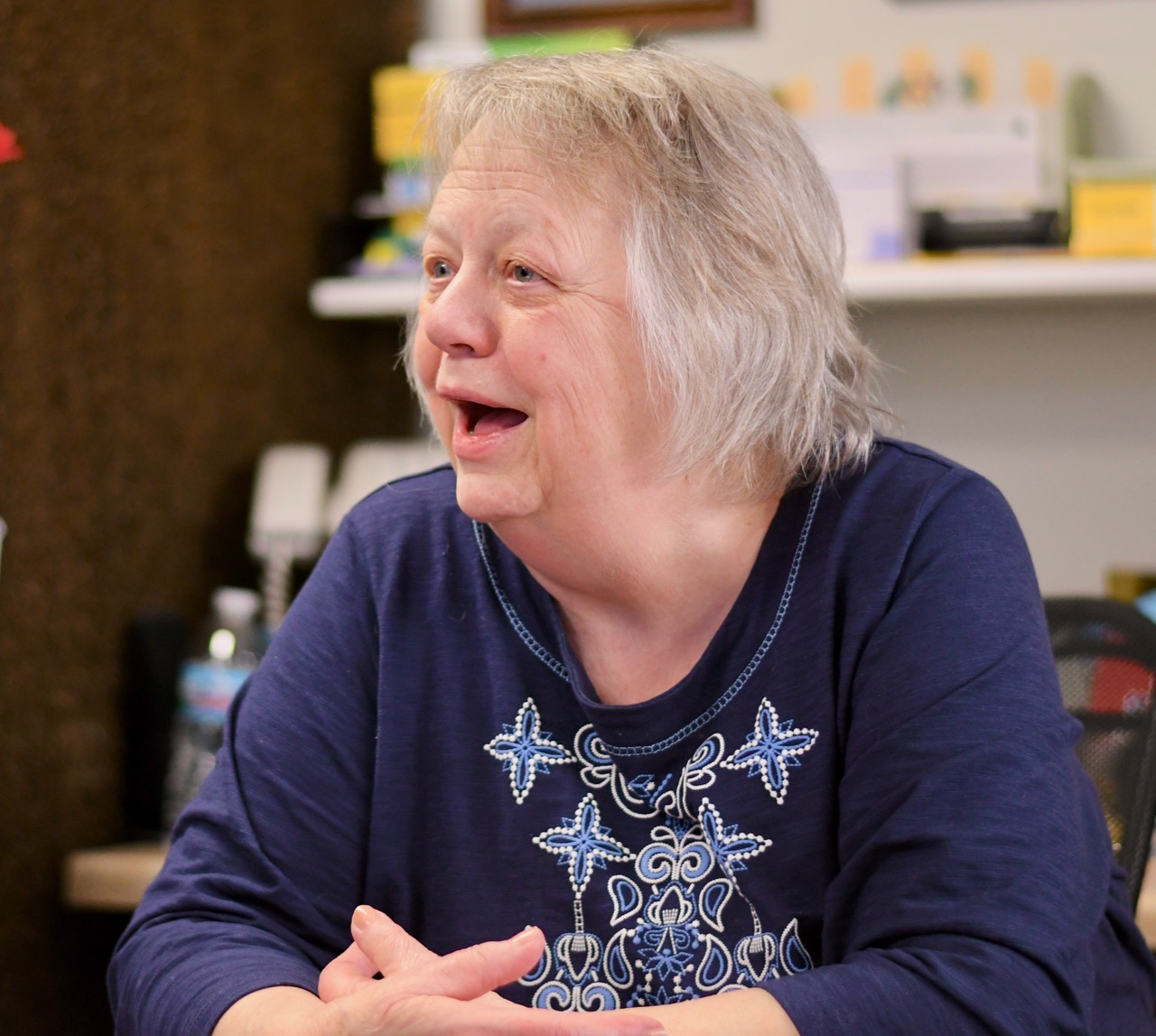
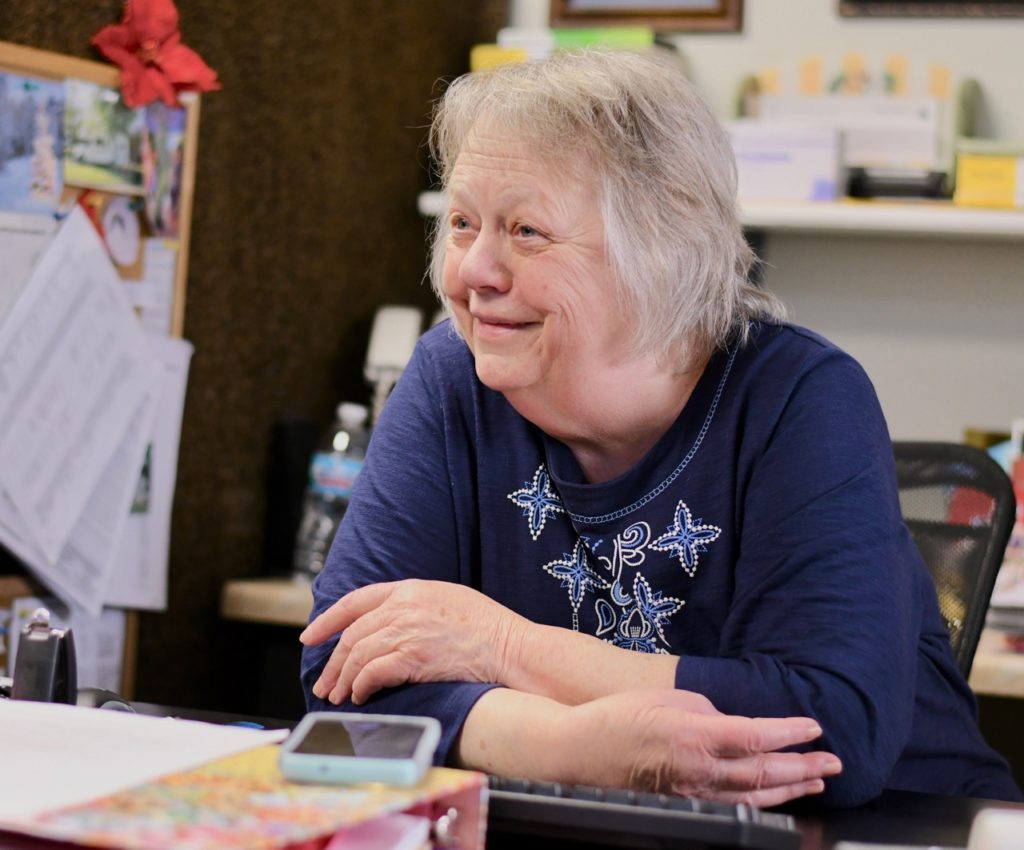
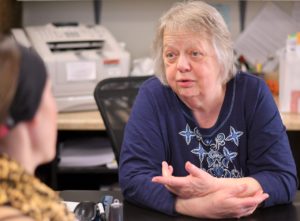
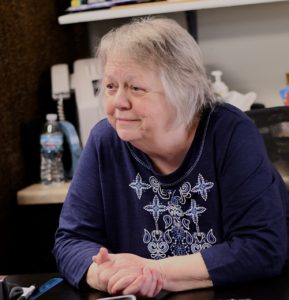
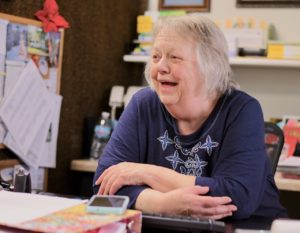
Carolyn Bingaman at her desk at Accounting Plus
Cassie Mattia is a resident of Historic Downtown Loveland
Loveland, Ohio – Every city is known for something. Some cities are known for their restaurants, some are known for their national parks and trails and some are known for their shopping. The city of Loveland, of course, does not fall short when it comes to having some of the best restaurants, parks, trails, and shopping, but where Loveland really leaves its mark is through its people. So just what’s in Loveland’s DNA?
The area of Loveland was first settled in 1795 by Colonial Thomas Paxton and was later incorporated as a chartered city in 1961. History runs deep within Loveland’s roots giving the city a very long line of DNA. Many Loveland residents have not only lived in the “sweetheart” city for years but have also created a long line of DNA themselves within the city with their children now building a life in Loveland too. One could say that families build long lines of DNA in places across the United States all the time, so why is it unique that it happens in Loveland too? To that, I would say yes families do this all the time, but what is unique about families doing this in Loveland is that these same families dedicate their lives to making Loveland the absolute best place to live, work and go to school. That just doesn’t happen in every place.
Carolyn Bingaman has been a part of Loveland’s DNA since the age of 19 years old when she and her husband moved to Loveland. Fred “Allen”, an Air Force veteran, died in 2010. He and Carolyn were married for 53-years and Allen’s obituary said his motto was, “Try every day to be a blessing to someone”.
“We bought a house up in one of the only subdivisions in Loveland. We were going to move to Milford, but they didn’t have any openings in any subdivisions, so we came to Loveland. At first, I was thinking oh gosh Loveland…but then I fell in love. There has been a lot of changes since then. We have lived in the same house for 53 years,” Bingaman said.
Shortly after moving to Loveland, Bingaman began not only building a DNA strand of her own with her husband and 5 children but also began leaving her mark on the community through sports.
“Loveland had a great women’s and children’s softball teams. My husband and I played every Thursday night and I also had a women’s team that I coached,” Bingaman said, “We had so much fun! We played where the bus garage is now, at the Loveland Elementary School. There were bleachers there and lights and a concession stand,” Bingaman added.
To Loveland residents who know Carolyn, she could be described as very kind and modest about all the good she does for Loveland’s community, but what many don’t know is that she is also a strong advocate for women’s rights. What inspired Carolyn to fight for equal rights? Well, it all began on a Thursday night right before her women’s softball team was about to play a game.
“I was told by the men (Dave Hirsh and Roger Muething) in charge of the softball fields that I needed to be self-reliant and that I needed to stop asking them to get me bats and other supplies for the softball games. So, one night we had a game and we didn’t have a home plate. I knew there were some plates in the cupboard in the front building so I went up and borrowed a home plate with prongs on it. I went back and pounded it into the ground and started the game. Later, I saw people up by the building running around and yelling wondering where something was and one of the men came up and said, ‘Is that my home plate?’ I said ‘Yup!’ From then on, we always had our equipment and never had to go find our own,” Bingaman said.
Carolyn was very motivated starting at a young age. She knew most women during the ’60s and ’70s were expected to stay at home, take care of the children and make dinner for their husbands, but that just wasn’t what she saw for herself.
“I was not the best at math in school, but I did get A’s and B’s. When my husband and I came here I got a job with the Browns who at the time owned half of Loveland. Bob Lonagrover was their accountant,” Bingaman explained, “I began working at their supermarket. I worked the registers counting money and making deposits. Bob was instrumental in saying you must learn how to type, and Barkley Gest said why don’t you learn how to do something else so you can advance your skills. I took their advice and I just kept growing and growing my skills and eventually, I got the opportunity to work at Totes on Kemper Road. Totes was famous all over the country for their “stretch-on” footwear. I worked in the accounting department and ended up becoming the secretary to the vice-president of manufacturing,” Bingaman said.
Bingaman working her way up in a “man’s world” was something that inspired women all over Loveland. Unfortunately, after working for Tote’s for 9 and a half years, Carolyn made the decision to leave the company.
“I filed an EEOC suit in 1974 against Tote’s because they wouldn’t let me have a job I deserved. Paul Hackmen had lost his sight and had to retire. I did his job and mine for 4 or 5 months, but then they wouldn’t give it to me formally,” Bingaman explained, “Tote’s ended up hiring a man to take Paul’s place and wanted me to train him for the position I had been doing. I asked if they were going to give me the title. I didn’t even care about the money. I told them I would be quitting if they didn’t give me the job title because I worked hard for it and deserved it. There were a lot of women that worked there that did a lot of work and didn’t get credit for it,” Bingaman stated, “I ended up winning with the EOC and the right to sue, but I had to find another person for class action. My lawyer wanted to get another woman to speak out against Tote’s so that we could get more money, but I told him he would never get another lady to speak out against Tote’s because they would be gone in a second as I was,” Bingaman said.
I asked Carolyn if Totes didn’t give her the job title because she was a woman and she answered without hesitation, “Yes, that was why.” Carolyn now has a law in the books named after her.
After Carolyn gained the knowledge and confidence she needed to be successful in the business world she decided to open her own accounting firm called “Accounting Plus,” which has now been open for over 40 years. Carolyn believes that her biggest impact on Loveland has come through her business.
“People know if they have a question they know they can come here (Accounting Plus) and ask a question and I won’t charge them for just a question that I have an answer for. I have the same clients that I had 40 years ago. They wouldn’t dare leave me because I care so much for them that I would go get them,” Bingaman said.
Carolyn says that ever since she came to Loveland she has been in love with it. She loves the people more than anything and whether she knows it or not the people love her too. Pat Furterer, a longtime friend of Carolyn’s, couldn’t say enough about Carolyn and her impact on the Loveland community.
“Carolyn is a very unassuming, kind, gracious and generous donor to many organizations in Loveland. She has supported the Loveland Stage Company for years,” Pat Furterer said, “She supports the Loveland Historical Society as well. I feel she would make a great Valentine Lady representing the city!”
Loveland Magazine’s very own David Miller also had a few things to say on the impact Carolyn has had on him and the community.
“I used to work with Carolyn at Totes before and after I went to Vietnam. She, before, during and after treated me like she was my slightly, older sister taking care of me. She does an awful lot for Loveland and is very modest about it. She is very kind,” Miller said. “Not many, outside of my own family really cared that I was in Vietnam, but Carolyn did, and she worried about my safety. Hers was a deep personal concern for all who were serving during the war, and when I got home she wasn’t one to shy away from asking me about my experience. She wasn’t afraid to hear my answers.”
Carolyn is also responsible for the beautiful scenery Loveland residents and visitors enjoy during the spring and summer, “I love the flowers! I have planted flowers for I don’t know how many years in Loveland. Many women help,” Bingaman said.
Although Carolyn Bingaman is very humble there is not a question in anyone’s mind in the Loveland community that she is a huge part of, and matches Loveland’s DNA.
If you think you know someone in the community that has made a huge impact on Loveland and would be a great candidate for our Loveland’s DNA segment feel free to contact us.





 Carolyn Bingaman has been a part of Loveland’s DNA since the age of 19 years old when she and her husband moved to Loveland.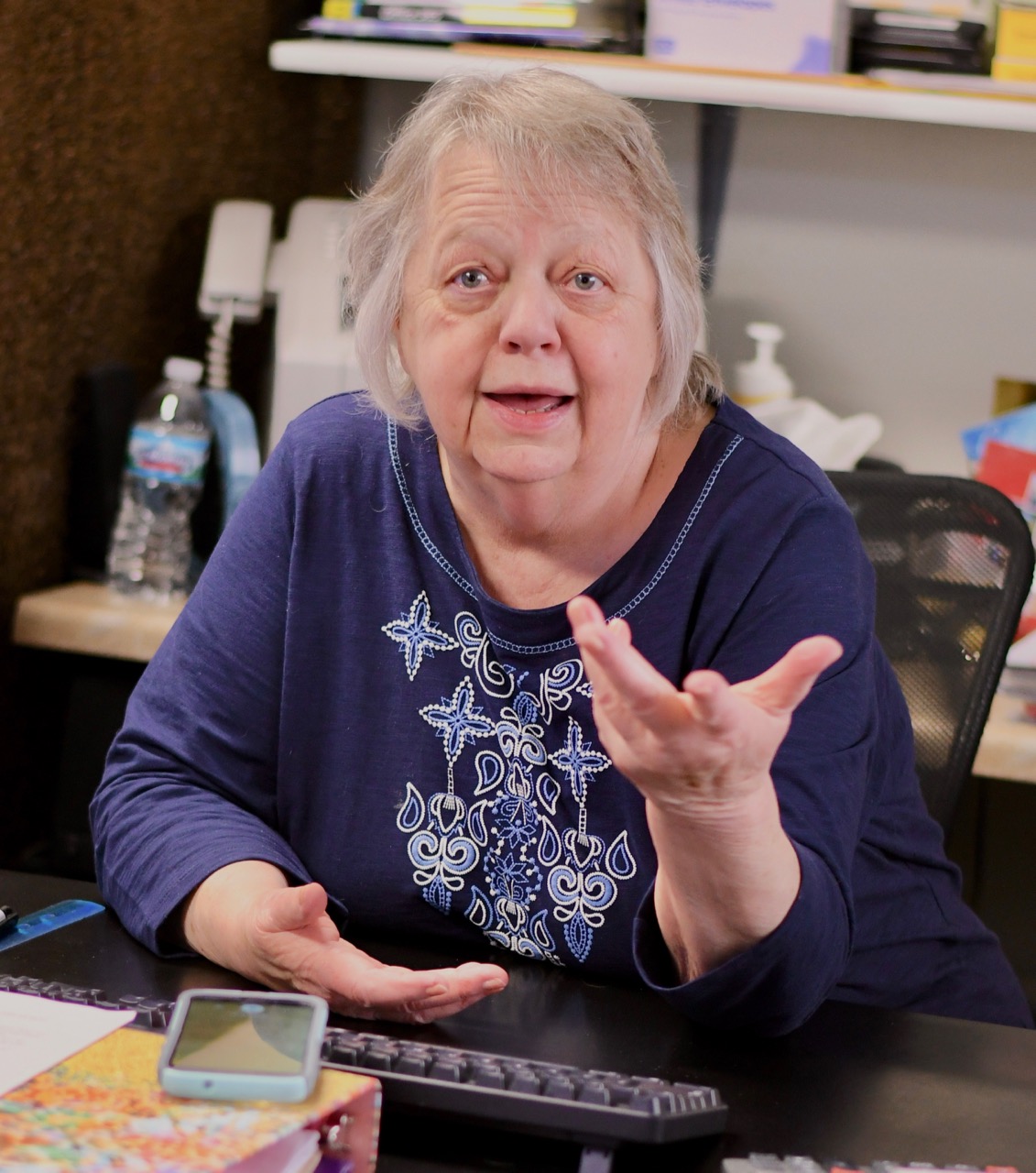
 “I filed an EEOC suit in 1974 against Tote’s because they wouldn’t let me have a job I deserved. Paul Hackmen had lost his sight and had to retire. I did his job and mine for 4 or 5 months, but then they wouldn’t give it to me formally,” Bingaman explained, “Tote’s ended up hiring a man to take Paul’s place and wanted me to train him for the position I had been doing. I asked if they were going to give me the title. I didn’t even care about the money. I told them I would be quitting if they didn’t give me the job title because I worked hard for it and deserved it. There were a lot of women that worked there that did a lot of work and didn’t get credit for it,” Bingaman stated, “I ended up winning with the EOC and the right to sue, but I had to find another person for class action. My lawyer wanted to get another woman to speak out against Tote’s so that we could get more money, but I told him he would never get another lady to speak out against Tote’s because they would be gone in a second as I was,” Bingaman said.
 “People know if they have a question they know they can come here (Accounting Plus) and ask a question and I won’t charge them for just a question that I have an answer for. I have the same clients that I had 40 years ago. They wouldn’t dare leave me because I care so much for them that I would go get them,” Bingaman said.