Tag: FBI

  • Ohio Lt. Gov. Husted won’t say if he knew about $1M dark-money contribution

    Ohio Lt. Gov. Husted won’t say if he knew about $1M dark-money contribution

    Donation came from utility behind massive bribery scandal

    BY:  – Ohio Capital Journal

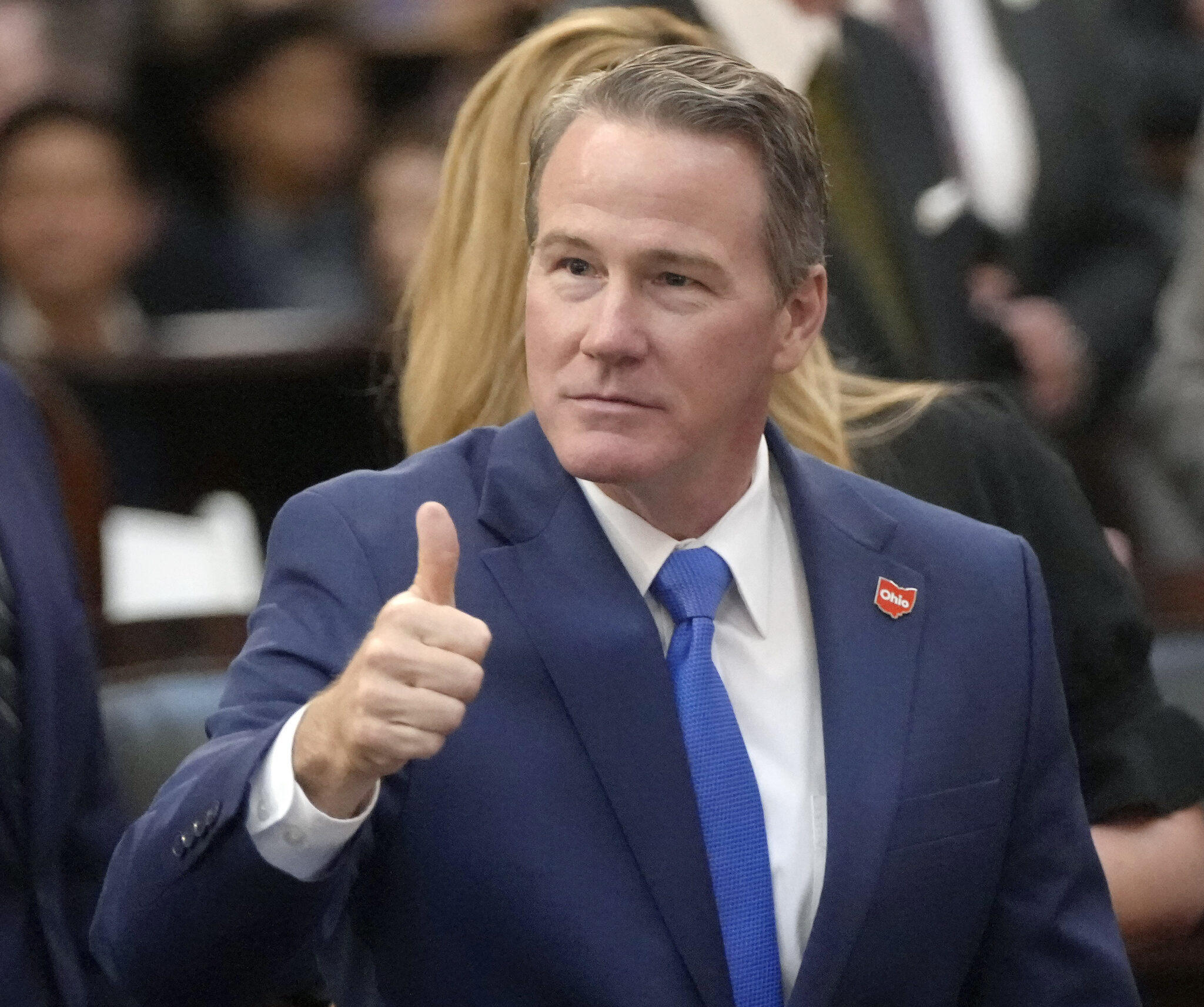
    Ohio Lt. Gov. Jon Husted is refusing to say whether he was aware of a $1 million contribution in 2017 to a political group that was supporting his bid for governor. Instead, his office is only reiterating that the group wasn’t affiliated with the Husted campaign.

    The massive donation came from Akron-based FirstEnergy, which over the next two years ponied up more than $60 million in bribes in exchange for a $1.3 billion ratepayer bailout — a law that Gov. Mike DeWine signed just hours after it passed.

    The donation was discovered among a trove of documents that a group of news organizations including the Capital Journal requested from the Office of Ohio Consumers’ Counsel.

    As reported last week by the Energy News Network and Floodlight, the documents also contained emails indicating that Husted was lobbying DeWine to support the bailout. The lobbying came just 11 days after Husted abandoned his gubernatorial bid and joined DeWine’s ticket on Dec. 1, 2017.

    “Jon Husted called me to say he was meeting with DeWine on our issue to try and get him aligned to help keep the plants open,” a Dec. 12, 2017 email by FirstEnergy lobbyist Joel Bailey said.

    The plants were money-losing nuclear and coal plants that FirstEnergy wanted to prop up with the bailout and then spin off.

    FirstEnergy in 2021 signed a deferred prosecution agreement in which it admitted to paying bribes to elect a friendly Republican majority to the state House, which would elect a friendly speaker who would pass and protect the corrupt bailout.

    The company also admitted to paying a $4.3 million bribe to Sam Randazzo, DeWine’s pick to chair the Public Utilities Commission of Ohio, who died by suicide last week. A state indictment said that FirstEnergy executives arranged the bribe with Randazzo the same night they discussed his suitability as a regulator at a dinner meeting with Gov.-elect DeWine and Lt. Gov.-elect Husted on Dec. 18, 2018.

    The ensuing scandal has landed former House Speaker Larry Householder, R-Glenford, in federal prison for 20 years, and former Ohio GOP Chair Matt Borges for five. Two others have pleaded guilty and await sentencing. Another defendant, lobbyist Neil Clark, also died by suicide — clad in a “DeWine for Governor” T-shirt.

    DeWine and Husted haven’t been charged in case, and they adamantly deny wrongdoing.

    However, they haven’t publicly discussed just what they knew about Randazzo’s long-standing relationship with FirstEnergy, or what they knew about the torrent of dark money flooding from FirstEnergy into Capitol Square to pass and protect the bailout. They also haven’t discussed what senior administration officials with close ties to FirstEnergy might have known.

    Among the documents turned over once FirstEnergy made its agreement with federal prosecutors was a spreadsheet listing 501(c)(4) political contributions the company made in 2017.

    Such donations are called “dark money” because recipients don’t have to disclose their sources. By law, dark-money contributions can’t go directly to candidates, but they can go to groups that support them, but aren’t supposed to directly coordinate with them.

    The FirstEnergy spreadsheet is only now becoming public because the FBI investigated the scandal and the U.S. Department of Justice brought a prosecution. During the battle over the bailout law in 2019, there were suspicions that FirstEnergy was bankrolling the effort, but the press and public couldn’t know because the money was being funneled through dark-money groups — without which U.S. Attorney David DeVillers said the conspiracy would have been impossible.

    Now that FirstEnergy’s 2017 donation to a Husted-aligned group is known, it raises new questions.

    Special interests sometimes piously claim that they spend millions on politics solely in the interests of “good government.” But as was shown in Householder’s lengthy trial last year, corporate political donations are often — if not usually — intended to buy influence with people in government.

    In order for that to happen, a government official would have to know that a special interest had contributed on his or her behalf. But Husted — who is eyeing a 2026 gubernatorial run — won’t say whether he knew that FirstEnergy in 2017 gave a million bucks to a group supporting his earlier bid.

    His spokeswoman, Hayley Carducci, was asked if Husted knew of the contribution and if he did, when he learned of it. She was also asked if Husted persuaded DeWine to support the FirstEnergy bailout; what Husted knew about Randazzo’s links to FirstEnergy when he was picked to regulate the company; and whether he knew that FirstEnergy was flooding Cap Square with dark money in its effort to pass and preserve the bailout.

    In an email, Carducci repeated her earlier statement: “The Husted campaign never received this donation and is not affiliated with any of these groups.”

    She added, “As for your other questions, we will not be commenting.”


    Marty Schladen
    MARTY SCHLADEN

    Marty Schladen has been a reporter for decades, working in Indiana, Texas and other places before returning to his native Ohio to work at The Columbus Dispatch in 2017. He’s won state and national journalism awards for investigations into utility regulation, public corruption, the environment, prescription drug spending and other matters.

    Ohio Capital Journal is part of States Newsroom, the nation’s largest state-focused nonprofit news organization.

    MORE FROM AUTHOR

  • Defense lawyer boils over in Ohio utility bailout and political bribery racketeering trial

    Defense lawyer boils over in Ohio utility bailout and political bribery racketeering trial

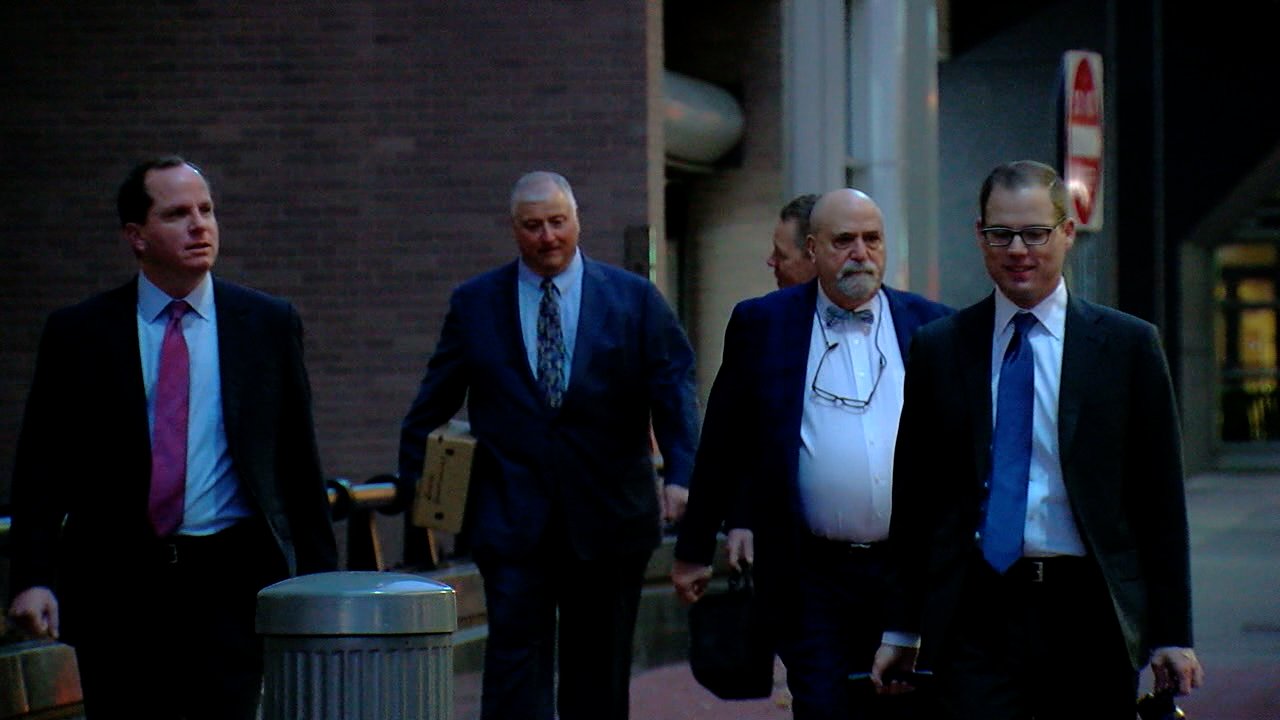
    Former Ohio House Speaker Larry Householder, a Perry County Republican, second from left, with attorneys outside of his racketeering trial. Photo courtesy of WEWS.

    BY: MARTY SCHLADEN – Ohio Capital Journal

    CINCINNATI — The defense of former Ohio House Speaker Larry Householder erupted Thursday in Householder’s epic corruption trial.

    Defense attorney Mark Marein of Cleveland suggested it was because of U.S. District Judge Timothy Black’s unfairness. But it came after a day in which the defense team’s attempts to undermine prosecution witnesses’ credibility might have come to naught.

    The sparks flew in the fourth week of the trial. Householder and former Ohio Republican Party Chairman Matt Borges are accused of racketeering in a scheme to use $61 million in utility money to make Householder speaker and pass a $1.3 billion bailout that mostly benefited Akron-based FirstEnergy, the primary contributor.

    Earlier on Thursday, defense attorney Steven Bradley cross examined Jeffrey Longstreth, who operated as Householder’s right-hand man through his bid for the speakership and the 2019 passage and defense of the bailout law, House Bill 6.

    Longstreth was arrested along with Householder, Borges, and two others in July 2020. He is now cooperating with prosecutors in exchange for a sentencing recommendation of less than six months.

    The dinners

    During direct examination Wednesday, Longstreth described fancy dinners with Householder and FirstEnergy’s top executives during Donald Trump’s inauguration in 2017 in Washington, D.C. 

    At one, Longstreth described being at one end of a long table with FirstEnergy Vice President Michael Dowling in a noisy steakhouse, while Householder sat with company CEO Chuck Jones at the other. Longstreth said he couldn’t hear the conversation at the other end of the table, but at his end Dowling told him FirstEnergy needed help and it wanted to help Householder become speaker.

    Dowling instructed Longstreth to set up an organization to receive FirstEnergy’s millions, Longstreth said. 

    “He said (the money) needed to be undisclosed and unlimited contributions,”  Longstreth testified on Wednesday.

    Apparently seeking to impeach Longstreth’s memory, Bradley on Thursday showed the jury an itinerary indicating that Jones took the FirstEnergy corporate jet to D.C. the morning after the steakhouse dinner. He also produced a credit card receipt showing that Jones attended a dinner at a different restaurant the following night than where a second, more-intimate dinner was described by Longstreth on Wednesday.

    But Assistant U.S. Attorney Emily Glatfelter asked Longstreth if itineraries change. He agreed they often do.

    She then produced credit card receipts and car records that indicated Jones may well have been in D.C and could have attended the first dinner as Longstreth described. She also showed that on the following night, the dinner Bradley said Jones attended ended about 30 minutes before the one Longstreth said he attended began.

    Longstreth testified that it was common at presidential inaugurations to attend multiple receptions and dinners in the same evening. Apparently that’s a major purpose of the quadrennial gatherings: To stay in $600 hotels, eat multiple $200 dinners, and figure out how to split up the taxpayers’ —or  ratepayer’s — money.

    Whistleblower former state Rep. Dave Greenspan

     Former State Rep. Dave Greenspan, R-Westlake. Official photo.

    After Longstreth left the stand, the prosecution called former state Rep. Dave Greenspan, R-Westlake. He said he never voted to make Householder speaker and he never supported House Bill 6. 

    “I didn’t believe in corporate bailouts,” Greenspan said, explaining that this one was especially hard to support because FirstEnergy hadn’t shown that it needed the money and the bill put no restrictions on how it was spent. “There was nothing in the bill that required FirstEnergy to do anything.”

    As a sign of how unpopular the bill was, 17 Republicans voted against it when it passed the House in April 2019. And it’s an important reminder that it would never have become law without the support of Ohio House Democrats.

    Greenspan described the intense pressure he was under from Householder and lobbyist Neil Clark to vote for the bill. He was so disturbed by it that he contacted a member of the U.S. Marshal’s Service, who put him in touch with the FBI.

    During cross examination, Marein, another of Householder’s attorneys, seemed dumbfounded that Greenspan contacted the FBI, which he referred to as the “Federal Bureau of Investigation” in a tone that in many places would pass for shouting.

    Then, as he tried to read lengthy passages of Greenspan’s grand jury testimony, Judge Black repeatedly cut the attorney off and told him to ask a question.

    Another attack at the judge

    On Feb. 1, Marein undertook a risky gambit by accusing the judge of bias, saying that Black had it in for his client because Householder opposed Black’s run for Ohio Supreme Court 22 years ago. After the jury filed out Thursday afternoon, Marein doubled down.

    He started off so loudly that Black admonished Marein to show the same respect for him that Black believed he’d shown Marein.

    A little more quietly, Marein said, “You’re really tying our hands. Overruling our objections. Quite frankly, I don’t know what’s going on.”

    Then he added, “Is there something personal against Mr. Householder?”

    When Marein finished, Black asked, “Is that all?”

    Marein said yes, Black banged his gavel and said, “We’re in recess.”

  • In top-secret documents case, Portman wants to investigate the investigators

    In top-secret documents case, Portman wants to investigate the investigators

    BY: MARTY SCHLADEN Ohio Capital Journal

    It now appears that secrets of the most sensitive nature were among the documents former President Donald Trump hung onto after more than a year of entreaties by the government to return them. Having to do with another nation’s nuclear-weapons capabilities, one set of documents in Trump’s possession was so sensitive that only a few senior government officials are allowed to see them and only then on a need-to-know basis, the Washington Post reported Tuesday.

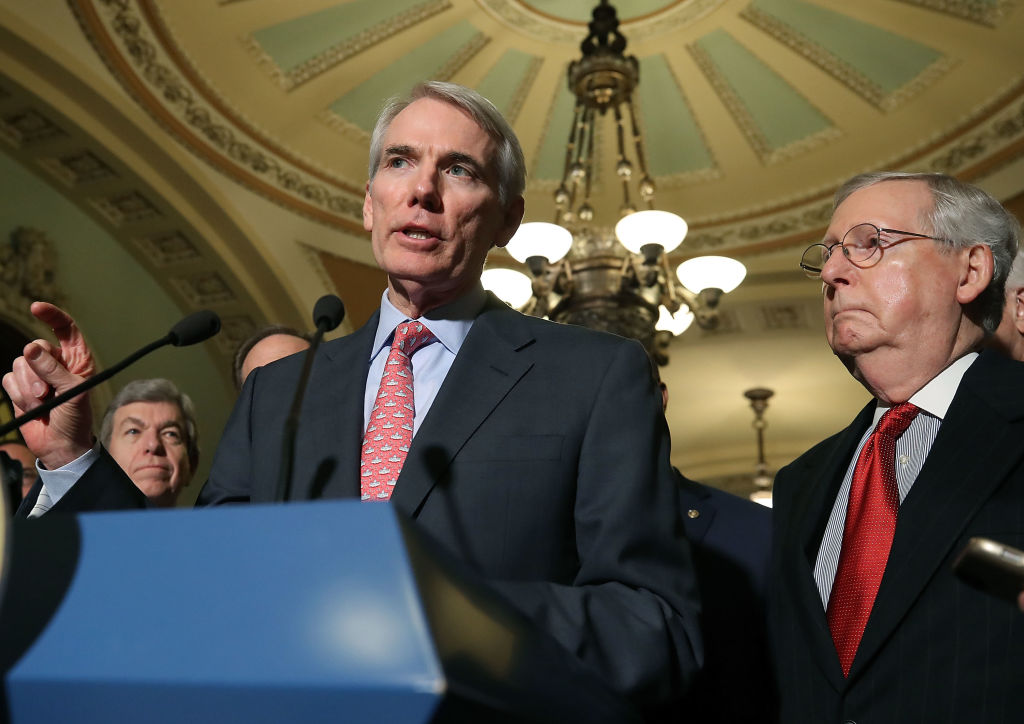
    One might think that the most senior Republican on the Senate Homeland Security and Government Affairs Committee would want to know what Trump was doing with those documents and how much his possession of them might have jeopardized national security. But since the Aug. 8 search of Trump’s South Florida club and residence, it appears that the only statement Sen. Rob Portman, R-Ohio, has made about the matter has been to call for a congressional investigation of the FBI.

    “As the Lead Republican on the Senate Homeland & Governmental Affairs Committee, I call on @SenGaryPeters to utilize the broad jurisdiction of the Cmte, which includes jurisdiction over the National Archives & Records Admin, to perform oversight on this issue & ensure transparency,” Portman tweeted on Aug. 14.

    Portman quickly followed that with, “The Attorney General and the FBI should now demonstrate unprecedented transparency and explain to the American people why they authorized the raid.”

    Many other Republicans — eager to stay in Trump’s good graces — were quick to attack the FBI for conducting the court-sanctioned search. They also attacked the Justice Department for seeking it after trying more voluntary methods to get Trump to return the classified documents.

    “I’ve seen enough,” House Minority Leader Kevin McCarthy said in a tweeted statement. “The Justice Department has reached an intolerable state of weaponized politicization.”

    Republicans on the House Judiciary Committee, led by Ohio Republican Rep. Jim Jordan, in two separate tweets said, “This is what happens in third world countries. Not the United States,” and, “If they can do it to a former President, imagine what they can do to you.”

    And Rep. Marjorie Taylor Greene, R-Ga., simply tweeted “DEFUND THE FBI!”

    But unlike those officials, Portman in January announced that he isn’t seeking reelection. Even so, he apparently hasn’t condemned an attack on the FBI office in his hometown of Cincinnati or a rash of threats to the FBI that are thought to partly be a product of the rhetoric by Trump and his supporters.

    Portman’s staff didn’t respond to questions for this story. And some observers are confused as to why Portman wouldn’t speak out against attacks on federal law enforcement or call on Trump to explain his actions as he has called for the FBI and Justice Department to do.

    “He’s been a real puzzle to me,” Paul Beck, a political science professor emeritus at Ohio State, said last week. “You’d think by the time he decided to retire, he’d kind of freed himself from the clutches of Trump. But for some reason or another, he doesn’t feel that way.”

    With his mild, polite demeanor, Portman is far from the Trumpiest member of the Senate. But he has been enthusiastic about some of the former president’s initiatives — particularly the 2017 tax cut.

    “But that’s done,” Beck said. “The question now is, what more does he want from (Trump)? It may well be that what Portman wants is for Republicans to retake the Senate in 2022 and maybe… stymie the Biden administration for the next two years.”

    Similarly to Portman, former Vice President Mike Pence on Aug. 17 said he was “deeply troubled” by the search of Trump’s club and residence. And he called on Attorney General Merrick Garland to explain more about the Justice Department’s reasons for undertaking the search — which the department has done through subsequent court filings.

    But, the Washington Post reported, Pence also called on his fellow Republicans to tone down their rhetoric.

    “These attacks on the FBI must stop,” the paper reported Pence as saying. “Calls to defund the FBI are just as wrong as calls to defund the police.”

    Pence, whom Trump attacked during the Jan. 6 Capitol riot even as rioters were chanting to hang the vice president, is widely believed to be positioning himself for a presidential run. And he’s taken several other steps to distance himself from the former president

    Is it possible that Portman by contrast is considering becoming a lobbyist post-retirement and he doesn’t want to alienate Trumpworld?

    “The question is, where does he want to live?” Beck said. “I don’t know that he’s ready to go back and live in Lebanon, Ohio. Does he want to settle in Washington, D.C. and earn fairly big bucks as a lobbyist? It may well be that to do that he can’t be on the outs with Trump, but he also doesn’t have to be at all aggressive in supporting Trump’s efforts to rescind the results of the 2020 election.” 

    Or Portman could simply be emulating Senate Minority Leader Mitch McConnell, R-Ky., a frequent target of Trump’s ire.

    “You would think that Portman would be distancing himself from Trump,” Beck said. “Maybe he’s doing what Mitch McConnell is doing and that is saying nothing. And McConnell can’t be happy.” 

    Follow Marty Schladen on Twitter.

  • Utility regulator accused of taking a bribe helped write bill targeting watchdog

    Utility regulator accused of taking a bribe helped write bill targeting watchdog

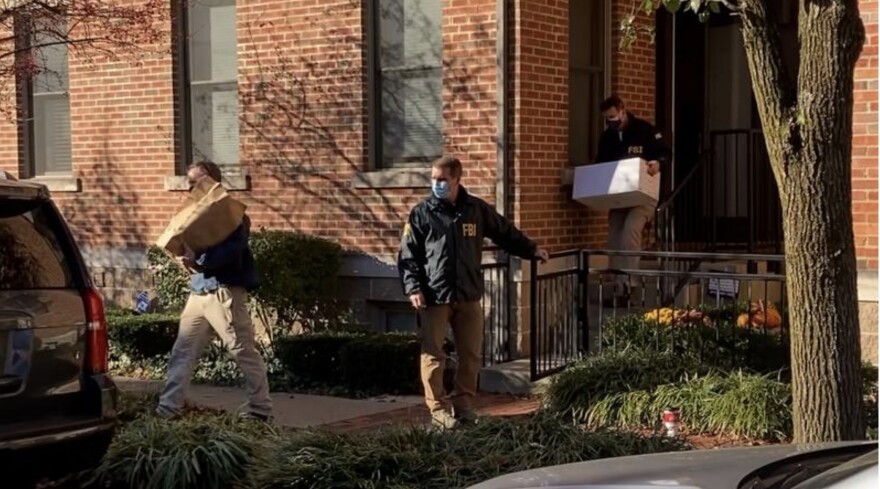
    FBI agents remove boxes of materials from PUCO Chairman Sam Randazzo’s condo in Columbus Nov. 17, 2020. Photo courtesy of Daniel Konik/Statehouse News Bureau.

    BY: JAKE ZUCKERMAN Ohio Capital Journal

    Ohio’s former top utility regulator, who was accused of taking a $4.3 million bribe, quietly spent months helping write a sweeping energy bill that targeted a state watchdog agency that advocates for Ohio’s residential electric customers, records show.

    Emails that the Public Utilities Commission of Ohio gave in response to two FBI subpoenas show its former chairman, Sam Randazzo, conferred with the bill sponsor and helped draft legislative language. The bill would have limited the reach of the Ohio Consumers’ Counsel and given often-hostile state legislators control of its board.

    The OCC appears at PUCO cases and advocates for residential ratepayers’ interests, which often run counter to those of investor-owned utility companies and industrial-scale energy customers. The agency’s efforts have led to millions in refunds to consumers, including $306 million from FirstEnergy Corp. last year to settle a lawsuit against the company for charging an unlawful profit margin on its customers.

    Akron-based FirstEnergy told prosecutors last summer that it paid a business owned by Randazzo $4.3 million before his 2019 appointment in exchange for “official actions.” The company also said it gave a nonprofit secretly controlled by then-GOP House Speaker Larry Householder $60 million to help pass House Bill 6 — energy legislation worth an estimated $1.3 billion to FirstEnergy. Householder has pleaded not guilty and awaits trial. Randazzo has not been charged with a crime.

    Records released earlier this year showed some of Randazzo’s behind-the-scenes lobbying work on HB 6. The records released last week show his influence spanned further.

    In May 2020, Rep. Nino Vitale, R-Urbana, introduced the text of House Bill 246. The bill would have narrowed the scope of cases the OCC can join and subject the agency to “any reasonable conditions that the commission deems necessary to avoid duplication, repetition or delay.” It also gives state lawmakers appointment power over six of nine seats on the OCC’s board.

    The legislation contained a sweep of other changes as well, including creating new ways for utilities to set their prices, modifying setback rules for wind farms, and allowing the Ohio Power Siting Board to create new setback requirements for solar energy sites.

    In the six months before Vitale unveiled the bill, Randazzo and PUCO staff met with Vitale, drafted elements of the legislation, and helped edit Vitale’s introductory testimony to lawmakers, the subpoenaed emails show. The emails don’t show Randazzo addressing the OCC provisions directly. But in a statement through his attorney, Randazzo equivocated when asked if he drafted or advised on the section.

    “If so but having no recollection of either writing or advising any such language, it would only have been as the result of a request from the legislature,” he said. “It is likely that the utilities had input.”

     Sam Randazzo, then a private sector attorney, testifies before the PUCO in March 2018. Source: The Ohio Channel.

    The PUCO released the emails after the Ohio Capital Journal filed a public records request and an eventual lawsuit seeking them.

    Around Thanksgiving of 2019, Randazzo asked to meet with Maura McClelland, a policy adviser and attorney at the PUCO, to meet and discuss the language of the bill’s “ratemaking piece.”

    HB 246 created a new option for utilities to set prices called “alternative rate plans.” According to nonpartisan analysts with the state Legislative Service Commission, the plans can take into account aspects of fair energy pricing that the current model misses like efforts for energy efficiency or cash flow problems from the companies.

    “In general, alternative rate plans could lead to higher prices paid by ratepayers,” the LSC analysts wrote. “But presumably, PUCO would only approve those higher costs after examining aggregate effects in accomplishing its policy objectives.”

    HB 246 would also allow the PUCO to consolidate parties that it determines have “sufficiently common interests” to speed up cases.

    In a memorandum opposing the bill, the Ohio Manufacturers’ Association said the legislation would block its members from meaningful participation at the PUCO. The manufacturers argued the bill in several areas consistently gives utilities the upper hand over their customers, especially via the ratemaking proposal.

    “The bill is opaque and no clear reasoning exists for why its proposed changes are needed,” the memorandum states.

    Roger Sugarman, an attorney representing Randazzo, said via email that neither Randazzo nor the PUCO were the driving force behind the bill. He said he couldn’t determine if the LSC’s analysis is correct without more details.

    “Without knowing what type of alternative rate plan, or the object of your question and the statutory conditions required to secure PUCO approval, it is not possible to evaluate the LSC analysis,” he said. “In general, rate applications filed by utilities, whether alternative or traditional, lead to higher rates; the question is usually about how much higher.”

    He said some pieces of the bill wouldn’t have affected much change versus current law. Plus, the bill all but died after its first hearing. Randazzo’s time “was occupied by more pressing and important things than HB 246.”

    FBI agents arrested Householder and charged him with racketeering in June 2020. He awaits trial. Agents raided Randazzo’s condo months later. In July 2021, FirstEnergy signed a deferred prosecution agreement with the U.S. Department of Justice. It agreed to pay a $230 million penalty and cooperate with the ongoing investigation into HB 6 to possibly avert a charge of wire fraud.

    In a statement of facts paired with the agreement, FirstEnergy said it paid companies controlled by Randazzo $4.3 million in exchange for official action. The company said it hired Randazzo as a consultant and paid him a total of about $22 million since 2010.

    Before starting in state government, Randazzo represented industrial scale energy users before the PUCO. He spent years fighting against Ohio energy policies that forced utilities to include more renewable energy in their mixes or make their customers’ homes more energy efficient. He also represented subsidiaries of both CenterPoint Energy and Dominion Energy as a lobbyist, as well as a group of citizens opposing a wind farm in Huron County.

    Vitale drew significant media attention via outrageous claims including that Bill Gates invented the novel coronavirus or that Gov. Mike DeWine was bringing “FEMA Concentration Camps” to Ohio in relation to the pandemic. (Randazzo said his position on COVID “pulled in a very direction” than Vitale’s.)

    Vitale also, perhaps more subtly, helped guide HB 6 from legislation to law. He co-sponsored the bill and chaired the House Energy and Natural Resources committee that reviewed it. He first won office with $7,700 in financial backing from Householder’s campaign committee. He voted for HB 6 in 2019 and against repealing it after Householder’s arrest. He was one of 21 lawmakers who voted against expelling Householder from office.

    Vitale didn’t respond to a phone call or emails to his personal and official accounts.

     State Rep. Nino Vitale, R-Urbana. Photo from Ohio House website.

    “As you all know, anyone can be indicted for anything. Anything,” he said in a floor speech last year defending Householder.

    “However, that person deserves to go in front of a jury of their peers and prove their case. They might be guilty, they might not … That’s what makes us different from a communist country.”

    Federal prosecutors alleged that Householder secretly controlled a nonprofit organization that received $60 million from FirstEnergy. He used the money to elect a slate of candidates who would vote him into the House Speaker’s office and in turn support HB 6. He’s also accused of spending the money for personal use. Two alleged conspirators, including Householder’s former political adviser, have pleaded guilty.

    When the anti-OCC bill dropped, few knew or suspected of either Randazzo’s financial ties with FirstEnergy or his lobbying work on the bill. However, after Householder’s arrest and the raid on Randazzo’s home, some raised interest in ensuring the bill’s quick death.

    “This bill is a danger to anyone in Ohio who pays a utility bill and it remains on the Ohio House docket as a direct attack on the OCC and all Ohio residential utility customers,” wrote former Democratic State Senator Leigh Herington in a November 2020 op-ed in the Columbus Dispatch.

    He suggested the legislation was simple retaliation for the OCC’s opposition to House Bill 6 and another bill that allows FirstEnergy a more favorable accounting formula to determine if its collections from customers are “significantly excessive.” (The OCJ previously reported Randazzo lobbied on that legislation as well.)

    Utility companies spend big and wield considerable sway in Ohio politics. As Herington noted, the OCC has seen its size dwindle over the years. Its budget dropped from $9.3 million in 2011 to $5.5 million in 2020.

    The OCC also suggested the bill was retaliatory in nature due to its opposition to HB 6. Vitale’s bill, the agency said in a resolution, would “weaken the independence” of the board as well as its “utility watchdog role.”

    A PUCO spokesman said the emails only show the PUCO working on language related to the agency and the state Power Siting Board. He said he didn’t know why Randazzo and Vitale communicated through personal email accounts.

    “The PUCO does not take a position on proposed legislation,” he said. “We will always be responsive to inquiries from members of the General Assembly as they go through the legislative process.”

  • Plot to kidnap Michigan’s governor started in a ritzy Columbus suburb, prosecutors say

    Plot to kidnap Michigan’s governor started in a ritzy Columbus suburb, prosecutors say

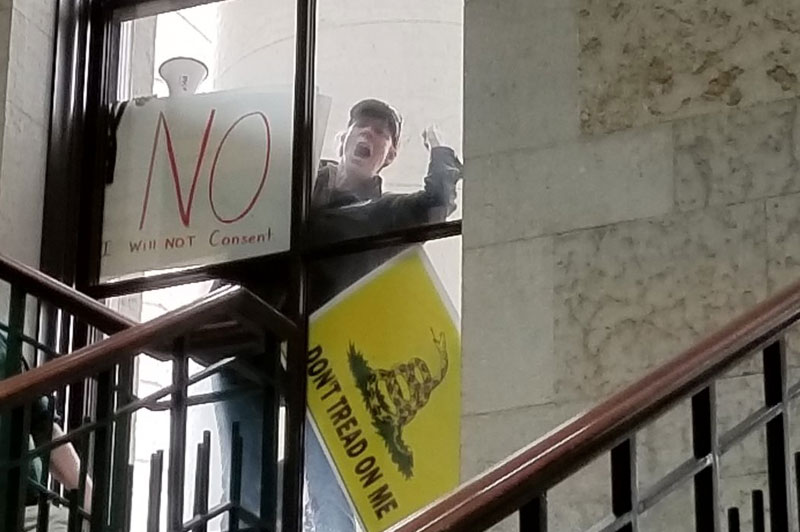
    A man protesting Ohio’s health orders at the state Capitol on May 1. Gov. Mike DeWine later repealed most of them only to start reimposing orders on Tuesday as coronavirus cases continued to surge. Capital Journal photo by Marty Schladen

    by Jake Zuckerman and the Ohio Capital Journal

    This summer, a cabal of a least 15 extremists meeting in Dublin, Ohio began crafting a violent plan to “storm” the Michigan state Capitol and kidnap Gov. Gretchen Whitmer, law enforcement officials say.

    Six men were federally charged with conspiring to kidnap Whitmer, and another seven were charged with violations of Michigan’s anti-terrorism laws connected to alleged involvement with the “Wolverine Watchmen” militia group.

    Jake ZuckermanJake Zuckerman is a statehouse reporter. He spent three years chronicling the West Virginia Legislature for The Charleston Gazette-Mail after covering cops and courts for The Northern Virginia Daily.

    The federal allegation, unsealed Thursday morning, details plans of armed assaults on the Michigan State Police, construction of improvised explosive devices, covert meetings held in a Grand Rapids basement accessible by secret trap door, nighttime surveillance of Whitmer’s home, and quasi-military “field training exercises” to prepare for an abduction sometime before the November elections.

    “When the time comes, there will be no need to try and strike fear through presence,” Brandon Caserta said Sept. 17, according to prosecutors, opting against attending an armed protest at the State Capitol. “The fear will be manifested through bullets.”

    Michigan Attorney General Dana Nessel said to reporters Thursday the group crafted “elaborate plans” that posed a “serious and credible threat to public safety.”

    What brought the men to two meetings in central Ohio is unclear: The suspects are all from Michigan and Delaware.

    However, the charging document states one paid informant assisted the FBI and secretly recorded the meetings in Dublin on June 6 and July 18. No threats were reported against Ohio government.

    At the first meeting, Michigan man Adam Fox and Delaware man Barry Croft huddled for a meeting at an undisclosed Dublin location with 13 other people, including a confidential informant.

    They discussed creating a society that followed the U.S. Bill of Rights where they could be “self-sufficient.” They discussed “state governments” they believed violated the U.S. Constitution, and specifically mentioned Whitmer.

    They also discussed murdering “tyrants” or “taking” a sitting governor. Fox then reached out to a “Michigan based militia group.” The charging document does not identify the group, though Nessel said affiliates of the “Wolverine Watchmen” were charged.

    Fox, working with Croft, met members of the militia group several times in June, including at a Second Amendment rally in Lansing. He later described the Dublin meeting and said he would need 200 men to storm the Capitol to abduct Whitmer.

    “Fox explained they would try the Governor of Michigan for ‘treason’ and he said they would execute the plan before the November 2020 elections,” the charging document states.

    The alleged conspirators engaged in “field training exercises” in rural Michigan including firearms training and combat drills, and unsuccessfully attempted to construct two improvised explosive devices.

    On July 18, the men again met, secretly recorded by an informant, in Ohio. They discussed attacking a Michigan State Police facility and floated the idea of shooting up Whitmer’s vacation home. They eventually settled on kidnapping.

    “Snatch and grab, man,” Fox allegedly said. “Grab the fuckin’ governor. Just grab the bitch. Because at that point, we do that, dude — it’s over.”

    Prosecutors detailed two episodes of “surveillance” of Whitmer’s home and determined the conspirators considered demolishing a bridge to stave off a police response. An informant provided the FBI with a map of the lake near Whitmer’s home, distance from nearest police departments and estimated response time.

    By mid-September, the men successfully detonated an explosive device at a field training exercise.

    “I can see several states takin’ their fuckin’ tyrants,” Fox allegedly said. “Everybody takes their tyrants.”

    The allegations come amid a time of unprecedented unrest and instability in the U.S., likely a combination of a pandemic, perceived overreach when governments responded, racial unrest, economic devastation of the pandemic, and extremism proliferating on various social media platforms.

    Whitmer attracted national attention during the spring and summer for a forceful response to the COVID-19 pandemic. She also drew ire from libertarian and small-government groups for what they saw as overly heavy-handed stay-at-home orders and mask mandates.

    In May, hundreds of protesters, many of whom were armed, stormed the Michigan Capitol. President Donald Trump only accelerated instability, calling for Whitmer to “LIBERATE MICHIGAN.”

    Political demonstrations this summer have consistently featured armed demonstrators and counter-demonstrators. In Ohio, a violent, self-described neo-Nazi wielded an anti-Semitic sign at a coronavirus protest. Another anti-Semitic sign appeared at a protest outside the home of Ohio’s health director, who is Jewish. She resigned in June.

    Earlier this month, the U.S. Department of Homeland Security issued a threat assessment warning of increased extremism in the country.

    “The domestic situation surrounding the COVID-19 pandemic creates an environment that could accelerate some individuals’ mobilization to targeted violence or radicalization to terrorism. Social distancing may lead to social isolation, which is associated with depression, increased anxiety, and social alienation, the assessment states.

    “Similarly, work disruptions, including unexpected unemployment and layoffs, can also increase risk factors associated with radicalization to violence and willingness to engage in acts of targeted violence.”

  • Common Cause: Strong campaign finance disclosure rules would have stopped Householder in his tracks

    Common Cause: Strong campaign finance disclosure rules would have stopped Householder in his tracks

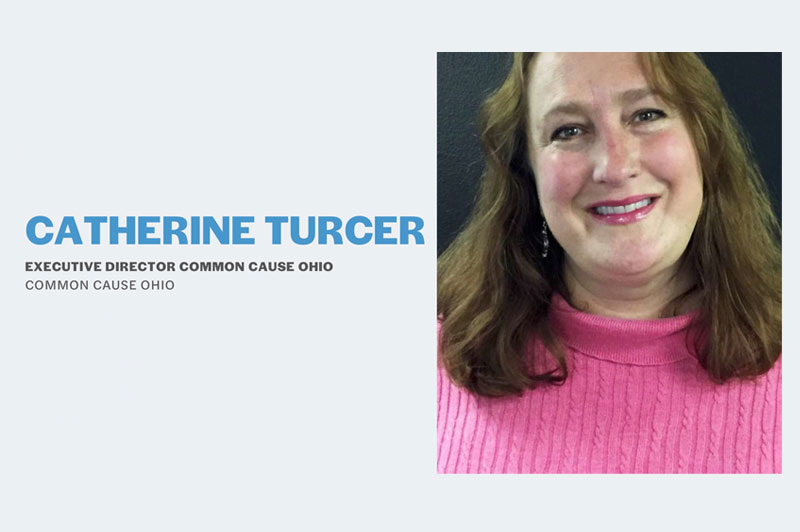
    In reaction in Ohio’s Speaker of the House Larry Householder being arrested by the FBI as part of a $60 million pay-to-play scheme, Common Cause Ohio Executive Director Catherine Turcer released the following statement:

    “This pay-to-play scandal would have been stopped in its tracks if Ohioans were able to see who was behind efforts to influence their opinions and votes — if they could “follow the money.”  We shouldn’t need an FBI investigation to connect the dots. If we had strong campaign finance disclosure rules,  Larry Householder would not have been able to pervert our political system the way that he did.

    This scheme began with his quest for power — his election as Speaker of the Ohio House of Representatives — and revolves around the passage of the nuclear and coal bailout of a FirstEnergy subsidiary, House Bill 6.

    Householder allegedly took millions of dollars at the same time he pushed legislation to bail out non-competitive coal and nuclear plants with more than $1 billion in public money, gut subsidies for renewable energy, and roll back clean energy standards.

    Ohioans have a right to an accountable government and to know who is trying to influence lawmakers, their votes, and opinions. The federal investigation into Generation Now and today’s arrest of Speaker Householder are just the latest example of why the Ohio legislature needs to take immediate action to increase campaign finance disclosure. 

    It’s past time for the Ohio legislature to take action to increase transparency of political spending and stop allowing ‘dark money’ to distort the democratic process. The source of campaign funding information helps voters examine the motivation of ads they see on TV and the internet. Shining the light on ‘dark money’ will also encourage those funding these egregious ads to be more accountable.

    Common Cause and its members will work with Republican and Democratic allies to find a path for strong money in politics transparency reform. Ohio voters deserve nothing less.”

    xxxxx

    Common Cause Ohio is a non-profit, non-partisan advocacy organization that works to strengthen public participation in our democracy and ensure that public officials and public institutions are accountable and responsive to citizens. Through a powerful combination of coalition building, lobbying and litigation, grassroots organizing, policy development, research and public education, we spotlight local, state and national issues that affect every Ohioan.

  • FBI records spike In disability-related hate crimes

    FBI records spike In disability-related hate crimes

    As hate crimes across the U.S. surge, new data indicates that incidents targeting people with disabilities are up sharply too.

    There were 128 hate crime offenses reported during 2017 stemming from bias against those with disabilities, according to the FBI. That’s up from 76 the previous year.

    The numbers released this week come from the FBI’s Uniform Crime Reporting Program, which tallies data submitted by law enforcement agencies across the country on incidents motivated by disability as well as race, ethnicity, ancestry, religion, sexual orientation, gender and gender identity.

    Read on at Disability Scoop