

Tag: Federal prosecutors

  • Utility regulator accused of taking a bribe helped write bill targeting watchdog

    Utility regulator accused of taking a bribe helped write bill targeting watchdog

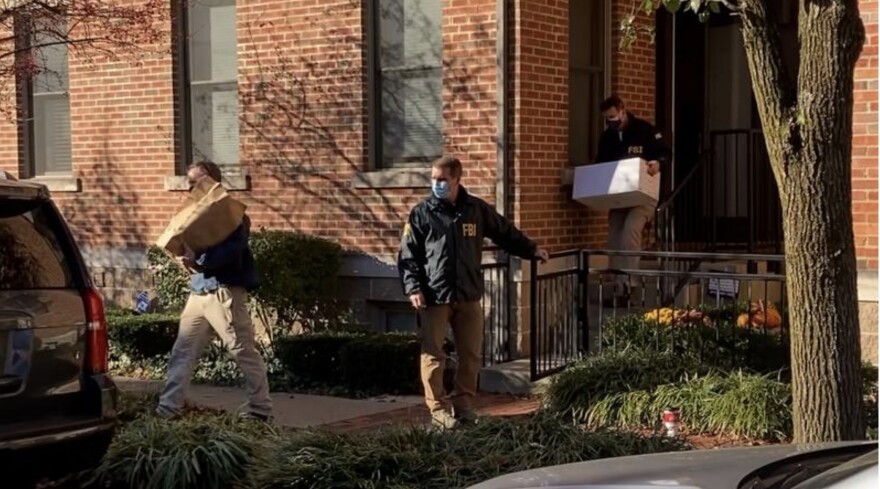
    FBI agents remove boxes of materials from PUCO Chairman Sam Randazzo’s condo in Columbus Nov. 17, 2020. Photo courtesy of Daniel Konik/Statehouse News Bureau.

    BY: JAKE ZUCKERMAN Ohio Capital Journal

    Ohio’s former top utility regulator, who was accused of taking a $4.3 million bribe, quietly spent months helping write a sweeping energy bill that targeted a state watchdog agency that advocates for Ohio’s residential electric customers, records show.

    Emails that the Public Utilities Commission of Ohio gave in response to two FBI subpoenas show its former chairman, Sam Randazzo, conferred with the bill sponsor and helped draft legislative language. The bill would have limited the reach of the Ohio Consumers’ Counsel and given often-hostile state legislators control of its board.

    The OCC appears at PUCO cases and advocates for residential ratepayers’ interests, which often run counter to those of investor-owned utility companies and industrial-scale energy customers. The agency’s efforts have led to millions in refunds to consumers, including $306 million from FirstEnergy Corp. last year to settle a lawsuit against the company for charging an unlawful profit margin on its customers.

    Akron-based FirstEnergy told prosecutors last summer that it paid a business owned by Randazzo $4.3 million before his 2019 appointment in exchange for “official actions.” The company also said it gave a nonprofit secretly controlled by then-GOP House Speaker Larry Householder $60 million to help pass House Bill 6 — energy legislation worth an estimated $1.3 billion to FirstEnergy. Householder has pleaded not guilty and awaits trial. Randazzo has not been charged with a crime.

    Records released earlier this year showed some of Randazzo’s behind-the-scenes lobbying work on HB 6. The records released last week show his influence spanned further.

    In May 2020, Rep. Nino Vitale, R-Urbana, introduced the text of House Bill 246. The bill would have narrowed the scope of cases the OCC can join and subject the agency to “any reasonable conditions that the commission deems necessary to avoid duplication, repetition or delay.” It also gives state lawmakers appointment power over six of nine seats on the OCC’s board.

    The legislation contained a sweep of other changes as well, including creating new ways for utilities to set their prices, modifying setback rules for wind farms, and allowing the Ohio Power Siting Board to create new setback requirements for solar energy sites.

    In the six months before Vitale unveiled the bill, Randazzo and PUCO staff met with Vitale, drafted elements of the legislation, and helped edit Vitale’s introductory testimony to lawmakers, the subpoenaed emails show. The emails don’t show Randazzo addressing the OCC provisions directly. But in a statement through his attorney, Randazzo equivocated when asked if he drafted or advised on the section.

    “If so but having no recollection of either writing or advising any such language, it would only have been as the result of a request from the legislature,” he said. “It is likely that the utilities had input.”

     Sam Randazzo, then a private sector attorney, testifies before the PUCO in March 2018. Source: The Ohio Channel.

    The PUCO released the emails after the Ohio Capital Journal filed a public records request and an eventual lawsuit seeking them.

    Around Thanksgiving of 2019, Randazzo asked to meet with Maura McClelland, a policy adviser and attorney at the PUCO, to meet and discuss the language of the bill’s “ratemaking piece.”

    HB 246 created a new option for utilities to set prices called “alternative rate plans.” According to nonpartisan analysts with the state Legislative Service Commission, the plans can take into account aspects of fair energy pricing that the current model misses like efforts for energy efficiency or cash flow problems from the companies.

    “In general, alternative rate plans could lead to higher prices paid by ratepayers,” the LSC analysts wrote. “But presumably, PUCO would only approve those higher costs after examining aggregate effects in accomplishing its policy objectives.”

    HB 246 would also allow the PUCO to consolidate parties that it determines have “sufficiently common interests” to speed up cases.

    In a memorandum opposing the bill, the Ohio Manufacturers’ Association said the legislation would block its members from meaningful participation at the PUCO. The manufacturers argued the bill in several areas consistently gives utilities the upper hand over their customers, especially via the ratemaking proposal.

    “The bill is opaque and no clear reasoning exists for why its proposed changes are needed,” the memorandum states.

    Roger Sugarman, an attorney representing Randazzo, said via email that neither Randazzo nor the PUCO were the driving force behind the bill. He said he couldn’t determine if the LSC’s analysis is correct without more details.

    “Without knowing what type of alternative rate plan, or the object of your question and the statutory conditions required to secure PUCO approval, it is not possible to evaluate the LSC analysis,” he said. “In general, rate applications filed by utilities, whether alternative or traditional, lead to higher rates; the question is usually about how much higher.”

    He said some pieces of the bill wouldn’t have affected much change versus current law. Plus, the bill all but died after its first hearing. Randazzo’s time “was occupied by more pressing and important things than HB 246.”

    FBI agents arrested Householder and charged him with racketeering in June 2020. He awaits trial. Agents raided Randazzo’s condo months later. In July 2021, FirstEnergy signed a deferred prosecution agreement with the U.S. Department of Justice. It agreed to pay a $230 million penalty and cooperate with the ongoing investigation into HB 6 to possibly avert a charge of wire fraud.

    In a statement of facts paired with the agreement, FirstEnergy said it paid companies controlled by Randazzo $4.3 million in exchange for official action. The company said it hired Randazzo as a consultant and paid him a total of about $22 million since 2010.

    Before starting in state government, Randazzo represented industrial scale energy users before the PUCO. He spent years fighting against Ohio energy policies that forced utilities to include more renewable energy in their mixes or make their customers’ homes more energy efficient. He also represented subsidiaries of both CenterPoint Energy and Dominion Energy as a lobbyist, as well as a group of citizens opposing a wind farm in Huron County.

    Vitale drew significant media attention via outrageous claims including that Bill Gates invented the novel coronavirus or that Gov. Mike DeWine was bringing “FEMA Concentration Camps” to Ohio in relation to the pandemic. (Randazzo said his position on COVID “pulled in a very direction” than Vitale’s.)

    Vitale also, perhaps more subtly, helped guide HB 6 from legislation to law. He co-sponsored the bill and chaired the House Energy and Natural Resources committee that reviewed it. He first won office with $7,700 in financial backing from Householder’s campaign committee. He voted for HB 6 in 2019 and against repealing it after Householder’s arrest. He was one of 21 lawmakers who voted against expelling Householder from office.

    Vitale didn’t respond to a phone call or emails to his personal and official accounts.

     State Rep. Nino Vitale, R-Urbana. Photo from Ohio House website.

    “As you all know, anyone can be indicted for anything. Anything,” he said in a floor speech last year defending Householder.

    “However, that person deserves to go in front of a jury of their peers and prove their case. They might be guilty, they might not … That’s what makes us different from a communist country.”

    Federal prosecutors alleged that Householder secretly controlled a nonprofit organization that received $60 million from FirstEnergy. He used the money to elect a slate of candidates who would vote him into the House Speaker’s office and in turn support HB 6. He’s also accused of spending the money for personal use. Two alleged conspirators, including Householder’s former political adviser, have pleaded guilty.

    When the anti-OCC bill dropped, few knew or suspected of either Randazzo’s financial ties with FirstEnergy or his lobbying work on the bill. However, after Householder’s arrest and the raid on Randazzo’s home, some raised interest in ensuring the bill’s quick death.

    “This bill is a danger to anyone in Ohio who pays a utility bill and it remains on the Ohio House docket as a direct attack on the OCC and all Ohio residential utility customers,” wrote former Democratic State Senator Leigh Herington in a November 2020 op-ed in the Columbus Dispatch.

    He suggested the legislation was simple retaliation for the OCC’s opposition to House Bill 6 and another bill that allows FirstEnergy a more favorable accounting formula to determine if its collections from customers are “significantly excessive.” (The OCJ previously reported Randazzo lobbied on that legislation as well.)

    Utility companies spend big and wield considerable sway in Ohio politics. As Herington noted, the OCC has seen its size dwindle over the years. Its budget dropped from $9.3 million in 2011 to $5.5 million in 2020.

    The OCC also suggested the bill was retaliatory in nature due to its opposition to HB 6. Vitale’s bill, the agency said in a resolution, would “weaken the independence” of the board as well as its “utility watchdog role.”

    A PUCO spokesman said the emails only show the PUCO working on language related to the agency and the state Power Siting Board. He said he didn’t know why Randazzo and Vitale communicated through personal email accounts.

    “The PUCO does not take a position on proposed legislation,” he said. “We will always be responsive to inquiries from members of the General Assembly as they go through the legislative process.”
  • Hitting cops, roaming the Senate, smoking pot: DOJ says Ohioans were everywhere Jan. 6

    Hitting cops, roaming the Senate, smoking pot: DOJ says Ohioans were everywhere Jan. 6

    BY: JAKE ZUCKERMAN – Ohio Capital Journal

    In the big picture of the insurrection, the criminal charges against Alexander Sheppard are unremarkable.

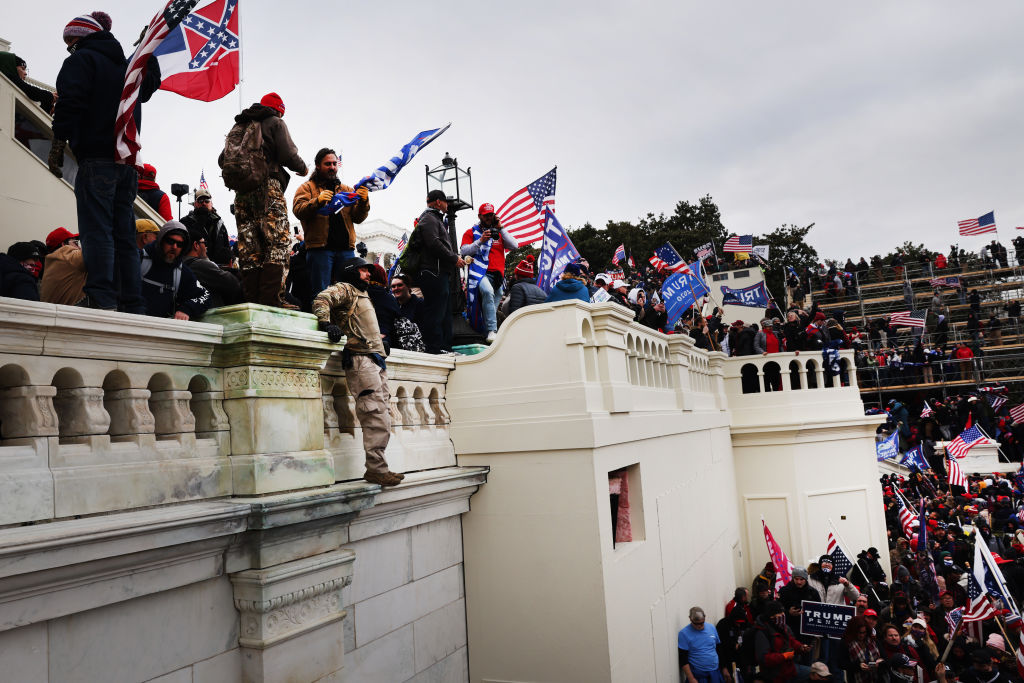
    Federal prosecutors say Sheppard arrived in Washington D.C. from Powell, Ohio after posting on Facebook that the election was “RIGGED.” He faces five charges, including disorderly conduct in a Capitol building. He wasn’t accused of violence or destruction, but of joining the throngs of about 2,000 people who comprised a mob that stormed the Capitol in an attempt to forcefully block the U.S. Congress from certifying President Joe Biden’s 2020 electoral win.

    Then-President Donald Trump and his allies hosted the Jan. 6, 2021 event, based on the central lie the election was fraudulently stolen from the incumbent. Trump said in a speech that day the attendees should “stop the steal” and “fight like hell” because they’re “not going to have a country anymore” if they don’t.

    Sheppard, 21 at the time, was spotted in footage outside the House Speaker’s lobby just before a Capitol Police officer shot and killed Ashli Babbitt as she tried to climb through a transom window toward members of Congress.

    In charging documents, prosecutors included a still photo from raw footage from a man named John Sullivan, who also breached the Capitol that day. About 80 seconds after the camera shows the included still frame of Sheppard — wearing a Trump red “Keep America Great” hat and navy blue hoodie, yelling at police officers blocking the door — Babbitt gets shot some 10 feet away.

     Alexander Sheppard, pictured on right. Source: DOJ

    A public defender representing Sheppard, who has pleaded not guilty, did not respond to inquiries, including whether Sheppard witnessed Babbitt’s shooting. A spokesman for the U.S. Attorney’s Office for the District of Columbia declined comment.

    Babbitt is one of five people present who died that day or shortly thereafter. Others include a trampled Trump supporter and a Capitol Police officer who suffered two strokes and died of natural causes after defending the building. Four officers who responded to the attack have died by suicide, according to Reuters.

    The episode is a reminder of the way Ohioans pockmarked events around the Capitol on an infamously seditious, chaotic and politically violent day of American history. At least 38 Ohioans were accused of crimes in connection with the riots. Six have pleaded guilty, mostly for comparatively minor offenses.

    The Ohio cohort’s alleged conduct ranges from conspiring to plan the event with the Oath Keepers (a paramilitary group), to waging hand-to-hand combat with police officers and wrestling down barricades outside, to smoking joints and carrying a bottle of bourbon around the seat of government.

    Many of the suspects filmed and photographed themselves throughout the day, which prosecutors relied on heavily in bringing charges against the defendants. Several signaled allegiances to QAnon, a sprawling, online conspiracy theory whose believers essentially say the Democratic Party runs a massive, Satan-worshipping child sex trafficking ring that only Trump can thwart.

    A review of court documents, raw footage and news coverage shows the range of conduct Ohioans took part in that day.

    Oath Keepers and the ‘stack’

     A still from footage of the riots in Washington D.C. captures Jessica Watkins, 38, seen with several people in Oath Keepers regalia, heading up the Capitol stairs. Screenshot from YouTube, credit Ford Fischer / News2Share.

    Some of the most serious charges of the day accuse several Ohioans who are Oath Keepers of conspiring to plan the events of Jan. 6. The Oath Keepers are a right-wing, anti-government extremist group within the militia movement comprised mostly of former law enforcement and military members. Twenty one members from multiple states were charged with various offenses.

    They were seen in matching combat gear in a “stack” formation (hands on the shoulders of the person in front of them) moving up the stairs toward the east side entrance of the Capitol. Prosecutors have accused them of conspiring to plan a Capitol raid as far back as November 2020. On Jan. 6, they wore matching combat fatigues and ballistic helmets. They were unarmed, but prosecutors have alleged they had a “quick reaction force” at the ready to deliver guns if needed. A lawyer representing one defendant, however, said in court filings the ‘force’ was one overweight, old man and called the government’s claim a gross overstatement.

    Jessica Watkins, a Champaign County bartender, ran a small group she called the “Ohio State Regular Militia” — a subset of the Oath Keepers that folded in with the larger unit that day.

    “To me, it was the most beautiful thing I ever saw until we started hearing glass smash,” she said of the raid in a January 2021 interview with the Ohio Capital Journal “That’s when we knew things had gotten really bad.”’

    Watkins characterized her participation as non-violent. Footage has since emerged, identified by amateur internet sleuths “Capitol Terrorists Exposers” and later published by The New York Times, showing her and other Oath Keepers in a crowd trying to push past the Capitol Police into the U.S. Senate.

    “Get in there! They can’t hold us!” Watkins yells in the footage.

    Also in the clash were Ohioans Donovan Crowl and Sandra Parker, according to prosecutors. Bennie Parker, Sandra’s husband, stayed in communication from outside the building. All have pleaded not guilty.

    “So can I bring my gun?” Bennie Parker allegedly texted Watkins before the riot, charging documents state.

    ‘Kill the tyrannical government’

     Douglas Wright, of Canton, in a photo prosecutors say they obtained from his Facebook page. Source: DOJ

    David Mehaffie, of Kettering, Ohio, acted as a quasi-commander during one of the most brutal clashes between rioters and police during the siege, according to federal prosecutors. Police had formed a human barricade against a door at an exterior terrace at the Capitol complex.

    According to prosecutors, he left the scrum and spent 26 minutes above the fray “to coordinate the mob’s actions” by directing efforts and passing weapons around like stolen police shields.

    “If you are going in, get on this side,” he yelled to rioters, according to footage obtained by prosecutors. “Push! Push!”

    Capitol Police Officer Michael Fanone would later say he was electroshocked in the fracas involving Mehaffie. A woman named Rosanne Boyland, a pro-Trump member of the mob, died after she was trampled amid the chaos, according to the Huffington Post.

    Mehaffie pleaded not guilty and awaits trial. His lawyer did not respond to inquiries. Other Ohioans were accused of violence elsewhere on the Capitol grounds.

    Cliff Mackrell pushed, shoved, struck at, and peeled a gas mask from the face of a Capitol Police officer outside the building to expose him to various chemical irritants like tear gas in the air, according to footage obtained by prosecutors.

    “Whatever it takes take for my country,” he said in the footage, per the DOJ. He posted on Facebook later that day that it’s our “literal jobs as Americans to kill the tyrannical government.”

    Facebook messages later obtained by law enforcement quote Mackrell, a Wellington, Ohio man, as saying his head hurts because he was hit 10 to 15 times with a baton.

    Mackrell has pleaded not guilty and awaits trial. His lawyer did not respond to an email.

    John Douglas Wright, from Stark County, Ohio, has pleaded not guilty to charges, but told The Canton Repository he was “beaten up by the cops” on Jan. 6 at the Capitol.

    “Yesterday wasn’t the end,” he said to the newspaper. “Yesterday was the first battle of the war. I promise you.”

    In charging documents, prosecutors included a photo of him and other rioters with their hands on a metal barricade, seeking to overpower Capitol Police officers on the other side. In Facebook posts prosecutors say they obtained, Wright seemed to have foreseen clashes with law enforcement.

    “WE ARE GOING TO HAVE TO FIGHT THE BLUE TOMORROW,” one message states (capitalization in the original).

    “FROM WHAT I SEEN TONIGHT THE TEMPERS WILL BE UP TOMORROW AND POLICE LINES WILL BE BREACHED,” reads another.

    Wright pleaded not guilty. His attorney did not respond to an inquiry.

    Jared Hunter Adams, a Plain City, Ohio man, was accused of entering the building. Prosecutors say he brought two hunting knives to Washington D.C., but did not bring them with him into the building. They cited alleged comments from Hunter captured in footage as evidence to successfully quash a motion from Hunter to allow him to possess firearms while he awaits trial.

    “Next time we won’t leave our guns at home,” he said on Jan. 6, per court documents.

    Adams has pleaded not guilty. His lawyer, Joseph Roll Conte, declined to comment.

    QAnon: Where we go one, we go all

     Ohio woman Christine Priola, right, roamed the floor of the U.S. Senate during the Jan. 6, 2021 insurrection. She currently faces several criminal charges stemming from the event. She has pleaded not guilty. (Photo by Win McNamee/Getty Images)

    Some Ohioans publicly signaled their adherence to QAnon, the online conspiracy theory that exploded in popularity during the pandemic

    A Piqua, Ohio woman named Therese Borgerding was photographed holding a large “Q” (in the theory, Q is a high ranking anonymous government official who leaves cryptic messages for followers about Trump’s looming purge of detractors from the federal government) sign. She has pleaded not guilty. Her lawyer did not respond to an inquiry.

    Timothy Allen Hart, a Dayton man, was photographed wearing a “Q” sweatshirt inside the building. Another, Ethan Seitz, saw a “militia” that “wants to storm the Capitol and take the building after Trump’s speech,” according to Facebook messages obtained by law enforcement included in charging documents. Along with posts stating that the people “will not allow our country to be stolen! #stopthesteal,” he posted a photo of himself the night before the riot from his hotel room.

    The post states he’s in Washington D.C. and ends with QAnon’s unofficial mantra: “Where we go one, we go all.”

    Another woman named Chrstine Priola was one of a smaller group of rioters who allegedly made it onto the floor of the U.S. Senate. Prosecutors say she wielded a sign reading “THE CHILDREN CRY OUT FOR JUSTICE” — QAnon followers often use vague references to protecting children as a coded means of attracting new followers. Shortly after the riot, Priola resigned from her role as a school therapist for the Cleveland Metropolitan School District, according to Cleveland.com. She resigned in a QAnon-tinged letter stating she was “switching paths to expose the global evil of human trafficking and pedophilia, including in our government agencies and children’s services agencies.”

    Priola has pleaded not guilty. Her attorney, Charles Langmack, noted that discovery (the trading of evidence between the defense and prosecution) is ongoing and declined further comment.

    The partiers

     James Matthew Horning smoking what prosecutors say is a marijuana cigarette. He was also photographed inside the Capitol. Source: DOJ.

    The Jan. 6 mob contained violent extremists, Trump zealots, an Olympic swimmer, men in costume, and a number of people who seemingly flowed into the building with a crowd.

    However, there’s some evidence that people used the mayhem simply to catch a buzz in a government building.

    “F**k it, smoking a joint on the Capitol steps right now,” wrote James Matthew Horning, who attended the protests with his daughter, according to prosecutors.

    In a Facebook comment thread provided by a tipster to the FBI, a person asked Horning why he attended the protests. Horning listed three reasons.

    “To participate in anarchy, to smoke weed in government buildings, [but] the real reason was to intimidate congress,” he wrote in a post detailed in the documents. “They have a 9% approval rating. We accomplished that. Maybe they will work on that because they know we could have got them and have mercy”

    Columbus men Robert Anthony Lyon and Dustin Thompson attended the event, the latter of whom was accused of trying to steal a coat rack on his way out the door. Thompson bailed on the coat rack and fled when confronted by police, according to prosecutors.

    Lyon was allegedly found to have marijuana, pipes, and bourbon in his bag — he was charged with crimes related to the insurrection, not the substances.

    In another case, prosecutors alleged an Instagram video from an account called “brotunda” that appeared to show Hart smoking marijuana in the rotunda of the Capitol building.

    “It can be inferred that Hart was smoking marijuana in the video due to the fact that the induvial who was taking the video was counting how many ‘joints’ were in the video and asked another individual if he smoked weed,” an FBI agent wrote in an affidavit.

  • Power company says utility commission has no power to investigate role in bailout scandal

    Power company says utility commission has no power to investigate role in bailout scandal

    An Akron-based utility company that figures prominently in a massive nuclear bailout scandal is saying that state regulators don’t have the authority to investigate whether the company improperly financed the bailout effort.

    Over the past week, FirstEnergy Corp. has filed two documents with the Public Utilities Commission of Ohio saying that the commission and the state’s consumer representative don’t have standing to investigate whether FirstEnergy and affiliated companies improperly used ratepayer money in what has been called the largest bribery scandal in state history. 

    Marty Schladen

    Marty Schladen has been a reporter for decades, working in Indiana, Texas and other places before returning to his native Ohio to work at The Columbus Dispatch in 2017. He’s won state and national journalism awards for investigations into utility regulation, public corruption, the environment, prescription drug spending and other matters.

    Federal prosecutors say $60 million in utility money was used to pass a $1.3 billion nuclear bailout into law. But FirstEnergy says the utility commission lacks the authority to investigate whether it improperly used ratepayer funds in the affair.

    “The commission lacks any statutory basis to conduct an investigation of FirstEnergy Corp. with respect to the alleged expenditures or to order FirstEnergy Corp. to show cause that it has not violated Ohio utility law,” FirstEnegy said in a Sept. 23 filing. 

    It was in response to an order by the utility commission that it show “that the costs of any political or charitable spending in support of (the bailout bill), or the subsequent referendum effort, were not included, directly or indirectly, in any rates or charges paid by ratepayers in this state.” 

    Federal prosecutors in July charged then-House Speaker Larry Householder and four associates with using $60 million from FirstEnergy and related interests in a scheme to make Householder speaker and pass a $1.3 bailout of two failing nuclear plants owned by FirstEnergy Solutions, a successor company to FirstEnergy Corp.

    The effort was successful, although there is an effort in the legislature to repeal it before the charge hits ratepayers’ bills on Jan. 1.

    FirstEnergy and associated companies haven’t been charged, but in announcing criminal charges against Householder, U.S. Attorney David M. DeVillers stressed that the investigation was far from over. An affidavit supporting the criminal complaint also refers repeatedly to “Company A,” or FirstEnergy, and it makes reference to its CEO.

    In addition, Ohio Attorney General Dave Yost last week filed a civil suit that names FirstEnergy, a subsidiary and its successors — as well as Householder and his associates — as defendants.

    The Ohio Consumers’ Counsel, the state’s official consumer representative in utility matters, has asked for an independent investigation into whether FirstEnergy improperly used ratepayer funds in the dark-money scheme to pass House Bill 6, the bailout legislation. The agency was disappointed when the utilities commission only directed the company to show that it had not acted improperly.

    But even that is too much for FirstEnergy.

    In documents filed on Monday with the utility commission, it said it was legally entitled to a reasonable profit. The company also seemed to argue that what it did with much of its money was nobody’s business.

    “Beyond the investment necessary to provide adequate service, a public utility may spend its funds in the best interests of the utility as determined by its management.,” the company argued, later adding, “To the extent the Companies use a portion of their revenues to make political or charitable contributions, this is not improper or illegal.”