

Tag: fetus

  • Loveland Area lawmaker says baby born of rape, incest ‘still has the right to life’

    Loveland Area lawmaker says baby born of rape, incest ‘still has the right to life’

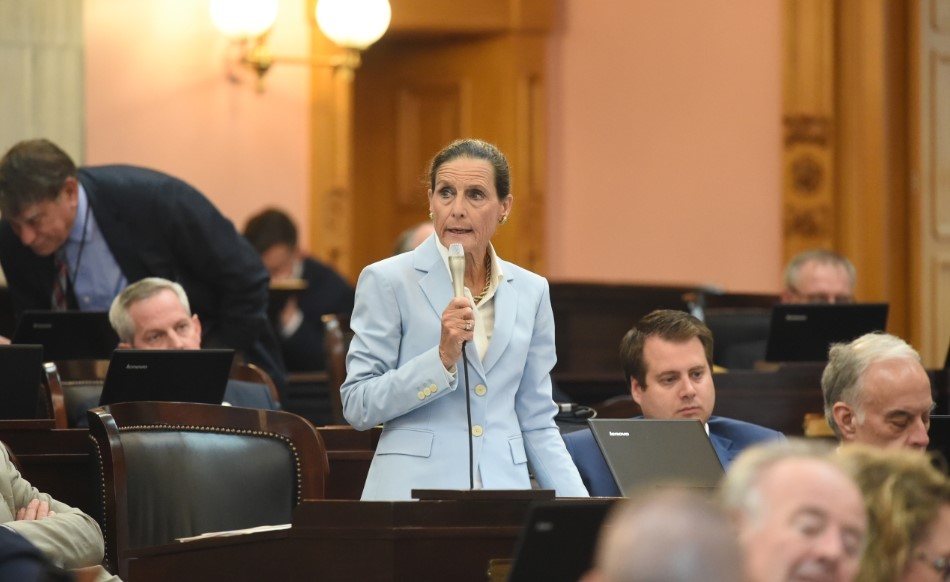
    State Rep. Jean Schmidt speaks on the floor of the Ohio House. Photo from the Ohio House website.

    BY: JAKE ZUCKERMAN –  Ohio Capital Journal

    The sponsor of legislation that would ban nearly all abortions in Ohio said babies conceived via rape or incest still have a right to life.

    Rep. Jean Schmidt, a Loveland area Republican, said on conservative talk radio earlier this week that her bill is likely to pass in the legislative session after the November elections.

    “I do believe we have the votes in both chambers, and we have the full support of the governor on this bill,” she said.

    The bill also creates a new misdemeanor crime of “promoting” abortion, for those who make, sell or distribute drugs or devices used to perform illegal abortions. Schmidt said in the interview this could be used to target some of the companies (including in Ohio) that have announced they will cover costs of employee travel to seek an abortion as needed.

    When pressed by 700WLW host Bill Cunningham on whether Ohio should pass legislation banning birth control pills or condoms, she said she’ll listen to both sides of the debate.

    House Bill 598, which Schmidt introduced, would ban most abortion in Ohio. Current Ohio law allows for abortions up to six weeks after a woman’s last period. The proposed legislation does not provide exceptions for pregnancies conceived by rape or incest.

    Providing any abortion under the bill could lead to a fourth degree felony charge. The law allows the accused to mount a defense, however, if they only did so to save the life of the mother. That physician would need to provide written certification of the woman’s medical need along with that of another physician from a separate practice.

    Likewise, the legislation requires at least two physicians present during the abortion: one to perform the abortion in the manner that provides the “best opportunity for the unborn child to survive,” and another to care for the fetus.

    Schmidt drew national attention in April when she referred to a hypothetical 13-year-old’s pregnancy spawned by rape as an “opportunity.” Her recent comments, however, come after the U.S. Supreme Court last week overturned a landmark 1973 ruling that established a constitutional right to abortion. That decision wiped out the federal protection and returned control over abortion to the states.

    A spokesman for Gov. Mike DeWine did not dispute Schmidt’s characterization of DeWine’s support for her bill, and noted that the governor has previously expressed support for conceptually similar legislation. Senate President Matt Huffman, R-Lima, said this week he expects an abortion ban of some sort to pass in late 2022.

    Schmidt’s remarks indicate no signs of a softened position, and a sense of opportunity after the removal of a major roadblock to restrictive abortion laws. They, and Cunningham’s questions, have been edited here for length and clarity.

    Cunningham: What about rape and incest [as a potential exception to a ban on abortion]?

    Schmidt: “Rape and incest is an ugly, ugly, ugly act of violence, and that woman is truly harmed and scarred, and those wounds will never go away and we need to make sure that she has all of the love and help and support. But to end the pregnancy of the child is not going to erase those wounds or those scars. That child still has the right to life.”

    So, as a leader in the House of Representatives, you would not vote to ban birth control pills in Ohio?

    “You know, that’s another issue for another day, and I’m going to have to listen to both sides of that debate. But right now, what I’m really concerned about is the life of the child, and the fact that we have the opportunity in Ohio to protect it from its conception until its natural death. That’s what I’m most excited about.”

    Would you vote against gay marriage in Ohio?

    “You know, Bill, that’s another decision for another day. The issue right now is abortion, and that’s one I want to make sure sees its end in Ohio in a very quick fashion.”

    [Cunningham for 90 seconds talks about various alternatives to surgical abortion, ending in a statement that companies are starting to “pay” their employees $4,000 to travel to more liberal states that allow them to obtain an abortion and other “workarounds”.]

    Do you know what I’m saying?

    “If those companies want to do that, they better make sure that they’re complying with the laws of the states that allow them to do that. Because in House Bill 598, it says anybody that promotes an abortion will be under the issues of criminal activity. They might have a problem with sending somebody outside the state with a paycheck in hand, because that would be – in some legal eyes – promoting abortion.”
    Follow OCJ reporter Jake Zuckerman on Twitter.

  • Support their right to have some control over what largely feels like something happening TO them, not just IN them.

    Support their right to have some control over what largely feels like something happening TO them, not just IN them.

    “If you can’t bring yourself to do that, then please, try to listen a little longer, and seek to somehow, in some way, understand.”

    by Stefanie Badders Laufersweiler

    I’ve been pregnant 7 times. Four progressed successfully; three did not. 

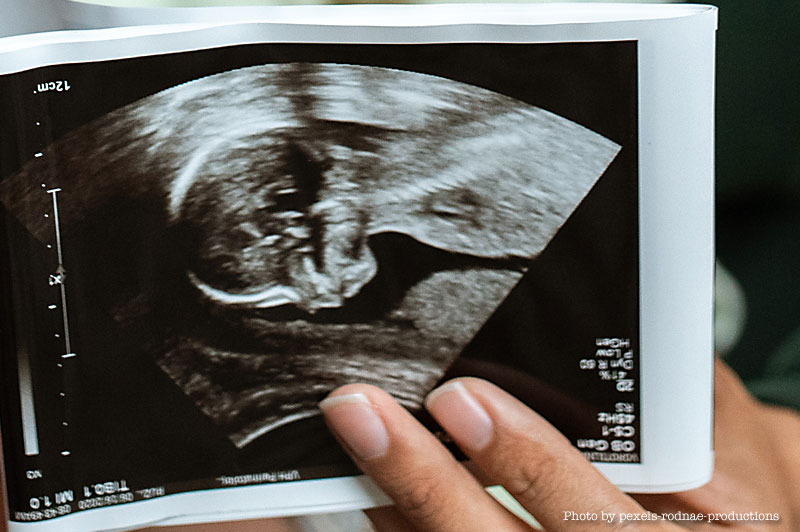
    Half of the times I’ve been in the ultrasound room, the news was bad. The first time, a heartbeat was no longer detectable at 10 weeks, but my body didn’t naturally miscarry, so ultimately I opted for a D&C, where my OB removed the fetus. The few weeks that I waited for natural miscarriage were traumatic and sad. I was 28.

    The second time I got pregnant, I went in for an ultrasound and a very slow heartbeat was detected—too slow. My OB told me it didn’t look good, but he couldn’t say for certain at that point. I went home and later that evening, miscarried at home, at 6 weeks. I was 29.

    I had a healthy pregnancy with our first child, Amy, when I was 30. But, the entire time I fretted. When you have your first pregnancy at that age or older, more odds, complications and viability testing options are shared with you. More risk is involved, and though you aren’t nudged in any direction, they (and you) want to progress with eyes wide open.

    I had two more healthy pregnancies, with Paul and Em. Then, at age 39, a chemical pregnancy. I had had some bleeding before that ultrasound; I didn’t bother telling Matt to meet me there. “What’s your due date?” the doctor (not my usual OB) asked me as she prepped me for the scan. “I’ve no idea,” I said. “I don’t do that anymore, because I’ve not always walked out of this room with good news.”

    Ben came last, a beautiful blindside, at age 42. It’s the only time I had to sit down to catch my breath after taking a pregnancy test. I was old. We were blessed, everyone would say, but few knew what that pregnancy was like for us. You don’t really ready for a child; you prepare yourself for whatever may come. Miscarriage. Birth defects. Potential loss. And any pregnancy-related trauma you’ve ever felt, mental and physical, comes roaring back. You count on nothing, and brace for anything.

    We all have different experiences and opinions. We all live this life differently, not always by choice. I’m not foolish enough to think my experience will change your mind. I had miscarriages, after all, not abortions. But, every time, I had choices. Choices I’m grateful for, because they were mine to make.

    Every time prior to Ben, after we had a pregnancy or a pregnancy loss, we had to make a decision—not whether to have another child, but whether to put ourselves through the process that may or may not end with a child. And once I was pregnant with Ben—whose conception happened by failed contraception—we had another decision to make: whether to risk future pregnancies, in middle age with a body that had served me well but suffered complications along the way.

    We chose a vasectomy for Matt while I was in my seventh month of pregnancy with Ben. I say that out loud because society in general doesn’t do that enough, although we are quite comfortable speaking of contraception and prevention in regards to women.

    By age 45, I had fully entered menopause, and I no longer had to worry about getting pregnant. After all of my adult life having to weigh the risks and benefits of taking birth control pills, or using condoms, or trying “natural” prevention, or considering surgery, or taking chances, or hoping the vasectomy “took,” I didn’t have to worry anymore. At 45.

    I share this, perhaps oversharing, because many people think they know how they feel about pregnancy. And contraception. And having babies. And abortion. And, most importantly, what they would do. What others should do. What they DID do. Their own experiences. My own experience. 

    Others speak from experience they don’t personally have, but think they know enough about to judge someone else’s.

    We all have different experiences and opinions. We all live this life differently, not always by choice. I’m not foolish enough to think my experience will change your mind. I had miscarriages, after all, not abortions. But, every time, I had choices. Choices I’m grateful for, because they were mine to make.

    Give an ear and perhaps some grace to those who’ve been there. Who’ve been in that room where your odds of coming out with a due date are 50/50. Who’ve had a pregnancy they terminated under unimaginable circumstances. Who’ve carried the trauma of losing, or being faced with a painful choice; of having to explain something so personal to others who may not understand or ever have to experience what you did; of having to piece together a life afterward. 

    Look around you. Talk to women you know, and maybe some you don’t. Ask questions about what pregnancy is like. Better yet, just listen. Hear their stories. Learn their experiences. Not just the happy endings or desired outcomes.

    Then support them. Support their right to have some control over what largely feels like something happening TO them, not just IN them. If you can’t bring yourself to do that, then please, try to listen a little longer, and seek to somehow, in some way, understand.