Tag: firearms

  • 1 ,777 Ohioans died by suicide in 2023, according to new Ohio Department of Health report

    1 ,777 Ohioans died by suicide in 2023, according to new Ohio Department of Health report

     (Photo by Quentin Young/Colorado Newsline.)

    By:  Ohio Capital Journal

    This story is about suicide. If you or someone you know needs support now, call, text or chat the 988 Lifeline.

    More than 1,700 Ohioans died by suicide in 2023, according to the Ohio Department of Health.

    The number of Ohioans who died by suicide decreased 1% in 2023, according to ODH’s 2023 Suicide Report.

    “Every death by suicide is a tragedy that deeply affects so many,” said ODH Director Bruce Vanderhoff. “This is a sobering fact, and it is why, even though we take some encouragement from this slight decline, we are committed to continuing to work hard to drive those numbers down further.”

    This is the first time in three years there has been a decrease. 1 ,777 Ohioans died by suicide in 2023 — 20 fewer than 2022.

    “While this decrease in suicide deaths is certainly a step in the right direction, we must continue to make improvements in suicide prevention and mental health,” Ohio Gov. Mike DeWine said in a statement. “Depression and suicide remain a serious threat – especially to our kids. If anything, our progress should inspire us to further advance our commitment to this life-saving work, because the life of every Ohioan is precious.”

    GET THE MORNING HEADLINES.


    Nearly five Ohioans died by suicide each day — including one person ages 10-24 every 36 hours, according to the report.

    “These are moms, dads, brothers, sisters, neighbors, co-workers and all of these losses are truly a human tragedy and a reminder that we have to do more,” said LeeAnne Cornyn, director of the Ohio Department of Mental Health and Addiction Services. “We want all Ohioans to be well, get well and stay well, so that they can live up to their full God given potential every single day.”

    Suicide was the 12th leading cause of death overall in Ohio and was the second-leading cause of death among Ohioans ages 10-14 and 20-34, according to the report.

    Nearly 70% of Ohio suicide deaths were white-non-Hispanic males and Ohioans ages 45-54 was the age group with the highest rate of suicide deaths, according to the report.

    Firearms were used in more than half of all Ohio suicide deaths and and the use of drug poisoning increased by 11% in 2023, according to the report.

    Black non-Hispanic females and white non-Hispanic females saw the largest decrease in rate of suicide deaths, both by 6%, according to the report.

    The 988 Suicide & Crisis Lifeline launched in July 2022 and Ohio’s 19 call centers have responded to more than 440,000 calls, chats and texts.

    “Every single Ohioan plays a role in reducing suicides, and that’s why we have also worked to equip thousands and thousands of Ohioans with the skills that they need to recognize mental illness or substance use disorder and have the skills that they need to talk to their peers, to talk to their family members and help connect them to care,” Cornyn said.

    Follow OCJ Reporter Megan Henry on Bluesky.

    YOU MAKE OUR WORK POSSIBLE.


    Megan Henry
    Megan Henry

    Megan Henry is a reporter for the Ohio Capital Journal and has spent the past five years reporting in Ohio on various topics including education, healthcare, business and crime. She previously worked at The Columbus Dispatch, part of the USA Today Network.

    Ohio Capital Journal is part of States Newsroom, the nation’s largest state-focused nonprofit news organization.

    MORE FROM AUTHOR

  • Ohio suicides went up in 2022, according to new report from Ohio Department of Health

    Ohio suicides went up in 2022, according to new report from Ohio Department of Health

    (Photo by Quentin Young/Colorado Newsline.)

    BY:  Ohio Capital Journal

    This story is about suicide. If you or someone you know needs support now, call, text or chat the 988 Lifeline.

    The number of Ohioans who died by suicide increased by 2% in 2022, according to new data from the Ohio Department of Health.

    There were 1,797 suicide deaths in Ohio in 2022 — the 13th-leading cause of death in Ohio, according to ODH’s Suicide Demographics and Trends 2022 report. Suicide was the second-leading cause of death among Ohioans ages 10-14 and 20-34 that year.

    Demographics

    Males accounted for 80% of Ohio suicide deaths and Ohioans between the ages of 35-44 had the highest rate of suicide deaths.

    Firearms accounted for more than half of all suicide deaths — 64% of male suicide deaths and 36% of female suicide deaths.

    Breaking it down by sex, males 75 and older had the highest rate of suicide deaths and females ages 25-34 had the highest rate of suicide deaths.

    Black non-Hispanics saw the the largest increases in rates of suicide deaths (16%) from 2021 to 2022. White non-Hispanics had both the highest rate of suicide deaths (16.1%) and the total number of suicide deaths (1,525).

    Vinton County had the highest suicide death rate (38.8 per 100,000) and Mercer County had the lowest rate (9.4 per 100,000). Franklin County had the most suicide deaths with 168, Cuyahoga County had the second most with 163 and Hamilton County had the third most with 136.

    Thirteen of the 15 counties with the highest suicide death rates were rural.

    988 Suicide and Crisis Line

    The National Suicide Prevention Lifeline moved to the 988 Suicide & Crisis Lifeline two years ago and since then Ohio 19’s call centers have responded to nearly 340,000 calls, texts and chats — an average of more than 14,000 contacts each month.

    “988 is saving lives,” Gov. Mike DeWine said in a statement. “The lifeline is providing free, around-the-clock support to Ohioans in crisis by connecting them with someone to talk to for help at the moment it’s needed most.”

    Ohioans facing a mental health or addiction crisis and their families members can call or text 988 or chat 988Lifeline.org to get connected to a trained call specialist who can help.

    “988 is confidential and functions as a crucial gateway to crisis support within our communities,” Ohio Department of Mental Health and Addiction Services Director LeeAnne Cornyn said in a statement. “Our hope is that reaching out to 988 in a behavioral health crisis becomes as natural to Ohioans as dialing 911 in other types of emergencies.”

    There have been an average of 9,804 calls from Ohio area codes; 2,686 texts received per month and an average of 1,652 chats per month.

    Cities across Ohio are trying to raise awareness of 988.

    The City of Columbus Department of Public Utilities put up more than a dozen signs about 988 throughout the city. Some of the police departments in Huron County have added 988 decals to their cars. Heidelberg University rented three billboards about 988 to inform students at the private college in Seneca County.

    “Any person or organization that puts effort toward building awareness about 988 is helping save lives,” Ohio’s 988 Administrator Doug Jackson said in a statement.

    Follow OCJ Reporter Megan Henry on Twitter.


    Megan Henry
    MEGAN HENRY

    Megan Henry is a reporter for the Ohio Capital Journal and has spent the past five years reporting in Ohio on various topics including education, healthcare, business and crime. She previously worked at The Columbus Dispatch, part of the USA Today Network.

    Ohio Capital Journal is part of States Newsroom, the nation’s largest state-focused nonprofit news organization.

    MORE FROM AUTHOR

  • [Commentary] Suicide is on the rise in Ohio

    [Commentary] Suicide is on the rise in Ohio

     (Photo by Quentin Young/Colorado Newsline.)

    Rob Mooreby Rob Moore – Ohio Capital Journal

    This article is about suicide. If you or someone you know needs support now, call or text 988 or chat 988lifeline.org.

    Five Ohioans die of suicide every day.

    This is just one of the many data points released in a new publication released last week by the Health Policy Institute of Ohio. This data snapshot focuses on the prevalence of suicide in Ohio and how incidence has changed over time.

    Below are some of the top findings from the release.

    Suicide is a leading cause of death for working-age Ohioans.

    Over 1,400 Ohioans died from suicide in 2022, the most recent year we have data for. This makes suicide the fifth-leading causes of death for working-age Ohioans, behind unintentional injuries like drug overdose and motor vehicle crashes, cancer, heart disease, and COVID-19.

    Ohio’s suicide death rate is 15 deaths per 100,000 people, just slightly above than the national rate of 14.5 deaths per 100,000 people.

    Suicide victims are disproportionately white, male, working-age, and Appalachian.

    In 2022, 17 white Ohioans died from suicide per 100,000 population, higher than the rate of 12 for Black Ohioans, 10 for Hispanic Ohioans, and 7 for Asian Ohioans. Men were also four times likely to die from suicide than women. This is despite the fact that women attempt suicide at a rate 70% higher than men.

    Suicide rates were highest in 2022 for working-age adults, higher than the rate for young adults, retirement-age adults, and children. Suicide was most common in Appalachian counties, with 15 of Ohio’s 22 counties with the highest suicide rates located in Appalachia.

    Suicide is on the rise–for nearly everyone.

    Since 2007, suicide rates have increased for men and women, white, Black, and Hispanic Ohioans, and Ohioans in every age group. The only major demographic group that has seen a flat suicide trend are non-Hispanic Asian or Pacific Islander Ohioans.

    Risk factors for high school students are also becoming more common.

    Compared to 2019, female Ohio high school students were more likely in 2021 to feel sad or hopeless, seriously consider suicide, make a plan to commit suicide, or attempt suicide. While more male high-school felt sad or hopeless and seriously considered suicide over that time period, fewer made a plan or attempted suicide. The increase in suicide plans and attempts among female students was much larger than the decrease among male students.

    The increase in suicide rate is driven by firearms.

    Suicide deaths involving a firearm increased 60% from 2007 to 2022. This accounted for 75% of the total increase in suicides over that time period. The remainder of the increase was driven mostly by an increase in deaths by suffocation and other causes. Deaths by poisoning decreased over that time period.

    Suicide is a hard social problem to make progress against. That being said, the Health Policy Institute of Ohio suggests interventions to improve mental health to prevent suicide attempts.

    A 2016 evidence review published in the American Journal of Psychiatry concluded legislation reducing firearm ownership lowers firearm suicide rates. It also acknowledged, however, that court interpretations of the second amendment to the U.S. Constitution have made most legislative options for reducing firearm ownership politically unfeasible in the United States.

    The researchers however, say targeted initiatives like gun violence restraining orders, smart gun technology, and gun safety education may be able to reduce risk for current gun owners. These sorts of approaches do not have a strong evidence base yet, but they at least give us something to tackle this difficult problem.

    If you or someone you know needs support now, call or text 988 or chat 988lifeline.org.


    Rob Moore
    ROB MOORE

    Rob Moore is the principal for Scioto Analysis, a public policy analysis firm based in Columbus. Moore has worked as an analyst in the public and nonprofit sectors and has analyzed diverse issue areas such as economic development, environment, education, and public health. He holds a Master of Public Policy from the University of California Berkeley’s Goldman School of Public Policy and a Bachelor of Arts in Philosophy from Denison University.

    MORE FROM AUTHOR

  • Milford, Ohio man Indicted in Machine Gun Scheme

    Milford, Ohio man Indicted in Machine Gun Scheme

    Allegedly conspired with two Indiana gun dealers to acquire over 200 fully automatic weapons and re-sell them at a profit

    One of those guns was an M2 .50 caliber belt-fed heavy machine gun, which according to the Indictment, is a vehicle- or ship-mounted weapon that is effective against lightly armored vehicles and low-flying aircraft.

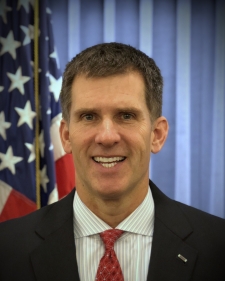
    Indianapolis – Acting U.S. Attorney John E. Childress announced on Friday that Dorian LaCourse, 65, of Milford, Ohio, was indicted by a federal grand jury for his role in a scheme to use his position as Chief of Police for the Addyston Police Department in Addyston, Ohio, to help two federally licensed firearms dealers in Indiana acquire hundreds of machine guns. LaCourse was indicted on charges of conspiracy and making false statements to the Bureau of Alcohol, Tobacco, Firearms, and Explosives (ATF). 

    Acting U.S. Attorney John E. Childress

    Childress also announced today that the two Indiana gun dealers, Johnathan Marcum, 33, of Laurel, Indiana, and Christopher Petty, 57, of Lawrenceburg, Indiana, have been charged with conspiracy for their roles in the machine gun scheme.

    “Federal laws regulating the purchase, transfer or possession of firearms exist to promote public safety,” said Childress. “When people violate those laws, they unacceptably threaten the safety of others. This office will vigorously pursue those who commit federal firearms offenses, regardless of who they are. We expect better from our public servants, and when police officers violate the law, they can expect to be investigated and prosecuted like any other citizen. I am confident that LaCourse’s criminal choices do not represent the vast majority of law enforcement in this country.”

    According to the Indictment, LaCourse and the two Indiana firearms dealers exploited a law enforcement exception to the general federal ban on fully automatic machine guns. The Village of Addyston, Ohio, has approximately 1,000 residents, and the Addyston Police Department has up to 10 officers, most of whom were part-time. However, according to the Indictment, between 2015 and 2019, LaCourse signed multiple letters and other official documents as Chief of Police falsely claiming to the ATF and others that the Addyston Police Department was interested in purchasing or receiving demonstrations of machine guns.

    The Addyston Police Department and Village of Addyston had no intention of purchasing machine guns or receiving demonstrations of machine guns. Instead, these allegedly false statements were a pretense to gain ATF approval for Marcum and Petty to acquire machine guns, which they re-sold to other federally licensed firearms dealers at a profit—of which LaCourse got a portion. According to the Indictment, LaCourse received 11 checks payable to him totaling over $11,500.

    In four instances, LaCourse falsely claimed on ATF forms and other documents that the Addyston Police Department was the actual purchaser of machine guns, including two bulk purchases of a total of 18 guns from German manufacturer Heckler & Koch. On one document required by the German government, which pertained to the importation of the machine guns into the United States, LaCourse is alleged to have falsely stated that the Addyston Police Department was the “end-user” of the guns. In reality, according to the Indictment, Marcum purchased the guns for the purpose of re-selling them—Marcum paid for them, picked them up from the Addyston Police Department when they arrived, and promptly re-sold them at a profit of over $8,000 each.

    In all, the Indictment alleges that through their scheme, LaCourse’s false statements and representations induced the ATF to approve the purchase or importation of approximately 200 fully automatic machine guns. The types of guns acquired ranged from smaller submachine guns to automatic assault rifles, to belt-fed machine guns for military use. One of those guns was an M2 .50 caliber belt-fed heavy machine gun, which according to the Indictment, is a vehicle- or ship-mounted weapon that is effective against lightly armored vehicles and low-flying aircraft. 

    This case was investigated by the Bureau of Alcohol, Tobacco, Firearms, and Explosives.

    “No matter who you are, it is a crime to make false statements to acquire firearms and allow them into the hands of those who cannot legally possess them,” stated Roland H. Herndon, Jr., Special Agent in Charge of ATF’s Columbus Field Division. “LaCourse, Marcum, and Petty all used their positions and knowledge of the system to illegally transfer fully automatic weapons for profit, with no regard for any potential impact that might have on our communities.”

    According to Assistant United States Attorneys Nick Linder and William L. McCoskey, who are prosecuting this case for the government, LaCourse faces up to 5 or 10 years in prison on each charge if indicted and convicted. Marcum and Petty each face up to 5 years.

    An indictment is merely a charge and not evidence of guilt. All defendants are presumed innocent until proven otherwise in court.

  • Despite brawls, no OSHP arrests at clashing protests at Ohio Statehouse last Wednesday

    Despite brawls, no OSHP arrests at clashing protests at Ohio Statehouse last Wednesday

    By Jake Zuckerman and Ohio Capital Journal

    A pugilistic day of political demonstrations that included two brawls between far-right demonstrators insisting the presidential election was stolen and Black Lives Matter activists ended with no arrests last Wednesday.

    At least two rounds of fisticuffed rumbles with an array of participants broke out at different points through the afternoon along with some more minor spats.

    The Proud Boys, a radical conservative group with white nationalist ties known for violent confrontations with liberal demonstrators, tussled with BLM activists after hours of vitriolic name calling and antagonizing between the two.

    Conservative activist Judi Phelps, a pistol holstered to her leg, yells into a microphone. (Photo by Jake Zuckerman)

    Among the Proud Boys and those alongside them, firearms were everywhere. People were carrying assault style rifles, shotguns and pistols. None were seen used or brandished. One man carried a telescoping baton.

    At least two people standing with BLM activists carried pistols, and one man carried a baseball bat, none of which were seen in use during the fights.

    Photo by Jake Zuckerman

    Members of the Ohio State Highway Patrol, which protects the Capitol building and campus, intervened at times to break up the physical altercations and try to keep the two groups separate or at least in peace.

    OSHP Staff Lt. Craig Cvetan said Thursday the primary function of the officers on the scene were to make sure everybody stays safe, not necessarily make arrests.

    “As you make arrests and try to start apprehending individuals, that takes away those trooper’s ability to separate those groups,” he said.

    He said the officers are well aware of the arsenal of weapons around the protest.

    “Ohio is an open-carry state,” he said. “Certainly, we prefer for people not to have weapons on the Statehouse grounds. It makes it easier for us.”

    The first rumble broke out around 12:40 p.m. It was captured in video via a Statehouse News Bureau reporter.

    The Columbus Police Department assisted in breaking up the fights. Repeated calls to the department seeking information on arrests or lack thereof were sent to a Public Information Officer who did not answer calls and could not accept voicemails.

    A separate fight with at least about 10 people engaged broke out on the Capitol lawn at roughly 3 p.m. OSHP officers broke things up and separated the two groups.

    A man with a holstered pistol engages in a heated argument with a Columbus Police officer after the second brawl. (Photo by Jake Zuckerman)

    Shortly thereafter, the Proud Boys groups left on buses, after which the situation quickly calmed down.

    Meanwhile, in Washington D.C., a mob of insurrectionists were in the process of invading the U.S. Capitol and wreaking havoc inside. One woman was reportedly shot, and three more died due to unspecified medical emergencies.

    Gov. Mike DeWine briefly mentioned the protests at the Ohio Capitol speaking to reporters Thursday. He acknowledged there’s no guarantee that Ohio’s statehouse is safe from a similar invasion. He made no mention of either the fights or the firearms that were present through the event.

  • Ohio schools ask state supreme court to support armed personnel

    Ohio schools ask state supreme court to support armed personnel

    Pictured is the Thomas J. Moyer Ohio Judicial Center where the Ohio Supreme Court meets. Photo courtesy Wikimedia Commons..

    Arguing for their right to arm school personnel, 17 schools from 11 counties in Ohio asked the Ohio Supreme Court to allow them to continue using firearms as an option for student safety.

    Susan TebbenSusan Tebben is an award-winning journalist with a decade of experience covering Ohio news, including courts and crime, Appalachian social issues, government, education, diversity and culture. She has worked for The Newark Advocate, The Glasgow Daily Times, The Athens Messenger, and WOUB Public Media. She has also had work featured on National Public Radio.



    The schools are asking for the state’s highest court to reverse an appeals court decision that said state law did not allow boards of education to allow armed personnel without training on the same level as police and security officers.

    Four of the schools came from Shelby County, two each represented Hardin and Montgomery counties, and one district each from Tuscarawas, Williams, Adams, Morgan, Noble, Coshocton and Portage counties were listed on a brief to the court.

    Boards of education or governing boards for all but one of the districts have authorized certain staff members to carry weapons within school zones as long as they have concealed handgun licenses.

    One school, Shelby County’s Jackson Center Local Schools, “is currently taking steps in the process of considering the authorization of staff members to become part of its school safety team and to carry a weapon into a school safety zone,” according to court documents.

    The school districts argue that Ohio Revised Code allows anyone to carry a firearm into a school safety zone with the written authorization from the board of education. But they argue, just as Madison Local Schools and Ohio Attorney General Dave Yost argued, the law does not require teachers or anyone other than police and security personnel to be trained to the standard of the Ohio Peace Officer Training Academy (OPOTA).

    “By its plain terms, this would apply to law enforcement but not to administrators, teachers, or support staff authorized to carry a firearm in a school safety zone,” the districts wrote in their brief to the court.

    The school representatives urged the court to recognize that decisions about student safety “are best left to locally-elected boards of education.”

    The schools said giving board of education the right to govern in varying ways is “simply federalism,” calling boards “laboratories of democracy.”

    Furthering that argument, the schools said boards were entrusted by the state and the legislature to “serve as a laboratory; and try novel social and economic experiments without risk to the rest of (Ohio),” quoting a U.S. Supreme Court decision in an unrelated case.

    Photo by Dan Galvani Sommavilla from Pexels

    They criticized the 12th District Court of Appeals decision in the case, saying the court took away the meaning of the Ohio law regarding firearms allowances in schools, and made “arming staff entirely impractical.”

    “As a result of the 12th District’s decision, if an Ohio school district desires to arm any administrator, teacher, or support staff, the district is left with two options: (1) hire a police officer to teach English; or (2) send an algebra teacher to the police academy,” the brief from the districts stated.

    The schools went so far as to say schools will be “less safe” if the supreme court agrees with the 12th District’s decision, because of the varying amount of resources from school to school. Hiring more school resource officers isn’t always in the budget, they wrote.

    They estimate a school resource officer’s salary to be $50,000 per year. They also say sending a school employee to FASTER, a training given by pro-gun lobby Buckeye Firearms Association and marketed specifically to teachers and school staff, costs “a couple thousand dollars.”

    “Unsurprisingly, the resource discrepancy between districts in Ohio is largely exacerbated between larger, suburban and urban districts and smaller, rural districts,” the brief states. “This money gap, though, has a direct impact on the ability of a school district to safely protect its students and staff.”

    The FASTER program is later called the state’s and country’s “preeminent active school shooter training program” more than once, and the districts say nearly 200 school districts in Ohio have been sent to it. The attorney writing on behalf of the districts, Jonathan Fox, is named as Buckeye Firearms Association member in a story on the BFA website.

    The court case is running parallel to proposed legislation that recently passed a state Senate committee regarding armed school personnel

  • Local counselor Tonya Schaeffer: How you can help prevent suicide 

    Local counselor Tonya Schaeffer: How you can help prevent suicide 

    Tonya Schaeffer, M.Ed, LPCC-S is a co-owner of Hope Restored Counseling Services, LLC in the West Loveland Historic District at 600 West Loveland Avenue. She can be reached at 513-683-HOPE (4673)

    by Tonya Schaeffer

    According to National Institute of Mental Health, suicide is a major public health problem and a leading cause of death in the United States. The effects of suicide go beyond the person who acts to take his or her life – it can have a lasting effect on family, friends and communities.

    Are Suicide Rates Increasing?

    The American College Health Association (ACHA) states that the suicide rate among young adults, ages 15-24, has tripled since the 1950’s.  On average, there are 129 suicides per day in the U.S. More males die from suicide than females (approximately four male deaths by suicide for each female death by suicide). However, females attempt suicide three times more often than males. 

    Some risk factors for suicide include: previous attempts; depression and other mental health disorders; family history of a mental health or substance disorder; family history of suicide; drug and alcohol abuse; family history of violence, including physical or sexual abuse; impulsivity and or poor self control; hopelessness; medical illness; firearms in the home; and being exposed to others’ suicidal behavior, such as a family member, peer or media figure.

    There are many other factors that could lead to suicide, too. Even among people who have risk factors for suicide, most do not attempt it. It remains difficult to predict who will act on suicidal thoughts.

    The following behaviors may be a sign that someone is thinking about suicide: talking about wanting to die or wanting to kill themselves, sharing feelings of hopelessness, or feeling empty or numb. Other behaviors include planning or looking for a way to kill themselves, such as searching online for ideas, stocking up on pills or newly acquiring potentially lethal items (firearms or ropes). In addition, talking about being a burden to others, giving away important possessions, displaying extreme mood swings, or suddenly changing from very sad to very calm or happy are telltale signs.  

    Often in my office, a parent might be confused about how serious they should take their child talking about suicide. They might think their child is just seeking attention. However, suicidal thoughts or actions are a huge red flag that the person is in distress and an alert they need help. Any warning sign or symptom of suicide should not be ignored. Threatening to die by suicide is not a typical response to stress and should not be taken lightly.  

    Addressing Some Common Myths of Suicide

    If I talk about suicide, then it might put the idea in their head.

    This is not true! Several studies examining this concern have demonstrated that asking people if they are having suicidal thoughts or behaviors does not induce or increase such thoughts or experiences. Asking someone directly, “Are you thinking of killing yourself,” can be the best way to identify someone at risk for suicide. Another myth is people believing that talking to the person directly can’t make a difference to them. Talking to the person can help tremendously – it opens up a line of communication. Ignoring or minimizing a person’s feelings, thoughts or actions surrounding suicide is not advisable.  

    Most of the time a family member or friend are the first people to notice the warning signs of suicide. If someone tells you they are going to kill themselves, do not leave them alone, and do not promise anyone you will keep their suicidal thoughts a secret. It is important to have a plan in place to make sure the individual is as safe as possible. But, you should seek professional help as soon as possible.  

    As a mental health professional, suicide is a major concern and we are quite often assessing for it. The amount of request for services related to suicide has increased dramatically over the years.

    If you have someone in your life who you believe is suicidal, don’t wait to reach out for help.  This is not something to take lightly. In fact, if they are displaying risk factors and have a plan, take them to a local emergency room to be assessed. All too often people are seeing warning signs and reach out to us for services, and due to demand we can’t accommodate them in their time of need.   

    Resources

    If you know someone in crisis, you can also call the toll-free NATIONAL SUICIDE PREVENTION LIFELINE at 1-800-273-TALK (8255), 24 hours a day, 7 days a week. The service is available to everyone. The deaf and hard of hearing can contact the LIFELINE via TTY at 1-800-799-4889. All calls are confidential.

    Contact social media outlets directly if you are concerned about a friend’s social media updates, or dial 911 in an emergency.

    The Crisis Text Line is another resource available 24 hours a day, 7 days a week. Text “HOME” to 741741.

    Tonya Schaeffer, M.Ed, LPCC-S is a co-owner of Hope Restored Counseling Services, LLC in the West Loveland Historic District at 600 West Loveland Avenue. She can be reached at 513-683-HOPE (4673)

  • Governor Kasich issues common sense gun order

    Governor Kasich issues common sense gun order

    The database includes criminal conviction sentences, protection orders, and mental health records that, in Ohio, should be inputted.

    Columbus, Ohio – On Monday, Governor John R. Kasich took action to begin implementing recommendations of a working group he reconvened in April to improve the background check system that helps make sure guns stay out of the hands of people prohibited by law from having them.

    The group reached unanimous agreement on a proposal that has been introduced as legislation in the General Assembly HB 585/SB 288. Those bills include closing gaps in the background check system.

    The working group developed a 39-page report that assessed the current level of compliance in Ohio and identified barriers that exist to achieving comprehensive, up-to-date reporting. Those recommendations include ways to expand training and training to those responsible for submitting data into the system, reforms to reduce duplicative or unclear reporting responsibilities and ensure greater coordination among entities.

    In addition, the working group published a reporting compliance manual for local governments and elected officials who have responsibility for inputting data into the background check system and ways they can overcome compliance barriers.

    By signing Executive Order 2018-10K, Kasich permanently established the National Instant Criminal Background Check System (NICS) Compliance Working Group to continue working to ensure that gaps in the system are closed. Kasich also signed Executive Order 2018-11K to adopt emergency rules to require law enforcement agencies to upload protection order and warrants into theLaw Enforcement Automated Data System (LEADS) to close an existing reporting gap identified by the working group.

    “By closing gaps in the gun-buyer background check system, we can make it less likely that dangerous people are able to purchase firearms,” said Kasich.

    “By closing gaps in the gun-buyer background check system, we can make it less likely that dangerous people are able to purchase firearms,” said Kasich.  “I’m grateful to the working group for putting together such a thorough report and Ohioans will be safer as result of their continued work.”

    Anyone buying a firearm must undergo a background check to make sure they are not prohibited by federal or state law from possessing a firearm.  Those background checks only protect the public if the information in the National Instant Criminal Background Check System is complete, accurate, and up to date.  The database includes criminal conviction sentences, protection orders, and mental health records that, in Ohio, should be inputted.

    Earlier this year, Gov. Kasich brought together leaders with a variety of backgrounds to search for common ground on new policies that can protect Ohioans’ lives and respect their constitutional rights. The group reached unanimous agreement on a proposal that has been introduced as legislation in the General Assembly HB 585/SB 288. Those bills include closing gaps in the background check system.

    The two executive orders can be viewed here and the full report from the working group is available here.


      Take Home Tano is about fresh, wholesome food for the frenzied family   Our goal is to meet the needs of busy families.


  • Dianne  Decker Bomar to City Council: For our children, there is no more important work that you will do

    Dianne Decker Bomar to City Council: For our children, there is no more important work that you will do

    EDITOR’S NOTE:

    This is a statement Dianne Decker Bomar read at the open forum of the May 22 Loveland City Council meeting. Loveland Magazine Publisher, David Miller stood at the podium with Bomar and expressed his endorsement of the statement. Council did not engage in the conversation of declaring June 1 Gun Sense Safety Day in Loveland.



    Dianne Decker Bomar

    by Dianne Decker Bomar,

    There have been 288 school shootings in the United States since 2009.

    At least 2,500 children and adults have died as the result of these shootings.

    We have all heard the newly-released statistic that more school children have been killed in 2018 alone than Americans serving in the active military service. I will let that sink in. More children are dead from school shootings than those serving in the Marines, Army, Navy, Air Force, and Coast Guard in 2018.

    Gunmen, whether adults or youthful peers of the victims, have had access to firearms with the ability to wound and kill quickly in settings where we send our children to learn and grow. 

    “The end result was the same:  children as young as five, and adults as old as 75 were killed in the place we believed for decades was safe… their school.”

    Whether this ability was a result of multiple guns, or firearms with modified features to fire on victims in rapid succession, the end result was the same:  children as young as five, and adults as old as 75 were killed in the place we believed for decades was safe… their school.

    This council has been asked to declare June 1 Gun Sense Safety Day in Loveland.  

    This council has been asked to celebrate Gun Sense Safety by decking themselves and our community in orange: ribbons, lighting, clothing, and whatever conveys your support of the mission of Moms Demand Action, Mayors Against Gun Violence, Everytown for Gun Safety, and Sandy Hook Promise:

    That mission is to engage in meaningful change to address the epidemic of school violence in our community and across the United States.

    That mission is to support the Second Amendment and at the same time provide fundamental, common sense approaches to the very specific issues which are a result of modern technology and profound special interest lobbying.

    This is not an effort to strip responsible gun owners of their firearms, about which I believe at least a few of you on council have personal concerns.  

    “I encourage each of you to search out answers which prove to this community that you take our children’s, teachers, aides, and administrators lives seriously.”

    I encourage each of you to search out answers which prove to this community that you take our children’s, teachers, aides, and administrators lives seriously. That you acknowledge that the current means and methods are not working and a new view and action is necessary.

    Please show that your personal beliefs are congruous with the health and well-being of all of Loveland’s children.

    Please know that you hold a unique position of influence and that meaningful change has to include everyone in the conversation about gun sense legislation and safety.

    There is no more important work that you will do than to engage in the conversation in this meaningful way to work toward safety in our schools.

    Please declare June 1 Gun Sense Safety Day in Loveland and promote the conversation which you know has to take place in order for change to begin, and for healing to take place.

    There is no more important work that you will do than to engage in the conversation in this meaningful way to work toward safety in our schools.