

Tag: FirstEnergy Corp.

  • Judge rejects bid to settle FirstEnergy bribery suit with shareholders elsewhere

    Judge rejects bid to settle FirstEnergy bribery suit with shareholders elsewhere

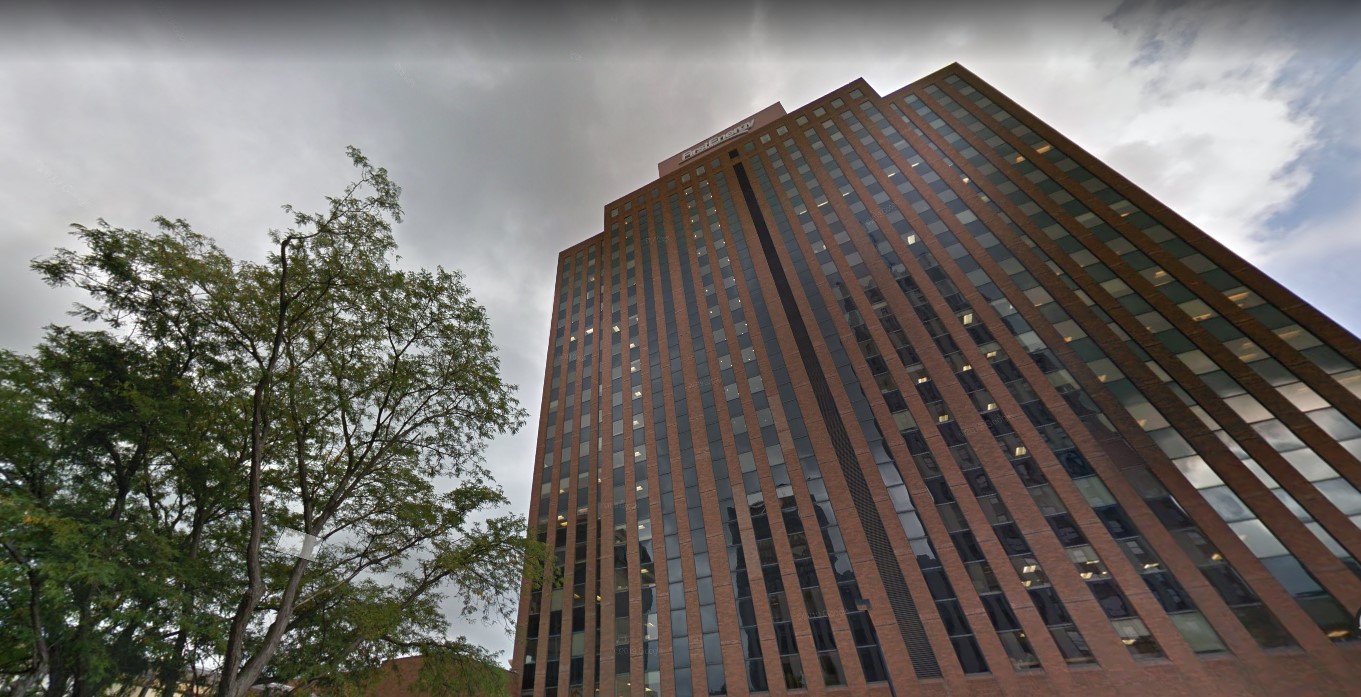
    FirstEnergy’s headquarters in Akron. Source: Google Maps.

    BY: JAKE ZUCKERMAN – Ohio Capital Journal

    A federal judge in Akron has refused to dismiss a lawsuit between FirstEnergy Corp. — which has admitted that it bribed two top Ohio politicians with $64 million — and some of its shareholders.

    U.S. District Judge John R. Adams denied a motion Tuesday, filed jointly by the company and its investors, asking him to dismiss the case in light of a proposed settlement preliminarily agreed to by another federal judge.

    Adams accused the parties of “forum shopping,” or looking for a friendly judge given his previous skepticism of the settlement. He also implicitly accused FirstEnergy of protecting its former CEO’s riches, and the plaintiff’s lawyers of cashing in without properly investigating the company’s scheme.

    The lawsuit traces back to the 2019 passage of state House Bill 6, which included several provisions favorable to FirstEnergy worth an estimated $1.3 billion to the company. This included a massive, ratepayer funded bailout for nuclear plants it owned at the time.

    FirstEnergy admitted in a deferred prosecution agreement last summer that it engaged in the bribery operations, with money flowing from the company to entities controlled by Ohio House Speaker Larry Householder and Public Utilities Commission of Ohio Chairman Sam Randazzo. Householder awaits trial and has pleaded innocent. Randazzo has not been charged and maintained his innocence.

    The agreement required the company to admit to a lengthy proffer of facts, cooperate with ongoing criminal probes, and pay a $230 million penalty to avoid a criminal charge of wire fraud.

    Shareholders have brought three derivative suits against the company over their losses incurred by the scandal — one in state court and two in federal court. In March, FirstEnergy announced it reached a settlement with the shareholders. It called for the company to oust six board members and receive $180 million from company insurers.

    U.S. District Judge Algenon L. Marbley preliminarily approved the settlement in May but said he had no authority over other judges’ cases.

    In Adams’ order Tuesday, he expressed incredulity at the lack of investigative efforts from the plaintiffs and the lack of consequences for some of the defendants.

    The shareholders’ lawyers have claimed, defending the proposal, that this would be the largest settlement of its type in Ohio.

    Big whoop, Adams said.

    FirstEnergy already paid a $230 million penalty, he said. The case record indicates shareholders lost more than $1 billion in value when the news of the initial criminal arrests in the scandal broke and the company’s share price plummeted. The insurance payout is a fraction of these losses. He noted that the small army of plaintiffs’ lawyers on the case could take a sizable chunk of the proposed settlement.

    “Given that counsel is permitted under the settlement to seek up to $48,600,000 in attorney fees, it is hardly surprising that the parties would seek out what they believe to be a more favorable forum,” he said.

    He also noted a finding in a recent regulatory audit that found FirstEnergy could have reclaimed some of the $55 million it paid to then-CEO Chuck Jones during the roughly three-year span of the criminal allegations. Though the company fired Jones, it never invoked the contractual provision allowing it to reclaw the compensation, the audit found.

    In his order, Adams also cited uncomplete exchange of evidence between parities, no testimony under oath from any defendants, and an incomplete forensic examination to identify “possible missing communications” from Jones’ phone.

    While FirstEnergy as a company faces criminal consequences, its executives to date have not. The deferred prosecution agreement the company entered, meanwhile, doesn’t specifically identify who organized the bribery operation.

    Earlier this year, Adams refused to allow any settlement — and at one point stormed off during a hearing — until someone in the case admitted who specifically orchestrated the bribery operation. Counsel representing plaintiffs identified both Jones and fellow executive Mike Dowling as the central operators. The two men are named defendants in the shareholder lawsuit.

    John Camillus, an attorney and “liaison counsel” for some of the plaintiffs, declined to comment.

    A FirstEnergy spokeswoman declined to comment.
    Follow OCJ reporter Jake Zuckerman on Twitter

  • FirstEnergy paid $4.3 mil to top energy regulator and reaped the benefits, court docs state

    FirstEnergy paid $4.3 mil to top energy regulator and reaped the benefits, court docs state

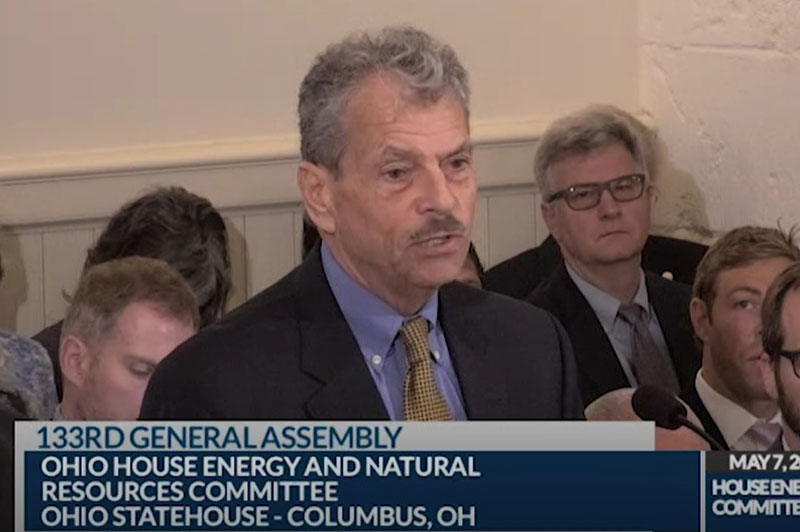
    Then-PUCO Chair Sam Randazzo testifies as an interested party regarding House Bill 6 on May 7, 2019.

    Source: Ohio Channel.

    “HB 6 F(***) ANYBODY WHO AINT US,” the executive wrote.

    BY: JAKE ZUCKERMAN and Ohio Capital Journal

    An energy lobbyist who Gov. Mike DeWine appointed as the state’s top regulator of public utilities received $22 million from FirstEnergy Corp. in the decade before his appointment — including $4.3 million paid just before assuming the post and specifically to execute official duties to benefit the Akron-based utility — court documents revealed Thursday.

    Sam Randazzo, who resigned as chairman of the Public Utilities Commission of Ohio after federal agents raided his Columbus home, used his PUCO chairmanship to scuttle a requirement that FirstEnergy undergo a rate review set for 2024, which company executives believed would hurt its bottom line, the documents state.

    FirstEnergy entered into a deferred prosecution agreement — in which the U.S. Department of Justice could drop the charge if the company meets certain conditions including a $230 million criminal penalty — on one count of wire fraud.

    It also agreed to a stipulation of facts detailing its nearly $61 million in payments to an account the former speaker of the Ohio House allegedly controlled and spent to pass House Bill 6, legislation worth an estimated $1.3 billion to the company.

    Thursday’s filing, however, is flush with new details about FirstEnergy’s long relationship with Randazzo, dating back to a contract in 2010 and a consulting deal inked in 2013.

    The agreement states one FirstEnergy executive texted another on Nov. 15, 2019 that Randazzo is “going to make the requirement [for a rate review] to file go away, but I do not know specifically how he plans to do it.” The document doesn’t directly identify the executives.

    On Nov. 21, 2019, PUCO issued an order finding it is “no longer necessary or appropriate” that three utilities owned by FirstEnergy file a new case when its current rate structure expires in 2024.

    Executive 1 thanked Randazzo via text the next day, according to prosecutors, attaching an image showing the company’s stock price increasing.

    An email for Randazzo on file with the Supreme Court is no longer in operation. In a statement obtained by the Cincinnati Enquirer, he said he executed his duties as chairman lawfully and denied performing any action to advance FirstEnergy’s interests. He said all payments to him were made under his consulting agreement with the utility.

    “In the fall of 2020, it became clear that issues surrounding House Bill 6 and a public attack on my background and character had escalated to a point that made it impossible for me to effectively perform my duties at the PUCO,” he said, explaining his choice to step down.

    According to prosecutors, Executive 1 and Executive 2 met Randazzo at his condo in late December 2018 to discuss remaining $4.3 million on his consulting agreement and a job posting for a PUCO seat. FirstEnergy had no legal requirement to make the payment but did so anyways.

    When a related court filing divulged Randazzo’s company accepted payments from FirstEnergy, executives worried the disclosure would torpedo the appointment. However, it only “grazed the temple,” they said, and forced “State Official 1” and “State Official 2” to perform “battlefield triage.”

    The governor nominates PUCO commissioners off a shortlist from a nomination council. A DeWine spokesman did not answer specific inquiries, including whether the governor is one of the unmentioned state officials.

    “As I have consistently said, we understood that Sam Randazzo had worked for manufacturing companies, energy companies, and consumers, and that he had done work for First Energy. Sam Randazzo was a well-known subject-matter expert in energy issues,” the governor said in a statement. “If, as stated in the court documents, Sam Randazzo committed acts to improperly benefit First Energy, his motives were not known by me or my staff.”

    Haley Carducci, a spokeswoman for Lt. Gov. Jon Husted, didn’t specifically answer whether Husted is one of the two state officials.

    “The Lt. Governor has not been contacted by any federal law enforcement officials regarding this case, so we have no reason to believe that he is mentioned in this document,” said Husted spokeswoman Haley Carducci.

    Along with Randazzo’s help on the regulatory side, the agreement states that he helped craft and review language of House Bill 6 including a “decoupling” provision, which created a ratepayer backed guarantee of FirstEnergy’s revenues at 2018 levels, a good year for the company. The bill also bailed out two nuclear plants owned by a former FirstEnergy subsidiary; bailed out two coal plants owned by a spread of different utility companies; and gutted the state’s renewable energy and efficiency standards.

    Randazzo has deep ties to the fossil fuel energy industry. He worked as a lobbyist and lawyer for the Industrial Energy users Ohio, which represents interests of energy-intensive manufacturing and commercial business before the PUCO.

    Lobbying records show he represented Greenwich Neighbors United, which fought off a potential wind farm development in Huron County; the Ohio Gas Company; and Vectren Corp., a natural gas company.

    As a donor, he contributed more than $282,000 to state candidates over 23 years, according to an analysis from the National Institute on Money and Politics. More than $194,000 went to Republicans, $36,000 to Democrats, and $48,000 to candidates of unspecified parties.

    When his name appeared on a short list of potential candidates for DeWine to choose, a spread of environmental groups wrote a letter outlining “serious concern” for Randazzo’s “extreme bias” against clean energy.

    “Mr. Sam Randazzo has worked earnestly to dismantle Ohio’s energy efficiency resource standard and renewable portfolio standard (RPS) since 2012 via multiple pieces of legislation,” they wrote. “He was supportive of the legislation that froze Ohio’s standards for two years, worked behind the scenes with the study committee that issued a faulty report allegedly assessing the costs and benefits of the RPS and EERS, and even continued to push the repeal and weakening of these standards after Governor Kasich’s veto of a bill that would have essentially eliminated the standards.”

    The Ohio Consumers Counsel, a state agency that represents residential ratepayers before PUCO, issued a statement after news broke of the filing.

    “The public got some justice today regarding the Ohio House Bill 6 scandal and FirstEnergy,” said agency director Bruce Weston. “But justice is also a longer road that requires state reforms to curb the utilities’ political influence that is costing Ohioans money on their utility bills.”

    Rep. David Leland, D-Columbus, said the information about Randazzo places the scandal right on DeWine’s doorstep.

    “This, combined with the significant money FirstEnergy gave to his campaign makes it clear that Governor DeWine needs to come clean to the people of Ohio about his role in this historic scandal,” he said.

    Catherine Turcer, director of Common Cause Ohio, which frequently advocates for anti-corruption and campaign finance reform legislation, said the entire episode highlights that current law allows some political entities to spend enormous sums of money without ever disclosing the source.

    “Clearly, Ohio legislators also need to create greater transparency so that voters can ‘follow the money’ and determine who is funding political spending by all entities including nonprofits. It’s not yet too late for us to pass new laws that will shine a light on ‘dark money,’” she said. “However, our state legislative leaders need to act with urgency and make transparency and accountability a top priority — or Ohioans will undoubtedly face yet another embarrassing scandal.”

    Shortly after HB 6 passed, a FirstEnergy executive texted Randazzo, according to prosecutors. Attached was an edited image of Randazzo’s face atop Mount Rushmore, with FirstEnergy executives and lobbyists alongside him on the iconic monument.

    “HB 6 F(***) ANYBODY WHO AINT US,” the executive wrote.

  • Power company says utility commission has no power to investigate role in bailout scandal

    Power company says utility commission has no power to investigate role in bailout scandal

    An Akron-based utility company that figures prominently in a massive nuclear bailout scandal is saying that state regulators don’t have the authority to investigate whether the company improperly financed the bailout effort.

    Over the past week, FirstEnergy Corp. has filed two documents with the Public Utilities Commission of Ohio saying that the commission and the state’s consumer representative don’t have standing to investigate whether FirstEnergy and affiliated companies improperly used ratepayer money in what has been called the largest bribery scandal in state history. 

    Marty Schladen

    Marty Schladen has been a reporter for decades, working in Indiana, Texas and other places before returning to his native Ohio to work at The Columbus Dispatch in 2017. He’s won state and national journalism awards for investigations into utility regulation, public corruption, the environment, prescription drug spending and other matters.

    Federal prosecutors say $60 million in utility money was used to pass a $1.3 billion nuclear bailout into law. But FirstEnergy says the utility commission lacks the authority to investigate whether it improperly used ratepayer funds in the affair.

    “The commission lacks any statutory basis to conduct an investigation of FirstEnergy Corp. with respect to the alleged expenditures or to order FirstEnergy Corp. to show cause that it has not violated Ohio utility law,” FirstEnegy said in a Sept. 23 filing. 

    It was in response to an order by the utility commission that it show “that the costs of any political or charitable spending in support of (the bailout bill), or the subsequent referendum effort, were not included, directly or indirectly, in any rates or charges paid by ratepayers in this state.” 

    Federal prosecutors in July charged then-House Speaker Larry Householder and four associates with using $60 million from FirstEnergy and related interests in a scheme to make Householder speaker and pass a $1.3 bailout of two failing nuclear plants owned by FirstEnergy Solutions, a successor company to FirstEnergy Corp.

    The effort was successful, although there is an effort in the legislature to repeal it before the charge hits ratepayers’ bills on Jan. 1.

    FirstEnergy and associated companies haven’t been charged, but in announcing criminal charges against Householder, U.S. Attorney David M. DeVillers stressed that the investigation was far from over. An affidavit supporting the criminal complaint also refers repeatedly to “Company A,” or FirstEnergy, and it makes reference to its CEO.

    In addition, Ohio Attorney General Dave Yost last week filed a civil suit that names FirstEnergy, a subsidiary and its successors — as well as Householder and his associates — as defendants.

    The Ohio Consumers’ Counsel, the state’s official consumer representative in utility matters, has asked for an independent investigation into whether FirstEnergy improperly used ratepayer funds in the dark-money scheme to pass House Bill 6, the bailout legislation. The agency was disappointed when the utilities commission only directed the company to show that it had not acted improperly.

    But even that is too much for FirstEnergy.

    In documents filed on Monday with the utility commission, it said it was legally entitled to a reasonable profit. The company also seemed to argue that what it did with much of its money was nobody’s business.

    “Beyond the investment necessary to provide adequate service, a public utility may spend its funds in the best interests of the utility as determined by its management.,” the company argued, later adding, “To the extent the Companies use a portion of their revenues to make political or charitable contributions, this is not improper or illegal.”