by Bill and Cyndi Gillings,
Changes in the City of Loveland are happening rapid-fire. After recovering from a devastating fire in its downtown in 2017, Loveland has reinvigorated its charming historic core by expanding
Bill and Cyndi Gillings live in the Paxton Woods neighborhood of Miami Township.
recreation, shopping, and restaurant/bar options. By anyone’s estimation, the city’s growth is on a steep trajectory with its ambitious city master plan, creation of a historic preservation district, and the addition of new venues and events. Loveland is dreaming big.
“Pat Ahr enters the Loveland City Council race with a “Breath of Fresh Air” campaign that promises better city-citizen communication, equal focus outside the historic core, and fiscal responsibility.”
Into this exciting phase steps Pat Ahr. A new face on the Loveland political scene, Ahr is a 15-year Loveland resident and retired registered nurse. She is running for a city council seat in the November 5 election, prompted to do so by a few key issues.
More Conversation, More Kindness
“I believe that as a city we are not communicating as well as we should,” Ahr says, laying out one of the pillars of her campaign. “I want to include all of Loveland in city discussions.” Ahr believes the current makeup of the city council has lent itself to block voting, and that the city would be better served by having a wider variety of viewpoints represented by elected officials.
“We need different voices on the council and not just people who agree on every point and push things through,” she emphasizes. “While I think that the council has done a lot to move Loveland forward, they are viewed–as a group–by many in the city as unkind. I want to bring kindness back to the council. We need to treat each other with respect. And I want the community to be involved in this transition to civility.”
If elected, Ahr will lean on her expertise as a communicator to make sure the public has a seat at the discussion table. This is second nature to her. “As a nurse, you must communicate at multiple levels–dealing with doctors, nurses, patients, patients’ families, and insurance,” she lists. “The communication is endless.”
Ahr will institute office hours for the public so all citizens can share their opinions and ideas outside the only current outlet for doing so: the monthly city council meeting. “Twice a month, I will hold meetings so the community can talk to me about what is going on in Loveland,” she says. “We’ll meet at a local restaurant or coffee shop, and I will encourage people of all ages to come. We must connect on a different level than just through the information put on the city website or by attendance at council meetings where you have to sign in to talk and where you can’t rebut as you would in a normal conversation. I want to give–and receive–more information than what you can get from that format.”
 But it’s not just how city council communicates, it’s also what they are communicating about that concerns Ahr. “To date, all the focus of the city has been on the downtown district, but we are outgrowing what we can do there. We need to be bringing in new businesses with taxable revenue comparable to other towns in Cincinnati. And we need to address the unique needs of all areas of Loveland.”
Ahr points to the Loveland-Madeira Road Corridor as an obvious focal point. “I attended community meetings for the city’s master plan, and I listened to parents talk about how they have to drive to Anderson and Milford to get to places that kids really enjoy–like Jump Zone and entertainment venues like that,” she says. “Could we have a year-round pool? Or a Loveland workout center, like the Y that was planned years ago, to keep people in Loveland? We invite all these people from outside to enjoy our downtown, but we need to look at what people who live here would enjoy.”
Soothing Municipal Headaches
After improving communication with the public, Ahr’s second mission will be to address the city’s parking issue. “The city’s third-party master plan designers said we have enough parking in the city and that we just need to educate the public about where it is,” she says. “But now the city has put out an RFP (request for proposal) for a parking garage with $7 to $8 million price tag. And they are guessing at costs. They should have done a preliminary RFP and then put the idea of the garage out to the public as an idea with an accurate price tag on it,” she says.
“Pat Ahr has lived in Loveland for over 15 Years
Retired Registered Nurse for 43 years
Expertise in Brand Management and Marketing
Regional Marketing Director across the Midwest
Managed Direct Sales for Multiple Businesses and Organizations
Understands Government Regulations having Assisted with Buyouts and Takeovers”
Considering the amount of money a garage could cost taxpayers, it is worth looking at alternatives first, Ahr says. “Let’s follow what the master planners suggested and educate the public on where to park. Maybe create a map we put in restaurants and in holders on the bike trail that would help people navigate the town and figure out where to park,” she suggests. “Try things first and build on the ideas before spending taxpayer money.”
The fiscal responsibility that colors Ahr’s opinion on the parking garage flows through her opinions on everything with which the city gets involved. This attention to management, processes, and regulation comes from her experience participating in acquisitions and takeovers of healthcare entities during her 43-year nursing career.
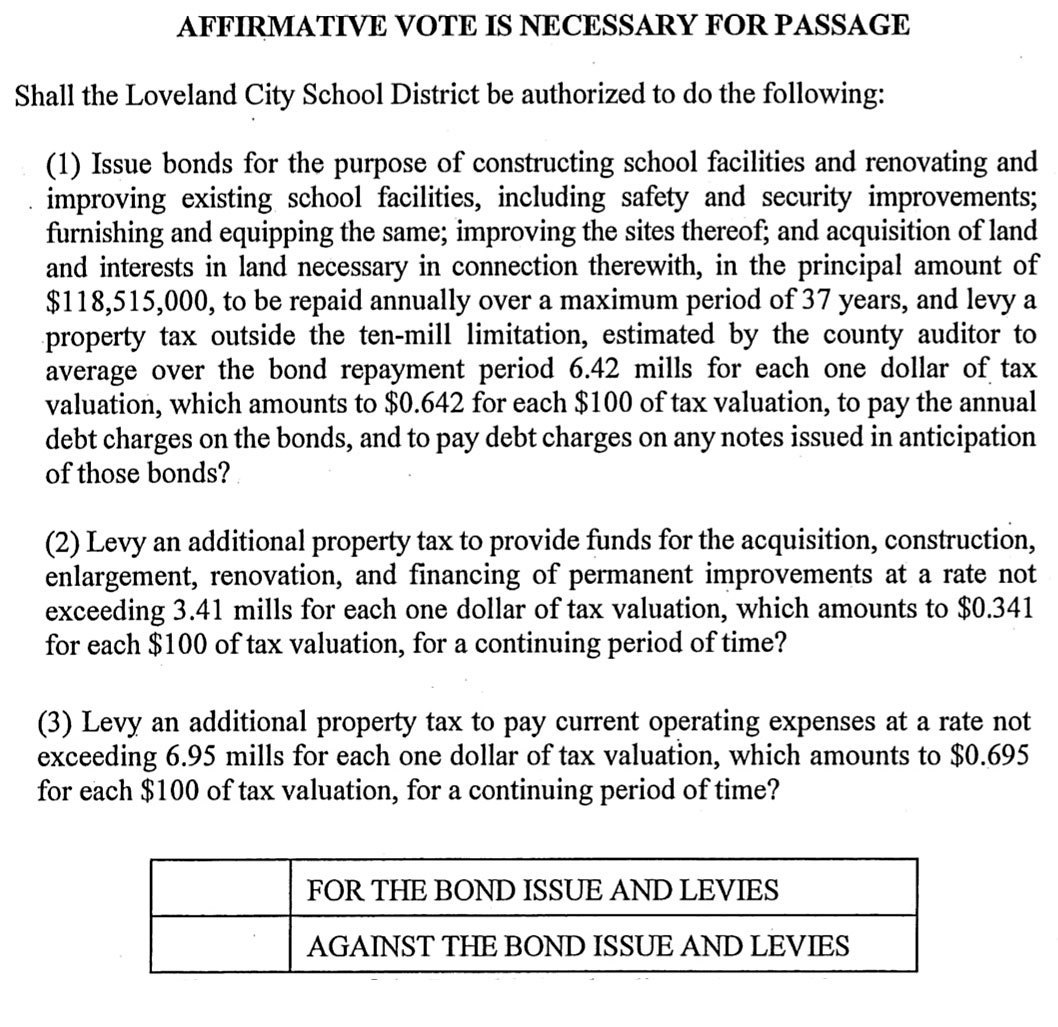
Take the school levy as an example. While not a city financial issue on the face of it, the school levy concerns Ahr. “Right now, the number-one thing everybody is talking about is the school levy and what is going in where and why we are being asked for so much money. People support schools for different reasons, both emotional and intellectual. I believe in education, but at what cost? I think every family needs to make the decision to support or reject the levy for themselves.”
That said, she has an eagle eye on what this school decision could mean for the taxpayers of Loveland. “The city must look at infrastructure to support the school,” she reminds. “The City is saying the schools are separate from us, but we need to be working together with them or we will blindside the taxpayers down the road on infrastructure costs, such as road improvements, after and on top of the tax for the schools.”
On a Personal Note … And An Invitation
Politics is in Ahr’s DNA. She is the great-great-granddaughter of our nation’s 12th president, Zachary Taylor (1784-1850). A Kentucky native, Taylor was a full-fledged war hero through his service in the Mexican War. He was in office for only 16 months before he died. “He was a president against slavery,” Ahr says proudly.
As important as her illustrious roots are her present-day kin. She and her husband, Barry, have four children and nine grandsons. That’s right–all boys. “I love them so much,” she says. “And we have one more on the way.” No word on the gender of the new addition, which is okay with Ahr. “I look forward to two surprises in November,” she says.