With the approach of flu season, the Ohio Department of Health (ODH) is recommending all Ohioans 6 months and older get a flu shot as soon as possible. The Centers for Diseases Control and Prevention (CDC) is urging vaccination by the end of October.
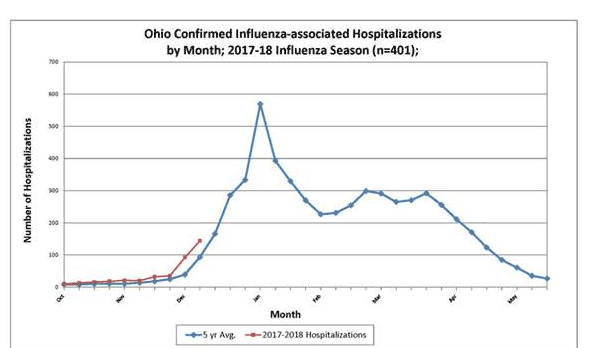
Flu activity traditionally begins to increase in October.
Flu activity traditionally begins to increase in October and can last as late as May, with cases typically peaking between December and February. CDC recommends a yearly flu vaccine as the best protection against seasonal flu viruses. Flu vaccines have been updated this year to better match circulating flu viruses.
Flu vaccines have been updated this year to better match circulating flu viruses.
“Flu vaccination can help keep you from getting sick, missing work or school, and prevent flu-related hospitalization and death,” said Sietske de Fijter, State Epidemiologist and Chief, Bureau of Infectious Diseases. “Getting your flu shot helps protect all, including older adults, very young children, pregnant women, and people with certain long-term health conditions who are more vulnerable to serious flu complications.” Symptoms of influenza can include fever, cough, sore throat, body aches, headache, chills, and fatigue.
“If you are sick with the flu, stay home from work or school to prevent spreading it to others,” said de Fijter.
Although most people fully recover from the flu, some experience severe illness like pneumonia and respiratory failure, and the flu can sometimes be fatal. People who think that they may have the flu and are pregnant, have an underlying medical condition, or who are extremely ill should contact their healthcare provider immediately.
Other effective ways to avoid getting or spreading it include: washing hands frequently or using alcohol-based hand sanitizer; covering coughs and sneezes with tissues or coughing or sneezing into elbows; avoiding touching eyes, nose and mouth; and staying home when sick and until fever-free for 24 hours without using fever-reducing medication.
Flu vaccines are offered by many doctor’s offices, clinics, health departments, pharmacies and college health centers, as well as by many employers and some schools. While vaccination provides the greatest protection against the flu, other effective ways to avoid getting or spreading it include: washing hands frequently or using alcohol-based hand sanitizer; covering coughs and sneezes with tissues or coughing or sneezing into elbows; avoiding touching eyes, nose and mouth; and staying home when sick and until fever-free for 24 hours without using fever-reducing medication.
CDC recommends that healthcare providers administer prescription antiviral medication as a second line of defense as soon as possible to patients with confirmed or suspected flu who are hospitalized, have severe illness, or may be at higher risk for flu complications.
More information about influenza and flu activity in Ohio is available at www.flu.ohio.gov.
Advertisement Sangha Yoga Studio in Loveland is offering 60 minute AM Yoga classes on Tuesday and Thursday mornings, beginning September 4th at 9:30 AM.