Report from Wired Magazine’s Beth Mole, Ars Technica
With the US experiencing a relatively large summer wave of Covid-19, the Food and Drug Administration is considering signing off on this year’s strain-matched Covid-19 vaccines as soon as this week, according to a report by CNN that cited unnamed officials familiar with the matter.
Last year, the FDA gave the green light for the 2023–24 Covid shots on September 11, close to the peak of SARS-CoV-2 transmission in that year’s summer wave. This year, the summer wave began earlier and, by some metrics, is peaking at much higher levels than in previous years.
WASHINGTON — A COVID-19 vaccine for young children will be delayed by at least two months as Pfizer and BioNTech gather more information on a three-dose regimen.
The disappointing news for many parents came after the Biden administration earlier had announced it was preparing to get the vaccines out to states as soon as it could following federal approval.
The pharmaceutical companies and the Food and Drug Administration released separate statements Friday saying a review of the vaccine for children under 5 years old will likely not take place until early April.
“Based on the agency’s preliminary assessment, and to allow more time to evaluate additional data, we believe additional information regarding the ongoing evaluation of a third dose should be considered as part of our decision-making for potential authorization,” the FDA said in a statement.
The FDA said it would postpone the Vaccines and Related Biological Products Advisory Committee meeting scheduled for Tuesday to “give the agency time to consider the additional data, allowing for a transparent public discussion as part of our usual scientific and regulatory processes for COVID-19 vaccines.”
Pfizer and BioNTech began submitting data to the FDA on a two-dose regimen for children under 5 earlier this month at the request of the agency.
Pfizer Chairman and Chief Executive Officer Albert Bourla said at the time the company would submit data on a two-dose regimen while it continued researching a three-dose regimen.
“Ultimately, we believe that three doses of the vaccine will be needed for children 6 months through 4 years of age to achieve high levels of protection against current and potential future variants,” he said on Feb. 1.
The Biden administration immediately began getting ready for approval of the emergency use authorization request. White House Coronavirus Response Coordinator Jeffrey Zients said the next day the federal government was preparing to ship the vaccine to states as soon as it was approved.
“Following FDA authorization, we would immediately begin packing and shipping doses to states and health care providers,” Zients said, noting the federal government had already “secured ample doses and the necessary needles and supplies” designed for this age group.
The White House was also preparing to work with local and state health officials as well as pediatricians to distribute information about the vaccine, including to hesitant parents.
That process now won’t get underway until at least April, as Pfizer and BioNTech gather more data on what will likely be a three-shot vaccine.
“Given that the study is advancing at a rapid pace, the companies will wait for the three-dose data as Pfizer and BioNTech continue to believe it may provide a higher level of protection in this age group,” the companies said in a statement. “The companies expect to have three-dose protection data available in early April.”
WASHINGTON — Pfizer and BioNTech on Tuesday asked the federal government to begin the approval process for a two-dose COVID-19 vaccine for children under 5.
The companies said in a joint statement they began the rolling submission process for an emergency use authorization at the request of the Food and Drug Administration “in response to the urgent public health need in this population.”
While the approval process is underway for the two-dose regimen, the company will continue researching a third dose that would likely be given at least eight weeks after a child receives the second dose.
Pfizer Chairman and Chief Executive Officer Albert Bourla said in the statement that increasing infections and hospitalizations of young children led the two companies to begin the approval process.
“As hospitalizations of children under 5 due to COVID-19 have soared, our mutual goal with the FDA is to prepare for future variant surges and provide parents with an option to help protect their children from this virus,” Bourla said.
“Ultimately, we believe that three doses of the vaccine will be needed for children 6 months through 4 years of age to achieve high levels of protection against current and potential future variants.”
Bourla said that if the FDA authorizes the two doses, that would allow parents to begin vaccinating their young children while waiting on approval of a third dose.
The submission announcement on Tuesday comes sooner than previously expected.
In mid-December, Pfizer and BioNTech announced they were modifying their trial to include a third dose of the vaccine for children between 2 and 4 years old after the two-dose approach didn’t lead to the type of immune response researchers sought. The trial did, however, produce the levels desired in children between six months and 2 years old.
The company said at the time that if the three-dose trial was successful, it would likely submit its emergency use request to the federal government in the first half of 2022.
Dr. Anthony Fauci, director of the National Institute of Allergy and Infectious Diseases, then said last week that parents needed to be patient in waiting for approval of the vaccine for younger children.
“I don’t think we can predict when we will see an [emergency use authorization] with that because the company is still putting the data before the FDA,” Fauci said during a White House briefing on the pandemic.
A poll released Tuesday by the Kaiser Family Foundation indicated about 31 percent of parents would get their small children vaccinated immediately.
Another 29 percent said they would wait and see while 12 percent said only if required and 26 percent of respondents said they definitely would not give their young child the vaccine.
From a press release by the U.S. Food and Drug Administration
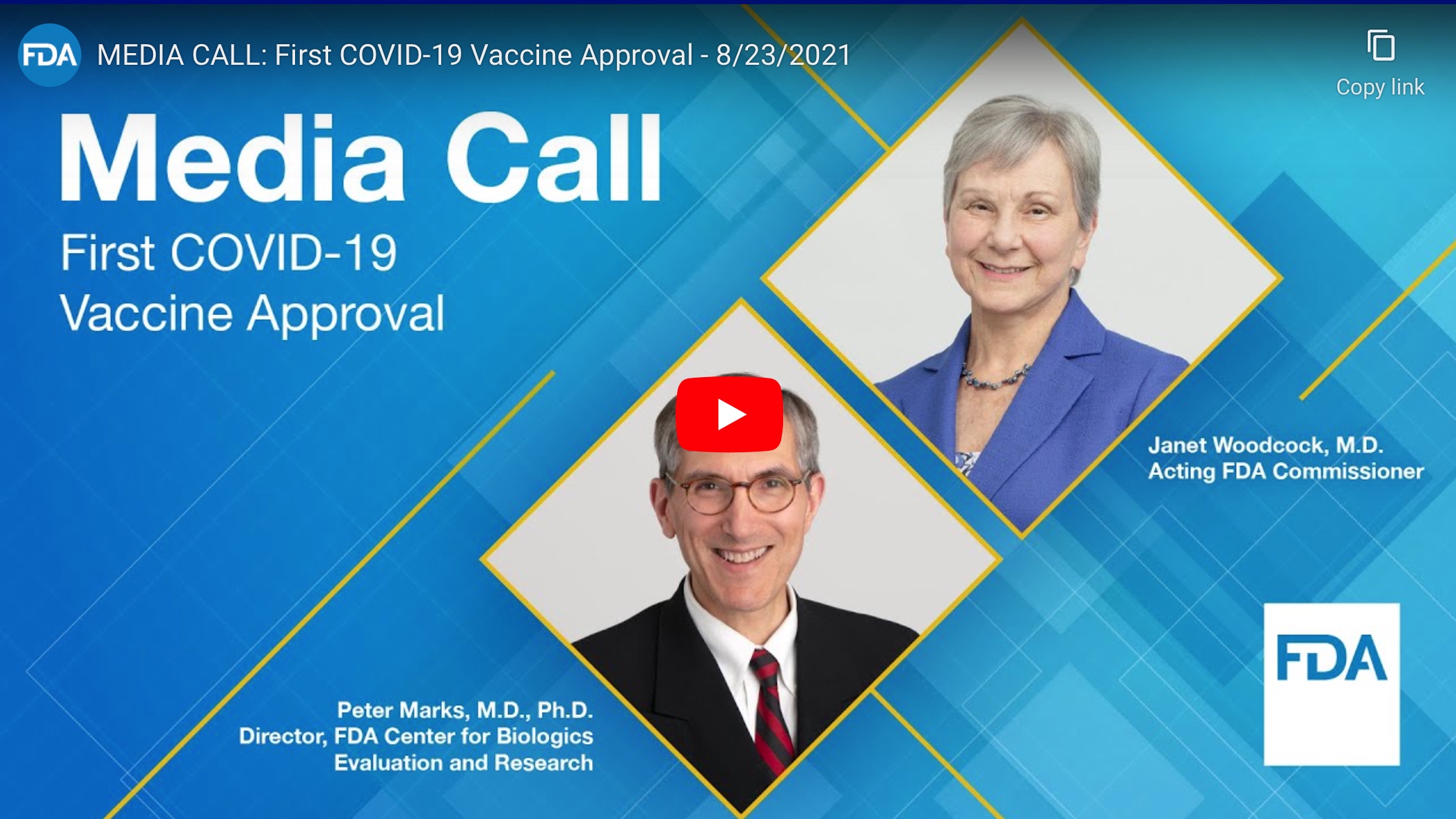
Today, the U.S. Food and Drug Administration approved the first COVID-19 vaccine. The vaccine has been known as the Pfizer-BioNTech COVID-19 Vaccine, and will now be marketed as Comirnaty (koe-mir’-na-tee), for the prevention of COVID-19 disease in individuals 16 years of age and older.
The vaccine also continues to be available under emergency use authorization (EUA), including for individuals 12 through 15 years of age and for the administration of a third dose in certain immunocompromised individuals.
“The FDA’s approval of this vaccine is a milestone as we continue to battle the COVID-19 pandemic. While this and other vaccines have met the FDA’s rigorous, scientific standards for emergency use authorization, as the first FDA-approved COVID-19 vaccine, the public can be very confident that this vaccine meets the high standards for safety, effectiveness, and manufacturing quality the FDA requires of an approved product,” said Acting FDA Commissioner Janet Woodcock, M.D. “While millions of people have already safely received COVID-19 vaccines, we recognize that for some, the FDA approval of a vaccine may now instill additional confidence to get vaccinated. Today’s milestone puts us one step closer to altering the course of this pandemic in the U.S.”
Watch Acting FDA Commissioner Dr. Janet Woodcock and FDA Center for Biologics Evaluation and Research Director Dr. Peter Marks participate in a media call to discuss FDA’s approval of the first COVID-19 vaccine.
Since Dec. 11, 2020, the Pfizer-BioNTech COVID-19 Vaccine has been available under EUA in individuals 16 years of age and older, and the authorization was expanded to include those 12 through 15 years of age on May 10, 2021. EUAs can be used by the FDA during public health emergencies to provide access to medical products that may be effective in preventing, diagnosing, or treating a disease, provided that the FDA determines that the known and potential benefits of a product, when used to prevent, diagnose, or treat the disease, outweigh the known and potential risks of the product.
FDA-approved vaccines undergo the agency’s standard process for reviewing the quality, safety and effectiveness of medical products. For all vaccines, the FDA evaluates data and information included in the manufacturer’s submission of a biologics license application (BLA). A BLA is a comprehensive document that is submitted to the agency providing very specific requirements. For Comirnaty, the BLA builds on the extensive data and information previously submitted that supported the EUA, such as preclinical and clinical data and information, as well as details of the manufacturing process, vaccine testing results to ensure vaccine quality, and inspections of the sites where the vaccine is made. The agency conducts its own analyses of the information in the BLA to make sure the vaccine is safe and effective and meets the FDA’s standards for approval.
Comirnaty contains messenger RNA (mRNA), a kind of genetic material. The mRNA is used by the body to make a mimic of one of the proteins in the virus that causes COVID-19. The result of a person receiving this vaccine is that their immune system will ultimately react defensively to the virus that causes COVID-19. The mRNA in Comirnaty is only present in the body for a short time and is not incorporated into – nor does it alter – an individual’s genetic material. Comirnaty has the same formulation as the EUA vaccine and is administered as a series of two doses, three weeks apart.
“Our scientific and medical experts conducted an incredibly thorough and thoughtful evaluation of this vaccine. We evaluated scientific data and information included in hundreds of thousands of pages, conducted our own analyses of Comirnaty’s safety and effectiveness, and performed a detailed assessment of the manufacturing processes, including inspections of the manufacturing facilities,” said Peter Marks, M.D., Ph.D., director of FDA’s Center for Biologics Evaluation and Research. “We have not lost sight that the COVID-19 public health crisis continues in the U.S. and that the public is counting on safe and effective vaccines. The public and medical community can be confident that although we approved this vaccine expeditiously, it was fully in keeping with our existing high standards for vaccines in the U.S.”
FDA Evaluation of Safety and Effectiveness Data for Approval for 16 Years of Age and Older
The first EUA, issued Dec. 11, for the Pfizer-BioNTech COVID-19 Vaccine for individuals 16 years of age and older was based on safety and effectiveness datafrom a randomized, controlled, blinded ongoing clinical trial of thousands of individuals.
To support the FDA’s approval decision today, the FDA reviewed updated data from the clinical trial which supported the EUA and included a longer duration of follow-up in a larger clinical trial population.
Additionally, the FDA conducted a rigorous evaluation of the post-authorization safety surveillance data pertaining to myocarditis and pericarditis following administration of the Pfizer-BioNTech COVID-19 Vaccine and has determined that the data demonstrate increased risks, particularly within the seven days following the second dose. The observed risk is higher among males under 40 years of age compared to females and older males. The observed risk is highest in males 12 through 17 years of age. Available data from short-term follow-up suggest that most individuals have had resolution of symptoms. However, some individuals required intensive care support. Information is not yet available about potential long-term health outcomes. The Comirnaty Prescribing Information includes a warning about these risks.
Ongoing Safety Monitoring
Specifically, in the FDA’s review for approval, the agency analyzed effectiveness data from approximately 20,000 vaccine and 20,000 placebo recipients ages 16 and older who did not have evidence of the COVID-19 virus infection within a week of receiving the second dose. The safety of Comirnaty was evaluated in approximately 22,000 people who received the vaccine and 22,000 people who received a placebo 16 years of age and older.
Based on results from the clinical trial, the vaccine was 91% effective in preventing COVID-19 disease.
More than half of the clinical trial participants were followed for safety outcomes for at least four months after the second dose. Overall, approximately 12,000 recipients have been followed for at least 6 months.
The most commonly reported side effects by those clinical trial participants who received Comirnaty were pain, redness and swelling at the injection site, fatigue, headache, muscle or joint pain, chills, and fever. The vaccine is effective in preventing COVID-19 and potentially serious outcomes including hospitalization and death.
The FDA and Centers for Disease Control and Prevention have monitoring systems in place to ensure that any safety concerns continue to be identified and evaluated in a timely manner. In addition, the FDA is requiring the company to conduct postmarketing studies to further assess the risks of myocarditis and pericarditis following vaccination with Comirnaty. These studies will include an evaluation of long-term outcomes among individuals who develop myocarditis following vaccination with Comirnaty. In addition, although not FDA requirements, the company has committed to additional post-marketing safety studies, including conducting a pregnancy registry study to evaluate pregnancy and infant outcomes after receipt of Comirnaty during pregnancy.
The FDA granted this application Priority Review. The approval was granted to BioNTech Manufacturing GmbH.
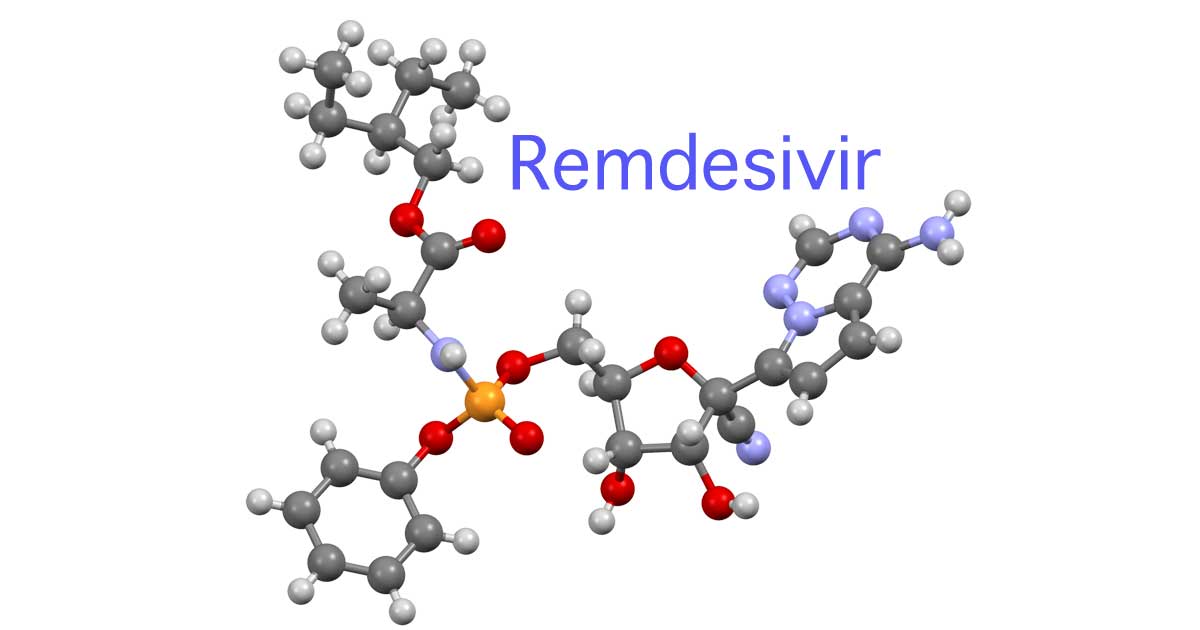
Remdesivir has not yet been approved by the FDA as a treatment for COVID-19
Columbus, Ohio – The Ohio Department of Health (ODH), and the Ohio Hospital Association (OHA), will work together to distribute remdesivir across Ohio that was received from the federal government on Tuesday, May 12.
Ohio’s allocation is not enough to treat all patients.
The Food and Drug Administration (FDA), has issued an Emergency Use Authorization for remdesivir to allow it to be administered to patients. It is currently being studied in the treatment of COVID-19 in clinical trials and has been found to shorten the duration of disease from 15 to 11 days in patients being treated in-patient hospital settings.
Ohio has received an allotment of 20 cases of remdesivir which is estimated for about 100 patients. How to distribute the drug was decided by the clinical leaders of the geographic zones that were created to help Ohio with this pandemic response. The decision-makers within each zone consisted of clinicians, pharmacists, public health officials, policymakers, ethicists, and other health disciplines that helped with the allocation amount to specific hospitals. The decision was based on the percentage of mechanically ventilated patients; which deems them to have the highest severity level.
“This is not a cure, but early signs indicate that it can help in the treatment of COVID-19,” said ODH Director Amy Acton, M.D., MPH. “Ohio’s allocation is not enough to treat all patients, so we are working with medical experts to ensure distribution is based on clinical best practices.”
“Ohio hospitals are committed to providing care and services to ensure the health and safety of our communities,” said Mike Abrams, President, and CEO, Ohio Hospital Association. “We appreciate the efforts of our policymakers and state leaders to secure resources and treatment to help in the delivery of care for patients impacted by COVID-19.”
Individual hospitals will be responsible for using clinical justification on the distribution of the medication to specific patients.
Remdesivir is administered intravenously and in two courses depending on the severity of the disease. Patients will receive either a 5-day (6-dose) course or a 10-day (11-dose) course, as clinically indicated.
Individual hospitals will be responsible for using clinical justification on the distribution of the medication to specific patients. Whenever the number of patients in need of remdesivir exceeds the supply of the medication, hospitals will use internal processes appropriate for the allocation of scarce resources.
Remdesivir is an investigational medication. While clinical trials indicate that the use of remdesivir has shortened the recovery time for some coronavirus patients, it has not yet been approved by the FDA as a treatment for COVID-19. The EUA and use of remdesivir for the treatment of COVID-19 is only due to the nature of the pandemic, the impact it has had on the population, and the fact that there is no adequate, approved, and available alternative to the emergency use of remdesivir for the treatment of COVID-19.