





 Quarter cow beef raffle will benefit the LIFE Food Pantry














_______________________
 _______________________





 _______________________



News and Events from the Loveland, Ohio Area
Without fear or favor
Since 2004


_______________________


_______________________
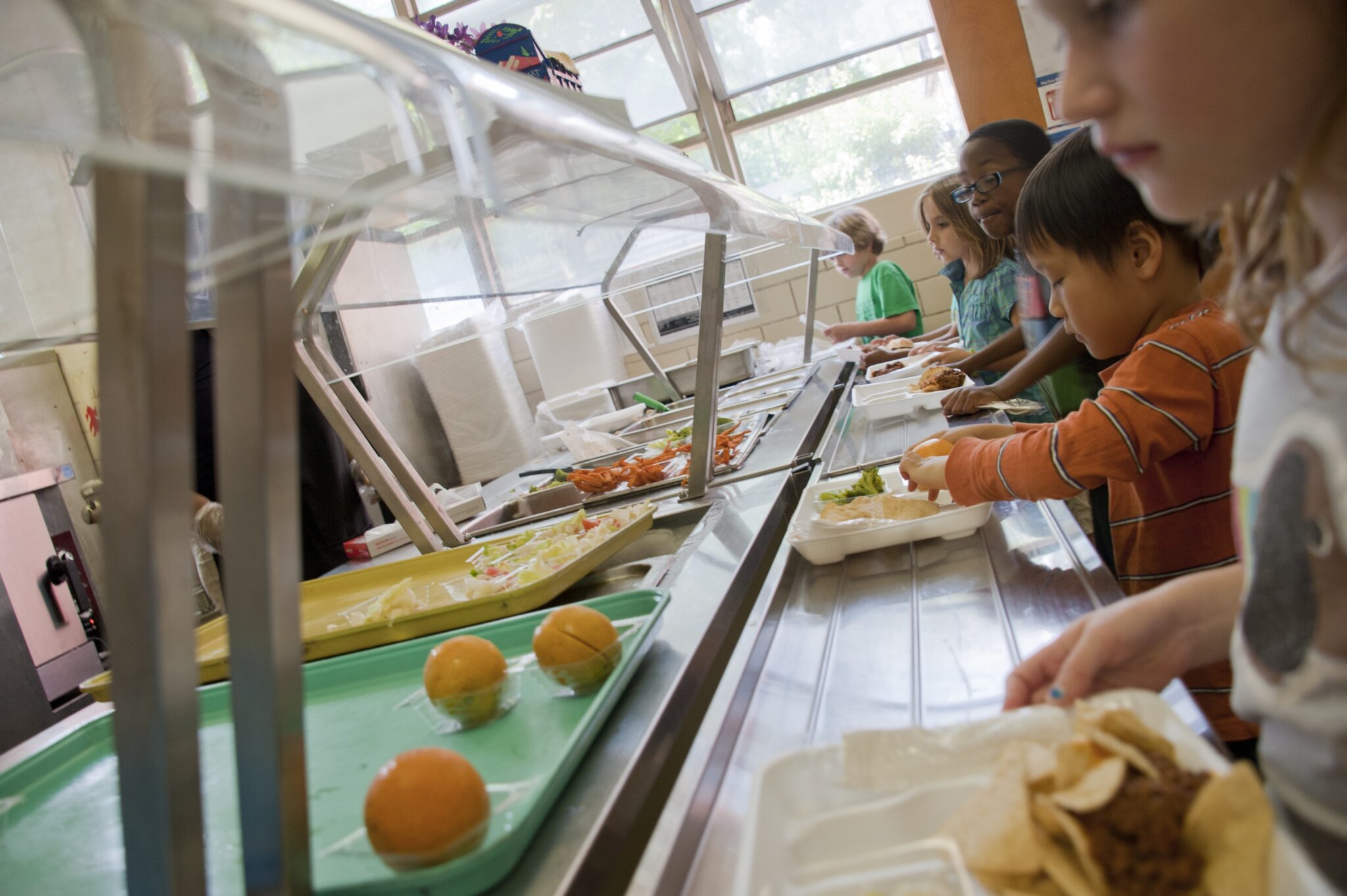
Students getting their l lunch at a primary school. Photo by Amanda Mills/Centers for Disease Control and Prevention.
The most recent state budget made changes to allow more students to be fed at no cost, but the battle to quell child hunger is still ongoing in Ohio.
The budget bill passed last year provided more than $4 million in funding to allow any students qualified for reduced-price of free breakfast and lunch can get the meals at no cost for the 2023-2024 school year.
It’s not quite the universal meals that school nutrition directors had asked for when budget talks began, but the final budget’s school meal provisions are progress in the right direction, child and education advocates in the state concluded.
The programs that are still attempting to help stem the flow of student hunger are seeing the struggles that inflation has on the cost of food, and Katherine Ungar, senior policy associate with the Children’s Defense Fund of Ohio, said the stigma of the income-based school food programs is still a barrier.
“It’s creating these categories that can create that stigma,” said Ungar.
Ohio has taken strides to help in the future by pledging to use federal dollars to establish a summer program that will give low-income families with child of school-aged children “grocery-buying benefits” while schools are closed, according to the USDA, who estimates more than 29 million children nationally could benefit.
“During the summer months, we estimate almost 1 million kids … lose access to meals,” Ungar said.
CDF-Ohio researched the whole-child impacts of categories like housing, health care and food insecurity. In fiscal year, 2023, the group’s annual data profiles showed an increase in the state’s students who were eligible for reduced-price or free school meals and considered “economically disadvantaged.”
The number of kids qualifying for the no-cost or low-cost lunches, for which any student in a household with up to 185% of the federal poverty line is eligible, when from 46.6% in the 2021-22 school year to nearly 50% in the 2022-23 school year.
This new summer benefit will be eligible to about 837,000 Ohio children, according to Ungar, and the economic impact of the benefit could bring $150 million into local economies.
The Summer Electronic Benefit Transfer Program (EBT) gives eligible families who apply pre-loaded cards with $40 per child per month. The EBT program works in conjunction with Supplemental Nutrition Assistance Program (SNAP) benefits, Women, Infants and Children (WIC) funds and other nutrition assistance efforts.
But the program can only be used if eligible families apply. Children who are certified as eligible for free or reduced-price meals at school would be eligible for the Summer EBT as well, but still have to apply through the same process as the free-or-reduced-lunch application.
“We know there are families who qualify but have not completed the application form,” Ungar said. “Some families may not think they’re eligible, but it’s important that anyone who could be eligible applies, so that those benefits can get to the people who need them.”
A similar program was available during the COVID-19 pandemic, and the USDA found that the program decreased “children’s food hardship” by 33%, and took between 2.7 and 3.9 million out of hunger across the country.
According to research by the Center for Community Solutions, the pandemic EBT program brought Ohio children an estimated $2.2 billion in nutrition assistance between Spring 2020 to Summer 2023, the end of the pandemic program.

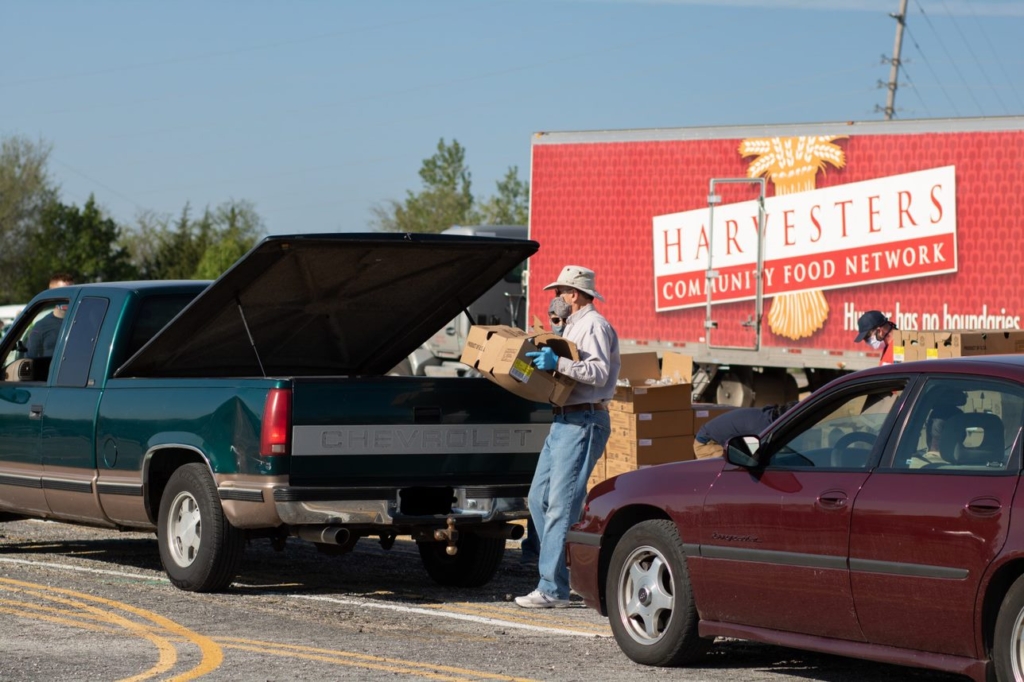
Throughout the pandemic, families have turned to food banks for help. Harvesters, a private food bank, saw the amount of food distributed increase from 54 million pounds in 2019 to 65 million in 2020. In this picture, food is distributed at a drive-in in Kansas City, Kansas. (Harvesters — The Community Food Network).
After Congress ended pandemic food assistance in February, 70,000 older Ohioans have seen food benefits slashed to $23 a month, in some cases down from $280.
That has many making excruciating choices between food, medicine and utilities like electricity and gas, Lisa Hamler-Fugitt, executive director of the Ohio Association of Foodbanks, said Wednesday.
And while it’s dire for anybody to live in hunger, that’s especially true the older you are, she said, because insufficient nutrition exacerbates conditions such as diabetes and depression and can take away seniors’ ability to live on their own. The end of COVID-era enhancements to benefits under the Supplemental Nutrition Assistance Program — or SNAP — has added to the already increasing number of older Ohioans seeking help at Ohio’s groaning food pantries, Hamler-Fugitt said.
“They’re the canaries in the hunger coal mine,” she said, explaining that because most older Ohioans live on fixed incomes, they can’t earn their way out of food insecurity. “When they join the food line, they’re not leaving until they go into the nursing home or they pass away.”
To help low-income people deal with the economic shocks from the coronavirus epidemic, Congress and the Trump administration in 2020 enhanced benefits under SNAP, the program formerly known as food stamps, and it eased eligibility to include households with somewhat higher incomes. And by literally putting food on the table, it had a big effect on poverty, the Center on Budget and Policy Priorities reported.
“The temporary benefits pushed back against hunger and hardship during COVID,” the report said. “A study estimated that (enhanced allotments) kept 4.2 million people above the poverty line in the last quarter of 2021, reducing poverty by 10 percent — and child poverty by 14 percent — in states with (enhanced allotments) at the time. The estimated reduction in poverty rates due to (enhanced allotments) was highest for Black and Latino people.”
But last December, Congress and the Biden administration decided to end the enhancements effective in February.
“This change was made as part of a bipartisan compromise that created a permanent Summer Electronic Benefit Transfer (EBT) program to provide grocery benefits to replace school meals for some 30 million children in low-income families when schools are closed in the summer — a time when families with school-aged children are at higher risk for food insecurity,” the Center on Budget and Policy Priorities reported.
Hamler-Fugitt said that in Ohio, the group over 60 was particularly hard hit in part because it’s an aging state. It has the 18th-highest percentage of residents over 65, for example.
In some cases, seniors don’t have support systems and some are even supporting others, such as grandchildren and great-grandchildren. And the older one becomes, the more health complaints accumulate, often making it impossible to perform many of the jobs that are available.
Hamler-Fugitt said her agency has been hearing about the real-life consequences of cutting back food benefits to older Ohioans.
“You just can’t even believe these horror stories,” she said. “We’re interviewing them now about what their coping strategies are and it’s really, really scary. Before they had about $2 a meal — that was a best-case scenario. Now it’s 75 cents a day. That’s 25 cents a meal.”
She explained that the permanent fix to the problem is at the federal level, where providing the U.S. Department of Agriculture with more resources could make the enhanced benefits permanent.
But over the short term, advocates for the poor are asking the Ohio General Assembly to pony up $21 million for each of the next two years to ensure that every eligible Ohio household has at least a $50 monthly SNAP benefit.
“The economic consequences of this for an aging state like Ohio are just huge,” Hamler Fugitt said.
_____________________________
 MARTY SCHLADEN
Loveland, Ohio – The Ohio Department of Job and Family Services (ODJFS) announced that changes in federal law mean that February will be the last month of emergency Supplemental Nutrition Assistance Program (SNAP) allotments.
However, through March 31, Meijer is offering SNAP customers a 10 percent discount on produce purchased in-store, helping families stretch their dollars even further on fresh, healthy food. More info:
Cincinnati/Cleveland/Columbus, Ohio – When the cannabis industry was deemed essential business by the State of Ohio, civic organization Cannabis Can! immediately felt a responsibility to help fellow Ohioans. Its mission that Cannabis Can! Strengthen Communities! and Fight Hunger! called organizers into action in March as COVID-19 shutdowns began to increase food insecurity nationwide.
Cannabis Can! worked with Freestore Foodbank, Greater Cleveland Food Bank, and Mid-Ohio Foodbank for its 2019 Holiday Canned Food Drive, which collected half a ton of nonperishable goods. In conjunction with its food bank partners in Cincinnati, Cleveland, and Columbus, they established branded landing pages for the 2020 Virtual Food Drive. Through these web pages, a text-to-give campaign and Facebook, Cannabis Can! supporters have been making secure, tax-deductible gifts directly to food banks for immediate use.
Forty-one mainstream and cannabis industry businesses, nonprofits, organizations, and influencers became Partners in the Cannabis Can! campaign to raise funds for Ohio food banks. Partners promote the Virtual Food Drive and offer incentives to donors; in turn, they receive promotion benefits from Cannabis Can!. A diverse group of Partners formed that includes businesses and organizations not directly related to the cannabis industry.
 The Drive itself started on April 20 and the call went out to “Celebrate 4/20 by showing that the cannabis community cares about fighting hunger.” Organizers set a fundraising goal of $3,000.00, equivalent to 12,000 meals or $27,000 worth of groceries, by June 30.
They not only met that goal, they surpassed it. Cannabis Can! Director, Lorien Hill-Purcell, announced $3,745.55 has been given directly to the Columbus area Mid-Ohio Foodbank, Greater Cleveland Food Bank, and Freestore Foodbank in Cincinnati collectively. Sixty donations, ranging from $5 to $525, make up the total. “Our Partners and Supporters include individuals and organizations who invested time, energy, and resources to reduce the stigma around cannabis by fighting hunger and strengthening Ohio communities,” says Hill-Purcell.
The $3,745.55 raised will help Ohio food banks acquire and distribute up to $33,709.95 worth of groceries, equivalent to 14,982 meals for our neighbors in need. However, the Drive does not stop because the goal was achieved. Donation pages will be active throughout the remainder of 2020 and links to them are available on the Cannabis Can! website, cannabiscanohio.org. Organizers’ new Virtual Food Drive target is $5,000 by January 1, 2021.
Cannabis Can! 2020 Virtual Food Drive Partners include:
AdvoCare Clinic
Canna.ED
Cannabis Safety First
Cincinnati Botanical Depot
Cincinnati Medical Marijuana Meetup
Cincy Mom Buds
Cleveland School of Cannabis
Columbus Botanical Depot
Compassionate Alternatives
Cresco Labs
Ediybles
Galenas
Green Harvest Health
Green Ideas and Wellness
Have A Heart Cincy
Health and Wellness Online, LLC
Hunger-fighting Masks
Key to Life Garden
KT Scooter Rentals
Leaf Medic
Luminous Life Wellness Center, LLC
Medical Marijuana Patient Care, LLC
MedicateOH
Midwest CannaWomen
Murray Road Strong
My Drops of Sanity
Ohio CBD Guy
Ohio Medical Marijuana Physicians Association
Ohio Rights Group
OhioCannabis.com
ORG Education Fund
Rise Dispensaries of Ohio
Terrasana Cannabis Co.
Tha Presidential Suite
The Nature Factory
The Ohio Cannabis and Hemp Chamber of Commerce
The Relaxation Place Inc.
Traxler Printing
Tulip Tree CBD
Vireo Health, LLC
