Tag: fossil fuels

  • “Drill, baby, drill” by Claire Mirkowski-Purdy

    “Drill, baby, drill” by Claire Mirkowski-Purdy

    White House photo

    by Claire Mirkowski-Purdy

    Loveland, OhioYou may have heard our current president quoted for saying, “We are going to drill, baby, drill,” recently in the news or on social media. But what does all of this mean? Why is there so much excitement over this statement?

    For starters, Donald Trump is not the one to coin the phrase “drill, baby, drill.” In fact, former Republican governor of the state of Maryland, Michael Steele, first used the phrase in 2008 to add enthusiasm to drilling from Alaska in order to reduce energy costs in America. The increasingly popular phrase is one passed down through the Republican party.

    Our former president, Joe Biden, had called to reduce the drilling and mining in Alaska in hopes of helping the planet. Now that President Trump has been inaugurated, this is going to change.

    However, many are opposed to the idea of drilling because of the environmental degradation that is attached to it. Many scientists argue that we need to decrease more fossil fuel extractions, not increase them, so as not to increase the Greenhouse Effect anymore than it already has been. Drilling oil from Alaska is undoubtedly going to harm any and all ecosystems in the Arctic, possibly even leading to mass extinctions. Alongside that, the melting of our ice caps will increase, assisting in polluting our air and spreading respiratory diseases globally. There is a possibility for the damage done by Trump’s resumption of drilling oil from Alaska to have irreversible effects on our planet.

    With that being said, there is merit in drilling oil in Alaska. Millions of jobs will be created with the drilling reenacted. Also, a large amount of American tax dollars go towards oil and drilling, and that money is eventually used for American services in infrastructure and transportation, giving more leeway for the government to reduce the cost of necessities. In simple terms, since Alaska is far more local than other foreign oil extraction sites, it costs less to transport this fuel to Americans, making gas and groceries cheaper in the US.

    The argument of drilling in Alaska is quite polarizing, but that’s not to say there isn’t an agreement somewhere. Both former Vice President, Kamala Harris, and current President, Donald Trump, have agreed upon the fact that drilling, fracking, and mining should continue. However, that’s where the agreement ends. Donald Trump’s right-wing Project 2025 will drastically change the position that the Environmental Protection Agency has in America. If we are to look at Trump’s past, he rolled back over 100 environmental regulations in his first four years in office.  

    It’s important to note that gaining energy from renewable sources such as solar, wind, or geothermal is arguably more cost-effective over time and greener than mining and drilling. Many argue that in order to secure a healthier future, we must invest in renewable and cleaner energy sources, and others believe that the cost of these sources is unnecessarily high for a return on investment that will take many years to actualize. 

    President Trump’s right-wing phrase “drill, baby drill” comes with environmental consequences and economic benefits, no matter what, and there is validity on either side of the argument. The future of US energy policy depends on finding a way to meet in the middle, boosting our economy and environment, ensuring future generations a world where humanity and nature live in harmony.
  • Ohio coal plant said to be nation’s most deadly. New owners seem likely to keep it open

    Ohio coal plant said to be nation’s most deadly. New owners seem likely to keep it open

    By:  Ohio Capital Journal

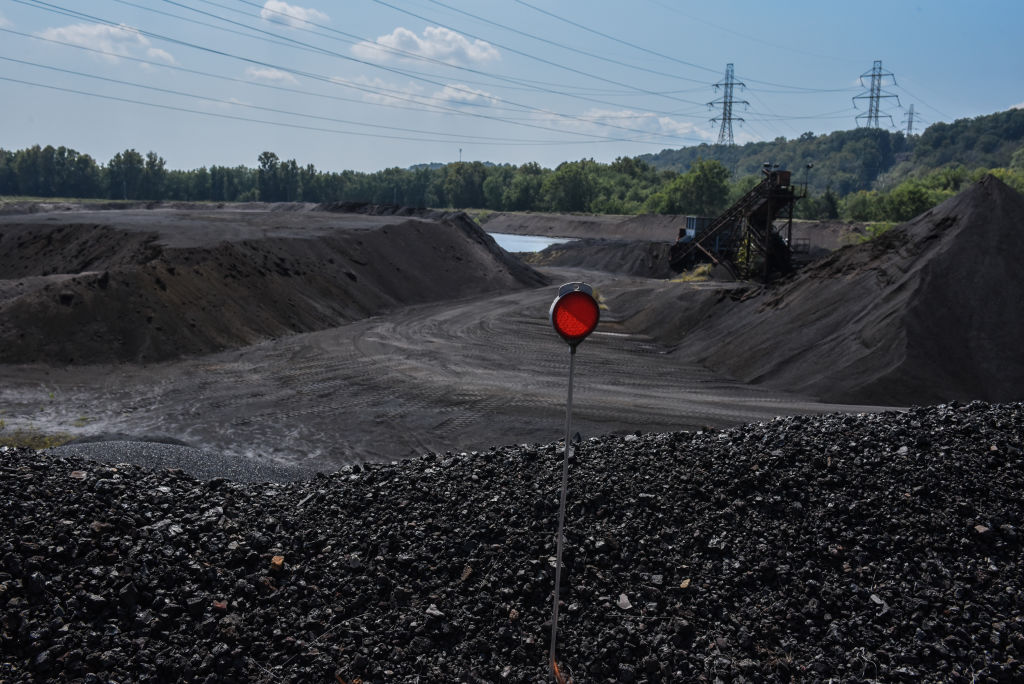
    Environmental activists have been pressing the company buying an Ohio coal plant said to be the nation’s deadliest to retire the facility. But that seems unlikely, given statements it made in a regulatory filing that it provided to the Ohio Capital Journal.

    The buyer, Energy Capital Partners, has boasted of helping plants make the transition away from coal. It hasn’t answered questions about its plans for Gavin, but in a Dec. 11 filing before the Federal Energy Regulatory Commission, it expressed no such plans for the Gavin Plant.

    “As with any electric generation facility, (Energy Capital Partners) and Javelin expect that the Gavin facility… will continue to operate for so long as they are legally able to do so on an economic basis,” it said.

    Energy Capital Partners, or ECP, and Javelin are private-equity firms that are in the process of buying the 50-year-old plant from another private-equity firm, Blackstone. The 2,600 megawatt plant along the Ohio River near Cheshire has stirred controversy for years.

    To settle lawsuits in 2002, a former owner, American Electric Power, bought out residents around the plant for more than three times the value of their property.

    The generating facility had been dumping toxic coal ash into unlined pits, creating worries that it would contaminate groundwater. The U.S. Environmental Protection Agency in 2022 ordered it to stop, and now its owners face a $40 million cleanup liability.

    And a 2023 analysis by the Sierra Club looked at coal-plant emissions and weather patterns. It concluded that because it sends a plume of toxins over populous areas in the eastern United States, the Gavin plant is the deadliest in the country, killing an estimated 244 people a year.

    Many investors have been turning away from fossil fuels — and especially coal — as a method of powering electricity generation. But private-equity investors have been taking up some of the slack, with nearly 80% of their power plant investments being in those fueled by coal or gas.

    Private equity has been stigmatized over claims that it practices one of the harshest forms of capitalism. They often buy assets in deals that quickly recoup their investments, then frequently sell off the most valuable parts of an enterprise, and then walk away either by selling or declaring bankruptcy. Whether people needlessly lose jobs or consumers lose choices is not a consideration, critics say.

    That has left environmentalists and private-equity critics worried that Gavin’s owners will continue to operate it as a polluting coal plant, then close it, and find a way to stick taxpayers with any cleanup costs.

    However, Energy Capital Partners bills itself as a company that helps utilities convert from using coal.

    “Energy Capital Partners (ECP) is a leading credit and equity investor across energy transition infrastructure, with a focus on investing in electricity and sustainability infrastructure, providing reliable, affordable clean energy,” its website says.

    The company last week declined to respond to questions, other than to send the Dec. 11 filing it made in a FERC proceeding. In it, ECP made several statements that seem to indicate the company plans to keep the Gavin plant operating as it is.

    “Notably, the Gavin facility has an existing long-term contract for coal supply with a supplier unaffiliated with Javelin, and ECP and Javelin have no intention of altering those arrangements,” it says.

    The filing also said that it’s just speculation that the new owners plan to retire the plant.

    “… regarding a secondhand, unnamed source’s speculation regarding plans to retire the Gavin facility, ECP and Javelin confirm that there are no such plans,” it said. “Notably, even the post cited by the Joint Protesters for the proposition that Gavin may be retired ‘in the coming years’ simply states (again, based on an unnamed source) that the facility may close or be converted to run on a different fuel by 2031, which is well outside of the forward-looking view on which the Commission relies in reviewing Section 203 applications.”

    A group critical of the practices of private-equity investors asked what it would take to close the Gavin Plant

    “Whether owned by Blackstone or ECP, every day that private equity firms continue to operate the deadly Gavin coal plant is another day that private equity executives are choosing to put communities at greater health risk,” Alissa Jean Schafer, Climate Director of the Private Equity Stakeholder Project said in a statement. “Gavin is one of the worst polluting power plants in the nation, and as emission plumes travel downwind, these negative health impacts reach far beyond Ohio. How many more premature deaths will be linked to Gavin before this plant is shut down?”
    _______________
    Marty Schladen
    Marty Schladen

    Marty Schladen has been a reporter for decades, working in Indiana, Texas and other places before returning to his native Ohio to work at The Columbus Dispatch in 2017. He’s won state and national journalism awards for investigations into utility regulation, public corruption, the environment, prescription drug spending and other matters.

    Ohio Capital Journal is part of States Newsroom, the nation’s largest state-focused nonprofit news organization.

    MORE FROM AUTHOR

  • Renewables on the Rise: Ohio Increases Solar Capacity by 2,600% in 10 Years

    Renewables on the Rise: Ohio Increases Solar Capacity by 2,600% in 10 Years

    Yes, 2,600%

    We did a double take too!

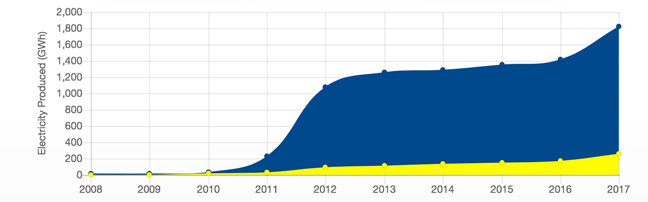
    Columbus, Ohio – As the Trump Administration puts efforts into weakening the Clean Power Plan, renewable energy is still increasing in Ohio. According to a ​new report​ by Environment Ohio Research & Policy Center, Ohio went from producing 1 Gigawatt hour of solar energy and 15 GWh of wind energy in 2008, to now producing 260 GWh of solar energy and 1,563 GWh of wind energy.

    Environment [​STATE​] Research & Policy Center is dedicated to protecting our air, water and open spaces. We investigate problems, craft solutions, educate the public and decision-makers, and help the public make their voices heard in local, state and national debates over the quality of our environment and our lives.

    “The last decade has seen explosive growth in the key technologies to power Ohio with clean, renewable energy,” said Nancy Goodes, Campaign Organizer for Environment Ohio “Ohio is poised to accelerate its shift away from fossil fuels. With renewable energy prices falling and new energy-saving technologies coming on line every day, Ohio should work towards the long-term goal of obtaining 100 percent of our energy from clean, renewable sources.”

    For the report, ​Renewables on the Rise: A Decade of Progress Towards a Clean Energy Future​, Environment Ohio Research & Policy Center, and Frontier Group reviewed statistics from 2008 to 2018 in solar energy capacity, wind energy capacity, energy efficiency, electric vehicle sales, and battery storage.

    The report’s authors called on the state and federal government to strengthen, not weaken, clean power standards and continue to allow Ohio to grow its renewable energy industry.

    “At the federal, state and local level, elected officials representing Ohio must enact policies to strengthen the renewable energy industry here.” said Goodes “We must accelerate our progress, not hit the brakes on effective programs like the Clean Power Plan.”

    Ohio

    Click buttons to view progress by clean energy technology.

    Clean energy progress in Ohio, 2008 to 2017:

    Solar: 183-fold growth in annual solar generation, an increase of 259 GWh. U.S. rank: 24 (ranked by increase in generation)

    Wind: 104-fold growth in annual wind generation, an increase of 1,548 GWh. U.S. rank: 24 (ranked by increase in generation)

    Total wind and solar: 1,823 GWh generated in 2017, enough to power 169 thousand homes.

    Electric Vehicles: 3,139 sold through 2017. U.S. rank: 34 (ranked by EVs per registered vehicle)

    Energy Storage: Utility-scale battery storage capacity increased by 51 MW. U.S. rank: 5 (ranked by increase in capacity)


    Loveland Sweets – Fine Candies

    Loveland Sweets is a purveyor of hand-crafted chocolates, caramels, marshmallows, and ice creams. Our house-made candies are prepared in small batches