Tag: foster care

  • Cincinnati Children’s named a Top Innovator

    Cincinnati Children’s named a Top Innovator

    Cincinnati, Ohio – Cincinnati Children’s has been named one of the Top Innovators for 2023 by Modern Healthcare, which cited software developed by a team of researchers and physicians to improve outcomes for kids in foster care.

    The proprietary technology creates definitive matches between a healthcare organization’s electronic health record and the Comprehensive Child Welfare Information System, which enables real-time data sharing between medical teams and child welfare professionals to improve overall outcomes of kids in foster care (also known as protective custody).

    Called IDENTITY, which is short for Integrated Data Environment to eNhance ouTcomes in cusTody Youth, the technology has been licensed to Cordata Healthcare Innovations, a Cincinnati-based software as a service company that connects communities and healthcare organizations to better serve at-risk populations.

    Modern Healthcare is a business publication whose Top Innovators recognition goes to healthcare organizations leading transformative programs that achieve measurable results in improving care and contribute to clinical and financial goals.

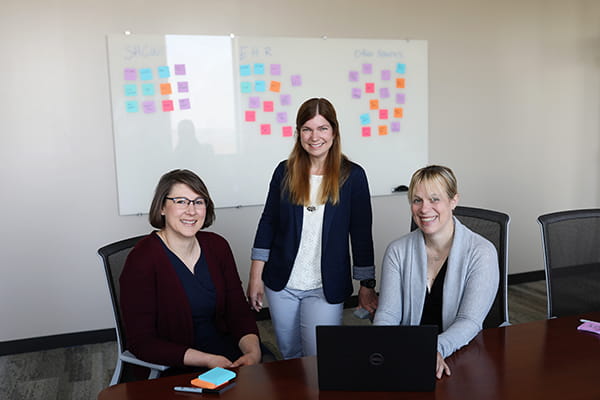
    The IDENTITY software, which improves cross-system communication and helps prevent gaps in healthcare delivery such as missed appointments, missed vaccinations and proper care coordination, was developed by a team at Cincinnati Children’s that included:

    • Sarah Beal, PhD, associate professor of behavioral medicine and clinical psychology and scientific director of child welfare research with the CHECK Foster Care Center at Cincinnati Children’s
    • Judith Dexheimer, PhD, associate professor of biomedical informatics and emergency medicine
    • Mary Greiner, MD, MS, professor of general and community pediatrics as well as medical director of the CHECK Foster Care Center at Cincinnati Children’s

    Nearly 400,000 children are in foster care in the United States, and they are at higher risk for medical, dental, developmental, behavioral and mental health concerns. Because of different ways of storing records by healthcare providers and child welfare professionals, information is often lost or inaccessible. And because healthcare providers often do not know a patient is in foster care, it might be unclear who should provide consent for treatment or when medical information can be shared.

    “Ensuring optimal health for children in protective custody requires a collaboration between the healthcare system and the child welfare system,” Greiner said. “IDENTITY opens the doors for rapid information exchange and communication, allowing everyone to be on the same page to provide the best possible care.”

    Cincinnati Children’s innovators are developing breakthroughs in nearly every area of healthcare – from digital solutions such as IDENTITY to therapeutics and medical devices. That includes world-first clinical trials of FLASH proton therapy to treat cancer, development of a neonatal MRI, and using virtual reality to plan cardiology procedures.

    “These innovations are generated by our scientific researchers as well as those on the front lines such as physicians and nurse practitioners, whose creative ideas often turn into improved care for patients of Cincinnati Children’s as well as kids throughout the world,” said Abram Gordon, vice president of Innovation Ventures, the health system’s tech transfer and commercialization office.

    “More than 18,500 people work at Cincinnati Children’s, and nearly one-third are engaged in research – including on therapies and cures as well as ways to improve child health by transforming delivery of care,” Gordon said.

    A nonprofit, academic organization, Cincinnati Children’s has a long history of creating, developing, or testing vaccines and medical devices, and the health system helps lead the way in research on digital solutions as well as new small molecules and organoids, Gordon said.

    Cincinnati Children’s Innovation Ventures has about 500 projects in progress at any given time, Gordon added. Highlights over the past 10 years at Cincinnati Children’s include 1,774 new invention disclosures, 1,885 patent applications filed, 628 patents issued, 230 licenses executed, 15 active start-up companies and 117 commercialized products/tools.

    Such innovations contribute to the health system’s mission of education and have helped create numerous jobs with spinout companies, other startups, and established firms that license Cincinnati Children’s technology.


  • Ohio Governor Mike DeWine’s Week in Review

    Ohio Governor Mike DeWine’s Week in Review

    The weekly press release from Ohio Governor Mike DeWine

    For the week ending April 24, 2020

    On Thursday, Governor DeWine and Lt. Governor Husted invited Mark Weir, Ph.D., an assistant professor of Environmental Health at The Ohio State University, to discuss how health risks change as changes are made to the environment.

    Dr. Weir explained that cough or sneeze droplets containing the virus spread through contact with others or contact with contaminated surfaces. He explained that minimizing the spread of the disease as Ohio begins the long process of reopening depends on personal and environmental controls. Personal precautions include interrupting the infection process by practicing good hand hygiene and wearing masks.

    Employers must take precautions by disinfecting surfaces often and maintaining distance between individuals. Finally, facility and building management can help interrupt the infection process by managing airflow and air filters.

    “Since COVID-19 can live up to 72 hours on plastics and stainless steel, it will take a combination of efforts from all of us to interrupt the disease process,” said Dr. Weir.

    On Friday, Governor DeWine announced that members of the newly formed Testing Strike Team, led by former Governors Celeste and Taft, have reached an agreement with Thermo Fisher, a company that makes reagent, that will substantially expand COVID-19 testing capacity in Ohio.

    As a result of collaborative efforts through the Ohio Manufacturing Alliance to Fight COVID-19, Governor DeWine announced that ROE Dental Laboratory in Cleveland will manufacture up to 1 million testing swabs to support Ohio’s testing efforts.

    This testing will dramatically increase Ohio’s ability to test in our priority areas, including nursing homes, hot spots, congregate living settings, food and grocery stores, and essential manufacturing facilities.

    As part of Ohio’s offense strategy, Governor DeWine announced that Ohio has started working with Massachusetts-based Partners in Health. Partners in Health will bring needed resources to Ohio to help increase the ability to trace contact exposure to the virus.

    Additionally, Governor DeWine announced that the state will cover the costs to keep more than 200 youth who are aging out of foster care in the foster care system until the COVID-19 pandemic ends.


    As of Friday afternoon, there were 15,169 confirmed and probable cases of COVID-19 in Ohio and 690 confirmed and probable COVID-19 deaths. A total of 3,053 people have been hospitalized, including 920 admissions to intensive care units. In-depth data can be accessed by visiting coronavirus.ohio.gov.

    For more information on Ohio’s response to COVID-19, visit coronavirus.ohio.gov or call 1-833-4-ASK-ODH.

    • EDITOR’S NOTE: Loveland school buildings are closed to the public, however remote learning is being conducted at the Loveland City School District.
  • New program to place former foster children on a path to self-sufficiency

    New program to place former foster children on a path to self-sufficiency

    Hamilton County, Ohio – GreenLight Fund Cincinnati and Hamilton County Job and Family Services are teaming up to bring First Place for Youth to Cincinnati. First Place for Youth is an innovative program aimed at helping foster children transition to adulthood using a youth-centered, trauma-informed approach. The program will help nearly 100 children a year in Hamilton County with housing, education and employment services.

    First Place for Youth originated in California and has a proven track record in helping youth develop necessary skills for adulthood. 91 percent of participating youth are employed when they graduate from the program. The education and workforce based program uses housing as a stabilizing force. Young people in the program live independently in apartments and receive wraparound support, education services, employment services and other help to become self-sufficient. This model, which is new to Cincinnati, will be operated by an existing, local non-profit organization who will be chosen later this month.

    First Place for Youth anticipates helping nearly 350 young people over the next four years, 90 percent of local transition-age youth.

    Moira Weir, director of Hamilton County Job and Family Services, which operates the local foster care system, said approximately 100 children a year “age-out” of the foster care system at age 18 or 21, meaning they are not reunified with their biological parents or adopted by new parents. First Place for Youth anticipates helping nearly 350 young people over the next four years, 90 percent of local transition-age youth.

    Weir’s organization worked with the University of Cincinnati’s Economic Center on a recent study that found children aging out of the local child welfare system eventually cost local residents $17.7 million in social expenses and lost productivity each year. Those costs are related to the youths’ involvement in the criminal justice, homeless and health care systems, as well as lost productivity because they are not employed at the same level as their peers in the general population.

    “You can imagine what life is like for an 18-year-old who is suddenly on their own with no family to turn to in times of trouble,” Weir said. “Research shows these young people are more likely to drop out of school, be unemployed, suffer physical or mental health problems, become teen parents, end up in the criminal justice system – they are more likely to fall victim to a host of social problems. We are excited to supplement our existing services with this incredibly innovative program GreenLight is bringing to our community. We are grateful for a community-based approach to this problem.”

    The GreenLight Fund works to improve the lives of low-income children and families by partnering with local community leaders to identify gaps in services in our community and then scours the country for innovative approaches to filling those gaps. Once a solution is found, GreenLight invests an initial $600,000 and draws on community connections to launch the solution in Cincinnati. GreenLight then measures results to ensure real change is happening.

    “We are thrilled to partner with Hamilton County Jobs and Family Services to support youth aging out of foster care in our community,” says Tara Noland, GreenLight Cincinnati’s executive director. “This proven, trauma-informed and data-driven model will drastically change the future trajectory of nearly all local youth who age out of care, helping them enter adulthood successfully and ultimately become thriving members of our community.”

    GreenLight Fund Cincinnati has raised $1.8 million in funding from organizations such as the Cincinnati Business Committee, the Cincinnati Regional Business Committee, Cincinnati Children’s Hospital, Bank of America, Duke Energy and others. Launched in 2015, it has served more than 1100 children and families through two portfolio organizations, the Center for Employment Opportunities and the Family Independence Initiative. First Place for Youth will be GreenLight’s third investment in Cincinnati.

    First Place for Youth has an extensive database of outcomes that make it a proven program ideal for replicating in our city. Hamilton County Job and Family Services will match GreenLight’s initial $600,000 investment with $6.5 million in ongoing support.


  • Per diem rates increase for some Clermont County foster care children

    Per diem rates increase for some Clermont County foster care children

    Batavia, Ohio – Clermont County Commissioners recently approved an increase to the per diem rate for therapeutic foster care children.

    The rate increased from $40 per day to $60 or $70 per day, depending on the number of children in the foster care home.

    There are children who are considered to have “therapeutic demonstrate behavior” that is considered from moderate to high risk, and may require psychiatric treatment. The child may be depressed, or have bouts of physical aggression, or frequent emotional outbursts.

    Commissioners also approved an increase in mileage rates.

    “The needs of these children place more demands on their foster parents,” said Sara Faison, Foster Care and Visitation Supervisor. “They may need to see a therapist on a regular basis, or require additional medical attention. The previous rate was $40 per day, and we did not think that was adequate to meet the particular needs of these children.” The rate was last increased in 2013, Faison said.

    One of the reasons Children’s Protective Services, which oversees the county’s foster care program, wanted to increase the therapeutic rate was to keep these children closer to their homes. “These children have often been placed in homes or centers outside the county,” Faison said. “We hope that by increasing the per diem rate, we can keep these children closer to their biological families, and keep them in the same school. This offers more stability to the child, which is so important.”

    The $60 per day rate is for families with one or two children in foster care, and applies only to the therapeutic child. The $70 per day rate is for families with three or more foster children, and again applies only to therapeutic children.

    Commissioners also approved an increase in mileage rates, from $.40 per mile to a standardized reimbursement rate listed by the U.S. General Services Administration, currently the rate is $.545 per mile. Foster parents are reimbursed for transporting children to approved medical and counseling appointments, and visitations with parents.

    For a complete list of current per diem rates for foster care children, which depend on the age of the child, whether the placement is considered an emergency, and other factors, click here:https://clermontforkids.org/clermont-county-foster-care-per-diem-rates/.

    “We would love to attract more foster care parents from Clermont County,” Faison said. “We are very supportive of our foster care parents, and they also support each other. It is far better for every child in foster care to stay as close as possible to their home so that the disruption they are experiencing isn’t worsened by a distant placement.”


      Accounting Plus–Bingaman Accounting and Tax Service, LLC is a tax preparation, payroll and bookkeeping company locally based in Loveland, OH.


  • November is National Adoption Month; 19 youth in Clermont await adoption

    November is National Adoption Month; 19 youth in Clermont await adoption

    Teens Need Families, No Matter What.

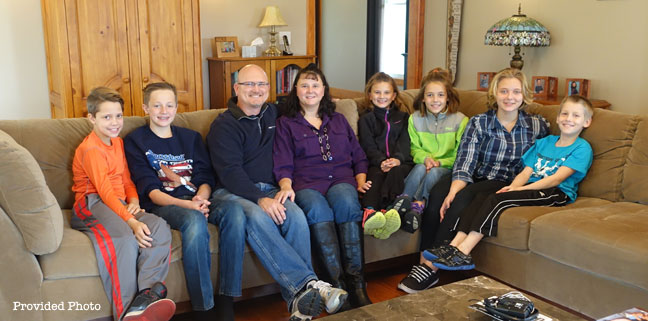
    Dan and Viola Rice with their six children, five of whom have been adopted. (Photo taken in November 2016)

    Clermont County, Ohio – That’s the theme of 2017’s National Adoption Awareness Month, which is recognized nationally and in Clermont County in November every year. And finding homes for older children, particularly teens, can be difficult, said Julie Jordan, Adoption Supervisor at Children’s Protective Services.

    “Most of the children we have waiting for adoption are 12 and older,” Jordan said. “Parents often think that older children are more challenging, but that is not necessarily the case. Their need for a home is just as great as it is for a younger child.”

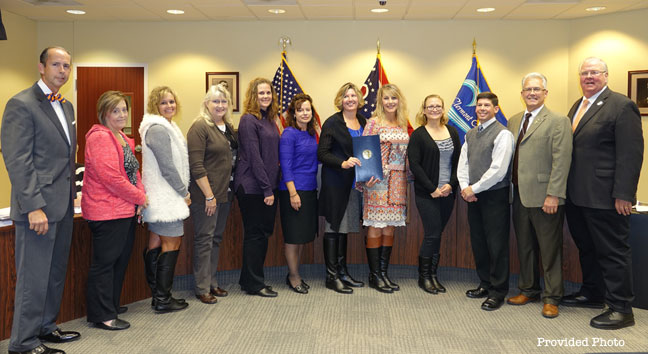
    Commissioners and staff of Clermont Children’s Protective Services on Oct. 25, 2017, as Commissioners proclaimed November Adoption Awareness Month.

    “This is a critical time for these kids,” Jordan said. “They need support and guidance, just like any other teen.”

    According to the most recent report from the Children’s Bureau, which advocates for the welfare of children and families, more than 110,000 children and youth in foster care are waiting to be adopted across the United States, and close to 12,500 of them are between the ages of 15 and 17 years old.

    Currently, Clermont County has 19 children awaiting adoption. These are children who were removed from their parents’ home due to abuse and/or neglect. Most of these children then entered foster care. After parental rights were terminated – typically after two years, when parents fail to take the steps necessary for reunification – the children can be adopted.

    One pathway to adopting older children is to become a foster parent first.

    In Clermont County, these teens include Clarissa, who is 16, and Kennedy, 17; Caleb who is 14, and  Jayden, who is 13. Brief biographies can be found on each child at http://www.clermontforkids.org/waiting-children/.

    The opioid crisis in Clermont County has contributed to the cases of abuse and neglect that compel CPS to remove children from their parents’ home, Jordan said. And that’s also a reason why there are more tweens and teens waiting for a family.

    One pathway to adopting older children is to become a foster parent first. The adoption team at Children’s Protective Services promotes foster-to-adopt certification as the best way to offer children a stable and nurturing home. Dan and Viola Rice of Mount Orab, who have adopted five children through CPS’s foster-to-adopt, and have fostered more than 40 children, are strong advocates of this method.

    “We love being foster care parents,” Dan says. “We ask our friends, or those we are just meeting – have you ever thought about foster-to-adopt?”

    In 2017, 38 children have been adopted by 23 families to date.

    To find out more about foster care or adoption through Clermont County Children’s Protective Services, please call 513.732.7765. The website www.clermontforkids.org has information on the foster-to- adopt process, and also has a list of children currently waiting for a forever family.


    Take Home Tano Consumer Meal Market

    Take Home Tano is about fresh, wholesome food for the frenzied family   Our goal is to meet the needs of busy families