Activist Greta Thunberg called world leaders to account on Monday with a blistering indictment of their failure to act on climate change.
The response of at least one world leader was to make fun of her.
President Trump tweeted sarcastically on Monday that Thunberg, who had just charged the audience at the United Nations Climate Summit with stealing “my dreams and my childhood with your empty words,” seemed like “a very happy young girl looking forward to a bright and wonderful future.” Others on the right also mocked and dismissed Thunberg, with conservative commentator Michael Knowles calling the 16-year-old activist a “mentally ill Swedish child” on Fox News.
Knowles appears to have been insulting Thunberg for having Asperger’s syndrome, an autism spectrum disorder. Autism isn’t a mental illness — it’s classified as a developmental disability. But advocates say that attacks like the ones Thunberg has faced are all too familiar for autistic people.
Thunberg may be experiencing especially strong stigma from the right because she’s not just autistic, but also female. “Autistic girls tend to face a lot of pressure not just to act like non-autistic people, but also to live up to the same gendered expectations many girls face,” Bascom said. “We always have to be smiling and compliant.”
When haters go after your looks and differences, it means they have nowhere left to go. And then you know you’re winning!
I have Aspergers and that means I’m sometimes a bit different from the norm. And – given the right circumstances- being different is a superpower.#aspiepower
If you’ve worked with me before, you already know that when I see moms and girls consistently having the same problem, I’m going to look for a way to make it better. That’s because – first – I know you want these problems to go away; and second – I know they can.
Toward the end of first quarter, I started hearing about meltdowns — those painful, exhausting, tearful sessions of self-doubt and giving up – often on school work or sports teams, but sometimes just on straightening the bedroom. And the topic hasn’t gone away – probably because school becomes steadily more stressful as the year goes on.
So I’ve been working on it – which for me means creating a cost-effective solution that you can use at your own pace in your available time. To make things better.
Would you like to be able to help your daughter manage her stress and anxiety without meltdowns – and without repeating some of the painful encounters you may have experienced with your own mom growing up?
I know when you’re faced with the homework meltdown, what you want in that moment is for it to stop – for your daughter’s well-being and – let’s face it – for your own sanity. So you might start by trying to calm your daughter – but I’ll tell you, I’ve rarely seen “Calm Down!” help anyone feel calm. So you try pushing back a little; reassuring her that you know she can handle the task she’s panicked about. You offer help. And maybe you’ve threatened a consequence.
Your intentions are good. It’s just that none of this works very well. You have to go deeper to get to the root of this problem.
And, instead of struggling to figure this out by yourself, here is everything you need to know in order to tackle this frustrating problem.
Help your daughter avoid those exhausting mood swings and move from quitting to persisting.
Build in her strong resistance to anxiety and depression by supporting her in moving from feeling inadequate to feeling confident.
Provide the very specific responses she needs from you in order to get off the Self-Esteem Roller Coaster so she can hang in there even when she’s becoming overwhelmed.
Not only will you walk the path towards being meltdown-free, but it will also give you the momentum you need to achieve to build your daughter’s confidence and protect her from anxiety and depression.
That’s so important – because these things – meltdowns, self-esteem, anxiety, depression – are all connected.
Because this is a brand-new course and I want to see how you like it, I’m only offering it for the next four days (but once purchased, you’ll have access to it for as long as you want). Four days is short, I know – so in exchange for that quick decision, there is an one-time introductory price of $47.
I’d love for you to take this opportunity to buckle down and address the meltdown saga! And remember – while you’re working the course, you can share your questions, experiences, and comments in the Raising Confident Girls Facebook group.
I’ll be there!
— Fran
Fran Hendrick, P.C.C.
Founder, Raising Confident Girls – The Power of Everyday Conversations
Professional clinical counselor, parenting columnist, and instructor Fran Hendrick has provided coaching and counseling for hundreds of women and girls for twenty-five years. Clients appreciate Fran’s calm, empathic style, her practical strategies and solid advice, and her playful spirit. In addition to her therapy practice at Wildflower House in Loveland, Fran provides consultation, through private video chat and by phone, for moms participating in her online course “Helping Confidence Bloom: The Step-by-Step Approach to Raising Confident Girls”.
“I don’t want my daughter to struggle with confidence and anxiety issues. I want to learn what I can do to help her become strong and confident – and really have fun with her life.”
This is the concern – and the heartfelt wish — that many of my clients share with me.
What I find both fascinating and empowering is that your daughter’s trust and confidence are not built by big actions and grand gestures; they’re actually built in the small moments of everyday life. Moments like when she’s late for school – or puts down her iPad to help her little brother with his spelling; says she hates what you’re having for dinner – or does her first headstand.
Believe it or not, these are the moments where what you say and do can make all the difference in building her confidence – or unintentionally eroding it. (And – by the way – what we generally think of as praise is likely to backfire completely!)
It’s easy to miss the opportunity in these moments, not because you don’t want to be there for her but because you aren’t fully aware of what she needs from you. It’s easy to get discouraged and even feel powerless to help your daughter become less anxious and more assertive; or to help her persist at a hard task instead of feeling stupid and quitting in a storm of frustration. What you need is a lens that allows you to see things you couldn’t see before – along with the insight, tools, and a clear framework to know what to do or say.
And it’s so important! Confidence is not only a goal in its own right. Beyond that, a strong sense of self-confidence and self-worth provides lifelong protection against depression.
I’m not one to step up to a microphone without major provocation. But the statistics on depression and self-harm in girls and women today in this country demand it.
I’m not one to step up to a microphone without major provocation. But the statistics on depression and self-harm in girls and women today in this country demand it. According to the National Institute of Mental Health, a whopping 17.3% of girls ages 12-17 have experienced a major depressive episode1, along with 8.2% of adult women2.It has even been estimated that girls’ self-esteem, their greatest protection against depression, peaks (yes, peaks) before they are ten years old!
What makes this all the more unacceptable is that it is largely preventable! We have the knowledge to raise girls to feel whole, adequate, and joyful so they experience the world confidently and in bright colors. The knowledge exists to protect our girls from depression, from lifelong battles against feeling not good enough, from desperation – in short, to prevent rivers of tears and needless pain.
They can joyfully become exactly who they’re meant to be.
But for parents to actually be able to implement that knowledge in the small moments that make up everyday life with children requires a clear approach, intentional action — and a strong dose of self-reflection, because it can be scary. With that investment, our girls can be spared the lifetime of depression and anxiety that so many women experience. They can joyfully become exactly who they’re meant to be.
They kick upwards, their arms reach for the sky, they seem to fairly prance, all with their own dance steps, their own vivid colors, their own lively style.
On my desk at Wildflower House, I have a colorful drawing, spontaneously crayoned by a spectacular six-year-old girl. In it, twelve children jubilantly dance two-by-two in all directions across the fluorescent green paper. They kick upwards, their arms reach for the sky, they seem to fairly prance, all with their own dance steps, their own vivid colors, their own lively style.
That is how our girls should feel! I believe our daughters simply must be given that opportunity. Parents need a clear approach to evade those awful statistics and, in their place, to create something wonderful.
I invite you to be part of improving the odds for today’s little girls, especially the ones within your own reach.
“So let’s fix it together.”
Why? Because each little girl has the potential to bloom uniquely. Because it is a sacred responsibility to learn to nurture, to discover that. And because there should be, there must be no lost voices. Each individual human being is entitled to self-expression. Without it, our sparks dim and become buried out of our reach, hopelessness gains ground, despair sets in. Human beings should not be locked away inside themselves. Ever.
So let’s fix it together.
You really can build your daughter’s confidence right there in the midst of simple everyday conversations. I’ve designed this new column to show you how.
I hope you’ll join me!
Located at 111 N. Wall Street in Downtown Loveland, Wildflower House, Fran’s cozy personal development studio for coaching, counseling, and classes provides a space for women and girls to confidently become exactly who they’re meant to be.
“I don’t want my daughter to struggle with confidence and anxiety issues. I want to learn what I can do to help her become strong and confident – and really have fun with her life.”
If one of your New Years Intentions is to help your daughter gain confidence, this challenge, offered by Loveland Professional Clinical Counselor Fran Hendrick, might just be for you!
Each day, Monday-Thursday there’s one activity followed by a Facebook livestream training — and then a full hour online workshop on Friday. Lots of great information and interaction — and it’s FREE.
Click below to Register Now!
HERE’S WHAT YOU’LL BE DOING DURING THIS FREE CHALLENGE:
✓ Give Yourself Credit: Celebrate your successes with a personal “Best of: Your 2018 High Points in Parenting.
✓ The Confidence Paradox: How to build your daughter’s confidence with quick wins instead of big challenges.
✓ The What If She Doesn’t Think Like I Do Syndrome. A structured opportunity to meet your daughter truly as Her Own Person.
✓ The What If She Hates Me Syndrome: Explore whether rules are a Relationship Killer or Confidence Builder.
✓ Debrief with daily Facebook Livestreams where I’ll help you build your insight and skills.
✓ The Magic of Small Moments Formula: A Roadmap to build within your daughter a strong foundation of confidence, resilience, and courage.
A professional clinical counselor, parenting columnist, and instructor, Fran Hendrick has assisted women and girls for 25 years in becoming exactly who they’re meant to be.
Fran specializes in showing moms the specific steps to take in the space of everyday situations in order to inspire girls to become confident, resilient, and joyful.
I’ve just downloaded the Best Wallpaper Ever. This free app turns my sleek and shiny smartphone into a miniature aquarium, complete with on/off bubble aerator, ten underwater scenes to choose from, and a selection of tropical fish that allows me to click not only which ones I want, but how many of each. It’s eye candy, especially on my extra-large screen; I’m pretty sure it’s better than the real thing. A beautiful, stress-relieving undersea scene, with me at all times – and, unlike our old clunky aquarium, doesn’t even need to be cleaned.
Also “with me at all times,” are google search, an infinite store of apps to shop, and, most powerful, all of my friends are reachable with just a tap or a text. Kindle, Nook, Netflix – this is by far the best toy I have ever had. I could become addicted.
Maybe you can feel the possibility of addiction, too. It definitely happens to kids, and the age that it happens keeps dropping.
Providing the support your daughter needs requires you to feel all right – good, even – about setting limits and, at times, saying no.
It’s obvious that I love my smartphone. And my laptop, my tablet, my Kindle, and yes, Facebook. They provide access to a wealth of knowledge and entertainment, a way of connecting with friends whom I might otherwise lose track of — and they play an important part in my safety. The problem is that we’ve swung so far in the direction of “Why not, what harm could it do?” — the habit of saying “yes” to pleas for today’s electronic gadgets – that we have lost track of what these gifts can take away.
Everyone’s got one. How can it hurt?
As much as smart phones and tablets give, they also, without doubt, take away. Used excessively, they can compromise self-reliance, responsibility, participation in activities that grow strength and character, face-to-face relationships, confidence, and, not least, sleep.
Not so long ago, when kids headed off to school in the morning, they were on their own in their “workplace”. There might have been a pay phone or two, and in a pinch the office would allow a phone call, but other than that, children had the responsibility to manage independently. Without a doubt, at times that was too harsh and isolating. But we’ve now moved to the opposite end of the continuum, and it’s also damaging. If homework is forgotten – or the required equipment for an after-school activity is still on the bedroom floor– just text mom. In a moment of angst, quickly text a friend. Kids – and adults, too – stand to become dependent on being constantly connected to a source of back-up and reassurance. The result: kids lose the the chance to learn that they are whole on their own. They lose the opportunity to develop clear boundaries of responsibility — yours vs. hers — and the sense of competence and confidence that result when those boundaries take hold. Even independent, responsible teens are at risk, because they’re more likely to take on responsibility for the well-being of one or more peers by feeling ethically obligated to be present “24/7” for their friends who are having a hard time – and that hurts both.
Join me for a Facebook Livestream on this this topic!
Got questions?
I’ve been looking at a different back-to-school concerns each week for the past three weeks. Please join me at www.facebook.com/franhendrick for a Facebook Live Stream on Fridays (8/3-8/24) at 11:00 AM Eastern Time.
Post your questions about that week’s back-to-school issue in the comment section of the live stream post — or private message me on Facebook. I love helping you work out these answers.
See you there!
But it doesn’t end there.
Designed to addict
Smart phones provide nonstop access to a sometimes malicious grapevine. It’s not at all unusual for girls to be texting a friend to critique a text conversation that is occurring simultaneously with another friend. It’s as if the mail carrier now comes every five seconds instead of once a day. Without a doubt, the intermittent reinforcement of finding a new messages is addicting — so are the truly cool visual and auditory notifications. If you doubt that, just watch people, adults and teens alike, checking their phones and sneaking in a text response right in the middle of absolutely any other activity. There is no doubt that this raises stress and anxiety — and a sometimes obsessive fear of missing out (FOMO). How many teens are having a hard time stepping away from all of this breaking news in order to get a full night’s sleep?
The reality is that smart phones are deliberately, calculatedly designed to addict. This is like leaving kids 24 hours a day in a candy shop with an ever-changing, overwhelmingly tantalizing selection. At every turn, there’s a new colorful, delicious concoction packaged so attractively as to be irresistible. It’s unrealistic to expect kids to manage this level of enticement without adult support.
Start with your own fears
But your own fears can get in the way of providing that needed support. What if your daughter’s friends are allowed to do things she’s not? What if everyone else has the latest gadget and your daughter feels left out? What if she can’t reach out to you when she wants to? What if she’s devastated by a cutting remark and she really, really needs to connect with her best friend right now? What if she’s excluded from the weekend social agenda because she doesn’t respond instantly to a text?
Put your goal into words
Providing the support your daughter needs requires you to feel all right – good, even – about setting limits and, at times, saying no. It takes your own gut level realization that over-dependence on electronic devices is harmful. When you feel that, limiting the harm is natural. Technology should enhance your daughter’s life without impeding her growth.
Cell Phone Safe Use Resource Sheet
Getting her electronics usage back on track and keeping your daughter safe online doesn’t have to feel like boot camp to your daughter. I’ve created a Cell Phone Resource Page for you (you can download below) to help you put together a simple, but powerful, agreement. In it, I’ll show you some of the ways to help your girls enjoy that amazing candy store without staying up all night or becoming dependent. It takes a dash of structure combined with a large measure empathy and accurate understanding. As one mom so aptly observed, possibly because she had experienced this in her own childhood, “Structure without empathy results in an absence of joy.” So, instead of talking solely about “laying down the law,” begin a constructive conversation with your daughter that you can continue over time.
About Fran Hendrick, P.C.C.
Professional clinical counselor, parenting columnist, and teacher Fran Hendrick has provided coaching and counseling for hundreds of women and girls for twenty-five years. She is a member of the International Association for Psychoanalytic Self Psychology. In addition to her therapy practice, Fran provides consultation online and by phone for moms participating in the Joyful Rebels process.
Fran divides her time among working with clients, kayaking with her husband, and scampering up jungle gyms with her granddaughters. Clients appreciate Fran’s calm, empathic style, her practical strategies and solid advice, and her playful spirit.
Wildflower House, Fran’s cozy personal development studio in charming, historic Loveland, Ohio provides a space for women and girls to become exactly who they’re meant to be.
Located in downtown Loveland Ohio at 111 N. Wall Street, Wildflower House is a cozy studio to support your personal development, a place to bloom.
The Step-by-Step Approach to Raising Confident Girls
An interactive, online course — coming in September!
If your daughter’s reaching (or has reached) the age when you feel it’s time she had a phone, you know you’re entering into a challenge.
by Fran Hendrick, PCC
Getting a cell phone warrants a celebration, right? Of course! But like any rite of passage, there is both responsibility and risk attached to it. Having a phone in her possession raises a number of very real health and safety issues because cell phone use is implicated in anxiety, stress, depression, cyberbullying, addiction, and emotional dependency (that’s right, cell phones can erode confidence!) — for starters. Like driving later on, handing your daughter her first phone merits some planning.
Join me Friday for a Facebook Livestream on this this topic!
Got questions?
I’ve been looking at a different back-to-school concerns each week for the past three weeks. Please join me at www.facebook.com/franhendrick for a Facebook Live Stream on Fridays (8/3-8/24) at 11:00 AM Eastern Time.
Post your questions about that week’s back-to-school issue in the comment section of the live stream post — or private message me on Facebook. I love helping you work out these answers.
See you there!
I’ve got three things for you on this topic:
1. The Cell Phone Safe Use Resource Sheet
I’ve put this together to help you create an informed plan — and yes, I really do think it’s that important. The research is coming in and it’s disturbing. But along with the research, we’ve now got more strategies and guidelines to help having a phone be a constructive experience for kids.
In this Resource Sheet, I cover:
Links to information you need to educate yourself in order to plan for your daughter.
Links to information on Parental Controls — super important.
How your own fears can get in the way of taking steps to protect your daughter.
How to structure a conversation with your daughter on this delicate topic.
How to respond to her feelings about implementing some structure around cell phone use.
2. From the Blog Archives
This issue of emotional dependency cuts right to the heart of what so many moms want for their daughters — and that’s confidence. In the post below, I’ve explained how cell phones can erode confidence. It’s not a small thing.
I’ll be talking about this topic and other questions, as well, Friday August 24 at 11:00 AM Eastern Time in a Facebook Live. You can join this event on my Facebook Page. (By the way — previous topics are also there for you to view. Just click the Video tab and you’ll see them.)
Professional clinical counselor, parenting columnist, and teacher Fran Hendrick has provided coaching and counseling for hundreds of women and girls for twenty-five years. She is a member of the International Association for Psychoanalytic Self Psychology. In addition to her therapy practice, Fran provides consultation online and by phone for moms participating in her Helping Confidence Bloom classes and upcoming ecourse.
Fran divides her time among working with clients, kayaking with her husband, and scampering up jungle gyms with her granddaughters. Clients appreciate Fran’s calm, empathic style, her practical strategies and solid advice, and her playful spirit. Wildflower House, Fran’s cozy personal development studio in charming, historic Loveland, Ohio provides a space for women and girls to grow the confidence to become exactly who they’re meant to be.
Crisis Alert! It’s pretty scary for girls to find out that their BFF isn’t in their class this year. Handling that crisis is the topic of the second of four Back to School posts. If that’s what’s happening in your house right now, this post is for you.
This Back-to-School topic is empowering girls to develop new friendships. I’ll be showing you things you can do to help your daughter gain confidence as she starts school.
Starting school can be hard on kids — and moms, too. This post is for you if your child is struggling with separation anxiety. Make sure to download the free planning tool!
Separation Anxiety
2 Girls, 2 Stories, 2 Plans
Sending your little girl off for the first day of preschool or kindergarten is not for the meek at heart! You’re not alone if you’ve been thinking about it for weeks and worrying about it when you’re meant to be sleeping. Even if your little one is feeling excited and confident, there’s still the issue of how you’re feeling!
Cassie Mattia lives in Historic Downtown Loveland, Ohio.
If we don’t protect our youth who will? In May, Ohio Paul Zeltwanger and Thomas Brinkman proposed House Bill 658, which states:
“If a government agent or entity has knowledge that a child under its care or supervision has exhibited symptoms of gender dysphoria or otherwise demonstrates a desire to be treated in a manner opposite of the child’s biological sex, the government agent or entity with knowledge of that circumstance shall immediately notify, in writing, each of the child’s parents and the child’s guardian or custodian. The notice shall describe the total circumstances with reasonable specificity.”
gen·der dys·pho·ri·a
ˈjendər disˈfôrēə/
noun
MEDICINE
The condition of feeling one’s emotional and psychological identity as male or female to be opposite to one’s biological sex. How to pronounce gender dysphoria.
In plainer language House Bill 658, also known as the “Parent’s Rights Bill,” would make any school administrator or teacher who allows or offers gender dysphoria (the condition of feeling one’s emotional and psychological identity as male or female to be opposite to one’s biological sex) treatment, including resources on sex and gender or counseling, for a minor “without the written, informed consent of each of the child’s parents and the child’s guardian or custodian” they could be charged with a felony in the fourth degree. The parents of the student according to the bill would get the ultimate decision whether their child gets access to treatment, including educational materials, counseling or medical services.
If this House Bill is implemented it could have detrimental consequences for teachers and even more importantly for those students affected. Teachers are there to lend their students a helping hand educationally and emotionally in order to prepare them for what’s to come once they are out on their own, why take this from them?
A teacher’s take on House Bill 658
I spoke to one Loveland teacher who wishes to remain anonymous, a mom of a teenager. I’ll call her Susan. She told me that for many students their home life is a wreck and out of control with issues of poverty, broken families, and domestic abuse. “For many of my students, the only adult in their life that can be trusted may be their teacher. Teachers who lend an ear and can be trusted can be an enormous help that often reflects on their academic achievement. We care for the whole child.”
Susan told me that for many students their home life is a wreck and out of control with issues of poverty, broken families, and domestic abuse. “For many of my students, the only adult in their life that can be trusted may be their teacher.”
Susan told me that she just overheard a conversation between her daughter and a friend about a classmate they thought was transgender. “I wondered, do they know what that means? Are they friends with this young person? How do my kid and others treat her? Because I am a teacher, would I be required to file a report with the District? These are all questions that ran through my head as a mom and a teacher.”
Susan said she wants to protect and support all of her kids, her biological ones and the ones that are “her’s” for a school year. “I want to be able to do that freely and openly and with my heart.” She said that some of her students desperately need someone they can trust in their life and the last thing they need is another person that will let them down because politicians want school staff charged as felons if they don’t report that the student herself, or a classroom teacher, principal, gym teacher, bus driver, or classmate may be questioning her gender identity.
Susan asked, “Just what stereotypes am I going to be expected to police?
HB 658 is a harmful bill that takes aim at some of our most vulnerable — transgender youth — by forcing school officials to serve as ‘gender police’ and out them or risk getting a felony.” – Alana Jochum
LGBTQ advocacy
“HB 658 is a harmful bill that takes aim at some of our most vulnerable — transgender youth — by forcing school officials to serve as ‘gender police’ and out them or risk getting a felony,” said Alana Jochum, executive director of LGBTQ advocacy group Equality Ohio. Jochum told NBC News. “This exposes young people to discrimination, harassment, and bullying.”
Jochum couldn’t be more correct if you really take a look at the alarming statistics. One study done by the Cincinnati Enquirer showed that 64% of LGBTQ youth in Ohio heard “negative comments” about their gender identity or sexual orientation from their family and in result, according to another study done by National Transgender Discrimination, 41% attempted suicide. Though many transgender students
75% of transgender youth have felt unsafe at school after being outed and have lower GPA’s due to missing school in fear of their safety.
have experienced negative comments, violence has become the most popular form of dealing with transgender youth. Disturbingly enough 19% of transgender youth, according to the National Center for Transgender Equality, experience the majority of violent abuse in their home from their own family members. Along with dealing with all the dissension from family members 75% of transgender youth, according to a national survey done by GLSEN (pronounced “glisten”), have felt unsafe at school after being outed and in result have lower GPA’s due to missing school in fear of their safety. With all the facts at hand, The Ohio Education Association who represents 125,000 teachers and support professionals, have openly opposed the bill.
Violence has become the most popular form of dealing with transgender youth.
Kathryn Lorenz is the Loveland Board of Education Vice President
While researching House Bill 658 I managed to only get a response from two local representatives of the Loveland School Board, one being Kathryn Lorenz, the Board Vice President and the other being Loveland School Board Member, Ned Portune. Lorenz’s response was, “In the case of House bill 658, we would have to say that we do not yet have enough information, nor have we met as a board for a few weeks, so we do not yet have a Board statement to make.”
Ned Portune is a member of the Loveland School Board
Portune added that he, “…simply has not been fully informed at this point on HB 658 to have an educated opinion. There are several items in your statement that would certainly give me a gut reaction, and opinion on, if true as presented. But I need time to fully review the Bill, its implications and existing laws to have any formal statement.”
School Superintendent Amy Crouse, High School Principal Peggy Johnson, and assistant principals at the High School did not respond.
Studies show most transgender youth are fully aware of their gender identity by age 4.
After attempting several times to contact both Representatives Paul Zeltwanger and Thomas Brinkman through email and phone about House Bill 658, I, unfortunately, got no response. It wasn’t hard to find Brinkman’s opinion on the issue in several other publications though, voicing to WCPO, “Parents have the right to decide what is best for their children,” and telling WOSU Public Media, “And if somebody doesn’t like it, you’re emancipated at age 18 and you can go do whatever the heck you want.” Seems pretty harsh considering the transgender population represents about 0.3% (700,000) of Americans and studies show most transgender youth are fully aware of their gender identity by age 4. Are we encouraging parents and administrators to discard their students or child’s gender identity in fear of social rejection? Do these children not deserve to live an authentic life?
Fran Hendrick, PCC has offices at Wildflower House in the West Loveland Historic District.
House Bill 658 is expected to be presented to the Ohio General Assembly in the Fall and will be without a doubt one of the most controversial bills to date. Many have opinions on this issue one being Fran Hendrick, a respected and highly educated clinical counselor who specializes in assisting women and girls who are experiencing depression or anxiety triggered by a crisis or major life change. When I presented Fran with House Bill 658 and asked what her opinion was she had a lot to say and rightfully so considering one of her life missions, according to Fran’s website franhendrick.com, is to “gently help you find and shelter your spark (the essence of who you are at your core) and grow it so that it illuminates your person and is radiated through words, actions and decisions, big and small, that make up your daily life.”
In a culture such as ours, it is a matter of life and death for transgender youth to decide if and when to trust another person with their reality. – Fran Hendrick, PCC
“Being a parent takes great courage, even more so when your child presents you with something that you’re unfamiliar with – or even afraid of. In a perfect world, a child who feels somehow ‘different’ from their peers (‘their’ is deliberately gender-neutral), they could consult their parents, who would strive to deeply understand the child’s experience, would provide accurate empathy, and would go on a crash course to learn everything they could about the unfamiliar issue. And, so very fortunate for their children, there are many parents like these.
But in the real world, an adolescent boy saying to his father, ‘Dad, I think I’m a girl’ is very likely to encounter disgust, rejection, rage, or even violence, not empathy and understanding.
While the intent of this bill, giving benefit to grave doubt, could be a deeply uninformed and misguided attempt to protect children, that seems unlikely. My sense is that in truth it is more about attempting to hand parents the power to say no to their child’s gender identity,” Hendrick said, “But gender identity – and sexual orientation, for that matter – are not matters of choice. And in a culture where transgender people are assaulted and even murdered at a rate higher than their cisgender counterparts,where transgender youth are summarily shunned and rejected by their own parents (the rate of homelessness is, not surprisingly, very high), where the suicide rate that results from these atrocious facts is far higher than for other youth – in a culture such as ours, it is a matter of life and death for transgender youth to decide if and when to trust another person with their reality, and, most importantly, whom to trust.
To be “outed” for the choice to trust; or to be prosecuted for trying to be help – these are not protections. Actions like these support bigotry, and increase isolation and despair. – Fran Hendrick, PCC
To be “outed” for the choice to trust; or to be prosecuted for trying to be help – these are not protections. Actions like these support bigotry, and increase isolation and despair. Stopping a teacher from helping such a student, one who is likely alone with the reality of their gender identity, who stands to be emotionally and psychologically rejected, or even physically abused, by their own family is, quite simply, a cruelty. This, I strongly believe, is not what the overwhelming majority of parents want for their own or anyone else’s children. This is bad enough. However, this bill opens the door to much more far-reaching damage than this.”
Is he to be turned in to the gender police?
The talented young male artist who despises sports – is he to be turned in to the gender police? The girl who chooses overalls and a t-shirt rather than a dress and a mani-pedi –what of her? The sponsors of the bill have explicitly said that teachers should be required to inform on them, as well. We have an essential responsibility to ensure that proposed legislation protects vulnerable people from the bigotry endemic in our society.This legislation explicitly deprives them of protection.”
Ultimately what it comes down to is ensuring that our children are and feel safe when going to school. Teachers and administrators are the ones that take on the responsibility of creating that fun, loving and supportive atmosphere so that our children get the best opportunities in life. Passing a bill such as House Bill 658 only presents another obstacle that both teachers and administrators have to overcome. Don’t these professionals have enough obstacles to conquer as is?
Both Justin Haake and Tonya Schaeffer who are Professional Clinical Counselors for Hope Restored Counseling Services in Loveland couldn’t agree more.
Justin Haake is a Licensed Professional Counselor at Hope Restored Counseling Services in Loveland and works primarily with adolescents and adults, specifically during transitional periods in life.
Haake said, “For some, teachers and school administrators may be the only people in schools that feel safe for students to reach out to.Imagine the fear of asking for support, knowing that you’ll either be outed or put the teacher or administrator at risk of a felony.”
Schaeffer said, “From my perspective, this would most likely increase the level of bullying and possible harm to these students.There is already so much shame and stigma attached with Transgender people, and they need as much support as they can get,”
Tonya Schaeffer is a Licensed Professional Clinical Counselor and co-owner of Hope Restored Counseling Services in Loveland.
Schaeffer added, “Support is out there.In fact, we are offering a psycho-educational group starting in September that offers education, support and a safe environment for Transgender students to express themselves.” She said they hope to offer a similar group to parents who are trying to understand what their child is going through, explore what the parents are experiencing and provide support. “We currently serve the LGBTQ community, and we are expanding those services.I recently read a statement that it is estimated that 41% of trans men and women have attempted suicide. I don’t believe this bill would help–it seems like it could only hurt.”
Susan, the mom and teacher said, “I am thankful I live in a community where support services like those provided by Hope Restored, and Fran Hendrick at Wildflower House are nearby for my students and their families.”
Transgender youth have so many mountains to climb within their own scientific makeup and allowing a bill like House Bill 658 to go through in hindsight is taking away their basic rights as Americans and human beings.
“GLSEN (pronounced “glisten”) was founded in 1990 by a small, but dedicated group of teachers in Massachusetts who came together to improve an education system that too frequently allows its lesbian, gay, bisexual, transgender, queer and questioning (LGBTQ) students to be bullied, discriminated against, or fall through the cracks.”


![[In Global News] Attacks on Greta Thunberg expose the stigma autistic girls face](https://lovelandmagazine.com/wp-content/uploads/2019/09/EFlEmqmXYAAtzmQ.jpeg)




![[When “Calm Down” Doesn’t Help] How to Tackle Meltdowns, Anxiety & Depression with Your Daughter](https://lovelandmagazine.com/wp-content/uploads/2019/02/When-Calm-Down-Doesnt-Help-LM.jpg)


 Professional clinical counselor, parenting columnist, and instructor Fran Hendrick has provided coaching and counseling for hundreds of women and girls for twenty-five years. Clients appreciate Fran’s calm, empathic style, her practical strategies and solid advice, and her playful spirit. In addition to her therapy practice at Wildflower House in Loveland, Fran provides consultation, through private video chat and by phone, for moms participating in her online course “Helping Confidence Bloom: The Step-by-Step Approach to Raising Confident Girls”.
 Join Fran’s




 by Fran Hendrick, PCC
 Everyone’s got one. How can it hurt?


 Located in downtown Loveland Ohio at 111 N. Wall Street, Wildflower House is a place to bloom.






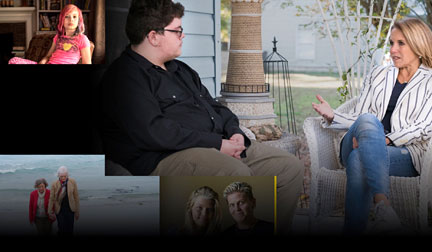 If you would like to explore the topic of Transgender youth and adults even further please check out “