Tag: fraud

  • Poll: 60% of Ohio GOP primary voters say election was stolen

    Poll: 60% of Ohio GOP primary voters say election was stolen

    BY: JAKE ZUCKERMAN – Ohio Capital Journal

    Nearly two in three Ohio Republicans likely to vote in the upcoming primary election believe the election was “stolen” from President Donald Trump, according to polling conducted late last month.

    Of 800 “likely” voters sampled in late January, 62% said they believed the election was stolen and 29% believed there was “some fraud” but President Joe Biden won. Only 8% indicated Biden won with “no fraud.”

    Top issues from voters in the poll, conducted by the firm Fabrizio Lee on behalf of a PAC supporting U.S. Senate Candidate J.D. Vance, included “border security and immigration” (16%), followed by “election and voting security” (13%) and several economic areas like inflation, taxes, government spending and jobs (all around 11%).

    “While every single message tests well, the best of the bunch are cutting federal aid to localities that allow non-citizens to vote, requiring proof of citizenship to get public assistance, and allowing border states to complete the border wall with Mexico,” the polling states, in advice to Vance.

    There’s no evidence to suggest the election was stolen. Trump’s administration officials have said there was no fraud at enough scale to sway the election, as have state audits and media investigations. However, Trump and his allies in politics and media have insisted the 2020 election was fraudulent regardless.

    In the U.S. Senate GOP primary for the open seat to be abdicated by incumbent Sen. Rob Portman, nearly all the leading candidates — Josh MandelVanceMike Gibbons, and Jane Timken — have embraced Trump’s claim that the election was stolen.

    Only Sen. Matt Dolan, R-Chagrin Falls, has unequivocally rejected the election fraud theory and called out leaders who “perpetuated lies.” The recent polling shows 15% of his likely voters believe the election was stolen.

    “Dolan voters differ greatly from the rest of the electorate, but they are only 3% of the vote,” the polling states.

    The polling was first reported and obtained by Politico last week. Fabrizio Lee earned a “B/C” grade from FiveThirtyEight, a data-driven politics blog that rates pollsters based on their methodology and historical accuracy.

  • Analysis: Billion-dollar whitewash?

    Analysis: Billion-dollar whitewash?

    Centene execs eager to put Medicaid scandal in the rearview without explaining what they did

    By Marty Schladen and Ohio Capital Journal

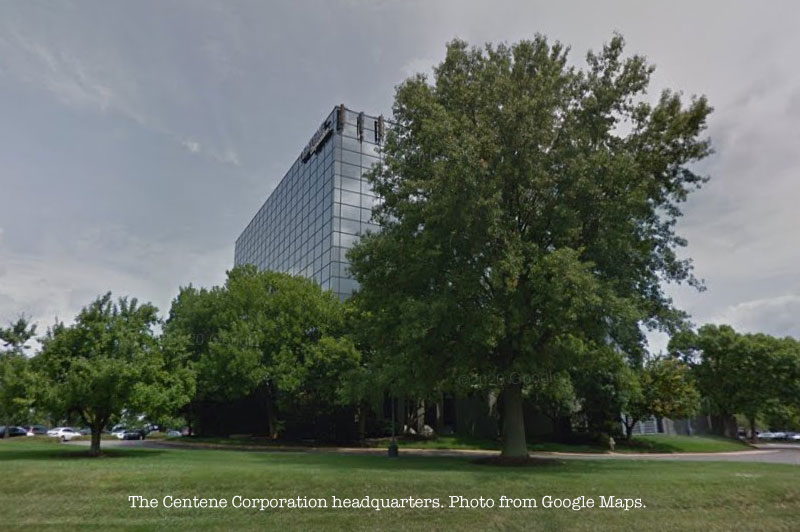
    In the wake of a blockbuster settlement of fraud claims, the top executive at the nation’s biggest Medicaid contractor was eager Wednesday to put the matter behind the company, which derives most of its revenue from taxpayers.

    But even though executives repeatedly used some form of the word “transparency,” they seem to be trying to get past the scandal without explaining to taxpayers and shareholders what, exactly, they did. 

    That’s kind of a big deal as the company asks states and the federal government to continue to trust it to handle taxpayers’ billions. It’s also a big deal in a health care arena where huge corporations have been accused of exploiting a lack of transparency to overcharge taxpayers vast sums of money.


    Centene agrees to pay a record $88.3 million to settle Ohio…

    David Miller – Jun 14, 2021


    Michael F. Neidorff, chairman, president and CEO of Centene Corp., on Wednesday told investors that the $153 million the company is paying two states and the $1.1 billion it plans to pay 20 others settles a matter that was cleared up years ago. 

    “The agreement addresses a situation from 2017 to 2018,” he said. “The policies and practices that created the situation were changed in 2019, making the matter very much a thing of the past. With this agreement, Centene will be able to put the situation behind us in a timely manner.”

    To make sure none of the investment analysts viewing the presentation missed it, Neidorff hammered the point again.

    “I would like to reiterate that the matter in the agreement is very much a thing of the past and we are looking forward to bringing this to resolution as we move ahead and focus on delivering the highest quality of care to our members,” he said.

    The problem is, many states seem poised to accept settlement money and continue paying billions to Centene with only the vaguest idea of what the company did in 2017 and 2018, and what it might have cost taxpayers.

    On Monday, Ohio Attorney General Dave Yost announced that Centene initiated settlement talks and just four months after Ohio sued the company, Centene had agreed to pay $88.3 million. 

    Because it’s the first — and so far only — state to sue in the matter, Ohio’s getting special treatment. If any state gets more, Centene will have to plus up its settlement with Ohio to match it, Yost said.

    On Wednesday, Neidorff claimed that the state governments on which his company depended for much of its $120 billion in annual business deserved transparency.

    “We have a deep respect for our state partners, and have addressed their concerns expeditiously, increasing the transparency of our pharmacy network,” he said.

    But that transparency has been hard to spot in the company’s recent actions.

    Centene on Monday stressed that it admitted no wrongdoing as it shelled out all that money. The press release announcing the settlement was titled “Centene announces no-fault agreements with Ohio and Mississippi to resolve pharmacy subsidiary claims.”

    Centene’s press operation on Tuesday didn’t respond to a question asking for an explanation of the conduct over which the company was prepared to pay out $1.24 billion. 

    And on Wednesday, Centene’s six top executives answered a multitude of windy, jargon-laden questions from stock analysts. But they ignored another, seemingly simple one: Don’t taxpayers and shareholders deserve to know what Centene did to necessitate such a massive payout?

    The company is presumably anxious to keep other states from suspending their enormous contracts the way the Ohio Department of Medicaid has. And the company clearly wants to stop attorneys general in other states from following Yost’s lead by filing lawsuits alleging that Centene bilked taxpayers out of tens of millions of dollars.

    “Pursuing the matter in court could have involved litigation in 22 jurisdictions over the next three to five years,” Neidorff said. “And we all know what legal reserves and expenses that could have generated.”

    Unless other states do sue, the Ohio suit and earlier investigations there might be the fullest picture the public gets of Centene’s alleged misconduct.

    Yost’s team accused Centene of creating a non-transparent chain of pharmacy middlemen to overbill taxpayers through a few stratagems.

    “One was double billing,” Yost said Monday. “A process by which they used more than one entity to process a claim and added costs to it — overbilling.”

    Yost’s team also accused Centene of pocketing $6.7 million a year in funds that were intended to pay pharmacists to dispense drugs. 

    “They actually claimed they were paying more to the pharmacists than they actually were,” he said.

    The AG also accused the company of marking up drugs by as much as $400,000 in a single week. In court filings, Centene denied the claims.

    Mississippi, the other state with which Centene announced a settlement, was much less specific in its claims of wrongdoing.

    “Following suspicions that PBMs were inflating their bills, in 2019, the auditor’s office launched an investigation to review invoices produced by a Centene-owned company,” a joint press release by Attorney General Lynn Fitch and state Auditor Shad White said. “Contracts required payments be capped by certain industry-standard prices, and the PBM was charging Medicaid more than the allowed price cap.”

    Whether other state attorneys general will go into more detail is unclear. Those in Georgia, Florida, Kansas, New Mexico and Texas didn’t respond when asked whether they’ll seek settlement money from Centene or whether they’ll publicly describe what they believe the Medicaid contractor did wrong.

    They should be more forthcoming as the process moves forward, said Greg Reybold, vice president and association counsel of the Georgia Pharmacy Association — a group that says Centene and other healthcare giants have used non-transparent middlemen to drive drug prices up and community pharmacists out of business.

    “I think folks should know: What were some of the practices that were being investigated?” he said Tuesday.

    Georgia has some distinct similarities to Ohio. For example Centene-owned managed-care organizations in both states saw much higher markups of generic drugs than their peers did.

    An Ohio analysis showed that in 2017 all Medicaid managed-care plans were charging taxpayers far, far more for generic drugs than they were paying pharmacists. But Centene’s Buckeye Health Plan was charging almost double what the others were.

    Buckeye marked up generics an average of $11.60 each for the 4.57 million generic prescriptions it handled, while the average of the other four Medicaid managed-care organizations under contract with Ohio Medicaid was about $5.95. That means middlemen working for Centene marked up generic drugs $26 million more than if they were charging what the others were — and the the analyst hired by the Ohio Department of Medicaid concluded that together, the plans were charging at least triple the going rate

    And it turned out that a Centene-owned pharmacy middleman was paid $20 million for services that had an identical description to services that another middleman, CVS Caremark, said it provided. Be that as it may, the companies later said they weren’t double-dipping.

    Altogether, pharmacy middlemen working for Centene’s managed-care organization in Ohio charged $33 million more for the cheapest class of drugs in 2017 than they paid pharmacists. That was the highest rate for any of Ohio’s five managed-care organizations.

    Similarly, an audit of fiscal year 2019 commissioned by the Georgia Department of Community Health determined that the difference between what Centene-owned Peach State Health Plan was charging taxpayers for drugs and what pharmacies were getting was far greater than it was for the state’s other three managed-care organizations.

    A Myers and Stauffer report obtained by the Capital Journal said that at $12.93 per prescription, the Peach State markup in 2019 was almost quadruple the average of the other three plans. 

    Also similar to Ohio was that generic markups under the Centene managed-care organization totaled $30 million that year.

    That’s a lot of coincidences, Reybold said.

    “It begs the question, what isn’t being fleshed out?” he asked. “What don’t we know?”

  • Doug Evans and Evans Landscaping conviction to defraud minorities up-held by United States District Court

    Doug Evans and Evans Landscaping conviction to defraud minorities up-held by United States District Court

    Doug Evans exercised, “complete control over Ergon’s operations to ensure that the fruits of the fraud benefitted Evans Landscaping.”

    Evans faces twenty-one months in jail

    Loveland, Ohio – Defendant Doug Evans, a White male, and Evans Landscaping Inc. were tried and convicted of two counts of conspiracy to commit wire fraud and three counts of wire fraud arising out of their scheme to secure government contracts through a shell company.

    Evans Landscaping based in Newtown has a satellite location on East Kemper Road just outside of Loveland in Symmes Township.

    In a decision issued yesterday, the United States Sixth Circuit Court of Appeals denied Evans’ motion to suppress, various evidentiary rulings made at trial, and a jury instruction given by the district court.

    “We find no merit in the first two issues. Regarding the jury instruction, we conclude that
    the district court erred by instructing the jury that it could find that a defendant knowingly and
    voluntarily joined the conspiracy through deliberate ignorance. However, defendants did not preserve this issue for review below and cannot satisfy the demanding plain-error standard on appeal. Accordingly, we affirm the judgment of the district court.”

    Defendant Evans Landscaping Incorporated is an Ohio corporation engaged in transportation, demolition, and excavation services. The company is controlled by its president, defendant Doug Evans. It is also wholly owned by a trust to which Doug Evans is the sole beneficiary.

    Around 2006, Evans Landscaping began bidding on contracts for demolition work that
    were offered by government entities including the State of Ohio and the City of Cincinnati. The
    company found success in this niche and was awarded several contracts. However, the government entities began to include goals for “minority participation” as one criterion for evaluating bids for public works, and those goals later became mandatory bid components. In state contracts, minority inclusion was generally expressed as a percentage of the work that would be performed by a certified “EDGE” subcontractor that met Ohio’s definition of a Minority Business Entity (MBE).

    The City of Cincinnati similarly considered whether a bid was made by a business designated
    as a Small Business Enterprise (SBE) when administering municipal contracts. Evans Landscaping could not qualify for EDGE or SBE status. Therefore, to skirt local
    and state inclusion requirements, Evans Landscaping employees sought a “go-to” minority
    contractor to work with on public contracts. To that end, Doug Evans, Evans Landscaping’s Chief Financial Officer Maurice Patterson, and other Evans Landscaping managers held a meeting to discuss setting up a new company, which they called Ergon Site Construction.

    At that meeting, Doug Evans told Patterson to “go ahead and set [Ergon] up” because “Evans Landscaping needed whatever help [it] could get in securing contracts.” Accordingly, Patterson, in coordination with Evans Landscaping’s in-house counsel, filed the necessary paperwork to bring Ergon Site Construction into being in 2008.

    Ergon’s organizing documents established that it was ostensibly owned by an African
    American IT consultant named Korey Jordan who had done work for Evans Landscaping. But
    Jordan had no experience running a construction company and invested no funds of his own into Ergon’s operations. Jordan understood that Ergon “was set up between [him]self and Evans to go after government contracts” and that his role was to “handle all the paperwork” for Ergon. In exchange for his work, Jordan received $1,000 a month (later increased to $2,000), and Evans Landscaping “received basically the profits from the contracts that were secured with the participation of Ergon.”

    Evans Landscaping and Jordan spent the next two years building up Ergon’s resume with
    a few small jobs that were completed using Evans Landscaping resources. But in 2010, Jordan
    was informed that “for Ergon to exist,” he had to secure EDGE certification from the State and
    SBE certification from the City of Cincinnati. He applied first for SBE status from the City and
    falsely represented that he wholly owned Ergon and personally handled the company’s finances.

    The City approved Ergon’s application in 2011, and it began bidding as an SBE for contracts
    offered by the City at Evans Landscaping’s direction. By 2014, the City had awarded
    approximately 170 contracts to Ergon with a value of around $2,000,000. Ergon also applied for and received EDGE certification from the State of Ohio. Thereafter, Evans Landscaping began including Ergon as an EDGE subcontractor on its bids, but Ergon rarely, if ever, performed the work Evans Landscaping represented it to be doing.

    The respective schemes began breaking down between 2013 and 2014 when local officials
    grew suspicious of the relationship between Evans Landscaping and Ergon. The Appeal Court said in its ruling, “In truth, it did not require Holmesian sleuthing to deduce the relationship between the companies.” For instance, Ergon sometimes used heavy machinery that bore the Evans Landscaping logo. Ergon also stored and dispatched its two work trucks from an Evans Landscaping facility—even after Patterson suggested to Doug Evans that doing so was inconsistent with making Ergon an “independent” operation. The ruling continues, “Thus, it was only a matter of time before public officials became suspicious of the cozy
    relationship between the companies, and they acted on their suspicion by auditing Ergon several times.”

    The increased scrutiny, in turn, drew the attention of the FBI, which opened its own
    investigation in 2013. As part of that investigation, FBI Special Agent Matthew DeBlauw
    executed search warrants for several Evans Landscaping properties including the Symmes township location and additional search warrants for email accounts associated with Doug Evans and Korey Jordan.

    In 2017, the FBI’s investigation bore fruit when a grand jury returned an indictment
    charging Evans Landscaping Inc., Doug Evans, and Jim Bailey (the Vice President of Evans
    Landscaping) with two counts of conspiracy to commit wire fraud in violation of 18 U.S.C. § 1349 (one each for the Cincinnati SBE and State of Ohio EDGE schemes), and three counts of wire fraud in violation of 18 U.S.C. § 1343. The government also obtained pre-indictment plea
    agreements from Jordan, Patterson, and two other Evans Landscaping executives for their role in the Ergon scheme.

    After four weeks of trial, the jury returned a guilty verdict on all counts. The court
    sentenced Doug Evans to twenty-one months’ imprisonment and imposed $500,000 in fines upon Evans Landscaping, among other criminal penalties.

    In the ruling the court found, “Thus, the evidence shows that Doug Evans—as someone without any documented ownership or managerial interest in Ergon—was personally involved in all aspects of the company’s operations. He was everywhere: approving Ergon’s logos and business cards, authorizing minor expense requests submitted by Ergon’s supposed owner, and directing where Ergon’s trucks be kept.”

    The judges added, “Beyond the day-to-day, Doug Evans also made the big decisions. It was his word that put the scheme into action, and his direction that kept Ergon in business as time went on and the government contracts rolled in. In short, Doug Evans entered the conspiracy at its founding and furthered the purpose of the conspiratorial agreement in two respects: (1) by maintaining and bolstering Ergon’s façade to deceive government officials about the relationship between it and Evans Landscaping; and (2) by exercising complete control over Ergon’s operations to ensure that the fruits of the fraud benefitted Evans Landscaping.”

  • Portman will reject Republican effort in Congress to overturn election

    Portman will reject Republican effort in Congress to overturn election

    By Tyler Buchanan and Ohio Capital Journal

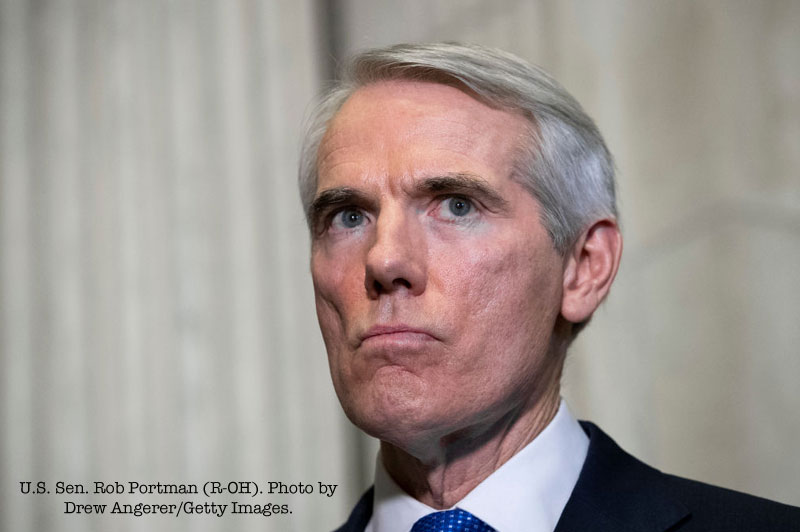
    Sen. Rob Portman is rejecting a Congressional effort from fellow Republicans to overturn the presidential election, saying on Monday he “cannot support allowing Congress to thwart the will of the voters.”

    Portman’s statement comes two days before members of Congress will meet on Wednesday to count the nation’s electoral votes, which were determined through last November’s election and later officially certified by each state. This is typically a ceremonial gathering, the final Constitutional requirement before the winning candidate is sworn-in as president on Jan. 20.

    A group of Republicans in the U.S. Senate and the U.S. House of Representatives, citing unfounded allegations of voter fraud, have announced plans to vote against the electoral vote certifications for a number of swing states won by Democratic nominee Joe Biden. 

    Portman said Monday he would not be joining them.

    “(A)fter two months of recounts and legal challenges, not a single state recount changed a result and, of the dozens of lawsuits filed, not one found evidence of fraud or irregularities widespread enough to change the result of the election,” a statement from Portman’s office reads. “This was the finding of numerous Republican-appointed judges and the Trump Administration’s own Department of Justice. Every state has now weighed in and certified its electoral slate based on its vote and the process set out in the Constitution.”

    Portman acknowledged that “many Americans believe the election was unfairly decided.” An NPR/PBS NewsHour/Marist survey from December found that nearly 75% of Republicans believed the 2020 election results to be inaccurate.

    Portman is advocating for a “blue ribbon bipartisan panel on election integrity” to look into “issues” from the 2020 election and make recommendations for future elections. 

    His statement mentions there were “instances of fraud and irregularities, as there are in every presidential election,” though it did not name any.

    Back in 2016, Portman rescinded his support for Trump after the Access Hollywood tape surfaced in which Trump bragged in 2005 about groping women’s genitals. Portman, who in 2016 was running for reelection to the U.S. Senate, said he would be voting for Mike Pence instead.

    Portman reversed again to become an ally of President Trump, even serving as a 2020 campaign co-chair in Ohio for his reelection effort.

    Portman’s full statement on the Jan. 6 electoral college count can be read here.

  • Has your Loveland Area mail service deteriorated?

    Has your Loveland Area mail service deteriorated?

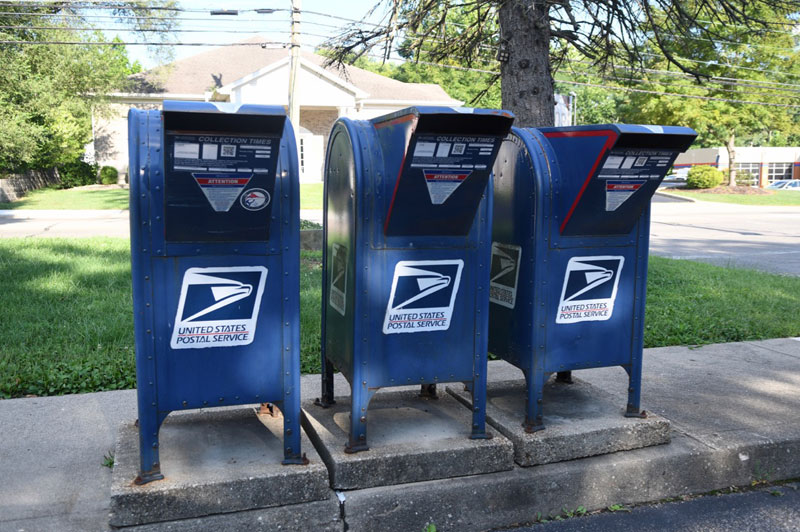
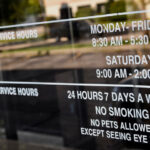
    Loveland, Ohio – To supplement the story below (4 Ohio Republicans join House Dems to pass bill to boost post office funding by $25B) from the Ohio Capital Journal, Loveland Magazine visited two of the closest local U.S. Post Offices to document the number of mailboxes placed outside the buildings. We also documented the days and hours of operation of each.

    While unlikely that the Trump Administration would attempt to interfere with the delivery of election-related mail in our heavily Republican voting area, nearly all Loveland mail does go to or from the Dalton Street processing center in Cincinnati. Interfering with mail delivery in the heavily Democratic voting urban areas of Cincinnati’s urban core is not beyond reasonable suspicion. And, the President may use mail problems in any part of the country to delegitimize and dispute the November election results.

    One day ago the President tweeted, “The greatest Election Fraud in our history is about to happen. This may top the Democrats illegally spying on my campaign!”

    On August 20 the President tweeted this, “They are sending out 51,000,000 Ballots to people who haven’t even requested a Ballot. Many of those people don’t even exist. They are trying to STEAL this election. This should not be allowed!”

    Trump said last week on Fox News that he opposes some funding because he doesn’t want it used for mail-in votes, repeating his claim that it would lead to “fraudulent” election results.

    WCPO has reported that processing machines from Cincinnati’s Dalton Street post office have been removed and remain offline and unusable.

    The Cincinnati Enquirer recently reported that according to Jim Sizemore, president of the American Postal Workers Union in Cincinnati that in May and June, the USPS “pulled the plug on eight mail processing machines in Cincinnati, accounting for 19% of the processing center’s capacity.” The eight machines could process collectively 243,000 pieces of mail an hour according to the Enquirer. Mail is piling up on the floor at the Queensgate facility according to Sizemore.

    WCPO’s John Matarese says the VA is now notifying veterans that they should order their medicine earlier than usual because at this time it cannot guarantee on-time delivery. And, by law, it cannot ship medication via private services.

    Sen. Rob Portman said on August 21 on his FaceBook page, “A number of veterans have reached out to my office recently expressing concern about delays in the USPS delivery of their critical prescription medications. This is not acceptable. This morning I pressed Postmaster General DeJoy for answers.” And on August 19 Portman said, “We must protect Ohioans right to vote during to the ongoing COVID-19 pandemic. That’s why I sent a letter to the Postmaster General with Congressman Bob Latta calling on the USPS to ensure the timely & accurate delivery of election-related materials in Ohio.”

    Rep. Brad Wenstrup told constituents in an email on Monday that the postal service has enough money on hand, “$14 billion cash” and that he voted to “open a $10 billion line of credit through the CARES Act” to help with any COVID-19 issues. Wenstrup said the USPS has enough money on hand to remain “fully function” until August of next year and that Speaker Pelosi has “manufactured a crisis and rushed the House back to vote on an irresponsible and unneeded amount of money on a problem that does not currently exist.”

    Paige Pfleger reported in a Cincinnati Public Radio story on August 20 that, “Since the pandemic, even more Ohioans have opted to receive their medications by mail, to avoid possible exposure or to save money.”

    Antonio Ciaccia of the Ohio Pharmacists Association is quoted in the story, “We have heard some extreme anecdotes over the last couple weeks where patients are waiting one, two, three weeks for their medications,” and adds that he’s never heard so many complaints about delivery delays.

    On August 18, Senator Sherrod Brown is quoted in a Cleveland.com article about mail sorting equipment being dismantled in Cleveland. Brown said, “As the U.S. Postal Service has warned Ohio and other states that it may not be able to meet mail-voting deadlines this November, the visibly idle equipment along with mail delays and post office budget shortfalls have fueled fears that the upcoming election will be undermined.”

    Reporter Sabrina Eaton writes in the Cleveland.com article:

    President Donald Trump’s assaults on mail-in balloting, even as he has requested an absentee ballot to vote from his new residence in Florida, have raised questions over whether he’s deliberately trying to sabotage an election that will likely have more mail-in ballots than ever because of reluctance to vote in person during the coronavirus pandemic.

    In a news conference over the weekend, Trump said universal mail-in voting would be “catastrophic. It’s going to make our country a laughingstock all over the world.”

    “The ballots are lost, there’s fraud, there’s theft, it’s happening all over the place,” said Trump. “Now we’re going to do it with this whole, vast, big section of the country? It’s crazy.

    Check out these two voter guides recently published by Loveland Magazine with information about requesting absentee ballots. Keep in mind that Ohio officials are recommending you stay ahead of these absolute dates to ensure your mail coming to and from the post office is delivered in time for your vote to count.

    Sidebar: What You Need to Know to Vote This Year

    Loveland Area November Voting Guide: What you need to know to…

    vvvvv
    nnnnn

    Loveland Magazine is interested in hearing from readers if they have experienced any delays in receiving mail (timely delivery of medicine, paychecks and other essentials) or about concerns they may have about receiving absent ballot requests or sending their ballot back to the local Boards of Elections. Please send us your thoughts to editor@lovelandmagazine.com.

    These photos were taken on the evening of August 16 at the Loveland and Symmes post offices. We do not know if any additional boxes were recently removed but is does not appear so. Although the quantity of mailboxes and hours of operation at these locations would not necessarily reflect current delays in mail delivery, we did want to document current conditions in advance of the November 3rd Presidential Election.


    4 Ohio Republicans join House Dems to pass bill to boost post office funding by $25B

    By Allison Stevens – Ohio Capital Journal
    House Speaker Nancy Pelosi said Saturday that mail delays are depriving Americans of timely delivery of medicine, paychecks and other essentials. Photo by Justin Sullivan | Getty Images

    WASHINGTON — The U.S. House convened a rare weekend session Saturday in an attempt to stop the U.S. Postal Service from allegedly disrupting mail service to sabotage the November elections.

    The Democratic-led chamber passed a bill  257-150 that would infuse $25 billion into the agency as it prepares for a surge in mail-in ballots and bar it from changing operations or service levels in place at the beginning of the year.

    The prohibition would remain in effect through January 2021 or for the duration of the coronavirus crisis — whichever is later.

    The bill passed largely along party lines, though more than two dozen Republicans joined Democrats in backing the legislation, including four Ohio Republicans: Reps. Troy Balderson (12th District), David Joyce (14th District), Steve Stivers (15th District) and Mike Turner (10th District). Rep. Bob Gibbs (R-7th District) did not vote. No Democrats voted against the bill.

    One Republican in favor was Rep. Brian Fitzpatrick of Pennsylvania, who said the post office needed to be funded so his constituents could get their mail delivered on time. “Republicans and Democrats must come together and address the serious challenges that USPS has been facing for some time now,” he said.

    Senate Majority Leader Mitch McConnell (R-Ky.) is not expected to take up the measure. He told his hometown paper Tuesday that he doesn’t think a stand-alone bill funding the postal service would pass the chamber.

    The White House threatened  Friday to veto the post office boost, calling it “an overreaction to sensationalized media reports that have made evidence-free accusations that USPS has undertaken reforms to achieve political rather than operational objectives.”

    But House Speaker Nancy Pelosi (D-Calif.) maintains that the administration is trying to suppress votes as the nation heads into a fraught election season in which the postal service will serve as “election central.”

    In addition to undermining the integrity of the elections, the delays are depriving Americans of timely delivery of medicine, paychecks and other essentials, Pelosi said at a press conference Saturday.

    Democratic lawmakers made similar allegations on the House floor.

    The administration has mounted a “sabotage campaign” to manipulate the vote, Rep. Debbie Dingell, a Michigan Democrat, said Saturday morning.

    Democratic Rep. Brenda Lawrence of Michigan and a member of the House Oversight and Reform Committee, said the bill would prohibit the postmaster general from making any changes that would undermine the post office. She said the postmaster general has “tried to rip it apart from the inside” and “our democracy is hinging” on delivery of the mail.

    “Don’t mess with the USPS,” said Rep. Debbie Wasserman Schultz (D-Fla.).

    Republicans charged Democrats with ginning up a manufactured crisis intended to deny the president a second term. House Minority Leader Kevin McCarthy (R-Calif.) said postal problems predate 2020 and the Trump administration.

    GOP Rep. Rob Woodall of Georgia called Saturday’s vote a “punctuation mark” at the close of last week’s Democratic National Convention. This “wasteful partisan exercise” will “go nowhere” in the GOP-controlled Senate and “help no one,” he added.

    Rep. Debbie Lesko, a Republican from Arizona, echoed the sentiment, calling the controversy “phony political theater.” Pelosi has gone “politically postal,” she said, quoting a recent Wall Street Journal editorial.

    The House approved $25 billion for the postal service in a $3 trillion coronavirus relief package approved in May. Pelosi pointed out Saturday that the USPS board of governors — a bipartisan group of members appointed by Trump — backs the funding.

    Trump said last week on Fox News that he opposes some funding because he doesn’t want it used for mail-in votes, repeating his claim that it would lead to “fraudulent” election results.

    Postmaster General Louis DeJoy, a top Trump donor and former logistics executive from North Carolina, has ushered in sweeping changes to the agency since taking the job in June. He acknowledged Friday at an oversight hearing in the U.S. Senatethat his overhaul has coincided with a drop in on-time deliveries but called allegations that they were intended to suppress votes “outrageous.”

    He said changes to overtime, retail hours and the location of mail processing machines and blue mailboxes were made to save costs and streamline operations but said earlier this week he would suspend some of his moves until after the elections to avoid the appearance of impropriety. He also said he wouldn’t close existing mail processing facilities and would use “standby” resources in October to meet mail surges.

    On Friday, he insisted that secure elections are his “sacred duty” and top priority this fall.

    But Pelosi on Saturday called DeJoy’s promise into question, pointing to his decision not to replace mail infrastructure that has already been removed. She also pointed to Trump’s comment earlier this week calling for law enforcement officers at polling places.

    “It is all designed to suppress the vote,” Pelosi said.

    DeJoy is slated to testify again on Monday in a hearing before the Democratic-led House Oversight and Reform Committee, where he is expected to face more withering questioning. Robert Duncan, chair of the U.S. Postal Service Board of Governors, will also appear before the committee.


    Allison Stevens

    Allison Stevens is a Washington D.C. reporter for States Newsroom, a network of state-based nonprofit news outlets that includes the Ohio Capital Journal.
  • “A Good American“

    “A Good American“

    “A Good American“ is a gripping docu-thriller about a groundbreaking surveillance program, the brilliant mastermind behind it and how a perfect alternative to mass surveillance was killed by NSA-management for money – three weeks prior to 9/11.

    Bill Binney was a brilliant cryptologist and long-time National Security Agency (NSA) analyst, since 1997 serving as Technical Director. Binney developed a sophisticated program named ThinThread for gathering data capable of providing clues, in real-time, of potential terrorist threats.


    Watch on YouTubeGoogle Play, Netflix, Vedu, and Amazon Prime.

    A Good American: Home


  • Claims now accepted for $586 million Western Union Fund for fraud victims

    Claims now accepted for $586 million Western Union Fund for fraud victims

    Columbus, Ohio – Ohio Attorney General Mike DeWine today announced that Ohioans who sent money to scammers using Western Union’s wire service may now apply for compensation from a $586 million fund held by the U.S. Department of Justice’s victim asset recovery program.  

    The fund is related to a multistate settlement Attorney General DeWine announced in January

    Consumers may be eligible to receive compensation if they sent a fraud-induced wire transfer through Western Union between Jan. 1, 2004, and Jan. 19, 2017.

    “It’s not often that scam victims have a chance to recover some of their money, so we want people to know about this opportunity,” Attorney General DeWine said. “If you think you’re eligible, file a claim.”   

    A settlement administrator is sending claim forms to over 500,000 consumers. Ohioans may receive a form in the mail if they reported to Western Union or to the Ohio Attorney General’s Office that they had been the victim of a scam using Western Union. The form will contain instructions on how to file a claim. 

    Consumers who do not receive a claim form but believe they may have a valid claim should visit www.WesternUnionRemission.com or call 844-319-2124 for details on filing a claim. 

    Completed claim forms must be submitted online or mailed back to the settlement administrator by Feb. 12, 2018.