Tag: free speech

  • LGBTQ community, people of color in the crosshairs of banned book movement

    LGBTQ community, people of color in the crosshairs of banned book movement

    A display of banned books at the San Jose Public Library (Photo courtesy of San Jose Public Library via Flickr | CC-BY-SA 2.0).

    BY: ARIANA FIGUEROA – Ohio Capital Journal

    Students in one Pennsylvania school district were not allowed to read a biography of the first Black President, Barack Obama. (The ban was reversed following student protests.)

    In some Tennessee classrooms, a nonfiction comic book about the atrocities of the Holocaust is banned.

    And one school district in Wisconsin banned from libraries a picture book about a gay rights activist who was assassinated.

    In the last nine months, hundreds of books across dozens of states are being banned at an alarming rate. A majority of the bans feature books written by authors who are people of color, LGBTQ+, Black and Indigenous, and feature characters from marginalized groups.

    And now, state Republicans lawmakers are joining the movement, spurred by ultra conservative groups, to ban books from public schools and libraries.
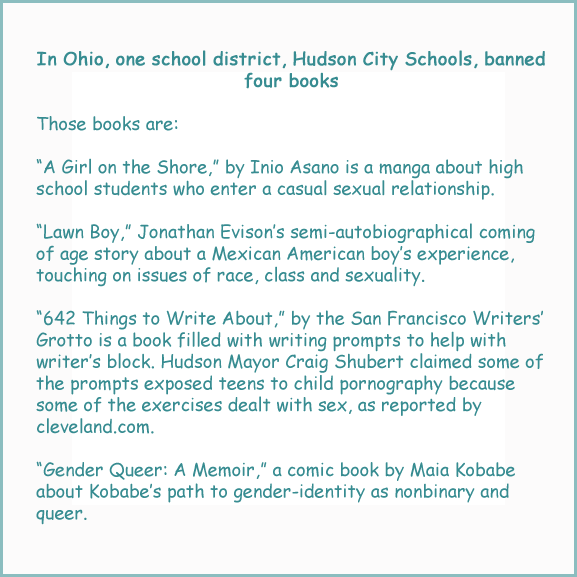
    This year in Arizona, state Republicans put forth a measure that would ban schools from teaching or directing students to study any material that is “sexually explicit.” In Florida, Gov. Ron DeSantis recently signed a bill to allow parents greater opportunity to review, and potentially object to, school library books that they find “inappropriate.”

    And in Idaho, state House Republicans passed a bill that would allow librarians to be prosecuted for allowing minors to check out material deemed harmful.

    Some of the states with the most aggressive book bans include Texas with 713 bans, Pennsylvania with 456 bans and Florida with 204 bans.

    Deborah Caldwell-Stone, the director of the American Library Association’s Office for Intellectual Freedom, said book bans the last 10 years have dealt “with the lives of LGBTQIA persons, either reflecting their experiences, or talking about issues of concern to the LGBTQIA community.”

    She said those bans have ranged from picture books depicting same-sex couples to young adult books talking about gender identities.

    Caldwell-Stone said, “the one thing that has interrupted this” trend of banning books centered around LGBTQ+ themes comes after the 2020 murder of George Floyd by Minnesota police officer Derek Chauvin.

    “There was an increased number of challenges to books dealing with race and racism that accelerated when we started seeing complaints from organized groups about critical race theory,” she said.

    “And so when I say critical race theory, I’m not using it in the sense that it actually should be used, which is to describe a graduate level academic analysis of law and political systems, but this use of it to describe books and materials that offer alternative perspectives on American history that reflect the lives of Black persons and their experience of slavery, their experiences with police violence, and so we’ve seen a rising number of challenges to those books.”

    Some of those groups that have challenged school boards include Moms for Liberty, an organization that has strong GOP ties and has local chapters that “target local school board meetings, school board members, administrators, and teachers” to push right-wing policies, as reported by Media Matters. Moms for Liberty has more than 100 local chapters across 35 states.

    “We’re seeing nationally organized groups create local chapters, and use social media to amplify their demands,” Caldwell-Stone said. “They will tell you that they’re asserting parental rights to direct their children’s education, but the impact of their activities is to deny other parents the right to make decisions about their own children’s education, and particularly for older adolescents denying the First Amendment rights and agency for elder adolescents to read and access the materials they find important for their lives.”

    Congressional Democrats have also raised concerns about the increase in book bans across the country. At a recent hearing, Maryland Democrat Rep. Jamie Raskin, cited a report by PEN America — an organization that advocates for the protection of free speech — that found from July 2021 to the end of March this year, more than 1,500 books were banned in 86 school districts in 26 states.

    Ruby Bridges, a civil rights icon who was the first Black child to desegregate an all-white Louisiana school, was a key witness at the hearing. Children’s books about her story – “Brand New School, Brave New Ruby,” and “The Story of Ruby Bridges” – have been banned from classrooms in Pennsylvania.

    “The truth is that rarely do children of color or immigrants see themselves in these textbooks we are forced to use,” Bridges told lawmakers. “I write because I want them to understand the contributions their ancestors have made to our great country, whether that contribution was made as slaves or volunteers.”

    Banning books is not a new thing, and since the 1980s, the American Libraries Association has celebrated those books that are taken off the shelves for its yearly “Banned Books Week.”

    Books have been banned for racist depictions or language, such as “Huckleberry Finn” by Mark Twain and “Of Mice and Men” by John Steinbeck because of its racial slurs. And in 2021, Dr. Seuss Enterprises announced it would no longer reprint six Dr. Seuss books, including “And to Think That I Saw It on Mulberry Street,” and “If I Ran the Zoo.”

    “These books portray people in ways that are hurtful and wrong,” Dr. Seuss Enterprises said in a statement.

    But the uptick and rate at which books are now being challenged and banned in schools, has alarmed many freedom of speech advocates such as Jonathan Friedman, the Director of PEN’s Free Expression and Education program, and author of the report Raskin referred to during a House hearing.

    “It’s not just a parent getting angry about a book in a one off fashion,” he said in an interview with States Newsroom.

    Friedman said some parents or local activists will submit hundreds of books to be challenged and removed off shelves.

    “It’s happening all over, so it’s not just one part of the country. A list of books that might be deemed illicit by a group of parents in one state is being used in other states as well,” he said.

    Friedman said he’s noticed most of the escalation of book banning happened in the fall of 2021, and pointed to a large swath of book bans that started in Leander, a school district in Texas.

    “I think a lot of the energy around that (trend), set off of anti-mask energy, and you know, sort of frustrations of a pandemic,” Friedman said.

    During a school board meeting, a parent read an excerpt of “Out of Darkness” by Ashley Hope Pérez that has a euphemism for anal sex that is historically accurate for the time the book takes place in, which is the 1930s.

    That book was one of 120 that students could choose from based off of an optional curriculum, such as a book club.

    “And in response, the district suspended the entire curriculum and launched a review, a kind of book by book review, much of it seemingly developing on the fly,” he said. “So they went through a year-long process, but some have serious questions about how much that process was conducted in a way that was fair.”

    Banning books in the classroom is an issue the Supreme Court took up in 1982 in Island Trees School District v. Pico. In a 5-4 decision, the Court ruled in the student’s favor, affirming that the First Amendment limits the power of junior high and high school administrative officials to remove books from school libraries based on the books’ content.

    But in that court decision, because “given the sensibilities of young people” schools were given discretion to remove books that were deemed “pervasively vulgar,” or “educationally unsuitable,”Caldwell-Stone said.

    “Because the court really didn’t define these terms, they become a kind of magic word,” she said. “If we say those magic words that will make it legal for us to remove this book when, in fact, the actual motivation behind removing the book is because the book is about two gay teens finding each other and falling in love.”

    Ohio HB 616: This type of legislation and mentality must be…


  • To the Mayor and City Council: 
Why Can’t We Vote?

    To the Mayor and City Council: 
Why Can’t We Vote?

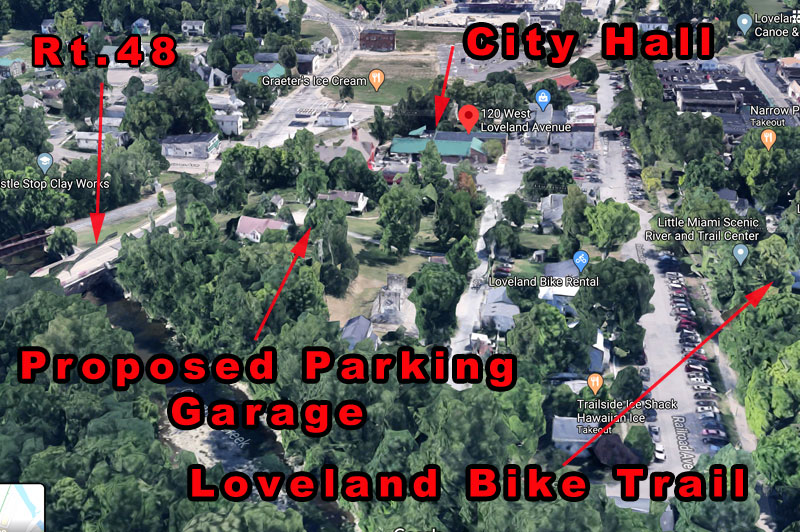
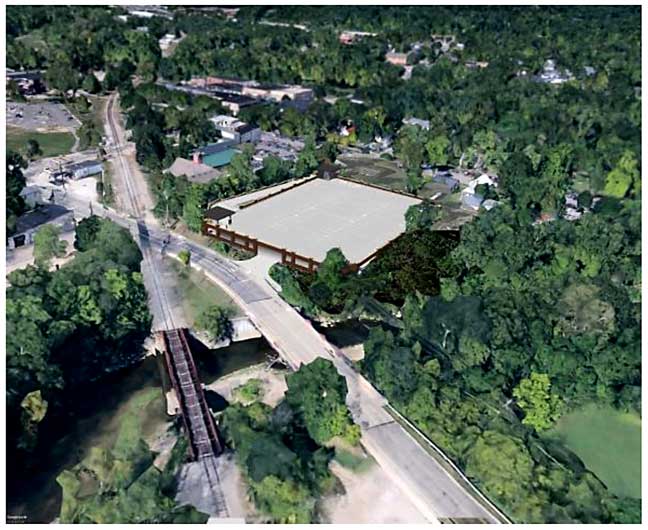
    The proposed parking garage for Historic Downtown as envisioned by City Hall.

    “A man without a vote is a man without protection.”

    Lyndon B. Johnson

    by Lauren Enda

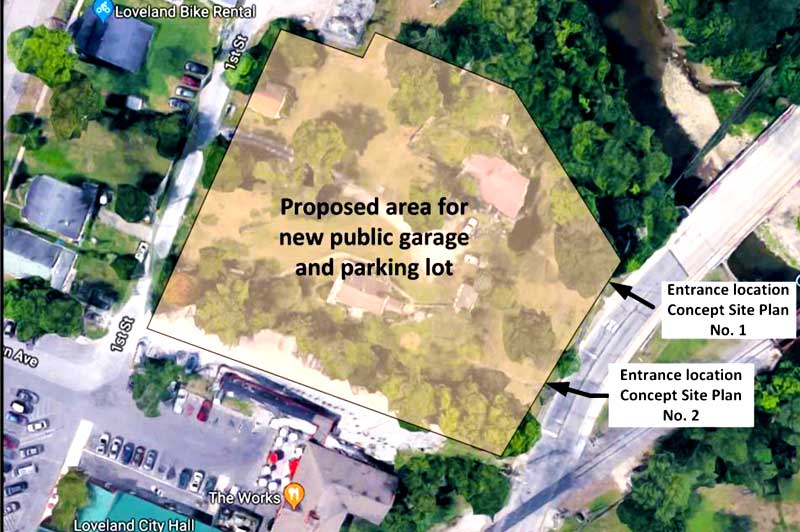
    I retired here from the National Security Agency after 30 years of playing my part to protect the United States. I did not expect to continue that role in retirement, but in my opinion, democratic principles in Loveland are in trouble, especially with the proposed parking garage in Historic Downtown. The Mayor is on record denying residents the right to vote on whether to build the garage. I will not stay silent when this and other examples of abuse of power in my own city are happening. Below, I outline examples.

    In recent weeks, we have heard evidence about the mayor’s record of stifling free speech – both of ordinary citizens and of council members. Also, a Loveland resident captured a photo of a campaigner for the Mayor’s “endorsed block” who was removing campaign signs of their opponent on Election Day. Removing campaign signs subverts open, free and fair elections. Who authorized this tactic? Every Loveland resident should be concerned that this type of anti-democratic behavior is happening here. This behavior does not uphold democratic principles. These are two examples of democracy in trouble, but I will focus now on the garage. 

    Building a multi-story level parking garage in Loveland is very controversial. Many Loveland residents do not want it. The only official feedback we have about the garage is the recent election. Only one council member indicated he was opposed to the garage. And he won the most votes. The message is clear. Loveland voted against the garage. If the Mayor and the newly appointed Council go forward with the garage, they do so against the will of the people. 

    But does the will of the people matter in Loveland? Mayor Bailey clearly does not think so. During a council meeting on 11 February 2020, the mayor said, “Residents will not be voting on the garage.” When asked WHY residents were not allowed to vote, the mayor responded, “You vote on your elected officials and those are the decisions we have been elected to make.” The Mayor would like for residents to become mute after an election, however, an election does not provide the winning party free rein with taxpayer money. An election does not give the winning party carte blanche to permanently disfigure a town without the clear support of the people. An election does not give anyone a green light to plan a large, controversial project in virtual secrecy. 

    Below is video of resident Karen Hawkins asking the Council, and specifically, Mayor Kathy Bailey, about the inevitably of the parking garage being built in Historic Downtown Loveland and if the public will be allowed to vote on its construction.:

    Elected officials should uphold the will of the people. They should give citizens a voice, not deny their voice. Residents are not mute once they leave the polling booth. Quite the contrary. Loveland citizens should retain a voice in what is decided here – especially on the largest capital expenditure in the history of Loveland.

    The proposed parking garage for Historic Downtown as envisioned by City Hall.

    Protection from abuse of power at the federal level is enshrined in the Constitution by checks and balances between the executive, legislative and judicial branches. What safeguards against abuse of power does Loveland have?  Where are our checks and balances? How does Loveland’s electorate ensure our voices are heard? 

    Luckily, there is precedence that the council could use to uphold democratic principles – Council could determine the will of the people by submitting the garage to a vote. In 2007, Loveland was faced with a similar decision – whether or not to build a YMCA. Since it was an expensive project with strong opposing views, the council wanted citizen input and put in on a referendum. The voters went to the polls and voted the project down. Other municipalities have put similar proposals to a vote. This is how democracy can work when a Council respects the electorate and allows them a vote. Why is our Council not providing us the same opportunity?

    My recommendation to the new Council who support the garage is to let Loveland vote on it. The recent election suggests the public doesn’t want the garage. The burden lies with Council to convince the public that this project is in the best interests of the city and the taxpayers. Once appropriate data is gathered and shared with the public on why it is necessary and how much it will cost, then let us vote. Ignoring voter input from the recent election and restricting voter input for the next election is certainly not democratic. 

    It is not too late for the Council to make this right. Loveland goes to the polls again on May 3rd. To the new Council, this is your chance to show that you are listening to us, not developers or outside interests. Your responsibility to listen to the voters does not end once the election is over. That is when your responsibility begins. Let us vote.

  • [VIDEO] Lauren Enda: Democracy in Loveland is in trouble.

    [VIDEO] Lauren Enda: Democracy in Loveland is in trouble.

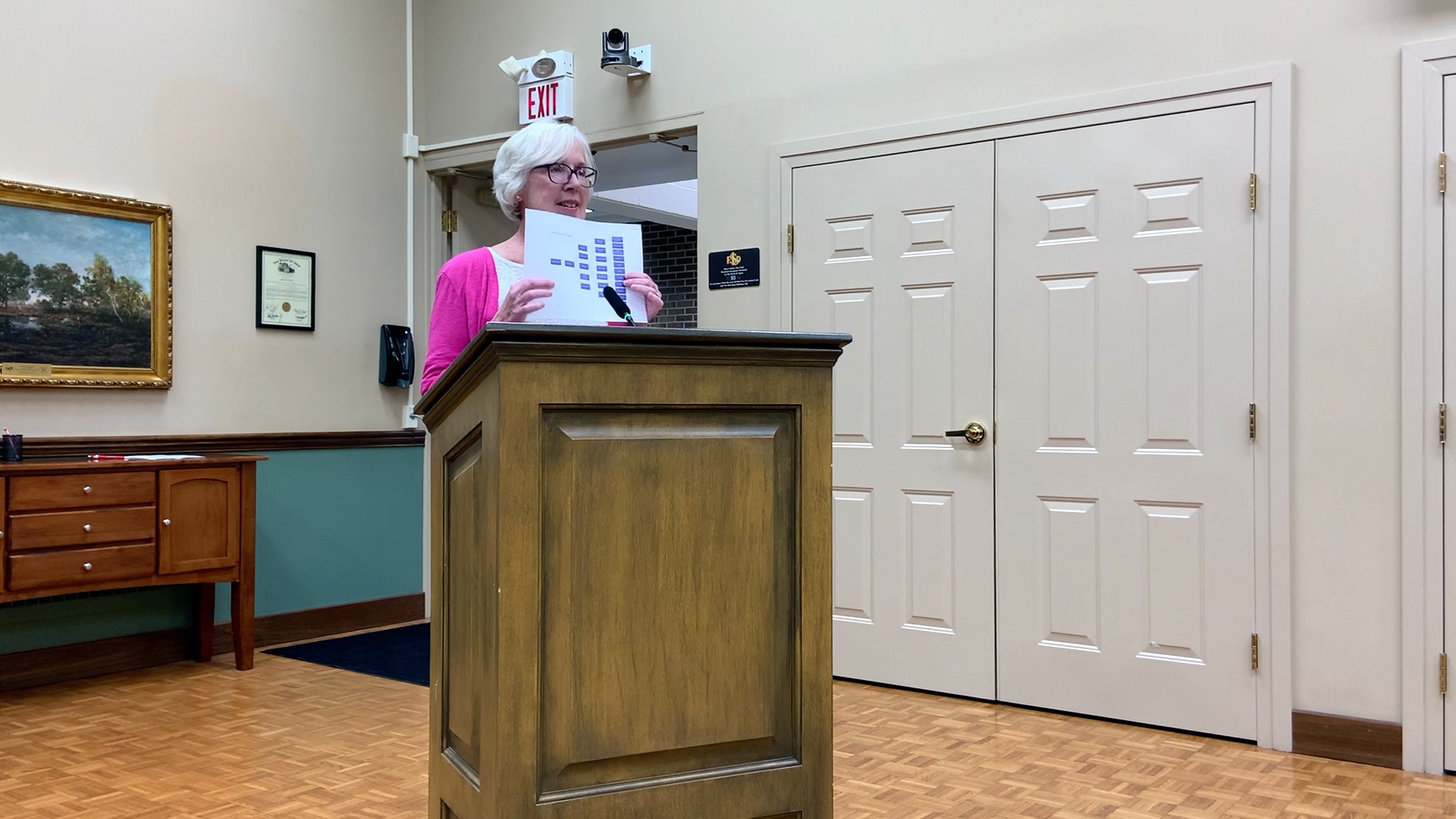
    Loveland, Ohio – Resident Lauren Enda spoke at the council meeting on Tuesday. Enda said she retired in Loveland after working at the National Security Agency. She began by saying, “After thirty years of doing my part to protect the United States, I did not expect to continue to do that role in retirement, but here I am.”

    She continued by outlining instances of Mayor Kathy Baily suppressing free speech at council meetings.

    Enda spoke mostly about a proposed parking garage in Historic Downtown and the message she sees sent by voters via the recent election. “One council member indicated he was opposed to that garage and he won the most votes. The message is clear. Loveland voted against the garage,” Enda said.

    Enda wants the question of building a garage put to a formal vote. She says Council should determine the will of the residents by putting the question on the May 3, 2022, ballot.

  • Sharon Scovanner on the annexation of Grailville and suppression of speech by Mayor Bailey

    Sharon Scovanner on the annexation of Grailville and suppression of speech by Mayor Bailey

    Loveland, Ohio – Sharon Scovanner went through the legal channels to be permitted to speak for 10-minutes at Tuesday night’s City Council meeting. Even though she followed the rules, Mayor Kathy Bailey refused Scovanner’s request to be “Placed on the Agenda”.

    She wanted to speak about the annexation into the City of the Graville property.

    WOW! If Mayor Bailey doesn’t want to hear from the citizens of Loveland maybe being mayor of Loveland is not for her.”Sharon Scovanner

    Not being deterred, Scovanner went to the meeting and signed up for “open forum” which would allow her 5-minutes to speak.

    As soon as the 5-minutes was over, Scovanner was interrupted mid-sentence by Bailey and told that her speaking time was over. Scovanner immediately left the podium.

    You can watch Scovanner speaking last night in the LOVELAND MAGAZINE TV video below and also read her entire statement to see what she was not allowed to say.

    Also below is a post-meeting LOVELAND MAGAZINE TV interview with Scovanner being asked how she felt the meeting went and Mayor Bailey’s response to the accusation of suppressing free speech.

    City council
    
    I’ve spoken with numerous members of council recently including Mr. Oury, Mr. Bateman, (at my house) Mr. Blair, and Mr. Butler (at the committee appreciation dinner) about some really important issues recently.  There has been debate and at times we have agreed to disagree.  Disagreement is not a negative, but a way to understand each other’s point of view.  I have also had productive meetings and discussions with Dave Kennedy, Tom Smith and Mark Medlar.  The best results are always when there is dialogue, each person defending their positions.  That’s how democracy works, when it is working well.  Governing bodies succeed when there is open sharing of facts, discussion, deliberation and at times, compromise.           
    
    A couple of weeks ago all the city council candidates were invited to attend a meet the Candidate forum after our neighborhood’s annual HOA meeting.  Mr. Butler, Hart, Phelps and Ms. Lukens attended.   At our meeting there was spirited debate about the development of Blossom Hill, annexation of the Grail property, the proposed parking garage, all of which significantly impact TRAFFIC congestion in DT Loveland.  Mr. Phelps and Hart took a lot of tough questions, as the residents were concerned about the disproportionate detrimental effect each of these developments would have on the residents of Warren County.  Hopefully they heard the collective and heartfelt voices of the residents.  Mr. Phelps stayed after the meeting and talked further about these issues which was most appreciated.  He suggested that I add my name to the agenda of the next city council meeting for further discussion.  I attempted to do so. 
    
    Rule 19 of the Loveland City Council rules (five-day rule) states “Any person, group or delegation wishing to be placed on the agenda to appear before council shall direct a letter to the clerk of council so it is received by the clerk no later than 12 noon on the Thursday preceding the regularly scheduled Tuesday council meeting,….
    
    Rule 19 was followed, despite this, On Friday, I received an email from Misty, the clerk of council.  It read, “Sharon, Mayor Bailey has DECLINED your request to be placed on the October 26 agenda and suggested that you speak during open forum.”  WOW!  If Mayor Bailey doesn’t want to hear from the citizens of Loveland maybe being mayor of Loveland is not for her.  
    
    According to rule 19, the mayor has no authority what so ever to deny a request to appear on the agenda.  Just because the mayor does not like what a citizen has to say, does not give her the right to try to silence them.     
    
    If you look at the organizational chart of the city, one and only one group is at the top, it isn’t the mayor, the city council, businesses or developers.  It’s the citizens.  
    
    Allowing active participation of the citizenry should be the goal of any functioning democracy and should be insisted upon by all who are in positions of power.    
    
    In 2017, a group known as Loveland Community Heartbeat, lead by Neal Oury (our community advocate, as per his political sign) initiated a recall of Mayor Mark Fitzgerald.  The grounds for removal were as follows.
     
    1. Conducting city operations and meetings in a manner which prohibits full participations by all council members, resident involvement and transparency and
    
    2. Willfully and flagrantly exercising authority and power without the consent of the resident electorate or city council
    
    2017 was a dark time for the city of Loveland and Mayor Bailey is returning us to those same dark days.  Over the past few months Mayor Bailey has prohibited full participation by all council members and resident involvement by
      
    1. denying my request to be on the agenda to limit my time for speaking, after I was invited by Mr. Phelps to be placed on the agenda.
    
    2. telling another Resident he could not speak (Dave Stanton), only to be admonished by the Law Director because she overreached her authority. 
    
    3. voting in favor of taking a sitting Council Member off the agenda to limit his speech.
    
    4. denying a sitting Council member’s request to be on the agenda to limit his speech. 
    
    5.  trying to limit members of the press from access to meetings and taking pictures.
    
    6. showing favoritism to one member of council by allowing him more times to speak, while denying that same right to others council members.   
    
    7. Earlier this year, she voted to change council rules to limit the time any one topic could be spoken about by residents in one meeting to 20 minutes. 
     
    So, if an issue comes up that brings 100 people to open forum only 4 people can speak?  Council has an obligation to listen to all the residents who take the time to prepare and come to speak to council, regardless how long it takes; its what you were elected to do. 
    
    These are only the things that I know of, who knows who else has been denied the right to speak?   This is all very alarming and needs to stop.     
    
    Suppression of speech undermines the very core of any democracy.  
    
    The recent actions of Mayor Bailey serve as a wakeup call for the citizens of Loveland, members of council and to those who spoke so loudly against Mark Fitzgerald 4 years ago.  
    
    We can and must do better.  
    
    I welcome your questions and comments
    
  • Apply now for ACLU’s Summer Advocacy Institute

    Apply now for ACLU’s Summer Advocacy Institute

    Are you a rising high school junior or senior interested in gaining political and grassroots experience?

    From free speech to privacy and from mass incarceration to voting rights, students will become experts on the issues currently being confronted in the United States’ courts and political arena.

    The ACLU’s Summer Advocacy Institute will bring together a diverse group of students entering their junior and senior years of high school from across the United States to participate in an advanced, firsthand learning experience for the next generation of social justice advocates. Through an intensive 8-day program (July 18-25, 2018) in Washington D.C., students will learn directly from lawyers, lobbyists, community activists, and other experts working to defend the civil rights and liberties critical to a free and open society. The Close Up Foundation — a DC-based civic-education nonprofit — will serve as a partner with the ACLU to provide substantive experiential learning opportunities that help students hone their skills as issue-focused campaigners.

    In classroom sessions, lectures, and daily debates, students will explore the complex nature of defending and advancing civil liberties as well as examine the importance of these freedoms in our current society. Students will be immersed in the real world of political and legal decision making in Washington, D.C., meeting with elected officials and/or congressional staff and community organizers as well as participating in workshops with civil rights pioneers and other current youth activists.

    APPLY NOW

    Scholarships are available.

    If a Loveland Area student qualifies, we are committed to helping raise $’s beyond what is provided by the financial assistance available.


    Wildflower House — where women & girls bloom!


  • [VIDEO] Mayor announces Zero Tolerance Policy: No whispering or passing papers during meetings

    [VIDEO] Mayor announces Zero Tolerance Policy: No whispering or passing papers during meetings

    Loveland, Ohio – Mayor Mark Fitzgerald announced at the beginning of the May 23 Council meeting that he has instituted a “Zero tolerance policy” towards the public’s whispering or passing documents among themselves during meetings. He said it was because it was intentionally, “Preventing the audience from hearing or knowing the business of the body discussed.”

    He further stated that a disruptive person waives their right to attend council meetings and the Council can remove the person from the meeting.

    The Mayor was speaking on behalf of all of Council. None objected to the policy.


    Paxton’s Grill

    Relaxed atmosphere and friendly service welcomes you back time and time again! Located in the heart of the Historic Loveland District