Tag: George Floyd

  • House passes bill creating new criminal charges for protesters

    House passes bill creating new criminal charges for protesters

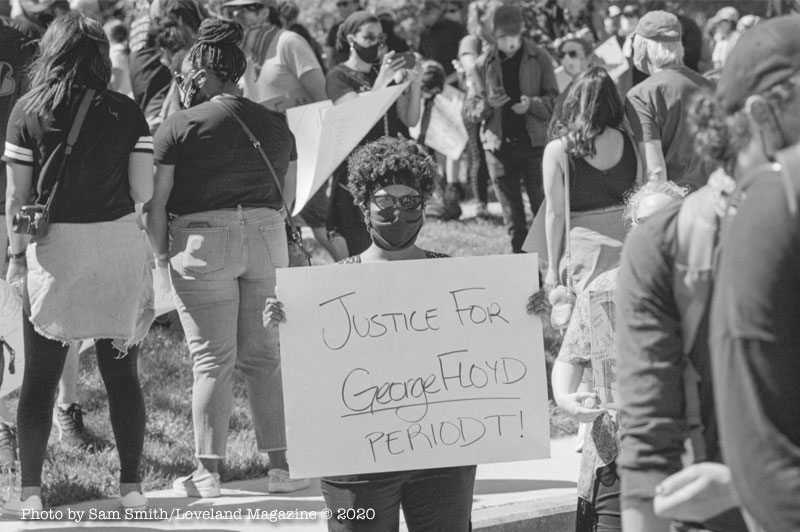
    Photo by Sam Smith for Loveland Magazine of racial justice rally in Inwood Park, Cincinnati – Sunday, March 31st, 2020

    By Jake Zuckerman and Ohio Capital Journal

    Ohio House Republicans passed legislation Friday that would expand the definition of “obstruction of justice” broadly enough to capture protest activity, according to social justice activists and civil rights advocates who testified against the bill. 

    The legislation would qualify failing to follow a “lawful order from a law enforcement officer” as the obstruction of justice.

    It also prohibits a person from interfering with or obstructing a police officer at work with “reckless disregard” as to whether the action diverts or obstructs the officer’s attention. This includes entering or placing an object somewhere that’s large enough that the officer cannot reach a person outside the area.

    Republicans said the legislation establishes basic protections for officers after a year of increasing violence and tumultuous social justice protests.

    Democrats said the legislation is unhelpful and divisive. Rep. Jeff Crossman, D-Parma, said it “fans the flame of culture wars and is yet another dog whistle about race.”

    Crossman offered an amendment to exempt anyone from charges who uses or threatens to use force against an officer if they’re “acting in good faith” to prevent death or serious bodily injury. The amendment failed on party lines. 

    Additionally, the legislation would prohibit a person from throwing any object or substance at an officer “with intent to distract.”

    The bill largely addresses conduct that’s already illegal under Ohio law, according to analysis from the Legislative Service Commission. It provides prosecutors more charges they can impose on alleged violators.

    The expanded obstruction of justice charges would be second-degree misdemeanors, or fifth-degree felonies if they cause physical harm to a person. Second-degree misdemeanorconvictions can yield sentences up to 90 days. Fifth-degreefelonies yield sentences between six and 12 months.

    After a Minneapolis police officer murdered George Floyd, an unarmed black man suspected of using a fake $20 bill, on camera last summer, massive racial justice protests formed around the country. Activists criticized racial profiling and the excessive use of force from officers unto people of color.

    Some of the initial protests descended into violence and looting. However, researchers reviewed 2,400 demonstrations nationwide between May and August 2020 and found fewer than 220 (about 7%) turned violent.  

    Regardless, Republican-controlled legislatures around the U.S. have introduced and passed different proposals to expand on or build new charges that can be filed against protesters. A more extreme proposal in Ohio sought to expand citizens’ rights to shoot in perceived self-defense during a “riot” — a loosely defined term in Ohio law.

    “This bill is not an anti-peaceful protest bill,” said Rep. Shane Wilkin, R-Lynchburg, one of the lead sponsors. “The key word is peaceful.”

    The version of the bill advanced by the House Criminal Justice Committee on Thursday is significantly narrower than what was introduced. “Taunt[ing]”an officer would have qualified as the obstruction of justice under the original bill draft.

    Republican Reps. Jeff LaRe of Violet Twp. and Wilkin sponsored the proposal. In their written testimony to the committee, they denied any intent to infringe upon individuals’ rights to free speech and assembly. They said it’s about protecting law enforcement officers.

    “Peaceful protests have turned violent when bad actors who are not involved in a police matter begin to taunt, harass, and overall interfere with law enforcement officers performing their duties,” they wrote.

    Racial justice groups, public defenders, the ACLU, religious organizations focused on social justice and the libertarian Americans for Prosperity spoke out against the bill.

    “The language in this bill will prevent innocent bystanders from exercising their Sixth Amendment rights per the U.S. Constitution,” said Tom Roberts, president of the NAACP Ohio Conference.

    “With the excessive force issues among our law enforcement here in Ohio and across the country, the timing of this bill is inappropriate and insensitive to many communities of color.”

    Advocacy groups representing police and prosecutors testified in support of the bill. Preble County Sheriff Mike Simpson, representing the Buckeye State Sheriffs’ Association, claimed some people seized on the unrest last summer as “an avenue to promote violence.”

    House Bill 22, he said, would outlaw “diversionary tactics” from those seeking to distract, disrupt and impede law enforcement.

    Analysts with the Legislative Service Commission, which conducts policy research for lawmakers, found the legislation will increase the number of offenders being sentenced to prison and may lengthen some terms. This could increase annual prison costs by between $3,000 and $4,000 per offender.

    Thomas Quinlan — who formerly served as Columbus chief of police, including during the protests last summer — testified in support of the bill on similar lines.  

    In May, U.S. District Judge Algenon Marbley issued a blistering, 88-page opinion prohibiting Columbus police from using tear gas, pepper spray, batons and rubber bullets against nonviolent protesters. He found officers used force “indiscriminately” and without provocation.

    “This case is the sad tale of police officers, clothed with the awesome power of the state, run amok,” he wrote.

    Just seven proponents testified in support of the bill, compared to more than 100 who opposed it, as noted by Ohio Legislative Black Caucus President Rep. Thomas West, D-Canton, in a statement after the vote.

    He said the bill “further sows the seeds of fear” by attempting to criminalize the right to protest.

    “This bill, not to mention similar legislation pending before this body, takes Ohio in the opposite direction of progress,” he said. “HB 22 will not promote the safety and security of our officers and of individuals exercising their First Amendment rights. It will only create more tension and potential for conflict.”

    The bill now goes to the Senate for consideration.
  • A Diversity Story: by Leah Marcus

    A Diversity Story: by Leah Marcus

    “When we speak we are afraid our words will not be heard nor welcomed, but when we are silent we are still afraid. So is it better to speak?” – Audre Lorde

    I am in sixth grade. My hands, gripping the edge of my desk in a quiet rage. Knuckles white. I. Hate. It. Here. My skin crawls. There isn’t a place in the world I want to exist. Everyone listens to me say this. But no one hears me. I am ignored.

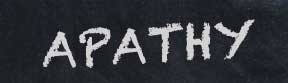
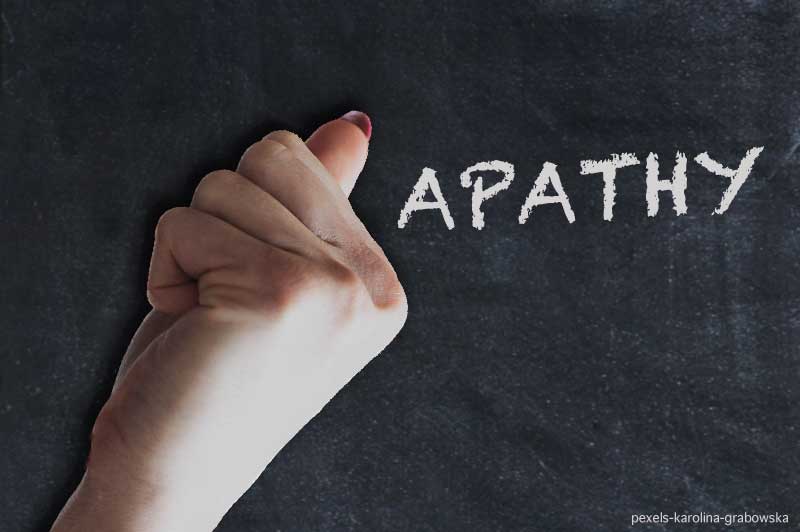
    Mrs. S. wrote the word “Apathy” on the board. 

    “That feeling. That word, murdered 11 million people. 6 million Jews. 1.5 million Jewish Children. Look at it.”

    We stare for a minute. Silent.

    I hear a soft laugh. Is that my snicker? Another. Uncomfortable shifting in desk chairs. Whoever it was, Brandon has the loudest giggle, and he receives the teacher’s corrective glare.

    She darkens the room and pulls down the screen. A slide of a naked, emaciated, woman, dead appears. My eyes glance over at the word. Apathy.

    The next slide. A gas chamber. Dead bodies slumped over each other. 

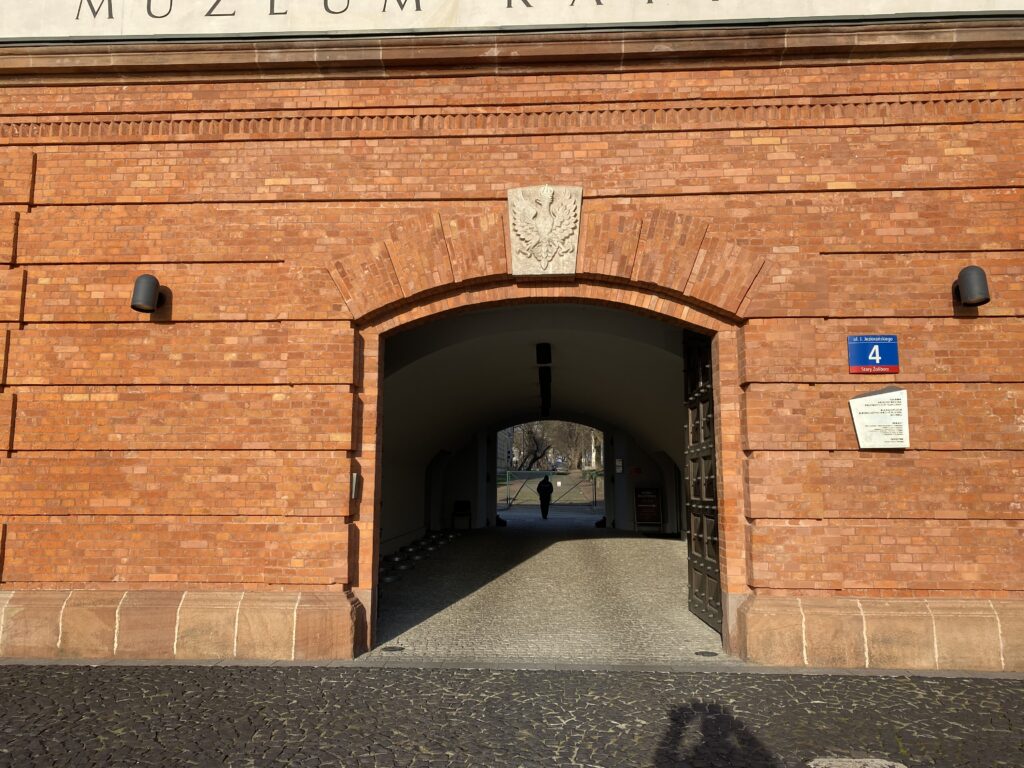
    Next, the entrance to Birkenau. 

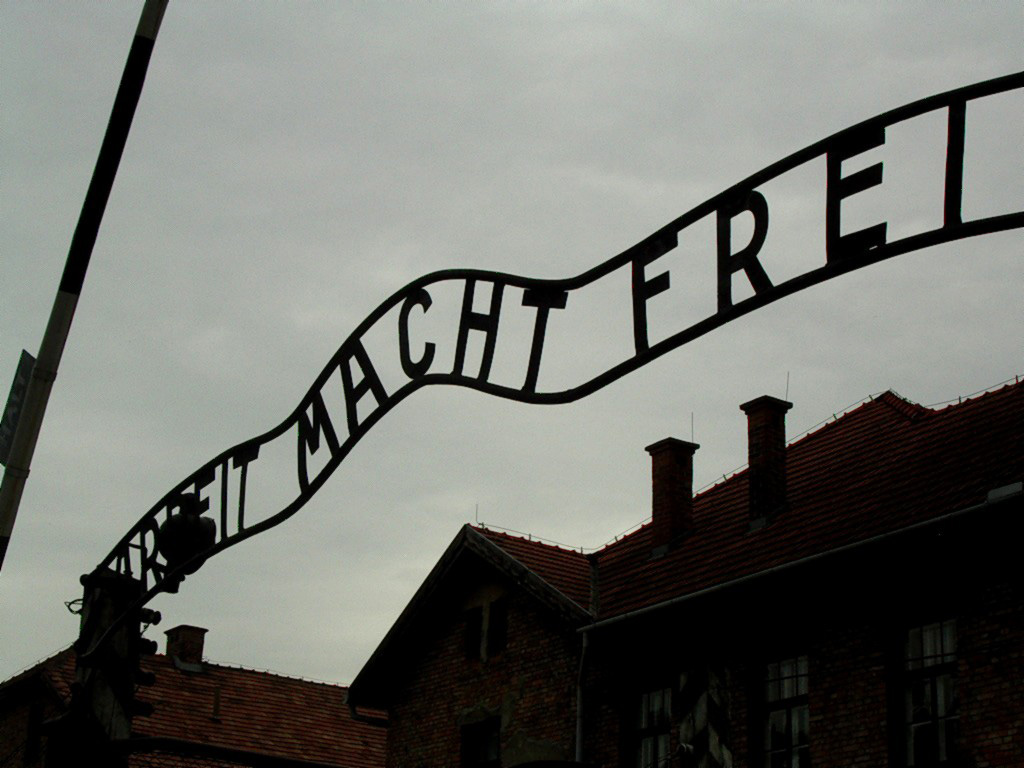
    Next, Auschwitz. “Arbeit Macht Frei” Apathy. 

    The deceitful message at the entrance to Auschwitz- translated means “Work sets you free”.

    Another slide. 

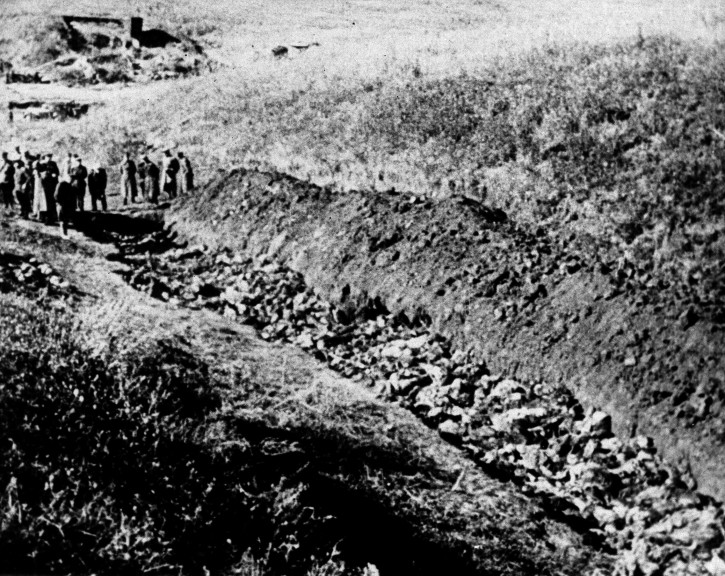
    “This is Babi Yar”. Mrs. S. delivers the information with a cold, flat, statement. The class gasps. All of us. Collectively. Gasping at the sight – a photograph of a mass grave holding the dead and starved bodies of 33,771 Jews, murdered over 2 days. Marci looks down at her paper and reads the quote that was to accompany the slide, number 18, “There is no gravestone that stands on Babi Yar; Only coarse earth heaped roughly on the gash.” One of the boys groans, “Ugh…Gash.”

    Apathy.

    I silently rode home with my father. I will never look at my Grandmother the same. “What did she see in Germany?” 

    Apathy. 

    I visited Majdanek, Sobibor, Auschwitz, Treblinka, Birkenau when I was 17. I am numb, the feeling of existing nowhere. I think I have died, but I am only numb. Every day, I want to die. Instead I am numb. Now I can survive.

    And I promise to share these words, as I stand under the gallows of Auschwitz:

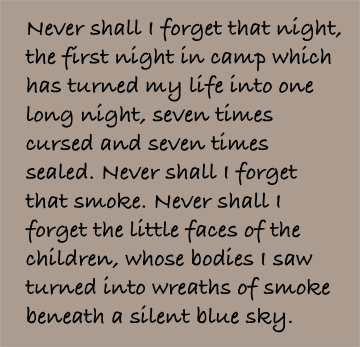
    “Never shall I forget that night, the first night in camp which has turned my life into one long night, seven times cursed and seven times sealed. Never shall I forget that smoke. Never shall I forget the little faces of the children, whose bodies I saw turned into wreaths of smoke beneath a silent blue sky.

    Never shall I forget those flames which consumed my faith forever.

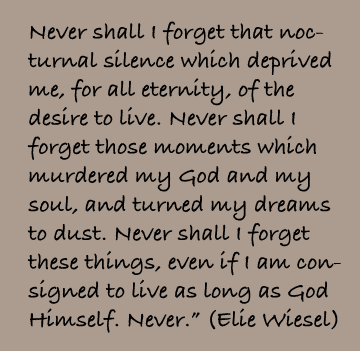
    Never shall I forget that nocturnal silence which deprived me, for all eternity, of the desire to live. Never shall I forget those moments which murdered my God and my soul, and turned my dreams to dust. Never shall I forget these things, even if I am consigned to live as long as God Himself. Never.” (Elie Wiesel)

    “It doesn’t feel right.”

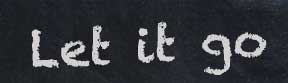
    “Let it go.”

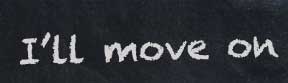
    “Ok, I’ll move on.”

    That conversation has dominated my life for 34 years. Apathy. I define it. My stomach rumbles every day, I never feel good. I sit with my husband at dinner and watch the news. This isn’t how it is supposed to be. All that I have seen and heard. I am numb and dead inside, as I was in Majdenak choking on the stench on rotten leather shoes. Trophies saved by Nazis to commemorate 80,000 murders. 

    “Never Again. What does that mean?”

    He stares back at me. My question emerges from my apathetic silence.

    This image has an empty alt attribute; its file name is never-again-1-1.jpg

    “When we say never again, doesn’t that mean we’re supposed to do something? What does `never again’ mean to you?”

    He quietly speaks of his dreams for peace. Eradicating poverty. Housing for the poor. Healthcare. College. Employment. 

    “What about you?”

    “I can’t live here anymore. Not the way it is. When I said never again, I meant I would stop a train carrying cattle cars of Jews with my body, with my strength, with my power. I don’t have power. I don’t want to live that way anymore. I don’t want to live here anymore.”

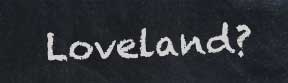
    “Like Loveland? You don’t want to live in Loveland anymore?”

    “No. I can’t live in the world as it is anymore. I have to change it. It’s unbearable.” I cry. I can’t stop. I feel the quiet rage of my youth. But my hands lie flat on the table, my knuckles pink. I don’t think I can exist here. I look to my husband and children. But they exist here.

    I pick up books and learn. I register voters. I learn how to organize large groups of people to fight for a common cause, not because of politics, but because it aligns with their self-interests. I learn about my privilege. I learn about systemic racism. I make so many mistakes. I am corrected aggressively. Kindly. Ignored. I cry. I laugh. I am successful. I learn as I go. Things change. 

    One day, I press play. My daughter is watching over my shoulder. We watch George Floyd die. She has closed her eyes. I restart the video.

    “Open them. Open your eyes. We have to see.”

    I think, “There is no gravestone that stands on Babi Yar; Only coarse earth heaped roughly on the gash.”

    We exist in a world like this – coarse earth heaped roughly on the gash. I don’t want this world to exist as long as I live in it.

    We hug at the end of the video.

    When my husband finishes work, I greet him by stating simply, “Never Again.”

    He knows what it means.

    I step in front of the train and put my hand up. 

    With a short meeting and trusted friends, the Loveland  Diversity Advisory Board is formed.

    John comments only occasionally, but when he does, I put the “mature administrator” hat on immediately and respond with a question, “Help me understand…” or “I’m not sure I am following what you mean…could you say more about that?” Inevitably, John replies with a co-opted statement about the thread and relates it back to Critical Race Theory or Reparations, or School Funding and School Policy. Clearly, he is looking to push buttons and searching for a “gotcha moment”.

    I don’t want this world to exist as long as I live in it. My stomach rumbles. Looking down, I see that my hands are clutching the edge of my desk. My knuckles are white. 

    He writes, “Critical Race theory has no place in American Schools. The tenets of Critical Race Theory are based in the destructive ideal of inherent racism and will teach our children to judge and self segregate based solely on skin color….It promotes the dismantling of American Society thru (sic) Marxist anti American rhetoric.”

    It takes my breath away to see it in writing. “Marxist anti-American Rhetoric”. In the rambling online blogs of the Poway Synagogue shooter, references to Jews and their control of the media, the banks, and his description of hatred for Jews and their role in “cultural Marxism”. This phrase has repeatedly created a rationale for violence against leftists, against Jewish people, and against anyone associated with either. 

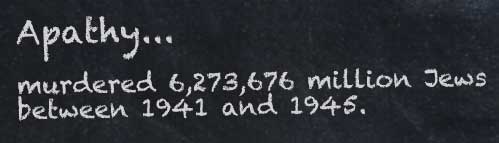
    My alarm is sounded. Bully. Microassault. Dog Whistle.  “There is no gravestone that stands on Babi Yar; Only coarse earth heaped roughly on the gash.” Apathy murdered 6,273,676 million Jews between 1941 and 1945.  

    Never Again.

    I step in front of the train.

    Stop.

    You’re either driving the train. Or you’re stopping it.

    The more people that stand in front of this train, the faster it will stop.

    We must always take sides. Neutrality helps the oppressor, never the victim. Silence encourages the tormentor, never the tormented. –Elie Wiesel Z”L, Buna, Buchenwald, Auschwitz Survivor (1928 – 2016)


    This Guest Column by Leah Marcus is presented by Loveland Magazine in collaboration with the Loveland Diversity Advisory Board. Contact them if you’ve a story to share.


  • Eifert’s Decision to Honor David Dorn Will Test Limits of League’s New Social Justice Policy

    Eifert’s Decision to Honor David Dorn Will Test Limits of League’s New Social Justice Policy

    by Christopher Ball

    In early September, former Bengals tight end Tyler Eifert announced that he would choose to honor the memory of David Dorn, a retired St. Louis police captain who was killed in June of this year.

    Christopher Ball is a longtime Loveland resident and an attorney

    Eifert was selected by the Bengals in the first round of the 2013 NFL Draft and played his first seven seasons in Cincinnati. He recently signed a 2-year $9.5 million deal with the Jacksonville Jaguars, where he hopes to make a comeback after several injury-plagued seasons with the Bengals. 

    In addition to a new chapter in his NFL career, Eifert plans to wear a decal honoring Mr. Dorn this season, as part of the league’s recent decision to allow players to wear decals on the back of their helmets 

    The NFL’s new stance is a stark reversal from its prior positions. In 2016 the league refused to allow Dallas Cowboys players to wear decals to honor five police officers killed by a sniper in downtown Dallas. Even Jerry Jones, the owner of the Cowboys, felt that allowing players to put unique messages on their helmets or wear pink to honor cancer survivors, would open “Pandora’s Box’ that would be difficult to ultimately control. In 2013 Bears wide receiver Brandon Marshall was fined for wearing green shoes to highlight issues surrounding mental health. 

    Whatever you may think of his opinions, Colin Kaepernick’s visible on-field protests against systemic racism and police violence are unquestionably a large part of the reason that he is no longer playing football. Prior to 2020, it was clear that the National Football League was doing all that it could to keep politics, protests, and uniform variance out of its brand. 

    Now that has all changed. 

    Roger Goodell has admitted that both he and the league were wrong for not listening to protesting players sooner. The new decal initiative is the National Football League’s attempt to, at least in part, allow its players to express their non-football opinions on the field, while they are at work, doing their jobs. While the new rules were ultimately put in place to allow players to place decals on their helmets “bearing names or initials of victims of systemic racism and police violence” Eifert’s choice sends a different message, one very similar to those of the 2016 Dallas Cowboys. Eifert himself has a long history of supporting military and first responders during his career, and so his choice to honor David Dorn is not surprising.  

    What will be interesting to see is whether the league will allow him to wear a decal honoring Dorn even though, by most standards, the slain police captain is not a “victim of systemic racism or police violence.” Early reports suggest that the players will be allowed to pick from an approved list of names, with options such as George Floyd, Breonna Taylor, and Ahmaud Arbery. While the NFL has not officially released its policy on decals, nor have they provided the complete list of names from which its players can choose, Eifert’s decision to honor Dorn is one that will no doubt spark debate on the boundaries of the NFL’s new policy. 

    Whether it opens Pandora’s box, as Jerry Jones once feared, is yet to be seen.

  • [VIDEO] Brown condemns GOP-led Justice Act as ‘CHECK IN THE BOX’

    [VIDEO] Brown condemns GOP-led Justice Act as ‘CHECK IN THE BOX’

    Washington, D.C. – Wednesday, U.S. Sen. Sherrod Brown (D-OH) continued pushing for what he calls “meaningful police reform” as he voted against proceeding to debate the GOP-led Justice Act, legislation that he called a “check in the box” and would do very little to reform policing.

    Brown took to the Senate floor to call for passage instead the Justice in Policing Act, what he says is a “Comprehensive package.” He helped introduced the bill earlier this month, “To put important policing reforms into place, help end racial profiling in the criminal justice system and work to improve police-community relations.”

    “I’m not willing to stand here and participate in a political charade – to vote on something that won’t lead to real change, just to check a box and provide politicians with a talking point. It’s an insult to Black families who have been fed empty promise after empty promise for generations,” said Brown. “The Justice in Policing Act would create real change in our justice system, and communities across the country can’t afford us to not act on this meaningful legislation. We need to listen to the Black voices leading these calls for justice, and take real action.”

    Democrats on Wednesday denied Republicans the votes needed to pass the Senate GOP’s policing reform bill and send it to the House. Sixty votes were needed. The vote was 55-45.

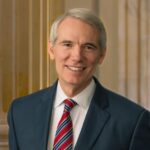
    Ohio Senator Rob Portman (Provided by Portman office)

    Senator Rob Portman (R-OH), a co-sponsor of the Justice act released a statement saying, “The fact that Senate Democrats voted to block debate and an open amendment process on meaningful police reforms is outrageous and unacceptable. Over the last month we’ve continued to see egregious examples of injustice and violence against people of color. Americans want to see progress on meaningful police reform.”

    Brown says the Justice in Policing Act which he supports would:

    • Ban chokeholds, carotid holds, and no-knock warrants at the federal level and limits the transfer of military-grade equipment to state and local law enforcement.
    • Establish a National Police Misconduct Registry to prevent problematic officers who are fired or leave an agency from moving to another jurisdiction without any accountability.
    • Mandate the use of dashboard cameras and body cameras for federal officers and requires state and local law enforcement to use existing federal funds to ensure the use of police body cameras.
    • Create law enforcement development and training programs to develop best practices and requires the creation of law enforcement accreditation standard recommendations based on President Obama’s Task force on 21st Century policing.
    • Make important legal reforms to increase police accountability and transparency.

    The package also includes Brown’s End Racial and Religious Profiling Act, which hs said would better enforce equal protection laws and work to end racial profiling in the criminal justice system.

    Brown took to the Senate floor earlier this month, condemning what he characterized as President Trump’s “violent response” to protests of the murders of Breonna Taylor, George Floyd, Ahmaud Arbery, and countless other victims of racist police brutality and systemic injustice. Brown pointed out that Black and Brown communities have been and remain marginalized and targeted and that protests sweeping Ohio and the nation are calling for an end to systemic racism.

    Portman’s statement also said, “The JUSTICE Act takes responsible steps toward improving the collection of data on violence by and against law enforcement, providing funding to increase the use of body cameras, and increasing transparency and accountability while strengthening and reforming police training methods and hiring practices.  I hope my Democratic colleagues will reconsider their decision and join us in working towards real reform on this issue.”

    Brown’s remarks on the Senate Floor, as prepared for delivery, are below:

    Thousands of Americans are peacefully protesting in communities all across the country, demanding our country do better.

    The protests are an expression of grief, for Breonna Taylor and George Floyd and Ahmaud Arbery and Rayshard Brooks and so many other Black Americans murdered by the people who were supposed to protect them.

    They’re an expression of frustration and anger, that it’s 2020 – a century and a half after the official end of slavery, 55 years after the passage of the Civil Rights Act – and still Black people are fighting the same fight.

    And they’re also an expression of hope and patriotism. Demanding our country do better, demanding we live up to our founding ideals is one of the most patriotic things anyone can do.

    We need to listen to the Black voices leading these calls for justice, and take real action.

    That’s what Democrats want to do. My colleagues Senator Harris and Senator Booker in the Senate, and the CBC in the House, have led our bicameral efforts, and have a serious plan: the Justice in Policing Act.

    It would implement real, meaningful reforms and actually hold police accountable. It makes it clear:

    No more chokeholds. No more unchecked police misconduct. No more militarization of police misconduct.

    Of course we know this isn’t the only thing we need to do – policing didn’t create institutional racism, it’s a product of it and often reinforces it, and we have a lot of work to do beyond this. But these reforms are an important start to making policing in our country more just.

    The Justice in Policing Act would create real change in our justice system, and communities across the country can’t afford us to not act on this meaningful legislation.

    What we cannot do, is pass something called “Police Reform” that does very little to actually reform policing – and then turn around and tell Black mothers and fathers whose children have been slain, “we solved it, our work here is done.”

    I respect Senator Scott and I appreciate him coming to the table, and taking on this issue. I know he is fighting an uphill battle within his own caucus.

    I want to work with him, and with anyone of either party on real solutions.

    But I’m not willing to stand here and participate in a political charade – to vote on something that won’t lead to real change, just to check a box and provide politicians with a talking point.

    It’s an insult to Black families  who have been fed empty promise after empty promise for generations.

    We need to listen to the communities that suffer the most at the hands of police violence, and they all agree: the Senate Republican bill is simply not serious.

    It won’t fix the problems, and we’ll be right back here, sooner rather than later.

    Major civil rights groups all oppose this bill – the NAACP Legal Defense Fund, the Urban Leagues, the Leadership Conference on Civil and Human Rights.

    It doesn’t ban no-knock warrants. The Justice in Policing Act does.

    It doesn’t stop the militarization of police departments. The Justice in Policing Act does.

    It doesn’t create a national misconduct registry. The Justice in Policing Act does.

    It doesn’t ban chokeholds. The Justice in Policing Act does.

    These are all steps that civil rights groups have said are critical to any reform effort. This is the bare minimum we should be doing.

    Really all this bill offers is more studies of questions we already know the answers to.

    We don’t need more studies, more task forces, more delaying tactics.

    We need real accountability.

    The Justice Act could even put us in danger of moving in the opposite direction, by providing more funding for policing without adequate strings attached and without a similar investment in community supports.

    The NAACP says this bill, quote, “ignores the public demands to reimagine public safety by shrinking the purview of law enforcement and providing better funding to agencies equipped to address the critical needs of communities such as social services, mental health services, and education.”

    The Urban League says this bill, “dances around the edges in a show of political posturing.”

    We refuse to engage in that political posturing.

    We refuse to act like this is just a box we can check, so we can move on.

    We refuse to insult Black Americans by pretending this is a serious effort.

    People have suffered too long for that.

    We have been here before. This isn’t the first wave of protests, or the second.

    In 2014, after the murders of Tamir Rice in my city, in Cleveland, and Michael Brown in Ferguson, President Obama and his administration laid important groundwork for reform.

    They studied what reforms would be most effective, they instituted consent decrees with cities to hold departments accountable, and they created a roadmap we could follow.

    But President Trump undid much of the progress the Obama Administration made.

    The Urban League put out a plan for reform in 2014, after Michael Brown’s murder.

    Since then, nearly 1,300 Black men and women have been fatally shot by police.

    This bill does nothing to stop the practices that killed them.

    Black Americans know their lives are put in danger by policing every day. Let’s listen to them. People all around the country – Black and white and brown, in small towns and big cities, young and old – are all listening, waking up, and joining the calls for change.

    Let’s follow their lead. Let’s actually hear the voices that have been silenced for too long.

    I urge my colleagues to vote “no,” and instead work with us on real, meaningful reform to transform our public safety system into one that actually keeps people safe.

  • [POLL] Should Epiphany Church shut down intersection during rush hour?

    [POLL] Should Epiphany Church shut down intersection during rush hour?

    [poll id=”2″]

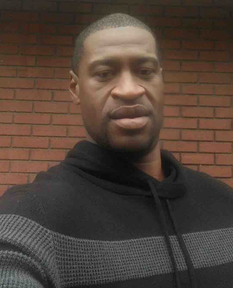
    George Floyd (Photo from George Floyd’s profile on Facebook.)

    Miami Township, Ohio – Loveland Magazine reported yesterday that members of the Epiphany United Methodist Church plan to stop traffic by kneeling in the roadway in silent prayer during rush hour on Friday.

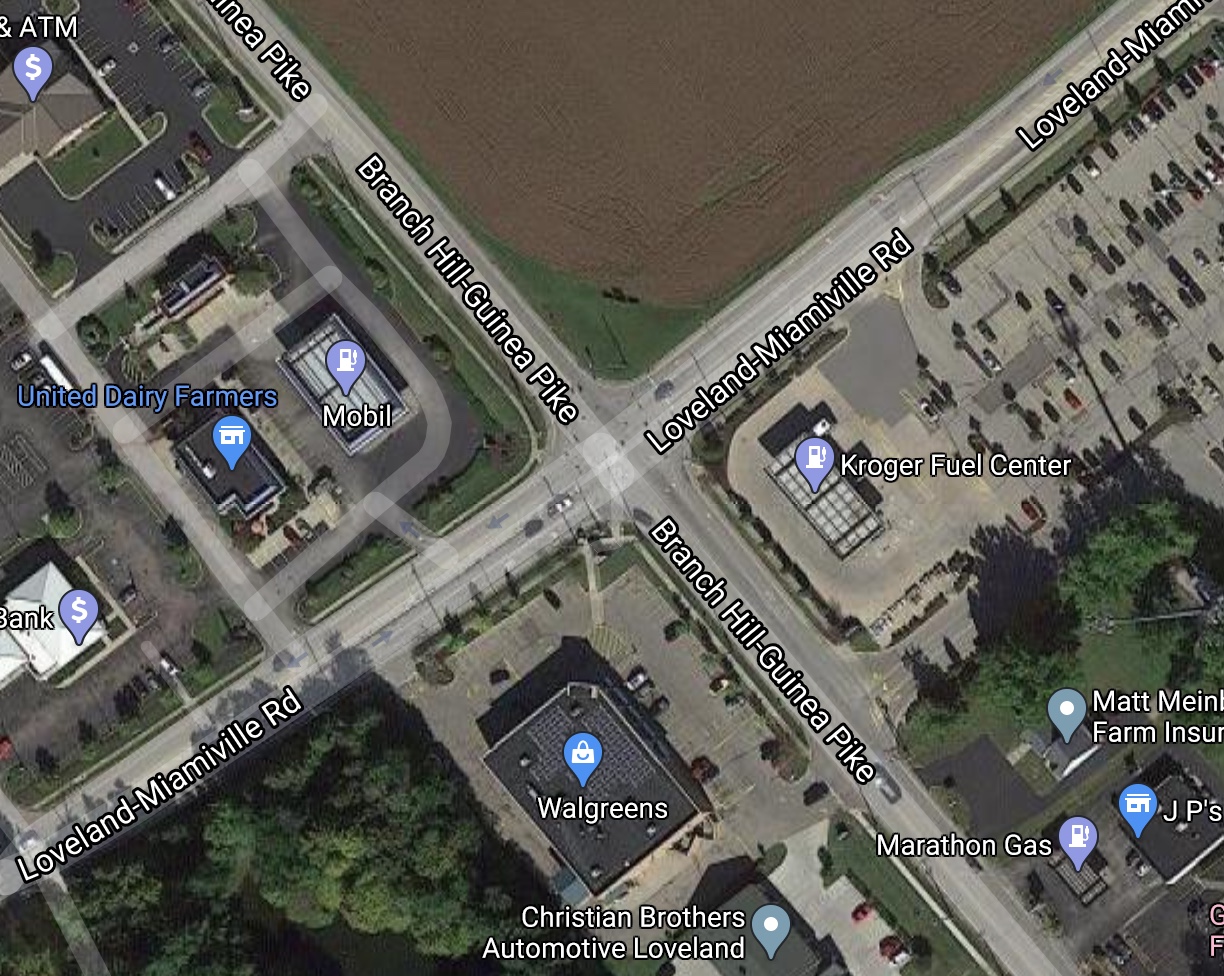
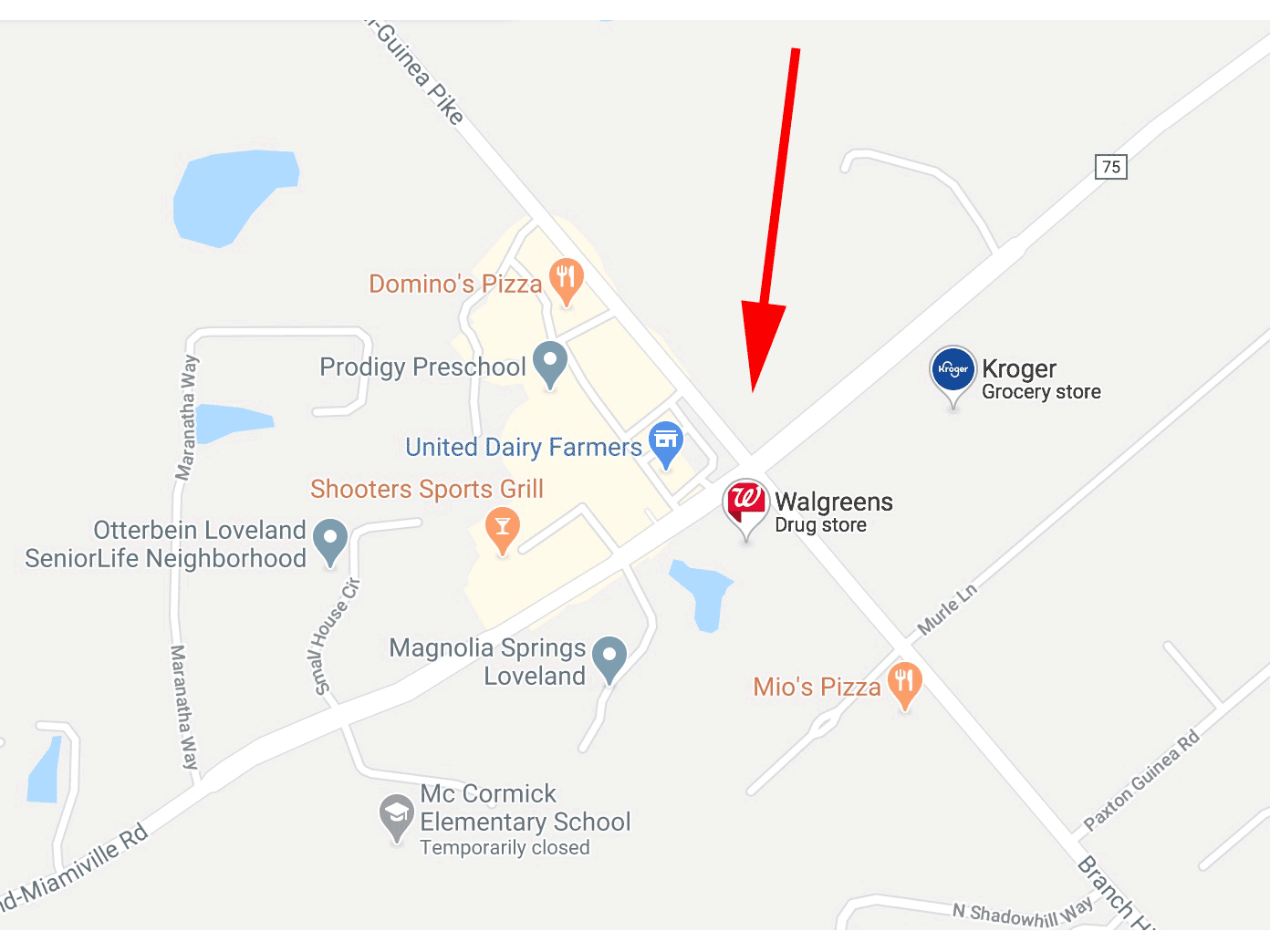
    Google Map

    Their plan is to kneel and pray for 8:46 minutes at the intersection of Branch Hill-Guinea Pike and Loveland-Miamiville Roads at 6 PM, the amount of time Minneapolis Police officer Derek Chauvin kneeled on George Floyd’s neck before he died, “…and the many victims before him who have lost their lives to injustice.”

    This is the Kroger/Walgreen/United Dairy Farmers intersection.


    Civil disobedience planned for Friday

    Miami Township group will stop rush hour traffic by kneeling in silent prayer Friday


    EDITOR’S NOTE: This story has been updated:

    FRONT PAGE STORIES

  • Miami Township group will stop rush hour traffic by kneeling in silent prayer Friday

    Miami Township group will stop rush hour traffic by kneeling in silent prayer Friday

    EDITOR’S NOTE: This story has been updated:

    Miami Township, Ohio – The press release sent out by Lisa Kerwin, a Pastor at Epiphany United Methodist Church says, “On Friday, June 19, Epiphany and other SW Ohio UMC congregations will stop traffic by kneeling in silent prayer, offering peaceful protest and witness for 8:46 minutes to respectfully mark the tragic death of George Floyd and the many victims before him who have lost their lives to injustice.” The plan is to shut down roads at 6 PM this Friday afternoon.

    The events are apparently planned around the region, however, the location for the civil disobedience in the Loveland area is the corner of Branch Hill-Guinea Pike and Loveland-Miamiville Roads. This is the Kroger and Walgreen intersection.

    The press release calls it a “Peaceful Witness” event and further says, “The Miami Township Police Department and surrounding businesses are invited to attend and/or participate as a show of support.”

    Lisa Kerwin is the Pastor of Care Ministries at Epiphany United Methodist in Miami Township. (Church Photo)

    Loveland Magazine asked Kerwin, “Have you been given permission by Miami Township Police to shut down the road? Are people prepared to be given citations or go to jail?”

    Kerwin responded Friday via email by saying, “We are not going to be arrested. We have police support. They will be there!!”

    Loveland Magazine reached out to Miami Township Police Chief Mike Mills, and asked him if the organizers had been given permission to shut down this intersection. He responded this morning saying, “We, the police, cannot give permission to shut down the intersection. There is a process through the Township Government to apply for permits, but it is not a quick process.” Mills said that Kerwin had met with him and that they are reconvening this week to discuss logistics and a plan for a peaceful protest.

    Mills added, “We are working with them to keep everyone safe and encouraging a peaceful protest in the right-of-way and the not the roadway.”

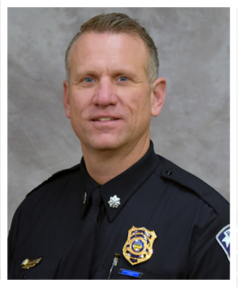
    Miami Township Police Chief Mike Mills (Township Photo)

    Loveland Magazine also asked the Chief, “According to the release, your department has been invited to ‘participate’. Will you or any of your officers join? Will you allow your officers to participate?”

    Mills responded this morning by saying, “We will be there to make sure everyone is safe. Sometimes bad actors show up in support of one side or the other and distracts from the cause.”

    When asked for his reaction to a plan to shut down the roads, Mills said, “We will support their 1st Amendment Right.”

  • Kristy McNally interview about George Floyd and racial equality

    Kristy McNally interview about George Floyd and racial equality

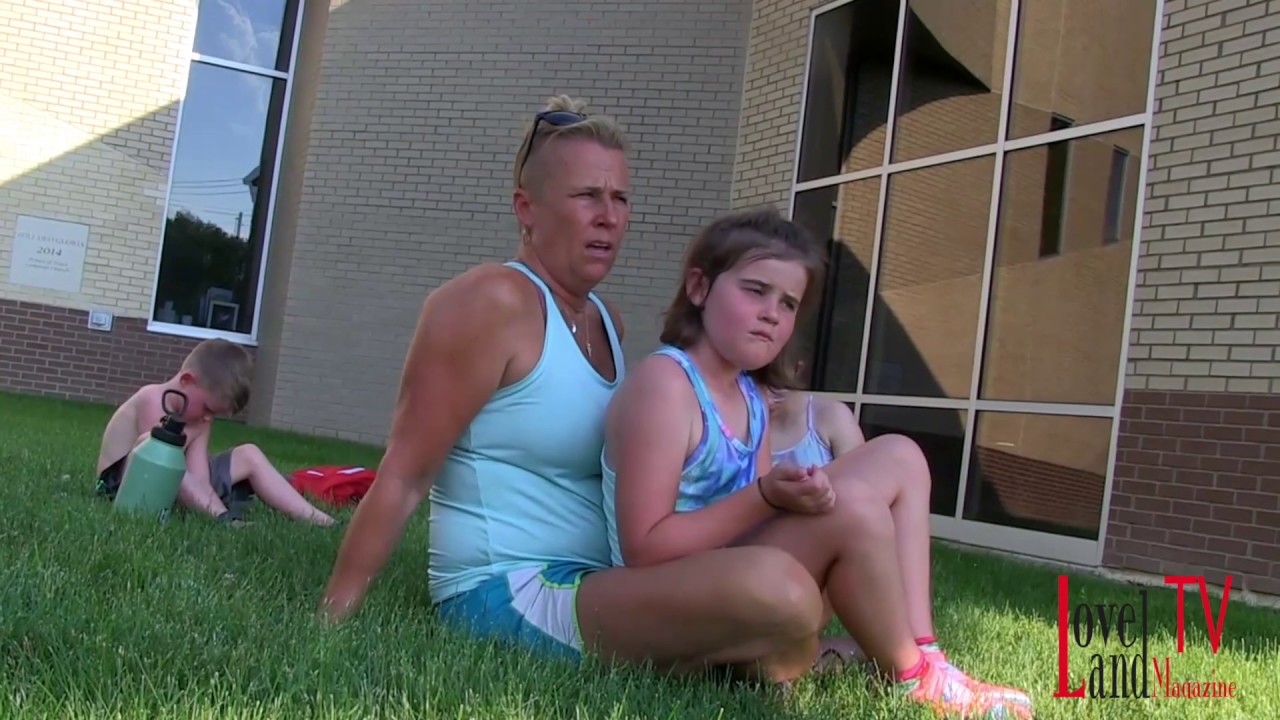
    Loveland, Ohio – This is an interview with Kristy McNally just after she came back from one of the Prayer Peace Walks that have been organized by Desmon Gault all last week.

    The walks through Loveland neighborhoods were in response to the death of George Floyd who died in police custody on May 25 in the Powderhorn community of Minneapolis, Minnesota. While Floyd was handcuffed and lying face down on a city street during an arrest, Derek Chauvin, a white American Minneapolis police officer, kept his knee on the right side of Floyd’s neck for 8 minutes and 46 seconds; according to the criminal complaint against Chauvin, 2 minutes and 53 seconds of that time occurred after Floyd became unresponsive.

    McNally lives in the West Loveland Historic District with her husband Mike and their children.


    FRONT PAGE STORIES

    Say their names: voices from the George Floyd protest

     
    Inwood Park, Cincinnati OH – Sunday, March 31st, 2020 After a handful of changes in location, the Facebook-organized rally labeled as “Be Heard, Be Safe;…
  • [Interview] Youth Pastor Scott Russ speaks about George Floyd and racial justice

    [Interview] Youth Pastor Scott Russ speaks about George Floyd and racial justice

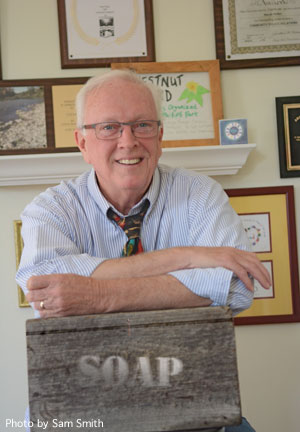
    David Miller is the Editor and Publisher of Loveland Magazine

    by David Miller

    Loveland, Ohio – This is an interview with the Epiphany United Methodist Church, Youth Pastor Scott Russ, just before he departed to join one of the Prayer Peace Walks that have been organized by Desmon Gault all this week.

    The walks through Loveland neighborhoods were in response to the death of George Floyd who died in police custody on May 25 in the Powderhorn community of Minneapolis, Minnesota. While Floyd was handcuffed and lying face down on a city street during an arrest, Derek Chauvin, a white American Minneapolis police officer, kept his knee on the right side of Floyd’s neck for 8 minutes and 46 seconds; according to the criminal complaint against Chauvin, 2 minutes and 53 seconds of that time occurred after Floyd became unresponsive.


    FRONT PAGE STORIES

    Say their names: voices from the George Floyd protest

     
    Inwood Park, Cincinnati OH – Sunday, March 31st, 2020 After a handful of changes in location, the Facebook-organized rally labeled as “Be Heard, Be Safe;…
  • [Interview] Matt Baker speaks about George Floyd and racial justice

    [Interview] Matt Baker speaks about George Floyd and racial justice

    David Miller is the Editor and Publisher of Loveland Magazine

    by David Miller

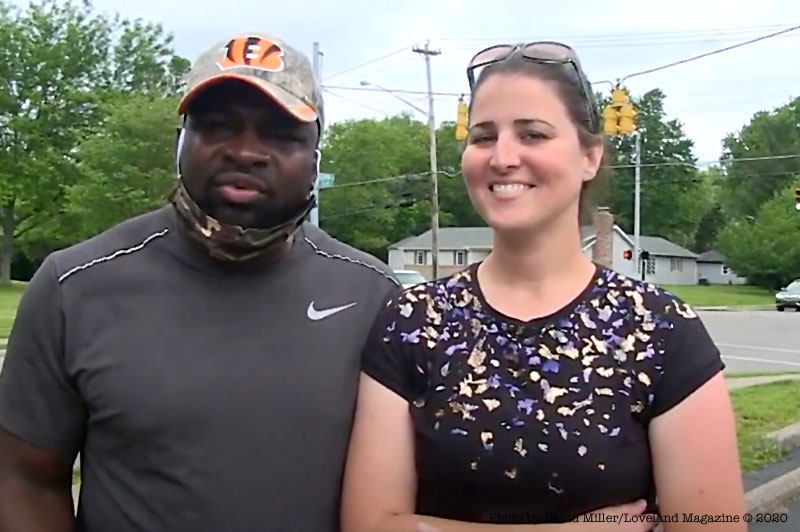
    Loveland, Ohio – This is an interview with Loveland resident Matt Baker just before he departed to join one of the Prayer Peace Walks that have been organized by Desmon Gault all this week.

    The walks through Loveland neighborhoods were in response to the murder of George Floyd who died in police custody on May 25 in the Powderhorn community of Minneapolis, Minnesota. While Floyd was handcuffed and lying face down on a city street during an arrest, Derek Chauvin, a white American Minneapolis police officer, kept his knee on the right side of Floyd’s neck for 8 minutes and 46 seconds; according to the criminal complaint against Chauvin, 2 minutes and 53 seconds of that time occurred after Floyd became unresponsive.


    FRONT PAGE STORIES

    Say their names: voices from the George Floyd protest

     
    Inwood Park, Cincinnati OH – Sunday, March 31st, 2020 After a handful of changes in location, the Facebook-organized rally labeled as “Be Heard, Be Safe;…
  • Desmon Gault after peace walk grows to 200: “The POWER of unity!”

    Desmon Gault after peace walk grows to 200: “The POWER of unity!”

    David Miller is the Editor and Publisher of Loveland Magazine

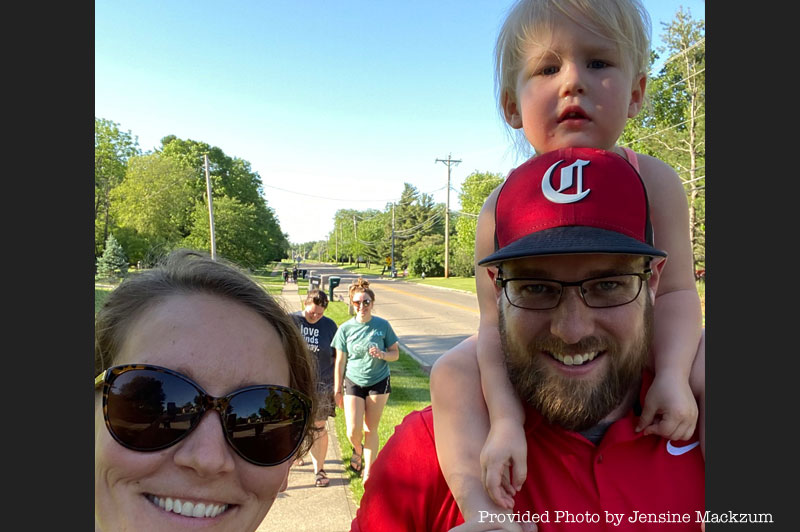
    In the photo above are Jensine, Joe, and June Mackzum who attended the prayer walk on Tuesday.

    by David Miller

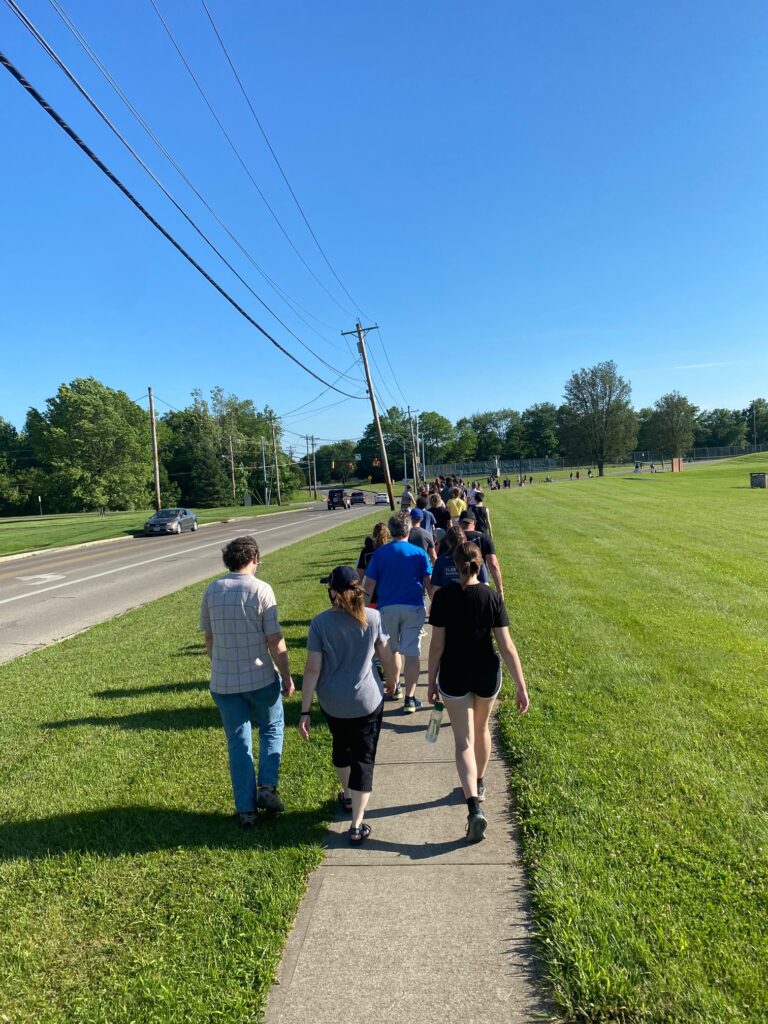
    Loveland, Ohio – The Unity Prayer Walk through Loveland Neighborhoods has grown by 200%. What started as one man walking alone on a soul-searching quest to turn around and re-direct his anger over the death of George Floyd, his walk grew to around 200 people Tuesday night when about 170 more Loveland citizens joined him.

    Read this story and watch the video interview with Desmon Gault and his wife Brittany that LOVELAND MAGAZINE TV produced the night before Tuesday’s walk grew to around 200 people. [Video Interview] A Unity Prayer Walk through Loveland Neighborhoods

    After Tuesday’s walk from the corner of West Loveland and Lebanon Road to Loveland High School, Desmond Gault described the feeling as, “The POWER of unity! Prayer Walk for UNITY, LOVE, JUSTICE, STRENGTH, PEACE, and HEALING” on his personal FaceBook page.

    Photo provided by Desmon Gault

    He told Loveland Magazine later in the evening, “Yes sir, It was truly amazing.”

    Concerned over the death of George Floyd and wanting to be a symbol of healing and prayer-filled hope to the Loveland community, Gault has been organizing evening prayer walks since last Saturday.

    Floyd died in police custody on May 25 in the Powderhorn community of Minneapolis, Minnesota. While Floyd was handcuffed and lying face down on a city street during an arrest, Derek Chauvin, a white American Minneapolis police officer, kept his knee on the right side of Floyd’s neck for 8 minutes and 46 seconds; according to the criminal complaint against Chauvin, 2 minutes and 53 seconds of that time occurred after Floyd became unresponsive.

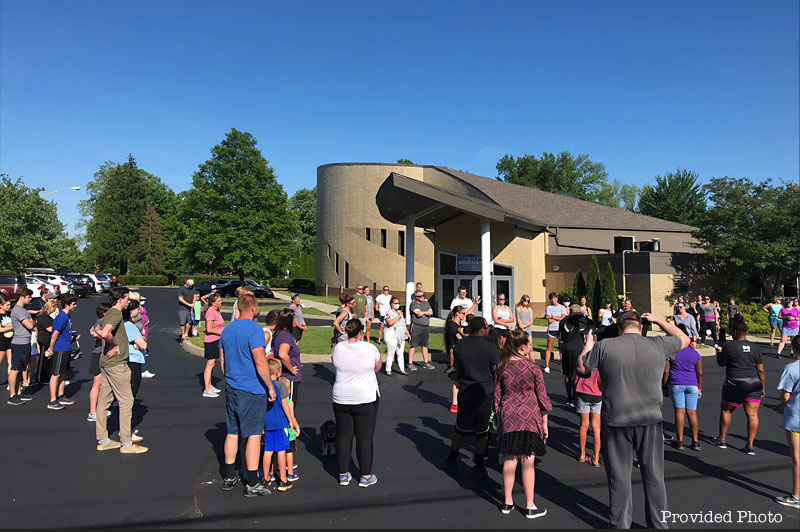
    Last night hey walked down West Loveland Avenue, turned onto Rich Road towards the High School. Then stopped at the High School and prayed as a group for the school – with their arms stretched towards the school.

    “It was truly an amazing sight to see people from all different backgrounds, cultures and walks of life stepping out on faith for the cause of unity. My heart was overjoyed by the response of the people,” Gault told Loveland Magazine after he got home.

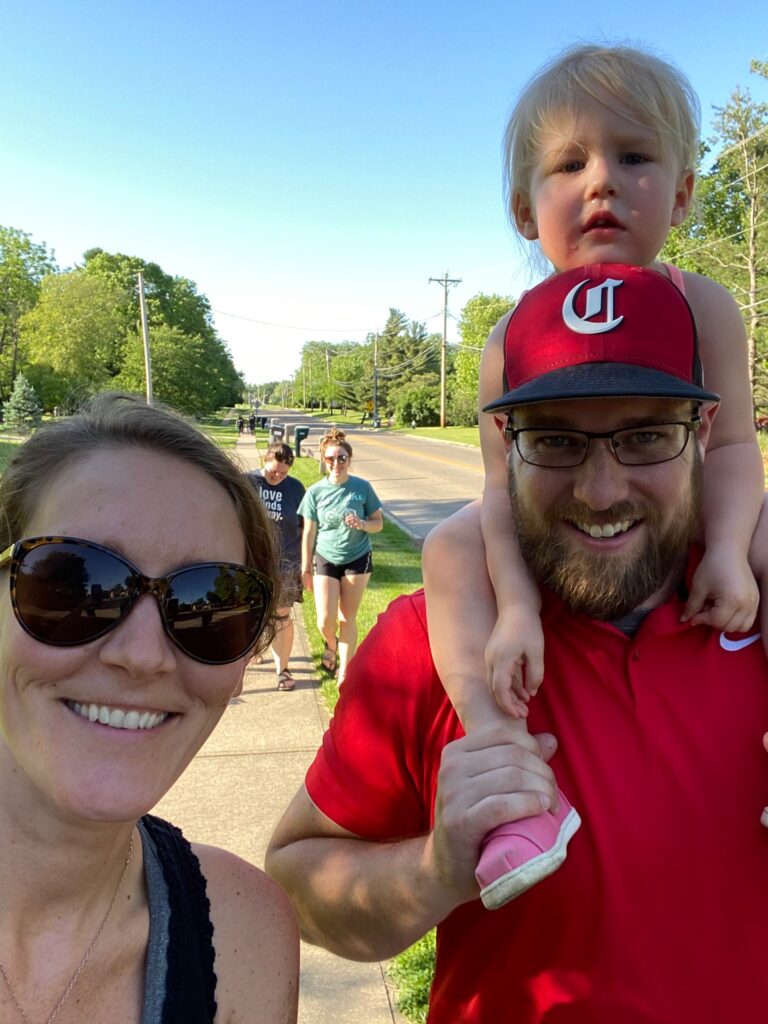
    Jensine, Joe, and June Mackzum attended the prayer walk on Tuesday(Provided photo by Jensine Mackzum)

    Gault said he had no expectation of the number of people that would show up Tuesday but he had every bit of expectation for the unity of prayer. “Hats off to everyone who attended and showed their support,” he said,

    Gault, a deeply religious man was in constant prayer since the news of Floyd’s death. He added Tuesday night, speaking about his fellow walkers, “I pray that Christ Jesus enriches their lives with prosperity, unity, love, and hope. All Glory goes to our Lord Jesus Christ. I am proud of my Loveland Community tonight.”

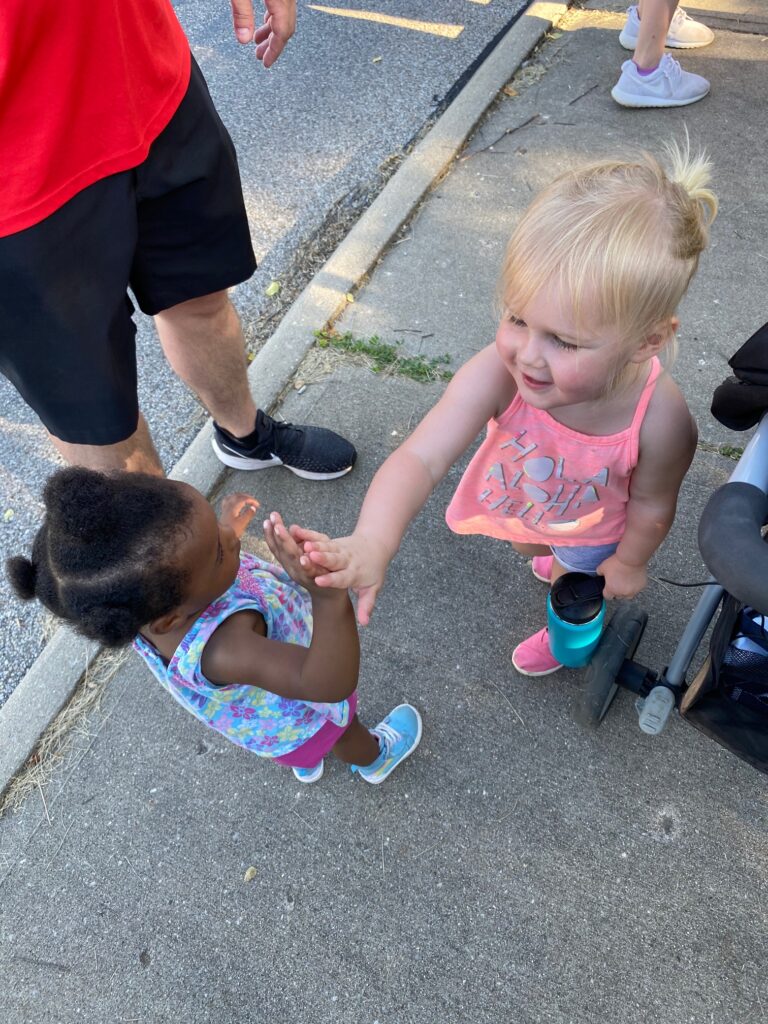
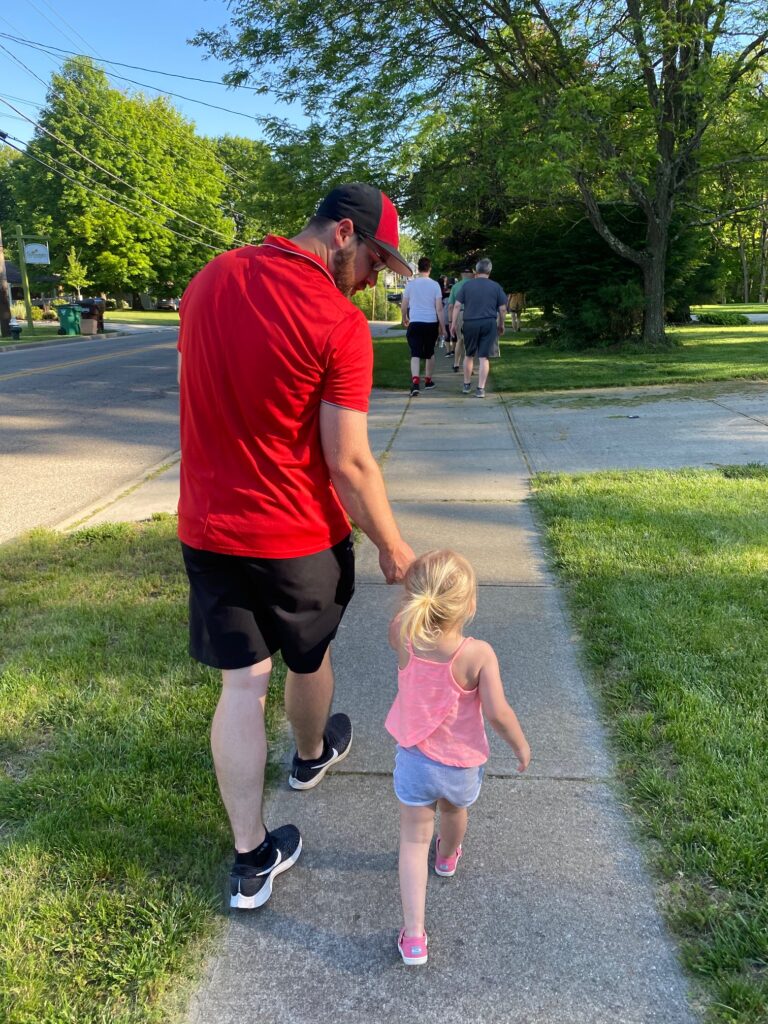
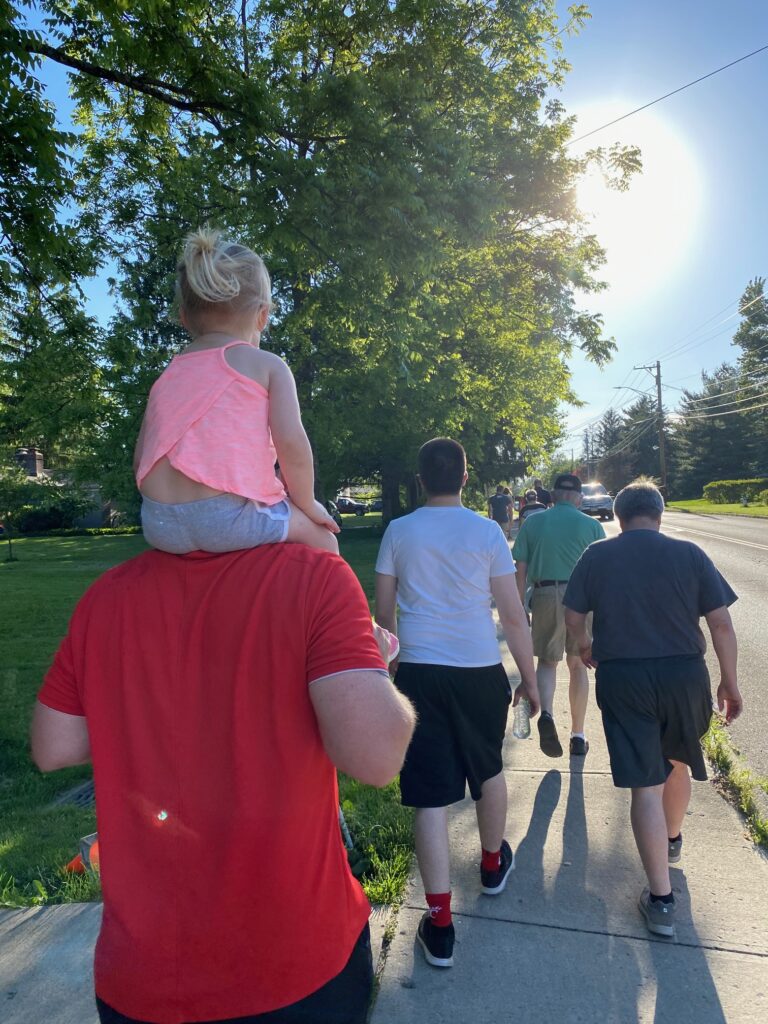
    Jensine Mackzum told Loveland Magazine that she, her husband Joe, and their daughter June attended the peace walk. She said, “Many people we walked past along the street waved and said, “Hello”. “Lots of cars passed honking and waving too.”

    Mackzum sent these photos of Tuesday’s:

    Jensine Mackzum said that when her daughter (in pink shirt) met the other little girl in the photo she said “aw cute” and gave her a high five. (Provided photo by Jensine Mackzum)

    (Provided photo by Jensine Mackzum)

    (Provided photo by Jensine Mackzum)

    (Provided photo by Jensine Mackzum)

    The “Day 5 Prayer Walk” begins Wednesday at 5:45 PM. They meet in the parking lot of the Prince of Peace Church at the corner of Lebanon Road and West Loveland Avenue.