Loveland Magazine is one of the 400 news outlets worldwide, with a combined audience of over 2 billion people “Covering Climate Now”, a global journalism initiative committed to bringing more and better coverage to the defining story of our time.
The initiative, was co-founded by The Nation and Columbia Journalism Review
Mihaela Manova is “Covering Climate Now” in Loveland, Ohio as an editor for Loveland Magazine
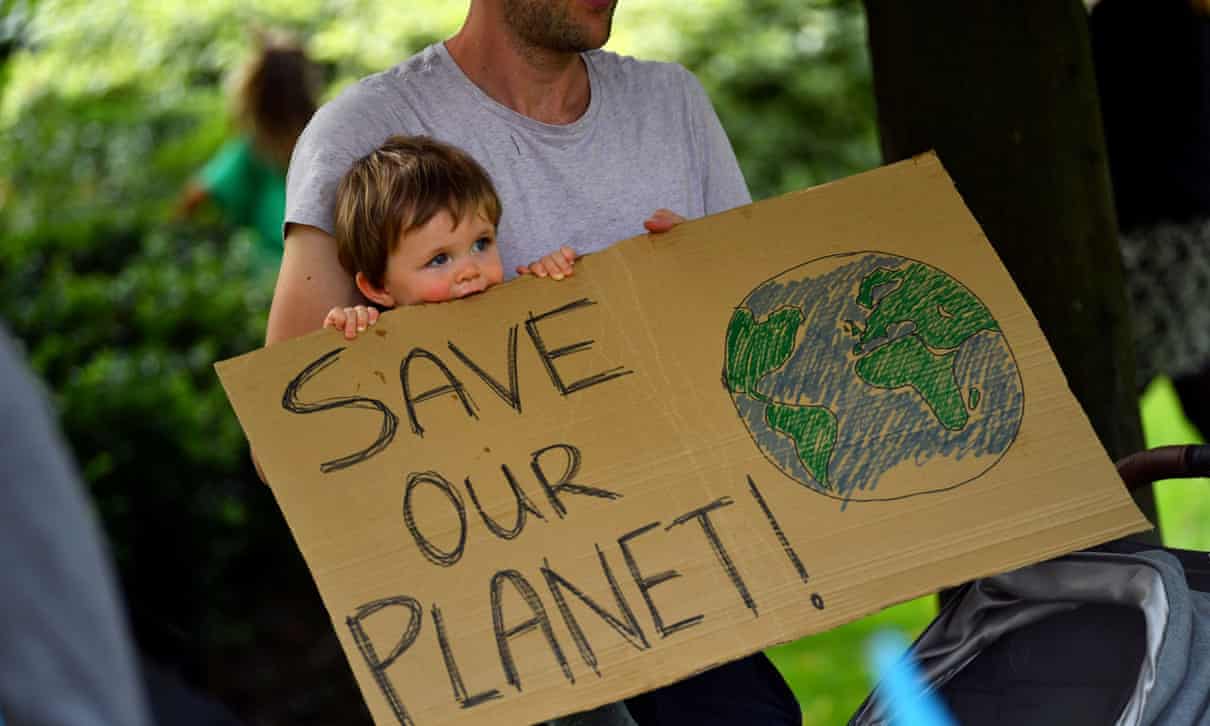
In today’s Covering Climate Now post, young activists are protesting and calling out world governments for the lack of climate change progress. Despite COVID-19 times, this is an effort to shift their attention to what has been happening in the world’s environment. Article written by Fiona Harvey for The Guardian.
Mock Cop26 set up in frustration at lack of progress due to coronavirus crisis
Young climate activists have begun a parallel process to the UN climate crisis talks, in frustration at the lack of progress they perceive in world governments’ efforts to address the emergency.
Crunch negotiations aimed at fulfilling the Paris climate agreement, called Cop26, were to be hosted by the UK this November, but have been delayed by the coronavirus crisis. Activists, participants and observers have told the Guardian they are concerned at a lack of progress so far.
The UK government has said little in public since the launch in February, before widespread lockdowns hit, other than to agree a postponement with the UN. The rescheduled Cop26 will take place next November, but the hosts face an uphill struggle to bring countries grappling with the Covid crisis to agree stiffer targets on greenhouse gas emissions.
While public progress on the postponed Cop26 has been meagre, young activists in Fridays for Future, the movement sparked by Greta Thunberg’s school strikes, are pushing ahead with their own online event this November, called Mock Cop26.
They are inviting young people to “fill the void of the postponed Cop26 with a big, inclusive online Mock Cop”. The event will be run by young climate activists, aiming to get between three and five delegates from as many countries as possible, with a focus on the global south – to contrast with what they see as the dominance of developed countries in the UN negotiations.
The two-week event will mimic the format of the real thing, with high-level opening statements by the youth delegates, keynotes and panels by global names, followed by a week of facilitated workshops and regional caucuses. The discussions will be framed around five conference themes: climate justice; education; health and mental health; green jobs; carbon reduction targets.
The event is planned to culminate in a statement to world leaders from the youth of the world, with demands for the achievements they want to see from the real Cop26 next year.
“We are so far quite disappointed in how [the UK’s hosting of Cop26] is shaping up,” said Joel Lev-Tov, coordinator of Fridays for Future. “[That is why we] have started to work on our own Mock Cop26 to address what we presume will be the failure of Cop26 … to show what Cop could look like if governments actually acted on the climate crisis.”
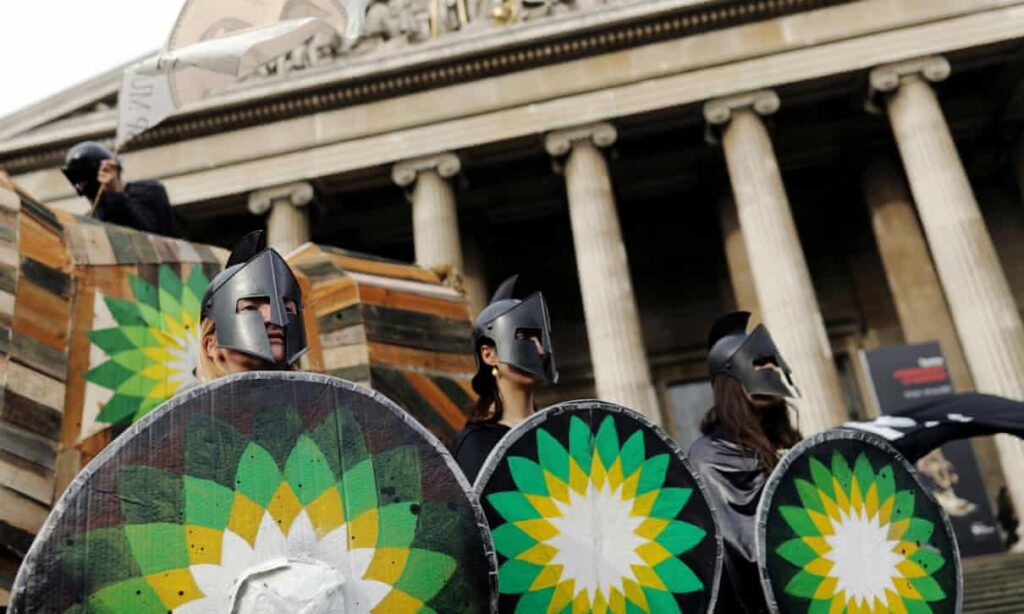
Climate change activists demonstrate against BP outside the British Museum in February 2020. Photograph: Simon Dawson/Reuters
The move to initiate a parallel young people’s conference came as developing countries and international observers told the Guardian they were concerned at the slow progress being made towards Cop26 by the UK hosts.
“We are behind, in our opinion,” said Carlos Fuller, of the Alliance of Small Island States, whose 44 member states are some of the world’s most at risk from climate breakdown. “We are very disappointed that we are so far behind. The UK needs to exercise its muscle more.”
Earlier this week, the UK’s top official in charge of the Cop26 summit admitted that formal negotiations had not yet started, as the face-to-face sessions supposed to take place earlier this year were delayed.
Greater leadership from the UK’s prime minister, Boris Johnson, is also vital, according to several leading experts. Johnson has said little in public about Cop26 or the climate crisis since the launch of Cop26 in February, which was overshadowed by the botched sacking of the ex-MP originally appointed to lead the conference, Claire O’Neill.
Mary Robinson, former president of Ireland and twice a UN envoy on climate issues, told the Guardian: “I have not seen the leadership necessary to deliver a successful Cop. It takes every ounce of influence and diplomatic muscle, and we are not seeing that yet.”
She contrasted the lack of movement with the activities of the French government in the two years before the Paris agreement was signed in December 2015. “They threw everything at it, every ambassador, every country was engaged.”
Mohamed Adow, director of PowerShift Africa, a developing country thinktank, added: “The UK has made some positive noises as COP president but it’s clear that Number 10 really needs to start making it a political priority. We need to see some real leadership from Boris Johnson. If he wants the ‘Global Britain’ brand to mean anything more than just a PR stunt, he needs to step up and lead from the front on climate.”
A further complication is the government’s stance on the Brexit withdrawal agreement. That the government has openly admitted its proposals will break international law has caused consternation among the climate community. Many fear that the willingness to flout international law will be used by opponents of the Paris agreement to discredit the summit’s hosts and foster discord.
Tom Burke, co-founder of the E3G thinktank, said: “The prime minister has destroyed his global credibility. [The decision to break international law] has cast a blight on our ability to influence other leaders on Cop26.”
“Countries at [the UK talks] use weaknesses that they perceive in other countries,” warned Robinson. “This is very unhelpful at a time when we have enough difficulties to cope with.”
One key sticking point, however, is that the UK has still not made a public commitment on a new plan for cutting its own emissions. Current commitments to cut emissions under the Paris agreement are too weak, and the treaty requires them to be ratcheted up. All nations are being asked to come forward this year with strengthened plans on curbing their emissions by 2030, preferably with a view to net-zero emissions by 2050, or soon after in the case of the developing world.
Despite urging other countries to meet the deadline, when questioned by MPs earlier this week, Alok Sharma, the UK’s business secretary and president of Cop26, would not commit to the UK producing a revised plan on its emissions this year.
Loveland Magazine is one of the 400 news outlets worldwide, with a combined audience of over 2 billion people “Covering Climate Now”, a global journalism initiative committed to bringing more and better coverage to the defining story of our time.
The initiative, was co-founded by The Nation and Columbia Journalism Review
Mihaela Manova is “Covering Climate Now” in Loveland, Ohio as an editor for Loveland Magazine
In today’s Covering Climate Now Post, Facebook re-evaluates and takes a new step in fact-checking climate change content. Article written by Sarah Frier for Bloomberg.
The initiative will give climate information a more similar treatment to Covid-19 and election content.
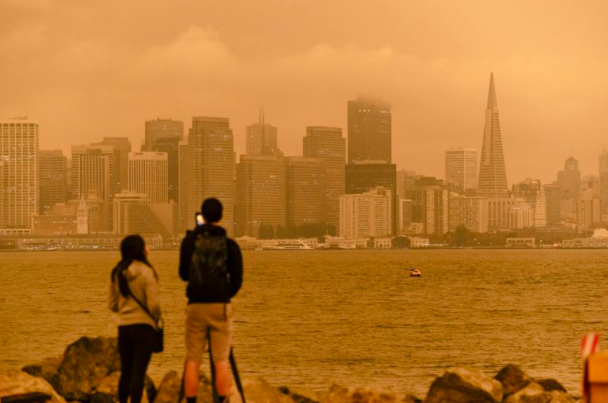
In the geographic heart of the tech industry Wednesday, it was hard to think of anything except the orange skies, dark and tinted by wildfire smoke. The image software on iPhones failed to capture the dystopian hue, or the feeling of being surrounded by it. Silicon Valley workers tweeted that it felt like night time, or a perpetual sunset, or a scene from “Blade Runner 2049.” It marked the fourth week of severe fire and ash in the Western U.S.
The conversation shifted from the already-apocalyptic pandemic to another global public health disaster: climate change. For those who don’t know, this is not what California is usually like. The first time I smelled smoke in my San Francisco apartment, in 2015, I imagined something nearby was on fire—not that it was happening miles north of the city. I turned on an air purifier, which I’d purchased for my partner’s allergies, never expecting it would be necessary for anything else.
The climate disaster is undeniable to those who have experienced its harms, and a political talking point for the rest. Facebook is full of misinformation on the topic, which, when noticed and reported by users, is sent to the company’s third-party fact-checkers. Over the summer, a nonprofit called C02 Coalition, which claimed that carbon dioxide created by humans was beneficial for the planet, was banned from advertising on Facebook after too many fact violations. The group successfully appealed its ban, and had the fact-checks labels on its posts removed.
Facebook said that it considered such posts to be opinions, ineligible for fact-checking, causing a miniature scandal when the checker, Climate Feedback, spoke out. “We don’t believe that articles in an opinion section should be immune from fact-checking,” Climate Feedback science editor Scott Johnson wrote in an email to Bloomberg.
Facebook also doesn’t take the additional step of removing misinformation on the climate, because the company has ruled that such posts don’t cause imminent harm to human health.
But, in the aggregate, they do. Facebook has recently re-evaluated its approach to climate misinformation, according to spokesman Andy Stone. The company is working on a climate information center, which will display information from scientific sources. Stone said Facebook isn’t ready to officially announce anything, but it’s easy to imagine what this might look like. Facebook has already devised centers for factual information about Covid-19, and about voting and the upcoming election, both of which it has promoted heavily on its site.
The info center approach would put less pressure on evaluating each individual post, in favor of directing users to what they need to know more about generally. It could plausibly be more effective than the fact-checking process, which sometimes takes days or weeks to complete, long after a claim has gone viral. Of course, it won’t help address individual disputed claims.
In the meantime, to get the general idea of what’s going on, anyone in Silicon Valley can look out the window.
Loveland Magazine is one of the 400 news outlets worldwide, with a combined audience of over 2 billion people “Covering Climate Now”, a global journalism initiative committed to bringing more and better coverage to the defining story of our time.
The initiative, was co-founded by The Nation and Columbia Journalism Review
Mihaela Manova is “Covering Climate Now” in Loveland, Ohio as an editor for Loveland Magazine
In today’s Covering Climate Now Post, cities around the world are seeking Covid-19 spending to be made more “climate smart.” Article written by Andrew McCormick for The Nation.
This story is part of a collaboration between The Nation and InsideClimate News as part of Covering Climate Now, a global journalistic collaboration strengthening coverage of the climate story. The piece below focuses on cities; to read how green recovery spending can impact rural areas, click here.
Trillions of dollars are on the table, as governments around the world seek to dig out from the economic crater caused by the coronavirus. With time also running short to avoid the worst of the climate crisis, the growing consensus among world leaders is that Covid-19 recovery spending must be “climate-smart.”
“This terrible challenge that has caused so much suffering is an opportunity,” United Nations Secretary General António Guterres said yesterday in an interview with Covering Climate Now. “We can either rebuild as it was, which is a huge mistake, because of the fragilities of the world, or we can rebuild a more inclusive and more sustainable economy and society.” The secretary general’s comments echoed statements in favor of a “green” stimulus by the European Union, the International Monetary Fund, the International Energy Agency, and BlackRock, the world’s largest investments asset manager.
Climate-conscious stimulus spending creates more jobs per dollar invested than do expenditures on fossil fuel projects, according to an Oxford University study of more than 700 stimulus programs initiated after the 2008 global financial crisis. Nevertheless, with the exception of the EU, a majority of Covid-19 recovery spending to date by the world’s leading economies has reinforced the carbon-intensive status quo, propping up the very economic sectors and practices that have driven the climate crisis, including the fossil fuel and airline industries.
At the local level, however, leaders are calling for a better way.
In a recent letter coordinated by the C40 Cities Climate Leadership Group, dozens of mayors from the world’s biggest cities declared that the economic recovery “should not be a return to ‘business as usual,’ because [business as usual is] on track for 3 degrees Celsius or more of over-heating.” What’s more, mayors say, their cities have existing and “shovel-ready” projects that could put climate-smart stimulus spending to work right away, if only national governments or central banks provide it.
“Mayors are in a position to really define what a recovery from Covid-19 looks like,” David Miller, a former mayor of Toronto and C40’s director of international diplomacy, said in an interview. “It’s not just their voices advocating to the national governments; it’s their actions demonstrating what’s possible.”
Here are five leading examples.
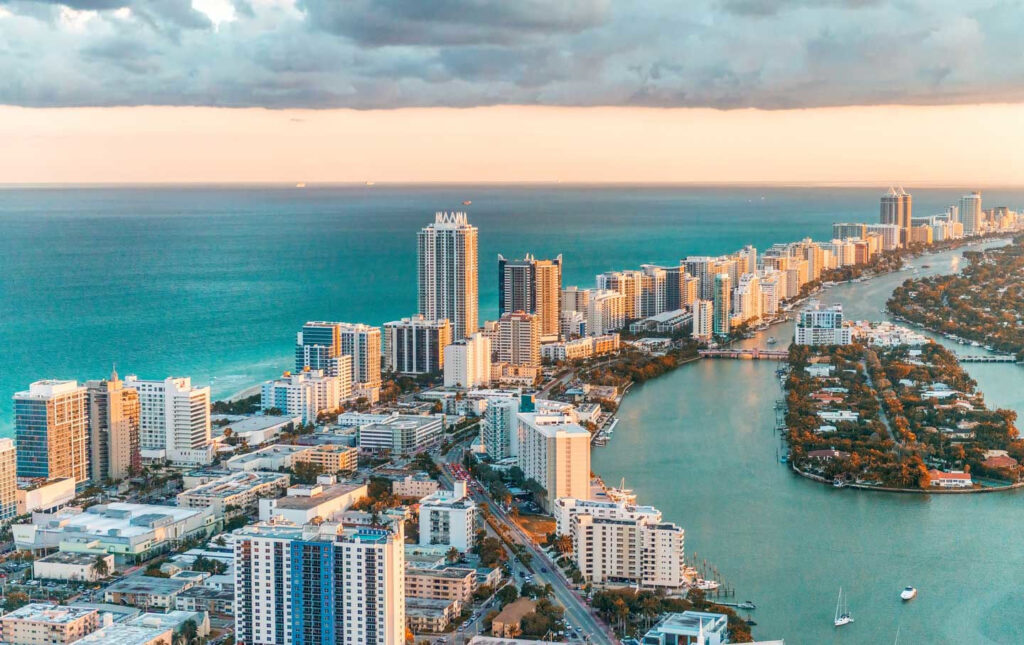
South Beach, Miami. (pisaphotography / Shutterstock)
IN MIAMI, A REPUBLICAN MAYOR EMBRACES CLIMATE-SMART STIMULUS SPENDING
Francis Suarez, Miami’s Republican mayor, has been consistently aggressive on climate. Dismissing the idea that taking climate change seriously makes him somehow less conservative, Suarez says the idea of a green stimulus is “music to my ears.”
In 2017, on the same day Suarez was elected, Miamians voted to authorize a $400 million “Miami Forever” bond that seeks to develop long-term resilience for the city, including against sea-level rise, flooding, and hurricane storm surge. That means building seawalls, installing stormwater pumps with valved outfalls (so water ejected from the city into water bodies is clean and doesn’t damage local ecosystems), and physically raising some city roads.
Flooding in the city is already routine, putting billions of dollars in property at risk and leaving many low-lying residents—nearly 60 percent of Miami-Dade county is less than six feet above sea level—anxiously looking for somewhere else to go. This past November, Suarez led Miami to declare a “climate change emergency.”
But $400 million isn’t nearly enough to prepare Miami for the full extent of what’s coming, Suarez said. And Covid-19 budget cuts have only complicated matters: Recently, the city weighed eliminating its chief resilience officer, for instance. “Miami Forever was sort of a down payment,” Suarez said. “It’s not going to solve all our problems. So, if we were to get a stimulus, we would be able to put the money to use right away.”
A green stimulus would also give a boost, Suarez said, to more ambitious, engineered solutions in the works. Large urban reservoirs, designed to trap and expel excess waters, are under construction along the inland Miami River, and along the ocean-side Biscayne Bay. The benefits are three-fold, Suarez said: elevating the sea wall, creating a buffer for the community in the form of a reservoir, and creating new public space. “And whenever you’re investing in public spaces, you get infinite return, because by their very nature they’re not going anywhere,” Suarez said.
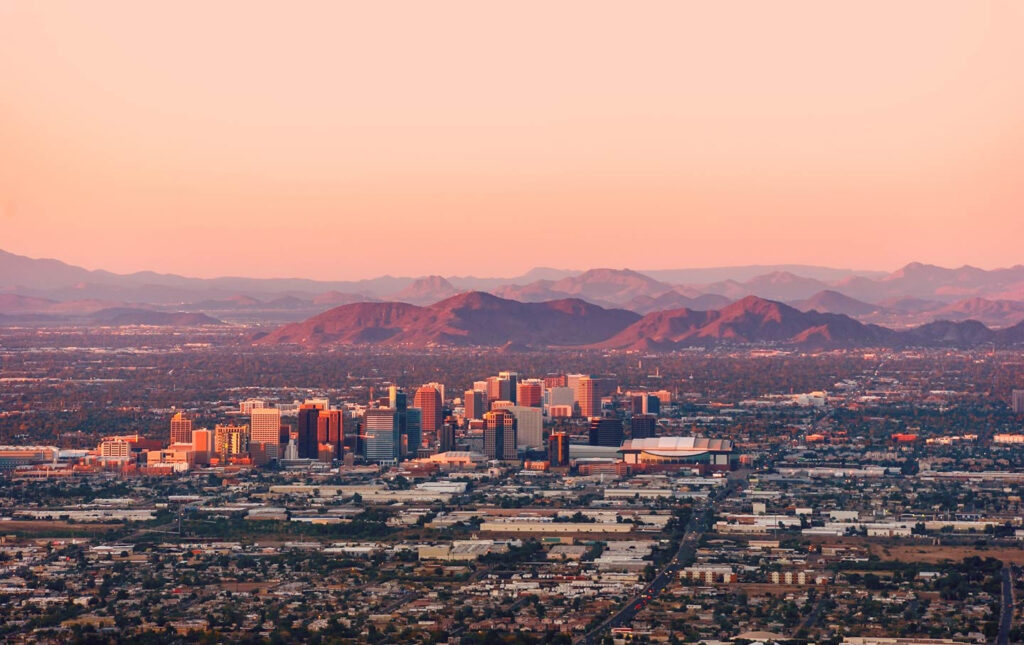
Phoenix (Dreamfarmer / Shutterstock)
REVIVING A BATTERED SOLAR INDUSTRY TO HELP COOL PHOENIX
Phoenix is hot. It’s among the fastest-warming cities in the United States, with temperatures topping 100 degrees on 103 days in 2019. This summer was the city’s hottest season ever. And for four years running, Phoenix has set records for heat-related deaths.
This June, Phoenix’s Street Transportation Department fast-tracked a “cool pavement” pilot program. Roads in eight neighborhoods are being outfitted with a special, water-based treatment that is lighter in color than traditional asphalt and reflects sunlight instead of absorbing it. If the cool pavement proves effective in mitigating the urban “heat island” effect—and is resilient to Phoenix’s high temperatures, persistent sunshine, and monsoon storms—officials hope to implement it far and wide in the city.
Meanwhile, however, the Covid-19 lockdown has shrunk potential sources of funding for climate-smart projects. With ridership way down on public transit, fare collection has fallen by more than 50 percent. To ensure that cooling projects and sustainable development continue to reach the city’s residents, Phoenix needs a green stimulus, said Mayor Kate Gallego.
Federal support, Gallego said, would aid the expansion of cooled bus stops, shaded walking paths, and elevated solar panels around the city. The solar panels would provide not only electricity but also badly needed shade in open areas, especially in lower-income neighborhoods where regular access to air conditioning is not guaranteed.
In 2019, Arizona was the state with the sixth most solar-related jobs—last year, the state produced enough solar energy to power three-quarters of a million homes—and nearly 90 percent of those jobs reside in the Phoenix metropolitan area. But the economic slowdown following the coronavirus hit the solar industry hard. Thousands of solar jobs were lost, and plans to expand solar deployment in Arizona were dramatically scaled back. Federal funding, especially for workforce training and development, could help the industry bounce back.
The government could also provide up-front loans to help people and businesses, particularly in low-income areas, adopt solar and other green technologies, such as more efficient windows, air conditioners and other appliances. “There are so many energy efficiency products that pay for themselves over time, but there are upfront [financial] barriers to some people taking advantage,” Gallego explained.
“There are beautiful and important ideas waiting to happen,” the mayor added. “If the federal government could lead the way, there are so many transformative projects that could happen, just when local government needs them most.”
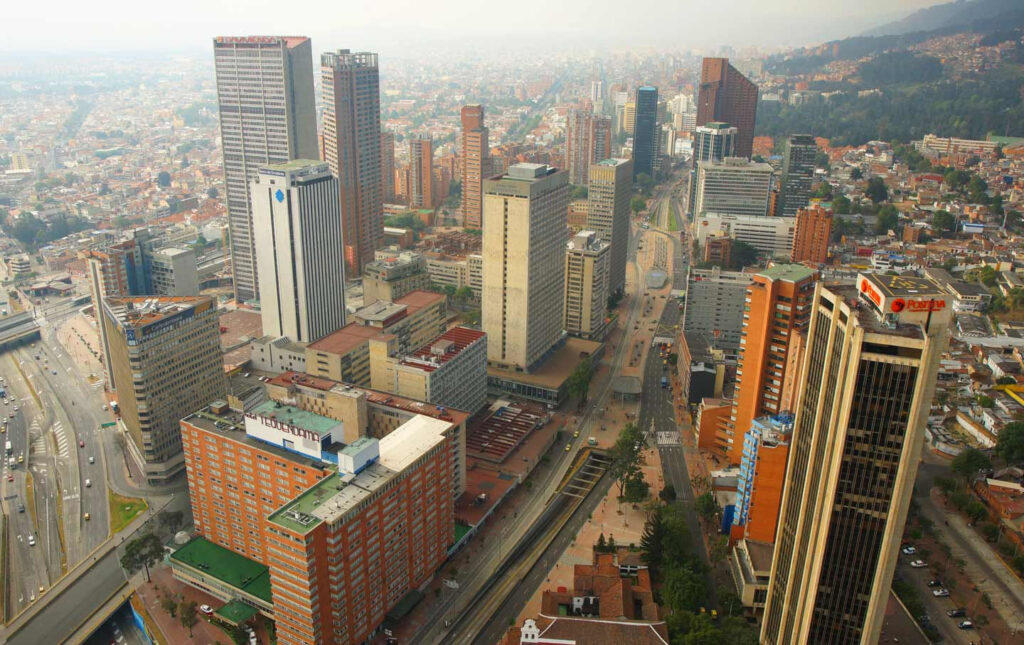
Bogotá, Colombia. (Alejo Miranda / Shutterstock)
BOGOTÁ’S MAYOR SAYS DEVELOPING NATIONS CAN BE SUSTAINABILITY LEADERS
In Colombia, the funds a city receives from the national government are more or less fixed in the constitution, based on the city’s population and relative wealth compared with other parts of the country. When it comes to a stimulus, then, it’s a matter less of lobbying for better support than of rebalancing priorities in Bogotá’s budget.
That’s fine for the new mayor, Claudia López Hernández, who already counted climate action among her foremost priorities in Bogotá. The coronavirus pandemic has caused a significant shortfall in tax collection, so this is a time for fearless and intelligent use of debt, López said. “This is a time to invest heavily and push. This moment [calls for] a Keynesian approach. If we start doing some neoliberal solution, we’ll only depress the economy.”
López, who began her four-year term this January, is the first member of Colombia’s center-left Green Party elected to Bogotá’s mayorship, generally viewed as the second-most-important elected position in the country after president. López is also the first woman—and the first gay woman—elected to the post. “We don’t want to just comply [with UN climate goals]. We want to be a world leader,” López said. “We want to be a big, developing city in a developing country leading not only in what we achieve but in how we achieve it.”
Equity and reconciliation are foremost on López’s mind, in a country that is recovering from a long and recent civil war. “What we do has to be sustainable in both climate change and social inclusion terms, otherwise it’s not really sustainable in the long-term,” López said. In the near-term, López plans to implement a universal basic income and invest heavily in education, especially post-secondary education, with a focus on skills that lead to green jobs in digital and knowledge-based economic sectors.
Before the pandemic hit, López’s government declared a general alarm for environmental pollution in the city, where air pollution levels often are more than twice as high as the World Health Organization recommends, contributing to thousands of deaths annually.
Cleaning up the air means changing how Bogotá gets around. Since March, the city has added 80 kilometers of new bikeways, adding to the 500-some already in place. By the end of her term, López hopes to add 300 kilometers more, taking space away from cars directly and giving it to bikers: “inverting the pyramid” of how transportation space is allocated in the city, López said, enough that 80 percent of commuters in the city will be able to get around by bike if they choose to. (López has set an example in this regard, biking seven kilometers from home to her inauguration ceremony in Bogotá’s Parque Simón Bolívar.) The city will also aim to replace its buses with lower-emissions models and push forward with a new, all-electric mass transit system.
All of these plans were already in the works, López said, but in the wake of Covid-19 she’s front-loading them and striking while the iron is hot. “We have no choice,” she explained. “Just like we have no choice to wear masks and social distance and invest to improve our health and testing systems, there is no point to discuss here. The way we produce, the way we live, the way we consume, it’s simply unsustainable for humanity. We need to act.”
Paris (Thomas Samson / AFP via Getty Images)
PARIS CHAMPIONS “THE 15-MINUTE CITY” TO CUT BOTH STRESS AND EMISSIONS
Around the world, pandemic shutdowns prompted cities to reclaim streets from cars and preserve them for bikes and pedestrians. In Paris, that work had been underway for years. Since her inauguration in 2014, mayor Anne Hidalgo has eliminated thousands of on-street parking spots across Paris, barred high-polluting vehicles from entering the city, and banned cars from some streets entirely, including along the river Seine. Still, the lockdown this spring offered a calming, if uneasy, glimpse of what a green future could look like in the City of Light. “We could breath,” Hidalgo recently told Time magazine. “We could hear birds.”
Environmental pledges were central to Hidalgo’s campaign for reelection, which she won this June by a landslide. Hidalgo championed “the 15-minute city,” a planning concept in which neighborhoods function as villages unto themselves, where virtually all needs can be met with 15 minutes or less of walking or biking: stores, restaurants, fitness centers, schools, banks, work centers, and more. The need for cars, in turn, decreases.
The 15-minute city, or la Ville du quart d’heure, represents a shift away from the conventional zoning wisdom, which separates residential and commercial districts, that has dominated city development over the past century, said Carlos Moreno, an urban planning advisor to Hidalgo and professor at the Sorbonne.
It’s not just Paris that’s going green. France is in the midst of a “green wave,” with environmental party candidates winning mayoral elections in June in large cities across the country, including Marseilles, Lyon, Strasbourg, and Bordeaux. The election marked a decided shift, commentators said, toward public concern for climate action, driven perhaps in part by the unbearable heat of recent summers in Western Europe; Emmanuel Macron, the centrist president, has suggested a referendum to amend the country’s constitution to include language about fighting climate change.
With people’s movement necessarily constricted, the pandemic shutdown was a great time to pilot many aspects of the 15-minute city, including a further reclamation of public space from cars, Moreno said. Now, he added, the 15-minute city will prove key to Paris’s economic revitalization. As part of a “big bang of proximity,” as Hidalgo puts it, the city will move to reimagine work life, revolutionize child and elder care, revisit dated real estate practices, and ensure that cafés and cultural opportunities are more ubiquitous in all 20 arrondissements. In theory, this will help rekindle economic activity citywide, Moreno said—including in parts of the city that were underdeveloped and marginalized under France’s old economic status quo.
But to do all of this, while also ensuring that those devastated financially by the coronavirus shutdown don’t fall through society’s cracks, will take spending. “Automatically, we will have a deficit,” Moreno said. The 15-minute city is a Paris project, and not something that requires explicit support or approval from France’s central government. But the central government can, Moreno said, help the city stay afloat financially as it charts a way forward in this difficult time.
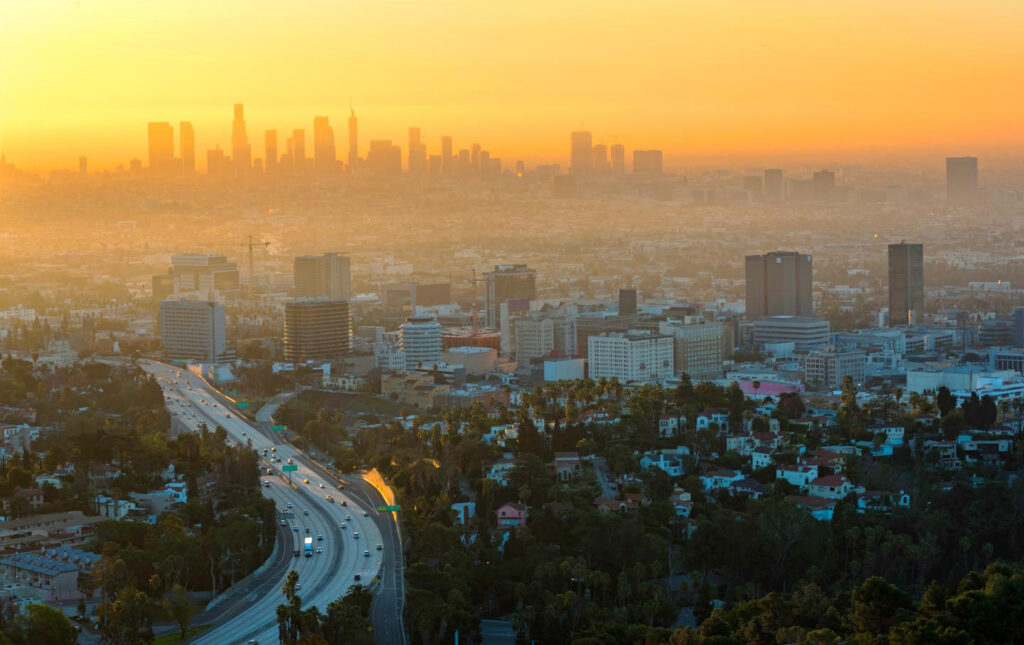
Los Angeles. (4kodiak / Getty Images)
IN LOS ANGELES, A GREEN STIMULUS WOULD “SUPERCHARGE” THE SHIFT TO EVS
In the car capital of the world, it’s little surprise that plans for tackling climate change would focus on how Angelenos move.
As a part of the city’s extensive and thorough Green New Deal, announced by Mayor Eric Garcetti in the spring of 2019, work is underway to electrify the city’s bus fleet and to get more car owners into electric vehicles; the goal is for a complete, citywide transition to zero-emissions vehicles by 2050. That requires installing more EV chargers. The city’s Green New Deal calls for increasing the number of chargers from 8,000 at present to 10,000 by 2022 and 28,000 by 2028.
That was the plan, at least. But the coronavirus lockdown is forecast to cost the city’s transit agency, which partially funds green initiatives, $1.8 billion—a quarter of all forecast revenues for 2020, according to Doug Mensman, Los Angeles’s director of transportation. That doesn’t mean that the city’s Green New Deal projects will be scrapped, but all could be delayed or deferred. “It may take up to two years to recover to pre-Covid levels of financial security, so federal funding is imperative to backfill that loss,” Mensman said.
The transition to low-emissions cars, in particular, is funded by Low Carbon Fuel Standard credits, which reward the sale and consumption of cleaner fuels. But that requires a robust marketplace. Here, too, the federal government can play a role, in part by telling car manufacturers that low-emissions vehicles are the way of the future, said Lauren Faber O’Connor, LA’s chief sustainability officer. The Trump administration has done the opposite, rolling back fuel emissions standards for gas-powered vehicles.
A crucial element of the city’s Green New Deal, O’Connor said, is that all the city’s residents reap the benefits of change. That includes ensuring that jobs created through the Green New Deal reach historically underemployed populations. “We’re building a new economy. We need to be very deliberate about ensuring that everyone has the ability to participate in it.” To help low-income residents access electric vehicles, the city’s EV car-share program, BlueLA, offers steeply subsidized rates to consumers who need them. BlueLA is another program that could benefit immediately from climate-smart stimulus spending, O’Connor said. “We want to help people in every way to make the right decision.”
Los Angeles is also working to get drivers out of their cars and instead to choose public transportation, walking, bike share systems, or micromobility systems, such as scooters. “It’s not rocket science. The solutions are there,” O’Connor said. “We know what we need to do, and the strategies are no-regrets, economically and from a health perspective. All signs point in this direction. We just need the federal government to embrace it.”
Loveland Magazine is one of the 400 news outlets worldwide, with a combined audience of over 2 billion people “Covering Climate Now”, a global journalism initiative committed to bringing more and better coverage to the defining story of our time.
The initiative, was co-founded by The Nation and Columbia Journalism Review
Mihaela Manova is “Covering Climate Now” in Loveland, Ohio as an editor for Loveland Magazine
In today’s Covering Climate Now Post, we dive into current changes of environmental regulations and its lasting effects. Written by Vernon Loeb for Inside Climate News.
Pursuing an unrelenting fossil fuel agenda, Trump has scaled back or eliminated over 150 environment measures, expanded Arctic drilling, and denied climate science.
In the middle of his 44th month in office, two weeks before the start of the Republican convention in late August, President Trump rolled back Barack Obama’s last major environmental regulation, restricting methane leaks.
The move represented an environmental trifecta of sorts for the president, who had handed the oil and gas industry another gift in his quest for “American energy dominance,” thumbed his nose yet again at climate change and came close to fully dismantling his predecessor’s environment and climate legacy.
“I applaud and strongly support President Trump’s continued support for the oil and gas industry,” Oklahoma Gov. Kevin Stitt said after the administration proposed its rollback of the Obama methane rules. “During these uncertain times, it makes no sense that we would be placing additional regulatory burdens on our vital industries which are not supported by sound science and do not consider economic impact.”
Environmental lawyers and climate activists who’ve been battling Trump since day one are in agreement that Trump, beginning with his decision to lead the nation out of the Paris climate accord, has done more to roll back and weaken environmental laws and regulations than any president in history.
Trump extolled the accomplishment and put a different spin on the superlative during a White House speech in July, saying, “We have removed nearly 25,000 pages of job destroying regulations, more than any other president by far in the history of our country.”
A few days earlier, as his Democratic rival, Joe Biden, unveiled a $2 trillion plan to combat climate change, Trump promoted what he called a “very dramatic” series of revisions to the National Environmental Policy Act, the foundation of environmental protection in the United States that had been signed into law by President Richard M. Nixon 50 years ago.
Environmentalists have used the law to block everything from pipelines to the destruction of natural habitats. Trump has now limited environmental reviews under the act to between one and two years and relieved federal agencies from having to consider a project’s impact on climate change during the review and permitting process.
“While our world is burning, President Trump is adding fuel to the fire by taking away our right to be informed and to protect ourselves from irreparable harm,” Gina McCarthy, Obama’s EPA administrator who now serves as president and CEO of the Natural Resources Defense Council, said of weakening the act.
By late summer, Columbia University’s Sabin Center for Climate Change Law had counted 159 actions since Trump took office “to scale back or wholly eliminate climate mitigation and adaptation measures.” Many have been slowed or blocked by the courts.
“We are going to turn everything around,” Trump declared. “And quickly, very quickly.”
Once in office, Trump pursued a policy of unfettered support for fossil fuel development. He immediately signed memorandums to revive the Keystone XL and Dakota Access pipelines, projects blocked by Obama.
In early March 2017, his administration ordered the Environmental Protection Agency to stop gathering data from oil and gas companies needed to rein in leaks of methane, a potent short-lived climate pollutant. Fossil fuel infrastructure adds to greenhouse gas emissions, in part by leaking methane into the atmosphere.
He followed up, at the end of March, by issuing a sweeping executive order directing all federal agencies to target for elimination any rules that restrict U.S. production of energy. He set guidance to make it more difficult to put future regulations on fossil fuel industries and he moved to discard the use of a rigorous “social cost of carbon,” a regulatory measurement that puts a price on the future damage society will pay for every ton of carbon dioxide emitted.
As his first year in office came to a close, Trump and Alaska’s Republican senators inserted a provision into his signature tax cut legislation that called for opening the coastal plain of the Arctic National Wildlife Refuge for drilling.
Many of Trump’s regulations have also been tailored to favor the coal industry, often at the expense of cheaper, cleaner energy. Robert Murray, founder of the now-bankrupt coal company Murray Energy and one of Trump’s closest industry allies, gave the president a “wish list” early on that became a virtual template for the administration’s rollback of regulations.
The administration swiftly lifted an Obama moratorium on new coal leases on federal lands, to no real benefit. The decline of coal continued unabated, but Trump remained an unapologetic champion of the dirtiest fossil fuel.
Trump’s War on Science
When U.S. government scientists released their latest volume of the National Climate Assessment in November 2018, it revealed much about the robust, sobering scientific consensus on climate change.
It also revealed the striking disconnect between Trump and essentially every authoritative institution on the threat of global warming.
The president rejected the assessment’s central findings—based on thousands of climate studies and involving 13 federal agencies—that emissions of carbon dioxide are caused by human activities, are already causing lasting economic damage and have to be brought rapidly to zero.
“I don’t believe it. No, no, I don’t believe it,” Trump told a reporter after the assessment’s release.
In almost every agency overseeing energy, the environment and health, people with little scientific background, or strong ties to industries they would be regulating, were appointed to scientific leadership positions.
One of the administration’s first actions was to order scientists and other employees at EPA and other agencies to halt public communications. Several federal scientists working on climate change have said they were silenced, sidelined or demoted. The words “climate change” have been purged from government reports and other reports have been buried.
The administration’s mistrust of scientists and its tendency toward science denialism would also become a prominent feature of its response to the coronavirus pandemic, when the president muzzled scientists at the Centers for Disease Control and chafed at the dire predictions of many epidemiological models for Covid-19 deaths.
With the nation in a state of emergency over the pandemic, Andrew Wheeler, a former coal industry lobbyist who serves as Trump’s administrator of the Environmental Protection Agency, moved in late March to fast-track the “Strengthening Transparency in Regulatory Science” rule. Wheeler replaced Scott Pruitt, an Oklahoma Republican who served as Trump’s first EPA administrator before resigning in 2018 amid an ethics scandal.
Critics call Wheeler’s transparency proposal Orwellian and say it would actually limit the use of human health science in environmental decision-making, by eliminating studies that rely on patients’ anonymous medical data.
While Trump and his conservative allies contend that the reliance on such studies amounts to “secret science,” scientists and leading medical authorities respond that it is standard practice to honor patient confidentiality in peer-reviewed studies.
Numerous studies, including one based on health data from 60 million Medicare recipients, have shown that one of the signature pollutants from the burning of fossil fuels, microscopic particles less than 2.5 microns in width—known as PM 2.5—kill as many as 52,100 Americans prematurely each year.
Less than a month later, as much of the nation remained locked down to halt the spread of Covid-19, a respiratory disease, the Trump administration rejected a recommendation from government scientists to strengthen the national air quality standard for particulate matter. Trump chose instead to maintain the current PM 2.5 standard, handing the fossil fuel industry a major victory.
A ‘Concerted Attack’ on Alaska, Public Lands
The Trump administration knew no bounds for its fossil fuel agenda, pursuing drilling from the outset on pristine public lands in Alaska and the lower 48 states, where oil companies have long sought access.
Less than four months after taking office, Trump moved to lift Obama’s offshore Arctic drilling ban and, then, in July 2017, gave Italian oil company Eni a quick green light to drill exploratory wells.
In March 2018, the Trump administration proposed a resumption of leasing in Alaska’s Beaufort Sea. President Obama, shortly before leaving office, had “permanently” withdrawn from drilling there.
By then, Trump had also carved 2 million acres of land from the Grand Staircase-Escalante and Bears Ears national monuments in southern Utah in what amounted to the most sweeping reductions in protections for public land in U.S. history.
In September 2018, the Interior Department finalized a rule that loosens methane requirements for oil and gas operations on federal lands. A month later, the administration proposed a regulation to streamline and expedite oil and gas permits on national forest lands.
The following summer, the administration proposed weakening protections under the Endangered Species Act for threatened species and critical habitat. Shortly thereafter, the Interior Department commenced the public comment period on its plan for oil drilling in the Arctic National Wildlife Refuge that had been included in the 2017 tax bill.
In early August 2020, the president signed the Great American Outdoors Act appropriating $900 million a year to the Land and Water Conservation Fund and $9.5 billion over five years to reduce maintenance backlogs in the national parks.
The bipartisan legislation was sponsored by a House Democrat, but Trump extolled its passage as the most significant act in support of parklands since Teddy Roosevelt.
Still, the administration was preparing, on the eve of the Republican convention, to start selling leases in the Arctic National Wildlife Refuge. The sale was one of six pending projects in which Trump was pursuing more drilling, logging and mining in Alaska.
One environmentalist called it the most “concerted attack” in 30 years on Alaska’s natural resources.
All six of the Trump initiatives could still be blocked or rolled back in the courts, or undone by a new Biden administration working with a Democratic Congress. But for now, they are proceeding, with enormous consequences for Alaska’s environment, and global climate change.
One by One, Obama’s Main Climate Accomplishments Fell
The same could be said for President Obama’s environment and climate legacy: Trump’s relentless attacks could be wholly or partially undone by a new administration and Congress. But for now, Trump has accomplished his mission: a near total elimination of his predecessor’s most significant measures.
After countless piecemeal rollbacks during Trump’s first two and a half years in office, the administration in June 2019 launched its long-awaited attack on Obama’s signature plan to tackle climate change. Designed to cut emissions from coal-fired power plants, Obama called it the Clean Power Plan.
While the plan was challenged by industry and 27 states and blocked by the U.S. Supreme Court before Obama even left office, it encouraged many states to begin a process of planning for a transition away from coal-fired electricity at a time when cheaper natural gas and renewable energy already were forcing coal plants to shut down.
Next came Trump’s rollback of Obama’s 2012 automobile fuel efficiency standards, the single largest step any nation had taken to address global warming by cutting carbon emissions from cars and trucks. The weakened Trump plan will allow automakers to deploy fleets that average just 40 miles per gallon by 2025, instead of 54 mpg.
If Trump’s standard ultimately survives legal challenges, cars and trucks in the United States would emit nearly a billion tons more carbon dioxide during their lifetimes than they would have under the Obama standards.
Finally, in mid-August, Trump proposed the rollback of the methane rules, the last major Obama environmental regulation still standing. Methane, a super-pollutant, is 86 times more potent in warming the planet than carbon dioxide over a 20-year period.
In the climate realm, Obama is best known, of course, as the driving force behind the 2015 Paris climate accord.
Trump first announced in a Rose Garden speech in June 2017 that the U.S. would withdraw from the accord in three years, as soon as the treaty allowed.
So, right on cue, two years later, on Nov. 4, 2019, Secretary of State Mike Pompeo notified the United Nations of the formal exit of the United States, activating the final one-year waiting period.
The actual U.S. withdrawal is set for Nov. 4, 2020, one day after the presidential election.
Loveland Magazine is one of the 400 news outlets worldwide, with a combined audience of over 2 billion people “Covering Climate Now”, a global journalism initiative committed to bringing more and better coverage to the defining story of our time.
The initiative, was co-founded by The Nation and Columbia Journalism Review
Mihaela Manova is “Covering Climate Now” in Loveland, Ohio as an editor for Loveland Magazine
Today’s article talks about London’s Heathrow airport, which is currently getting a ban on building a third runway due to the present climate change crisis. This article was written by Damian Carrington for The Guardian in partnership with Covering Climate Now.
By Damian Carrington on Feb 27, 2020
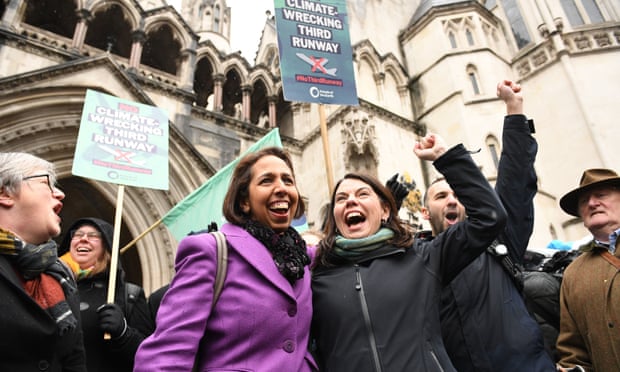
plans for a third runway at Heathrow airport have been ruled illegal by the court of appeal because ministers did not adequately take into account the government’s commitments to tackle the climate crisis.
The ruling is a major blow to the project at a time when public concern about the climate emergency is rising fast and the government has set a target in law of net zero emissions by 2050. The prime minister, Boris Johnson, could use the ruling to abandon the project, or the government could draw up a new policy document to approve the runway.
The government is considering its next steps but will not appeal against the verdict. The transport secretary, Grant Shapps, said: “Our manifesto makes clear any Heathrow expansion will be industry-led. Airport expansion is core to boosting global connectivity and levelling up across the UK. We also take seriously our commitment to the environment.”
Johnson has opposed the runway, saying in 2015 that he would “lie down in front of those bulldozers and stop the construction”. Heathrow is already one the busiest airports in the world, with 80 million passengers a year. The £14bn third runway could be built by 2028 and would bring 700 more planes per day and a big rise in carbon emissions.
Johnson is thought to have been looking for a pretext to withdraw support for the extra runway and could make the argument for Birmingham to provide increased airport capacity for London given that train journey times will be reduced by HS2.
The court’s ruling is the first major ruling in the world to be based on the Paris climate agreement and may have an impact both in the UK and around the globe by inspiring challenges against other high-carbon projects.
Lord Justice Lindblom said: “The Paris agreement ought to have been taken into account by the secretary of state. The national planning statement was not produced as the law requires.”
“It’s now clear that our governments can’t keep claiming commitment to the Paris agreement, while simultaneously taking actions that blatantly contradict it” said Tim Crosland, at legal charity Plan B, which brought the challenge. “The bell is tolling on the carbon economy loud and clear.”
Plan B’s intervention was one of a number of legal challenges against the government’s national policy statement, which gave the go-ahead for the new runway in 2018 after MPs backed it by a large majority. Others were brought by local residents, councils, the mayor of London, and environmental groups including Friends of the Earth and Greenpeace.
The challenges were dismissed in the high court in May 2019 but the complainants took their cases to the court of appeal, which delivered its verdicts on Thursday.
Plan B argued that the Paris agreement target, which the government had ratified, was an essential part of government climate policy and that ministers had failed to assess how a third runway could be consistent with the Paris target of keeping global temperature rise as close to 1.5C as possible.
“This is an opportunity for Boris Johnson to put Heathrow expansion to bed and focus on the most important diplomatic event of his premiership, the UN climate summit in Glasgow in November,” said Lord Randall, a former Conservative MP and climate adviser to the former prime minister Theresa May. “It’s his chance to shine on the world stage.”
The court of appeal did not overturn the high court’s dismissal of the other challenges, which related to air and noise pollution, traffic, and the multibillion pound cost of the runway.
But the Paris agreement ruling is far-reaching, according to Margaretha Wewerinke-Singh, an international public law expert at Leiden University, in the Netherlands. “Its implications are global,” she said.
“For the first time, a court has confirmed that the Paris agreement temperature goal has binding effect. This goal was based on overwhelming evidence about the catastrophic risk of exceeding 1.5C of warming. Yet some have argued that the goal is aspirational only, leaving governments free to ignore it in practice.”
Prof Corinne Le Quéré, at the University of East Anglia, said: “Government needs to put climate targets at the heart all big decisions, or risk missing their own net zero objectives with devastating consequences for climate and stability. I am relieved this is finally recognised in law.”
Climate campaigner Greta Thunberg said: “Imagine when we all start taking the Paris agreement into account.”
Heathrow and proponents of the third runway say it would provide an economic boost and is important for international business, particularly after Brexit. “The court of appeal dismissed all appeals against the government – including on ‘noise’ and ‘air quality’ – apart from one, [i.e. climate change] which is eminently fixable,” said a spokeswoman for Heathrow.
“We will appeal [as an interested party] to the supreme court on this one issue and are confident that we will be successful. Expanding Heathrow, Britain’s biggest port and only hub, is essential to achieving the prime minister’s vision of global Britain. We will get it done the right way.”
Mike Cherry, at the Federation of Small Businesses, said: “The verdict is a blow to small firms who need greater regional and global connectivity, as well as more opportunities to export.”
“No amount of spin from Heathrow’s PR machine can obscure the carbon logic of a new runway,” said John Sauven, at Greenpeace UK. “Their plans would pollute as much as a small country.”
Geraldine Nicholson, from local campaign group Stop Heathrow Expansion, said: “This is the final nail in the coffin for Heathrow expansion. We now need to make sure the threat of a third runway does not come back.”
At a separate event on Thursday, Alok Sharma, the business secretary and president of November’s UN COP26 climate summit, said: “The only economy which can avoid the worst effects of climate change, and thus continue to deliver growth, is a decarbonised economy. Our choices will make or break the zero-carbon economy.”
• This article was amended on February 28 2020. An earlier version had mistakenly called the business secretary Ashok Sharma, rather than Alok Sharma. This has been corrected.