
Tag: Gulf of Mexico

  • Local Conservation of the National Wild & Scenic Little Miami River

    Local Conservation of the National Wild & Scenic Little Miami River

    by Joe Timmerman

    Few leaves are still falling off trees and down the ever-running water of the National Wild and Scenic Little Miami River, where they float through five counties and 111 miles of southwest Ohio, into the Ohio River and toward the Mississippi before eventually finding their way into the Gulf of Mexico. Today, these 111 miles of Little Miami River are the cleanest that they have been in the last 40 years, and as the world may seem largely disconnected due to the coronavirus pandemic, a connection between people over time is helping to create the river’s lasting sustainability. 
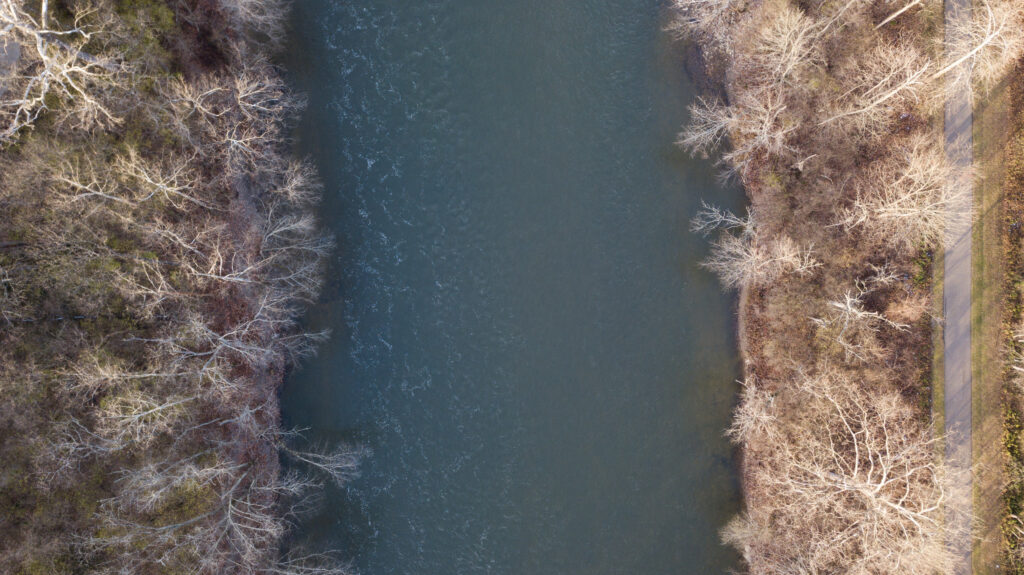
    An aerial view of the National Wild and Scenic Little Miami River in Maineville, Ohio, on Dec. 3, 2020. (Photo © 2021 Joe Timmerman/Loveland Magazine)

    Since the end of the last Ice Age before this land was known as America, humans have lived along the Little Miami River and enjoyed the resources it provides — drinking the water alongside its banks while hunting for fish within, using the clay to build pottery or structures, and floating on the surface in kayaks or canoes like the leaves still do today. In that time, the river has seen many seasons of change, from shifts in human culture alongside its banks through community development to biological diversities in its rich, natural environment, according to the Little Miami Ecology and History report.
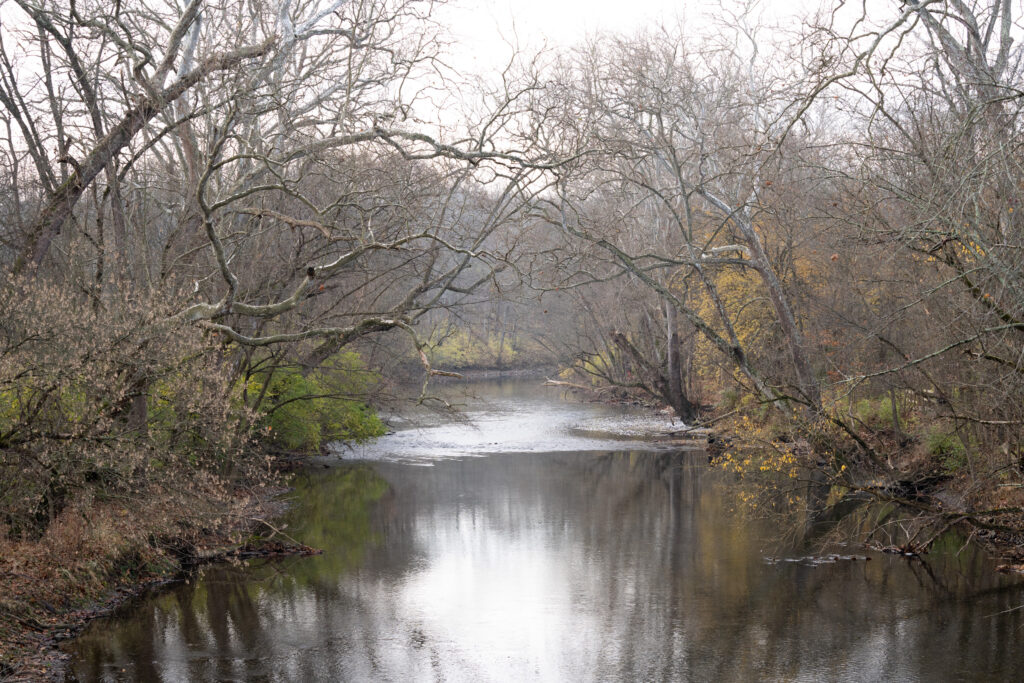
    The Little Miami River at Narrows Reserve Nature Center in Greene County, Ohio, near Beavercreek, on Sunday, Nov. 14, 2020. (Photo © 2021 Joe Timmerman/Loveland Magazine)

    When the Little Miami was designated as Ohio’s first State Scenic River and included in the National Wild and Scenic River System in 1973, according to the Ohio Department of Natural Resources, locals had already been active in its conservation and return to sustainability for more than half a decade. The Little Miami Conservancy (LMC), a non-profit organization fueled by passion for the protection of the river, led the effort in Washington to recognize the importance of protecting the Little Miami River as not only a local hidden gem, but as a national treasure.
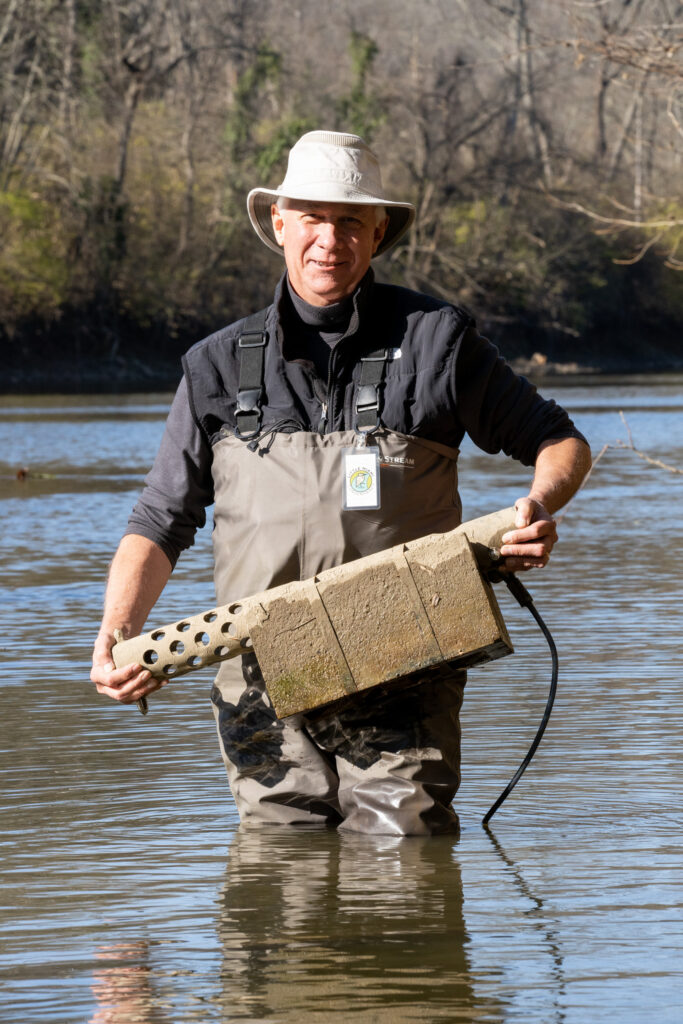
    Eric Partee, executive director of the Little Miami Conservancy, holds one of nine water quality sondes that are found all along the length of the river, this one in Milford, Ohio, on Tuesday, Nov. 16, 2020. “96% of the river is in full attainment with exceptional habitat quality, it’s just in fantastic condition. The challenge is to keep it that way,” Partee said. (Photo © 2021 Joe Timmerman/Loveland Magazine)

    The lower section of the river runs right through the heart of Loveland, Ohio, where LMC and its current executive director, Eric Partee, is based. Partee’s passion roots from the original director of the conservancy, Glenn Thompson, who in 1967 embodied the idea that their effort isn’t about one single person, but rather about everyone coming together to save the river. 

    “Someday, a corridor of green will stretch from one end of the river to the other. Individuals and families will enjoy peace and quiet and restoration of spirit that comes with clean water, birds, and trees,” a quote from Glenn Thompson that Partee believes the conservancy has lived up to.

    Since its origin, the conservancy has worked with agencies like the Ohio Environmental Protection Agency (OEPA), who records the condition of the Little Miami River every 10 years by sampling fish life. In the 1980s, only 4% of the Little Miami River was in full attainment of water quality health, but in recent years, the chart has flipped, and as of 2007, the river is at 96% attainment of health, according to OEPA research.
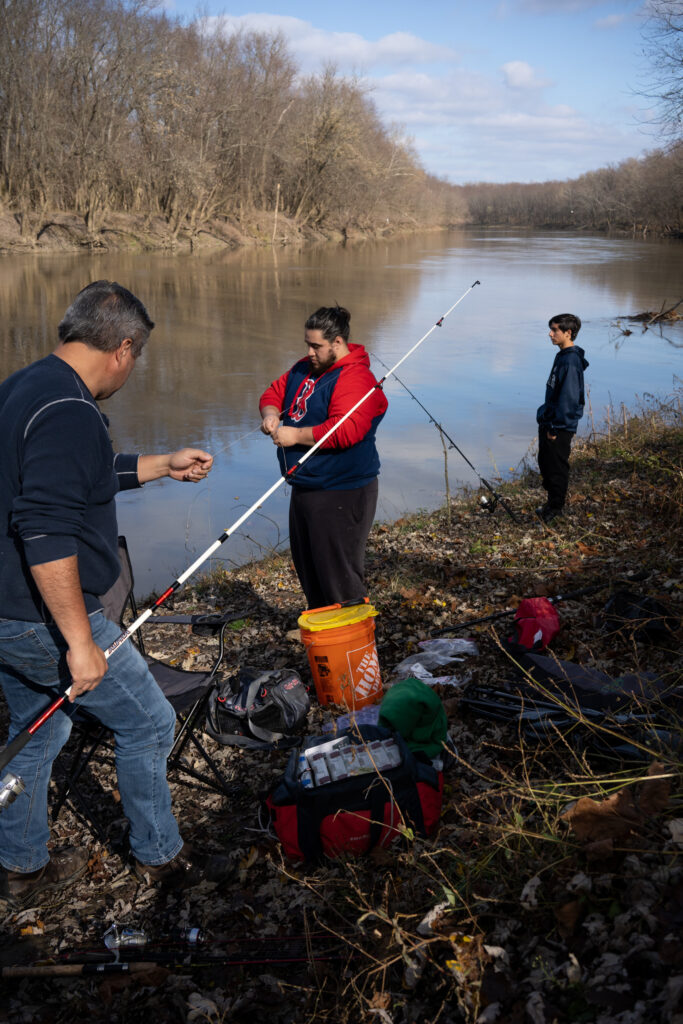
    Kenny Boykin (center) baits his hook at Magrish Nature Preserve just north of the Ohio River on Friday, Nov. 27, 2020. (Photo © 2021 Joe Timmerman/Loveland Magazine)

    “As early as the turn of the century, this river was very well polluted. (There were) a lot of deformed fish, it was not anything close to exceptional,” Partee said in an interview. “It took a lot of discussion, a little bit of arm twisting, and some local funding to fund improvements to the sewage treatment plants to ratchet down on phosphorus, which was the main culprit … when we got the treatment plants to ratchet down on that, biology basically turned around on a dime —from terrible to exceptional.”
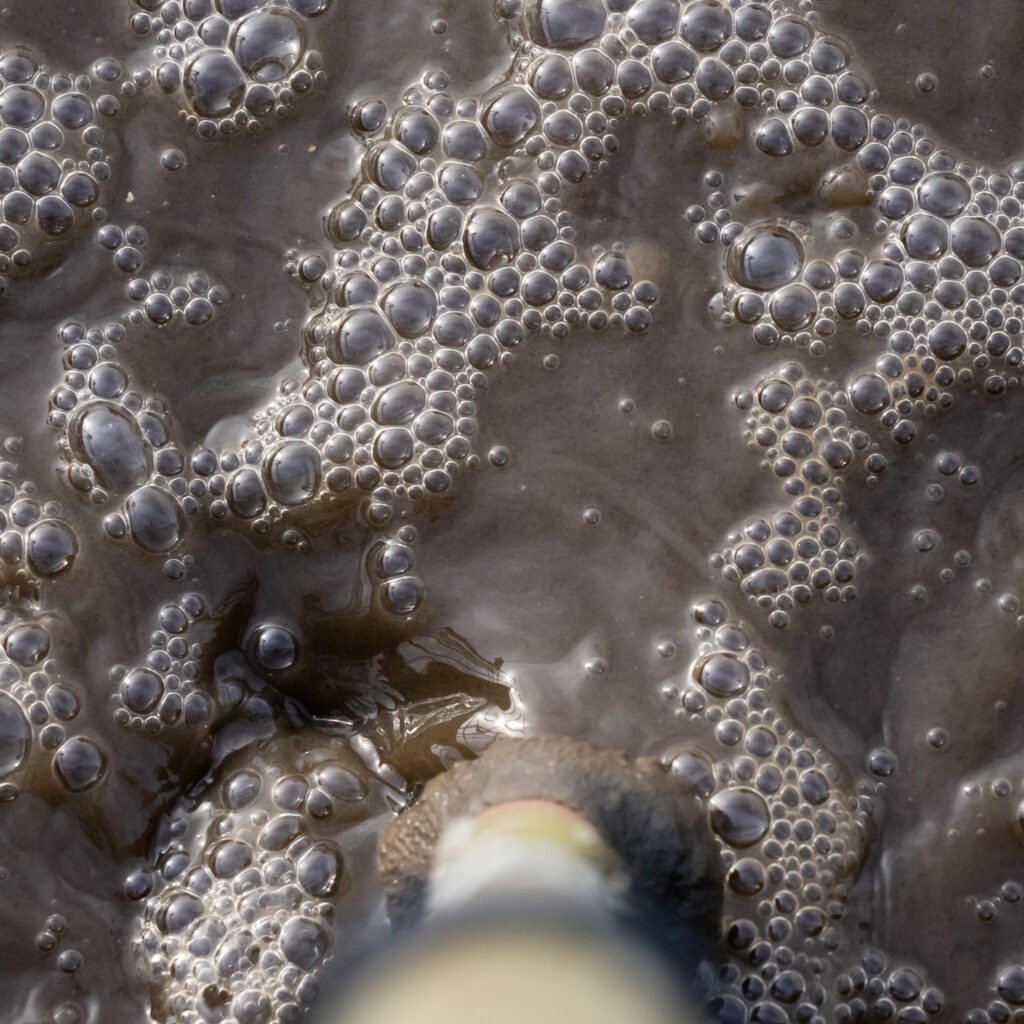
    Bubbles float and fall rapidly surrounding a dissolved oxygen analyzer in a section of the WRRF in Beavercreek, Ohio, on Saturday, Nov. 14, 2020. Measuring dissolved oxygen is one way to determine water quality in water, especially in rivers that contain natural life. (Photo © 2021 Joe Timmerman/Loveland Magazine)

    To make sure the river stays healthy, LMC introduced a set of equipment called YSI Water Quality Sondes, which monitor dissolved oxygen in nine locations throughout the length of the entire Little Miami, according to Partee. Each system monitors oxygen every 15 minutes, allowing for constant awareness of river health to prevent a reversion of quality. The conservancy also takes prides in their work on forest restoration through buying riverfront properties, planting trees, removing invasive species, and working collectively to clean up trash in the effort to grow closer to the initial goal of a corridor of green along the riverbank. 
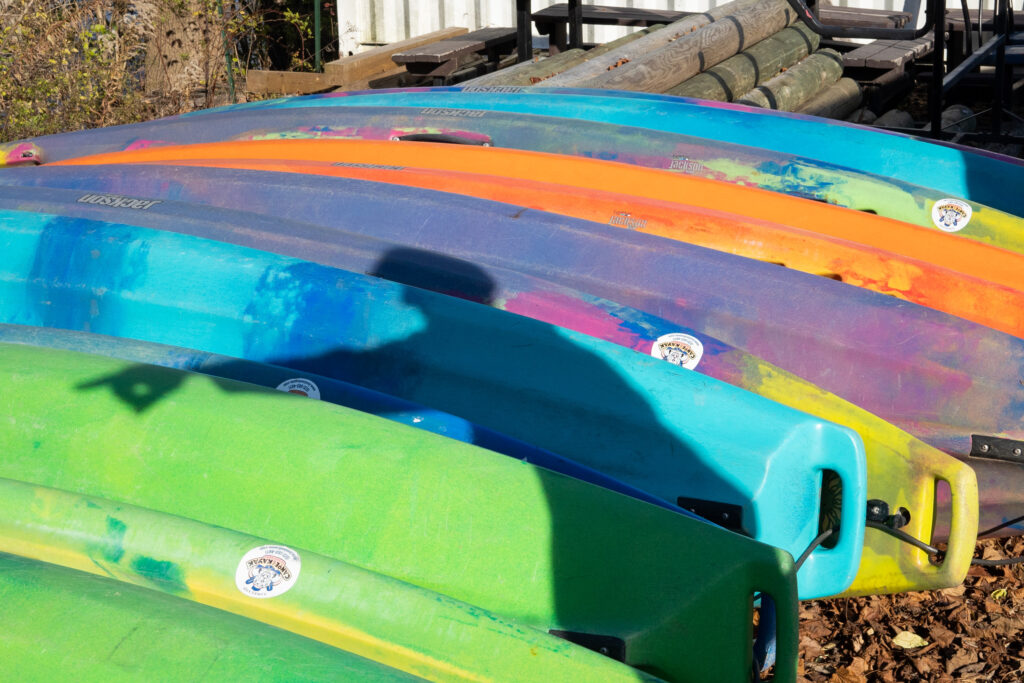
    Mark Bersani, owner of Loveland Canoe and Kayak, points to plants beyond stacks of kayaks along his riverfront property where his business and home sits next to the Little Miami River in Loveland, Ohio, on Friday, Nov. 19, 2020. (Photo © 2021 Joe Timmerman/Loveland Magazine)

    A short walk from the doors of the conservancy is the Loveland Canoe and Kayak Livery, owned by Mark and Robyn Bersani, which is just one of the many businesses along the Little Miami River that rely on its health as their main resource for income. The Bersanis work closely with the conservancy each year by offering and volunteering for cleanups as well as generous donations. This year, along with two other liveries including Rivers Edge and Scenic River, their combined donation to the Little Miami Conservancy’s effort was $56,000, according to Bersani.
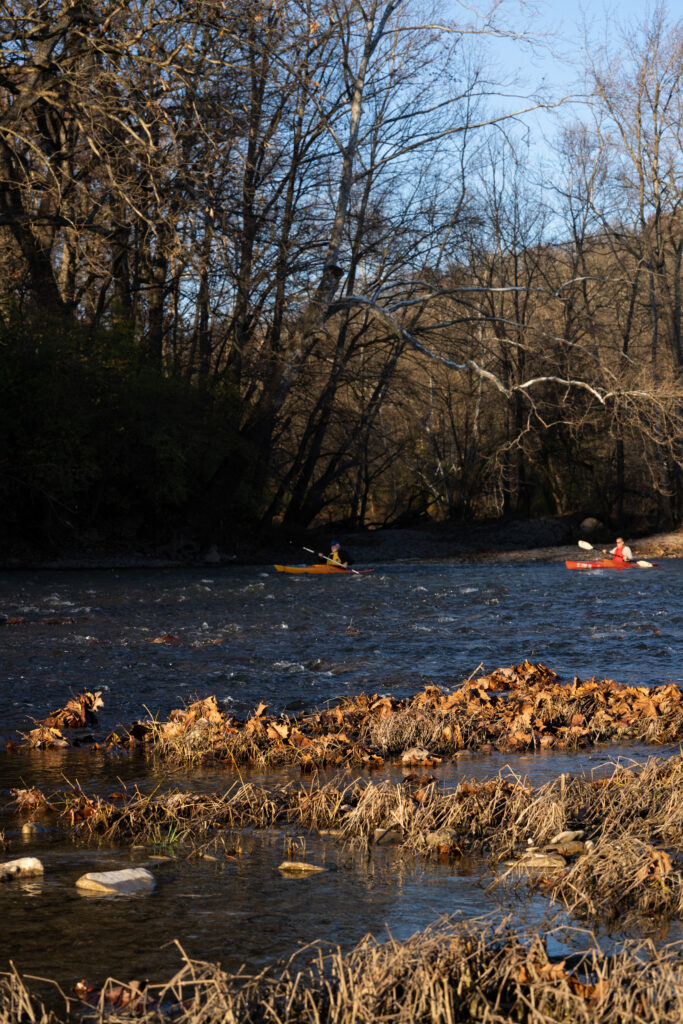
    Kayakers float down the Little Miami River in Loveland, Ohio on Thursday, Nov. 12, 2020. The Little Miami is popular for its kayaking and fishing. (Photo © 2021 Joe Timmerman/Loveland Magazine)

    “We’re involved from a grassroots portion, to actually helping with cleanups, to keeping an eye on the river, as well as donating and continuing to fund the good work that they do,” Bersani said in an interview. “It comes down to the people that live along the river, people that visit the river, the people in the community, if the river is going to stay clean. This river is very natural, it looks like it did 300 years ago … it is vital that the citizens all realize they have a role in this.”

    Up the road at Loveland High School, Amy Aspenwall, an AP environmental science teacher teaches teenagers the importance of environmental awareness through hands-on experiences in places like the Little Miami River. 
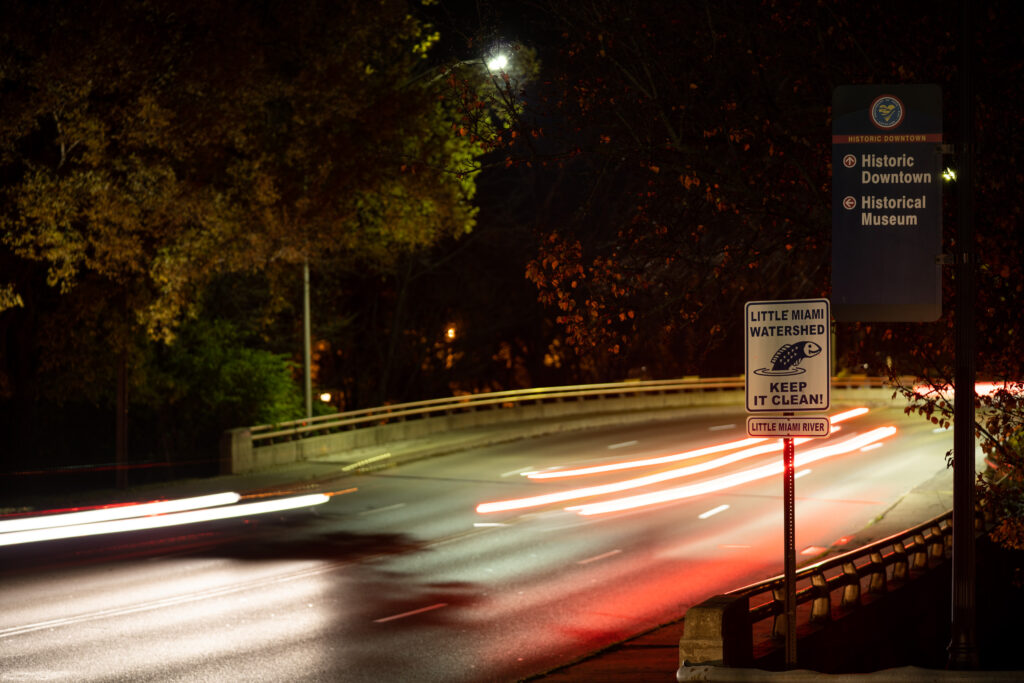
    Perhaps half of the students attending Loveland High School cross over the Little Miami State and National Scenic Little Miami on their way to school each morning.

    A sign in Hamilton County reads, “Little Miami Watershed, Keep It Clean!” as cars cross the bridge above the Little Miami River and into Historic Downtown Loveland on Thursday, Nov. 11, 2020. (Photo © 2021 Joe Timmerman/Loveland Magazine)

    In an interview over Zoom, Aspenwall talked about the importance of students getting out into nature to actually see how humans fit in the environment, because “if you don’t see it, it’s really not your problem,” Aspenwall said. From understanding food waste to the water drinking system to sewer treatment facilities, her goal is to allow students the opportunity to realize a sense of civic responsibility. 

    “It’s important for students to start to think of themselves as a bigger picture rather than just someone following teacher instructions,” Aspenwall said. “I want them to start thinking on their own and realize how powerful they are as a consumer.” 
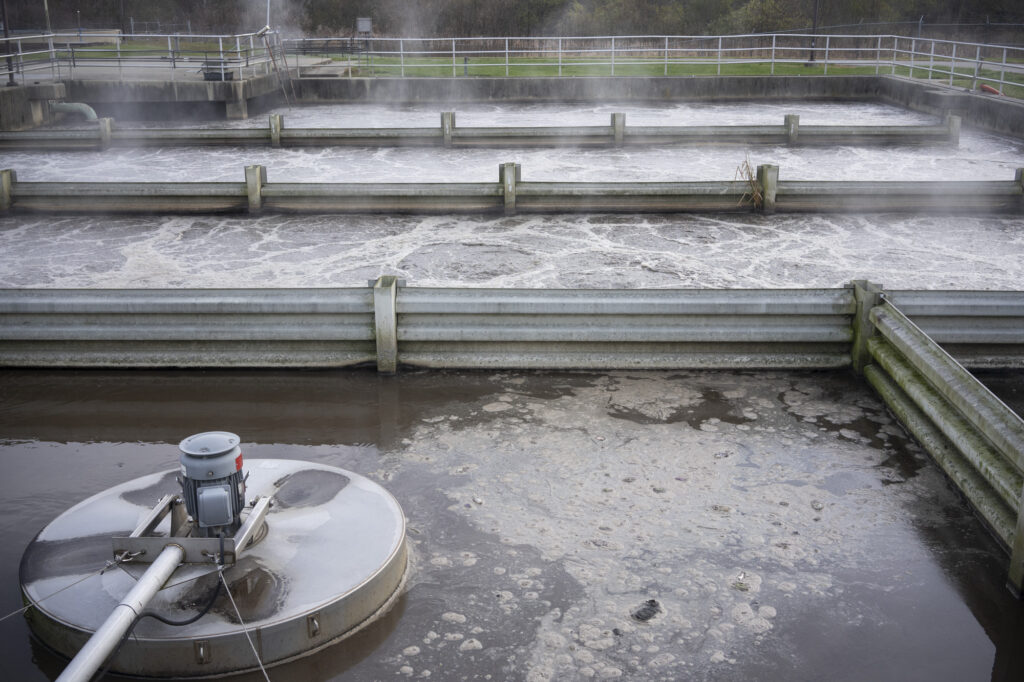
    Steam rises above a section of the WRRF, Water Resource Recovery Facility, in Beavercreek, Ohio, on Sunday, Nov. 14, 2020. The upper Little Miami River water runs through Beavercreek’s WRRF, which discharges 8.5 million gallons of water per day, according to the OEPA. (Photo © 2021 Joe Timmerman/Loveland Magazine)

    Although the Little Miami River is of “exceptional quality,” according to a 2010 water quality monitoring report by the OEPA, “the tributaries were generally of a lower quality.” 

    Michelle Waller, an environmental specialist in the Division of Surface Water at OEPA, discussed the difficulties the river has faced through poor nutrients entering the river due to excess phosphorus from treatment plants and still faces through agricultural runoff from farms, in an interview over Zoom.
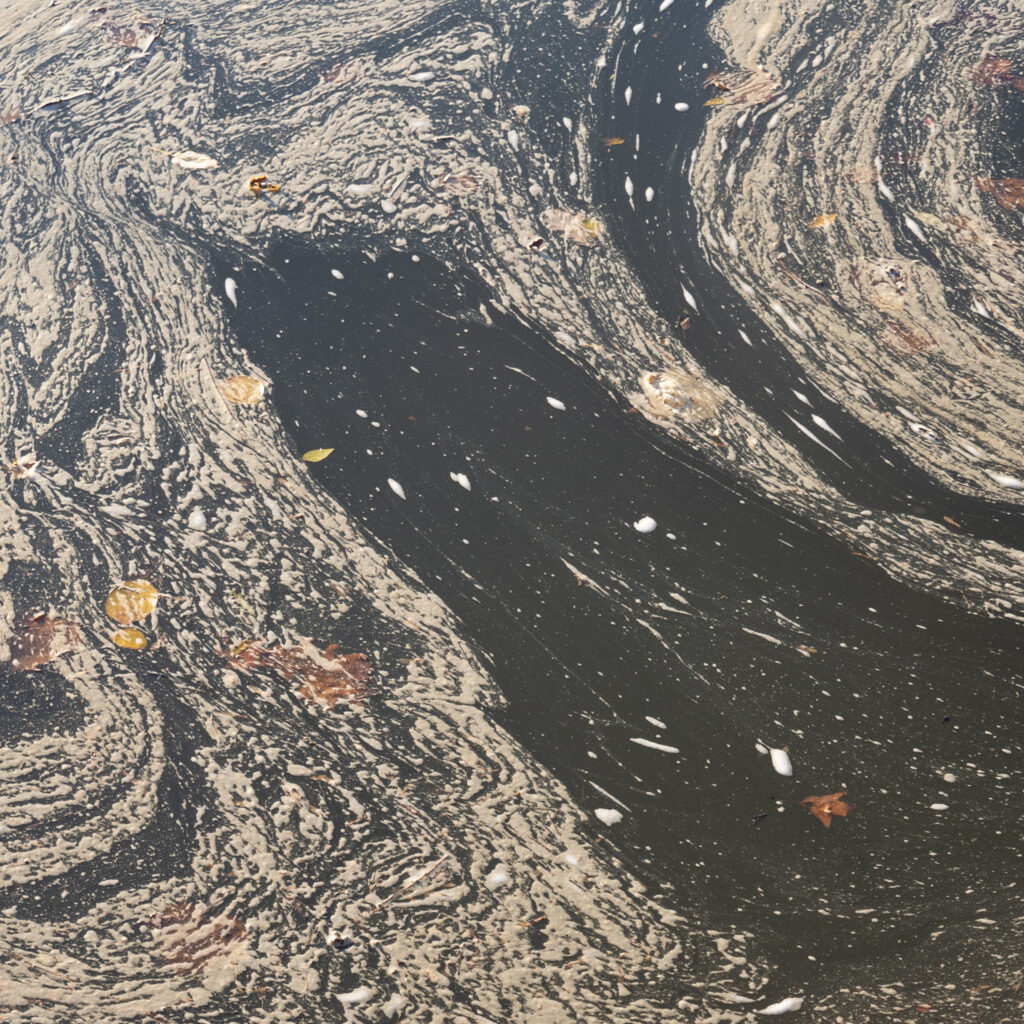
    Particles of sediment floats on the surface of the Little Miami River near a bank in Loveland, Ohio, on Thursday, Nov. 12, 2020. Runoff is one of the biggest threats to the Little Miami River, usually from agriculture, which makes up nearly half of the lower Little Miami’s watershed. (Photo © 2021 Joe Timmerman/Loveland Magazine)

    Waller said that placing phosphorus limits on the main stem’s water treatment plants in recent years proved to show major improvements in river nutrients after the OEPA performed sampling, but other negative sources are out of their reach. “We do not have authority over agriculture the way we do with what we call point sources, the treatment plants,” Waller said. “We try to work with local Soil and Water Conservation Districts, they try to get the word out about good farming practices … but there is no real regulatory authority which is a really big problem.” 
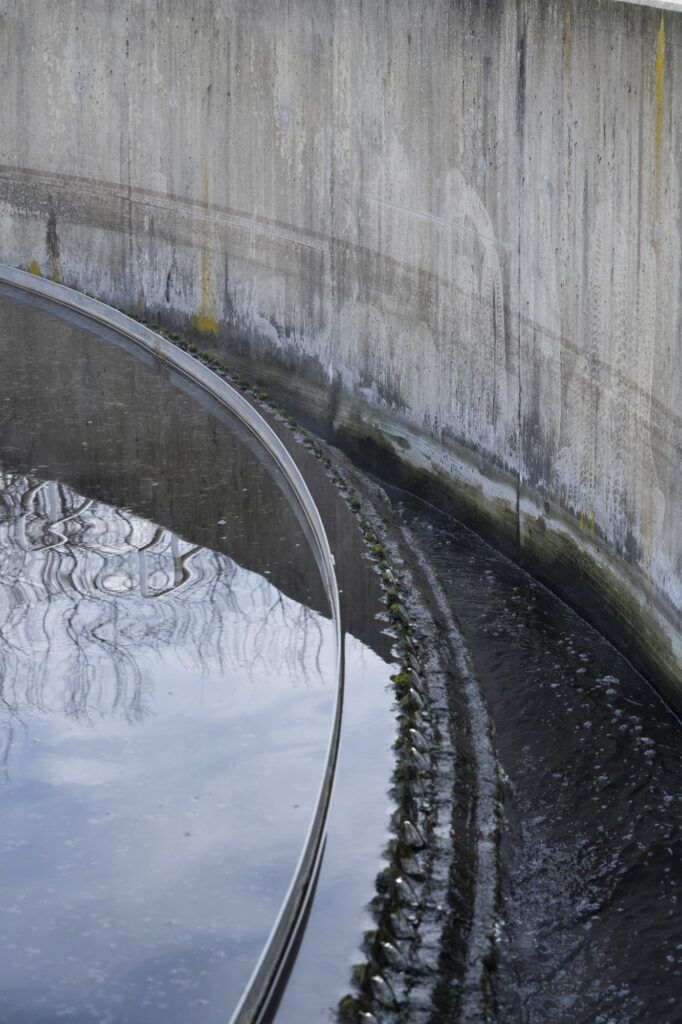
    Tree branches are reflected in a section of the Water Resource Recovery Facility, WRRF, in Beavercreek, Ohio, on Sunday, Nov. 14, 2020. (Photo © 2021 Joe Timmerman/Loveland Magazine)

    The majority of land along the Little Miami River is agricultural, unlike other major rivers in Ohio that have industry running alongside their waters. And just like the branches of community that have come together to help preserve the river, many tributary streams and creeks branch out from the Little Miami, though those tributaries can be overlooked. 
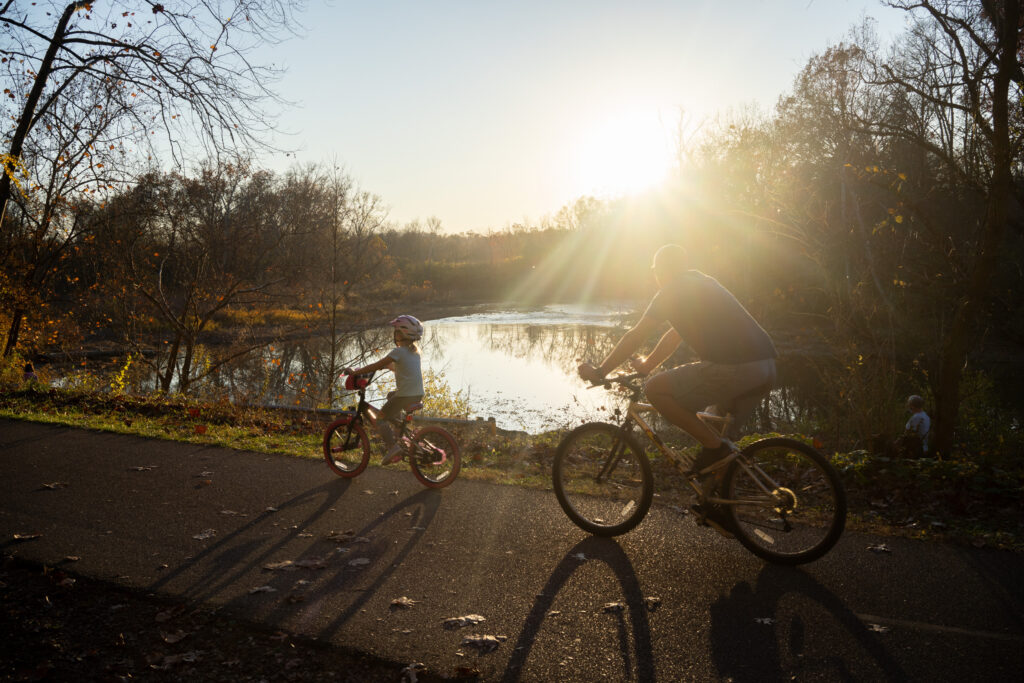
    People bike on a section of the Loveland Bike Trail alongside the Little Miami River in Loveland, Ohio, on Monday, Nov. 8, 2020. (Photo © 2021 Joe Timmerman/Loveland Magazine)

    As most organizations, including the OEPA and LMC, focus their efforts on upholding the exceptional quality of the main stem of the Little Miami River, there is still work to be done in the tributaries. Partee talked about how there just isn’t enough time for LMC to visit every tributary and talk to every landowner. However, near Beaver Creek in Greene County, there is an organization called the Beaver Creek Wetlands Association, which has adopted that very issue. “I think that’s probably the best future for the watershed, to have local citizens dealing with multiple tributaries and try to restore or protect it,” said Partee. 

    Between the shared relationships of the Little Miami Conservancy, OEPA, local government officials, developers, landowners, non-profits, teachers, and local business owners, a community has come together and worked toward the common effort to make a positive, sustainable change in the health of the river. 
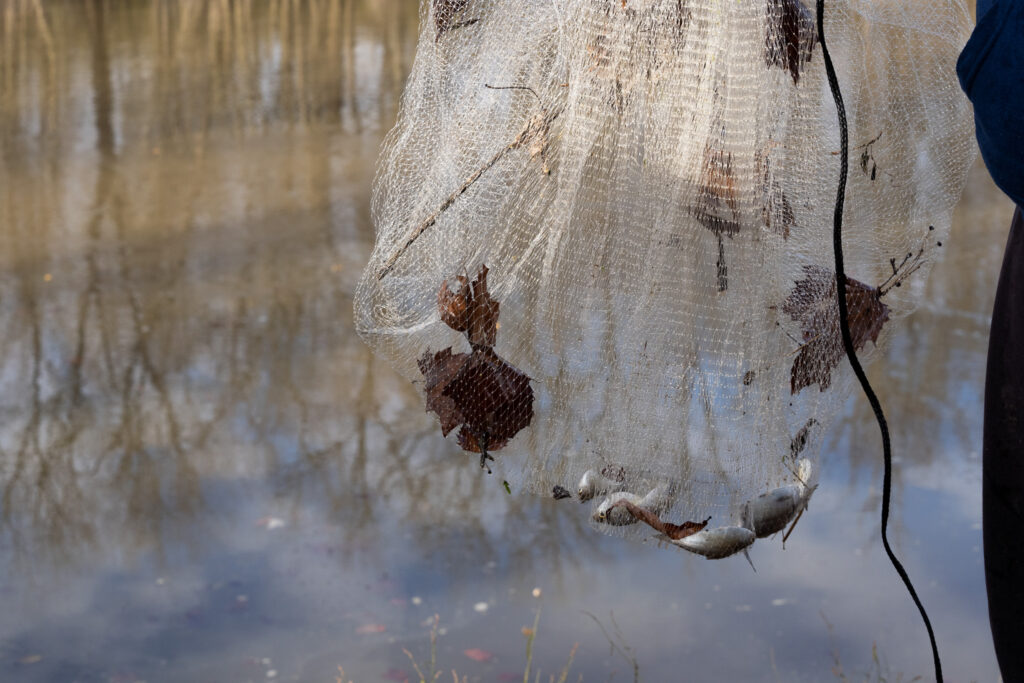
    Kenny Boykin carries a net with a couple bait fish he plans to use to catch catfish in the Little Miami River at Magrish Nature Preserve just north of the Ohio River on Friday, Nov. 27, 2020. (Photo © 2021 Joe Timmerman/Loveland Magazine)

    The timelessness of the Little Miami River will carry on as long as its water continues to run. And as it always has been, it’s still up to the people alongside the riverbank to make sure that the water runs clean for generations to come. As the late author Nelson Henderson said, and Eric Partee paraphrased when we talked together, “The true meaning of life is to plant trees, under whose shade you do not expect to sit.”
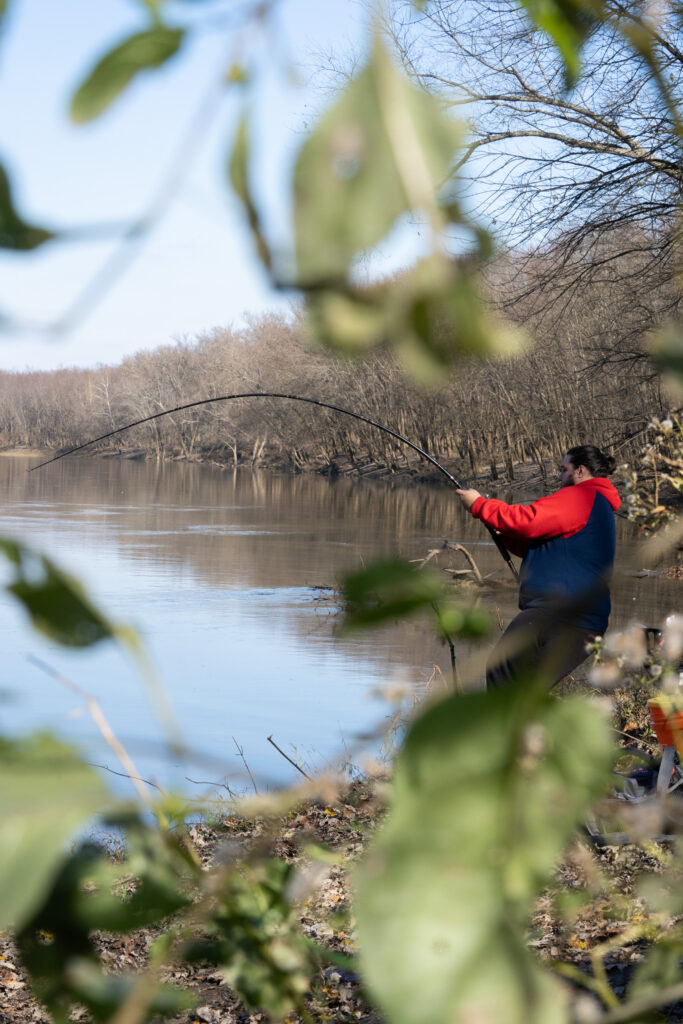
    Kenny Boykin struggles to pull his cast back in after the hook got stuck in the bottom of the river at Magrish Nature Preserve just north of the Ohio River on Friday, Nov. 27, 2020. (Photo © 2021 Joe Timmerman/Loveland Magazine)

    Note: The next OEPA Little Miami River Watershed TMDL Report will be produced and published by 2022, according to the last OEPA TMDL report
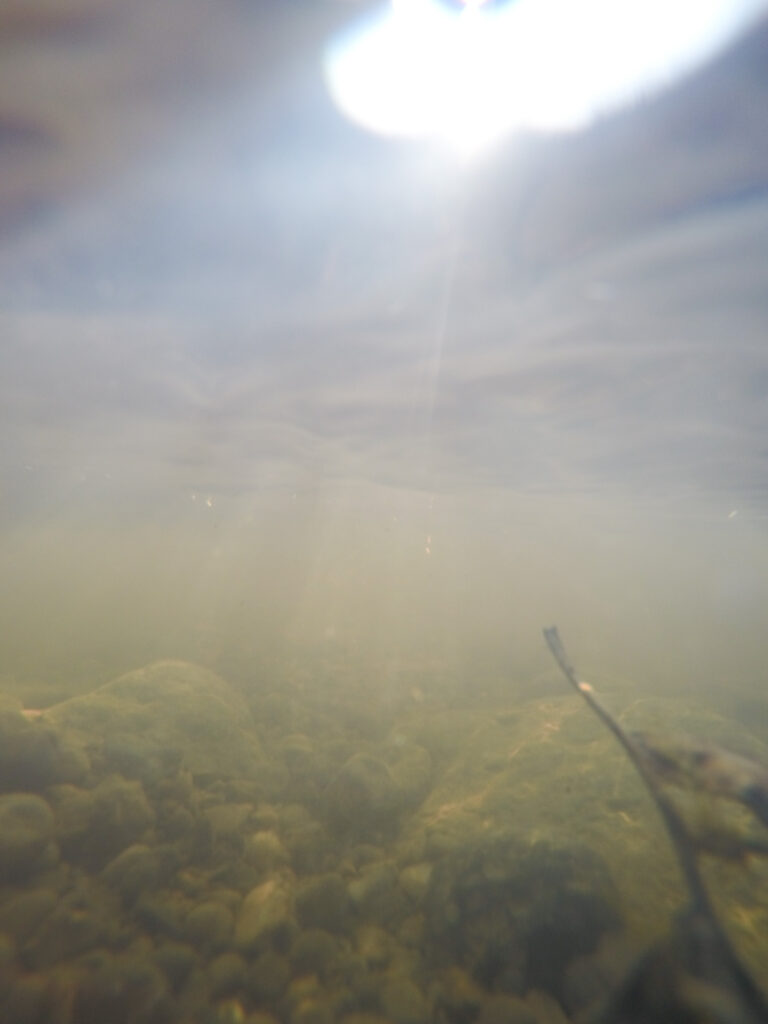
    Sunlight breaks through the river’s surface in an underwater view of the Little Miami River near Nisbet Park in Loveland, Ohio on Thursday, Nov. 12, 2020. (Photo © 2021 Joe Timmerman/Loveland Magazine)

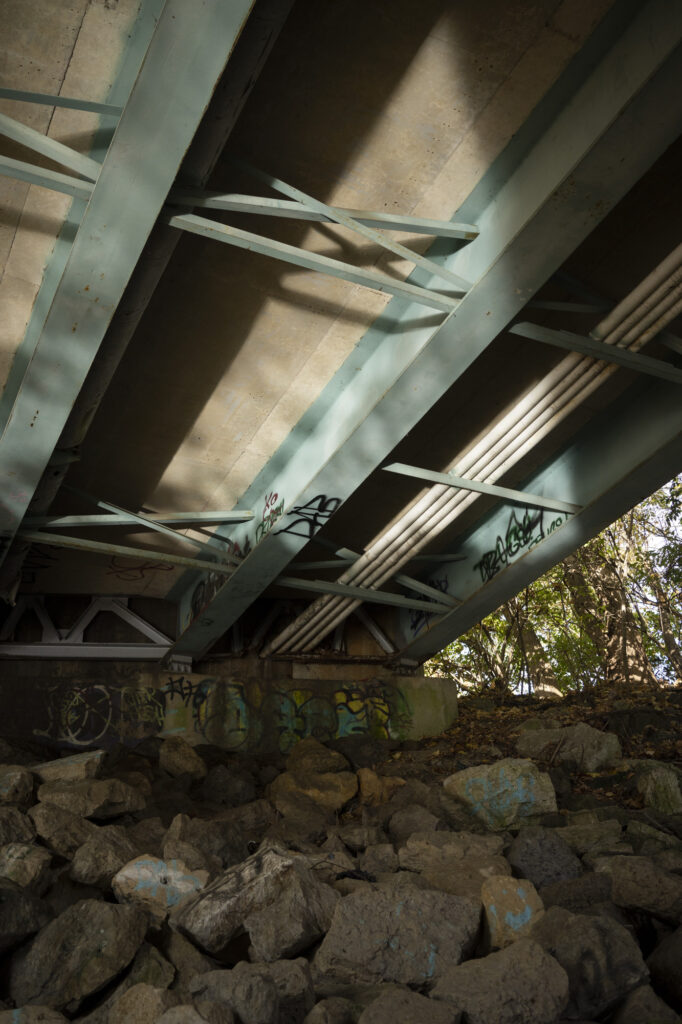
    Currents of the Little Miami River from sunlight reflect onto the bridge that connects Hamilton County and Clermont County in Loveland, Ohio, on Tuesday, Nov. 10, 2020. (Photo © 2021 Joe Timmerman/Loveland Magazine)
  • Angry Earth

    Angry Earth

    The earth is angry, and rightly so.

    Columnist Stephen McClanahan is retired from P&G and now active in environmental advocacy, search/rescue and emergency medical/disaster response.

    How much destruction do you have to see before you have seen enough? How angry does the earth need to be before we pay attention? How many lives must be ruined before it’s too many? As these words emerge on my computer screen, I can’t help but recall the lyrics to the folk ballad, and I pray the answers are not “Blowin’ in the wind”.

    In the past few months, I took the opportunity to spend some time in eastern North Carolina and the northern panhandle of Florida; in both places, I was there as part of Team Rubicon to help people try to put their lives back together following hurricanes Florence and Michael, respectively. Team Rubicon is a volunteer disaster recovery organization, mainly but not completely composed of military veterans. Hurricanes (or tropical cyclones as they’re called) are natural storms. We pay attention to the ones coming in off the Atlantic ocean. Pushed along by easterly trade winds in the tropics, warm, moist air near the ocean’s surface naturally rises and is replaced by cooler air aloft. With enough heat at the surface, the process

    Learn more about Team Rubicon

    continues. Throw in the rotation of the earth that induces a spin (counterclockwise in the northern hemisphere). As these get pushed along over the open ocean, they draw energy from the heat of the surface waters. The warmer the surface waters of the oceans, the more energy these storms have available. If atmospheric conditions are favorable for their large-scale formation, a storm emerges. As it grows, we give it names like tropical depression, then a category one hurricane and on up the line. I think one would have to be numb not to stand in awe at the fury and strength of such natural phenomena. Monster storms as these can make one feel very small; their scale and power are enormous. Magnificent, global forces are at play here. And yet, as tiny as we are in comparison, you and I (and many more of us) have a direct and measurable impact on them, because, you see, we’re pretty good at warming the oceans over which they pass. And with that, let me say welcome to global warming.

    Monster storms as these can make one feel very small; their scale and power are enormous.

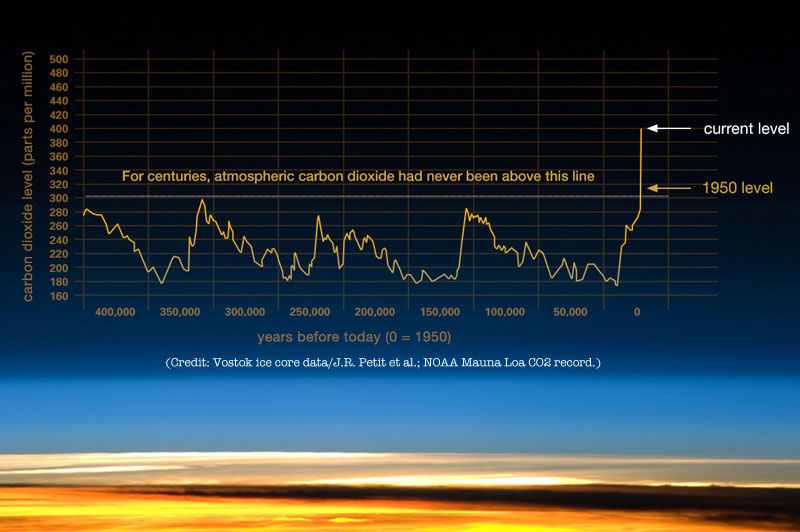
    We are probably familiar with the story by now. The sun heats our earth during daylight hours and at night, the earth cools by radiating some of that heat back into space. We all know that the earth does not cool as much during those nights with cloud cover, since the clouds act as a blanket. Clouds have an immediate and temporary effect; these impact our weather. It turns out that the carbon dioxide we emit into our atmosphere from our consumption of fossil fuels has been building up for decades (look at the graph to see for yourself); it too, acts as a kind of blanket but its impact is long-term. This CO2 blanket has a much slower build time but also a much longer lasting impact on our climate. CO2 traps some of the energy that would normally be radiated into space and holds it close to the earth. And, as we know, water is a great heat sink; it takes a lot of energy to heat water but once warmed, it retains that heat very well. Most (about 95%) of the excess heat that CO2 has trapped is in our oceans. Ergo, charged up hurricanes…natural storms made stronger by human impact on our planet.

    Its easy to read this kind of stuff and have it remain abstract, lifeless with no human touch. So, let’s go to North Carolina and Florida.

    Its easy to read this kind of stuff and have it remain abstract, lifeless with no human touch. So, let’s go to North Carolina and Florida.

    Burgaw sits in the Cape Fear river basin, about 40 miles inland from the Atlantic in eastern North Carolina. I spent a week there helping to muck-out homes in the flood zone of Hurricane Florence that went through in September of last year. One of those homes belongs to 80-year old Robert Ramsey; he lost everything, and I mean everything. Even though he’s 40 miles from the ocean, Florence came in and ever so slowly moved up the river valley; for days, it dumped unbelievable amounts of rain. The river flooded, to put it mildly.

    All but 2 feet of the roof line of Robert’s single-story house disappeared under the waters.

    All but 2 feet of the roof line of Robert’s single-story house disappeared under the waters. The water line was clearly visible on his metal roof. When I arrived, it had been well over a month since his house re-emerged from the flood waters. But his home was still a disaster; the destruction was so wide spread, all the emergency recovery resources that could be mustered were simply too inadequate to fix everyone straight away. I looked into Robert’s eyes as he stood in front of his home and I began to grasp the impacts. You could feel the hole in his heart; it was palpable. The damage to his home was enormous; there was nothing that was not ruined. Stench and mold were in abundant supply and growing worse by the day. Anything not washed away was rotting before your eyes. Everything in his humble home was totally destroyed. The only cure for his and about 4,000 other homes in this area was to gut

    I looked into Robert’s eyes as he stood in front of his home and I began to grasp the impacts. You could feel the hole in his heart; it was palpable. The damage to his home was enormous; there was nothing that was not ruined. Stench and mold were in abundant supply and growing worse by the day.

    them to the frame and try to dry out the bones of the structure. Everything inside is now in a landfill. Imagine, everything in your home being hauled to be buried. And while it has long faded from the news, the impacts of this storm ever present for those who lived it. One thing I heard time and again from the residents in the area was that this was not the first time their homes had been flooded; they do live in a river basin. But for thousands upon thousands of our fellow citizens, Florence was different; its waters were simply too much. And while it was water that Robert had to contend with, for folks in Mexico Beach, Florida, it was Michael’s winds that proved too much.

    Mexico Beach is was your quintessential beach-front tourist community. It sits directly on the Gulf of Mexico. Not far from Tyndall Air Force Base or Panama City, the land is flat and low, just feet about sea level. There is nothing to protect it from storms off the Gulf. 

    With little time for people to prepare, Michael slammed the upper peninsula of Florida near Mexico Beach on October 10 as a high-end category 4 hurricane; 150+ mph winds literally raked the community. Precious little remained standing when it was done.

    Hurricane Michael was kind of a sneaker; it showed up in the Caribbean as low-pressure disturbance. For almost a full week, it only slowly grew to a tropical depression. On October 8, it finally attained category 1 (the lowest) hurricane status. Then it moved northward over the warm waters of the Gulf of Mexico and as it did so, it became super-charged. With little time for people to prepare, Michael slammed the upper peninsula of Florida near Mexico Beach on October 10 as a high-end category 4 hurricane; 150+ mph winds literally raked the community. Precious little remained standing when it was done.

    The place still looked like a nuclear bomb had exploded.

    Team Rubicon volunteers come in for week-long waves; my assignment was for week 9 after Michael and the place still looked like a nuclear bomb had exploded. It’s kind of eerie to see a driveway lead up where a house once stood and literally, the only thing remaining is the concrete slab on which the home once stood; the winds took the rest. Our base of operations was an old warehouse in Panama City; Mexico Beach is about 20 miles down the coast to the southeast. To get there, you drive past Tyndall AFB which is well off the highway.  So mainly, you’re driving through a beautiful pine forest, or I should say, once was a pine forest. Thousands upon thousands now stand like twigs, all completely snapped off about 20 feet off the ground and all laying dead in the same wind-blown direction.

    Increasing the intensity and the patterns of naturally occurring storms are some of the many impacts of a warming world. For any one storm, it’s hard to parse out the exact contribution that a warming planet has had on a naturally-occurring weather event. Keep in mind that altering hurricanes is only one of many changes taking place. What is clear, in the long view of measuring climate, is that things are changing. To quote from NASA: “Global climate change has already had observable effects on the environment. Glaciers have shrunk, ice on rivers and lakes is breaking up earlier, plant and animal ranges have shifted and trees are flowering sooner.” And things will continue

    Keep in mind that altering hurricanes is only one of many changes taking place.

    to change for the worse simply due to the amount of CO2 in the air right now. But we can stop the worse of it, if we act…with urgency. Scientific modeling of future changes very clearly shows that we must stop adding CO2 to the air (i.e., get off fossil fuels). If we don’t, starting in a little over a decade from now, we’re going to be in serious trouble. (Read the latest report from Intergovernmental Panel on Climate Change if you’re into the details.)

    Encouragingly, there are signs that we’re beginning to take this seriously; average citizens and political/community leaders are raising this issue and debating options. And not a minute too soon. The earth is angry, and rightly so. And nature will have the final say in all this. We need bold action and we need it now; otherwise, we’re blowin’ in the wind.