

Tag: Harm Reduction Ohio

  • Ohio residents who may be in a position to reverse an overdose should consider carrying FREE naloxone

    Ohio residents who may be in a position to reverse an overdose should consider carrying FREE naloxone

    Loveland, Ohio

    About This Naloxone Program

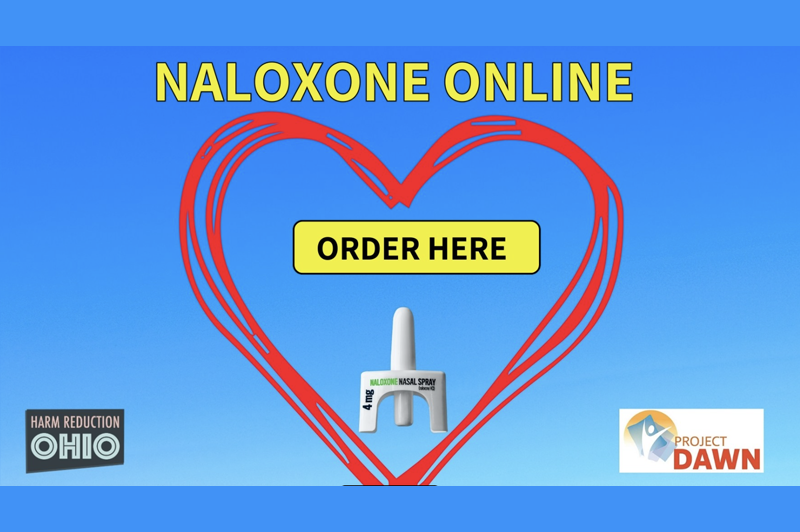
    Twenty-thousand Ohio residents died from drug overdoses from 2020 through 2023. Harm Reduction Ohio provides the overdose-reversing drug naloxone to any Ohio residents at no charge. You can order online. We mail orders within 24 hours from our main office in Granville.

    This service is made possible by the Ohio Department of Health’s Project DAWN program, using federal State Opioid Response funds approved by Congress.

    Ohio Department of Health

    What drugs in Ohio may contain fentanyl?

    All illicit drugs in Ohio — except marijuana — may contain the opioid fentanyl or a fentanyl analog that can cause a potentially fatal overdose. Half of fentanyl overdoses deaths are caused by mixtures with stimulants (meth, cocaine). High doses of prescription opiates — such as oxycodone, fentanyl, hydrocodone and morphine — may cause overdoses, too.

    Who should order at this site?

    Ohio residents who may be in a position to reverse an overdose should consider carrying naloxone. This is especially true for family members, friends, co-workers, neighbors and service providers in contact with people who use drugs other than marijuana. People who stimulants and non-opioid drugs (other than cannabis) are at significant risk of fentanyl overdose and should carry naloxone, as should people in contact with people who use drugs.

    Can I order fentanyl test strips?

    Yes. Please request them in the comment section when ordering naloxone. Fentanyl test strips will be added soon as an option to our online form.

    Other questions? Email narcan@harmreductionohio.org

    HRO-Naloxone-Nasalv2 from Jumpstart Video on Vimeo.

    Xylazine Wound Care Guide

    Harm Reduction Ohio’s partner NEXT Distro of New York City prepared this Xylazine Wound Care Guide, which can be found here and below.

    Harm Reduction Ohio published a study January 4, 2024, on xylazine’s frequency in Ohio’s drug supply. That study can be found here. The charts and data from the study is here.

    The study found xylazine in 37.3% of fentanyl. Other key findings:

    • Xylazine is paired with fentanyl in nearly every case.
    • Xylazine is almost non-existent in the supply of cocaine, methamphetamine, benzodiazepines, psychedelics and other drugs, except when fentanyl is also present.
    • Xylazine is found across Ohio without significant regional variations.
    • Xylazine frequency was consistent throughout the nine months studied, indicating the drug was well-established in Ohio’s fentanyl supply before 2023 and is not currently increasing or decreasing in frequency.

    Caring for Xylazine Wounds

    Source: National Library of Medicine

    The NEXT Distro wound care guide offers this guidance.

    • Xylazine wounds should be kept clean with soap and water. Using alcohol and peroxide is NOT suggested for these wounds.
    • Moisturized with antibacterial ointment like A&D or even a thin layer of vaseline.
    • Covered with clean bandages.
    • Manuka honey (Medihoney) has been found to be very useful and effective for its wound healing and antibacterial properties.

    [pdf-embedder url=”https://lovelandmagazine.com/wp-content/uploads/2024/04/XylazineWoundCare.pdf”]
  • Ohio Gov. Mike DeWine gets plaudits for OneOhio pick, pans for the process

    Ohio Gov. Mike DeWine gets plaudits for OneOhio pick, pans for the process

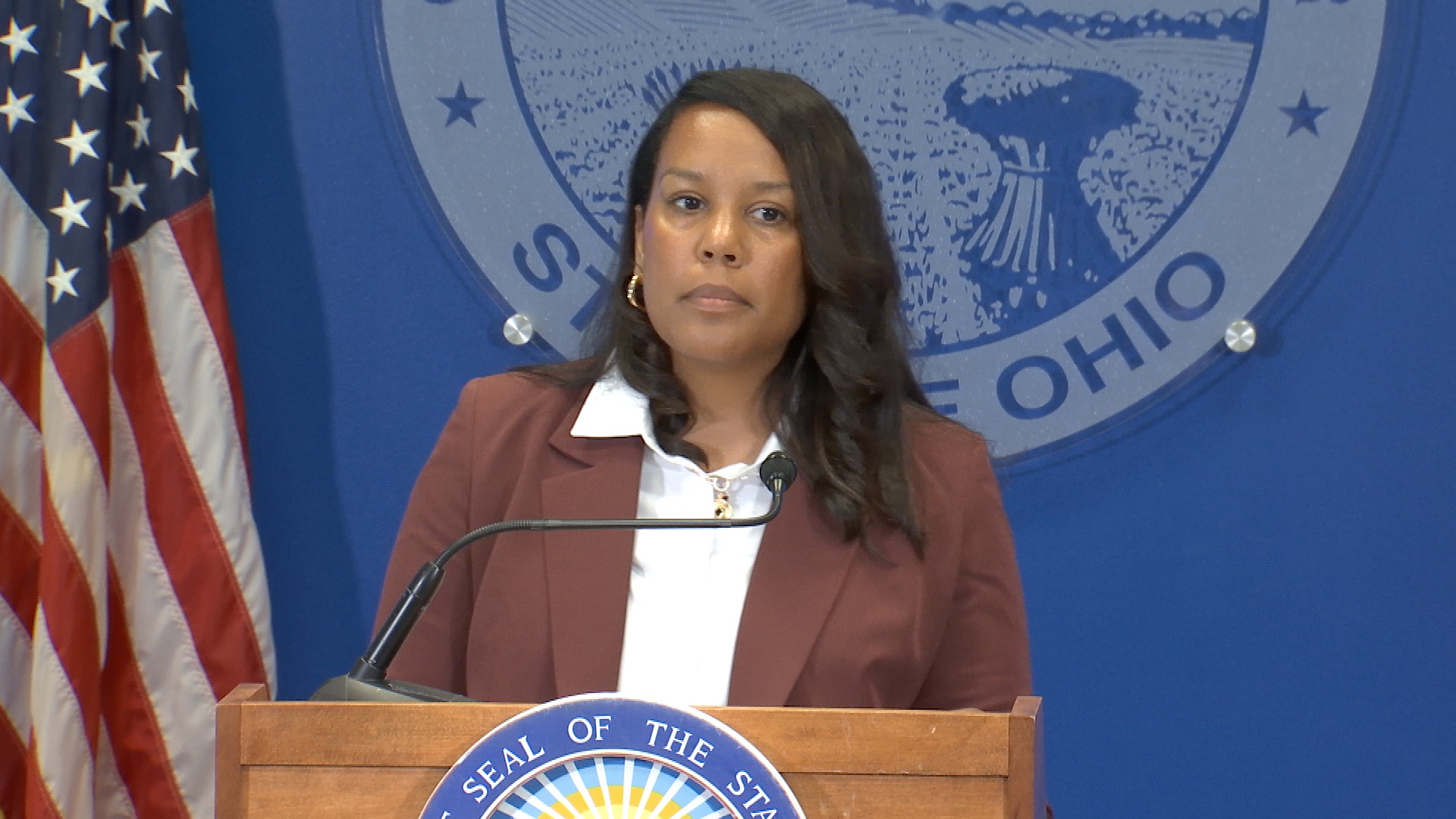
    OneOhio Recovery Foundation Executive Director Alisha Nelson. (Photo by Morgan Trau)

    BY:  Ohio Capital Journal

    This week, Ohio Gov. Mike DeWine tapped an executive director to lead the OneOhio Recovery Foundation. The nonprofit charged with administering more than $1 billion in opioid settlement money has faced criticism over lack of transparency. While critics of OneOhio praise DeWine’s pick, they argue the nomination process was opaque.

    The background

    State and local officials negotiated the OneOhio Recovery Foundation as way to manage opioid settlement money flowing to Ohio. The organization’s 29-member board hints at the competing interests. The governor, attorney general and general assembly all get to name board members. The state is then divided into 19 regions in which local leaders get to tap board members.

    In all, the agreement gives the nonprofit control over 55% of the $2 billion coming to Ohio.

    The memorandum of understanding that established OneOhio insists “meetings shall be open, and documents shall be public to the same extent they would be if the Foundation was a public entity.”

    But when Harm Reduction Ohio president Dennis Cauchon tried to attend the group’s first meeting in 2022, OneOhio turned him away. HRO then filed a public records request for documents related to the meeting. OneOhio didn’t respond.

    HRO sued OneOhio in the state supreme court. The justices decided — unanimously — that OneOhio is the functional equivalent of public entity and must comply with the records request.

    Dissatisfied with that outcome, state lawmakers added language to the budget explicitly defining OneOhio as not a public entity. Gov. Mike Dewine signed the budget on July 4. Eight days later, the OneOhio board voted to send DeWine their short list for executive director.

     Gov. Mike DeWine introducing OneOhio Recovery Foundation executive director Alisha Nelson (left) and Ohio Department of Children and Youth director Kara Wente. (Photo by Morgan Trau) 

    The director

    When DeWine announced his decision, he noted the OneOhio board “conducted an extensive national search” and he praised all three candidates. In the end though, he landed on Alicia Nelson.

    “For more than 16 years,” he said, “Alicia has turned her passion and life experiences into a career promoting and developing policies that support long term recovery and the advancement of the behavioral health field.”

    DeWine would know. As attorney general, he selected Nelson to lead his office’s anti-drug efforts. Shortly after taking office as governor, he turned to her again to lead RecoveryOhio, a new agency tasked with addressing mental health and drug abuse. Nelson also has experience working with the Alcohol Drug and Mental Health, or ADAMH, board of Franklin County. In the private sector, DeWine described how she’s worked to improve mental health payments within the Medicaid system.

    Nelson said she and the OneOhio board are committed to transparency, and she took a long view of the work in front of them.

    “What does it take to see the vision of 2050, where we want to be, to really see this issue abated and that no one else has to struggle with the loss of a loved one,” she said.

    Cauchon, from Harm Reduction Ohio, spoke glowingly of Nelson as well. He described her as “a talented, wonderful person and totally qualified.”

    He recalled how at RecoveryOhio she was instrumental in clearing bureaucratic hurdles for naloxone distribution. “It was just like a technical administrative thing that was having serious consequences,” he explained, “but she cared.”

    “I think that OneOhio is fortunate to have her as the executive director,” he said. “I have no problems with her at all. In fact, I salute her. I’ve worked with her in the past, and I have great respect for her.”

    The process

    The problem, Cauchon said, is how the board arrived at its short list. He claims the OneOhio held numerous meetings without public notice as they conducted their national search. Although the state budget asserts OneOhio doesn’t have to comply with state open meetings laws, those provisions won’t take effect until October.

    The controlling mandate, Cauchon said, is a restraining order granted by Franklin County Common Pleas Judge Mark Serrott in April. That order explicitly directs the board to comply with open meetings laws “for all meetings and subcommittee meetings.” Serrott made a point of insisting on adequate public notice, and that any exempt meetings must be “identified and disclosed.”

    In July, Judge Serrott extended that order through the budget’s October effective date.

    According to OneOhio’s February 2023 meeting minutes, the firm contracted to conduct the search said their team would meet with OneOhio’s personnel committee “twice per month to update the committee on candidates applying for the position.” OneOhio’s website shows no meeting minutes for that subcommittee after February.

    “It’s unfortunate,” Cauchon said, “because if they’d done it as the law requires, the outcome could have been the same — maybe would have been the same. But it’s like their cultural view that they’re a secret society, and that they’re a secret club.”

    Harm Reduction Ohio filed a motion to compel discovery against OneOhio and to hold the organization in contempt. The judge denied the first and sealed both motions. OneOhio has until next week to provide its response to the contempt motion.

    In a statement, OneOhio spokeswoman Connie Luck said, “we strongly dispute the claims made and will be responding through the proper legal channels.”

    Follow OCJ Reporter Nick Evans on Twitter.


    Nick Evans
    NICK EVANS

    Nick Evans has spent the past seven years reporting for NPR member stations in Florida and Ohio. He got his start in Tallahassee, covering issues like redistricting, same sex marriage and medical marijuana. Since arriving in Columbus in 2018, he has covered everything from city council to football. His work on Ohio politics and local policing have been featured numerous times on NPR.

    MORE FROM AUTHOR