Tag: help

  • El Departamento de Seguridad Pública de Ohio anuncia un nuevo programa educativo sobre seguridad vial dirigido a personas que no hablan inglés en Ohio

    El Departamento de Seguridad Pública de Ohio anuncia un nuevo programa educativo sobre seguridad vial dirigido a personas que no hablan inglés en Ohio

    La Oficina de Seguridad Vial de Ohio (OTSO), una división del Departamento de Seguridad Pública de Ohio, anunció hoy que ahora hay nuevos recursos educativos disponibles para diversas comunidades de Ohio para ayudar a los estudiantes del idioma inglés a convertirse en conductores con licencia.

    El plan de estudios y el programa de capacitación de capacitadores tienen como objetivo ayudar a las personas que no hablan inglés a aprender prácticas de conducción segura y prepararse para los exámenes escritos y de conducción en la Oficina de Vehículos Motorizados de Ohio (BMV). Incluye información sobre los requisitos para obtener una licencia de conducir en Ohio, el significado de las señales de tránsito y otras leyes básicas de seguridad vial.

    “Es posible que las personas que no hablan inglés y son nuevas en Ohio no comprendan completamente las reglas de tránsito, lo que aumenta el riesgo de verse involucrados en un accidente”, dijo el director del Departamento de Seguridad Pública de Ohio, Andy Wilson. “Incluso la educación vial más básica ayuda a promover comportamientos seguros en nuestras carreteras, lo que beneficia a todos los conductores de Ohio”.

    ¿Tienes preguntas?
    drivertraining@dps.ohio.gov
    614-466-3524

    Un programa piloto se presentó por primera vez en la Cumbre de Seguridad Vial de Ohio de 2024 de OTSO en Columbus y ahora está listo para lanzarse en todo el estado. La capacitación proporciona información para que los participantes la compartan con estudiantes que aprenden inglés o con adultos que no hablan inglés y que quieran aprender a conducir en Ohio. Las capacitaciones se llevan a cabo en inglés y los participantes traducen el material para compartirlo en sus comunidades.

    “Brindar educación sobre seguridad vial en varios idiomas ayuda a eliminar algunas barreras para los estudiantes de inglés de Ohio e integrarlos a la comunidad”, dijo Emily Davidson, directora ejecutiva de OTSO. “Esperamos que este nuevo programa educativo pueda ayudar a crear un entorno más seguro e inclusivo para todos los residentes”.

    Es importante tener en cuenta que este plan de estudios no reemplaza la educación vial y que quienes lo presentan en comunidades lingüísticas diversas no se consideran instructores de capacitación vial con licencia en el estado de Ohio. Los conductores adolescentes todavía deben completar 24 horas de instrucción en el aula y 8 horas de capacitación al volante en una escuela de capacitación para conductores autorizada. Los conductores adultos que no aprueban el primer intento en el examen de manejo en la BMV deben completar el programa abreviado para adultos, que consta de 4 horas de instrucción en el aula y 4 horas de capacitación detrás del volante con un instructor autorizado o 24 horas de práctica de manejo con un conductor con licencia mayor de 21 años.

    Hay recursos disponibles en el sitio web de OTSO para aquellos interesados ​​en llevar este plan de estudios a su comunidad. El esquema del plan de estudios, las diapositivas de PowerPoint, la guía de recursos y otras ayudas de capacitación están disponibles de forma gratuita para cualquiera que los solicite.

    Este anuncio sigue una serie de iniciativas de OTSO para fortalecer la educación vial, que incluyen casi $2,5 millones en subvenciones para financiar becas de capacitación vial para adolescentes elegibles en 42 condados. A principios de este año, se otorgaron $4.5 millones en financiamiento a través del nuevo  programa de subvenciones Creación de Oportunidades para la Educación Vial (CODE) que apoya la expansión de las opciones de capacitación vial en áreas desatendidas.

  • Ohio Department of Public Safety Announces New Traffic Safety Education Program Aimed at Non-English Speakers in Ohio

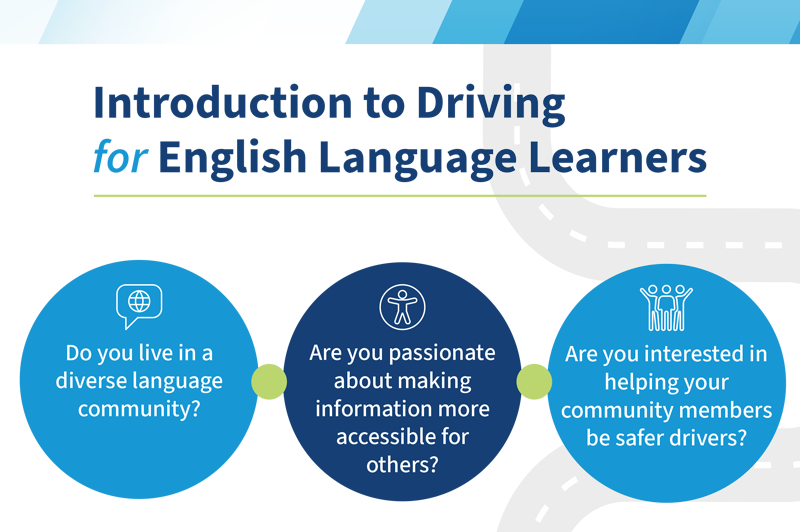
    Ohio Department of Public Safety Announces New Traffic Safety Education Program Aimed at Non-English Speakers in Ohio

    The Ohio Traffic Safety Office (OTSO), a division of The Ohio Department of Public Safety, announced today new educational resources are now available for diverse communities in Ohio to help English Language Learners become licensed drivers.

    The curriculum and train-the-trainer program is intended to help non-English speakers learn safe driving practices and prepare for the written and driving tests at the Ohio Bureau of Motor Vehicles (BMV). It includes information on the requirements for obtaining a driver license in Ohio, the meanings of traffic signs and signals, and other basic traffic safety laws.

    “Non-English speakers who are new to Ohio may not fully understand the rules of the road, increasing their risk of being involved in a crash,” said Ohio Department of Public Safety Director Andy Wilson. “Even the most basic driver education helps promote safe behaviors on our roads, benefitting all drivers in Ohio.”

    Do you have questions?
    drivertraining@dps.ohio.gov
    614-466-3524

    A pilot program was first introduced at OTSO’s 2024 Ohio Traffic Safety Summit in Columbus and is now ready to be launched statewide. The training provides information for participants to share with English Language Learners or non-English speaking adults that want to learn to drive in Ohio. Trainings are conducted in English, and participants translate the material to share in their communities.

    “Providing traffic safety education in multiple languages helps to remove some barriers for Ohio’s English Language Learners and integrate them into the community,” said Emily Davidson, OTSO executive director. “We hope this new education program can help create a safer and more inclusive environment for all residents.”

    It’s important to note that this curriculum does not replace driver education, and that those who present it in diverse language communities are not considered licensed driver training instructors in the state of Ohio. Teen drivers are still required to complete 24 hours of classroom instruction and 8 hours of behind-the-wheel training at a licensed driver training school. Adult drivers who fail the first attempt at the driving test at the BMV are required to complete the abbreviated adult program – which is 4 hours of classroom instruction and either 4 hours of behind the wheel training with a licensed instructor or 24 hours of driving practice with a licensed driver over the age of 21.

    Resources are available on OTSO’s website for those interested in bringing this curriculum to their community. The curriculum outline, PowerPoint slides, resource guide, and other training aids are available free of charge to anyone that requests them.

    This announcement follows a number of initiatives by OTSO to strengthen driver education, including nearly $2.5 million in grants to fund driver training scholarships to eligible teens in 42 counties. Earlier this year, $4.5 million in funding was awarded through the new Creating Opportunities for Driver Education (CODE) Grant program that supports the expansion of driver training options in underserved areas.

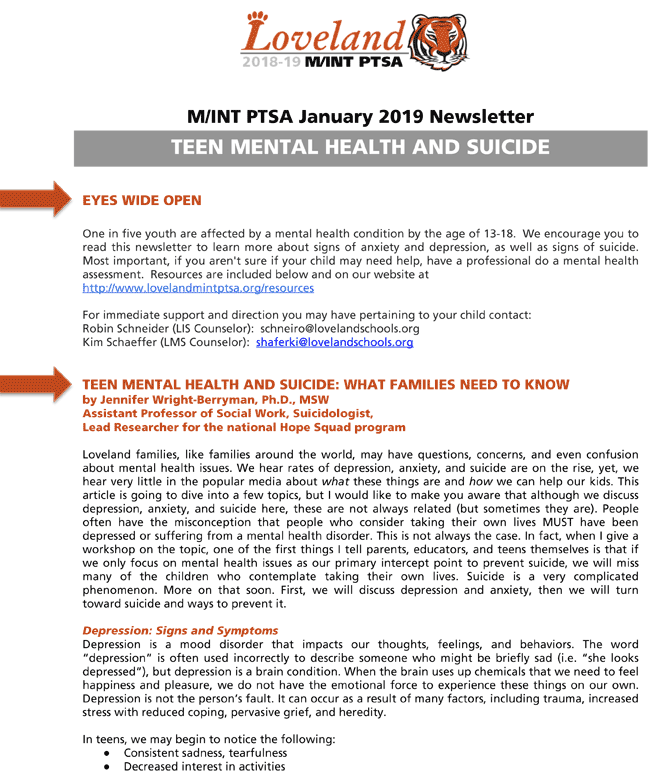
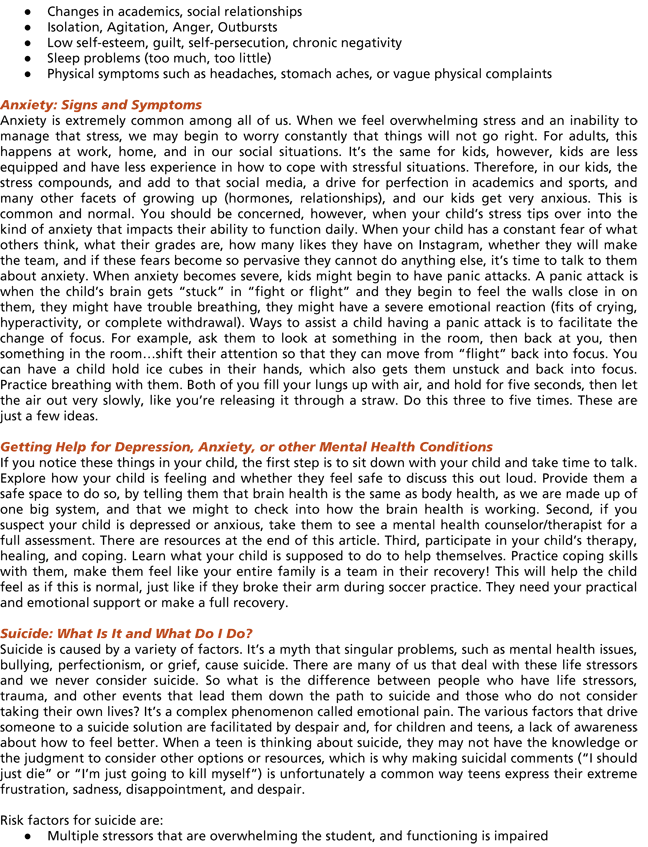
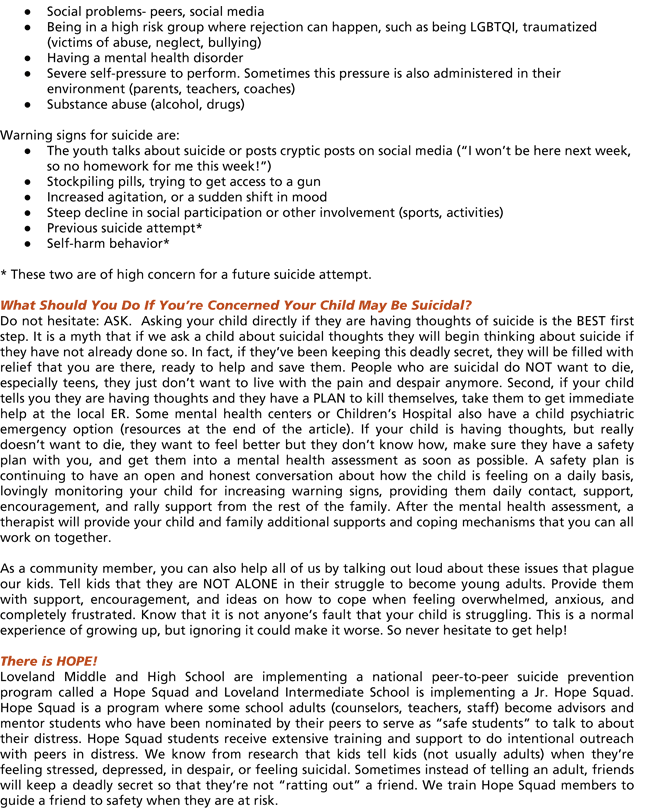
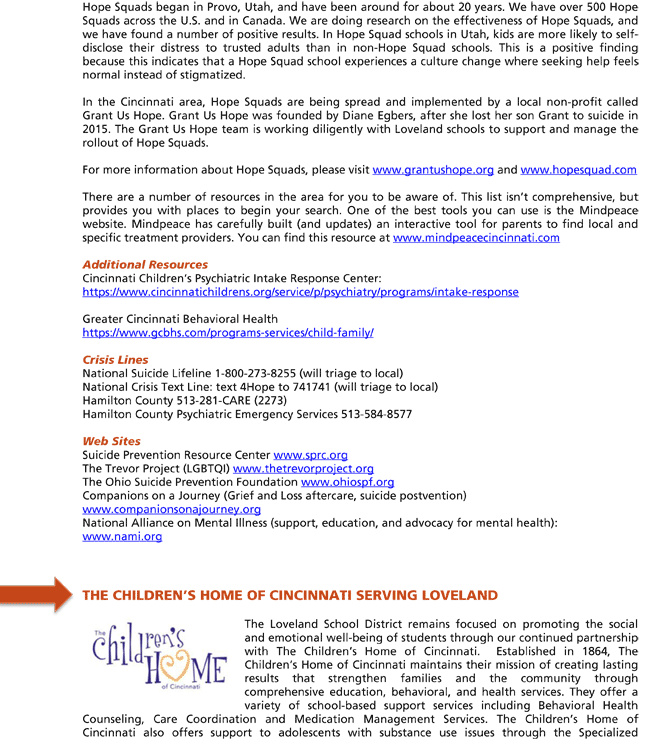
  • [Resources] Teen mental health and suicide from your M/INT Parent Teacher Student Association

    [Resources] Teen mental health and suicide from your M/INT Parent Teacher Student Association

    The newsletter was written by Jennifer Wright-Berryman, Ph.D., MSW and Suicidologist.

    (This is a re-print of a story Loveland Magazine ran in March of 2019)


    The M/INT PTSA regularly posts resource information (articles, web sites, etc.) to their Facebook page (LovelandMINTPTSA) and Web Site.

  • Teens can get ready for college or a career with a leg up from the Library

    Teens can get ready for college or a career with a leg up from the Library

    Written by Kelly Sheehy, Content Specialist, Downtown Main Library

    With COVID-19 still keeping us all at a social distance for the time being, Teen Librarians from across our Library system put their heads together to help connect teens with college and career readiness resources as they graduate, move into summer employment, or think about college.

    Teen Librarians Jacob Glemaker and Michelle Kanis, unable to meet with students in person due to the pandemic, compiled several lists of quick links and tutorial videos so teens can explore and get connected to useful information.

    “We hope that teens from all over our Library system will learn about new digital resources like OhioMeansJobs in order to map out potential career paths, explore different career choices, and also look at local colleges that will help them achieve these goals of breaking int degree or certificate programs,” said Glemaker.  “John Lortie, Teen Librarian at the Anderson Branch, compiled a list of digital tours for colleges in Ohio. This is great for students who were thinking about physically touring a school, but could not because of the pandemic.  This way they are still able to learn about what options are available to them.”

    Check out these helpful resources they compiled, with the assistance of Teen Librarians throughout the Library system:

    Education Resources

    Guide to Planning High School Courses  

    College Resources 

    Virtual College Visits

    Ohio Technical Center Programs 

    Community Resources

    Career Resources 

    Get Your First Job, presented by Teen Librarians Liz Weigand and Lauren Smallwood

    8 Red Flags Employers See on Your Résumé 

    Career Clusters

    OhioMeansJobs Quick Links to Resources

    Guide to Budgeting

    Guide to Researching Occupations 

    Guide to Résumés 

    Job Readiness Guide  

    Job Search Log  

    Transferrable Skills Checklist

    RELATED POSTS