Tag: Hillbilly Elegy

  • As a fellow Ohioan, I have some concerns about U.S. Sen. J.D. Vance

    As a fellow Ohioan, I have some concerns about U.S. Sen. J.D. Vance


    by David DeWitt

    Donald Trump announced Monday Ohio junior U.S. Sen. J.D. Vance as his running mate in the 2024 Election, and I have some concerns.

    Like J.D. Vance, I am also 39 years old; I also grew up in a struggling old industrial city in Ohio; I have also lost countless people close to me to the scourge of drug addiction; and I have also spent a lot of time in Appalachia — although my time was spent as a reporter in the Ohio foothills of Appalachia covering poverty, education, crime, courts, transportation, health care, business, and labor for nearly a decade.

    Where does one begin? Perhaps 2016 when Vance first launched into the national spotlight with his memoir, “Hillbilly Elegy.” The memoir part of the book I found interesting and sad and heartbreaking on the level of all the other stories I have witnessed, heard, and reported on about childhood traumas passed down in families struggling with poverty.

    Then there was the other part of his book, the diagnosis and prescription part, that I couldn’t understand or relate to: A certain seething contempt and scorn for the people of Appalachia and the Ohio “rust belt,” as though their struggles were the result of deep personal character flaws and a lack of bootstrapping, and not predictable consequences wrought by growing up poor in a region wracked by exploitation, stuck in cycles of generational poverty, and mired in the kind of desperation that accompanies these things.

    Most reporters drift toward certain topics of personal interest, and mine has always been the hardships of those in poverty and all its attendant ills. You see, “poverty” is not its own specific beat; it’s a topic wrapped up in the largest resource, funding and hence achievement gaps in education; it’s tied to the lack of reliable transportation to get to work, or job interviews; it’s weighted down by a lack of access to primary and preventative health care, and even internet access; it’s connected to childhood trauma, and hunger, and the long-term denial of regular meals and nutritious food; it’s burdened by increasing costs and regressive taxes: A greater and greater percentage of income goes toward rent, utilities, groceries, toiletries.

    I’ve met grandmothers providing kinship care to their grandchildren who’ve had to look at a couple boxes of mac and cheese and hot dogs, a loaf of bread and PB&J, as food for the week. I’ve met mothers working two jobs having to face a high electric bill but not having enough leftover for shampoo and deodorant. Imagine the bullying at school that leads to, and then think about how that bullying is just one more additional hardship — like not ever having your parent or parents around because they’re working two jobs, and you have to take care of younger siblings from the time you turn nine because child care is unaffordable.

    The generally crushing existence of all of it year after year, decade after decade, a lifetime of one blow after another; one trauma after another; one setback after another; one car breakdown, one broken bone or disease racking up medical debt, one layoff sending the family hurtling toward crisis and bankruptcy, just imagine it, and you begin to see how poverty perpetuates itself by breaking everyone in it down, and leaving the vast majority without a shot to break the cycle. And of course the susceptibility to addiction is high. Anything to fade away from the nightmare for a few hours. So that begets all its own problems and cycles and traumas from there. I learned all about it in the courtrooms and at the addiction treatment centers.

    So here is where I take issue. While I covered poverty in Appalachia, these are the cycles and problems of poverty at-large, wherever you find it, in the cities or in the hills, regardless of race, creed, or religion, throughout the country. This is not some cultural problem with Appalachia or the so-called “rust belt” — which is an insulting term, by the way, as is “Hillbilly.” This is what poverty is like anywhere in America. All that and much more.

    Appalachia itself is charming and noble. The “Hey Buddy” drawl and geniality of so many people is downright charismatic. A lot of folks are a helluva lot of fun to go four-wheeling with or to visit with over a draft at the local hole-in-the-wall. There’s genuine warmth and a good-times attitude. There’s an authentic kindness and lack of pretension. Then you learn the history of the coal mines and the breaker boys and the company towns and the union-busting and the Battle of Blair Mountain, and the Matewan Massacre, and you begin to understand what the region has been through and where it is now.

    The rural Ohio I know is full of strong, caring, resilient, community-minded people. I can say the same for the cities. Sometimes I get asked where I look for hope, and I always say that it’s not the politicians; it’s the thousands of good-hearted people working so hard every day to help their communities, in cities, towns and villages across Ohio. In my work as a reporter, I’ve been lucky enough to meet a whole heckuva lot of them.

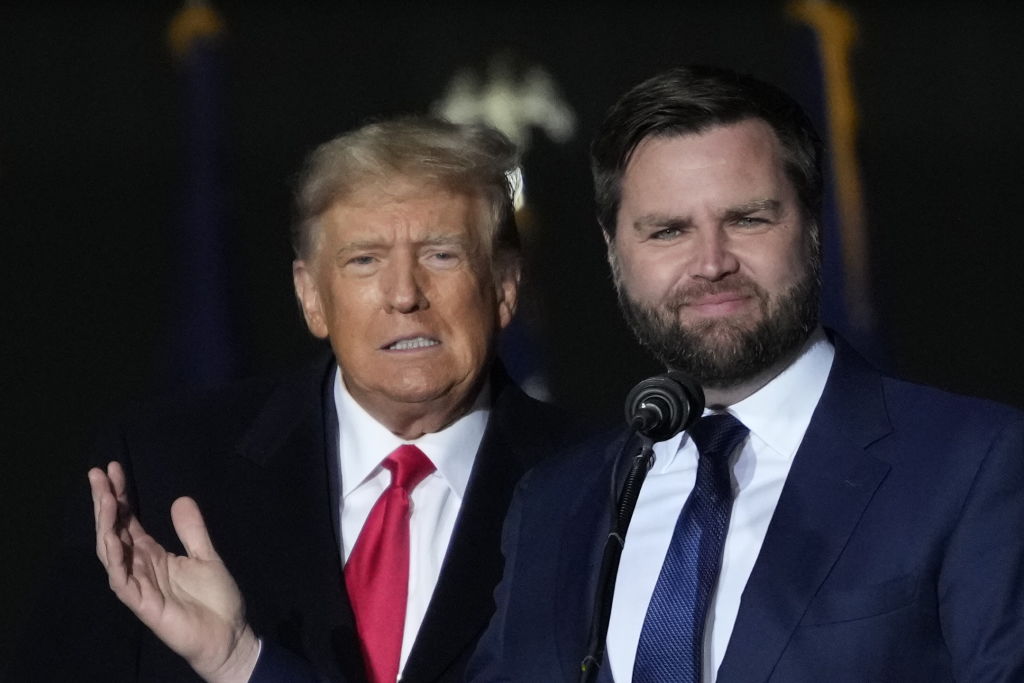
     VANDALIA, OHIO -Former U.S. President Donald Trump and Ohio Republican U.S. Senator JD Vance. (Photo by Drew Angerer/Getty Images.) 

    So after all my years of reporting their stories, some things seem pretty obvious to me as far as what can be done to help these communities, and giving tax cuts to billionaires just isn’t one of them. But that’s what Donald Trump is promising.

    Neither is saddling them with the regressive financial burden of 10% tariffs, which amounts to a $1,700 per year tax on Americans and will increase inflation that falls heaviest on those in poverty. That is another Trump promise. Replacing income taxes with tariffs, as Trump has also suggested, would send millions of families in poverty hurtling toward ruin, not only paying much higher sales taxes and other fees to try to still fund the government, but seeing vast swaths of support systems removed from under their feet. Costs going up would also forestall interest rates coming down. Devaluation of the dollar, as they propose, would also jack up inflation rates. Trump has also proposed cutting corporate tax rates from 21% to 15%, after already cutting them from 35% to 21% in 2017.

    Defunding the U.S. Department of Education as Trump has proposed would cut $18 billion a year for Title I high-poverty schools, cut $15 billion a year for special education, and cut $28 billion a year for Pell Grants. That would have a devastating impact on these communities.

    What these communities need is lots of funding and support to overcome the poverty achievement gap in education with best practices: early childhood education, before school programming with a full breakfast for those who need it; full universal lunch during school hours; and after school programs with dinner availability and options ranging from athletics to music and the arts to media production to outdoor activities. We need full, well-rounded education; and good pay and trauma-informed training for all teachers and public-facing workers; and connected, wraparound support systems for families.

    We shouldn’t be cutting our education budgets, commoditizing and privatizing education as billionaires are planning to do under Trump, and leaving whole communities out in the rain to perpetuate the cycles. We should realize, to paraphrase Frederick Douglass, that it’s easier to give a child education, hope, and opportunity than it is to fix a broken man.

    We should be making our public schools palaces of such learning, hope and opportunity, that keep children away from potentially toxic or negligent home environments for as long as possible; that give them three square, nutritious meals a day if that’s what some need; that provide them with good adult role models and mentorship, and allow them the opportunity to explore a variety of interests to find their individual passions to pursue, and a pathway toward a fulfilling, stable career and adulthood.

    On Wednesday night, J.D. Vance made his pitch to the “working man” in his vice presidential acceptance speech. Stood up next to the actual Trump agenda, I just don’t know what he’s talking about. That’s my concern. Nothing in the Trump agenda tangibly promises to help the families J.D. and I know so well. Quite the opposite. Meanwhile, as far as the heart-wrenching menace of drug addiction, J.D. has already prioritized defunding Ukraine over fighting fentanyl.

    I have many other concerns, such as his extreme moral and intellectual flexibility that raises serious questions about his ethics and candor; and his advocacy for abandoning Ukraine to the ravages of Putin; and his playing footsie with a neo-monarchist named Curtis Yarvin; and his comments that the radical right should seize institutions and ignore the courts; and his joining the ticket of a convicted felon — also adjudicated guilty of sexual assault and business fraud — who conspired to overturn the results of a free and fair election and rob millions of Americans of their votes, and instigated a violent mob attack on the U.S. Capitol on January 6, 2021 to disrupt constitutional business and the peaceful transfer of power.

    I am concerned that J.D. has said he would’ve went along with the plot to create a constitutional crisis by overstepping his authority as vice president and overthrowing the election results.

    In short, I have grave questions about J.D. Vance’s judgment and trustworthiness, and I do not understand his apparent desire to overthrow the post-WWII Pax Americana in favor of some sort of nationalistic isolationism where autocrats run amok, with a reactionary domestic agenda that dismantles programs for people in poverty and will only exacerbate and perpetuate their plight and exploitation — while Trump and the five dozen billionaires supporting him get even more filthy, stinking rich.


    David DeWitt
    DAVID DEWITT

    Ohio Capital Journal Editor-in-Chief and Opinion Columnist David DeWitt has been covering government, politics, and policy in Ohio since 2007, including education, health care, crime and the courts, poverty, state and local government, business, labor, energy, the environment, and social issues. He has worked for the National Journal, The New York Observer, and The Athens NEWS. He holds a bachelor’s degree from Ohio University’s E.W. Scripps School of Journalism and is a board member of the E.W. Scripps Society of Alumni and Friends. He can be found on X @DC_DeWitt

    Ohio Capital Journal is part of States Newsroom, the nation’s largest state-focused nonprofit news organization.

    MORE FROM AUTHOR

  • Former President Trump taps Ohio U.S. Sen. J.D. Vance as running mate in 2024

    Former President Trump taps Ohio U.S. Sen. J.D. Vance as running mate in 2024

    BY:  Ohio Capital Journal

    A little more than three years ago, J.D. Vance was just an author and conservative commentator. Now he might be next in line for the White House. It’s a dizzying political ascent for the 39-year-old man from Middletown, Ohio.

    Presumptive Republican Party presidential nominee Donald Trump announced Monday during the first day of the Republican National Convention that he has chosen Vance as his running mate in the 2024 Election.

    His 2016 memoir Hillbilly Elegy put him on the national stage as many were searching for an explanation to the rise of Donald Trump. At the time, Vance himself was extremely critical of the incoming president, but by the time he was running for office in 2022, Vance had reversed his thinking. Instead of “cultural heroin,” he argued Trump was the “greatest president in my lifetime.”

    Vance’s embrace of Trump helped him secure the former president’s endorsement in his U.S. Senate race, and since taking office, Vance has been one of Trump’s most consistent defenders. On cable news and Sunday talk shows, the Yale law grad has shown a knack for smoothing the sharp edges off of Trump’s latest pronouncements without walking back his point. As the Trump campaign works to extend beyond its conservative base, Vance’s skills as a communicator and translator — presenting a more palatable version of the nominee’s message — could help appeal to undecided voters.

    Still, there’s plenty in Vance’s own messaging that could turn some voters off. As a U.S. Senate candidate he leaned heavily into anti-immigrant rhetoric. On the campaign trail and in office, he has stridently opposed ongoing support for Ukraine. That stance is particularly notable given Ohio’s substantial Ukrainian community and Vance’s predecessor, U.S. Sen. Rob Portman co-founded and chaired the Senate Ukraine caucus. Critics argue Vance’s statements about the war mirror rhetoric coming out of the Kremlin.

    On the other hand, Vance has signed on to several bipartisan pieces of legislation. In addition to co-sponsoring rail safety and unfair trade legislation with U.S. Sen. Sherrod Brown, D-OH, Vance has backed U.S. Sen. Elizabeth Warren’s, D-MA, bill to claw back bonuses from executives at failed banks, and U.S. Sen. Sheldon Whitehouse’s, D-RI, bill that would eliminate a lucrative tax exemption for larger mergers.

    Vance has also praised FTC Chairwoman Lina Khan for taking a more critical view of business consolidation. That more aggressive posture has earned Khan the ire of traditional GOP allies like the U.S. Chamber of Commerce.

    What does he bring to the ticket?

    When a presidential nominee selects a running mate, they often attempt to answer a perceived shortcoming. The vice-presidential pick might come from an important state or region. Maybe they have strong connections with a particular interest group or represent a wing of the party. Perhaps they bring greater governing experience to the table.

    Ohio State political science professor emeritus Paul Beck argued Vance’s appeal for the ticket certainly isn’t geographic.

    “Well, I think one thing Vance doesn’t bring is votes in Ohio that Trump would need,” Beck said. “He doesn’t need them.”

    In 2016 and 2020, Trump won Ohio handily. In 2022, as Republicans nationwide underperformed, Vance and every other statewide Republican candidate won their races in Ohio.

    Beck contrasted Vance with former Vice President Mike Pence, who helped bring Christian evangelicals into the fold. Vance doesn’t have a similar affinity group to add, but Beck suggested he might help solidify support among one of Trump’s strongest groups of supporters — white working-class voters. Vance speaks their language, Beck argued, when it comes to trade and offshoring.

    “It could well be that he brings that group or at least solidifies that group in the Trump coalition,” Beck said, but allowed, “I don’t think Trump needs, necessarily, somebody who is going to strongly appeal to that particular part of his base. On the other hand he doesn’t want someone on his ticket, I would think, who would be opposed.”

    Instead, Beck emphasized Vance’s ability as a communicator. “He certainly has emerged as one of the most forceful and articulate defenders of a lot of conservative policy,” Beck argued. And as part of the ticket, he added, Vance could be an asset “downplay(ing) some of the major Democratic criticisms of Trump and deflect(ing) them in a way that is plausible.”

    Personal perspective

    Dan Driscoll first met Vance as part of a veteran’s group at Yale and described him a reassuring voice for a “scared, humbled, self-conscious” first year law student. In an interview Driscoll said he’s “thrilled for a friend I have a ton of respect for and our country to get an amazing leader.”

    Since graduating, Driscoll has settled in North Carolina. In 2020 he ran for the Republican nomination for the congressional seat vacated by former Trump chief of staff Mark Meadows. He lost in a crowded primary to the eventual winner, former Rep. Madison Cawthorn.

    Driscoll argued Vance’s run of success from a book, to a movie, to a venture capital fund — “most people, one of those would be an amazing lifetime achievement” — is no accident. He described the senator as “one of the single hardest workers” he’s ever met.

    And like Beck, he pointed to Vance’s communication skills as a kind of a “superpower,” but insisted it works because he’s saying what he believes.

    “My true genuine perspective is that he just wants to make a difference for a set of the population that seems to have been pretty overlooked since the 80’s or 90’s,” Driscoll said.

    He argued Vance is skeptical of elite political consensus on issues like trade because it has contributed the hollowing out of working-class communities like Middletown where he grew up. It was a familiar part of Vance’s stump speech throughout his U.S. Senate campaign. Driscoll brought up examples of Vance working with some of the most liberal lawmakers in the Senate, and argued he wouldn’t do so unless they shared concerns about policies impact those communities.

    “Even if what he’s saying doesn’t fit in these clean boxes of the left or the right, if he believes it, he will say it,” Driscoll argued. “And that’s really compelling to a lot of people, I think.”

    Ohio Republicans applaud

    Shortly after President Trump’s announcement came a wave of positive reaction from Ohio politicos.

    Gov. Mike DeWine, who will be tasked with finding a replacement if Republicans retake the White House, congratulated Vance and praised his “unique life story (which) will resonate with Republicans and Independent voters across the country.”

    DeWine has no shortage of options to fill the vacancy created by a Vance Vice Presidency, but whomever he settles on would face an election in 2026 to complete the remainder of Vance’s unexpired term.

    DeWine added that “J.D. will also bring a new generational perspective to the ticket,” and that his experience growing up poor in Middletown, Ohio will help him relate “to the many Americans who are struggling right now to make ends meet.”

    Republican U.S. Senate nominee Bernie Moreno has been an enthusiastic supporter of Vance, and the feeling is mutual. Vance endorsed Moreno for the U.S. Senate more than a year ago in hopes of avoiding a messy primary, and last November, he campaigned with Moreno outside Columbus — urging the crowd to “send me reinforcements.

    “President Trump made a brilliant selection in Senator J.D. Vance,” Moreno said in a statement.


    Moreno described Vance as a “dynamic, visionary leader” and the “perfect messenger” for Trump’s agenda.

    “He will fight with President Trump for our middle class, secure our border, and unleash American energy,” Moreno continued. I am proud to call J.D. a friend and I look forward to working with him to fire Joe Biden, Kamala Harris, and Sherrod Brown.”

    Several of the Ohio politicians who could be in the running if Vance’s seat opens up poured praise on the selection as well. On social media, State Treasurer Robert Sprague said “once again, President Trump hits it out of the park.” In a press release Attorney General Dave Yost called Vance a “perfect pick.”


    “Tough, smart and high-energy,” Yost went on. “He knows what it’s like to have to fight, what it’s like to win, and what it’s like to serve.”

    Both men are eyeing the governor’s mansion in 2026, and speculation has begun that DeWine might name a gubernatorial contender as way to create a less volatile GOP primary. Lt. Gov. Jon Husted is laying the groundwork to run for governor as well.

    Two recent U.S. Senate hopefuls congratulated Vance on his selection as well. State Sen. Matt Dolan, who DeWine endorsed in this year’s GOP primary, described the pick as “great news for Ohio and America. We are in need of new, results-driven leadership in Washington, DC.”

    Secretary of State Frank LaRose praised Vance as “an excellent choice,” who will “serve honorably.”

    “J.D. Vance is a patriot, a thought leader, and a fighter for America’s forgotten working class,” LaRose said.

    Ohio Democrats criticize Vance’s ‘political shapeshifting’

    In a nod to Vance’s previous comments against Trump, Ohio Democratic Party Chair Elizabeth Walters released a statement after the selection pointing to his “political shapeshifting.”

    “J.D. Vance is an out-of-touch millionaire who launched his political career by taking advantage of Ohio’s opioid crisis and has spent his time in the Senate humiliating himself in the service of a convicted felon instead of working to improve the quality of life for Ohioans,” Walters said. “His support for a national abortion ban and his twisted belief that women should stay in violent marriages for the benefit of their children exemplifies his dangerous extremism. He’s not just wrong for Ohio, he’s wrong for the country.”

    Follow OCJ Reporter Nick Evans on Twitter.


    Nick Evans
    NICK EVANS

    Nick Evans has spent the past seven years reporting for NPR member stations in Florida and Ohio. He got his start in Tallahassee, covering issues like redistricting, same sex marriage and medical marijuana. Since arriving in Columbus in 2018, he has covered everything from city council to football. His work on Ohio politics and local policing have been featured numerous times on NPR.

    Ohio Capital Journal is part of States Newsroom, the nation’s largest state-focused nonprofit news organization.

    MORE FROM AUTHOR

  • BREAKING: Trump picks Ohio U.S. Sen. J.D. Vance as his running mate

    BREAKING: Trump picks Ohio U.S. Sen. J.D. Vance as his running mate

    BY:  AND  Ohio Capital Journal

    MILWAUKEE, Wis. — Donald Trump announced Ohio U.S. Sen. J.D. Vance as his running mate Monday during the first day of the Republican National Convention, capping off months of speculation about who would get the nod as his vice presidential pick.

    Vance has not been a member of Congress long, having less than two years experience as a senator and having voted against major bipartisan bills throughout his tenure in the upper chamber.

    Before becoming a U.S. lawmaker, Vance served in the Marine Corps during the Iraq war, worked as a venture capitalist and wrote a book about growing up in Middletown, Ohio. He holds a law degree from Yale.

    “After lengthy deliberation and thought, and considering the tremendous talents of many others, I have decided that the person best suited to assume the position of Vice President of the United States is Senator J.D. Vance of the Great State of Ohio,” Trump, who will be nominated as the 2024 Republican presidential candidate on Thursday night, posted on social media.

    “J.D. has had a very successful business career in Technology and Finance, and now, during the Campaign, will be strongly focused on the people he fought so brilliantly for, the American Workers and Farmers in Pennsylvania, Michigan, Wisconsin, Ohio, Minnesota, and far beyond….,” Trump added.

    Kevin Roberts, president of the conservative Heritage Foundation, received the news while he was speaking to reporters at the foundation’s all-day policy fest in downtown Milwaukee.

    “You will see a broad smile on my face,” Roberts said, adding that he and Vance are “good friends” and that he “personifies” Heritage’s values.

    “He listens. He’s thoughtful. He’s funny. He and I had a similar upbringing, challenging childhood, so we hit it off like that when we met. He’s obviously going to be his own man. He’s got to work with our conservative standard bearer,” Roberts said. “The second thing is in terms of policy, he understands the moment we’re in in this country, which is that we have a limited amount of time to implement great policy on behalf of forgotten Americans.”

    Trump’s former Vice President Mike Pence has distanced himself from Trump since the Jan. 6, 2021, attack on the U.S. Capitol building — requiring Trump to find a different person to join him on the ticket this year.

    Pence was in the Capitol that day, when a pro-Trump mob attacked police officers, broke into building and disrupted Congress’ certification of the electoral college votes for President Joe Biden.

    Pence has been critical of how the Republican Party has changed under Trump’s leadership, including rejecting how the platform evolved on abortion this year.

    The Biden-Harris campaign immediately slammed the selection of Vance.

    “Donald Trump picked J.D. Vance as his running mate because Vance will do what Mike Pence wouldn’t on January 6: bend over backwards to enable Trump and his extreme MAGA agenda, even if it means breaking the law and no matter the harm to the American people,” said Biden-Harris 2024 Chair Jen O’Malley Dillon.

    “Over the next three and a half months, we will spend every single day making the case between the two starkly contrasting visions Americans will choose between at the ballot box this November: the Biden-Harris ticket who’s focused on uniting the country, creating opportunity for everyone, and lowering costs; or Trump-Vance – whose harmful agenda will take away Americans’ rights, hurt the middle class, and make life more expensive  – all while benefiting the ultra-rich and greedy corporations.”

    Vance background

    Vance was born in Middletown, Ohio in August 1984. After graduating from high school in 2003 he enlisted in the Marine Corps, later deploying to the Iraq War.

    He attended Ohio State University, where he received a bachelor’s degree in political science and philosophy in 2009. Vance went on to attend Yale Law School, graduating in 2013 before working for the law firm Sidley Austin LLP.

    Vance gained national attention with his 2016 memoir, “Hillbilly Elegy: A Memoir of a Family and Culture in Crisis,” which tells the story of him growing up in poverty in the Rust Belt. However, the book faced backlash from many historians and journalists over his depictions of Appalachia and the people who live there.

    The 39-year-old worked in San Francisco in the tech industry as a venture capitalist. He served as a principal at one of the firms of Peter Thiel, the co-founder of PayPal.

    Vance later moved back to Ohio and raised more than $90 million to co-found a venture capital firm in Cincinnati, Narya Capital, which received financial backing from Thiel.

    Vance ran his first campaign for U.S. Senate in 2022, defeating Democratic candidate and former U.S. House Rep. Tim Ryan with 53% of the vote.

    Since being sworn into office in January 2023, Vance has voted against several big-ticket legislative items, including the law that raised the debt limit, the national defense policy bill and two must-pass government funding packages.

    Aid to Ukraine, Israel, Taiwan

    Vance also voted against legislation that held $95 billion in military and humanitarian assistance for Ukraine, Israel and Taiwan as well as a ban on TikTok within the United States unless the social media app’s Chinese parent company sold it.

    Vance was among the 18 senators who voted against that emergency spending bill heading to President Joe Biden’s desk. Another 79 senators voted to approve the legislation.

    During floor debate on the supplemental spending package, Vance spoke out against sending more aid and arms to Ukraine, arguing that there were parallels between its fight to eject Russia from its borders and the U.S. war in Iraq.

    “And the same exact arguments are being applied today, that you are a fan of Vladimir Putin if you don’t like our Ukraine policy, or you are a fan of some terrible tyrannical idea because you think maybe America should be more focused on the border of its own country than on someone else’s,” Vance said.

    “This war fever, this inability for us to actually process what is going on in our world to make rational decisions is the scariest part of this entire debate,” he added.

    Bipartisan efforts

    Vance has also worked across the aisle on bipartisan legislation during his somewhat brief tenure in the U.S. Senate.

    He sponsored a bill alongside Ohio Sen. Sherrod Brown, Pennsylvania Sens. Bob Casey and John Fetterman, all three of whom are Democrats, to address rail safety in the aftermath of the Norfolk Southern train derailment in East Palestine.

    Vance wrote in a statement released when the bill was unveiled in March 2023 that with the legislation “Congress has a real opportunity to ensure that what happened in East Palestine will never happen again.”

    “We owe every American the peace of mind that their community is protected from a catastrophe of this kind,” Vance wrote. “Action to prevent future disasters is critical, but we must never lose sight of the needs of the Ohioans living in East Palestine and surrounding communities.”

    The bipartisan legislation has yet to advance in the Senate to either a committee markup or a floor vote.

    Ashley Murray contributed to this report.


    Jennifer Shutt
    JENNIFER SHUTT

    Jennifer covers the nation’s capital as a senior reporter for States Newsroom. Her coverage areas include congressional policy, politics and legal challenges with a focus on health care, unemployment, housing and aid to families.

    Ohio Capital Journal is part of States Newsroom, the nation’s largest state-focused nonprofit news organization.

    MORE FROM AUTHOR

    Ariana Figueroa
    ARIANA FIGUEROA

    Ariana covers the nation’s capital for States Newsroom. Her areas of coverage include politics and policy, lobbying, elections and campaign finance.

    Ohio Capital Journal is part of States Newsroom, the nation’s largest state-focused nonprofit news organization.

    MORE FROM AUTHOR

  • Candidate version of J.D. Vance using same dog whistles he once derided as a ‘moral disaster’

    Candidate version of J.D. Vance using same dog whistles he once derided as a ‘moral disaster’

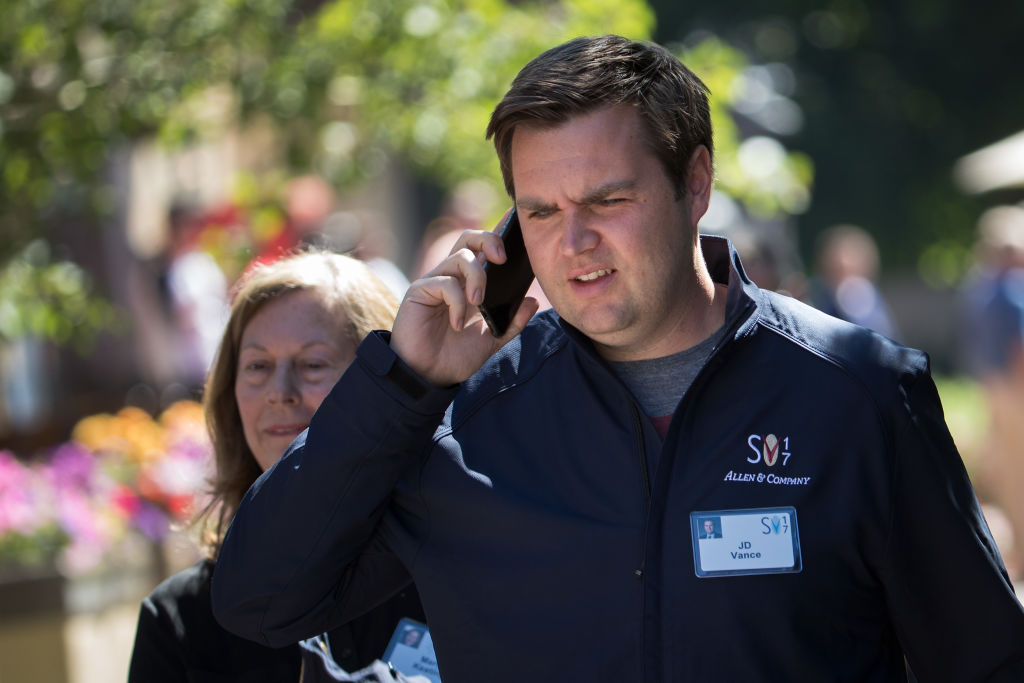
    JD Vance, venture capitalist and author of ‘Hillbilly Elegy,” in 2017. (Photo by Drew Angerer/Getty Images).

    COMMENTARY

    MARILOU JOHANEK and Ohio Capital Journal

    The last time I spoke with J.D. Vance, he was living the good life as an elite West Coast venture capitalist in Silicon Valley. He was a baby-faced investor from southern Ohio who was basking in the unexpected sensation of his newly published bestseller. Everybody had to get their hands on his memoir for what it might explain about the inexplicable presidential appeal of a former reality TV star. Vance’s book about his self-described hillbilly roots promised insights into why a dirt-poor, down on its luck demographic was swooning over a billionaire celebrity who wouldn’t be caught dead in Appalachia.

    At the time I wrote for a newspaper in a blue-collar Ohio town whose glory days as a manufacturing mecca — like Vance’s hollowed-out hometown near Cincy — were long gone. So, I invited the author to connect with an Ohio audience that might relate to his story. He called from his office in San Francisco, and we spoke for over an hour. Recently, I went back to look at the transcript of that conversation to make sure it was the same Vance who now wants to be Ohio’s next U.S. Senator. 

    The senatorial candidate looks and sounds like the J.D. Vance I interviewed, save for the full Midwestern beard he’s sporting, but something’s very different. The Vance appearing — on any FOX show that will have him — is passing himself off as a fawning Trump acolyte and far right culture warrior. Who the heck is that guy and what did he do with the thoughtful conservative I questioned who castigated another charlatan for pulling off a similar con to become president?

    The 37-year-old moved back to Ohio, bought a sprawling million-dollar estate in a tony neighborhood in the Queen City and decided to boost his profile with a vain bid for national office. To that end, however, the 2021 version of Vance has sidled up to the infamous Mar-a-Lago insurrectionist, hobnobbed with big money donors on the coasts and rebranded himself as an alt-right grievance peddler. This character jumped right into the smarmy attack mode of the extreme right, owning the “degenerate liberals,” deriding the “party of childless people,” (what??) disparaging desperate immigrants as “dirty” drug traffickers threatening to overrun Ohio, dismissing critical race theory as “crap” parents don’t want in their schools, defending a white supremacist banned from Twitter for inciting violence and, of course, discounting life-saving measures during a surging pandemic as nefarious “efforts to control our lives.” 

    Candidate Vance opined that: “Obesity is a far more serious public health crisis than Covid,” and sardonically asked, “Should we mandate that no one be allow to eat fried chicken?” He parroted the insanity of right-wing Republicans that COVID “is not the only bad thing” and “people don’t trust (life-saving) vaccines because our public health authorities are understood, reasonably, to be political hacks who don’t know what they’re doing.” Besides, he added, brushing over 600,000 dead Americans, “what about basic bodily liberty?”

    Seriously, who is this guy and why is he embracing the ugly scorch and burn tactics of the fearmongers and scapegoaters that 2016 Vance denounced as divisive and dangerous? Back then he told me, “Trump voters can be encouraged to look at their fellow countrymen as fellow citizens and that’s good. Or they can be made to think of them as scapegoats for all their problems and [that’s] the reason I am so against Donald Trump.” He [Trump] is pulling “a significant portion of the white working class” into a “more racist direction,” concluded Vance.

    “He’s changing the political conversation in a way that makes it less likely for people to think of Black folks and Mexicans as countrymen” and instead “think of those people” as the ones to blame for everything that’s wrong in white America. “Racism is definitely a part of the Trump phenomenon,” said Vance. “The David Dukes of the world…[are] absolutely a part of the Trump movement. And I think to his great discredit, Trump hasn’t disavowed these people as strongly as he should. I really believe that Trump bears a lot of blame… we are seeing an unprecedented level of racial resentment and racialized rhetoric in this [2016] election.” 

    But Candidate Vance is blowing the same dog whistles he once disavowed from a candidate he derided as a “moral disaster.” Trump’s personal conduct alone, Vance said, “would have been so offensive to my [Appalachian] grandmother that she would have hated it… there’s no way she would have voted for him.” Vance confided he was disappointed in religious leaders “who have made a lot of apologies for Trump’s behavior…if Barack Obama, who by all accounts is an incredible family man, if he had fathered five children from three women…there would be a lot of religious conservatives all over him…”

    “I don’t think it’s totally out of bounds to say we should hold our presidents up to a certain moral standard…and it’s just astonishing to me that we haven’t done the same thing for Donald Trump,” Vance told me. That was before Trump was elected and the serial corruption, deceit, dishonor and damage commenced. Before his first impeachment for trying to rig the 2020 election in exchange for foreign aid and his second impeachment for inciting an insurrection against his own government to steal an election he lost.

    It was also before J.D. Vance pulled a 180 on his former self. The young writer I talked to over four years ago was different. He was authentic, unafraid to chastise his community for its “lack of agency” and “a feeling that you have little control over your life and a willingness to blame everyone but yourself.” It was personal for Vance, whose mother was in the same rut. “I don’t blame Mom for the way she lived her life. I don’t blame her for the addiction. I don’t blame her for the way she sometimes treated me and my sister. What I would blame Mom for is if she stopped trying.”

    That J.D. Vance was nothing like the Ohio Senate candidate blaming everyone else today. That actor is degrading all the people MAGA supporters love to hate — from rich educated elitists (like himself) to the mainstream media, Brown immigrants and Black Lives Matter protestors. So, which J.D. Vance is the real deal, and which one is running a clumsy con as a faux extremist to pursue an open Senate seat in Ohio? 

    You know. Ohio voters can spot the phony a mile away.