Tag: hospitalizations

  • Governor provides update on COVID-19 hospitalizations and Ohio National Guard deployment

    Governor provides update on COVID-19 hospitalizations and Ohio National Guard deployment

    Ohio Governor Mike DeWine announced today that he has ordered the mobilization of an additional 1,250 members of the Ohio National Guard to support hospitals with the most critical needs across the state. The mobilization comes on the same day the state set an all-time high for the total number of COVID-19 hospitalizations during the pandemic.

    The Ohio Hospital Association reported today that 5,356 people are currently hospitalized with COVID-19. One in four patients are COVID-19 positive. This surpasses the previous hospitalizations record of 5,308 on Dec. 15, 2020. Of today’s hospitalizations, 1,228 patients are in the ICU, which is approaching the record high of 1,318 ICU patients reported on Dec. 15, 2020.

    While Southwest Ohio is not seeing the same volume of patients as northern parts of the state, Richard P. Lofgren, MD, President and Chief Executive Officer, UC Health, expressed concerns about the surge in cases making its way across the entire state during the coming weeks.

    Ohio National Guard Deployment
    As hospitals struggle with staffing to support the surge in COVID-19 patients, Governor DeWine announced during a press conference today, that he has asked Major General John C. Harris, Jr., Adjutant General, Ohio National Guard, to mobilize an additional 1,250 members of the Ohio National Guard, bringing the total deployment of National Guard members working with Ohio’s healthcare systems to 2,300 members.

    “This is not something we take lightly… We are asking them to leave their families, their jobs and homes. This is a huge sacrifice,” Governor DeWine said.

    Governor DeWine previously authorized the deployment of 1,050 Ohio National Guard members on Friday, Dec. 17. Major General Harris said the Ohio National Guard’s goal is to augment hospitals’ medical staff and wraparound services. Teams including nurses and medics will provide clinical care and non-medical teams will offer support services such as food service, patient transportation within facilities, and administrative support.

    Approximately 460 Guard members are deployed in the Cleveland area; more than 160 in the Toledo area; about 100 in Columbus area. Smaller numbers of the Guard will be deployed in the coming days in Mansfield, Dayton, and Lima to support hospitals. Guard personnel are also supporting testing sites in Cleveland and Akron.

    “The National Guard has been indispensable,” said Robert Wyllie, MD, Chief Medical Operations Officer, Cleveland Clinic.

    The Ohio Department of Health and the Ohio Hospital Association are working daily with Ohio hospitals to assess staffing needs to determine the most appropriate support from the Ohio National Guard.

    “Everybody agreed when the decision was made to send in the National Guard to our hospitals … All the way through this, we are going to be guided by where they are needed most today. It should give people confidence that everybody is on the same page here. Let’s deploy them where they are needed the most,” Governor DeWine said.

    Hospitals
    Hospitals have been taking extraordinary measures to manage this COVID-19 surge, including postponing elective surgeries, while battling staffing shortages as a result of COVID-19 infection or exposure, and burnout.  

    The northern parts of Ohio have been particularly hard hit, especially the greater Cleveland area, where one in three patients are COVID-19 positive, including ICU patients, according to OHA data.

    “The hospital systems are under significant stress in Northern Ohio,” Dr. Wyllie said. “We are running 2,000 tests a day. Let me tell you about those tests: 36% of the people going into the Walker Center for testing are testing positive for COVID.”

    Statewide, the COVID-19 positivity rate is 25%, according to Ohio Department of Health data.

    The state’s strategic hospital zone and region structure has allowed hospitals to work together with neighboring hospitals to balance the load of patients. This structure continues to be vital as cases and hospitalizations dramatically rise statewide and staffing remains a significant concern.

    While Southwest Ohio is not seeing the same volume of patients as northern parts of the state, Richard P. Lofgren, MD, President and Chief Executive Officer, UC Health, expressed concerns about the surge in cases making its way across the entire state during the coming weeks.

    “Unfortunately, the pandemic is not over … we are seeing more cases now than we have ever seen along the way,” he said. “Now, the spread of Omicron is adding fuel to this raging fire. One of the things that I want to make sure that people understand, is that this not only affects the care of people with COVID, but also affects people who don’t have COVID. It squeezes out our ability to take care of patients with other life-serious or life-threatening problems, such as heart attacks and strokes.”

    Governor DeWine also spoke with Jennifer Hollis, a critical care nurse at OhioHealth Riverside Methodist Hospital in Columbus, about her experience in the hospital.

    “I just want everybody to be able to walk a mile in my shoes and kind of understand as a critical care nurse, what I am seeing when I am coming into work. It is beyond difficult,” Hollis said. “Our beds are full. There is nowhere else to go, and we are just as short-staffed as everyone else is seeing as well … We are tired, we are frustrated, and we want the best for all of our patients.”

    Hollis urged Ohioans to get vaccinated to protect themselves, their loved ones, and their communities. “I’ll continue to fight for you, when you won’t fight for yourself. Please get vaccinated. Quarantine if you are symptomatic. Get tested,” she said.

    Vaccination, prevention
    Governor DeWine emphasized that the COVID-19 vaccines remain a powerful tool to keep people out of the hospital. Since June 1, 2021, there have been 35,962 admissions, and 92.5% of those have been among people who are not fully vaccinated.

    Now more than ever, it’s critical to follow prevention strategies including getting vaccinated, getting a booster shot if eligible, wearing face masks, washing your hands frequently, getting tested, and staying home if sick, even if symptoms are mild.

    “We are looking now at an impact of COVID-19 that is unlike anything we’ve seen before in this pandemic,” said Bruce Vanderhoff, MD, MBA, Director, Ohio Department of Health. “We have access to a powerful tool that can really shield us from the worst outcomes of COVID-19, and that is vaccination.”

    As of today, more than 6.9 million Ohioans have received at least their first dose of a COVID-19 vaccine. That’s 63% of those Ohioans eligible (ages 5 and older). More than 2.6 million have received an additional dose, or a booster dose.

    Masking in Schools
    Today, the Ohio Hospital Association also distributed a letter from the Ohio Hospital Association and Ohio Children’s Hospital Association to Ohio school superintendents, administrators and school board members encouraging them to implement a masking requirement when students return from the holiday break. A masking requirement in schools will help limit community spread of COVID-19 and keep students in school, the letter said. 

    Holidays
    Dr. Vanderhoff encouraged Ohioans to celebrate safely this holiday weekend so we can all have a healthy start to 2022. “As we get ready to ring in a new year, please, think about the steps you can take to prevent COVID-19 spread before you gather. Keeping vaccinations up to date, appropriate testing, staying home if you feel the least bit sick, masking especially in crowded indoor environments, proper ventilation, and regular handwashing can all help prevent the spread of COVID-19, flu, and other illnesses this season,” he said.

  • [DeWine] COVID-19 Update for Ohio: highest levels ever of hospitalizations among those under 50

    [DeWine] COVID-19 Update for Ohio: highest levels ever of hospitalizations among those under 50

    Around 97 percent of patients of all ages in Ohio hospitals today are unvaccinated.

    When you get COVID-19 without the protection of a vaccine, there is a very real risk you’ll end up in the hospital or the obituary pages.

    Columbus, Ohio – Ohio Governor DeWine today provided an update on the increased impact that COVID-19 is having on Ohio’s younger populations and the stress that the surge of cases is having on hospitals statewide.

    “The bottom line is that we’re seeing our highest levels ever of hospitalizations among those under 50 years old,” said Governor DeWine. “Those who are getting very sick, being hospitalized, and dying of COVID are getting younger and younger. And it is because they are not vaccinated.”

    • Today, there were 459 newly-reported hospitalizations, the highest number of new hospitalizations since January.
    • The number of new hospitalizations for COVID-19 of those under 50, was the highest during the entire pandemic during the week of Sept. 5th, when Ohio hospitals admitted 398 patients under the age of 50.
    • During the most recent completed reporting week (Sept. 5 — Sept. 11), 230 Ohioans 39 and younger were admitted to the hospital, which is the highest number of admissions for COVID in this age group during the entire pandemic, even higher than during the winter surge levels when no one was vaccinated.
    • Around 97 percent of patients of all ages in Ohio hospitals today are unvaccinated.
    • In July, 48 percent of COVID-19 deaths were among those 69 years old and younger. In August, preliminary data shows that an average of two people younger than 50 died of COVID-19 in Ohio every day.

    • Last month, preliminary numbers showed 18 Ohioans 39 and younger died from COVID-19. This is compared to five people in that age range who died in June and two people in that age range who died in July.

    Dr. Bruce Vanderhoff, Director, Ohio Department of Health
    “If you are young and unvaccinated it’s now probably only a question of when, not if, you get COVID-19. When you get COVID-19 without the protection of a vaccine, there is a very real risk you’ll end up in the hospital or the obituary pages. The numbers really tell it all, COVID has changed and is now making younger Ohioans who are not vaccinated very sick. Don’t become a statistic when there is a simple, safe, and effective alternative. Go out today and get vaccinated.”

    Suzanne Bennett, M.D., Extracorporeal Membrane Oxygenation (ECMO) Program Director, University of Cincinnati Health
    “These rising numbers of sick COVID patients places a significant burden on our hospital beds, our medical teams, and worse yet, it creates scenarios that no one wants to think about where we do not have the space for patients who would otherwise benefit from receiving their care at large academic medical centers. We now need the help of the people in our community more than ever so that no one else needs to die from this disease.”

    Alan Rivera, M.D., Hospitalist, Fulton County Health Center
    “We are in a crisis mode. As compared to last year, our nursing staff is down probably 50 percent. We have nurses leaving the field, retiring early, or finding jobs elsewhere because of the long hours and the emotional strain. On top of that, our COVID numbers are now going up. In June and July I didn’t see any COVID patients. Now, the majority of the census in our hospital are COVID patients, and they’re younger, anywhere from 30 to 50.”

    Joe Bates, R.N., B.S.N., Clinical Coordinator, Critical Care Unit, Genesis HealthCare System (Zanesville)
    “We’re seeing the younger population being hit hardest with this right now. Our average age right now that we’re seeing is around 59, with many of them being younger, as compared to last year when the average was about 78 years of age. Of the COVID positives that we currently have in the ICU, none of them are vaccinated who are on the ventilator.”

    Terri Alexander, R.N., P.C.C.N., Summa Health (Akron)
    “It’s just a sad, sad situation that we’re dealing with, and it’s tragic because it’s just so preventable. Please, please, please, get vaccinated. We live in a culture that has never experienced coming to the hospital and getting turned away, and I think people can’t fathom what that’s truly like until its them or their family members who are coming in and getting turned away.”

  • DeWine announces new curfew to try to slow covid spread

    DeWine announces new curfew to try to slow covid spread

    Gov. Mike DeWine is pictured during his statewide address on Wednesday, Nov. 11. Photo courtesy Ohio Channel.


    By Marty Schladen and the Ohio Capital Journal


    Desperate to slow the spread of coronavirus, Ohio Gov. Mike DeWine on Tuesday announced a new curfew intended to decrease person-to-person contacts and new infections.

    The move was greeted with skepticism in some quarters.

    DeWine said that starting at 10 p.m. on Thursday, there will be a 21-day statewide curfew from 10 p.m. to 5 a.m. Bars, restaurants and retail stores will have to close. But there will be exceptions for pharmacies, grocery stores, food delivery, drive-through and pickup service.

    Technically, people who violate the curfew could be charged with a second-degree misdemeanor, punishable by 90 days in jail and a $750 fine. But as he has with other covid-related health orders, DeWine said he he’s not eager to see people charged.

    “We do not expect law enforcement to go pull people over because they’re out beyond 10 o’clock,” he said. “But if they’re seeing something going on, this is a way they can walk up and say, ‘Hey guys, you’re here… there’s a curfew. Why don’t you just go home?’”

    The governor added, “No one’s been charged under these health orders,” he said. “That doesn’t mean they couldn’t be, but they haven’t so far.”

    The curfew comes as Ohio experiences its most alarming spike in coronavirus infections and hospitalizations since the start of the pandemic early this year.

    On Tuesday, state health authorities reported 7,079 new cases over the past 24 hours, a 36% increase over the 21-day average. They also reported 368 new coronavirus hospitalizations, only a little less than the state record of 386 set on Nov. 10.

    The swelling numbers have placed Ohio hospital staffs in a “precarious situation,” said Bruce Vanderhoff, chief medical officer for the Ohio Department of Health. He said medical workers are fatigued from fighting the disease since March and they have to balance that work with living in communities and with families where the virus is increasingly prevalent.

    DeWine said his goal was to reduce the number of person-to-person contacts and thereby stop the virus from spreading. He asked Ohioans to voluntarily do that through such measures as condensing the number of trips they make to the grocery and buying more when they do. At the same time, he urged people to do what they can to remotely maintain emotional connections.

    However, critics noted that the curfew doesn’t go as far as one imposed in the spring. For example, the earlier order imposed limits on how many people can be in stores when they’re open.

    Asked what scientific basis he used in issuing the order, DeWine said, “We know the basic science. The basic science is fewer contacts, less spread.”

    The likely effectiveness of the curfew was disputed by at least one scientist in the field. Kent State epidemiologist Tara C. Smith tweeted that she didn’t know any professionals who thought it would work.

    DeWine, however, might have felt the curfew was as far as he could go. It had the support of the Ohio Restaurant Association, likely meaning that there was some negotiation behind it.

    Also, DeWine is a member of a party led by president who in October visited Circleville and said the media were hyping the virus to hurt his reelection chances. The president predicted the media would stop covering coronavirus on Nov. 4 — the day after the election.

    Covid skepticism runs so deep in elements of the Republican Party that at the same time that DeWine was announcing the curfew, Ohio Senate President Larry Obhof, R-Medina, was testifying in favor of his bill to repeal an earlier health order requiring bars to stop serving at 10 p.m.

    For his part, DeWine said he hopes the curfew will “push more people toward home.”

    “I think if we do these things it gives us a shot at slowing (the coronavirus) down,” the governor said. “Most of what we’re doing and the decisions I’m making are between two bad choices.”


    Marty Schladen

    Marty Schladen has been a reporter for decades, working in Indiana, Texas and other places before returning to his native Ohio to work at The Columbus Dispatch in 2017. He’s won state and national journalism awards for investigations into utility regulation, public corruption, the environment, prescription drug spending and other matters.

  • Warren County Health District “overwhelmed” with the rapid acceleration of new COVID-19 cases

    Warren County Health District “overwhelmed” with the rapid acceleration of new COVID-19 cases

    440% increase in reported cases since October 1st

    The Warren County Health District (WCHD) says they have “recently become overwhelmed with the rapid acceleration in the number of new positive COVID-19 cases being reported.” As of Friday, WCHD is currently seeing a average of 110 new cases being reported daily, with a recent peak of 175 cases reported in one day.

    The Health District said that here has been a 72% increase in the average daily cases since November 1st and a 440% increase in reported cases since October 1st.

    Hospitalizations of COVID-19 patients in Southwest Ohio have increased by 67% over the last 2 weeks and COVID-19 patients in the ICU have increased by 50% over the same time period, according to a release from the health department. “We are at a critical point in the response to the coronavirus pandemic.”

    In order to manage the surge in cases additional contact tracers have been hired in addition to contracts signed with local universities for additional assistance.

    Until additional resources are in place and operational for contact tracing, WCHD is going to be sending people that are not able to be contacted via phone, a letter including:

    • Informing them of their positive result for COVID-19
    • Education on isolation
    • Education on quarantine for any household contacts
    • Education on what constitutes someone as a close contact
    • Asking the person to call any close contacts they identify during their contagious period and inform contact of their exposure so the contact may begin their quarantine.

    The message the District is sending to every citizen is that “It is imperative that everyone increases their efforts to slow the spread of COVID-19 in the community. Now is the time to focus on the measures we know can slow the spread of the virus and protect yourself and others.”

    • Stay home if you are sick
    • Stay home if you have been exposed to COVID-19
    • Avoid gatherings, limit contact with people outside of your household, and reconsider holiday plans
    • Keep six (6) feet of distance from others
    • Wear a mask
    • Wash your hands

    The Health District asks that if you are notified by a healthcare provider that you have tested positive for COVID-19, isolate away from others at your house and inform your close contacts that they need to quarantine in their home for 14 days from the last time you had close contact with them.

    Quarantine and isolation means that you must stay in your place of residence until you are released from quarantine or isolation, or for a medical emergency.

    People with questions about COVID-19 can call the Ohio Department of Health COVID-19 Call Center, 7 days a week from 9AM – 8PM at: 1-833-4-ASK-ODH (1-833-427-5634) or visit warrenchd.com for local information.

  • Record-Breaking Cases & Hospitalizations, Statewide High Incidence

    Record-Breaking Cases & Hospitalizations, Statewide High Incidence

    CURRENT COVID-19 DATA
    There are 235,170 confirmed and probable cases of COVID-19 in Ohio and 5,461 confirmed and probable COVID-19 deaths. A total of 20,015 people have been hospitalized, including 3,969 admissions to intensive care units. In-depth data can be accessed by visiting coronavirus.ohio.gov.  Video of today’s full update, including versions with foreign language translation, can be viewed on the Ohio Channel’s YouTube page.  For more information on Ohio’s response to COVID-19, visit coronavirus.ohio.gov or call 1-833-4-ASK-ODH.

    Columbus, Ohio – Ohio Governor Mike DeWine and Lt. Governor Jon Husted today provided the following updates on Ohio’s response to the COVID-19 pandemic. 

    RECORD-BREAKING CASES & HOSPITALIZATIONS
    DeWine announced today that Ohio is once again breaking records in regard to COVID-19 cases and hospitalizations.

    • Between yesterday and today, health officials have reported a total of 4,961 new positive coronavirus cases in Ohio, the highest number of new cases in a 24-hour period to date.

    • There are currently 2,075 patients hospitalized with COVID-19 which is a 55 percent increase in hospitalized patients compared to two weeks ago. 

    • Of the hospitalized patients, 541 people are in intensive care. The previous record for intensive care admissions was 533 in April. 


    “This virus is flaring up, and we have to push it down – the economy depends on it,” said Governor DeWine. “If the virus continues to aggressively spread, people will lose confidence in their ability to safely go to stores, restaurants, and other businesses. If we want to keep our economy moving, we must all live with this virus and we must all be more careful.”

    Governor DeWine stressed that the new record number of cases is not due to increased testing capacity in the state. Since September 24, the total number of tests in Ohio has increased by approximately 44 percent, but positive cases have increased 280 percent in the same time period. If a person is tested multiple times, they are only counted once.

    STATEWIDE HIGH INCIDENCE 

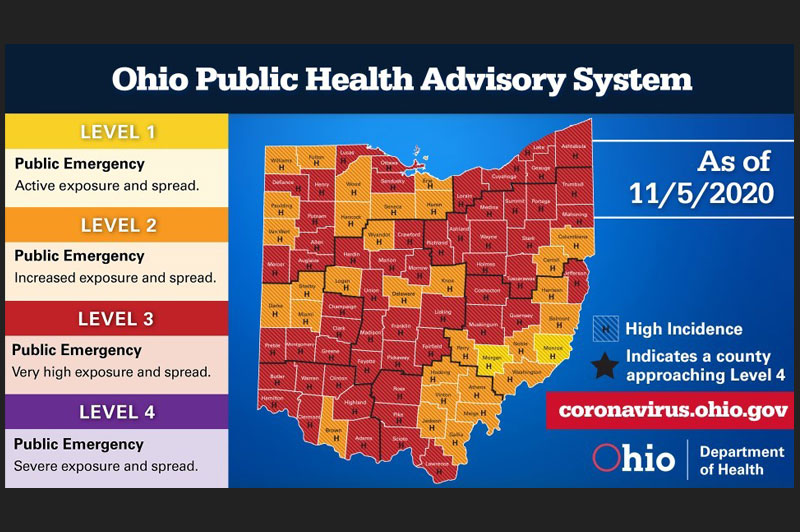
    New health data compiled by the Ohio Department of Health revealed today that all 88 counties in Ohio are now considered “high incidence” as defined by the Centers for Disease Control and Prevention. 

    “There have been so many cases in the past two weeks that the risk of catching this virus in every county of this state is very real and very concerning,” said Governor DeWine. “Again, I ask everyone to recognize their personal responsibility in slowing the spread of this deadly disease. It’s up to every citizen in Ohio to choose to slow the spread by wearing masks, distancing, and making overall smart decisions.”

    According to today’s updated Ohio Public Health Advisory System map, 56 counties are currently rated as having a very high risk of exposure and spread (Red Level 3), up from 43 counties last week. This represents the highest number of Red Level 3 counties since the launch of the advisory system in July. As of today, 86 percent of Ohioans are living in a Red Level 3 county. 

    A county-by-county breakdown outlining the presence of COVID-19 in all of Ohio’s 88 counties can be found on the Ohio Public Health Advisory System’s website.


    NEW OHIO DEPARTMENT OF HEALTH STRUCTURE

    Governor DeWine announced multiple key additions to the existing administration at the Ohio Department of Health (ODH). 


    Chief Medical Officer Dr. Bruce Vanderhoff: 
    Dr. Vanderhoff previously served for more than a decade as a Senior Vice President and as the Chief Medical Officer at OhioHealth. He has years of experience leading large teams in successfully dealing with important healthcare issues in Ohio and prepared OhioHealth to deal with the threat of Ebola and the H1N1 flu pandemic.  

    Director Stephanie McCloud: 
    Director McCloud previously served as Governor DeWine’s administrator of the Ohio Bureau of Workers’ Compensation, managing an agency of 1,800 colleagues and over $28 billion in assets. She has considerable experience in the area of mental health and addiction treatment which is a priority in Ohio’s health improvement plan. 

    Senior Deputy Lance Himes: 
    Himes had previously served as the interim director of ODH where he has played an integral role in running and managing many aspects of the pandemic response operation. He will lead the coordination of the state’s vaccine distribution plan and will continue to work directly with Ohio’s local health commissioners.

    Chief of Staff Kathleen Madden: 
    Madden had previously served as Assistant Director at the Ohio Office of Budget and Management and will now play a key role in keeping ODH’s pandemic and non-pandemic programs and operations on track. She will work to prioritize and resolve critical issues, provide oversight and guidance to ODH staff, and ensure that ODH funds are spent responsibly and strategically. Other key members of the ongoing COVID-19 response who will continue their roles in assisting ODH are: 

    Adjutant General Maj. Gen. John Harris, Ohio National Guard: 
    Maj. Gen. Harris will continue work to ensure complex operations, such as COVID testing and contact tracing, are well-coordinated, monitored, and improved when necessary.  He will also work directly with Senior Deputy Himes on the planning and logistics of the forthcoming vaccine distribution program.  

    Director Ursel McElroy, Ohio Department of Aging: 
    Director McElroy will continue to direct virus prevention efforts for older adults in the community and in long-term settings, including nursing homes and assisted living facilities.  

    Director Lori Criss, Ohio Department of Mental Health and Addiction Services: 
    Director Criss will continue to lead efforts to address the increasing mental health needs of citizens during the pandemic.

    NEW OHIO BWC ADMINISTRATOR
    Governor DeWine announced that John Logue, the Ohio Bureau of Workers’ Compensation’s (BWC) Chief of Strategic Direction, will become the new administrator of Ohio BWC effective on November 16. Logue has worked for 26 years in the industry. Before returning to BWC in 2019, he most recently served as the vice president of client services for International Absence Management Company where he focused on Ohio workers’ compensation.


  • The State of Ohio COVID-19 Dashboard

    The State of Ohio COVID-19 Dashboard

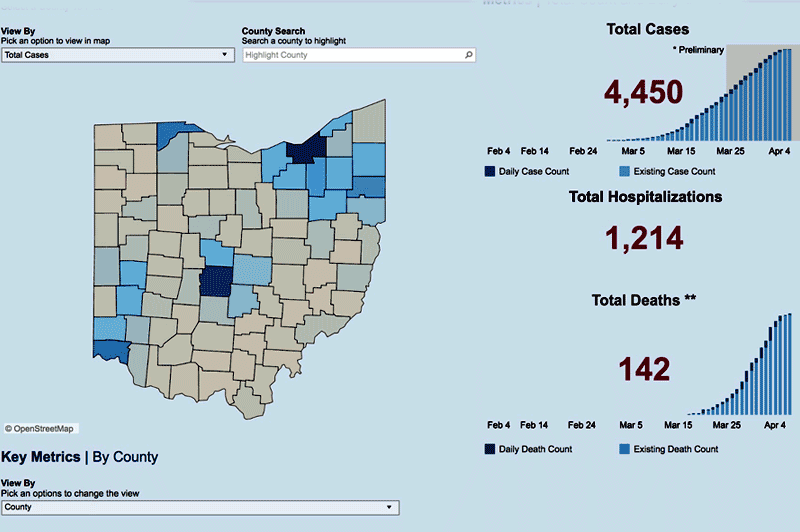
    The State of Ohio COVID-19 Dashboard displays the most recent preliminary data reported to the Ohio Department of Health (ODH) about cases, hospitalizations and deaths in Ohio by selected demographics and county of residence.

    You can search for counties in Ohio and view a snapshot of key metrics pulled from daily data reporting to the Ohio Department of Health. These metrics are updated daily.

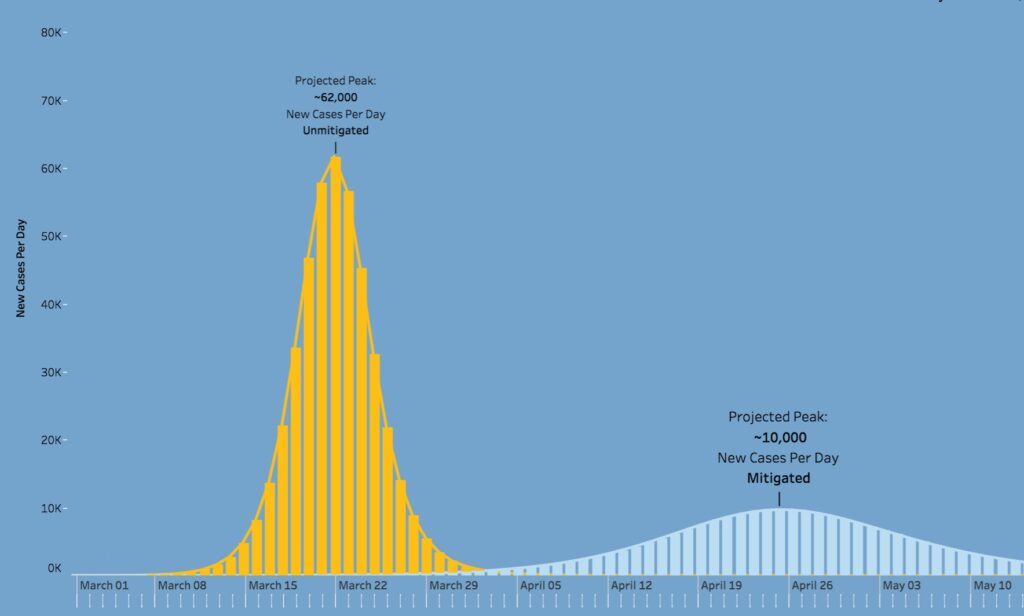
    You can even view a current forecast curve provided by Ohio State University.

    This is a snapshot of modeling from the Ohio State University that shows the projected trajectory of COVID-19 in Ohio. This model compares the spread of the disease without mitigation (yellow curve) to how it is projected to spread with the mitigation efforts the state has implemented (blue curve) such as social distancing and the Stay At Home Order. The models are created based on current data and become more precise as more information is available.


  • CDC is advising consumers, restaurants, and retailers not to eat, serve, or sell any romaine lettuce

    CDC is advising consumers, restaurants, and retailers not to eat, serve, or sell any romaine lettuce

    Illustration with a triangle and exclamation mark and text reading Food Safety Alert

    Illustration of a clipboard with check marks on it.

    CDC is advising that U.S. consumers not eat any romaine lettuce, and retailers and restaurants not serve or sell any, until we learn more about the outbreak. This investigation is ongoing and the advice will be updated as more information is available.

    • Consumers who have any type of romaine lettuce in their home should not eat it and should throw it away, even if some of it was eaten and no one has gotten sick.
      • This advice includes all types or uses of romaine lettuce, such as whole heads of romaine, hearts of romaine, and bags and boxes of precut lettuce and salad mixes that contain romaine, including baby romaine, spring mix, and Caesar salad.
      • If you do not know if the lettuce is romaine or whether a salad mix contains romaine, do not eat it and throw it away.
      • Wash and sanitize drawers or shelves in refrigerators where romaine was stored. Follow these five steps to clean your refrigerator.
    • Restaurants and retailers should not serve or sell any romaine lettuce, including salads and salad mixes containing romaine.
    • Take action if you have symptoms of an E. coli infection:
      • Talk to your healthcare provider.
      • Write down what you ate in the week before you started to get sick.
      • Report your illness to the health department.
      • Assist public health investigators by answering questions about your illness.

    Advice to Clinicians

    • Antibiotics are not recommended for patients with E. coli O157 infections. Antibiotics are also not recommended for patients in whom E.coli O157 infection is suspected, until diagnostic testing rules out this infection.
    • Some studies have shown that administering antibiotics to patients with E. coli O157 infections might increase their risk of developing hemolytic uremic syndrome (a type of kidney failure), and the benefit of antibiotic treatment has not been clearly demonstrated.
    Illustration of a megaphone.

    At A Glance

    Photo of romaine lettuce in a wood bowl.

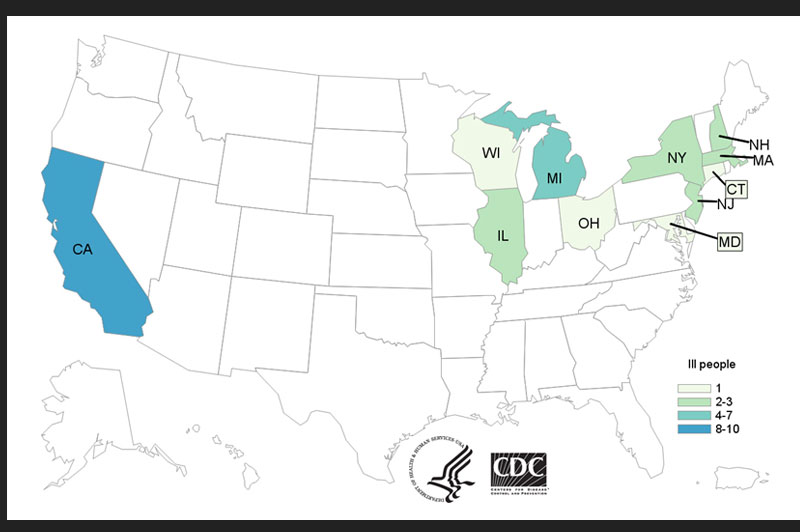
    • Thirty-two people infected with the outbreak strain of Shiga toxin-producing E. coli O157:H7 have been reported from 11 states.
      • Illnesses started on dates ranging from October 8, 2018 to October 31, 2018.
      • Thirteen people were hospitalized, including one person who developed hemolytic uremic syndrome, a type of kidney failure. No deaths have been reported.
    • The Public Health Agency of Canada has identified 18 ill people infected with the same DNA fingerprint of E. coli O157:H7 bacteria in two Canadian provinces: Ontario and Quebec.
    • Epidemiologic evidence from the United States and Canada indicates that romaine lettuce is a likely source of the outbreak.
    • Ill people in this outbreak were infected with E. coli bacteria with the same DNA fingerprint as the E. coli strain isolated from ill people in a 2017 outbreak linked to leafy greens in the United States and to romaine lettuce in Canada. The current outbreak is not related to a recent multistate outbreak of E. coli O157:H7 infections linked to romaine lettuce.
    • CDC is advising that consumers do not eat any romaine lettuce because no common grower, supplier, distributor, or brand of romaine lettuce has been identified.
    • This investigation is ongoing, and CDC will provide more information as it becomes available.
    Illustration of a person with stomach pain.
    • People usually get sick from Shiga toxin-producing E. coli (STEC) 2–8 days (average of 3–4 days) after swallowing the germ.
    • Some people with a STEC infection may get a type of kidney failure called hemolytic uremic syndrome (HUS).
    • E. coli infection is usually diagnosed by testing a stool sample.
    • Antibiotics are not recommended for patients with suspected E. coli infections until diagnostic testing can be performed and E. coli infection is ruled out. Some studies have shown that administering antibiotics to patients with E. coli infections might increase their risk of developing HUS, and a benefit of treatment has not been clearly demonstrated.
    • For more information, see Symptoms of E. coli Infection.


  • Sycamore and Country Day systems are experiencing high levels of influenza

    Sycamore and Country Day systems are experiencing high levels of influenza

    The Loveland District has not noticed any unusual flu-related illnesses, “Outside of a normal school year during flu season.”

    Schools in the Sycamore and Country Day systems are experiencing high levels of influenza (flu) and influenza-like illnesses, according to Hamilton County Public Health surveillance. Sycamore has reported 40 cases, while Country Day has reported 80.

     “As we all know, we are in the midst of a tough flu season,” says Hamilton County Health Commissioner, Tim Ingram.  “It’s important to remain vigilant and practice good prevention techniques, especially for seniors, the very young and school-aged children.”

    Vicki Falconi-Young, the District Nurse at Loveland High School told Loveland Magazine this morning that the District has not noticed any unusual flu-related illnesses, “Outside of a normal school year during flu season.”


    Hamilton County Public Health recommends:

    1. Get a flu vaccination
    2. Take everyday preventive actions, including:
      1. Stay away from sick people;
      2. Avoid touching your eyes, nose and mouth;
      3. Cough or sneeze into a tissue or your elbow;
      4. Wash hands frequently – clean hands prevent the spread of illness;
      5. Stay home if you are ill. In schools, separate sick children from the rest of the school population until they are able to get home. Keep children and staff home until they are without fever for 24 hours.
      6. For schools, clean and disinfect frequently-touched surfaces such as desks, door handles, keyboards, etc.
    3. Take antiviral drugs if your doctor prescribes them.

    According to the Health District, “It’s not too late to get vaccinated. As long as flu viruses are circulating, vaccination should continue throughout the flu season, even in February or later. There are many reasons to get a flu vaccine.”

    1. While flu vaccine can vary in how well it works, it is the best way to prevent flu illness and serious flu complications, including those that can result in hospitalization.
    2. Even with vaccine effectiveness in the range of 30 to 60 percent, flu vaccination prevents millions of illnesses and tens of thousands of flu-related hospitalizations each year.

    For more information on seasonal influenza and its prevention, visit hcph.org.


    Wards Corner Chiropractic & Sports Rehab

      Loveland chiropractor Douglas Portmann, DC at Wards Corner Chiropractic & Sports Rehab is one of the best chiropractors in the Loveland area
  • Flu activity in Ohio elevated to “Widespread”

    Flu activity in Ohio elevated to “Widespread”


    New Flu-Associated Hospitalizations Continue to Trend Above Five-Year Average

    • The Ohio Department of Health issued a news release on Dec. 8 about rising flu activity, and the geographic spread being elevated to “regional.” 
    • Flu activity in Ohio has now been elevated to “widespread,” the highest level. During last year’s flu season, flu activity in Ohio didn’t reach “widespread” geographic spread until mid-January.
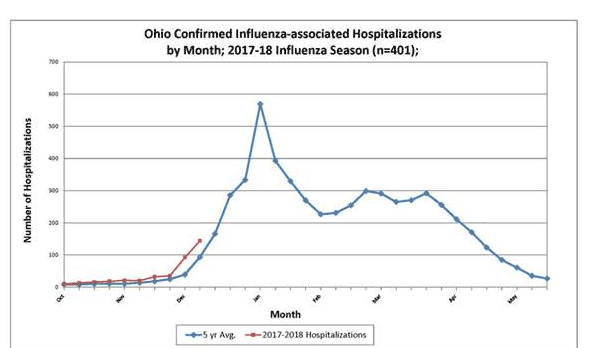
      • During the week ending Dec. 9 (most recent data available), there were 144 new flu-associated hospitalizations in Ohio, compared to 92 the week prior, and 29 during the same week last year. So far this flu season, there have been 401 flu-associated hospitalizations.
    • New flu-associated hospitalizations continue to trend above the five-year average (see below).
    • The Ohio Department of Health and the Centers for Disease Control and Prevention recommend that everyone six months and older get a flu shot as soon as possible.  It is not too late to get a flu shot. Vaccination is the best protection against seasonable flu viruses.


    513-683-1052
    215 Loveland-Madeira Rd

    Loveland, Ohio 45140