

Tag: House Bill 458

  • A behind-the-scenes look at how Ohio enacted the most restrictive voter photo ID law in America

    A behind-the-scenes look at how Ohio enacted the most restrictive voter photo ID law in America

    Lawmakers ignored a variety more moderate restrictions proposed by secretary of state and law firm

    BY: ZURIE POPE – Ohio Capital Journal

    Ohio Gov. Mike DeWine signed House Bill 458 on Jan. 6, enacting what’s been called one of the most restrictive voter-ID laws in the country. 

    Public records obtained by the Ohio Capital Journal show how the law moved through the process, with lawmakers often ignoring moderation suggestions proposed by the Ohio Secretary of State’s Office and a law firm that lobbied on the law.

    Taking elements from two election bills previously introduced in the Statehouse — House Bill 294, and Senate Bill 320 — House Bill 458 instituted sweeping changes to how elections are administered in Ohio. 

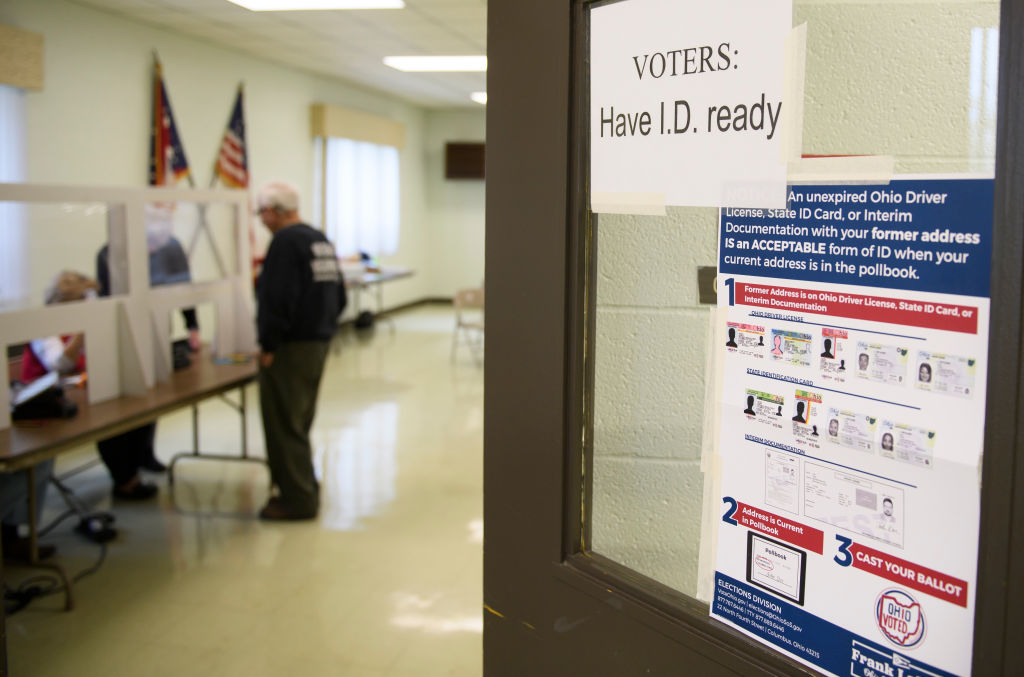
    Alterations include mandating the use of photo IDs, passports, or driver’s licenses to vote, and limiting counties to one ballot drop box. The law also mandated citizenship status on IDs and excludes county-issued veterans’ identification and college IDs from the list one can use to vote.

    Such restrictions received significant backlash, with Democratic law firm the Elias Law Group filing a lawsuit the day the law was passed.

    Regardless, Ohio’s Republican leaders insist the new voting restrictions were necessary, despite no evidence of significant voter fraud, by impersonation or otherwise. Total possible voter fraud in the 2020 election was a microscopic 0.0005%.

    Nevertheless, DeWine said the new restrictions were needed to combat concerns about voter fraud, which have been pushed politically by his own party without evidence.

    “Election integrity is a significant concern to Americans on both sides of the aisle across the country,” DeWine claimed in a statement.

    DeWine also touted what he sees as moderation of the law’s voting restrictions, congratulating the general assembly for “working with my Administration on changes to House Bill 458 to ensure that more restrictive proposals were not included in the final bill.” 

    Ohio Secretary of State Frank LaRose’s Press Secretary Rob Nichols similarly touted the DeWine administration’s involvement in the process. 

    “While no legislation is ever perfect, the House and Senate leaders listened to many of our concerns and made some improvements to the bill,” Nichols wrote in an email responding to OCJ when asked the extent of SOS’s work on election reform. “Overall, the legislature approved some much-needed reforms that will benefit both voters and elections officials, while continuing to make Ohio one of the most honest and accessible voting states in the nation.”

    But documents obtained by the Ohio Capital Journal through a public records request reveal a complex web of bureaucrats, lawmakers, lobbyists, and outside powerbrokers, united in their efforts to pass the new voting restrictions, including the Ohio Secretary of State’s Office.

    Records show that the Secretary of State’s Office supported most of the House GOP’s voting restrictions, haggling out various details. In some cases where the office pushed for more moderation, their recommendations were not followed by lawmakers. 

    Regardless, LaRose has been publicly supportive of the law as passed.

    Ohio Secretary of State input

     Ohio Secretary of State Frank LaRose. Official photo.

    On Dec. 9, 2022, Frank LaRose’s Chief of Staff Jason Mauk submitted a memo to Senate GOP legal Counsel Frank Strigari, outlining the secretary’s issues with HB 458. 

    Since Dewine signed the law, military families have voiced opposition to it, saying the mail-in ballot rules curtail the ability of service members to vote. 

    Mauk appears to have foreseen the blowback that the law’s rigid deadline for mail-in ballots would cause, especially among the armed services, and warned against it. 

    We have concerns with restricting the return of such ballots by election day,” Mauk wrote. “This provision has the potential to disenfranchise voters, particularly those living and serving overseas.” 

    Mauk asked the Senate to “allow for ballots to be returned by the postal service for at least five days after election day.” 

    Eventually, lawmakers settled on a four-day cutoff. 

    Asked if his colleagues in the secretary’s office were concerned that the four day cutoff — below the deadline recommended by Mauk — might endanger voters, press secretary Rob Nichols indicated it could have been worse.

    “They wanted zero,” Nichols said. “We said that might disenfranchise voters, asked for at least a five day return deadline, and they cut it down to four.” 

    Asked again if the four-day cutoff would harm voters, Nichols replied, “We enforce the laws; we don’t make them.” 

    Asked for comment, Ohio House Republican Majority Leader Bill Seitz responded in an email, “I do not think there will be any impact on service members being disenfranchised by our new law.”

    In communications, Mauk from the Secretary of State’s Office also argued counties should be allowed to have multiple ballot drop boxes on site, writing they “respectfully ask the Senate to allow up to three drop boxes on board office property.” 

    He also fought against immediate disclosure of drop box surveillance. 

    “This office has serious concerns about the burden placed on the county boards of elections in requiring immediate disclosure of drop-box video surveillance records,” Mauk wrote. “The immediacy of this requirement is problematic.”

    Nevertheless, the provision remained in the final bill and drop boxes were limited to one.

    Likewise, Mauk recommended creating a “secure, electronic method of verifying voter registration data,” using information from the Bureau of Motor Vehicles. 

    One of the benefits from this system, Mauk claimed, is that it could deter non-citizens from voting. 

    “It also helps to ensure non-citizens are not able to submit a voter registration accidentally, or intentionally,” he wrote.

    The final bill mandates all driver licenses and state IDs held by a non-citizen “include a notation designating that the licensee or cardholder is a noncitizen,” which civil rights advocates believe may endanger immigrants. 

    Byers Minton & Associates

    Another aspect of the election law process made clear by the records is the involvement of the Columbus law firm Byers, Minton & Associates.

    Byers Minton is one of Ohio’s largest lobbying firms, with clientele ranging from Apple to the Cleveland Browns, and the Girl Scouts. Byers Minton’s public position on election reform is rarely mentioned on its website, social media, or other communications.

    The firm’s weekly update on events at the Statehouse failed to mention HB 458, instead prioritizing DeWine signing a spending bill. The election bills are referenced once, at the bottom of a list including everything passed by the Statehouse during its lame duck session.  

    But behind the scenes, records show an apparently close relationship between Byers Minton’s lawyers and the lawmakers producing the election legislation. 

    Founder Bill Byers was involved at the earliest stages of the eventual law’s development. Records show Byers helped arrange favorable testimony, though some of his suggestions for election law changes, such as automated voter registration, were not followed by lawmakers.

     Republican Ohio House Majority Leader Bill Seitz. Official photo.

    For the original bill, House Bill 294, Byers helped arrange witness testimony from former Kentucky Secretary of State Trey Grayson to speak on its behalf.

    Please find a witness slip and proponent testimony for Trey Grayson on HB294,” Byers wrote in an email June 9, 2021, to one of Seitz’s policy advisers. “Please let me know if there’s anything else you need.”

    One month earlier, Byers was included in an email from Seitz’s legislative aide going over the bill analysis for 294. “Let us know if you have any questions/comments,” the aide wrote.

    Byers would also be included in a thread on the final draft of HB 294 from Oct. 5 of last year, featuring multiple revisions.  

    Asked about this, another legislative aide for Seitz said Byers’ actions were within the purview of Byers Minton’s regular duties. 

    “Bill Byers lobbied on behalf of the Secure Elections Project,” wrote the legislative aide in a response email to OCJ. “Byers simply offered valuable input on the bill on behalf of his client.”  

    Byer’s interest in election law would later extend to SB 320, the other predecessor bill to the one that was eventually passed, which was introduced by Republican state Sen. Teresa Gavarone.

    On Oct. 13, 2022, Byers sent an email to a Gavarone staffer as a “follow up to our discussion.” 

    In it, Byers argues for the cost-saving potential of automated voter registration and verification, and the wastefulness of provisional ballots. 

    “Processing provisional ballots imposes significant costs on county election officials,” Byers said. 

    Byers also portrayed decreasing the amount of provisional ballots as a financial windfall.

    “Reducing the number of provisional ballots cast in the 2016 and 2018 election cycles, would have resulted in an additional $830,721 in savings to county BOEs,” Byes said.

    According to the Massachusetts Institute of Technology’s Election Lab, 1.7 million provisional ballots were counted in 2016 nationally, and accounted for 1.2% of all votes in the 2018 midterm election.   

    “Thank you!,” the aid replied to Byers.  

    Six days later, the aide emailed Byers once more, saying Gavarone “would like to meet with you to get more Info,” and requested “Frank(LaRose)’s attendance during that meeting with us.” 

    Asked to discuss the details of these meetings, no one from Gavarone’s offices responded.

    As for Byers Minton, asked for comment, Andrew Minton replied, “My firm does not give comment to the press on any issue or for any reason.”

    Cincinnati NAACP President Joe Mallory submitted testimony against House Bill 294, writing it “creates unnecessary boundaries to the vote.” 

    Speaking about the election reform bills as a whole, Mallory was livid when asked for comment.  

    “These anti voter policy changes are not about improving the election process, it’s about erecting barriers and decreasing access,” Mallory said. “What we have is a super majority rushing anti voter bills through a lame duck session. They are perpetuating a fraud on Ohio voters and the democratic process, with the false narrative of Election security and modernization. It is disingenuous.”

  • New Ohio voter ID law also excludes state veterans’ IDs

    New Ohio voter ID law also excludes state veterans’ IDs

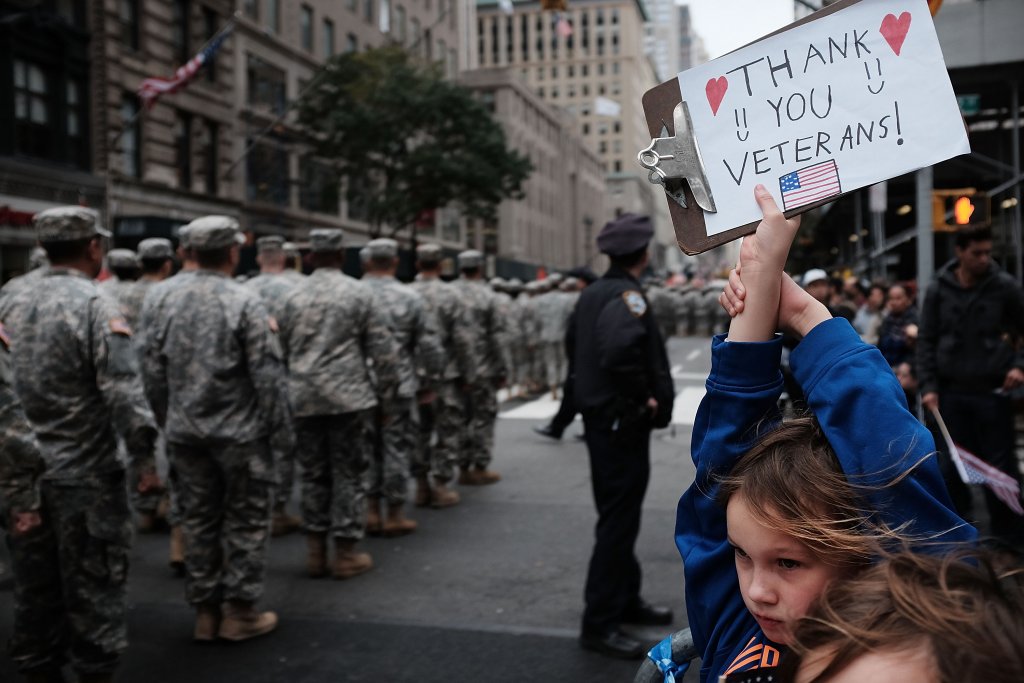
    A Veterans Day parade. (Photo by Spencer Platt/Getty Images.)

    BY: MARTY SCHLADEN Ohio Capital Journal

    Franklin County Recorder Daniel O’Connor is blasting Ohio’s Republican leaders for excluding county-issued veterans’ identification from the list of IDs one can use to vote under the state’s controversial new law.

    Gov. Mike DeWine signed House Bill 458 earlier this month after it was rushed through a lame-duck session by the heavily gerrymandered legislature in December. In previous elections, voters could establish their identities not only with valid drivers’ licenses, but also with documents such as utility bills and the county-issued vets IDs. 

    It might be hard to see significant problems with the old system. Secretary of State Frank LaRose found possible fraud in just one of every 222,000 votes cast in the 2020 election. But the state’s GOP leaders enacted HB 458 anyway, requiring Ohioans to have a driver’s license, state ID, passport or military ID to cast a vote.

    So far, it’s been tricky for researchers to show that strict voter ID laws suppress turnout because of problems with data and methodology. But voting rights advocates say that it only stands to reason that such laws would disproportionately affect the poor and communities of color.

    Those groups are less likely to have driver’s licenses or the documents needed to get one in the first place. And a report last year by the Legal Aid Society of Cleveland showed that a million Ohioans have licenses that are suspended because of debts relating traffic fees and fines and unpaid child support. That’s a number equal to one-eighth of the state’s registered voters.

    Those suspensions fall overwhelmingly on poor urban communities that — perhaps not coincidentally — are much more likely to vote for Democrats.

    In terms of military IDs, HB 458 allows people with federally issued military and veterans’ ID cards to use those to vote. It also allows Ohio National Guard IDs. 

    But it doesn’t appear to allow veterans’ cards that are issued by county recorders’ or veterans’ services offices under a 2016 law. To be issued one, a veteran has to produce a discharge form — DD-214 — and other forms of identification.

    O’Connor spokeswoman Hanna Detwiler said that about 5,000 Franklin County residents have such IDs, but it isn’t clear how many will be disenfranchised under HB 458.

    “I’m not sure how many veterans have our card as their only form of ID,” she said in an email. “But obviously things happen — like losing a wallet — where this might be the only form they have after showing the two additional forms of ID when initially getting the card.”

    Asked about the omission, DeWine Press Secretary Dan Tierney in an email said, “the bill did reduce the number of forms of identification that could be used and instead specified state-issued (and certain federal-issued) photo IDs. The bill provided for the (Bureau of Motor Vehicles) issued state identification cards as the photo IDs available at no cost to Ohio voters.” 

    Tierney added, “My understanding from legislative testimony is that, by far, the most common ID used for voting in Ohio are state-issued drivers’ licenses.”

    O’Connor, the Democratic county recorder, in a statement slammed GOP officials for not publicly announcing that this form of veterans’ ID will no longer be accepted at polling places.

    “It’s bad enough that in the middle of the night, the Ohio legislature decided to target our right to vote,” he said. “But specifically invalidating the free state-issued ID our office provides to retired service members is unacceptable, and I will not stay silent about it.”

  • In a state with 1M license suspensions, Ohio voter ID law could depress turnout

    In a state with 1M license suspensions, Ohio voter ID law could depress turnout

    New report says debt-related suspensions affect poor and minorities

    BY: MARTY SCHLADEN – Ohio Capital Journal

    When Gov. Mike DeWine last week signed what’s been called the nation’s strictest voter ID law, it raised fears that it would disenfranchise large numbers of voters in poor communities where people are less likely to meet the new requirements.

    Those fears seem to be supported by a September report that estimates 1 million Ohioans have suspended licenses because of debts from things such as a lack of insurance, unpaid fines, and court costs. That’s in a state with 8 million registered voters.

    The analysis, by the Legal Aid Society of Cleveland, said the suspensions by far fall most heavily on impoverished urban communities of color. In other words, debt-related suspensions disproportionately affect some of the communities least likely to vote for the Republican officials who passed and signed the voter ID law.

    DeWine and legislative sponsors sold the state’s controversial law by saying that it would boost public confidence in elections. That confidence, however, has likely been undermined by numerous lies by former President Donald Trump, and by dubious voting claims by Secretary of State Frank LaRoseOhio Auditor Keith Faber, and others.

    Meanwhile, LaRose found the rate of possible fraud in the 2020 Ohio General Election to be a vanishingly small 0.0005%.

    “There is absolutely no evidence that we need a voter ID law to prevent voter fraud,” said Collin Marozzi, deputy policy director of the American Civil Liberties Union of Ohio, which opposes the law.

    Even so, the voter ID law, House Bill 458, makes it considerably harder for many of the poorest to vote in Ohio. While voters previously could use documents such as bank statements and utility bills to establish their identity, they now must have a driver’s license, state ID, passport or military ID to cast a vote.

    Perhaps tellingly, college and university IDs didn’t make the list of acceptable IDs approved by Ohio’s heavily gerrymandered Republican legislature. College students were credited with helping to deliver victories to Democrats in key races around the country in the November election.

    Ohio’s voter ID law is already facing a legal challenge, which remains pending.

    Afflicting the afflicted

    While of questionable necessity, it’s unclear whether voter ID laws suppress turnout among the poor and communities of color as much as some advocates claim. MIT’s ​​Election Data and Science Lab says research into the matter has produced mixed results, citing “deficiencies in data quality and sensitivity of results to choices made in statistical estimation.”

    However, the analysis Legal Aid Society of Cleveland report shows that huge numbers of Ohioans have licenses that are suspended for debt-related reasons — and they face a steep climb in getting their licenses reinstated or to get a state-issued ID.

    “We have many examples of clients who are trapped by debt-related suspensions,” said Anne Sweeney, one of the report’s authors.

    The researchers issued open records requests to the Ohio Bureau of Motor Vehicles to gather data showing that for each year between 2016 and 2020, more than 1 million drivers had licenses suspended because of debts related to traffic fines and fees and unpaid child support. In addition, the average suspended driver has multiple suspensions, with 3 million suspensions a year in the state, the report said.

    “Debt-related suspensions trap drivers with limited resources in a vicious cycle,” the report said. “Fines and fees related to seemingly minor traffic stops can easily spiral into thousands of dollars owed to the State. Drivers unable to pay these debts cannot get their licenses back, which for most Ohioans means they cannot drive to work to earn the money needed to pay down the debt, without risking even more driving restrictions, fines, fees, or even jail.”

    Unsurprisingly, such suspensions are concentrated most heavily in impoverished urban communities of color.

    For example, 53% of the residents in Cleveland’s 44104 zip code live below the federal poverty line, 98% are people of color, and there are 1,535 suspensions per 1,000 people old enough to drive (because a given person can have more than one suspension), the report said. 

    Voters in that zip code likely support Democrats far more than they do Republicans. While DeWine won the 2022 governor’s race by a whopping 25  percentage points statewide, he lost Cuyahoga County by 14 points.

    The Legal Aid Society report was written before DeWine signed the voter ID bill and it focuses on the cycle of debt in which Ohio’s system places ever-greater burdens on people who can’t pay fees and fines related to their driver’s licenses and vehicle registrations.

    “The way it steamrolls is hugely problematic,” Sweeney said as she described how unpaid debts often compound from the hundreds to the thousands of dollars and sometimes into criminal penalties.

    And, she pointed out, most Ohioans with suspended licenses have to choose between quitting their jobs, finding a ride, or driving to them illegally and risking still more fines and fees. All of which can sap a person’s ability to pay the debts he or she already has.

    “For someone who has no way to get to a job, you can’t make payments to get your license back so you can get to the job you do not have,” she said.

    Overall, the analysis said Ohio’s system placed the biggest burden by far on the communities with the least ability to shoulder it. Zip codes with the highest rates of people of color experienced more than 100 times as many suspensions as the areas with the fewest people of color  — 6.9 million versus fewer than 51,000, the report said.

    It added, “Debt-related suspensions cost residents of Ohio’s highest poverty zip codes an average of $7.9 million each year. Debt-related suspensions cost residents of Ohio’s zip codes with the highest percentages of people of color an average of $12 million each year.”

    In all, total outstanding debt across the state each year totals nearly $1 billion, the report said.

    Asked about Ohio’s system that catches up so many Ohioans, DeWine Press Secretary Dan Tierney said, “The General Assembly could certainly debate whether to change the ability of courts to issue such sanctions, I am not aware of any movement to remove these penalties.”

    Are existing reforms adequate?

    Tierney was asked whether the governor was concerned that the Ohio system condemns the state’s poor and communities of color to a debt trap and now — with the voter ID law DeWine just signed — disenfranchisement. He responded by sending an article from The Columbus Dispatch about a state amnesty program that BMV officials say put 100,000 drivers back on the road — or roughly a tenth of the number of Ohioans the Legal Aid Society analysis says have suspended licenses in a given year. 

    In addition, the Legal Aid Society analysis points out, “Drivers are not eligible (for amnesty) until 18 months have passed since the end of their court-ordered suspension and must provide proof of insurance to utilize the program. The BMV automatically notifies eligible drivers of the reduction; drivers eligible for a complete amnesty waiver of reinstatement fees must complete an application and provide proof of qualifying benefits, such as Medicaid or (Supplemental Nutrition Assistance Program benefits.)”

    Sweeney added that producing the documentation required by the amnesty program also is much harder for the poor.

    “Access to documents and identification is a huge problem for our clients all the time,” she said. “The amount of time it takes to navigate the system when you have limited means is inordinately longer.”

    Asked about the limited reach of the program, Tierney said one should “remember that these are court-imposed fees and punishments issued by courts. They amnesty program is intended to help those in specific situations and provide them an opportunity to comply with the court-ordered sanctions on terms that can pay-off the debt and eventually restore license privileges, ultimately bringing these citizens in compliance with the law.”

    While some GOP officials have said the availability of a state ID card will enable Ohioans without valid driver’s license to vote, critics cite several obstacles. One is the just-cited difficulty in getting the needed documents. Another is the fact that one need get them from the BMV — an agency that people with outstanding fines and fees might be reluctant to deal with. And a third is that people struggling just to be able to drive legally might have more pressing things to do than get a state ID so they can vote.

    Marozzi of the ACLU, said that it stands to reason that a disproportionate number of license suspensions are in urban communities of color.

    “It happens most frequently in urban areas that are over-policed,” he said.

    And while DeWine’s spokesman didn’t address whether the new law will take away voting rights from many Ohioans with suspended licenses, Marozzi said, “I think there’s a very good chance that a significant number of Ohioans are going to get disenfranchised because of this bill.”