Tag: House Bill 6

  • Judge boots lawyers from FirstEnergy bribery suit for failure to ‘diligently prosecute’

    Judge boots lawyers from FirstEnergy bribery suit for failure to ‘diligently prosecute’

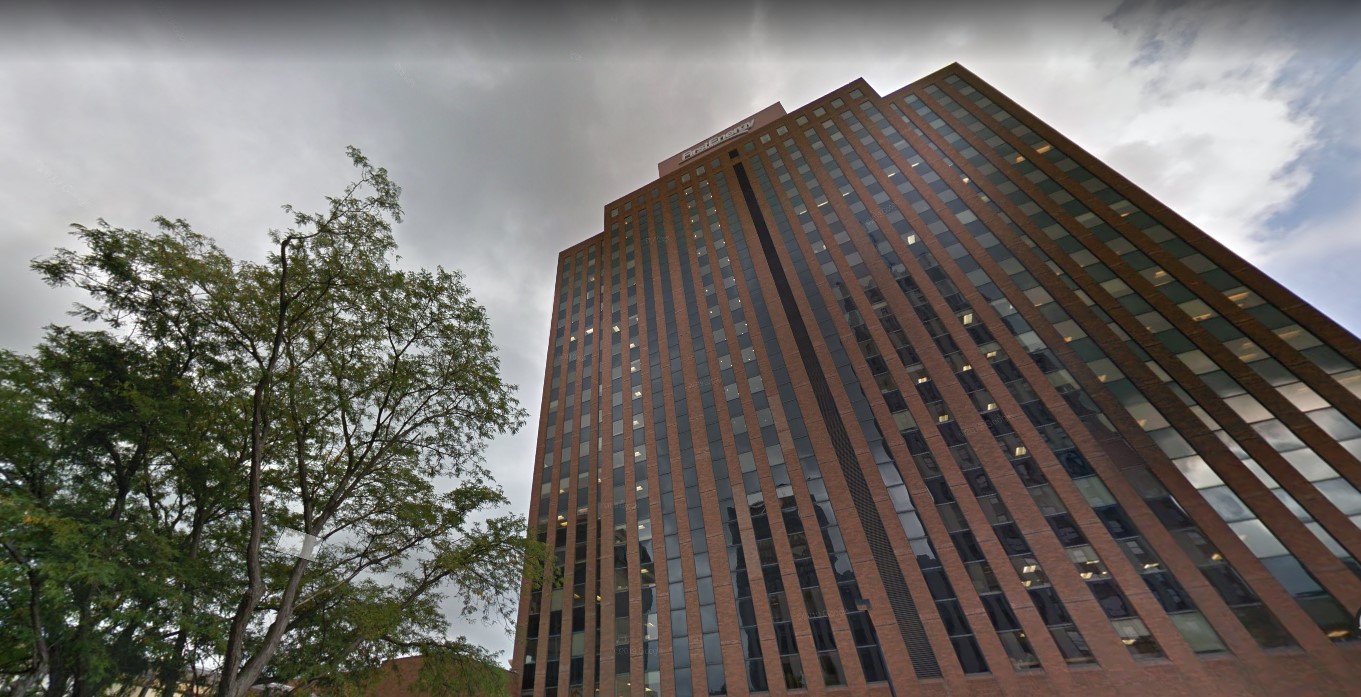
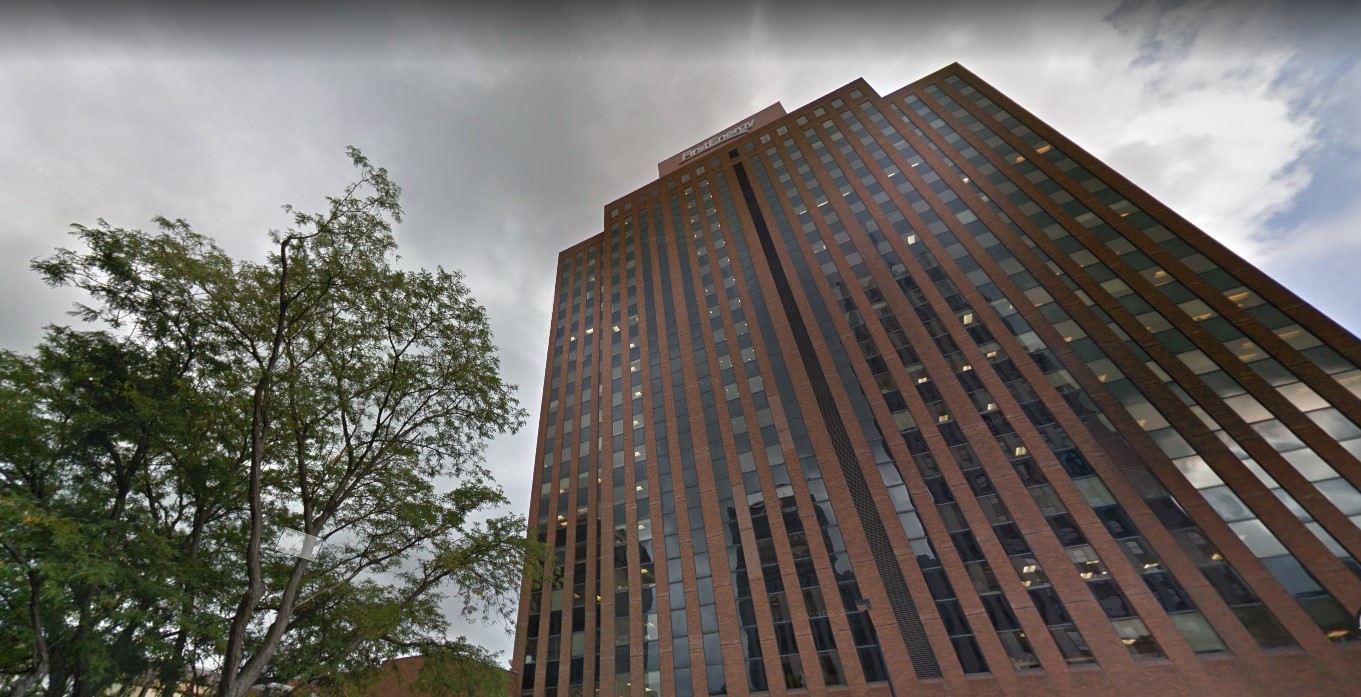
    FirstEnergy’s headquarters in Akron. Source: Google Maps.

    BY: JAKE ZUCKERMAN – Ohio Capital Journal

    In an unusual move in a high-profile lawsuit, a federal judge booted lawyers from a lawsuit they filed against FirstEnergy Corp. for their failure to “diligently prosecute” the case against the scandal-mired company.

    U.S. District Judge John Adams said Wednesday he would appoint counsel on behalf of the shareholders who sued the company in connection with what federal prosecutors have called the largest bribery scandal in state history.

    Both the shareholders and FirstEnergy publicly announced that they’d reached a settlement in March that called for insurers to pay the company $180 million and for the ouster of six board members. One federal judge preliminarily approved the settlement in May, but said he had no authority over the two other judges overseeing the related cases.

    Adams has for months lambasted the plaintiffs for agreeing to settlements without deposing witnesses, reviewing evidence, and shirking other typical fact-finding efforts.

    “As the parties have made clear that they do not intend to prosecute the matter before this Court, the Court will appoint counsel,” he said Wednesday. “Consistent with the Court’s authority to oversee this derivative action to its conclusion, the Court will appoint counsel that will be willing to diligently prosecute this matter and seek approval from this Court of any potential resolution, if one is reached.”

    The lawsuit traces back to the 2019 passage of Ohio House Bill 6 — an energy policy overhaul worth about $1.3 billion to FirstEnergy. In 2020, federal prosecutors arrested then-Ohio House Speaker Larry Householder and accused him and four allies of secretly accepting about $60 million from FirstEnergy and using it for personal enrichment, political gain, and to engineer passage and enactment of HB 6.

    Last summer, FirstEnergy Corp. admitted in federal court to the operation, also stating it paid Sam Randazzo, then Ohio’s top utility regulator, a $4.3 million bribe. FirstEnergy paid a $230 million penalty in connection with the filing and agreed to cooperate in related criminal investigations to possibly avert a federal charge of wire fraud.

    Householder has pleaded innocent and awaits trial. Two of four alleged conspirators have pleaded guilty. One died by suicide. Randazzo has not been charged with a crime and denied wrongdoing.

    FirstEnergy’s shareholders filed a derivative action against the company. This entails the shareholders suing the board of directors on behalf of a corporation for an alleged breach of duties, according to the Legal Information Institute at Cornell University. This allows shareholders to benefit as a derivative of the company’s corrective action.

    Adams called on a clerk to post the order in the court’s “News & Announcements” page. Interested lawyers can write him to express interest by July 25.

    His colorful outbursts have pockmarked the lawsuit. In the first hearing after the proposed settlement was announced, Adams demanded someone in the case answer a simple question: “Who paid the bribe?”

    After repeated attempts went nowhere, Adams told a lawyer for the plaintiffs that the attorney was wasting his time. Adams then stormed from the bench, according to an Akron Beacon Journal report.

    He later threatened to dismiss lawyers from the case if someone didn’t answer his question. An attorney for the plaintiffs later identified the alleged orchestrators of the bribery operation — two FirstEnergy executives — for the first time publicly.

    Last week, he denied a request from both the company and its shareholders that he dismiss the case, which could have cleared the way for the settlement. He cited uncomplete exchange of evidence between parities, no testimony under oath from any defendants, and an incomplete forensic examination to identify “possible missing communications” from FirstEnergy CEO Charles Jones’ phone.

    He also noted that of the $180 million, the settlement allows plaintiff’s lawyers to seek nearly $49 million in fees. Thus, he said it’s “hardly surprising” that they’d prefer the case handled by a judge who’s warmer to the settlement proposal.

    Two attorneys representing the shareholders did not respond to inquiries.

    A FirstEnergy spokeswoman declined to comment, citing pending litigation.

  • Judge rejects bid to settle FirstEnergy bribery suit with shareholders elsewhere

    Judge rejects bid to settle FirstEnergy bribery suit with shareholders elsewhere

    FirstEnergy’s headquarters in Akron. Source: Google Maps.

    BY: JAKE ZUCKERMAN – Ohio Capital Journal

    A federal judge in Akron has refused to dismiss a lawsuit between FirstEnergy Corp. — which has admitted that it bribed two top Ohio politicians with $64 million — and some of its shareholders.

    U.S. District Judge John R. Adams denied a motion Tuesday, filed jointly by the company and its investors, asking him to dismiss the case in light of a proposed settlement preliminarily agreed to by another federal judge.

    Adams accused the parties of “forum shopping,” or looking for a friendly judge given his previous skepticism of the settlement. He also implicitly accused FirstEnergy of protecting its former CEO’s riches, and the plaintiff’s lawyers of cashing in without properly investigating the company’s scheme.

    The lawsuit traces back to the 2019 passage of state House Bill 6, which included several provisions favorable to FirstEnergy worth an estimated $1.3 billion to the company. This included a massive, ratepayer funded bailout for nuclear plants it owned at the time.

    FirstEnergy admitted in a deferred prosecution agreement last summer that it engaged in the bribery operations, with money flowing from the company to entities controlled by Ohio House Speaker Larry Householder and Public Utilities Commission of Ohio Chairman Sam Randazzo. Householder awaits trial and has pleaded innocent. Randazzo has not been charged and maintained his innocence.

    The agreement required the company to admit to a lengthy proffer of facts, cooperate with ongoing criminal probes, and pay a $230 million penalty to avoid a criminal charge of wire fraud.

    Shareholders have brought three derivative suits against the company over their losses incurred by the scandal — one in state court and two in federal court. In March, FirstEnergy announced it reached a settlement with the shareholders. It called for the company to oust six board members and receive $180 million from company insurers.

    U.S. District Judge Algenon L. Marbley preliminarily approved the settlement in May but said he had no authority over other judges’ cases.

    In Adams’ order Tuesday, he expressed incredulity at the lack of investigative efforts from the plaintiffs and the lack of consequences for some of the defendants.

    The shareholders’ lawyers have claimed, defending the proposal, that this would be the largest settlement of its type in Ohio.

    Big whoop, Adams said.

    FirstEnergy already paid a $230 million penalty, he said. The case record indicates shareholders lost more than $1 billion in value when the news of the initial criminal arrests in the scandal broke and the company’s share price plummeted. The insurance payout is a fraction of these losses. He noted that the small army of plaintiffs’ lawyers on the case could take a sizable chunk of the proposed settlement.

    “Given that counsel is permitted under the settlement to seek up to $48,600,000 in attorney fees, it is hardly surprising that the parties would seek out what they believe to be a more favorable forum,” he said.

    He also noted a finding in a recent regulatory audit that found FirstEnergy could have reclaimed some of the $55 million it paid to then-CEO Chuck Jones during the roughly three-year span of the criminal allegations. Though the company fired Jones, it never invoked the contractual provision allowing it to reclaw the compensation, the audit found.

    In his order, Adams also cited uncomplete exchange of evidence between parities, no testimony under oath from any defendants, and an incomplete forensic examination to identify “possible missing communications” from Jones’ phone.

    While FirstEnergy as a company faces criminal consequences, its executives to date have not. The deferred prosecution agreement the company entered, meanwhile, doesn’t specifically identify who organized the bribery operation.

    Earlier this year, Adams refused to allow any settlement — and at one point stormed off during a hearing — until someone in the case admitted who specifically orchestrated the bribery operation. Counsel representing plaintiffs identified both Jones and fellow executive Mike Dowling as the central operators. The two men are named defendants in the shareholder lawsuit.

    John Camillus, an attorney and “liaison counsel” for some of the plaintiffs, declined to comment.

    A FirstEnergy spokeswoman declined to comment.

    Follow OCJ reporter Jake Zuckerman on Twitter

  • Ohioans spent $211 million subsidizing two coal plants over last two years

    Ohioans spent $211 million subsidizing two coal plants over last two years

    BY: JAKE ZUCKERMAN – Ohio Capital Journal

    Electric customers across Ohio collectively spent an estimated $211 million via add-on bill charges over the last two years to cover for losses from two coal-fired power plants that continue to bleed millions annually, according to new data from state regulators.

    The money to the Ohio Valley Electric Corp. (OVEC) — an entity comprised of several investor-owned utilities from multiple states that operates the plants — flows thanks to a 2019 state law now at the center of a criminal bribery prosecution.

    The Public Utilities Commission of Ohio began to allow three of the utilities that own and are contractually obligated to buy power from OVEC — American Electric Power (43% equity stake), Duke Energy (9%), and AES Ohio (4.9%) — to pass on their losses on OVEC to their customers, starting in the mid-2010s. The payments were originally only allowed through 2024. Through 2019, the three utilities’ customers were charged an estimated $159 million on OVEC.

    House Bill 6, a law passed in 2019 that’s now the focal point of what prosecutors have said is the largest political corruption investigation in state history, extended the subsidies through 2030 and spread the three utilities’ (AEP, Duke and AES) losses to electric customers of all Ohio utilities (not just those that own OVEC).

    In 2020, Ohio electric customers statewide paid $115 million to OVEC’s owners to cover their losses on the deal, according to data provided by a PUCO spokesman. In 2021, they paid about $97 million (July through December 2021 costs are estimates). Under the law, residential customers pay a maximum $1.50 per month to utilities to cover their OVEC losses. Industrial customers pay a maximum of $1,500.

    OVEC operates two 1950s-era coal plants in Cheshire, Ohio and Madison, Indiana, originally built to power the federal government’s uranium enrichment facilities near Portsmouth. That agreement ended in 2003. The utility companies that own OVEC last renegotiated their contract in 2011 extending its life through 2040.

    Technically, the OVEC plants could save utility customers money if OVEC could generate and sell electricity at below-market costs. However, a mix of market forces, environmental regulations and recently spending more than $1 billion on a “scrubber” system designed to limit emissions have left the plants selling electricity at costs well above those of PJM, an energy marketplace serving utilities in 13 states including Ohio.

    “[Our] analysis shows that at this time, the OVEC plants cost customers more than the cost of energy and capacity that could be bought on the PJM wholesale markets,” wrote London Economics International, a firm the PUCO commissioned to audit the subsidies, in December.

    A draft version of a 2020 PUCO-commissioned audit by the same firm found that “keeping the plants running does not seem to be in the best interests of the ratepayers.” The line was removed from the final version at the request of a PUCO staffer who asked the auditors to use a “milder tone and intensity of language,” according to emails obtained by the Ohio Consumers’ Counsel (OCC), which represents ratepayers in PUCO cases and has advocated ending the OVEC subsidies.

    In a 2018 bankruptcy filing, FirstEnergy disclosed losing $12 million per year due to its 4.85% equity stake in OVEC. As lawmakers considered HB 6, legislative analysts estimated Ohio utilities paid $94 million above wholesale market costs in 2018 alone to purchase OVEC-generated electricity.

    Along with the raw finances, Ohio consumers are subsidizing plants that have belched nearly 21 million tons of carbon dioxide, 21,000 tons of nitrogen oxide, and 12,000 tons of sulfur dioxide into the atmosphere since January 2020, plus smaller discharges of arsenic, lead, and mercury, according to data from the U.S. Environmental Protection Agency provided by the OCC.

    “Why the hell is this still in place?” said Neil Waggoner, an advocate with the Sierra Club’s Beyond Coal campaign. “I think that this is utility capture in practice. This is the utilities in this state having a death grip on the regulators and people in power to the point that they’re getting exactly what they want.”

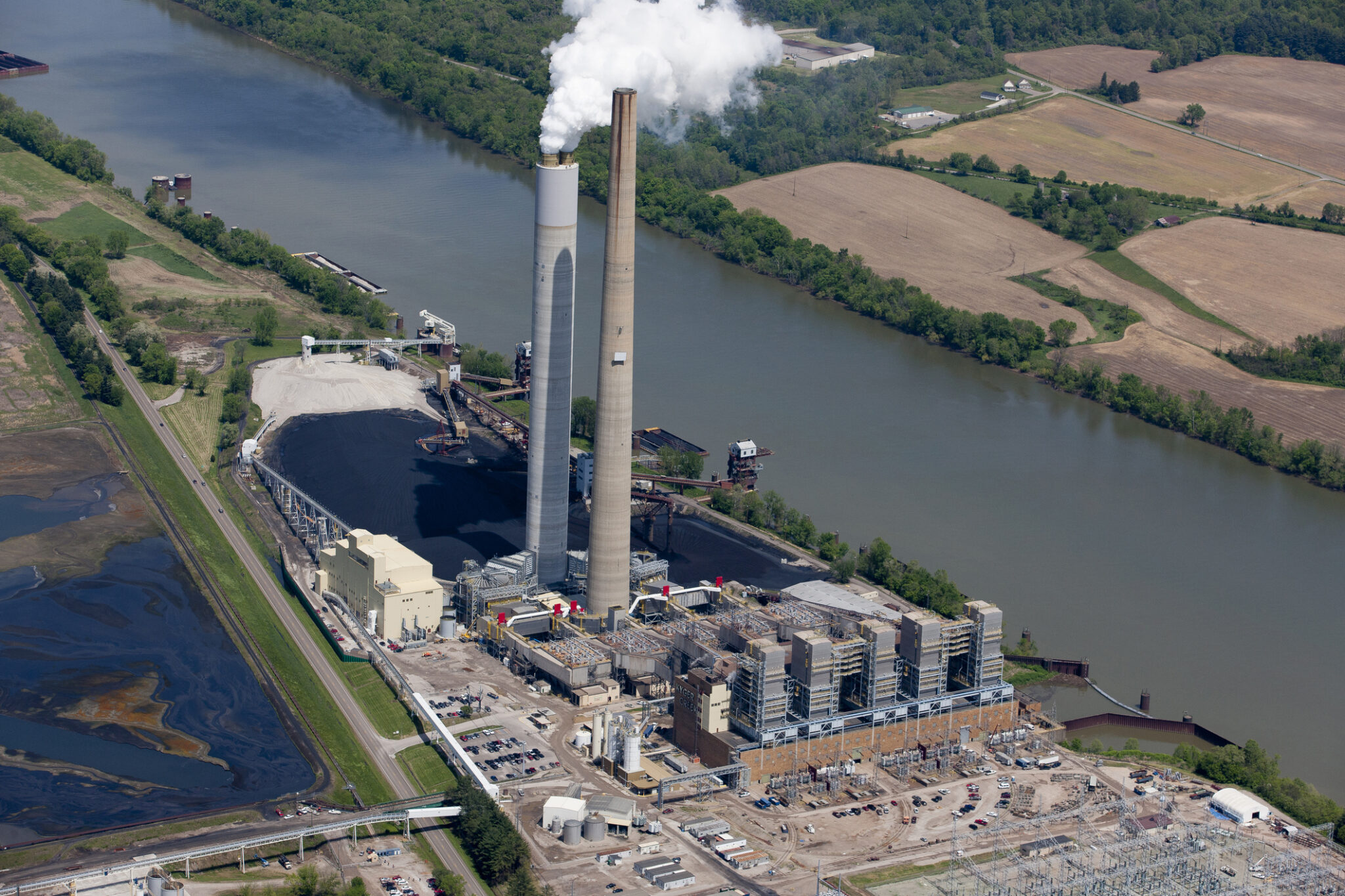
     The Clifty Creek Power Plant, in Madison, Indiana, which is operated by OVEC. Photo taken by Rep. Casey Weinstein, D-Hudson, who visited the plant and has called for a repeal of state law forcing Ohio ratepayers to subsidize it.

    A sticky bailout

    FirstEnergy Corp. admitted in July to paying more than $60 million to an account controlled by the former House Speaker and his allies to ensure passage of HB 6. The prosecutors’ allegations have focused in court documents on an estimated $1.3 billion nuclear bailout and other non-coal related provisions of the sweeping bill that are favorable FirstEnergy. Former speaker Larry Householder, accused of using the money to engineer passage of the bill and shore up his own political aims, has pleaded not guilty. Two Householder allies involved in the alleged scheme have pleaded guilty to racketeering.

    State lawmakers in early 2021 passed legislation repealing the nuclear bailout and “decoupling” provision (a ratepayer-backed revenue guarantee for FirstEnergy). However, the OVEC bailout was left intact.

    There are bipartisan efforts in the House and Senate to repeal the OVEC bailout from state law, and the narrower PUCO-approved bailout that preceded them. Neither has come up for a vote and the sponsors are pessimistic on their chances.

    Sen. Mark Romanchuk, R-Ontario, perhaps the plants’ most prominent critic and co-sponsor of the Senate legislation, said he is in negotiations with the utilities that own the plants and is not giving up. He declined an interview.

    “Not sure where things will go but we’re not giving up,” Romanchuk said.

    House Democrats have called for a repeal of the OVEC subsidies, though they only control 34 of 99 seats in the chamber. Rep. Jeff Crossman, a Parma Democrat who recently announced plans to run for attorney general, said the OVEC charges should be repealed but as much is unlikely.

    He said OVEC’s sponsors contribute tens of thousands in campaign contributions per year, mostly to Republicans. AEP, through a middleman, contributed $700,000 to Generation Now, the account prosecutors say Householder used to engineer passage of HB 6 in the first place.

    “There’s probably not a will to undo the OVEC charges,” he said. “They donate gobs of cash to the right folks. There’s just no other reason to support these plants.”

    House Speaker Bob Cupp, R-Lima, said in October he doesn’t believe there’s support in the House Republican caucus to repeal the coal bailout.

    House Majority Leader Bill Seitz, R-Green Twp., has told several state media outlets the bailouts aren’t going anywhere. He did not respond to written questions about the uneconomic nature of the plants, or why ratepayers should cover their owners’ losses on them.

    “We’ve beat this [OVEC] horse to death. It’s not going to change,” Seitz said to Cleveland.com in October. “They’ve introduced God knows how many bills — none of them are going anywhere, in my humble opinion.”

    Michigan takes action

    AEP is by far OVEC’s largest shareholder, with a roughly 43% equity stake in the company, and the two share several executives.

    While repeal efforts in Ohio are at a lull, other states have signaled resistance to allowing utilities to continue to pass OVEC’s owners’ losses to customers.

    The Michigan Public Service Commission in a November order noted that OVEC’s costs exceed the market price of electricity by tens of millions. It warned that AEP’s local utility may not be able to pass on all its OVEC losses to customers that are “incurred because of imprudent” decisions.

    “The order today put I&M [an AEP unit] on notice that the Michigan share of these excess costs are unlikely to be permitted without additional evidence that continuing to purchase power from the units was in the best interest of its customers,” the Michigan regulators said in a news release.

    AEP spokesman Scott Blake said in an email the OVEC plants are “critical resources that help ensure the reliability of the grid and offer protection from increases in the costs of other fuels.” He said AEP Ohio customers for decades benefitted from OVEC’s power via affordable electricity and good jobs. OVEC, he argued, insulates customers from cost spikes caused by things like a surge in natural gas prices or a shortfall of renewable energy supply.

    “AEP Ohio customers benefited for decades from the power provided by OVEC in the form of affordable electricity and good jobs,” he said. “While there may be years where power from OVEC is more expensive than the market, as generation from natural gas and other sources becomes more expensive, customers could see refunds from OVEC in the future.”

    Fitch Ratings determined OVEC’s outlook is “stable” in February — just one step above “speculative.” However, its analysts found that repealing HB 6 wouldn’t necessarily harm OVEC’s prospects. The analysts reasoned that for one, in the event of a repeal, AEP, Duke and AES would still be able to pass on their OVEC losses to customers. For two, the “sponsoring” utilities have already contractually agreed to purchase the power OVEC generates, regardless of who eats the losses.

    Meanwhile, in a Virginia appeal of a public service commission rate case, Virginia Attorney General Mark Herring accused OVEC of charging an AEP utility in Virginia well beyond market costs for electricity. The case is ongoing.

  • Ratepayers spent $166 million and counting bailing out coal plants under law that passed via bribes

    Ratepayers spent $166 million and counting bailing out coal plants under law that passed via bribes

    BY: JAKE ZUCKERMAN and Ohio Capital Journal

    Despite several plea deals with federal prosecutors regarding bribery on a massive scale to pass legislation providing a windfall to nuclear and coal companies, Ohio utility customers continue to fund bailouts of failing coal-fired power plants in Ohio and Indiana.

    In the first half of 2021, Ohio utility customers paid $51 million to subsidize the plants, which are jointly owned by Ohio utility companies like American Electric Power, Duke Energy, AES Ohio and others. That’s on top of the $115 million ratepayers paid last year, according to data from state utility regulators.

    Sen. Mark Romanchuk, R-Ontario, has spearheaded efforts within the GOP on a piece-by-piece strategy to repeal the remnants of House Bill 6, which codified the coal bailout through 2030.

    HB 6 passed via the muscle of $61 million that utility giant FirstEnergy Corp. paid into an account secretly controlled by House Speaker Larry Householder, R-Glenford. That money funded the bill’s passage and enriched those in on the scheme, according to a statement of facts the company proffered to the U.S. Department of Justice. (Householder has pleaded not guilty to a count of racketeering and awaits trial.)

    Romanchuk said Tuesday he’s facing resistance from his counterparts on the Senate Energy and Public Utilities Committee as far as repealing the coal plant bailouts.

    “You need votes to get it out of committee; the votes probably aren’t there right now,” he said to reporters after a hearing.

     State Sen. Mark Romanchuk, R-Ontario. Official photo.

    “The legislation has some other things in it like refunds that are probably, in the minds of committee members, not what they want to vote for.”

    Earlier this year, representatives of the utilities that comprise the Ohio Valley Electric Corp., which owns the two plants, appeared before the committee to argue in favor of the subsidies.

    Senate Energy Chairman Rob McColley, R-Napoleon, said Tuesday he has no update on timing regarding a vote to repeal the coal bailouts. He said Romanchuk is working behind the scenes to prepare the bill for a vote, but he’s not involved in specific details.

    “You know how I feel about House Bill 6. I voted no because I thought it stunk from the very beginning,” he said. “But at the same time, we’ve got to work this through the committee process and that’s what we’re trying to do.”

    Tuesday’s hearing: solar credits

    The Senate Energy and Public Utilities Committee met Tuesday to consider Senate Bill 118, a Romanchuk bill that would repeal a lesser-discussed piece of HB 6: a $20 million annual credit, funded by utility customers, for certain solar projects.

    Franklin County Common Pleas Judge Chris Brown halted collections over nuclear and solar subsidies under HB 6 via an injunction in December, according to PUCO spokesman Matt Schilling. However, in April, Brown issued a ruling allowing the solar fund collections to begin on Nov. 1, 2021.

    SB 118 has support from opponents of HB 6: the conservative group Americans for Prosperity, the Ohio Manufacturing Association, and the Ohio Consumers Counsel, which represents ratepayers.

    Lobbyists representing OMA and AFP described the credit structure as a form of cronyism, alleging HB 6 was narrowly tailored to ensure the payments made it to a select few solar projects.

    A spokeswoman from the Ohio Air Quality Development Authority, which oversees the solar credit program, confirmed collections from consumers won’t begin until Nov. 1. Five projects in Highland, Brown, Hardin and Vinton counties have been approved to receive payments within the program.

    Householder update

    Householder was arrested and indicted in July 2020. Lawmakers ousted him as Speaker of the House shortly thereafter. He was expelled as a member of the Ohio General Assembly in June of this year.

    He has maintained his innocence throughout. He’s scheduled to appear for a status conference before a federal judge Oct. 5.

    “I have not, not have I ever, taken a bribe or solicited or been solicited for taking a bribe. Never,” Householder said.

    Two alleged Householder co-conspirators — his political strategist Jeff Longstreth and lobbyist Juan Cespedes — pleaded guilty in October 2020 to one count each of racketeering. Neil Clark, a high power GOP lobbyist, was charged as well. He died by suicide earlier this year.

    In July, FirstEnergy admitted in court documents that it paid $61 million into an account that Householder controlled to pass HB 6. The company agreed to pay a $230 million penalty and plead guilty to a charge of wire fraud.

    The documents state the company paid $22 million to Sam Randazzo, an energy lawyer appointed by Gov. Mike DeWine to lead the PUCO, in the decade before his appointment. This includes a $4.3 million payment just before he assumed the post.

    In return, Randazzo allegedly used his chairmanship to shield PUCO from regulatory scrutiny that could cost it hundreds of millions. Randazzo denied any wrongdoing and has not been charged with a crime.

  • FirstEnergy paid $4.3 mil to top energy regulator and reaped the benefits, court docs state

    FirstEnergy paid $4.3 mil to top energy regulator and reaped the benefits, court docs state

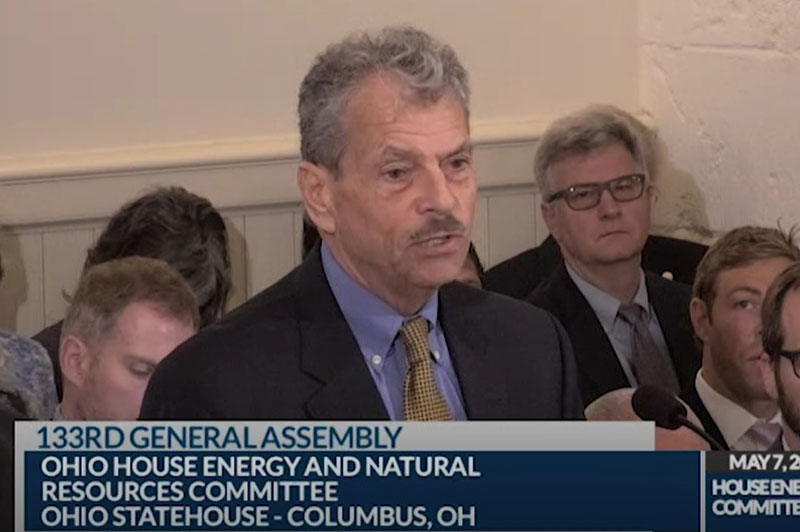
    Then-PUCO Chair Sam Randazzo testifies as an interested party regarding House Bill 6 on May 7, 2019.

    Source: Ohio Channel.

    “HB 6 F(***) ANYBODY WHO AINT US,” the executive wrote.

    BY: JAKE ZUCKERMAN and Ohio Capital Journal

    An energy lobbyist who Gov. Mike DeWine appointed as the state’s top regulator of public utilities received $22 million from FirstEnergy Corp. in the decade before his appointment — including $4.3 million paid just before assuming the post and specifically to execute official duties to benefit the Akron-based utility — court documents revealed Thursday.

    Sam Randazzo, who resigned as chairman of the Public Utilities Commission of Ohio after federal agents raided his Columbus home, used his PUCO chairmanship to scuttle a requirement that FirstEnergy undergo a rate review set for 2024, which company executives believed would hurt its bottom line, the documents state.

    FirstEnergy entered into a deferred prosecution agreement — in which the U.S. Department of Justice could drop the charge if the company meets certain conditions including a $230 million criminal penalty — on one count of wire fraud.

    It also agreed to a stipulation of facts detailing its nearly $61 million in payments to an account the former speaker of the Ohio House allegedly controlled and spent to pass House Bill 6, legislation worth an estimated $1.3 billion to the company.

    Thursday’s filing, however, is flush with new details about FirstEnergy’s long relationship with Randazzo, dating back to a contract in 2010 and a consulting deal inked in 2013.

    The agreement states one FirstEnergy executive texted another on Nov. 15, 2019 that Randazzo is “going to make the requirement [for a rate review] to file go away, but I do not know specifically how he plans to do it.” The document doesn’t directly identify the executives.

    On Nov. 21, 2019, PUCO issued an order finding it is “no longer necessary or appropriate” that three utilities owned by FirstEnergy file a new case when its current rate structure expires in 2024.

    Executive 1 thanked Randazzo via text the next day, according to prosecutors, attaching an image showing the company’s stock price increasing.

    An email for Randazzo on file with the Supreme Court is no longer in operation. In a statement obtained by the Cincinnati Enquirer, he said he executed his duties as chairman lawfully and denied performing any action to advance FirstEnergy’s interests. He said all payments to him were made under his consulting agreement with the utility.

    “In the fall of 2020, it became clear that issues surrounding House Bill 6 and a public attack on my background and character had escalated to a point that made it impossible for me to effectively perform my duties at the PUCO,” he said, explaining his choice to step down.

    According to prosecutors, Executive 1 and Executive 2 met Randazzo at his condo in late December 2018 to discuss remaining $4.3 million on his consulting agreement and a job posting for a PUCO seat. FirstEnergy had no legal requirement to make the payment but did so anyways.

    When a related court filing divulged Randazzo’s company accepted payments from FirstEnergy, executives worried the disclosure would torpedo the appointment. However, it only “grazed the temple,” they said, and forced “State Official 1” and “State Official 2” to perform “battlefield triage.”

    The governor nominates PUCO commissioners off a shortlist from a nomination council. A DeWine spokesman did not answer specific inquiries, including whether the governor is one of the unmentioned state officials.

    “As I have consistently said, we understood that Sam Randazzo had worked for manufacturing companies, energy companies, and consumers, and that he had done work for First Energy. Sam Randazzo was a well-known subject-matter expert in energy issues,” the governor said in a statement. “If, as stated in the court documents, Sam Randazzo committed acts to improperly benefit First Energy, his motives were not known by me or my staff.”

    Haley Carducci, a spokeswoman for Lt. Gov. Jon Husted, didn’t specifically answer whether Husted is one of the two state officials.

    “The Lt. Governor has not been contacted by any federal law enforcement officials regarding this case, so we have no reason to believe that he is mentioned in this document,” said Husted spokeswoman Haley Carducci.

    Along with Randazzo’s help on the regulatory side, the agreement states that he helped craft and review language of House Bill 6 including a “decoupling” provision, which created a ratepayer backed guarantee of FirstEnergy’s revenues at 2018 levels, a good year for the company. The bill also bailed out two nuclear plants owned by a former FirstEnergy subsidiary; bailed out two coal plants owned by a spread of different utility companies; and gutted the state’s renewable energy and efficiency standards.

    Randazzo has deep ties to the fossil fuel energy industry. He worked as a lobbyist and lawyer for the Industrial Energy users Ohio, which represents interests of energy-intensive manufacturing and commercial business before the PUCO.

    Lobbying records show he represented Greenwich Neighbors United, which fought off a potential wind farm development in Huron County; the Ohio Gas Company; and Vectren Corp., a natural gas company.

    As a donor, he contributed more than $282,000 to state candidates over 23 years, according to an analysis from the National Institute on Money and Politics. More than $194,000 went to Republicans, $36,000 to Democrats, and $48,000 to candidates of unspecified parties.

    When his name appeared on a short list of potential candidates for DeWine to choose, a spread of environmental groups wrote a letter outlining “serious concern” for Randazzo’s “extreme bias” against clean energy.

    “Mr. Sam Randazzo has worked earnestly to dismantle Ohio’s energy efficiency resource standard and renewable portfolio standard (RPS) since 2012 via multiple pieces of legislation,” they wrote. “He was supportive of the legislation that froze Ohio’s standards for two years, worked behind the scenes with the study committee that issued a faulty report allegedly assessing the costs and benefits of the RPS and EERS, and even continued to push the repeal and weakening of these standards after Governor Kasich’s veto of a bill that would have essentially eliminated the standards.”

    The Ohio Consumers Counsel, a state agency that represents residential ratepayers before PUCO, issued a statement after news broke of the filing.

    “The public got some justice today regarding the Ohio House Bill 6 scandal and FirstEnergy,” said agency director Bruce Weston. “But justice is also a longer road that requires state reforms to curb the utilities’ political influence that is costing Ohioans money on their utility bills.”

    Rep. David Leland, D-Columbus, said the information about Randazzo places the scandal right on DeWine’s doorstep.

    “This, combined with the significant money FirstEnergy gave to his campaign makes it clear that Governor DeWine needs to come clean to the people of Ohio about his role in this historic scandal,” he said.

    Catherine Turcer, director of Common Cause Ohio, which frequently advocates for anti-corruption and campaign finance reform legislation, said the entire episode highlights that current law allows some political entities to spend enormous sums of money without ever disclosing the source.

    “Clearly, Ohio legislators also need to create greater transparency so that voters can ‘follow the money’ and determine who is funding political spending by all entities including nonprofits. It’s not yet too late for us to pass new laws that will shine a light on ‘dark money,’” she said. “However, our state legislative leaders need to act with urgency and make transparency and accountability a top priority — or Ohioans will undoubtedly face yet another embarrassing scandal.”

    Shortly after HB 6 passed, a FirstEnergy executive texted Randazzo, according to prosecutors. Attached was an edited image of Randazzo’s face atop Mount Rushmore, with FirstEnergy executives and lobbyists alongside him on the iconic monument.

    “HB 6 F(***) ANYBODY WHO AINT US,” the executive wrote.

  • Nearly a year after a racketeering indictment, Ohio House expels Larry Householder

    Nearly a year after a racketeering indictment, Ohio House expels Larry Householder

    By Jake Zuckerman and Ohio Capital Journal

    Larry Householder addresses reporters June 16 after lawmakers voted to expel him from the General Assembly. Photo by Jake Zuckerman.

    Federal prosecutors accused the men of secretly accepting $61 million from FirstEnergy Corp

    The Ohio House voted Wednesday to expel Larry Householder, arrested on charges of public corruption nearly one year ago, from the chamber his Republican — and even some Democratic — colleagues thrice elected him to control.

    The expulsion could mark the end of Householder’s decades-long political career, which has included a previous tenure as speaker of the House in the 2000s that was derailed by a separate FBI investigation. No charges were filed.

    The House voted 75-21 to eject Householder. All but one Democrat voted in support.

    Wednesday’s vote extinguishes Householder’s political flame, but he remains innocent until proven guilty as his criminal trial draws nearer. Both he and former Ohio Republican Party chairman turned lobbyist Matt Borges await trial.

    Jeff Longstreth, Householder’s former political adviser, and Juan Cespedes, a lobbyist, both pleaded guilty to racketeering charges. Neil Clark, a lobbyist and once a towering figure in Ohio politics, was charged as well but pleaded innocent. He died by suicide before trial.

    Federal prosecutors accused the men of secretly accepting $61 million from FirstEnergy Corp via a dark money, pass-through entity. They allegedly used the funds for personal enrichment and to engineer the passage of House Bill 6, a coal and nuclear bailout worth an estimated $1.3 billion to the company.

    After his July 2020 arrest, House lawmakers quickly dethroned Householder as speaker. However, all but a handful of Republicans voted down an effort from Democrats to expel him. Speaking to House leadership on Tuesday, a confident Householder denied the allegations against him. On Wednesday, he listened from the House floor in silence as lawmakers publicly debated his fate.

    Those seeking his ouster emphasized the House is not a courtroom and thus can apply its own professional standards. They said the 43-page indictment and the plea deals entered into by two allies (and one dark money political entity) warrant his ouster from public office.

    “If selling legislation does not count as disorderly conduct, then frankly, nothing does,” said Rep. Brian Stewart, R-Ashville, who sponsored the expulsion resolution along with Rep. Mark Frazier, R-Newark.

    Rep. Kyle Koehler, a Republican who voted against HB 6, dismissed those trying to reduce Householder’s indictment as “allegations.” He identified himself as the anonymous “Representative 6” in the indictment itself, which describes the unnamed lawmaker subjected to political pressure funded by FirstEnergy for his vote.

    “These things occurred,” Koehler, one of few who have publicly demanded Householder’s ouster in recent months. “They’re not accusations. They’re not speculations.”

    Householder’s defenders argued it’s premature to punish Householder before he faces trial. Some argued that the allegations against him don’t qualify as “disorderly conduct,” the undefined Constitutional threshold for expulsion.

    “This is about due process. It’s about the Constitution. It’s not about that man sitting right over there,” said Rep. Al Cutrona, R-Canfield, pointing at Householder.

    What’s more, he won reelection in November, despite the indictment against him.

    “We do not get to choose who represents someone else’s district,” said Rep. Nino Vitale, R-Urbana, who chaired a committee specially created by Householder to review HB 6.

    At around 3 p.m., Householder began what would be his last floor speech of the 134th General Assembly.

    He reiterated a claim of his innocence, said that the allegations against him do not qualify as disorderly conduct, and criticized lawmakers for banishing from a chamber without gathering any evidence of their own.

    “I have not, nor have I ever, took a bribe, or provided a bribe,” he said. “I have not, nor have I ever, solicited a bribe. And I have not, nor have I ever, sold legislation.”

    After the vote, Householder approached the clerk and walked out from the chamber. He reiterated claims of his innocence to reporters gathered outside. There, he left open the possibility of a return to public office, and issued a warning to those who he feels crossed him.

    “Fellow elected officials who didn’t like public citizen Householder, are really not going to like private citizen Householder,” he said.

    This is a developing story and will be updated.

  • Utility and fossil fuel influence in Ohio goes beyond passage of bailout

    Utility and fossil fuel influence in Ohio goes beyond passage of bailout

    Dark money loopholes remain, while people linked to utilities and fossil fuels hold public office or enjoy ongoing access to government officials.

    by Kathiann M. Kowalski

    Dark money loopholes remain in Ohio law, despite last month’s surgical repeal of part of the law at the heart of a $60 million corruption scandal. Meanwhile, more evidence has emerged in recent months, detailing the flow of money by groups engaged in the House Bill 6 scandal and showing close ties between current and former utility lobbyists and Gov. Mike DeWine, as well as various lawmakers.

    “We need to learn from our mistakes,” said Catherine Turcer, executive director of Common Cause Ohio, a group that advocates for more transparency and accountability in politics. She noted that the House Bill 6 case is just the latest in a line of corruption scandals that have rocked state politics in the past two decades.

    A federal complaint released last July alleged an unlawful conspiracy to elect lawmakers who would favor Rep. Larry Householder as House speaker, secure passage of House Bill 6 and defend it against a referendum. A court filing by FirstEnergy in March admits that millions of dollars went from one of its subsidiaries either directly or indirectly to Generation Now, the primary dark money group at the center of the alleged scheme, or to other entities alleged to have played roles. Some funds were paid at the direction of FirstEnergy Solutions, the document claims.

    In addition to promptly repealing the whole law, legislators should have pursued action to prevent such a situation from happening again, Turcer said. Instead, “there was not any indication in place during the summer of a path of how to make sure we don’t create a space for misdeeds.”

    Efforts by FirstEnergy and others to make political contributions through dark money organizations — 501(c)(4) nonprofits and some political for-profits that are not required to disclose their donors — have touched numerous entities with connections throughout the Ohio government, according to data from various sources.

    The Accountability Project is a national database that collects records of federal campaign contributions, grants from nonprofits, expenditures by political action committees and more. The database also identifies shared addresses and other links among individuals and organizations.

    Among other things, the database reveals that Generation Now’s address shown on a 2017 corporate filing was the same as that for co-defendant Jeff Longstreth and his business JPL & Associates. JPL & Associates was shown as the president and secretary on an October 2019 IRS filing by Generation Now.

    The Accountability Project information also indicates that in 2018 Generation Now and JPL & Associates did business at a Capitol Square office tower. The same suite address was used at various times that same year for Friends of Larry Householder, the Committee to Elect Bill Roemer, Harris for Ohio and  Barhorst for Ohio.

    In earlier years the same suite address had been used by the Coalition for Growth and Opportunity, which received money from an American Electric Power-funded group. The office suite is unoccupied now, but at some earlier point the suite also had been the office address for a bespoke tailoring business. (The company moved out of the space years ago, Eye on Ohio and the Energy News Network learned.)

    Nonetheless, utilities and fossil fuel interests seek to continue to tailor Ohio energy policies to their benefit. Among other things, most candidates elected in 2018 whose campaigns got money from the alleged HB 6 scheme were reelected in 2020. Their incumbent statuses would have given them a bump, according to David Anderson, policy and communications director for the Energy and Policy Institute. Federal filings indicate substantial additional spending for the last election cycle as well, he added.

    FirstEnergy and its political action committee reported more than $1.1 million in campaign donations for 2019 and 2020, primarily to Republicans, the National Institute on Money in Politics reports. Nearly half a million of that went to candidates in Ohio.

    Those reported amounts don’t include spending by any dark money groups the company or other energy companies with utilities in Ohio might have donated to. The Growth & Opportunity political action committee had spent money in early 2020 to influence several Ohio primaries, Anderson noted.

    Close ties

    DeWine signed HB 6 into law within hours of its passage in July 2019. Even after HB 6 passed, close ties have remained between utilities and fossil fuel interests, on the one hand, and leadership in Ohio’s legislative and executive branches.

    Since the federal complaint was released last July 21, DeWine has stood by Dan McCarthy, whom he appointed as his director of legislative affairs in early 2019. As a lobbyist at the Success Group in Columbus, McCarthy had long been active in state politics and has contributed to a variety of campaigns, as data from the Accountability Project shows.

    McCarthy was a registered lobbyist representing FirstEnergy in 2017 and 2018, when the events alleged in the HB 6 conspiracy began, according to data from the Ohio Lobbying Activity Center. He also was president of Partners for Progress, the FirstEnergy-funded “Energy Pass-Through” organization that allegedly funneled millions of dollars into efforts to pass and preserve HB 6.

    The bio released by DeWine’s office when he appointed McCarthy in 2019 shows that he had previously managed several political campaigns in addition to working for the Success Group. McCarthy resigned from Partners for Progress before assuming his current government position. 

    His former Success Group colleague McKenzie Davis was a director for Partners for Progress through at least 2019, according to a November 2020 IRS filing by the group. The report also shows R. Scott Davis as president and secretary, and lawyer Michael Van Buren at Calfee, Halter & Griswold in Cleveland as treasurer. 

    The IRS filing showed that $13 million went from Partners for Progress to Generation Now in 2019, plus additional amounts to other organizations for “political campaign intervention,” lobbying and “educating the public about utility options.” Funds from two of those dark money groups supported DeWine’s campaign, as well as an unsuccessful campaign by his daughter Alice DeWine, the Cincinnati Enquirer has reported.

    Other lawyers at Van Buren’s firm represented FirstEnergy in cases before the Public Utilities Commission of Ohio, including one begun after news of the HB 6 scandal broke, for the purpose of determining if funds from FirstEnergy’s utility ratepayers were spent on HB 6 activities. Attorneys from Jones Day are now counsel in some of those cases.

    “It looks a bit different when the lawyers who defend you work for the firm that was part of that political spending,” Anderson said. Van Buren and a colleague did not respond to an inquiry about the reason for the change.

    On call

    FirstEnergy was not the only utility with ongoing links to the governor’s office. An October 2019 email recently released by Common Cause Ohio last month shows that the DeWine-Husted campaign held a weekly finance call, even though they’re not up for reelection until next year. The call list included multiple people with ties to utilities and fossil fuels, including FirstEnergy lobbyist Josh Rubin of the CJR Group, Duke Energy Business Services lobbyist Chip Gerhardt of Government Strategies Group, and Ohio Coal Association lobbyist Richard Hillis of Governmental Policy Group. The Governmental Policy Group’s address has been used by several political action committees throughout the years, Accountability Project data show.

    Also on the DeWine-Husted finance call list was J.B. Hadden, who has been president of Empowering Ohio’s Economy, one of the dark money groups that had also paid money to Generation Now. As of last summer, American Electric Power had contributed a total of $8.7 million to Empowering Ohio’s Economy since 2015, including $700,000 in 2019, according to company spokesperson Scott Blake. “We will continue to legally and ethically advocate on behalf of our customers and our company,” Blake said.

    AEP’s vice president for external affairs, Tom Froehle, also has been a board member of Empowering Ohio’s Economy, dating back to 2016, Blake confirmed.

    Froehle and AEP Director of Government Affairs Maria Haberman met with Householder in February 2020, after HB 6 was law but before the scandal broke last summer, Anderson noted. Householder’s calendar didn’t indicate what the meeting was about.

    As for Empowering Ohio’s Economy, its 2019 tax filing showed more than half a million dollars going to Generation Now. Donations to several other organizations included a $25,000 contribution to the Ohio Governor’s Residence & Office Fund, which is yet another dark money group. It has spent nearly $200,000 on meetings at the residence “to promote better and more efficient government.”

    Another $2 million went from Empowering Ohio’s Economy to another dark money group, Open Road Path, in 2019 “to promote economic and business development within Ohio.” Hadden did not respond to a request for additional information for this article.

    Regulatory connections

    Anne Vogel, former managing director of AEP’s government affairs office, became DeWine’s assistant director for energy and natural resources starting in March 2019. By July, HB 6 was passed. 

    In December 2020, Vogel became a finalist to replace Sam Randazzo as chair of the Public Utilities Commission of Ohio. Randazzo resigned the day after a FirstEnergy government filing stated that the company had paid $4 million in early 2019 to an entity apparently linked to Randazzo. After criticisms surfaced about last December’s list of PUCO nominees, DeWine ultimately asked for additional names and appointed Jenifer French to the post.

    The PUCO nominating council likewise has connections to utilities and fossil fuel interests. Chair Michael Koren was a registered lobbyist for FirstEnergy through 2019. He chaired the committee that nominated Randazzo for the PUCO in 2019. Ohio Lobbying Activity Center data shows Koren also has been a lobbyist for Columbia Gas and Boich Companies, which made its fortune in the coal industry.

    Randazzo’s calendar for the time he was PUCO chair shows multiple meetings with people from utility companies or their parent corporations, as well as with coal fleet lobbyist Michelle Bloodworth

    “I am unaware of any meeting in which a commissioner held a discussion of pending proceedings,” said PUCO spokesperson Matt Schilling, noting that meetings otherwise “could have been regarding any number of general energy or commercial transportation matters relative [to] the delivery of adequate, safe and reliable utility service.”

    Nonetheless, the Energy and Policy Institute’s Anderson said, the absence of detailed notations in the calendar presents “definitely a lot of potential conflicts.”

    Accountability Project data also shows that AEP’s Froehle, Randazzo and Scott Elisar, the PUCO’s current legislative and policy director, all had worked at the same law firm, McNees, Wallace & Nurick. The firm has long represented Industrial Energy Users-Ohio, which has pushed for limiting clean energy standards, and whose members have long enjoyed favorable rates from utilities.

    Still ahead

    Dark money loopholes made the alleged HB 6 scheme possible. “Dark money is a breeding ground for corruption,” former U.S. attorney David DeVillers said when the indictment was filed last July. The federal investigation continues, although the pandemic delayed some grand jury proceedings, he told the Ohio Consumers’ Counsel Governing Board on March 16. In-person meetings of the grand jury have recently resumed, he noted.

    “[For] a lot of these cases that have been on the back burner, you can expect to see a lot more indictments coming,” DeVillers said.

    This year, House Bill 13 aims to address some dark money issues. A hearing will be held in the coming week, so there’s at least some potential for lawmakers to take action this session. But so far, Turcer said, “it’s just that they have completely dragged their feet.”

    __________________________________

    This story is part of a collaborative journalism project produced by the Energy News Network and Eye on Ohio, the Ohio Center for Investigative Journalism. Funding is provided by the Cleveland Foundation, the George Gund Foundation, and the Accountability Project at American University’s Investigative Reporting Workshop.

    This article first appeared on Eye on Ohio and is republished here under a Creative Commons license.


    This article provided by Eye on Ohio, the nonprofit, nonpartisan Ohio Center for Journalism in partnership with the nonprofit Energy News Network. Please join our free mailing list or the mailing list for the Energy New Network as this helps us provide more public service reporting.


  • After financing xenophobic campaign, FirstEnergy deplores anti-Asian bigotry

    After financing xenophobic campaign, FirstEnergy deplores anti-Asian bigotry

    By Marty Schladen and Ohio Capital Journal

    There has been a terrifying surge in violence against Asians over the past year, prompting one Ohio company to take a stand on an issue it was arguably on the other side of in 2019.

    Meanwhile, Ohio’s lieutenant governor is digging in over comments he made last week. (Ohio Lt. Gov. bashes China on coronavirus, won’t address Trump)

    There has been a drumbeat of random violence against Asians throughout the coronavirus pandemic. 

    Earlier this month, a man went on a shooting rampage in the Atlanta area, killing eight. Six of those victims were Asian women. Then on Monday, sickening surveillance footage showed a man in New York kicking a 65-year-old Asian woman in the stomach and then twice kicking her in the head and saying “you don’t belong here.

    The attacks are part of an alarming trend. Nearly 3,800 instances of anti-Asian hate — most of them verbal — were reported to Stop AAPI Hate over the past year. The organization said many more unreported incidents have undoubtedly taken place.

    Researchers have linked the increase in anti-Asian hate to former President Donald Trump’s rhetoric regarding the coronavirus. He repeatedly referred to it as the “China virus” and the “Kung flu.”

    Last Friday, one Ohio company condemned violence against Asians.

    “FirstEnergy condemns the rise in violence across the country and stands firm in our support of the Asian-American community — which includes many of our employees, customers, suppliers and stakeholders,” the company said in a tweet.

    As Dave Anderson of the Energy and Policy institute flagged over the weekend, that’s a far cry from the tone of FirstEnergy-financed advertising during the 2019 fight over House Bill 6 — a $1.3 billion energy bailout that morphed into one of the biggest corruption scandals in Ohio history.

    After Gov. Mike DeWine signed the bailout law, FirstEnergy and related interests funded a furious fight to stop a citizen initiative to repeal it. Much of the campaign consisted of bogus claims that the repeal effort was really a Chinese conspiracy to take over Ohio’s power grid. Some of the rhetoric in the million-dollar campaign might even have surpassed Trump’s.

    “They took our manufacturing jobs,” one spot ominously opens. “They shuttered our factories. Now they’re coming for our energy jobs. The Chinese government is quietly invading our electric grid.”

    As the ad makes these assertions, it flashes video of Chinese President Xi Jinping at a Communist Party function.

    In another ad meant to scare Ohioans from signing the petition to repeal the bailout, the FirstEnergy-funded effort again falsely linked bailout opponents to China.

    “Warning!” it said. “Don’t give your personal information to the Chinese government. Don’t sign their petition allowing China control over Ohio.” 

    Asked about the contrast between the stance FirstEnergy took last week and the advertising campaign it helped fund in 2019, a spokeswoman said that the company is under new management.

    “FirstEnergy’s new leadership team is fully committed to diversity and inclusion and condemning violence and discrimination against Asian Americans,” the spokeswoman, Jennifer Young, said in an email. “We stand behind our statement and will continue to support and foster a workplace and world where all races, ethnicities and other targeted groups are valued and respected.”

    Indeed, in October the company fired CEO Chuck Jones and other top executives after an internal investigation found that the company had made a $4 million payment to DeWine’s appointee to Ohio’s utility regulator just before the HB 6 fight heated up. 

    As FirstEnergy works to move past the rhetoric of 2019, Ohio’s lieutenant governor is digging in on rhetoric from last week.

    On Friday, as FirstEnergy was denouncing anti-Asian violence, Lt. Gov. Jon Husted tweeted a story about Robert Redfield, former director of the U.S. Centers for Disease Control and Prevention. Without providing evidence, Redfield claimed that the coronavirus had escaped from a laboratory in Wuhan, China — a claim the World Health Organization called “extremely unlikely.”

    Despite that information being in the Axios story, Husted tweeted the story with the question, “So it appears it was the Wuhan Virus after all?

    Ohio Sen. Tina Maharath, D-Columbus, is the daughter of Laotian refugees. She told the Associated Press that Husted’s comments echoed Trump’s and only aggravated anti-Asian sentiment.

    Husted denied that.

    “I was just pointing out that this is an international crisis, in my opinion, that the Chinese government is responsible for and I wanted an independent investigation,” he told the AP. “So I wasn’t trying to accomplish anything that the political left or political right thinks that I might have from that tweet other than to draw attention to the issue.”

    In an article in the prestigious journal Nature Medicine, virologist Angela L. Rasmussen said that the “virus probably evolved in a bat host until an unknown spillover event into humans occurred.”

    She called claims that the pandemic started with a laboratory accident or intentional engineering “outright ridiculous conspiracy theories.”

    As for placing blame for the pandemic on government responses, there seems to be plenty of that to go around. 

    Deborah Birx, Trump’s coronavirus response coordinator, last weekend suggested to CNN that Trump’s bungled response to the pandemic may have cost hundreds of thousands of lives. A Trump supporter, Husted has avoided criticizing Trump’s coronavirus response.

  • Never needed? Senate president predicts little opposition to nuclear bailout repeal

    Never needed? Senate president predicts little opposition to nuclear bailout repeal

    By Marty Schladen and Ohio Capital Journal

    A billion-dollar nuclear subsidy was the subject of an intense fight in 2019 and great controversy since. But the president of the Ohio Senate this week predicted that a repeal will make it through the House, Senate and that Gov. Mike DeWine will sign it.

    The reason: The company that owns the nuclear reactors no longer wants the money, he said. And that raises serious questions about whether the subsidies were needed in the first place.

    The subsidy was the product of House Bill 6. The legislation was passed in 2019 after a nasty fight which led to federal criminal charges against then-House Speaker Larry Householder, four associates and a dark-money group. 

    Prosecutors said $61 million from Akron-based First Energy and associated groups was used in the corrupt effort to pass the bailout. Two of Householder’s associates and the dark money group have pleaded guilty, FirstEnergy’s CEO was fired and Gov. Mike DeWine’s appointee to chair the Public Utility Commission of Ohio has resigned as part of the scandal. 

    Despite intense calls for a full repeal of HB 6, it remains in place — although a Franklin County Judge has temporarily stopped collection of the money by the owner of the nuclear plants, FirstEnergy successor Energy Harbor.

    DeWine and others have said they want a repeal, but they want to continue to subsidize the Northern Ohio nuclear plants for environmental reasons.

    “We were for nuclear power,” he said Tuesday, referring to his initial support for HB 6. “Nuclear power was the only way in this state, today, that we can have very much non-carbon production. It’s the only way we can do it.”

    But early this month, Sens. Jerry C. Cirino, R-Kirtland, and Michael Rulli, R-Salem, introduced legislation, Senate Bill 44, to get rid of the subsidies. On Wednesday it received a hearing by the Senate Energy and Public Utilities Committee.

    Despite the governor’s statements, Senate President Matt Huffman, R-Lima, said he expects the repeal legislation to become law.  

    “I think that provision will likely get passed out of the Senate and I think it will pass out of the House and get signed by the governor,” Huffman told the governing board of the Ohio Consumers’ Counsel, the state’s official utility watchdog. “When I say the House and the governor, I’m not speaking for them, nor have I spoken to them about this. But if a large company that got a subsidy in a dubious way… says ‘We don’t want it,’ that seems to me to be a pretty easy call.”

    Energy Harbor, the owner of the plants, didn’t respond to requests for comment on Wednesday. But Huffman was apparently referring to a December 2019 ruling by the Federal Energy Regulatory Commission and Energy Harbor’s response to it. 

    The ruling said, in essence, that the company that would become Energy Harbor would have to cut its prices if it was going to sell its subsidized nuclear energy onto the massive grid that serves all or part of 13 states, including Ohio. 

    It would “threaten the competitiveness” of the long-term, or “capacity,” marketplace if companies like Energy Harbor could sell subsidized power on the same basis as power that wasn’t subsidized. So Energy Harbor and the others have to discount it according to a formula, the ruling said.

    Recent developments appear to be a sharp reversal from 2019.

    As proponents pushed HB 6, they threatened that closure of the Ohio nuclear plants was imminent if they didn’t get a bailout — and quickly. But Huffman’s statements on Tuesday indicate that Energy Harbor has no plans to shutter the plants even now that it isn’t getting the money. 

    “I don’t want the nuclear power plants to close,” he said. “However, it’s been made clear to me that the plants will not close if this subsidy is removed. In fact, they’re better off because of machinations at another level. In fact, these subsidies will likely harm these power plants.”

    There’s other evidence that Energy Harbor’s pre-bankruptcy predecessor, FirstEnergy Solutions, might not have been as broke as it claimed in 2019. 

    Shortly after emerging from bankruptcy in early 2020, it did an $800 million stock buyback. Such buybacks typically raise stock values, in this case enriching shareholders just months after pleading poverty and winning a $1 billion bailout from Ohio ratepayers.

    The federal ruling also raises questions about whether it was wise even to start the bailout fight, which has caused so much damage in Ohio. On June 29, 2018, more than a year before DeWine signed HB 6 into law, FERC issued a ruling strongly foreshadowing what it later did: effectively erase the subsidies bailout supporters had gained if they wanted to sell power into the long-term market.

  • Scandal-ridden FirstEnergy agrees to give up new upcharge

    Scandal-ridden FirstEnergy agrees to give up new upcharge

    By Marty Schladen and Ohio Capital Journal

    Many FirstEnergy customers weren’t recession-proofed when the coronavirus pandemic hit, but Akron-based FirstEnergy made sure that it was.

    Now, after firing its top management in the wake of a corruption-riddled 2019 law championed by the Akron-based company, FirstEnergy has agreed to stop collecting an upcharge that was part of it, Attorney General Dave Yost said Monday. As it currently stands, the charge is worth about $102 million a year to the company, Yost said.

    “A private company, probably as a matter of morality, shouldn’t be able to guarantee its profits against the marketplace by operation of the law,” Yost said in a virtual press conference.

    Yost last year sued FirstEnergy after federal authorities arrested then-House Speaker Larry Householder and four associates — two of whom later pleaded guilty — in connection with the 2019 passage of House Bill 6. The bill forced all Ohio utility customers to pay more than $1 billion over 10 years to bail out two failing nuclear reactors owned by a former FirstEnergy subsidiary. It also forces ratepayers to pay hundreds of millions propping up two aging, coal-fired power plants — including one that isn’t even in Ohio.

    Prosecutors say FirstEnergy and related groups funneled $61 million through 501(c)(4) “dark money” groups and into an effort to make Householder speaker and to pass and protect the utility bailout. U.S Attorney David DeVillers said it was likely the biggest bribery scandal in Ohio history.

    The bill also contained the mechanism that FirstEnergy agreed to stop collecting from on Monday. 

    In an email, FirstEnergy spokeswoman Jennifer Young said, “FirstEnergy’s Ohio utilities filed an application on Feb. 1 with the Public Utilities Commission of Ohio to end the collection of decoupling revenues permitted by HB 6. This will need to be considered and approved by the PUCO and is the first step toward a partial resolution with the Ohio Attorney General and other parties, subject to court approval. Working to constructively resolve this matter in cooperation with the Ohio Attorney General and other parties is part of decisive actions the board and management are taking to position FirstEnergy for the future and continue to deliver safe, reliable electric service to our customers. FirstEnergy’s leadership is committed to transparency and integrity in every aspect of its business.”

    Even by the standards of arcane utility regulation, “decoupling rider” can make the eyes glaze. But the context in which this one came about might make them pop.

    FirstEnergy’s board last year fired CEO Chuck Jones after an internal investigation found that the company in January 2019 had paid $4 million to a former lobbyist who had just taken a position with the state’s regulator — the Public Utilities Commission of Ohio. That’s when Gov. Mike DeWine appointed Sam Randazzo, a former FirstEnergy lobbyist, to chair the commission.

    Randazzo resigned after federal agents raided his Columbus house in November and DeWine is still looking for a successor. Even though he was supposed to be regulating utilities, emails released in January show that Randazzo played a role in shaping HB 6, the massive energy bill.

    Perhaps not coincidentally, bill’s decoupling rider guaranteed revenue for the company for which Randazzo had previously lobbied and from which Randazzo collected $4 million as he took his seat on the utility commission. 

    The decoupling mechanism was created in 2008 to offset electric company revenue losses due to energy efficiency programs. For example, if an electric company gives away or subsidizes things like LED light bulbs, such a rider would allow the company to recoup revenue it loses from selling less electricity. 

    The kicker with the FirstEnergy decoupling rider is that HB 6 gutted Ohio’s energy efficiency programs at the same time that it all but required the PUCO to approve it. The rider set the high-consumption year of 2018 as the baseline and allowed the company to upcharge its customers to meet that baseline.

    A tracker maintained by the state’s official utility watchdog, the Ohio Consumers’ Counsel, indicates that FirstEnergy has collected $27 million from the rider over the past year.

    “Two million consumers will be paying FirstEnergy about $310,722 per day in 2021, compared to about $51,259 per day in 2020,” consumer counsel spokesman J.P. Blackwood said in a statement issued before Monday’s news. “In other words, every day the legislature delays repealing HB 6, FirstEnergy gets another $310,722 from consumers. What a deal!”

    In a 2019 earnings call, then-First Energy CEO Jones seemed to think it was a good deal. He said the rider made the company “somewhat recession-proof.”

    In a statement issued after his press conference, Yost said the rider was the product of corruption plain and simple.

    “Under its now removed prior leadership, FirstEnergy built a feeding trough that it thought would guarantee it record profits year after year, filled with unearned money out of Ohioans’ pockets,” he said. “This agreement recognizes the corrupt influence used to guarantee a for-profit company above-market returns for years to come by operation of law.”

    Last Wednesday, as he introduced a bill to eliminate the decoupling charge, state Rep. Mark Romanchuk, R-Ontario, noted that it allowed FirstEnergy to lock in nearly $1 billion in annual revenue based on its best earnings in a decade. 

    “This transfers the risk of weather and economic conditions to the ratepayers,” Romanchuk said. “The nation and Ohio are currently experiencing an economic slowdown due to the pandemic. Because the decoupling rider did not account for weaker consumption due to economic conditions, the utility will continue to receive $978 million in distribution revenue at a time when businesses were shut down and families are struggling to make ends meet.”

    A judge has already stopped collection of nuclear bailout funds because of the criminal allegations against Householder and others. But that doesn’t mean FirstEnergy and other Ohio utilities haven’t profited from charges that were later declared to be unlawful.

    There’s no mechanism to recoup the $27 million FirstEnergy has already gotten from the decoupling rider. 

    That’s in addition to more than $1 billion collected from Ohio residents and businesses since 2009 that the state Supreme Court later ruled to be unlawful. Of that, more than $400 million was collected by FirstEnergy that was supposed to upgrade its distribution system but at least some of which was shared with out-of-state utilities.

    Yost said it’s up to the legislature to make well-connected utilities refund money from charges that are declared illegal.

    “It strikes me as fundamentally unjust,” he said. “The law is what it is and we’re stuck with the law until it’s changed.”