Tag: House Bill 8

  • Ohio Gov. Mike DeWine signs forced-outing, mandated religious release time policy bill into law

    Ohio Gov. Mike DeWine signs forced-outing, mandated religious release time policy bill into law

    By:  Ohio Capital Journal

    Ohio Gov. Mike DeWine has signed a bill into law that will require school districts to create a mandatory religious instruction release time policy and require educators to out a students’ sexuality to their parents.

    The law will take effect 90 days after DeWine signed the bill.

    Ohio lawmakers passed House Bill 8 during the final day of the lame duck session in 2024 and LGBTQ advocates called on DeWine to veto the bill.

    State Reps. D.J. Swearingen, R-Huron, and Sara Carruthers, R-Hamilton, introduced H.B. 8. Supporters called the bill the “Parents’ Bill of Rights” while opponents called it the “Don’t Say Gay” bill, due to its similar language to Florida’s ‘Don’t Say Gay’ law that passed in 2022.

    The bill requires public schools to let parents know about sexuality content materials ahead of time so they can request alternative instructions.

    GET THE MORNING HEADLINES.


    It also prohibits any sexuality content from being taught to students in kindergarten through third grade. H.B. 8 defines sexuality content as “oral or written instruction, presentation, image or description of sexual concepts or gender ideology.”

    This bill is one of a few anti-LGBTQ bills that became law during the most recent General Assembly.

    This new law strengthens Ohio’s existing law around religious release time by creating a mandate. Currently, Ohio allows school district boards of education to make a policy to let students go to a course in religious instruction during the school day, but this now becomes a requirement for Ohio school boards.

    “Parents, not government bureaucrats, should be making healthcare and education decisions for their kids,” Center for Christian Virtue President Aaron Baer said in a statement. “H.B. 8 protects children by safeguarding parents’ rights to make important decisions for their children.”

    The United States Supreme Court upheld religious released time laws during the 1952 Zorach v. Clauson case, which allowed a school district to have students leave school for part of the day to receive religious instruction.

    Religious release time instruction must meet three criteria: the courses must take place off school property, be privately funded, and students must have parental permission.

    LifeWise Academy, a Hilliard-based religious instruction program, already enrolls students in about 160 Ohio school districts and celebrated the governor’s signing.

    “All Ohio families have the freedom to choose off-campus religious instruction during school hours for their students,” LifeWise said in a statement.

    Two central Ohio school districts, Westerville and Worthington, rescinded their religious release time policy last year. Both districts formerly allowed LifeWise Academy to take public school students off-campus for Bible classes during school hours.

    “We are especially grateful that any local programs that had been put on hold will be able to resume their growing programs and that communities will now have the clarity they need to provide families with the opportunity to choose Bible-based character education for their child,” LifeWise said in a statement.

    Follow OCJ Reporter Megan Henry on Bluesky.

    YOU MAKE OUR WORK POSSIBLE.

    ______________
    Megan Henry
    Megan Henry

    Megan Henry is a reporter for the Ohio Capital Journal and has spent the past five years reporting in Ohio on various topics including education, healthcare, business and crime. She previously worked at The Columbus Dispatch, part of the USA Today Network.

    Ohio Capital Journal is part of States Newsroom, the nation’s largest state-focused nonprofit news organization.

    MORE FROM AUTHOR

  • LGBTQ Ohioans and advocates are asking Gov. Mike DeWine to veto ‘Don’t Say Gay’ bill

    LGBTQ Ohioans and advocates are asking Gov. Mike DeWine to veto ‘Don’t Say Gay’ bill

    Requires school districts to create a mandatory religious release time policy

    By:  – Ohio Capital Journal

    Advocates condemned Ohio lawmakers for passing another anti-LGBTQ bill as the General Assembly wrapped up late Wednesday night, urging Gov. Mike DeWine to veto the legislation, though DeWine has indicated he will sign it.

    The Ohio Senate passed House Bill 8 and the Ohio House concurred with changes made to the bill, sending it to DeWine’s desk. He will have 10 days to either sign the bill into law or veto it, once he receives it. DeWine has indicated he favors the legislation.

    The controversial bill requires educators to out a students’ sexuality to their parents, requires public schools to let parents know about sexuality content materials ahead of time so they can request alternative instructions, and requires school districts to create a mandatory religious release time policy.

    “We are deeply disappointed that the legislature decided once again to attack LGBTQIA+ youth by passing yet another bill that will make schools less safe and inclusive for queer and transgender people,” Kaleidoscope Youth Center, an organization that serves LGBTQIA+ youth, said in a statement.

    TransOhio said passing H.B. 8 is a “harmful step backward” for students.

    “By requiring a religious release program and restricting discussions on gender and sexuality, the law imposes a narrow worldview on public education and limits teachers’ ability to provide inclusive, fact-based instruction,” TransOhio said in a statement. “By mandating the reporting of students’ assumed gender identities and behaviors to parents, the law breaches student privacy, erodes trust, and puts vulnerable children at risk of harm.”

    Those who supported H.B. 8 called it the ‘Parents’ Bill of Rights’, but those who opposed it called it the ‘Don’t Say Gay Bill,’ due to its similar language to Florida’s ‘Don’t Say Gay’ law that passed in 2022.

    “While this bill is presented as a “Parents’ Bill of Rights,” its provisions pose significant risks to the well-being of LGBTQ+ youth and raise troubling questions about the separation of church and state in public education,” Stonewall Columbus said in a statement.

    The Ohio Education Association said this bill will take time away from educators being able to teach students and will create more challenges for marginalized students.

    “It unnecessarily entangles state government in regulating communications between parents and educators, sowing distrust rather than fostering the collaboration needed to ensure all students can learn, grow, and thrive,” OEA President Scott DiMauro said in a statement.

    The bill, which underwent several changes since it was first introduced in February 2023, received much opposition.

    “Despite the outcry from hundreds of students, parents, and social workers, conservatives want to broaden curriculum censorship, weaken current civil rights protections for LGBTQ+ individuals, and impose new disclosure and alternative curriculum mandates on teachers and counselors,” Lauren Blauvelt, executive director of Planned Parenthood Advocates of Ohio, said in a statement.

    “These requirements would create conflicting, burdensome obligations for educators, making it overly difficult for them to comply,” Blauvelt said.

    The Ohio Center for Sex Education said this bill is at odds with studies that show comprehensive sexuality education programs reduce the rates of sexual activity, sexual risk behaviors, sexually transmitted infections, and adolescent pregnancy.

    “This bill’s vague language creates an environment of fear and division, putting LGBTQ+ students at risk and eroding the trust that educators work hard to build with their students and families,” Jenna Wojdacz, the center’s assistant vice president, said in a statement.

    Equality Ohio, along with several other organizations, is asking DeWine to veto the bill.

    “Overnight when most school-age children are asleep, the legislature rushed through another shameful attack on LGBTQ+ youth,” Equality Ohio Executive Director Dwayne Steward said in a statement.

    LifeWise Academy, a Hilliard-based religious instruction program, celebrated the passage of H.B. 8.

    “Families understand the benefits of Bible-based character education during school hours, given the increasing demand for our program in communities throughout Ohio and the country,” LifeWise CEO Joel Penton said in a statement.

    LifeWise enrolls 50,000 students across 29 states, including about 160 Ohio school districts.

    Follow OCJ Reporter Megan Henry on Bluesky.

    YOU MAKE OUR WORK POSSIBLE.

    ___________
    Megan Henry
    Megan Henry

    Megan Henry is a reporter for the Ohio Capital Journal and has spent the past five years reporting in Ohio on various topics including education, healthcare, business and crime. She previously worked at The Columbus Dispatch, part of the USA Today Network.

    Ohio Capital Journal is part of States Newsroom, the nation’s largest state-focused nonprofit news organization.

    MORE FROM AUTHOR

  • Religious release time bill added to parents’ bill of rights during Ohio Senate Education Committee

    Religious release time bill added to parents’ bill of rights during Ohio Senate Education Committee

    LifeWise Academy is a Hilliard-based religious instruction program that started in 2019 and now enrolls 50,000 students across 29 states. (Photo by Megan Henry, Ohio Capital Journal.)

    House Bill 8 passed the Ohio House last summer

    By:  Ohio Capital Journal

    Ohio Senators have added a public school mandatory religious release time policy bill to a piece of legislation that would force educators to out a students’ sexuality to their parents.

    The amendment to require Ohio public school districts to put a policy in place to release students for religious instruction was added to House Bill 8 during last Tuesday’s Senate Education Committee Meeting. The two Democrats on the committee, Catherine Ingram and Vernon Sykes, voted against the amendment.

    “A school district shall, rather than may, have a policy governing religious release time instruction,” said state Sen. Sandra O’Brien, R-Ashtabula.

    Ohio law currently permits school district boards of education to make a policy to let students go to a course in religious instruction, but this would change the wording in the Ohio Revised Code from “may” to “shall” — meaning this would be a mandate for Ohio school districts.

    State Reps. D.J. Swearingen, R-Huron, and Sara Carruthers, R-Hamilton, introduced H.B. 8, which passed in the Ohio House last year. The bill would require public schools to let parents know about sexuality content materials ahead of time and give them the option to request alternative instructions.

    GET THE MORNING HEADLINES.


    It would also ban any sexuality content from being taught to students in kindergarten through third grade. The bill defines sexuality content as “oral or written instruction, presentation, image, or description of sexual concepts or gender ideology.”

    Senate Minority Leader Nickie Antonio, D-Lakewood, said H.B. 8 is not what Ohio needs.

    “It’s certainly not what the children and the teachers and the parents of Ohio need,” she said. “I think we need to maintain the ability of children to be able to talk to teachers, social workers, counselors, with some confidentiality, and parents need to be able to be involved with their children, but also know that sometimes children need somebody to talk to.”

    There were 62 parental-rights bills in 24 states last year, according to FutureEd, an independent think tank at Georgetown University’s McCourt School of Public Policy.

    More amendments were added to H.B. 8 during Wednesday’s Senate Education Committee meeting.

    “This amendment creates exceptions for disclosure requirements where they would conflict with federal law,” O’Brien said. “It also clarifies that nothing in House Bill 8 prohibits mandatory reporting under state law. Lastly, the amendment clarifies that nothing in House Bill 8 prohibits or limits career and academic mentoring between a teacher and student.”

    Religious release time

    The amendment language was taken from two companion bills regarding religious release time — Senate Bill 293 and House Bill 445. Hundreds of people have submitted opponent testimony against both bills, which are in committee.

    Two central Ohio school districts, Westerville and Worthington, recently rescinded their religious release time policy. Both districts formerly allowed LifeWise Academy to take public school students off-campus for Bible classes during school hours.

    LifeWise Academy is a Hilliard-based religious instruction program that enrolls 50,000 students across 29 states — including  about 160 Ohio school districts.

    The United States Supreme Court upheld released time laws during the 1952 Zorach v. Clauson case, which allowed a school district to have students leave school for part of the day to receive religious instruction.

    Release time in the middle of the school day is problematic, Antonio said.

    “It disrupts the flow of (students) dealing with their studies,” she said. “I think it needs to be on an individual school district basis to make those kinds of decisions.”

    About 170 people submitted opponent testimony against the newly amended H.B. 8 at Tuesday’s Senate Education Committee. H.B. 8 was up for a possible committee vote, but no vote was taken. The bill has had six hearings in the Senate Education Committee.

    The two-year General Assembly wraps up at the end of the month, so any bill that doesn’t pass will die and would have to be reintroduced in the next General Assembly. The final House and Senate sessions of the year are currently scheduled for next week.

    Follow OCJ Reporter Megan Henry on X.

    YOU MAKE OUR WORK POSSIBLE.

  • “An attack on all trans people,” transgender youth speak out against Ohio legislation

    “An attack on all trans people,” transgender youth speak out against Ohio legislation

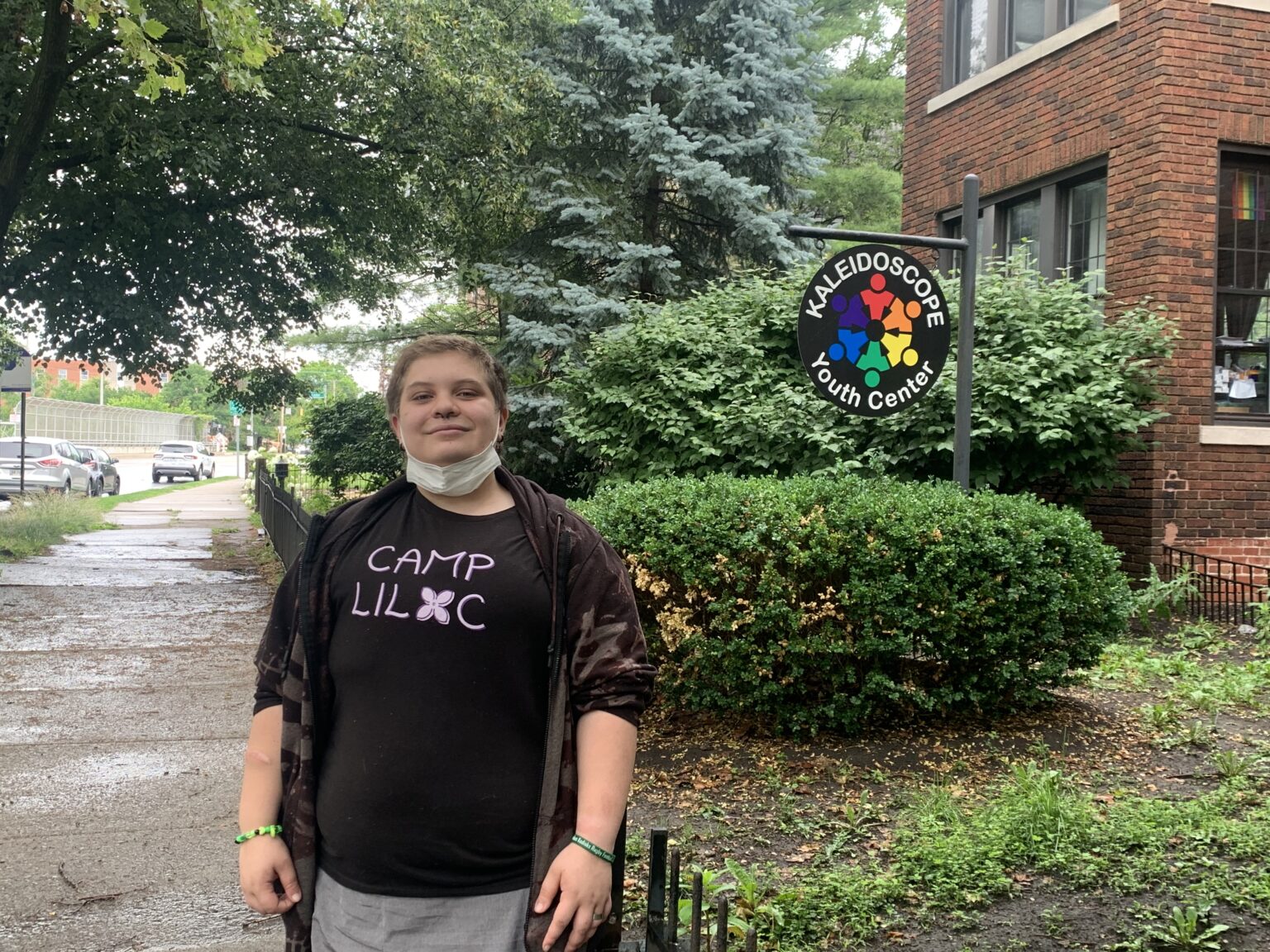
    Nathan Alvarez, 15, stands outside Kaleidoscope Youth Center on June 23. He is worried about a bill that would require K-12 schools and colleges to mandate that students could only use the bathroom or locker room that matches their sex assigned at birth. (Photo by Megan Henry, Ohio Capital Journal) Ohio Capital Journal talked to three transgender youths who are concerned about these bills and their potential implications.

    BY:  – Ohio Capital Journal

    Nathan Alvarez is used to people laughing or snickering at him when he uses the men’s bathroom.

    Despite that, the 15-year-old says his high school is one place he doesn’t have to worry about that happening because they have a couple of gender neutral bathrooms and anyone can use the men and women’s restroom.

    But a bill banning transgender students from being able to use the bathroom and locker room that aligns with their gender identity would change all that.

    State Reps. Beth Lear, R-Galena, and Adam Bird, R-New Richmond, recently introduced House Bill 183 which would require K-12 schools and colleges to mandate that students could only use the bathroom or locker room that matches their sex assigned at birth. HB 183 is still in House committee, awaiting sponsor testimony.

    “It would be hell (if the bill were to pass),” Alvarez said, who uses he/him pronouns. “Hearing about it disgusted me. Like it violently disgusted me.”

    HB 183 is one of a handful of anti-trans bills that have been introduced so far in the Ohio General Assembly.

    Doctors wouldn’t be able to give puberty blockers and hormone therapy to trans youth, trans athletes wouldn’t be able to participate in women’s sports, educators would be forced to out students to their parents and require public schools to give parental notification before teaching “sexuality content” if these various anti-trans bills pass through the Republican-controlled Ohio Statehouse.

    OCJ talked to three transgender youths who are concerned about these bills and their potential implications.

    “It’s an attack on all trans people,” said Ko Rupert, who uses she/it pronouns. “They are all uniquely bad, but their uniqueness is important.”

    And it’s not just happening in Ohio.

    There have been more than 220 bills introduced nationwide specifically targeting transgender and non-binary people, according to the Human Rights Campaign year-to-date snapshot from May 23.

    Fifteen laws have been enacted banning gender affirming care for transgender youth and four additional laws have been passed that censor school curriculum like books, according to HRC.

    “It’s very hard to see what’s been already happening in other states and how the bills that they are trying to pass here in Ohio are not even that different,” Jaylah Hollins, 19 said. “I feel like it’s not really in the interest of Ohioans, but only in the interest of anti-trans lobbyists from out of state.”

    House Bill 8

    Hollins is going to start attending Columbus State Community College this fall for social work and hopes to one day work for an organization that helps transgender people.

    “Hopefully if these bills don’t pass, we can try and make Ohio a place where it can be a refuge for trans kids and trans adults,” Hollins, said, who uses she/her pronouns. “Ensuring that trans kids have access to medical care and that adults have access to the facilities that align with their gender identity shouldn’t be politicized in the first place.”

     An advocate for the rights of trans children and their parents holds up a sign. Photo by Morgan Trau, WEWS. 

    While she said all the anti-trans bills are harmful, House Bill 8 stands out to her as the most damning.

    State Reps. D.J. Swearingen, R-Huron, and Sara Carruthers, R-Hamilton, introduced HB 8 which would require public schools to give parents a heads up before teaching “sexuality content” and school staff would have to out students to their parents. HB 8 recently passed the Ohio House.

    “I feel like they don’t see it as putting children in harm’s way when it most likely is because you can’t expect a parent to be able to deal with knowing that their child is within an LGBT umbrella and not have to try and resort to what they may not see at the time as harmful approaches to their child’s identity,” Hollins said.

    She said these bills would prevent children from learning more about themselves and make them feel as though they deserved to be punished because of how they identify.

    “It won’t allow children to be able to understand others who are maybe different from them,” Hollins said. “It will encourage isolation and I think the most devastating would be suicidal ideation, especially with trans and non-binaries who already know that they are coming from families who are unaccepting of those identities.”

    She’s said she’s still debating if she’ll stay in Ohio after college.

    “It’s still hard for me to think about, but for me, I think I would want to stay in Ohio and fight for trans youth,” Hollins said.

    Rupert, a 20-year-old Ohio State University graduate student, is also worried about HB 8 and the stripping away of youth rights.

    “Young people can make decisions, can know their bodies and understand and have a deep relationship with their gender and sexuality and romantic orientations,” Rupert said.

    Alvarez tries to speak out against the anti-trans bills when he gets the chance and even recently appeared on Good Morning America. But he’s not old enough to vote.

    “It’s upsetting to know that there are adults making choices for people to make choices about me. And I don’t have a choice,” Alvarez, of Reynoldsburg, said. “It’s scary.”

    He hopes to move out of Ohio one day and relocate to Washington.

    Anti-trans and anti-LGBTQ bills

    House Bill 68, also known as the  Save Adolescents from Experimentation Act (SAFE Act), would prevent doctors from giving puberty blockers and hormone therapy to trans youth. It would also ban physicians from performing gender reassignment surgery on a minor.

    Many opponents, however, have testified that no Ohio children’s hospital currently performs gender-affirming surgery on those under 18.

    House Bill 6 would prevent trans athletes from participating in Ohio women’s sports and was woven into HB 68, which recently passed the House and now awaits Senate committee consideration.

    Follow OCJ Reporter Megan Henry on Twitter.

    ______________________

    Megan Henry
    MEGAN HENRY

    Megan Henry is a reporter for the Ohio Capital Journal and has spent the past five years reporting in Ohio on various topics including education, healthcare, business and crime. She previously worked at The Columbus Dispatch, part of the USA Today Network.

    MORE FROM AUTHOR