Investment is a Part of the Housing Trust Fund and Will Help Create and Preserve Affordable Housing for Ohioans
Washington, D.C. – Today, U.S. Sen. Sherrod Brown (D-OH) – Chairman of the U.S. Senate Committee on Banking, Housing, and Urban Affairs – announced that the U.S. Department of Housing and Urban Development (HUD) has awarded Ohio $21,186,076 through the national Housing Trust Fund to help create and preserve safe, affordable housing for low-income households and families experiencing homelessness.
U.S. Sen. Sherrod Brown (D-OH) (provided photo)
“Even before the pandemic, one in four renters in Ohio were paying over half of their incomes on housing, leaving many to choose between buying groceries or paying rent,” said Brown. “This Housing Trust Fund grant will provide over $21 million to create and preserve affordable housing for Ohioans, and give more families a stable foundation for accessing healthcare, jobs, and educational opportunities.”
Ohio’s affordable housing providers can use the funds from this investment for property acquisition, site improvements and development hard costs, demolition, relocation assistance, financing costs, and operating cost assistance for rental housing. The funds will be allocated by the Ohio Housing Finance Agency.
Brown has been a longtime supporter of the Housing Trust Fund, which was created by the Housing and Economic Recovery Act of 2008 and is funded by contributions from Government Sponsored Enterprises (GSEs) Fannie Mae and Freddie Mac. However, after its creation, the Housing Trust Fund was not consistently funded as intended, but, in December 2014, at Brown’s request, the Federal Housing Finance Agency (FHFA) directed Fannie Mae and Freddie Mac to begin regular contributions.
And in 2019, following inexplicable delays in the release of these funds by the Trump Administration’s acting GSE regulator, Brown demanded that the Administration quickly disburse the funds so they can be used to create and preserve affordable housing.
Columbus, Ohio – As state lawmakers work on Ohio’s budget for fiscal years 2022 and 2023, there’s a grassroots call for the budget to reflect policies that protect and care for all Ohioans and communities.
The Ohio Organizing Collaborative and Policy Matters Ohio unveiled their “People’s Budget” on Tuesday, which the groups say will ensure the government is working for its people. (You can read the People’s Budget below)
Portage County Treasurer Brad Cromes joined the release, saying budgets are moral documents and should reflect that.
“For too long, we have been saying that the financial wellness of a very few is more important than the financial wellness of everybody in the state,” he said, “and that’s got to change if we’re ever going to start moving our state forward.”
The People’s Budget features seven demands: quality education, safe communities, economic dignity, care for caregivers, stability for families, a working health-care system, and a category known as “Funding Our Lives.” It’s an alternative to Gov. Mike DeWine’s budget proposal released in February.
Tia Ferguson shared her struggles working as a substitute teacher in Columbus without paid leave. After giving birth to a stillborn son, Ferguson said she had to return to work before she was emotionally ready. She contended that with economic stability, other aspects of life will fall into place.
“If your child care is funded, that’s a worry that you don’t have,” she said. “So, you can make sure that you’re taking the time to go back to school and get your education, so you can further your career. But if you don’t have that foundational piece set, then all the other aspects don’t even come into play.”
State Rep. Stephanie Howse, D-Cleveland, said a “people’s budget” is about paying attention and being flexible enough to make adjustments when people really need them. She said she thinks state leaders should take the lead in addressing the discrimination faced by people of color in education, health care, housing, and more.
“Declaring racism as a public health crisis is needed more now than any time, ever,” she said. “We could be on the forefront of what it really looks like to lift up racial equity and social justice.”
Specific provisions of the People’s Budget include tax code reforms, increased funding for education, and investments in housing, anti-hunger programs, and maternal health.
This story was produced in association with Media in the Public Interest and funded in part by the George Gund Foundation.
A budget that cares for all of us
The future of Ohio depends on a fair, equitable, and people-centered budget that cares for all of us — no exceptions.
We Ohioans believe in taking care of one other, no matter our skin color, our ability, or how much money we have. But for nearly two decades, our elected officials have passed a state budget that does not meet our needs or provide us with opportunities to thrive.
Instead, the wealthy few and corporations have hoarded wealth, lining their pockets at the expense of our schools, hospitals, and child care centers. That is why we are demanding a People’s Budget.
Our Seven Demands
1. Quality Education
For all Ohio students to thrive and pursue their dreams, regardless of how much money they have or what they look like.OUR DEMANDS
2. Safe Communities
For Ohio to be a place of freedom and justice for all, where our families can be whole and safe.OUR DEMANDS
3. Economic Dignity
For all Ohioans to have a home to make memories, see a doctor when we are sick, and put food on the table.OUR DEMANDS
4. Care for Caregivers
An Ohio that respects and lifts up BIPOC women and the people who care for our families.OUR DEMANDS
5. Stability For Our Families
For every Ohioan regardless of color or income to be cared for if and when they fall on hard times.OUR DEMANDS
6. A Working Health Care System
For all Ohioans to receive the very best care and see a doctor when we are sick, no exceptions.OUR DEMANDS
7. Funding Our Lives
An Ohio where everyone has the opportunity for a better life, no matter what we look like or how much money we have.OUR DEMANDS
Tell our elected state leaders why you support The People’s Budget
Hamilton County Job & Family Services has been working for several months with people from Cincinnati Children’s Hospital Medical Center and Cincinnati Public Schools on some new ways to bring attention to the stress a lot of families are feeling these days – and to some things everyone can do to help. The new campaign is called Safe and Sound @ Home Cincinnati.
Please take a look at these new public service announcement videos – there’s a 30-second version and a 60-secondone – and share them.
During a press conference announcing the collaboration, Interim Director Tim McCartney had this to say:
“Child abuse is already under-reported in normal times. During the shutdown, Children’s Services saw a 40% drop in calls about abuse and neglect. While reporting has increased since then, calls are still down from normal levels. Given the stress, anxiety and hardships surrounding the pandemic, we want to offer a collaborative approach to families by letting them know that we are here for them.”
To read more about the announcement, below is the text of a press release sent out announcing the work:
With the school year underway, parents are facing many challenges. It is natural for them to feel stress. Maintaining routines, having fun and using positive language can be helpful. For parents who start to feel anxious, taking a deep breath and talking to trusted family members or friends are great first steps. But if the situation becomes overwhelming, there are resources to help.
To better protect vulnerable children and families during the COVID-19 pandemic, Cincinnati Children’s Hospital Medical Center, Hamilton County Job & Family Services and Cincinnati Public Schools are collaborating on a new campaign called Safe and Sound @ Home Cincinnati. The goal is to raise awareness about parenting support and resources available to those in the community who may be struggling.
Support systems are available that can provide help with a variety of services, including food, medical assistance, childcare, housing, utilities, employment, cash and legal aid. However, experts have found some parents have difficulty asking for public benefits.
“Many people find themselves asking for help for the first time ever, and it can feel confusing and uncomfortable,” said Carley Riley, MD, attending physician in the division of Critical Care Medicine at Cincinnati Children’s. “There is no right or wrong way to feel when navigating your way through public assistance. We want to stress there’s no shame in asking for help. Taking care of your family is courageous. It shows strength and resilience.”
Resource guides on who to call for help have been available for the last several months at Cincinnati Public Schools food distribution sites. Public service announcements for Safe and Sound @ Home Cincinnati have also been released recently.
“This collaboration further solidifies the investment we all have in the health and well-being of children,” said Carrie Bunger, PhD, Director of Positive School Culture & Safety at Cincinnati Public Schools. “By working together to support vulnerable families, we can increase the community safety net—especially for those at risk during these challenging times.”
CCHMC also keeps a comprehensivelist of resources available for parents and children.
To better protect vulnerable children and families during the COVID-19 pandemic, Cincinnati Children’s, Hamilton County Job & Family Services and Cincinnati Public Schools are collaborating on a campaign called Safe and Sound @ Home Cincinnati. The goal is to raise awareness about parenting support and resources available to those in the community who may be struggling.
Child abuse and domestic violence are under-reported in normal times. During these stressful times, children and their caregivers are at greater risk.
There are places in the Cincinnati area that provide help with food or medical assistance, child care, housing and utilities, cash and employment and legal aid.
COVID-19 Sanity Guide: A guide full of practical and actionable ways to manage your sanity during the COVID-19 pandemic.
CDC: Mental Health and Coping: Guidelines from the CDC for managing your mental health and engaging in positive coping strategies during the COVID-19 pandemic.
Keeping Your Distance to Stay Safe: A guide from the American Psychological Association (APA) to engaging in physical distancing during the COVID-19 pandemic.
Coping with Stressful News: Seven crucial research findings that can help people deal with COVID-19, from the American Psychological Association, a translation of psychological science on coping with stressful news, and how that can help people to deal with COVID-19.
Sleep Hygiene: Tips and tricks for getting quality sleep from the Centre for Clinical Interventions.
Taking Care of Your Mental Health: Coping with Anxiety & Depression
Clients can schedule an appointment to receive Narcan via a drive-through service.
Hamilton County, Ohio – Before COVID-19 commanded the lion’s share of headlines, Hamilton County Public Health (HCPH) was in the midst of another battle — fighting the disease of addiction.
“We have made some modifications to our program to ensure the health and safety of our clients and our harm reduction team.”
“We certainly haven’t lost sight of those struggling with addiction,” says Greg Kesterman, interim health commissioner at Hamilton County Public Health. “But we have made some modifications to our program to ensure the health and safety of our clients and our harm reduction team.”
Syringe services are now available only through an appointment. Clients will receive a one-month supply of all items offered through the service. Clients can schedule appoints by phone, text, e-mail or through Facebook. Call or text 513-316-7725; log onto Facebook: @hc.xchange; or e-mail ExchangeProject@hamilton-co.org.
These calls will help clients find healthcare, housing, food or other needed resources.
In addition to syringe and other exchange service items, the HCPH team implemented a text service for its clients with alerts and messages covering a number of health and safety issues. The team is also reaching out through clients’ preferred communication mediums to check in during the stay-at-home order. These calls will help clients find healthcare, housing, food or other needed resources.
The HCPH Harm Reduction team is also continuing its distribution of Narcan®.
The HCPH Harm Reduction team is also continuing its distribution of Narcan®, the overdose-reversing drug. Clients can schedule an appointment to receive Narcan via a drive-through service. To schedule an appointment, call or text 513-946-7676; log on to Facebook: facebook.com/hc.narcan; or e-mail narcan@hamilton-co.org.
The HCPH team is also working closely with the Hamilton County Justice Center to ensure inmates released from incarceration have the appropriate resources. Each inmate will receive resource information in their property bags upon release. Finally, addiction treatment providers are operating during the COVID-19 pandemic. The HCPH team is available to help clients navigate the referral process to enter treatment.
“These are difficult times for all of us, but certainly for those with additional medical challenges,” Kesterman adds. “Even though we are all working to comply with stay-at-home requirements, our clients’ needs don’t go away. That’s what we’re here for.”
Persons experiencing homelessness cannot be punished for sleeping outside on public property in the absence of adequate alternatives.
Cincinnati, Ohio – This morning, the U.S. Supreme Court denied a petition by the city of Boise to review the case Martin v. Boise (formerly Bell v. Boise). This leaves in place earlier rulings by the 9th Circuit that persons experiencing homelessness cannot be punished for sleeping outside on public property in the absence of adequate alternatives.
The Supreme Court’s decision, issued without comment, means the April 2019 ruling is binding in the 9th Circuit, covering nine states including most of the western states, and carries national influence.
In a press release issued today, Josh Spring, Executive Director of the Greater Cincinnati Homeless Coalition said, “This is very important news, as our federal lawsuit filed last year by people experiencing homelessness and the Homeless Coalition continues to move forward here in the 6th Circuit.” Their lawsuit aims to overturn City of Cincinnati policies criminalizing people experiencing homelessness outdoors and hopes to squash last year’s Common Pleas Court order making it an arrestable offense to experience homelessness outdoors anywhere in the Hamilton County including Loveland.
The Law Center’s Executive Director, Maria Foscarinis, said, “Ultimately, our goal is to end homelessness through housing…so that no one has to sleep on the streets in the first place. We hope that the 9th Circuit decision will help communities find the political will to put that housing in place. Housing, not handcuffs, is what ends homelessness.”
John Parvensky, Acting Executive Director of the National Coalition for the Homeless described this as a “victory”, saying, “…it will force communities to address homelessness proactively – through the development of an adequate supply of affordable housing, while providing safe and appropriate emergency shelter in the interim”.
Symmes Township, Ohio – Affordable housing is the number one issue for people experiencing homelessness. The search for safe and quality housing is a tremendous stress to low income working families right here in our city.
This fact is one which has compelled over 200 CHCA students, faculty, staff, and parents (led by 23 student leaders) to partner with Help Build Hope to build the walls of a new house, using only a hammer and nails, in CHCA’s school parking lot. The build took place on April 11, from 8 AM – 3:30 PM at 8283 East Kemper Road in Symmes Township. The home was then loaded onto a flatbed by students the next day, and was then transported to Walnut Hills that afternoon. The house was sold to a low income family in urban Cincinnati through the non-profit, Discover Jubilee.
Throughout this process, the student leadership team planned for food, social media, music, and leading teams of 5-8 of their peers to build the walls. Classrooms were also engaged by discussing affordable housing and poverty issues.
Karen Hordinski said, “We were incredibly excited to help end the cycle of poverty and provide a home for a low income working family in Cincinnati!”
CHCA’s Student Organized Service (SOS) Director Karen Hordinski said, “We were incredibly excited to help end the cycle of poverty and provide a home for a low income working family in Cincinnati!”
This event was all made possible by CHCA’s Teacher Innovation Fund, an initiative that empowers teachers to inspire innovation and engagement among students. Teachers are moving from the role of mostly delivering content to facilitators of engagement, creativity, collaboration, problem solving, and enlightenment. At CHCA, teachers are embracing this shift and the Teacher Innovation Fund is serving as an accelerator.

















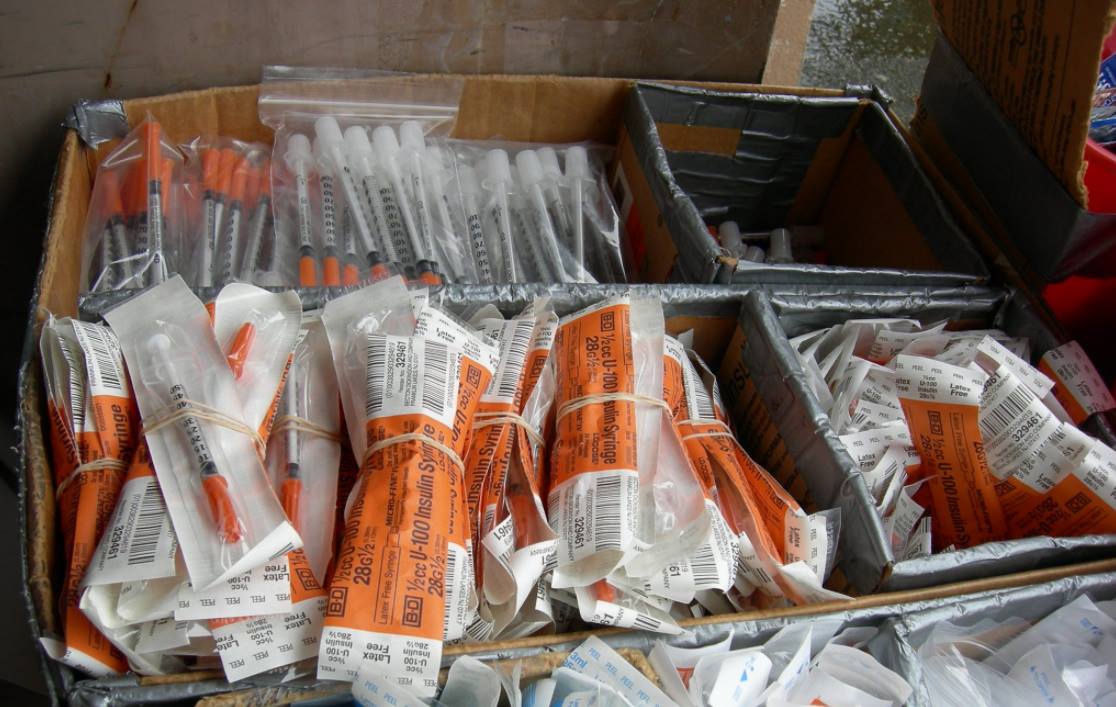 Syringe services are now available only through an appointment. Clients will receive a one-month supply of all items offered through the service. Clients can schedule appoints by phone, text, e-mail or through Facebook. Call or text 513-316-7725; log onto Facebook: @hc.xchange; or e-mail
  The HCPH Harm Reduction team is also continuing its distribution of Narcan®, the overdose-reversing drug. Clients can schedule an appointment to receive Narcan via a drive-through service. To schedule an appointment, call or text 513-946-7676; log on to Facebook: