Tag: hunger

  • Groups fighting hunger in Ohio disappointed by Senate budget draft

    Groups fighting hunger in Ohio disappointed by Senate budget draft

    BY:  OHIO CAPITAL JOURNAL

    Those on the ground trying to eradicate hunger in Ohio say the new budget proposal from the state Senate would only exacerbate the problem.

    After finding out that many of Ohio’s foodbank clients are forced to choose between paying for food and things like utilities and medicine, the Ohio Association of Foodbanks urged the state legislature to include increased funding to the Ohio Food Program and Agricultural Clearance Program (OFPACP), along with hopes that the federal government would make positive changes to the Supplemental Nutrition Assistance Program.

    “Clearly (the study’s) findings had the reverse impact on the Senate Republicans,” OAF executive director Lisa Hamler-Fugitt, told the OCJ. “If enacted, (the Senate’s budget proposal) will make hunger, insecurity, and poverty worse than it is now.”

    The Ohio Senate’s version of the budget, headed to the chamber’s finance committee, would reduce the OFPACP funding and added a request for the Department of Medicaid to establish work reporting requirements for Medicaid.

    The House version of House Bill 33, the official title of the budget bill, included $15 million per year for the next two years to the food and agricultural clearance program, and created free-lunch eligibility for any student who qualified for the reduced lunch program as well.

    Neither of those are included in the Senate version.

    “Eliminating increased funding to help workers, families, older adults, disabled Ohioans and marginalized people put food on the table, when the state of Ohio has incredible resources at its disposal, is cruel and short-sighted,” the OAF said in a statement.

    The Hunger Network in Ohio disparaged the GOP version of the budget for cutting funding not only to the hunger efforts, but also to K-12 education and free and reduced lunches in schools.

    “We cannot continue to balance our budget on the backs of hardworking and hungry Ohioans,” said Nick Bates, director of the network. “This proposal will leave Ohioans hungry, our schools under-resourced, and families without the resources to get ahead.”

    According to Hamler-Fugitt, the association of foodbanks provided take-home groceries to more than 3 million state residents in the last quarter, over 30% more than the same time last year.

    In the research study by the OAF, two in three Ohio households who come to the foodbanks have had to cut the size of meals or skip meals due to a lack of money, which could be attributed to rising food costs and a reduction in SNAP monies boosted during the pandemic.

    The association study also found that only 5% of SNAP participants’ benefits lasted a full month since the end of the pandemic-expanded program, which stopped in March.

    Ending the program resulted in a monthly loss of about $90 per person on average, according to the OAF.

    The Senate Finance Committee will hold hearings on the budget and conduct a floor vote on the bill. The deadline for passage is the end of June.


    Susan Tebben
    SUSAN TEBBEN

    Susan Tebben is an award-winning journalist with a decade of experience covering Ohio news, including courts and crime, Appalachian social issues, government, education, diversity and culture. She has worked for The Newark Advocate, The Glasgow (KY) Daily Times, The Athens Messenger, and WOUB Public Media. She has also had work featured on National Public Radio.

    MORE FROM AUTHOR

  • After the end of COVID-era benefits, 70k older Ohioans struggle to fight hunger

    After the end of COVID-era benefits, 70k older Ohioans struggle to fight hunger

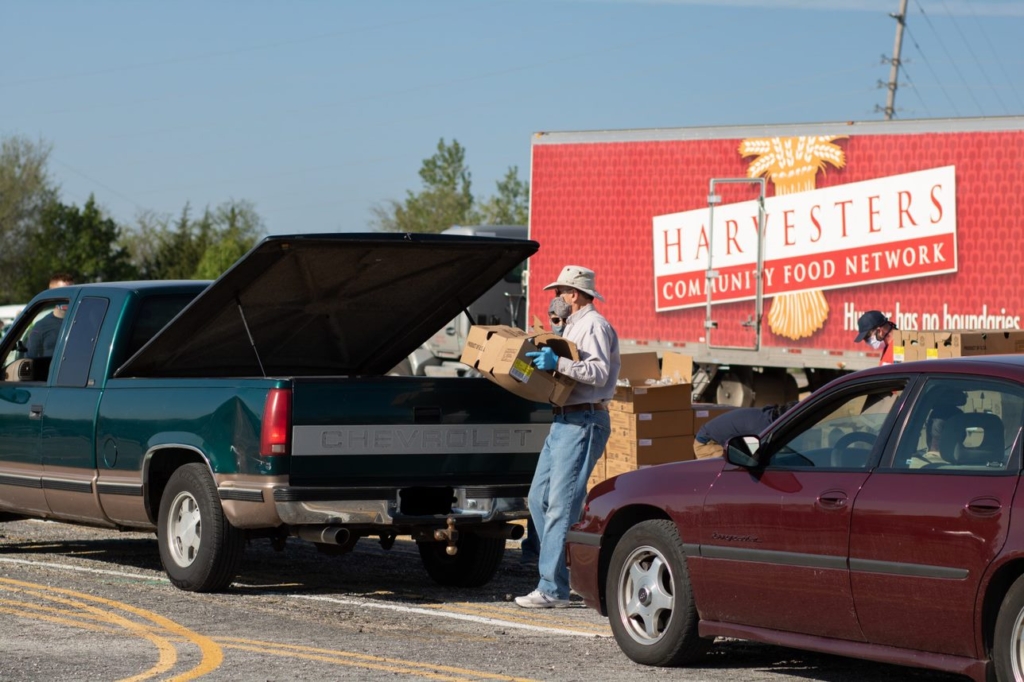
    Throughout the pandemic, families have turned to food banks for help. Harvesters, a private food bank, saw the amount of food distributed increase from 54 million pounds in 2019 to 65 million in 2020. In this picture, food is distributed at a drive-in in Kansas City, Kansas. (Harvesters — The Community Food Network).

    BY:  Ohio Capital Journal

    After Congress ended pandemic food assistance in February, 70,000 older Ohioans have seen food benefits slashed to $23 a month, in some cases down from $280.

    That has many making excruciating choices between food, medicine and utilities like electricity and gas, Lisa Hamler-Fugitt, executive director of the Ohio Association of Foodbanks, said Wednesday.

    And while it’s dire for anybody to live in hunger, that’s especially true the older you are, she said, because insufficient nutrition exacerbates conditions such as diabetes and depression and can take away seniors’ ability to live on their own. The end of COVID-era enhancements to benefits under the Supplemental Nutrition Assistance Program — or SNAP — has added to the already increasing number of older Ohioans seeking help at Ohio’s groaning food pantries, Hamler-Fugitt said.

    “They’re the canaries in the hunger coal mine,” she said, explaining that because most older Ohioans live on fixed incomes, they can’t earn their way out of food insecurity. “When they join the food line, they’re not leaving until they go into the nursing home or they pass away.”

    To help low-income people deal with the economic shocks from the coronavirus epidemic, Congress and the Trump administration in 2020 enhanced benefits under SNAP, the program formerly known as food stamps, and it eased eligibility to include households with somewhat higher incomes. And by literally putting food on the table, it had a big effect on poverty, the Center on Budget and Policy Priorities reported.

    “The temporary benefits pushed back against hunger and hardship during COVID,” the report said. “A study estimated that (enhanced allotments) kept 4.2 million people above the poverty line in the last quarter of 2021, reducing poverty by 10 percent — and child poverty by 14 percent — in states with (enhanced allotments) at the time. The estimated reduction in poverty rates due to (enhanced allotments) was highest for Black and Latino people.”

    But last December, Congress and the Biden administration decided to end the enhancements effective in February.

    “This change was made as part of a bipartisan compromise that created a permanent Summer Electronic Benefit Transfer (EBT) program to provide grocery benefits to replace school meals for some 30 million children in low-income families when schools are closed in the summer — a time when families with school-aged children are at higher risk for food insecurity,” the Center on Budget and Policy Priorities reported.

    Hamler-Fugitt said that in Ohio, the group over 60 was particularly hard hit in part because it’s an aging state. It has the 18th-highest percentage of residents over 65, for example.

    In some cases, seniors don’t have support systems and some are even supporting others, such as grandchildren and great-grandchildren. And the older one becomes, the more health complaints accumulate, often making it impossible to perform many of the jobs that are available.

    Hamler-Fugitt said her agency has been hearing about the real-life consequences of cutting back food benefits to older Ohioans.

    “You just can’t even believe these horror stories,” she said. “We’re interviewing them now about what their coping strategies are and it’s really, really scary. Before they had about $2 a meal — that was a best-case scenario. Now it’s 75 cents a day. That’s 25 cents a meal.”

    She explained that the permanent fix to the problem is at the federal level, where providing the U.S. Department of Agriculture with more resources could make the enhanced benefits permanent.

    But over the short term, advocates for the poor are asking the Ohio General Assembly to pony up $21 million for each of the next two years to ensure that every eligible Ohio household has at least a $50 monthly SNAP benefit.

    “The economic consequences of this for an aging state like Ohio are just huge,” Hamler Fugitt said.

    _____________________________

    MARTY SCHLADEN

    Marty Schladen has been a reporter for decades, working in Indiana, Texas and other places before returning to his native Ohio to work at The Columbus Dispatch in 2017. He’s won state and national journalism awards for investigations into utility regulation, public corruption, the environment, prescription drug spending and other matters.

    MORE FROM AUTHOR

  • Donations are down at our food pantry – Please help now

    Donations are down at our food pantry – Please help now

    Donations are going down at our L.I.F.E. Food Pantry at this time of year – please help support those in our community that need assistance through the rough patches.

    • Beef Stew

    • Canned Chili

    • Instant Hot Cocoa

    • Cooking oil

    • Ensure/boost

    • Jello/pudding boxes

    • Pasta

    • Refried beans

    • Rice-a-Roni (rice side dishes)

    • Sugar White

    • Canned tomatoes

    • Spaghetti Sauce

    • Pineapple

    • Coffee

    • Apple Juice

    • Cereal

    • Laundry Detergent

    FOOD PANTRY HOURS 
    SUNDAY: Closed
    MONDAY: Closed
    TUESDAY: 10 AM – Noon & 4 PM – 6:30 PM
    WEDNESDAY: 10 AM – Noon
    THURSDAY 10 AM –Noon & 4 PM – 6:30 PM
    FRIDAY: 10 AM – Noon
    SATURDAY: 10 AM – Noon

    541 Loveland-Madeira Road, Loveland, Ohio 45140
    (513) 583-8222

    WEB SITE

  • Food pantry needs – now that the holidays are over

    Food pantry needs – now that the holidays are over

    Loveland, Ohio – Here is a list of the LIFE Food Pantry needs – now that the holidays are over – donations will drop off but need will rise.

    Thank you for supporting the pantry!

    Spaghetti Sauce

    Canned/Jarred applesauce

    Canned Mandarin Oranges

    Hamburger Helper

    Ensure

    Salad Dressing

    BBQ Sauce

    Crackers

    White Sugar

    Bisquick

    Kleenex

    Hand held can openers — easy to turn for our Seniors!

    LIFE is a faith and community supported organization that provides food, financial assistance and programs to those experiencing hardship in the greater Loveland area.

  • DeWine, state leaders announce $430M in coronavirus relief

    DeWine, state leaders announce $430M in coronavirus relief

    Marty Schladen

    Marty Schladen has been a reporter for decades, working in Indiana, Texas and other places before returning to his native Ohio to work at The Columbus Dispatch in 2017. He’s won state and national journalism awards for investigations into utility regulation, public corruption, the environment, prescription drug spending and other matters.

    Ohio Gov. Mike DeWine and the state’s legislative leaders on Friday announced how they’d allocate almost half of what the state has left in federal coronavirus-relief dollars.

    The state has about $1 billion unexpended from its share of the $2.2 trillion CARES Act that Congress passed in March. At least until the feds change the rules, the funds have to be spent by Dec. 31.

    Social-service groups that deal with issues of homelessness and hunger have been clamoring for months for a share of the money, as have business groups and others. So it’s been up to DeWine and the legislature to decide what to do with the money while Congress appears stymied over further coronavirus relief.

    “We tried to look at what the needs were and what had already been put out,” DeWine said during a remote press conference. “We don’t know whether Congress will pass another bill or not.”

    The state is holding about half of the funds for coronavirus testing and contact tracing and other needs while it awaits a possible second round of relief — which may or may not include assistance to state and local governments.

    The expenditures announced Friday include:

    • $50 million for mortgage and rental assistance to families making 200% or less of the federal poverty level 
    • $125 million for businesses with up to 25 employees
    • $37.5 million for restaurants and bars
    • $100 million for colleges and universities to do testing, contact tracing and provide mental-health services
    • $62 million for rural and critical-access hospitals
    • $25 million for non-profits providing services such a food banks, homeless shelters and other social services
    • $20 million for the arts

    A good deal more of the money was focused on businesses than on assisting individuals who are suffering most. But several in Friday’s press conference said they hope by helping small businesses keep their doors open, people will be able to get or keep jobs.

    “We know some businesses are barely making it,” Lt. Gov. Jon Husted said of that portion of the package. “This is focused on them.”

    For their part, some leaders of social-service organizations said they were grateful for the help they will receive.

    “We’re pleased that Gov. DeWine finally deployed federal coronavirus relief funds to help people avoid getting evicted during this pandemic,” Bill Faith, executive director of the Coalition on Housing and Homelessness in Ohio, said in a written statement. “And we appreciate (Ohio) Controlling Board members’ support, especially Sen. (Matt) Dolan (R-Chagrin Falls) and Sen. (Jay) Hottinger (R-Newark) who took a personal interest in keeping struggling Ohioans safely in their homes. We look forward to seeing details on how the program will be implemented. Given the Dec. 31 deadline to use these funds, we would welcome the governor’s assistance in advocating for Congress to provide additional rental assistance into 2021.”

    The Ohio Poverty Law Center also released a statement praising state leaders for their action. But it warned that it won’t be enough.

    “As Ohioans continue to experience job and income loss due to the pandemic, additional federal and state resources will be needed to prevent evictions and keep Ohioans safe, especially as we get closer to the expiration of the Centers for Disease Control and Prevention’s eviction moratorium,” it said. “We hope housing assistance will be among the highest priorities for resources in the coming weeks and months.”

  • Ohio Department of Education looking for local nonprofit agencies that will help them feed hungry children this summer

    Ohio Department of Education looking for local nonprofit agencies that will help them feed hungry children this summer

    Free meals are provided at schools, colleges and universities, nonprofit organizations, parks, camps, community centers, swimming pools, libraries, low-income housing complexes and more.

    With the help of numerous sponsoring agencies and stakeholders, the Summer Food Service Program works to feed thousands of children in Ohio. Since 2014, Ohio has increased participation in the program by 10 percent.

    Despite these numbers, many Ohio parents and caregivers are forced to make difficult decisions daily to provide for their families. In many cases, this leaves Ohio’s most vulnerable citizens, our children and youth, struggling with hunger daily.

    This year, the Department wants to increase participation in summer meal programs and is actively seeking local nonprofit agencies to participate as sponsors or sites by providing free meals to children.


    “The need for healthy meals doesn’t stop when school breaks for the summer,” said Paolo DeMaria, superintendent of public instruction. “The Summer Food Service Program helps provide children with nourishment to make sure summer can be a time for continued learning and fun. Instead of worrying about where their next meals will come from, our students can enjoy activities like reading, sports, playing outdoors and the growing that happens during the summer months.”

    Free meals are provided at schools, colleges and universities, nonprofit organizations, parks, camps, community centers, swimming pools, libraries, low-income housing complexes and more.

    Sponsoring organizations receive reimbursement to cover the costs of providing nutritious meals and snacks to children in eligible areas.

    Sponsoring organizations receive reimbursement to cover the costs of providing nutritious meals and snacks to children in eligible areas. Nonprofit organizations offering summer activities for children living in low-income areas also are encouraged to apply.

    Expansion of the program is particularly needed in southern Ohio counties, where families struggle with food insecurity, as well as in rural communities and areas where migrant families reside.

    The Summer Food Service Program ensures that children ages 1-18 continue to receive nutritious meals during the summer break from school, when they do not have access to school breakfast or lunch. Children with disabilities and approved individualized education programs may participate through age 21.

    A sponsoring organization must be:

    • A public or nonprofit private school;
    • A public or nonprofit private residential summer camp;
    • A unit of local, municipal, county or state government;
    • A public or nonprofit college or university; or
    • A private nonprofit organization.

    The Summer Food Service Program is funded by the U.S. Department of Agriculture and administered by the Ohio Department of Education.

    Any organization interested in becoming a sponsor or site should complete the potential sponsor survey no later than Friday, March 2.