

Tag: IEU-Ohio

  • Ohio indictments provide a better picture of squalid relationships that spurred massive scandal

    Ohio indictments provide a better picture of squalid relationships that spurred massive scandal

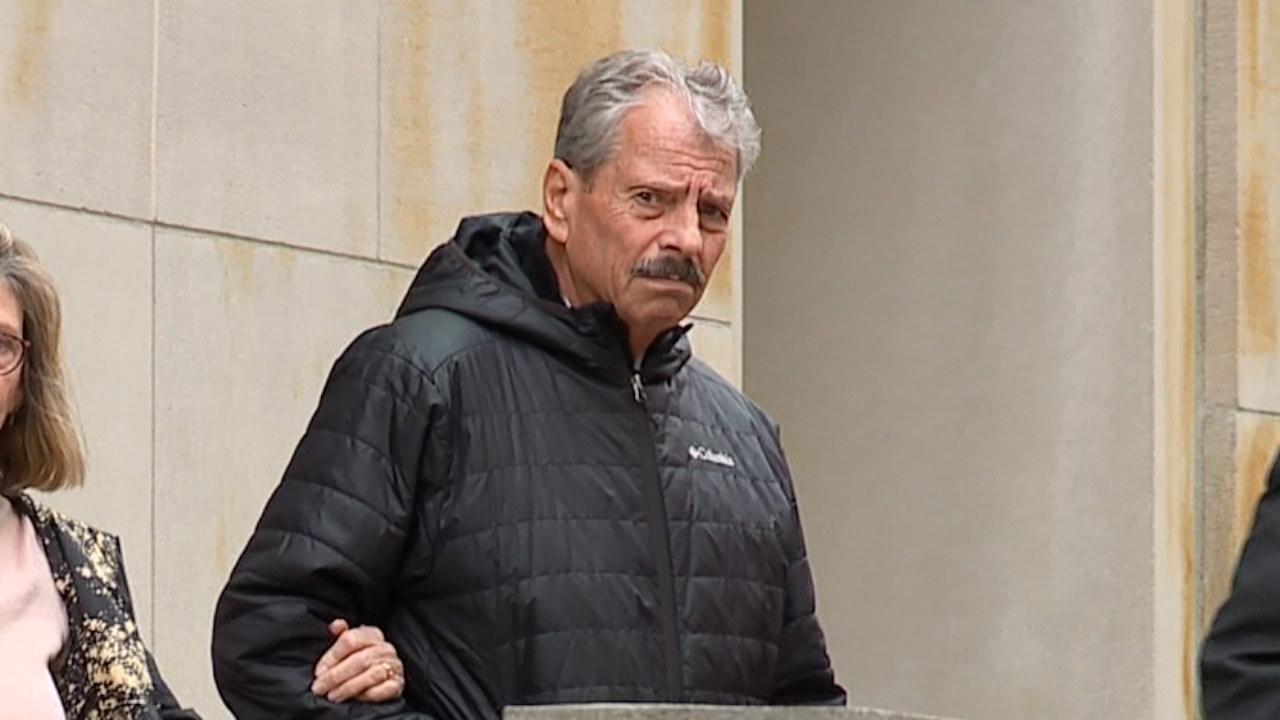
    Former Public Utilities of Ohio Chair Sam Randazzo at court. (Photo by WEWS.)

    BY:  Ohio Capital Journal

    An Ohio grand jury has handed up a 44-count indictment against three players in what is likely the biggest bribery scandal in state history. And when the 50-page indictment was unveiled Monday, it provided new details about a decade of payoffs and conflicts as one of them — who became the state’s top regulator — allegedly did a huge electric utility’s bidding.

    The indictment concerns a $1.3 billion dollar bailout that Akron-based FirstEnergy has already admitted to the federal government that it paid more than $60 million in bribes to purchase.

    Former Ohio House Speaker Larry Householder, R-Glenford, and former state GOP Chairman Matt Borges are serving federal prison sentences for their roles in the 2019 passage of the bailout and the dirty-but-succesful fight to thwart a voter-led repeal.

    When federal prosecutors in 2021 charged those two and three others, they said their investigation continued. But it wasn’t until December that they charged another in the case — Sam Randazzo, a lawyer and longtime energy consultant whom Gov. Mike DeWine nominated to chair the state’s top regulator, the Public Utilities Commission of Ohio.

    That left the people who paid the alleged bribes — FirstEnergy’s top executives — uncharged in a scheme that took place more than four years ago.

    Double dealing

    All that changed Monday when Ohio Attorney General Dave Yost announced state charges against Randazzo and former First Energy CEO Chuck Jones and former Vice President Michael Dowling for their alleged roles in the criminal conspiracy. The three were arraigned in Akron on Tuesday and each pleaded not guilty.

    They were charged in an indictment that alleged shady dealings between the them stretching back 13 years.

    “It all began with a well-lawyered theft in 2010,” the indictment said.

    It went on to describe how Randazzo was general counsel for a group of large FirstEnergy customers — the Industrial Energy Users of Ohio — while also working as a FirstEnergy consultant. Only, the Industrial Energy Users didn’t know that Randazzo was also being paid by the company they were paying him to fight, the indictment said.

    It accuses Randazzo of settling the industries’ claims against FirstEnergy on terms acceptable to FirstEnergy and running the settlements through Randazzo-controlled shell companies where he took a skim — again, unknown to the industrial energy users.

    “His clients, the industrial members of IEU-Ohio, did not know he was a consultant for FirstEnergy,” the indictment said. “Randazzo did not tell them. Years later, some of the money would make its way to IEU-Ohio. Some of it would end up in Randazzo’s pocket.”

    The Industrial Energy Users appear to have engaged in some cynical conduct of their own, however. The indictment describes a 2015 agreement in which FirstEnergy was to pay Randazzo’s company $8.5 million for “consulting services.”

    It was really a cash “side deal” in which FirstEnergy paid the industrial users to drop their objections to a rate hike FirstEnergy wanted, supposedly in the name of “energy security,” the indictment said. In other words, prosecutors said that with Randazzo’s facilitation, FirstEnergy paid off a wealthy, powerful group of electricity users in order to raise rates on everybody else.

    Such arrangements proved quite profitable for Randazzo.

    “Between 2016 and 2019, FirstEnergy paid… $13,152,639.94 to Randazzo’s two shell companies,” the indictment said. “Of that total, Randazzo gave $7,756.903.84 to his IEU-Ohio Client and kept $5,395,736.10 for himself.”

    Cozy relationships

    This is the guy the incoming DeWine-Husted administration thought would be a good candidate to regulate utilities — companies to which Ohioans have little choice in paying their billions.

    The state indictment describes how, on Dec. 18, 2018, FirstEnergy execs Jones and Dowling met with Gov.-elect DeWine and Lt. Gov.-elect Jon Husted at the Columbus Athletic Club and discussed whether the executives wanted Randazzo to regulate their massive electric utility.

    The notion that a governor would ask a huge utility who might be acceptable as a regulator might itself seem startling. But after the dinner, according to the indictment, Jones and Dowling did something even more brazen.

    They went to Randazzo’s German Village condo and pursuant to that, Randazzo solicited a $4.3 million payment from Jones and Dowling, the indictment said. FirstEnergy paid the money “without ever having received an invoice for the payment and without any work or consulting services being performed,” the indictment said. It added that the executives made the payment over the objections of a company lawyer.

    Randazzo told Laurel Dawson, DeWine’s chief of staff, about the payment, calling it a “consulting agreement.” But he didn’t tell her of the other millions he’d gotten from the utility he was seeking to regulate, the indictment said. Randazzo also never told the Ohio Ethics Commission about any of the money he’d gotten from FirstEnergy, the indictment said.

    In Dawson, Randazzo might have had a sympathetic audience. Her husband, Michael Dawson, was a “paid FirstEnergy lobbyist” in 2016, when he’d gotten a $10,000 loan from Randazzo, the indictment said.

    But if his chief of staff told DeWine about the huge payoff Randazzo got from FirstEnergy, it must not have fazed the new governor. DeWine nominated Randazzo to be chairman of the Public Utilities Commission — the ratepayers’ supposed protector — on Feb. 4, 2019.

    Versatile player

    During Householder’s six-week trial in Cincinnati last year, federal prosecutors put on exhaustive evidence of how the FirstEnergy executives financed Householder’s bid to become speaker and to pass the notorious bailout known as House Bill 6.

    “Together, Jones, Dowling, Randazzo and his shell companies worked in concert to steal the power of government and bend it to the will of FirstEnergy,” was the way the state indictment unveiled on Monday put it.

    Most of the details of Randazzo’s involvement in the creation and passage of HB 6 are already known from the federal trial. They show him acting in multiple, conflicting, often-undisclosed capacities — similar to those the state indictment alleges he had already played with FirstEnergy and the industrial energy users.

    Even though he was supposed to be a regulator, Randazzo drafted portions of the bailout legislation and passed them between FirstEnergy officials and a Householder employee who had recently worked for the PUCO. They sometimes only shared printed copies of the huge bill, out of an apparent apprehension about leaving electronic fingerprints.

    According to text messages between Jones and Dowling, Randazzo went so far as to actively lobby for passage of the bailout — which would seem a big departure from the traditional duties of a disinterested regulator.

    Jones and Dowling discussed a meeting about HB 6 that Randazzo had with Sen. Steve Wilson, R-Maineville, and the Senate’s counsel. “We have a good plan to help,” Dowling told his boss.

    Other officials

    Despite the fact that DeWine had reason to know Randazzo was connected to FirstEnergy, the governor made him the state’s top utility regulator and he signed the billion-dollar bailout that benefitted the company the day it passed. And on July 21, 2021 — the day Householder was arrested — DeWine said he wasn’t in favor of repealing the measure.

    The governor subsequently walked that back, but HB 6 is still on the books and Ohio utilities are still getting hundreds of millions in ratepayer subsidies as a result.

    DeWine wasn’t the only state official to act at least peripherally in the scandal.

    Secretary of State Frank LaRose has refused to explain the “private” updates that FirstEnergy CEO Jones said the state’s chief elections official was providing during an attempt to gather signatures to put an HB 6 repeal on the ballot.

    And Yost himself dealt a mortal blow to the signature gathering when he initially rejected the ballot language — cutting nearly in half the time HB 6 opponents had to gather a quarter-million valid signatures. And in text messages presented in the federal trial, Borges told a co-conspirator that Yost thought HB 6 was a bad law, but wouldn’t speak up because of help he’d gotten from FirstEnergy in the past.

    Beyond the bailout

    Randazzo’s alleged help to FirstEnergy wasn’t limited to HB 6. He also thwarted a PUCO look into the company’s books that was likely to force a cut in electricity bills. That would have caused falling stock prices and a hit to Jones’ and Dowling’s portfolios, the indictment said.

    The erstwhile regulator was apparently so helpful that Jones at one point told a FirstEnergy subordinate to back off for fear of being too obvious. In a text message included in the indictment, Jones told Dennis Chack that Randazzo’s pro-FirstEnergy conduct “has a lot of talk going on in the halls of PUCO about does he work there or for us?”

    Even so, Randazzo’s behavior at the PUCO continued to be shameless, urging fellow regulators to join him in lobbying for the corrupt bailout, the indictment said.

    Randazzo “began internally lobbying PUCO staff members between July 2020 and September 2020 to generate strategies to save HB 6, despite facing internal objections about the inappropriateness of the effort to save HB 6,” it said.

    The indictment included a Sept. 15, 2020 email in which Randazzo told subordinates, “One option (and I really think we need to get other commissioners and staff into a proactive mode): We could, on our own initiative, issue a show-cause order to (FirstEnergy) directing (FirstEnergy) to show that no costs associated with HB 6 have been included in any riders or base rates.”

    Had such an order been issued, the result would have been misleading. While the bill didn’t raise consumer costs through riders or base rates, it included a provision that ensured FirstEnergy would collect at least as much as it did in one of its best years and it created a massive subsidy for money-losing coal plants.

    Randazzo’s efforts seemed finally to end two months later, when the FBI searched his condo.


    Marty Schladen
    MARTY SCHLADEN

    Marty Schladen has been a reporter for decades, working in Indiana, Texas and other places before returning to his native Ohio to work at The Columbus Dispatch in 2017. He’s won state and national journalism awards for investigations into utility regulation, public corruption, the environment, prescription drug spending and other matters.

    MORE FROM AUTHOR


  • [BREAKING] Ex-First Energy executives, Ohio utility regulator charged by state in bailout and bribery scandal

    [BREAKING] Ex-First Energy executives, Ohio utility regulator charged by state in bailout and bribery scandal

    From left to right: Former PUCO Chair Sam Randazzo, former FirstEnergy CEO Chuck Jones, former FirstEnergy VP Michael Dowling. (Mugshots from the Summit County Sheriff’s Office. Graphic by WEWS.)

    BY:  AND  Ohio Capital Journal

    Ohio law enforcement authorities on Monday filed numerous felony charges against two former First Energy executives and a former top utility regulator in what has been called the biggest bribery and money-laundering scandal in Ohio history.

    Ohio Attorney General Dave Yost announced scores of felony charges against a former regulator who also has been charged federally, and against two people who haven’t — former top executives for Akron-based FirstEnergy whom the company admitted paid more than $60 million in bribes between 2016 and 2020 in exchange for a $1.3 billion ratepayer bailout.

    Charged were Sam Randazzo, former chairman of the Public Utilities Commission. Already facing felony charges in federal court, the state indictment charges him with 22 more, including grand theft, bribery, and money laundering. The indictment accuses him of taking bribes from FirstEnergy from 2010 until just before he became chairman of the commission in 2019.

    Also charged were former FirstEnergy CEO Chuck Jones and Vice President Michael Dowling. Between them, they face 22 felony charges similar to those faced by Randazzo.

    “This indictment is about more than one piece of legislation,” Yost said Monday. “It is about the hostile capture of a significant portion of Ohio’s state government by deception, betrayal, and dishonesty.”

    The state charges that were announced Monday didn’t deal with much of the activity addressed in the federal case. They instead focused on the relationship between Jones, Dowling, and Randazzo between 2010 and early 2019, when they paid him $4.33 million just as he was becoming the state’s top utility regulator.

    The House Bill 6 scandal

    Back in 2019, former Ohio House Speaker Larry Householder took $61 million in bribes in exchange for legislation to give FirstEnergy a $1 billion bailout, named House Bill 6, all at the expense of the ratepayers.

    The scheme was revealed in three main ways — two separate whistleblowers and a phone wiretap.

    In March 2023, a jury found Householder and former Ohio Republican Party leader Matt Borges guilty beyond a reasonable doubt for their involvement in the racketeering scheme that left four men guilty and another dead by suicide.

    In late June that year, federal judge Timothy Black sentenced Householder to 20 years in prison. Borges got 5 years. The two surviving defendants took plea agreements early on, helping the FBI, and are still awaiting their sentencing. The feds are asking for 0-6 months for them.

    Until Monday, only federal indictments had been handed out.

    HB 6 mainly benefited FirstEnergy’s struggling nuclear power plants, but those provisions were later repealed. There are aspects of the bill still in place, though.

    The Ohio Valley Electric Corporation (OVEC) got a handout from the scheme. It expanded a bailout of the OVEC plants and required Ohioans to pay for two 1950s-era coal plants— one in the Southern area of the state and the other in Indiana. The main beneficiaries of this are American Electric Power Company (AEP), Duke Energy and AES Ohio.

    Despite this scandal becoming public years ago, ethics laws in the state have not changed to prevent schemes like this from happening.

    There are numerous bipartisan efforts to repeal HB 6 totally and to put forward ethics laws. None are going anywhere, it seems.

    Monday’s indictments

    AG Yost was joined by Summit County Prosecutor Sherri Bevan Walsh and Sheriff Kandy Fatheree for the announcement Monday.

    “The crimes committed by these individuals impacted the pocketbooks of every hard working Ohioan and further shook our faith in the institutions and organizations that we count on to represent us and to provide us with essential services,” Fatheree said. “Today, we take another important step in ensuring that justice is served for these crimes and that those who took advantage of the public’s trust are held accountable.”

    FirstEnergy as a company has already admitted in a deferred prosecution agreement to bribing public officials in Ohio, including a $4.3 million bribe to Randazzo. Jones and Dowling allegedly paid this to him.

    Randazzo pleaded not guilty to the federal charges against him in December.

    The Sustainability Funding Alliance of Ohio and IEU-Ohio Administration Company are also named in the filing. Randazzo controlled each of them, and they were allegedly shell companies created to further his criminal activity.

    Reactions

    While Monday was probably not the best day for Randazzo, Jones and Dowling, it was a great day for whistleblower Tyler Fehrman.

    Fehrman is the Republican operative-turned-FBI informant who is credited with exposing this mass public corruption at the Statehouse — and he is cheering the AG and Summit County for these arrests.

    “These guys deserve to have everything taken away from them,” Fehrman said. “They deserve it.”

    Borges attempted to bribe Fehrman, and threatened him, to be a part of the scandal — even at one point telling him that if he snitches, Borges would “blow up his house.”

    That conversation was actually set up and recorded by the feds. Instead of staying quiet, Fehrman testified, helping the jury to return guilty verdicts in the federal trial.

    Fehrman ended up having to change careers and flee the state due to fears of retaliation — and because he was ostracized — but now he gets to watch as the scheme continues to unravel.

    “You can hide your actions in the dark for a little bit,” Fehrman said Monday. “But the sun always rises and the truth always comes out. Every time one of these guys gets indicted, especially the people that made it possible for Matt and Larry to have the opportunity to do what they did to me — to see them get in trouble, it’s extremely vindicating.”

    He agreed with Yost’s statement that there can be no justice without holding the check-writers and the masterminds accountable.

    Case Western Reserve University law professor Mike Benza believes these charges are going to be hard to fight. When asked the best possible scenario for them, other than pleading guilty, he said their best bet could be to argue this is politics as usual.

    “It seems that the focus from the defense side is going to be much like the focus from Householder and Borges — this is just how things get done in Columbus,” Benza said. “This is just the normal sausage-making of public policy and it may not be pretty and you may not like it, but this is the reality and it doesn’t equal corruption.”

    Clearly, that wasn’t a winning argument in federal court.

    Part of the reason why it may have worked so poorly in Black’s federal courtroom is because Householder went against the advice of the vast majority of criminal defense attorneys and decided to testify in his defense.

    The now-convicted felon used the bribe money to put himself and his allies into power, demolishing and threatening anyone in his path, as well as paying off credit card debt and renovations to his home in Florida.

    Benza believes Randazzo, Jones, and Dowling are facing difficult days ahead.

    “Randazzo is probably going to be looking at dying in prison,” Benza responded. “Jones and Dowling are probably in that same boat.”

    Ferhman is hoping for more indictments, including high-profile names.

    “The clock is ticking for the other people that were involved,” Fehrman said.

    He named Gov. Mike DeWine Lt. Gov. Jon Husted as people of interest for him.

    DeWine has been complying with a subpoena he received in a civil case connected to the scandal, he said.

    FirstEnergy investors are suing for being negatively impacted financially by the scandal. They have subpoenaed documents from DeWine, and they’re scheduling a sworn deposition with Husted.

    In a one-on-one interview with the governor, DeWine was asked if he was nervous about the scandal, or, more importantly — if was he worried for Husted. DeWine said no to both.

    Randazzo has been named as the mastermind behind HB 6, due to him being one of the creators of it — according to the feds. But DeWine was how he came into power.

    DeWine was asked in the same interview if he regretted naming Randazzo the state’s top utility regulator.

    “Oh, look, if I knew what I know now, if I knew that — I certainly would not have appointed Sam Randazzo to that position,” DeWine responded.

    DeWine said he was the best person for the job, claiming that he wasn’t aware that Randazzo was FirstEnergy’s handpicked man.

    “While our office was not privy to the indictment and have not yet reviewed it, the indictment alleges very serious acts,” DeWine’s spokesperson Dan Tierney said Monday afternoon. “Our office has full faith in the criminal justice system to adjudicate these serious allegations in an appropriate manner.”

    ________________

    Marty Schladen
    MARTY SCHLADEN

    Marty Schladen has been a reporter for decades, working in Indiana, Texas and other places before returning to his native Ohio to work at The Columbus Dispatch in 2017. He’s won state and national journalism awards for investigations into utility regulation, public corruption, the environment, prescription drug spending and other matters. MORE FROM AUTHOR

    Morgan Trau
    MORGAN TRAU

    Morgan Trau is a political reporter and multimedia journalist based out of the WEWS Columbus Bureau. A graduate of Syracuse University’s S.I. Newhouse School of Public Communications, Trau has previously worked as an investigative, political and fact-checking reporter in Grand Rapids, Mich. at WZZM-TV; a reporter and MMJ in Spokane, Wash. at KREM-TV and has interned at 60 Minutes and worked for CBS Interactive and PBS NewsHour. MORE FROM AUTHOR