

Tag: Immunizations

  • Pertussis (whooping cough) “Advisory” from Warren County Health District

    Pertussis (whooping cough) “Advisory” from Warren County Health District

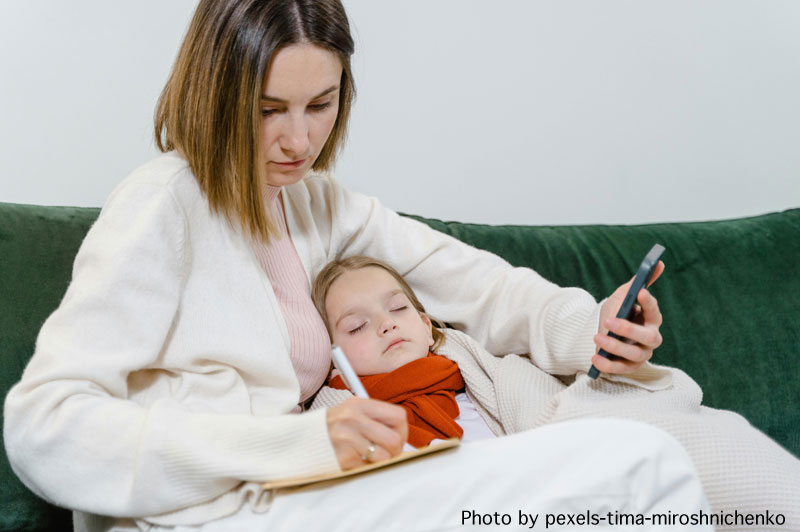
    Loveland, Ohio – The Warren County Health District (WCHD) is urging the public to stay up to date with immunizations, especially for pertussis (whooping cough). WCHD has identified an increase in pertussis cases in the county. In 2023, there have been 15 cases, including 14 that have been in the last month. By comparison, there was one case in 2022.

    The Advisory

    Whooping cough is highly contagious and is usually spread by coughing or sneezing while in close contact with others, who then breathe in the pertussis bacteria. It can cause serious illness in people of all ages but is most dangerous for babies.

    Symptoms of whooping cough usually develop within 5 to 10 days after you come into contact with the bacteria that cause it. Sometimes symptoms do not develop for as long as 3 weeks.   

    Whooping Cough symptoms can be classified into three stages: Stages 1,2, and 3.

    Stage 1, or early symptoms can last 1-2 weeks and include:

    • Runny or stuffed up nose

    • Low-grade fever (less than 100.4F)

    • Mild, Occasional cough (babies do not do this)

    • Apnea (life threatening pauses in breathing) and cyanosis (turning blue or purple) in babies and young children

    Many times, in the early stages of whooping cough, it is very easy to think it is just a common cold. Early testing is important since the antibiotics used to treat the illness is most effective in the first stage of pertussis. Antibiotics are not effective once the “whooping” starts.

    Stage 2 symptoms can begin one to two weeks after symptom onset, and can last anywhere from 1-10 weeks. During this time, someone affected by whooping cough will develop rapid, violent, and uncontrolled coughing fits. As the illness continues, these coughing fits will increase in frequency and intensity.

    Stage 3 is recovery, which can be slow, as the cough becomes milder and less common as someone gets better, but they can return if someone develops another respiratory infection.

    Whooping cough can cause serious and sometimes life-threatening complications in babies. This is especially true within the first 6 months of life. It is important to know that some babies with whooping cough don’t cough at all. Instead, it causes them to stop breathing and turn blue.

    If their mothers are vaccinated in the third trimester (27-36 weeks), newborns are offered some protection.

    The best way to prevent whooping cough is to get vaccinated. Two vaccines in the United States help prevent whooping cough: DTaP and Tdap. These vaccines also provide protection against tetanus and diphtheria. These vaccines cannot give you whooping cough, tetanus, or diphtheria.

    WCHD offers both of these vaccinations. If you are unsure of if you need the Tdap vaccination or have not received one in the last 10 years, and need to get scheduled, call 513-695-1229.

    For people exposed to whooping cough, the Centers for Disease Control and Prevention (CDC) recommends preventive antibiotics only if they:

    • Live with the person who has been diagnosed with whooping cough.

    • Are at increased risk for serious disease (e.g., babies, people with certain medical conditions) or will have close contact with someone who is at increased risk for serious disease (e.g., women in their third trimester of pregnancy, people who work with or care for high risk individuals).

    If you’ve been exposed to the bacteria that causes whooping cough, talk to your doctor about whether you need preventive antibiotics. This is especially important if there is a baby or pregnant woman in your household or you plan to have contact with a baby or pregnant woman.
  • Nurse’s Notes: Preventative Healthcare

    Nurse’s Notes: Preventative Healthcare

    Every month, the staff nurses at the Butler County Board of Developmental Disabilities share important health updates. This month, their nurses are talking about preventative healthcare!

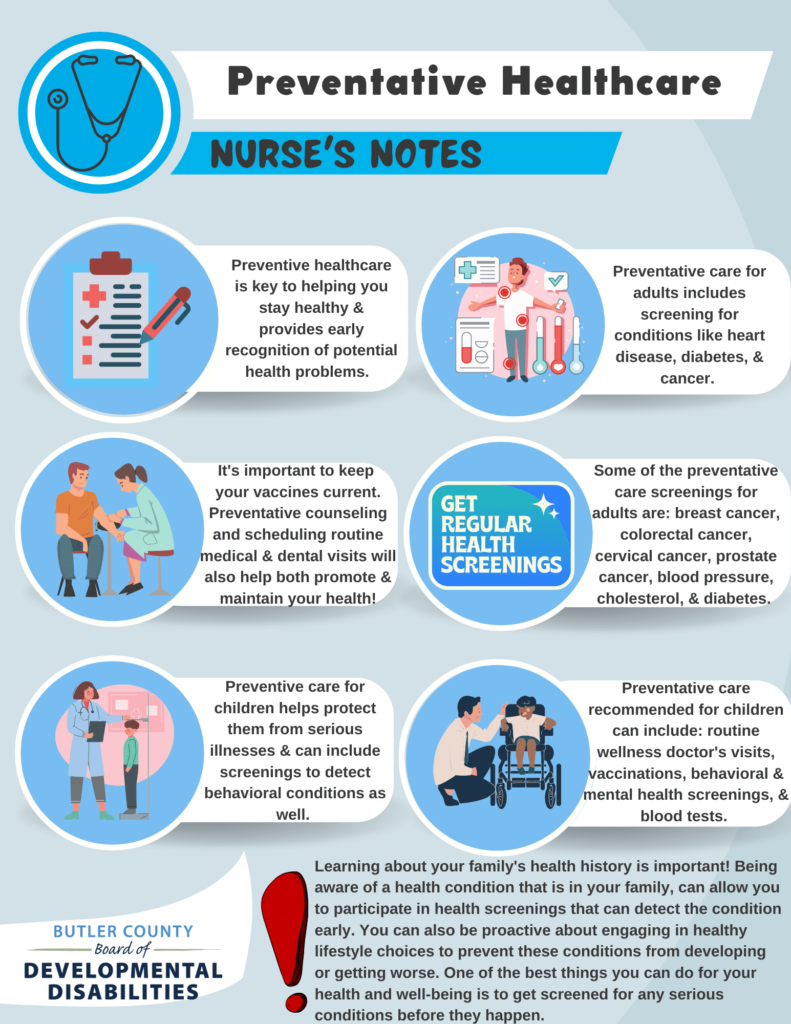
    Preventive healthcare is key to helping you stay healthy and provides early recognition of potential health problems. Seeking preventative healthcare can help you live a longer, healthier life!

    Preventative care for adults typically includes screening for conditions like heart disease, diabetes, and cancer. This also includes counseling and receiving appropriate patient teaching on healthy eating and life habits.

    What are some of the screenings recommended for adults? (Please note that these screenings are recommended based on age and family history).

    • Screenings for breast cancer, colorectal cancer, cervical cancer, and prostate cancer: These types of cancers are affecting men and women the most and early detection can stop or slow the spread and allow early treatment.
    • Screenings for blood pressure, cholesterol, and diabetes: These screenings can detect common conditions that can be treated with basic lifestyle changes and or medications. If left untreated or diagnosed, they can lead to serious diseases and early death.
    • Immunizations: Not only children need vaccines, but adults should also stay on top of their vaccines as well.  Annual flu shots, COVID-19 vaccines and any necessary boosters can help you prevent illness and diseases. Visit the CDC for guidelines on vaccines.
    • Preventative Counseling: Preventative counseling and patient teaching is useful to help us make ongoing positive health related changes to promote a healthy lifestyle.
    • Scheduling routine medical and dental visits:  Annual physicals and routine dental care is valuable to maintain general health and ensure necessary recommended screenings are performed.

    Preventive care for children helps protect them from serious illnesses and can include screenings to detect behavioral conditions as well. Preventive healthcare can help children stay healthy when they’re young and promote healthy decision making as they grow older.

    What preventative care is recommended for children?

    • Well-child visits: Routine visits every few months when your child is an infant, and yearly after that.  Routine immunizations and screenings are also conducted during these visits.
    • Vaccinations: Vaccinations for children protect them from serious diseases now and in the future.
    • Behavioral and mental health screenings: Pediatricians routinely screen children for conditions like autism, depression, and developmental delays.
    • Blood tests: Various blood test screenings can be conducted throughout childhood to detect various diseases.

    Why is knowing your family history important?

    Learning that you have a family history of a serious health condition can be discouraging and stressful, but knowledge is power. When you are aware of a health condition that is in your family, you can participate in health screenings that can detect the condition early, so that treatment is more effective and can be started early on. You can also be proactive about engaging in healthy lifestyle choices to prevent these conditions from developing or getting worse.

    One of the best things you can do for your health and well-being is to get screened for any serious conditions before they happen. That’s what preventive health is about, and why medical experts recommend that all adults and children participate in routine tests, screenings, and immunizations.

    If you have any questions about preventive care and what screenings you or your children should get, be sure to talk with your doctor or healthcare professional. Check to see if you are up to date on your preventative care! 
    The Butler County Board of Developmental Disabilities supports over 3,700 people to live, work, and learn successfully in their community. Supports and services are available life-long through contracts with partner agencies or directly provided by our Board.
    Please visit the website of the Butler County Board of Developmental Disabilities often for more great information about the services that they provide, many of which go beyond the walls of their facilities and take place in the greater community.

    Look for, and subscribe to their newsletters!