Tag: indicted

  • Digging into the latest indictment of former Ohio House Speaker Larry Householder

    Digging into the latest indictment of former Ohio House Speaker Larry Householder

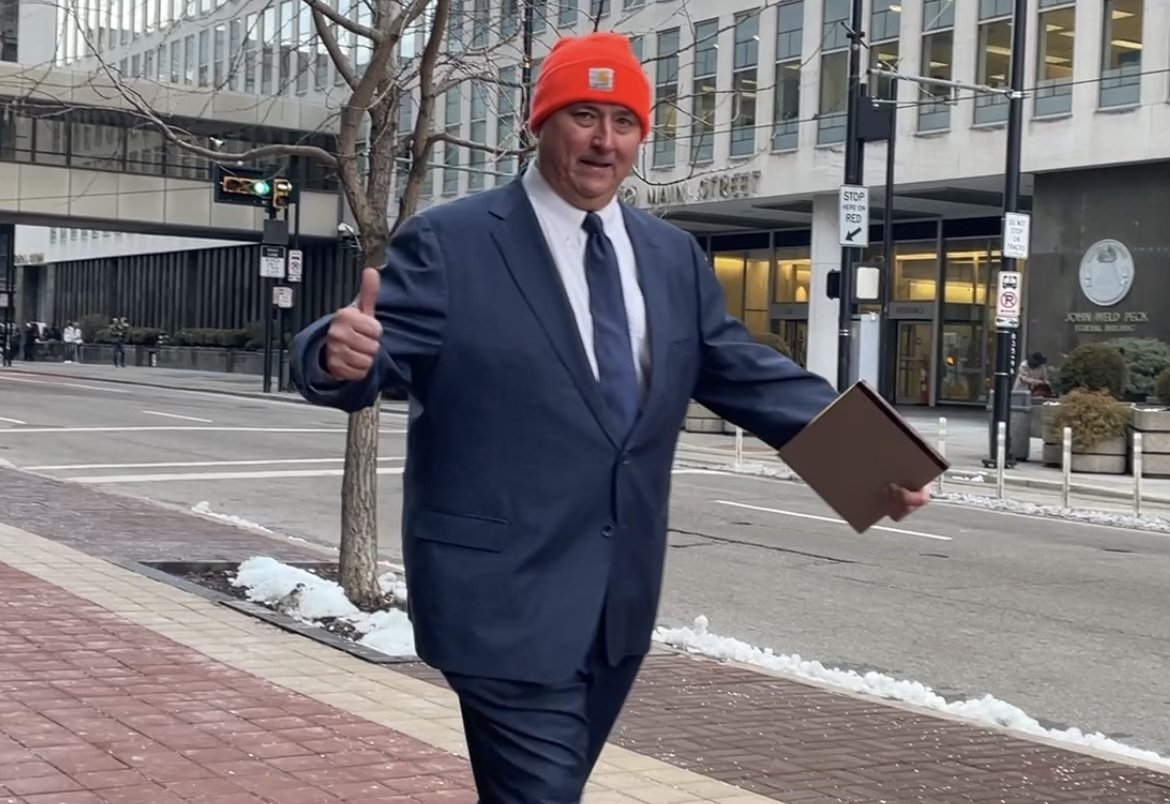
    Former Ohio House speaker Larry Householder arrives for day two of his racketeering trial. (Photo by Morgan Trau, WEWS.)

    Some allegations address Householder’s actions after the feds arrested him in 2020

    BY:  Ohio Capital Journal

    Former House Speaker Larry Householder has again been indicted on charges related to his actions in a massive bribery and money laundering scandal.

    The Glenford Republican is already serving a 20-year sentence in federal prison after being convicted last March of racketeering in a scheme in which Akron-based FirstEnergy paid more than $60 million to purchase a $1.3 billion, ratepayer-financed bailout.

    The state charges concern some conduct Householder engaged in after he was arrested in July 2020. They also concern debts and other items that Householder admitted during his federal trial that he didn’t report to the Joint Legislative Ethics Commission as required.

    The former speaker faces maximum sentences of from three to eight years on each of the 10 state charges from the Cuyahoga grand jury. And importantly, if he’s convicted of one of the counts — theft in office — he’s permanently disqualified from holding public office.

    In a video accompanying the announcement of the indictment, Ohio Attorney General Dave Yost noted that Householder has served two different stints as speaker, and that if he’s successful in appealing his federal conviction, “he might well try for a third bite at the apple.”

    Five of the 10 state counts Householder faces stem from his use of campaign funds to pay lawyers after his July 2020 arrest. In the video in which Yost appeared, Deputy Attorney General Carol O’Brien said Householder knew that was illegal when he did it.

    Several other counts relate to Householder “not reporting significant credit card debts going back to at least 2016, as well as gifts from lobbyists and significant loans from individuals.”

    Among gifts Householder received from FirstEnergy were flights to and from the 2017 inaugural of Donald Trump.

    Householder is due in Cuyahoga Common Pleas Court to be arraigned on April 12.

    The new state charges follow the announcement last month of state charges against former FirstEnergy CEO Chuck Jones and Vice President Michael Dowling. The executives are accused of financing the $60 million scheme to bail out two unprofitable nuclear plants owned by the utility so they could spin them off.

    Also indicted was Sam Randazzo, Gov. Mike DeWine’s pick to be Ohio’s top utility regulator. Jones and Dowling paid Randazzo $4.3 million mere weeks before DeWine nominated him to the commission in February 2019.

    DeWine’s chief of staff, Laurel Dawson, knew of the payment, but an administration spokesman said she didn’t tell the governor until after the FBI searched Randazzo’s Columbus condo in 2020.

    The governor stands behind Dawson because it wasn’t until 2021 that the payment was alleged to be a bribe, the spokesman said.

    Randazzo was charged by federal authorities in relation to his role in the scandal in December.

    Despite all the prosecutions and allegations of wrongdoing, the bailout law, House Bill 6, is still on the books. As a result, ratepayers have ponied up nearly a quarter-billion dollars to prop up two aging coal plants.

    Despite the fact that Ohio ratepayers are shouldering that burden, one of the plants isn’t even in Ohio, but in Indiana instead.


    Marty Schladen
    MARTY SCHLADEN

    Marty Schladen has been a reporter for decades, working in Indiana, Texas and other places before returning to his native Ohio to work at The Columbus Dispatch in 2017. He’s won state and national journalism awards for investigations into utility regulation, public corruption, the environment, prescription drug spending and other matters.

    Ohio Capital Journal is part of States Newsroom, the nation’s largest state-focused nonprofit news organization.

    MORE FROM AUTHOR

  • Former Ohio public utilities chairman Sam Randazzo indicted by federal grand jury for bribery, embezzlement

    Former Ohio public utilities chairman Sam Randazzo indicted by federal grand jury for bribery, embezzlement

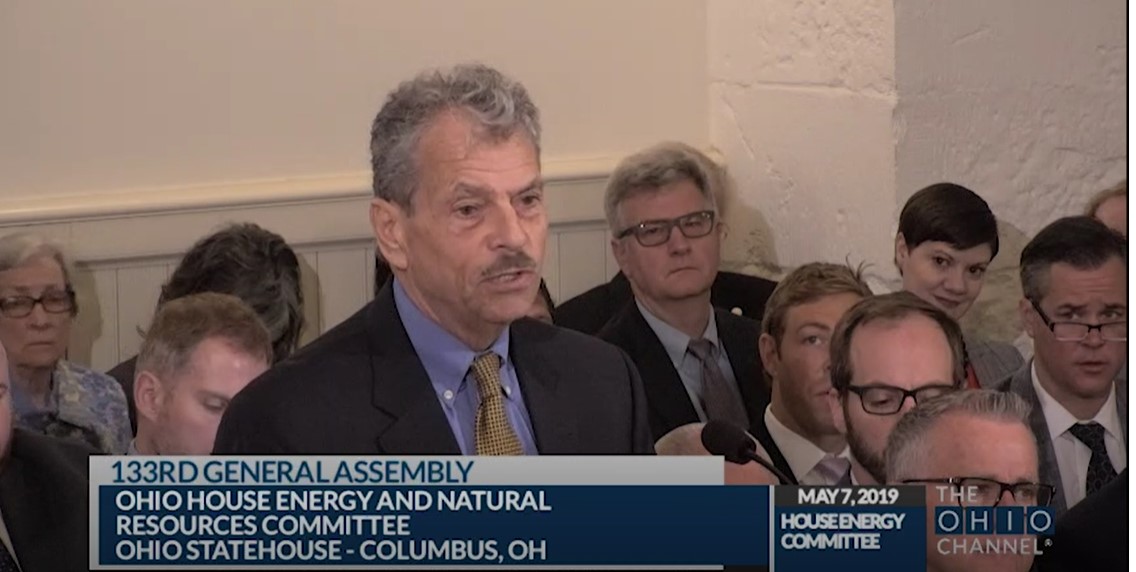
    Then-PUCO Chair Sam Randazzo testifies as an interested party regarding House Bill 6 on May 7, 2019. Source: Ohio Channel.

    BY:  Ohio Capital Journal

    The former chairman of the Public Utilities Commission of Ohio has been indicted by a federal grand jury on bribery and embezzlement charges, the U.S. Attorney’s Office for the Southern District of Ohio announced in a news release Monday.

    Sam Randazzo, 74, of Columbus, self-surrendered at U.S. District Court in Cincinnati Monday morning, the release said. Randazzo is charged in an 11-count indictment that was returned on Nov. 29 and he was scheduled for an initial appearance later Monday.

    The charges stem from an ongoing investigation into what federal prosecutors have called the biggest political bribery scandal in state history, where Akron-based FirstEnergy paid more than $60 million in 2018 and 2019 to get the legislature to pass and protect a $1.3 billion bailout that was mostly intended to benefit FirstEnergy.

    Former House Speaker Larry Householder, R-Glenford, in June was sentenced to 20 years in federal prison after a jury found him guilty of racketeering for his role in the scheme. Former Ohio GOP Chairman Matt Borges was sentenced to five years in the same case.

    FirstEnergy fired two of its top executives, CEO Chuck Jones and Vice President Michael Dowling. And it signed a deferred prosecution agreement admitting wrongdoing and committing to pay a $230 million fine.

    Jones, Dowling and Randazzo denied wrongdoing, but in the agreement, FirstEnergy said the executives paid Randazzo a $4.3 million bribe just as Ohio Gov. Mike DeWine was nominating him to be the top Ohio regulator overseeing FirstEnergy.

    “Public officials — whether elected or appointed — are tasked with upholding the highest level of integrity in their duties and responsibilities. Such service to the public must be selfless, not selfish,” said U.S. Attorney Kenneth L. Parker in Monday morning’s release. “Through the indictment unsealed today, we seek to hold Randazzo accountable for his alleged illegal activities.”

    FirstEnergy said the payment was made through Randazzo’s “consulting company in return for (Randazzo) performing official action in his capacity as (Public Utilities Commission of Ohio) Chairman to further FirstEnergy Corp.’s interests” and that “it was under no legal obligation to make the payment … ”

    Randazzo was the PUCO chairman from April 2019 until November 2020, when he resigned.

    Randazzo faces one count of conspiring to commit travel act bribery and honest services wire fraud, two counts of travel act bribery, two counts of honest services wire fraud, one count of wire fraud and five counts of making illegal monetary transactions.

    According to the indictment, Randazzo allegedly received more than $4.3 million from an energy company and its affiliates to provide favorable official actions for the company through PUCO proceedings.

    For example, it is alleged that in November 2019, Randazzo included language in a PUCO Opinion and Order that would address an issue for the energy company that was slated to happen in 2024.

    “Stock is gonna get hit with Ohio 2024. Need Sam to get rid of the ‘Ohio 2024 hole,’” an energy executive text message read. Another executive messaged, in part: “I spoke with Sam today. Told me 2024 issue will be handled next Thursday.” The next Thursday, the PUCO decision included language alleviating the 2024 issue.

    A March 2020 text message from an executive mentions that Randazzo “will get it done for us but cannot just jettison all process.” The message references specific official actions before continuing: “…a lot of talk going on in the halls of PUCO about does he work there or for us? He’ll move it as fast as he can.”

    It is alleged that Randazzo received the bribe money from the energy company through his consulting business, Sustainability Funding Alliance of Ohio, Inc. (SFA), which was registered in Ohio in March 2010. SFA filings name Randazzo as the president and sole representative of the business and lists Randazzo’s home address as the business address.

    The charging document alleges that Randazzo also used his consulting business, SFA, to carry out an embezzlement scheme, funneling to himself at least a million dollars meant for an association of large, industrial energy users in Ohio.

    Randazzo was the general counsel of the industry group for multiple years, including from 2010 until his PUCO appointment, and at times served as the industry group’s executive director. Randazzo controlled the industry group’s bank accounts.

    It is alleged Randazzo entered into settlements with companies on behalf of the industry group and kept portions of the settlement payments for himself.  As one method to conceal his alleged embezzling, Randazzo allegedly created a fictitious member of the industry group that received payments along with legitimate members.

    For example, in March 2019, it is alleged Randazzo attempted to conceal his embezzling by wiring approximately $1.1 million between bank accounts under his control.

    If convicted as charged, the defendant could face up to 20 years in prison.

    In the release, FBI Cincinnati Special Agent in Charge J. William Rivers said the indictment outlines an alleged scheme in which a public regulatory official ignored the Ohio consumers he was responsible for protecting, instead taking a bribe from an energy company seeking favors.

    “The FBI will remain vigilant in investigating allegations of corruption at all levels of government and hold those who violate the law accountable for their actions,” he said.

    Last week, it was revealed that plaintiffs in a civil suit related to the massive bribery and money-laundering scandal have subpoenaed documents from DeWine and they’re scheduling a sworn deposition with Lt. Gov. Jon Husted.

    Ohio Consumers’ Counsel Maureen Willis in a statement Monday called the indictment an important step to bring justice to Ohio utility consumers.

    “It underscores the need for near-term reform of the PUCO selection process that led to his appointment as Chair of the PUCO,” she said. “OCC’s calls for reform so far have gone unanswered. Ohioans deserve better from the public officials in this state.”

  • Fulton grand jury indicts Trump, members of his inner circle

    Fulton grand jury indicts Trump, members of his inner circle

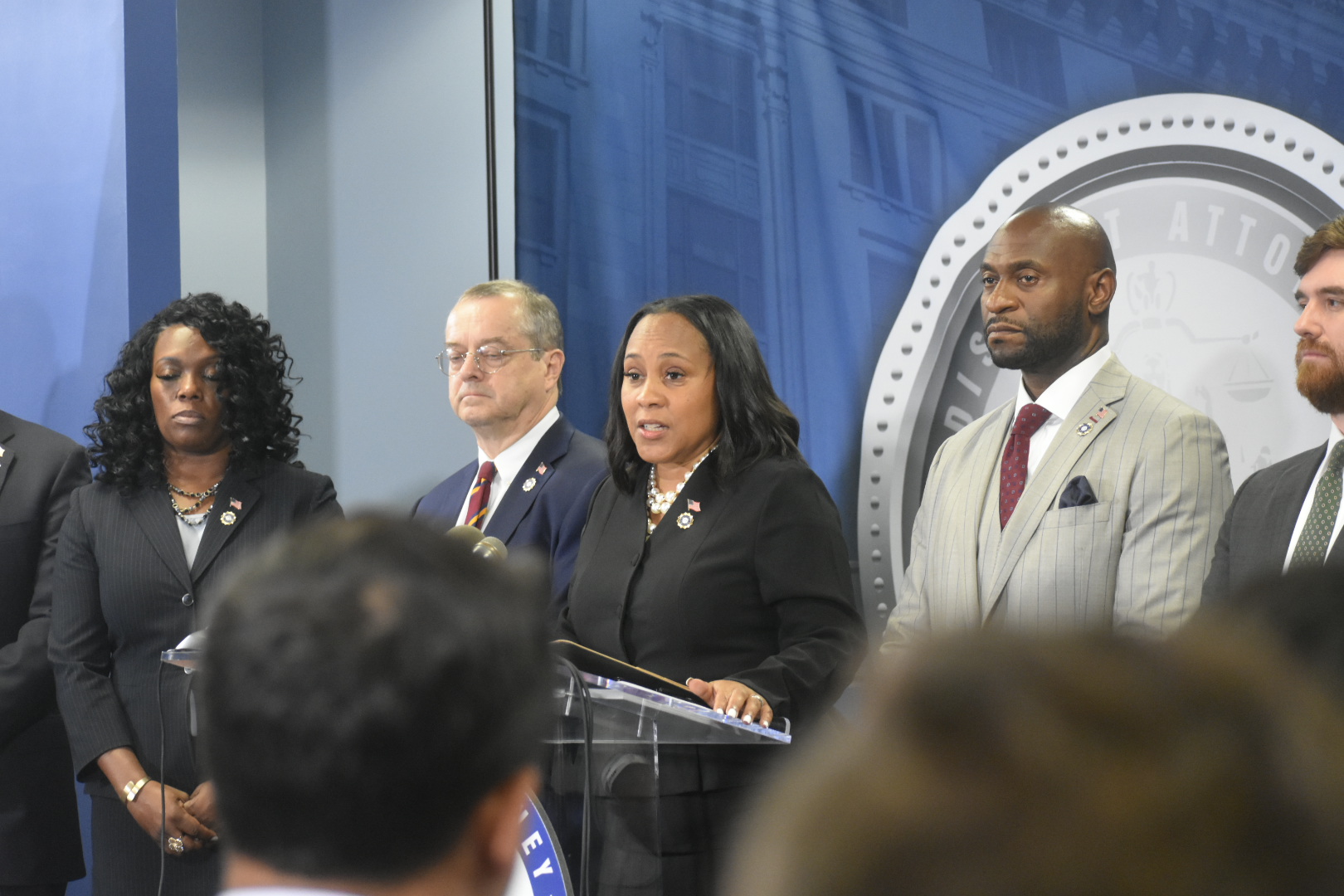
    Fulton County District Attorney Fani Willis discusses the indictments against former President Donald Trump and 18 others on Monday, Aug. 14, 2023. (Photo by Ross Williams/Georgia Recorder, States Newsroom.)

    BY:  AND  Ohio Capital Journal

    Former President Donald Trump and several members of his inner circle were indicted Monday in Fulton County Georgia’s sweeping investigation into 2020 election interference.

    Fulton County District Attorney Fani Willis held a press conference late Monday night to briefly discuss the grand jury’s felony conspiracy and racketeering charges being levied against the 2024 Republican presidential frontrunner and other allies that include his former chief-of-staff Mark Meadows, his personal attorney Rudy Giuliani and ex-Georgia Republican Party Chairman David Shafer.

    Nineteen people were indicted on 41 charges after the grand jury’s vote to hand up indictments and Fulton Judge Robert McBurney’s unsealing of the charges Monday evening.

    “All elections in our nation are administered by the states, which are given the responsibility of ensuring a fair process and an accurate counting of the votes,” Willis said late Monday evening. “That includes elections for presidential electors, Congress state officials and local offices. The state’s role in this process is essential to the functioning of our democracy.”

    “The indictment alleges that rather than abide by Georgia’s legal process for election challenges, the defendants engaged in a criminal racketeering enterprise to overturn Georgia’s presidential election result,” Willis said.

    It is the fourth time the former president has been indicted this year, and it is the second indictment directly tied to Trump’s attempts to stay in power after losing his bid for reelection.

    The defendants will have until noon on Friday, Aug. 25 to turn themselves in, Willis said.

    Read the 98-page indictment below.

    “I remind everyone here that an indictment is only a series of allegations based on a grand jury determination of probable cause to support the charges. It is now the duty of my office to prove these charges in the indictment beyond a reasonable doubt at trial,” Willis said.

    Willis said she plans to push for a trial to be held within the next six months, but acknowledged that will be up to the judge.

    Felony charges of false statements, forgery, racketeering and election fraud, solicitation of a government employee have also been filed against in the case that’s been more than a year in the making.

    The sweeping probe centers on Trump and a number of his supporters who lodged unfounded claims that widespread election fraud cost him the 2020 election in Georgia by nearly 12,000 votes. In early 2022, Willis launched the investigation after a recording of a phone call where Trump asked Republican Secretary of State Brad Raffensperger to “find” enough votes was released to the public.

    Willis, an Atlanta Democrat, has been accused of political bias by Trump and his attorneys who argue she has held fundraisers for candidates of her party in the past.

    And on Monday, Reuters reported that a document outlining charges against Trump appeared briefly on the Fulton County court’s website. A Fulton County courts spokesperson issued a statement Monday in response to a “fictitious document that has been circulated online and reported by various media outlets.”

    Trump’s Georgia-based attorneys blasted the brief appearance of the document in a statement, calling it part of a pattern that has “plagued this case from its very inception.”

    “This was not a simple administrative mistake,” Drew Findling and Jennifer Little said in a joint statement. “A proposed indictment should only be in the hands of the District Attorney’s Office, yet it somehow made its way to the clerk’s office and was assigned a case number and a judge before the grand jury even deliberated.”

    Trump also took to his social media site, Truth Social, to bemoan the indictment, calling Willis a “rabid partisan” and accusing her of timing the indictment to “maximally interfere” in next year’s presidential race. Willis brushed off the criticism when asked about the president’s comments.

    “I make decisions in this office based on the facts and the law. The law is completely nonpartisan,” Willis said.

    The group of 16 fake electors who met at the Georgia Capitol in December 2020 includes current and former state and local GOP officials, ex-Coffee County GOP Chairwoman Cathy Latham, and newly elected state Sen. Shawn Still.

    Giuliani pressed Georgia Republicans to set themselves up as alternate electors to counter state Democrat electors casting votes for Joe Biden after GOP election officials confirmed the current president as the winner of Georgia’s 2020 presidential election. The plan at first was for the “fake electors” to serve as a placeholder should the former president prevail in court challenges to Georgia’s results. But when Trump’s court challenges were all either dismissed or withdrawn, the alternate electors still signed paperwork swearing they were legitimate delegates.

    An eventful day

    Even before the prospect of a Monday grand jury decision, a throng of national and local press had assembled outside the Fulton County courthouse Monday morning where they tried to catch the witnesses as they left to quiz them on the process.

    The relative calm outside the courthouse was disrupted at one point Monday when opponents of a controversial public safety training center attempted to march through the area around the courthouse that has been closed off for the indictments. Among the group’s chants: “Donald Trump. Andre Dickens. I don’t know the f—— difference.”

    But inside the courthouse the grand jury proceeding moved at a faster pace than expected, and by late Monday afternoon, an indictment seemed possible. At least two witnesses – former Republican Lt. Gov. Geoff Duncan and Atlanta journalist George Chidi – who were originally set to testify Tuesday were moved up to Monday.

    Duncan, who did not seek reelection last year, brushed aside specific questions about his grand jury testimony Monday but he spoke generally about how he viewed his participation in the process. And politically, he described this moment in time as a potential “pivot point” for Republicans.

    “I think it’s important to tell the truth,” Duncan told reporters afterwards. “And to respond to the constitutional duties of answering the questions of the grand jury. It’s important for us as a country to finally figure out exactly what happened, and let Americans decide. Instead of misinformation and tweets, let America decide what’s next for us.”

    Other witnesses include state Sen. Jen Jordan and state Rep. Bee Nguyen, two Democrats who were part of the December 2020 legislative meetings where Rudy Giuliani pushed a false narrative in hopes of getting the General Assembly to intervene.

    Nguyen confirmed in a statement Monday that she had testified before the grand jury.

    “No individual is above the law, and I will continue to fully cooperate with any legal proceedings seeking the truth and protecting our democracy,” Nguyen said. “I believe that every individual who wrongfully and illegally tried to overturn our valid elections should be held accountable so that we can have, as John Adams said, ‘a government of laws, and not of men.’”

    Chidi, who testified before the special purpose grand jury, said late Monday that he was dismissed without testifying Monday. He called it a victory for journalists.

    The independent Atlanta reporter walked into the fake electors’ meeting at the state Capitol after noticing someone who would have likely served as a GOP elector had Trump won Georgia. He said he was intrigued when the person acted strangely toward him, so he started streaming on Facebook live and followed the man into the meeting room before quickly being ushered out.

    When he asked what kind of meeting it was, a woman said they were having an “education” meeting, he said.

    “Plainly, they were not having an education meeting. So, up until five minutes ago, the district attorney believed that that observation was relevant to these legal proceedings,” Chidi told a group of reporters who swarmed around him as he left the courthouse. “And perhaps it still is, but the jury may have enough information without me to make a decision.”

    [pdf-embedder url=”https://lovelandmagazine.com/wp-content/uploads/2023/08/CRIMINAL-INDICTMENT.pdf”]______________________

    Stanley Dunlap
    STANLEY DUNLAP

    Stanley Dunlap has covered government and politics for news outlets in Georgia and Tennessee for the past decade. At The (Macon) Telegraph he told readers about Macon-Bibb County’s challenges implementing its recent consolidation, with a focus on ways the state Legislature determines the fate of local communities. He used open records requests to break a story of a $400 million pension sweetheart deal a county manager steered to a friendly consultant. The Georgia Associated Press Managing Editors named Stanley a finalist for best deadline reporting for his story on the death of Gregg Allman and best beat reporting for explanatory articles on the 2018 Macon-Bibb County budget deliberations. The Tennessee Press Association honored him for his reporting on the disappearance of Holly Bobo, which became a sensational murder case that generated national headlines.

    MORE FROM AUTHOR

    Jill Nolin
    JILL NOLIN

    Jill Nolin has spent nearly 15 years reporting on state and local government in four states, focusing on policy and political stories and tracking public spending. She has spent the last five years chasing stories in the halls of Georgia’s Gold Dome, earning recognition for her work showing the impact of rising opioid addiction on the state’s rural communities. She is a graduate of Troy University.

    MORE FROM AUTHOR

  • Leader of Oath Keepers and 10 Other Individuals Indicted in Federal Court for Seditious Conspiracy and Other Offenses Related to U.S. Capitol Breach

    Leader of Oath Keepers and 10 Other Individuals Indicted in Federal Court for Seditious Conspiracy and Other Offenses Related to U.S. Capitol Breach

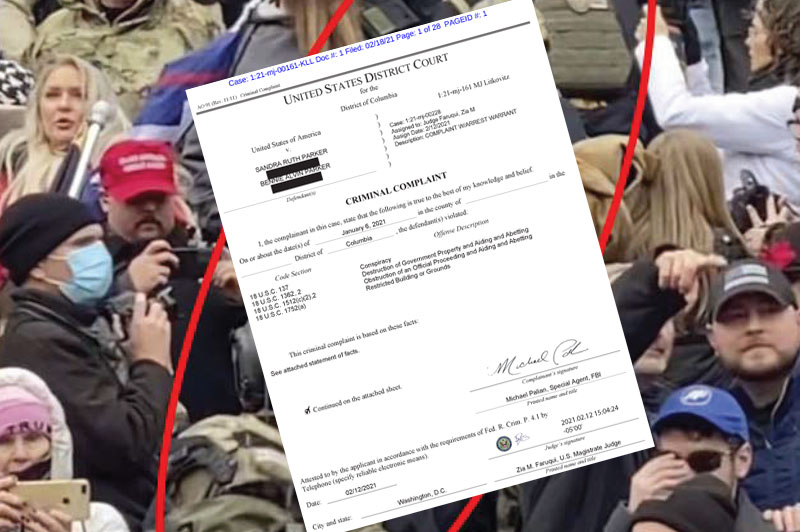
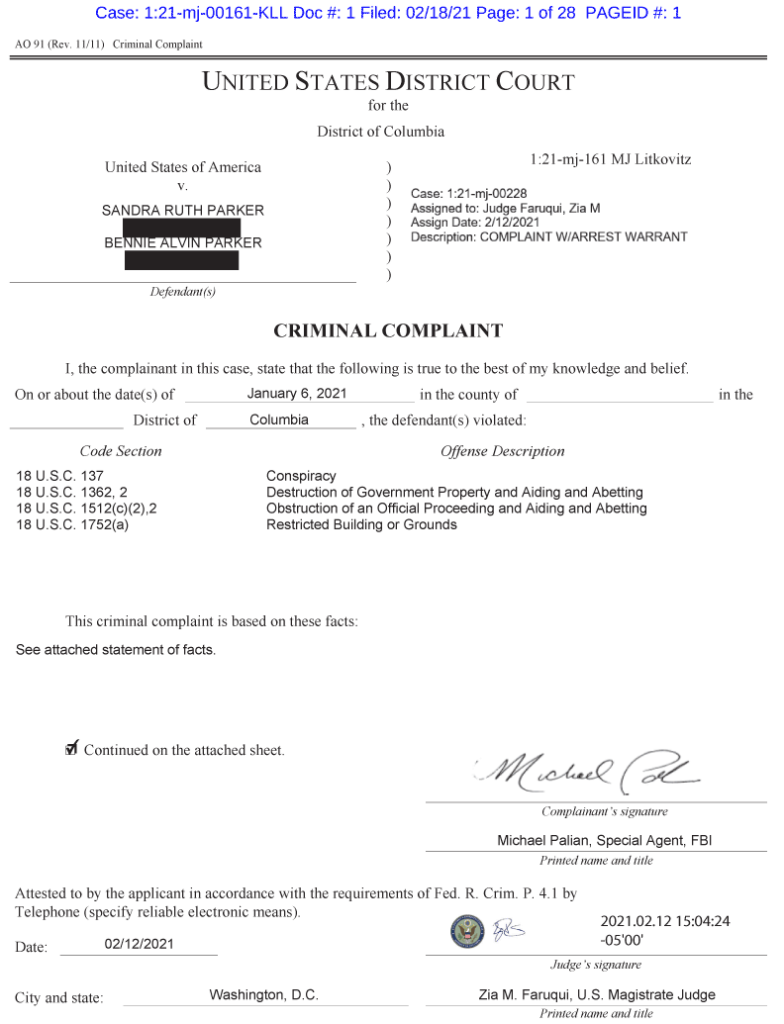
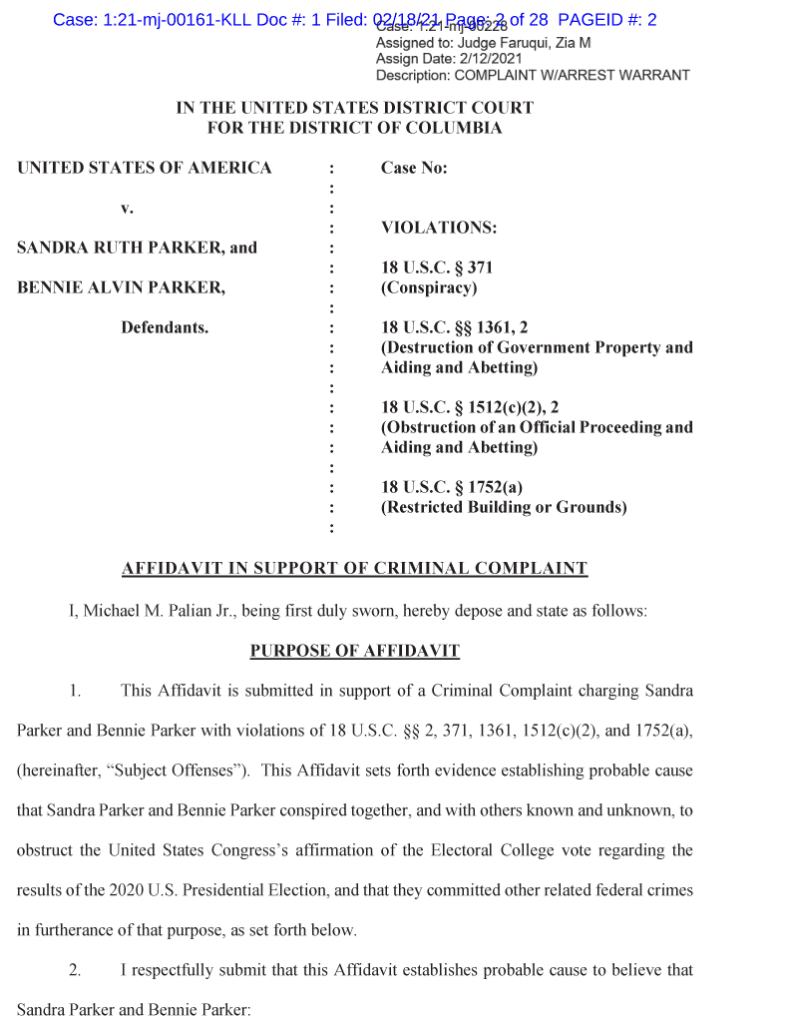
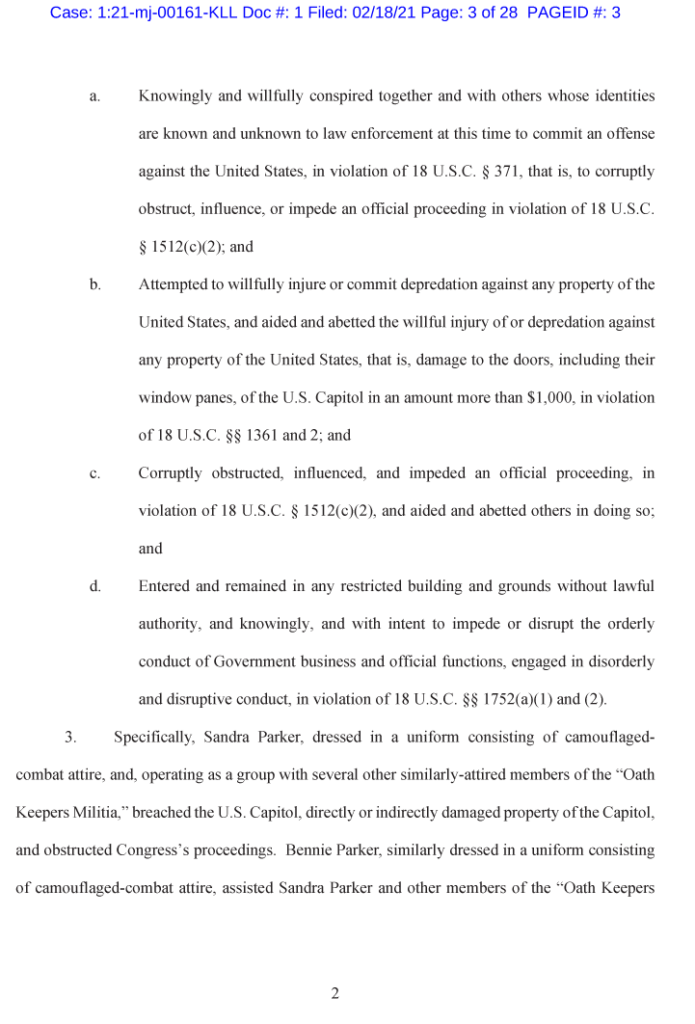
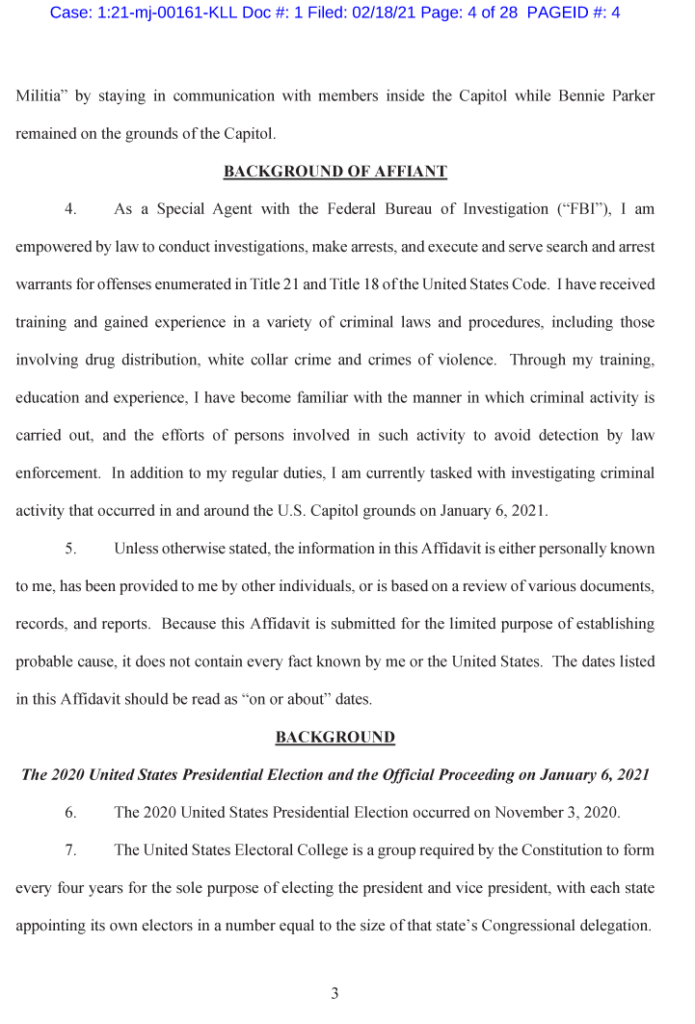
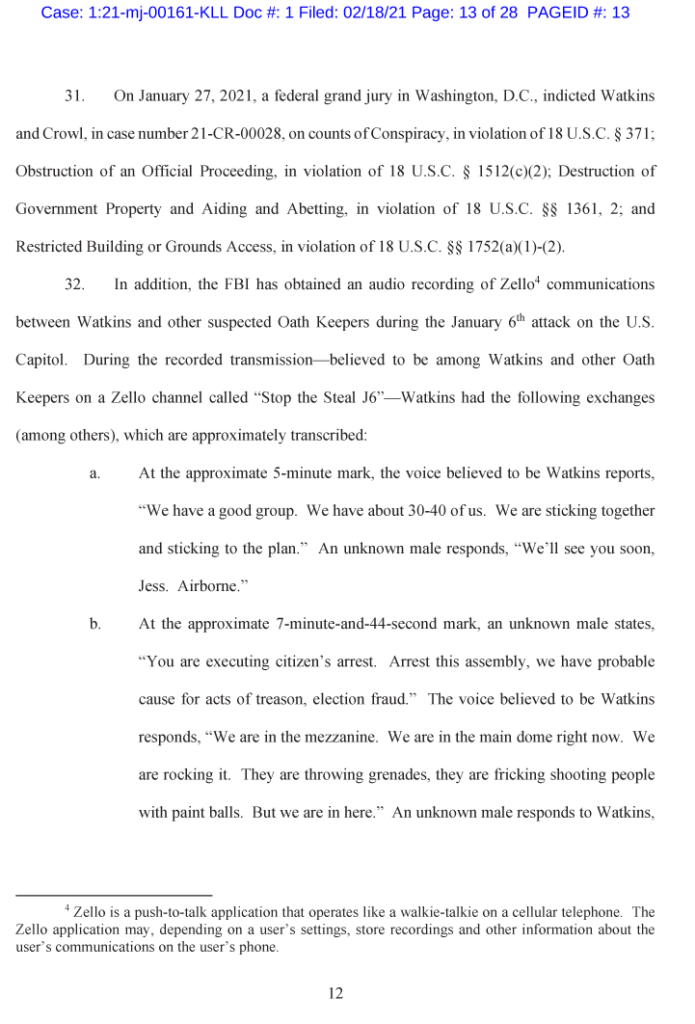
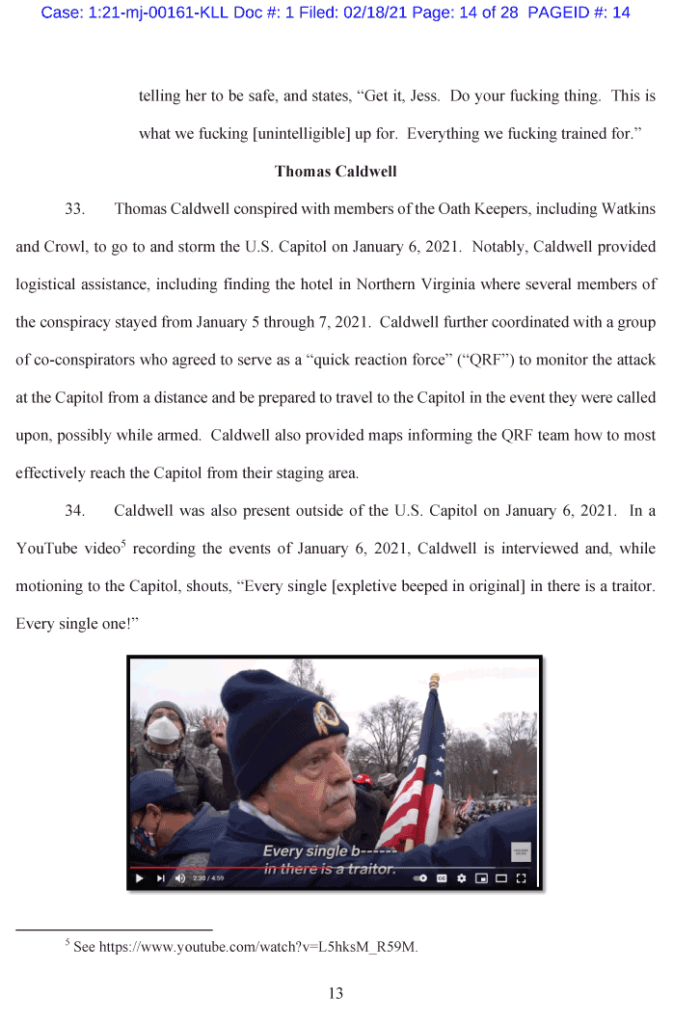
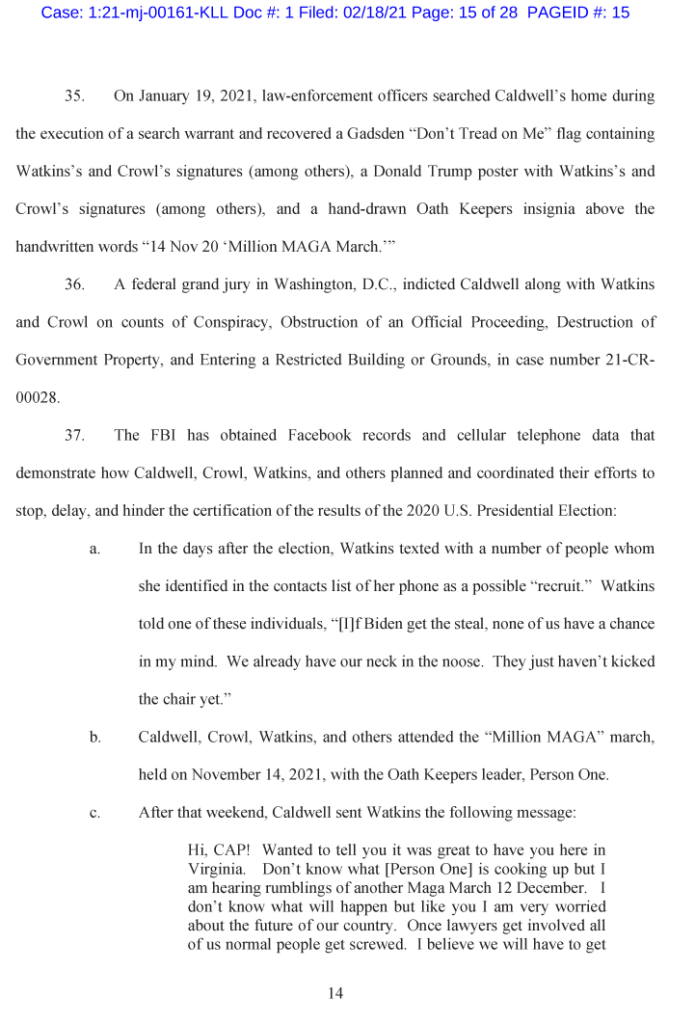
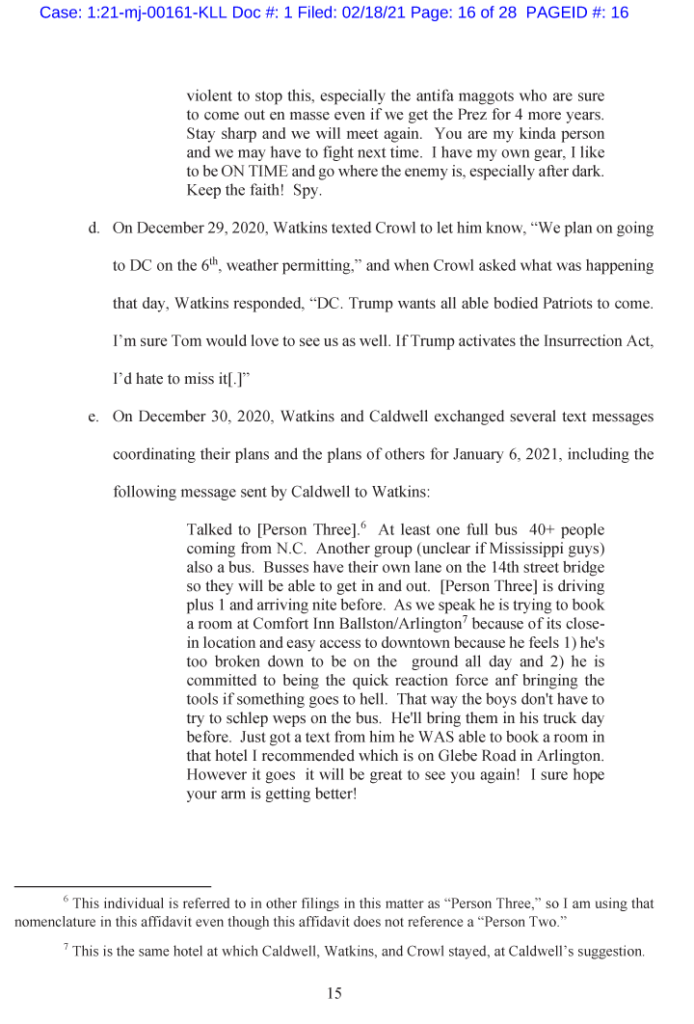
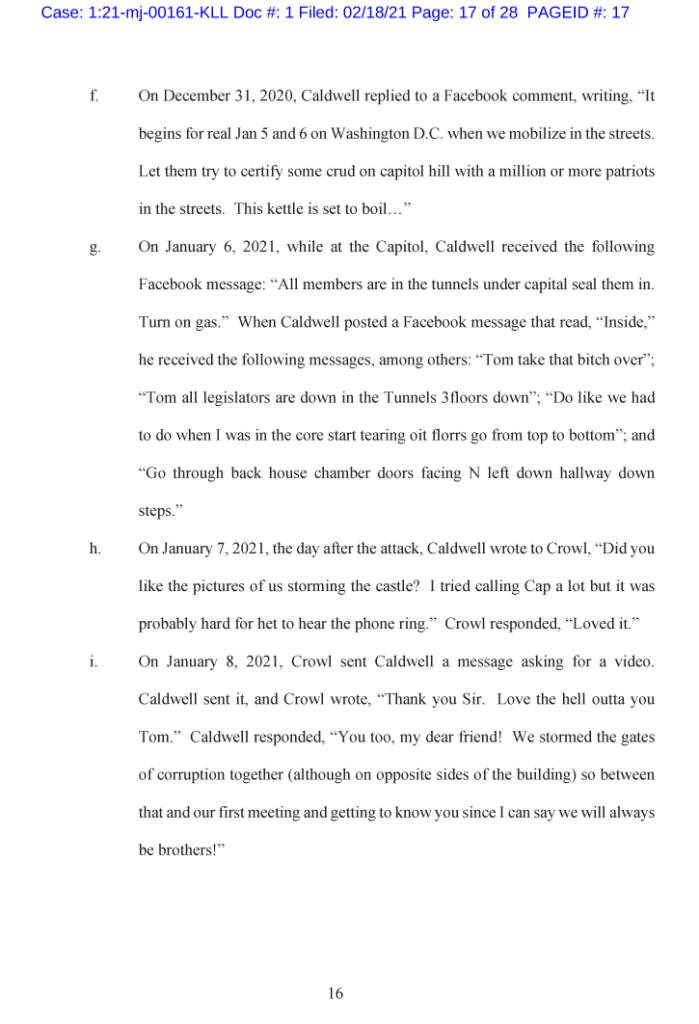
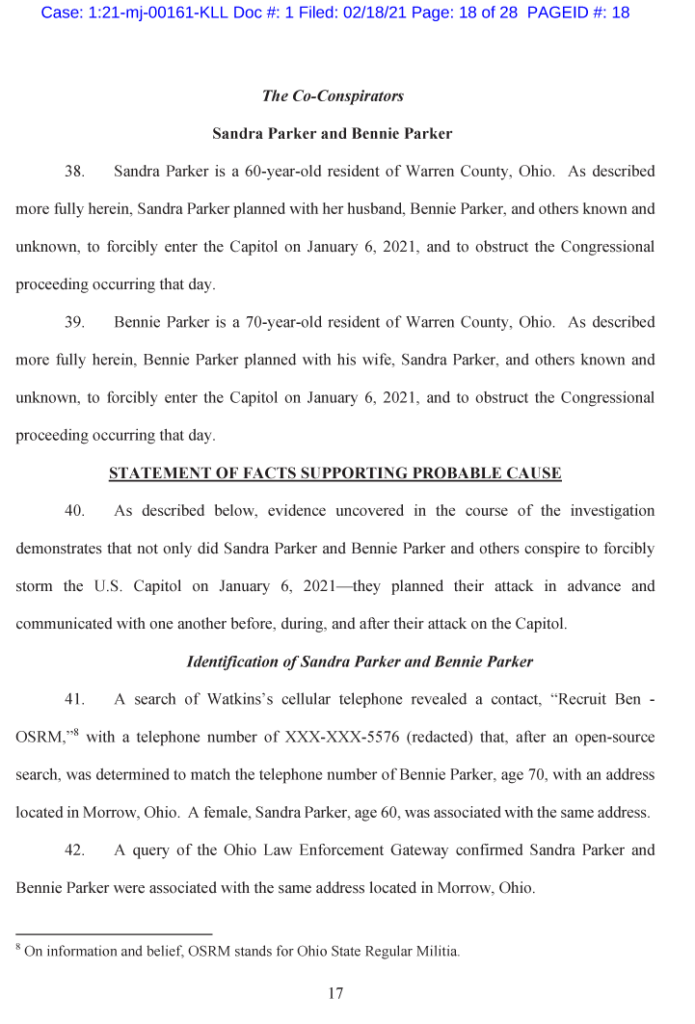
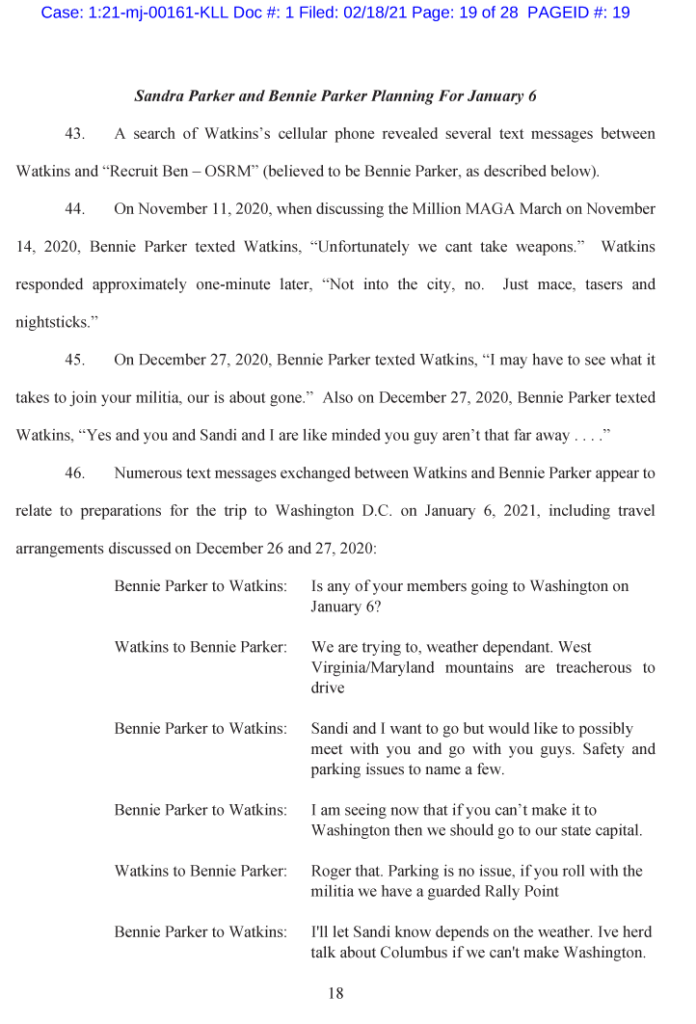
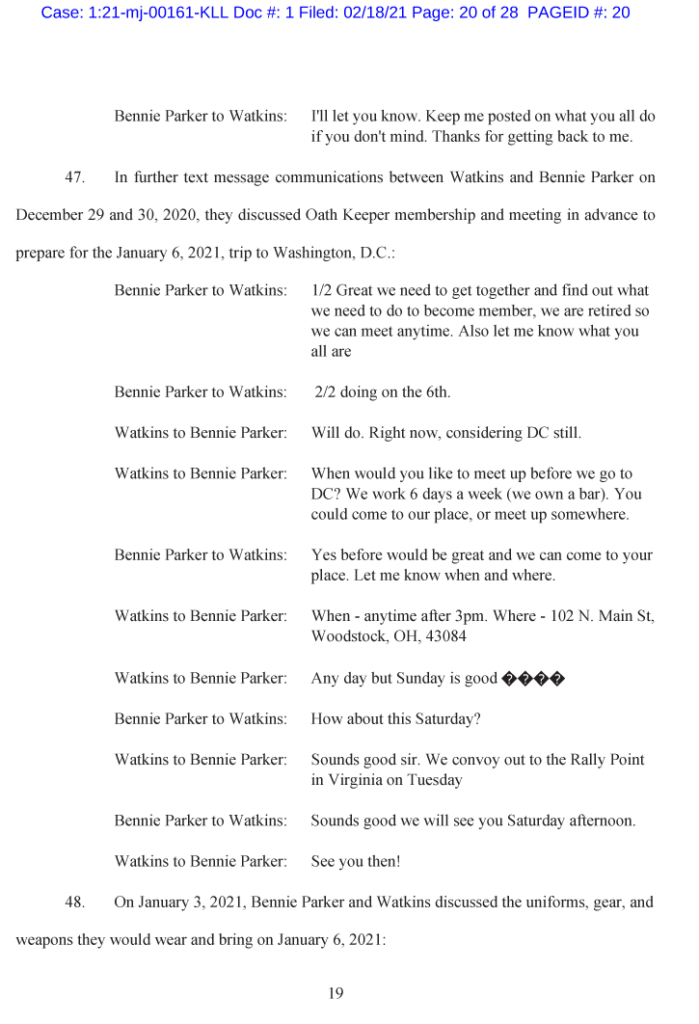
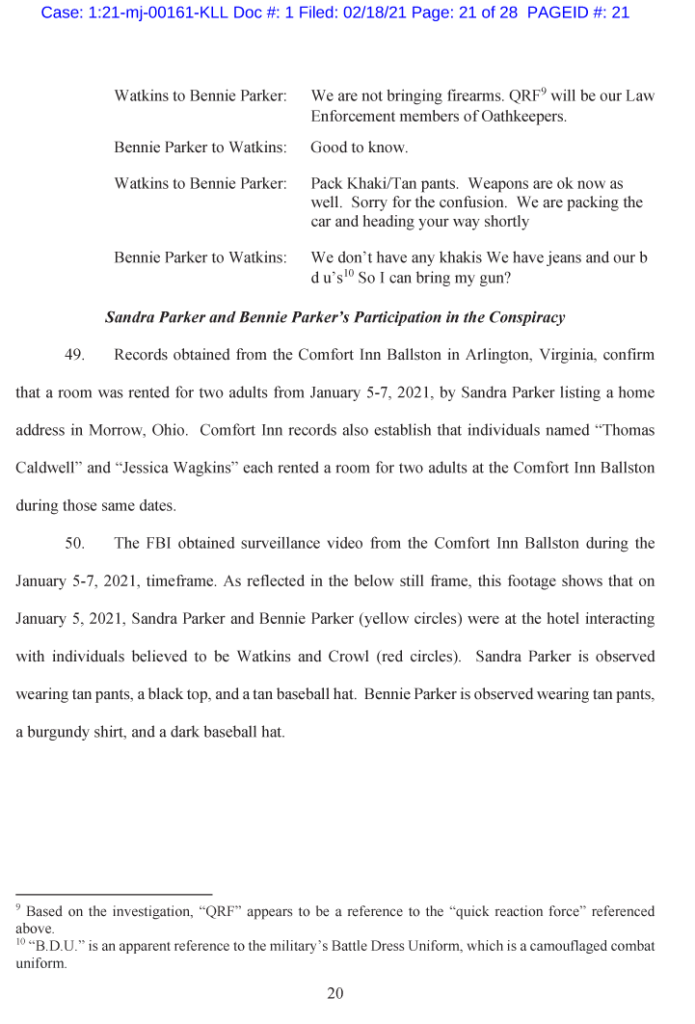
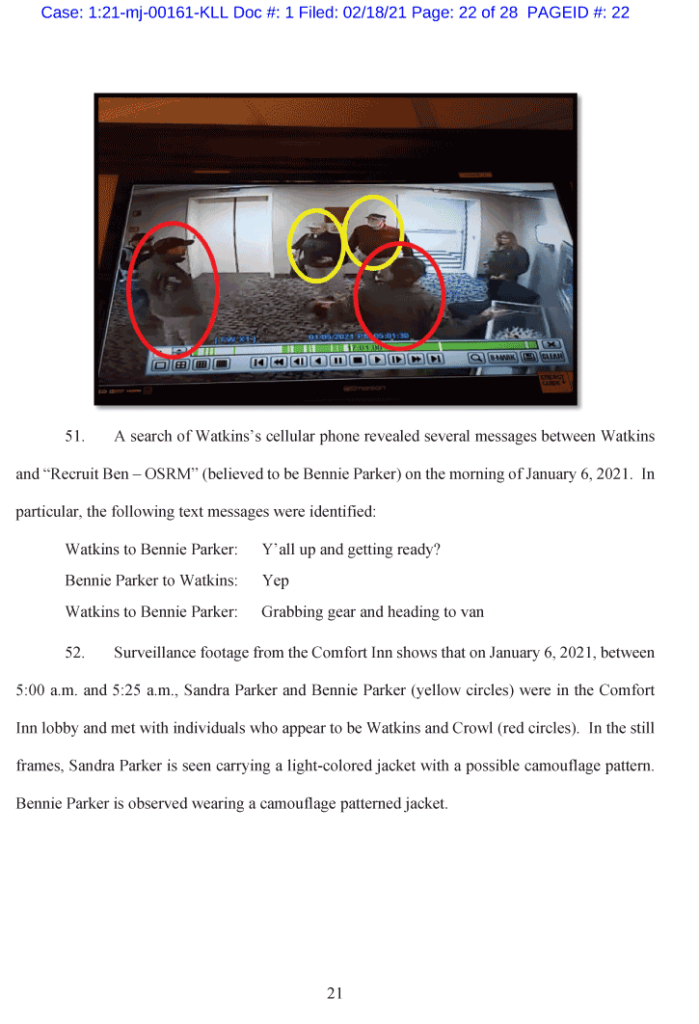
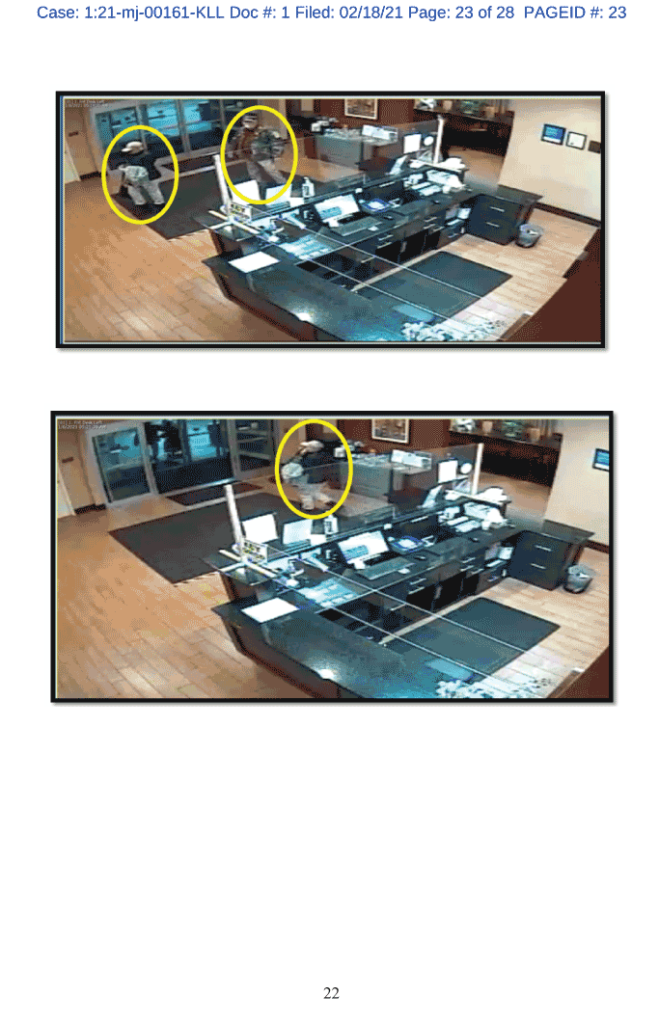
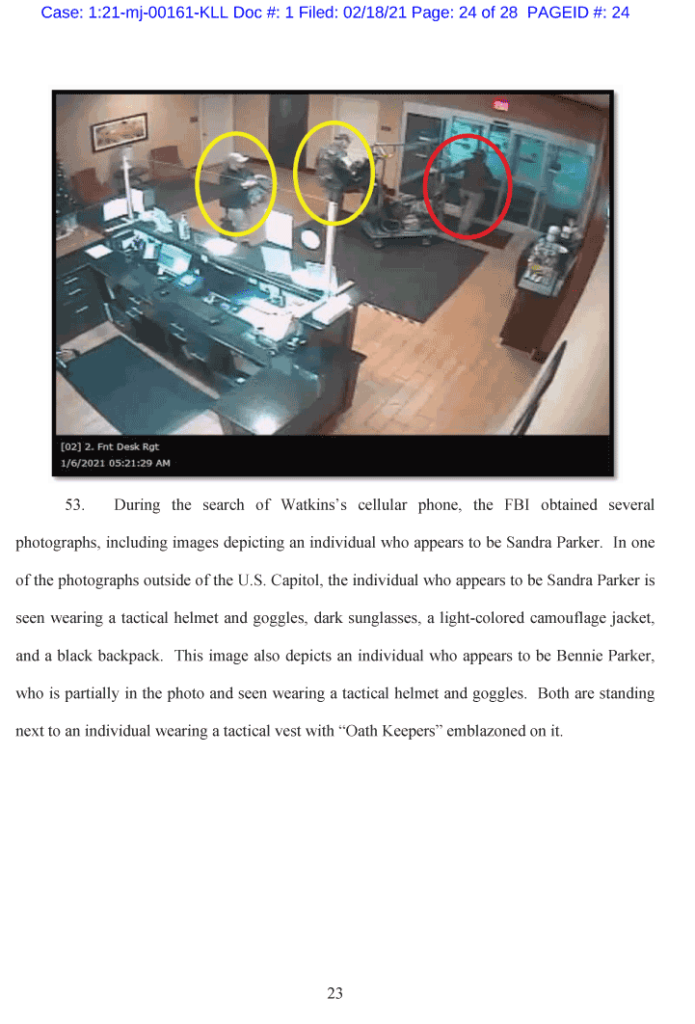
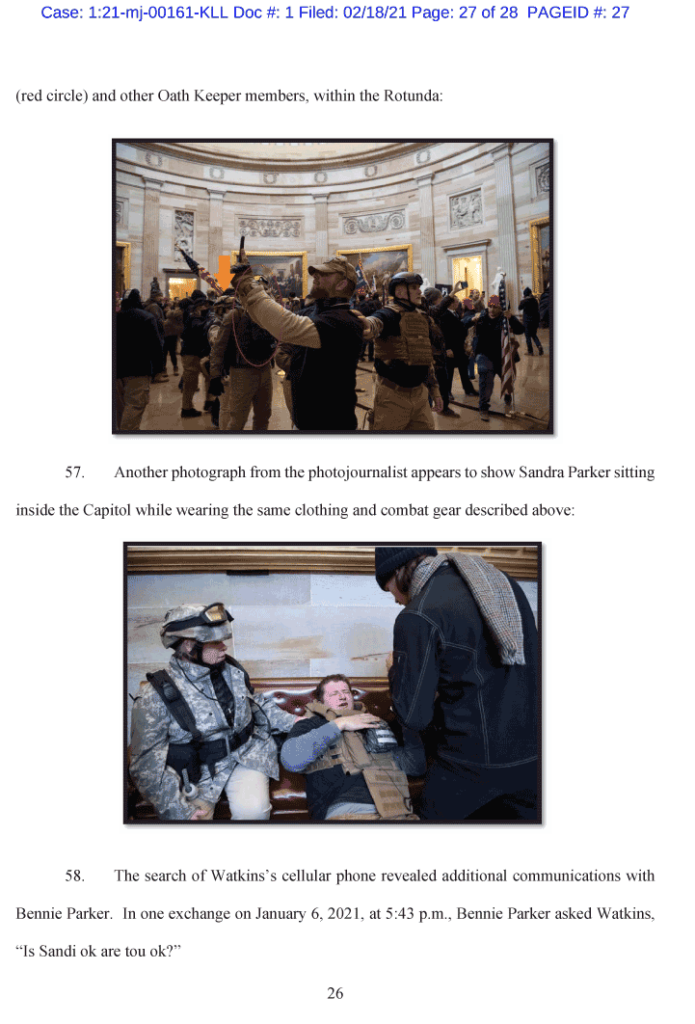
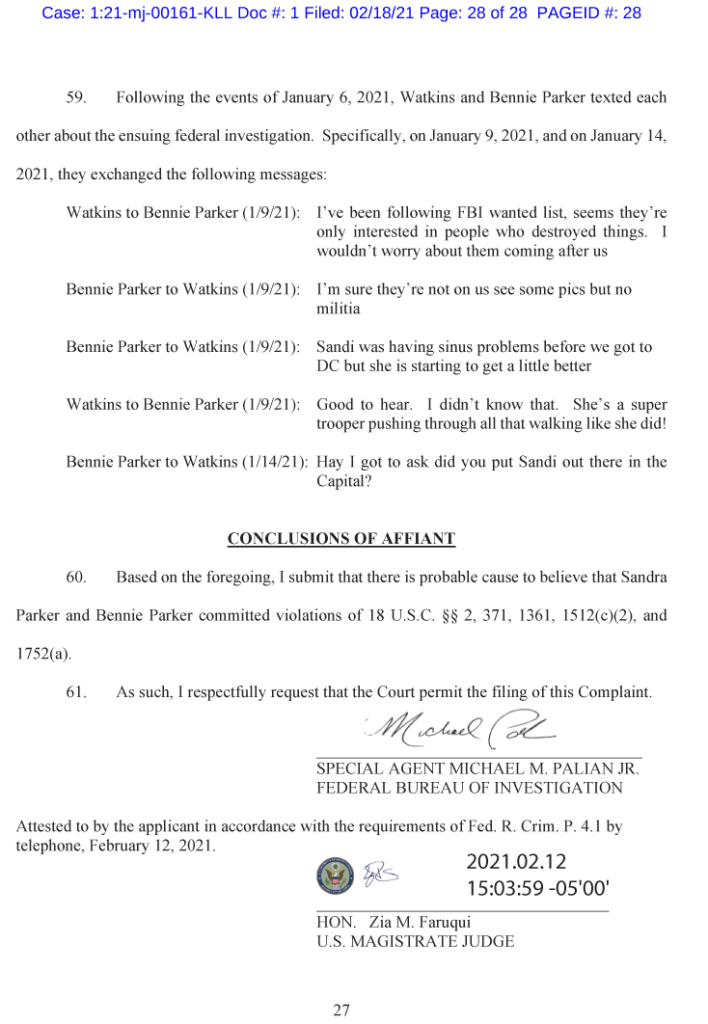
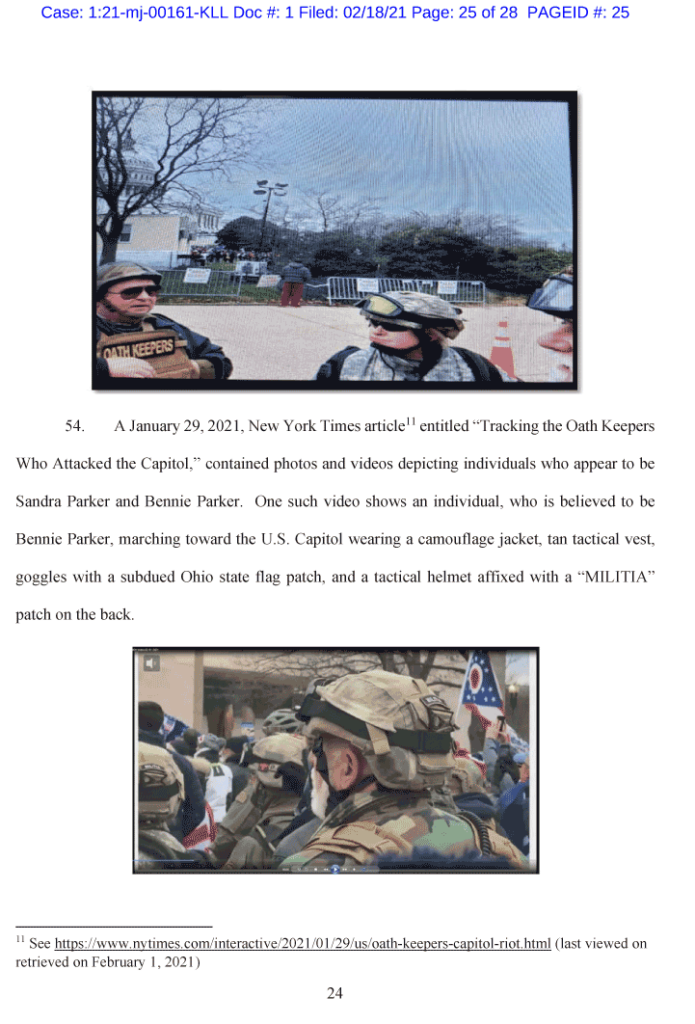
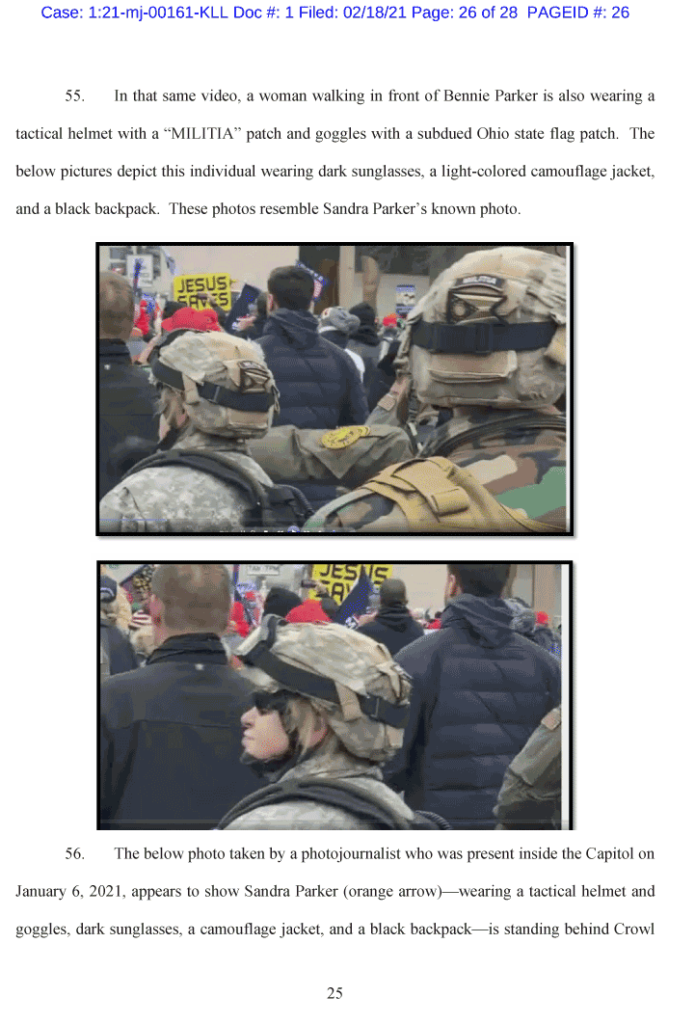
    The original superseding charges remain pending against Sandra and Bernie Parker of Morrow, Ohio (Read the complaint below)

    Washington, DC – A federal grand jury in the District of Columbia returned an indictment yesterday, which was unsealed today, charging 11 defendants with seditious conspiracy and other charges for crimes related to the breach of the U.S. Capitol on Jan. 6, which disrupted a joint session of the U.S. Congress that was in the process of ascertaining and counting the electoral votes related to the presidential election.

    According to court documents, Elmer Stewart Rhodes III, 56, of Granbury, Texas, who is the founder and leader of the Oath Keepers; and Edward Vallejo, 63, of Phoenix, Arizona, are being charged for the first time in connection with events leading up to and including Jan. 6. Rhodes was arrested this morning in Little Elm, Texas, and Vallejo was arrested this morning in Phoenix.

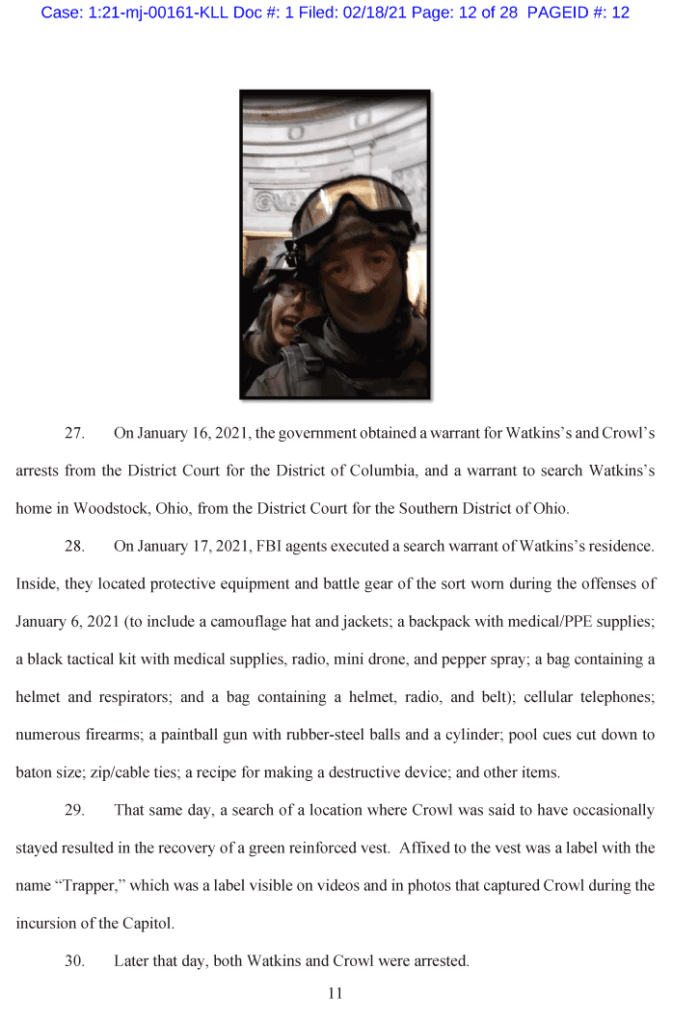
    In addition to Rhodes and Vallejo, those named in the indictment include nine previously charged defendants: Thomas Caldwell, 67, of Berryville, Virginia; Joseph Hackett, 51, of Sarasota, Florida; Kenneth Harrelson, 41, of Titusville, Florida; Joshua James, 34, of Arab, Alabama; Kelly Meggs, 52, of Dunnellon, Florida; Roberto Minuta, 37, of Prosper, Texas; David Moerschel, 44, of Punta Gorda, Florida; Brian Ulrich, 44, of Guyton, Georgia and Jessica Watkins, 39, of Woodstock, Ohio. In addition to the earlier charges filed against them, they now face additional counts for seditious conspiracy and other offenses.

    Eight other individuals affiliated with the Oath Keepers, all previously charged in the investigation, remain as defendants in two related cases. All defendants – except Rhodes and Vallejo – previously were charged in a superseding indictment. The superseding indictment has now effectively been split into three parts: the 11-defendant seditious conspiracy case, a seven-defendant original case, and a third case against one of the previously charged defendants.

    In one of the related cases, the original superseding indictment, charges remain pending against James Beeks, 49, of Orlando, Florida; Donovan Crowl, 51, of Cable, Ohio; William Isaacs, 22, of Kissimmee, Florida; Connie Meggs, 60, of Dunnellon, Florida; Sandra Parker, 63, of Morrow, Ohio; Bernie Parker, 71, of Morrow, Ohio, and Laura Steele, 53, of Thomasville, North Carolina. The other case charges Jonathan Walden, 57, of Birmingham, Alabama.

    The three indictments collectively charge all 19 defendants with corruptly obstructing an official proceeding. Eighteen of the 19 defendants – the exception is Walden – are charged with conspiring to obstruct an official proceeding and conspiring to prevent an officer of the United States from discharging a duty. Eleven of the 19 defendants are charged with seditious conspiracy. Some of the defendants are also facing other related charges.

    As alleged in the indictments, the Oath Keepers are a large but loosely organized collection of individuals, some of whom are associated with militias. Though the Oath Keepers will accept anyone as members, they explicitly focus on recruiting current and former military, law enforcement and first-responder personnel. Members and affiliates of the Oath Keepers were among the individuals and groups who forcibly entered the Capitol on Jan. 6, 2021.

    The seditious conspiracy indictment alleges that, following the Nov. 3, 2020, presidential election, Rhodes conspired with his co-defendants and others to oppose by force the execution of the laws governing the transfer of presidential power by Jan. 20, 2021. Beginning in late December 2020, via encrypted and private communications applications, Rhodes and various co-conspirators coordinated and planned to travel to Washington, D.C., on or around Jan. 6, 2021, the date of the certification of the electoral college vote, the indictment alleges. Rhodes and several co-conspirators made plans to bring weapons to the area to support the operation. The co-conspirators then traveled across the country to the Washington, D.C., metropolitan area in early January 2021.

    According to the seditious conspiracy indictment, the defendants conspired through a variety of manners and means, including: organizing into teams that were prepared and willing to use force and to transport firearms and ammunition into Washington, D.C.; recruiting members and affiliates to participate in the conspiracy; organizing trainings to teach and learn paramilitary combat tactics; bringing and contributing paramilitary gear, weapons and supplies – including knives, batons, camouflaged combat uniforms, tactical vests with plates, helmets, eye protection and radio equipment – to the Capitol grounds; breaching and attempting to take control of the Capitol grounds and building on Jan. 6, 2021, in an effort to prevent, hinder and delay the certification of the electoral college vote; using force against law enforcement officers while inside the Capitol on Jan. 6, 2021; continuing to plot, after Jan. 6, 2021, to oppose by force the lawful transfer of presidential power, and using websites, social media, text messaging and encrypted messaging applications to communicate with co-conspirators and others.

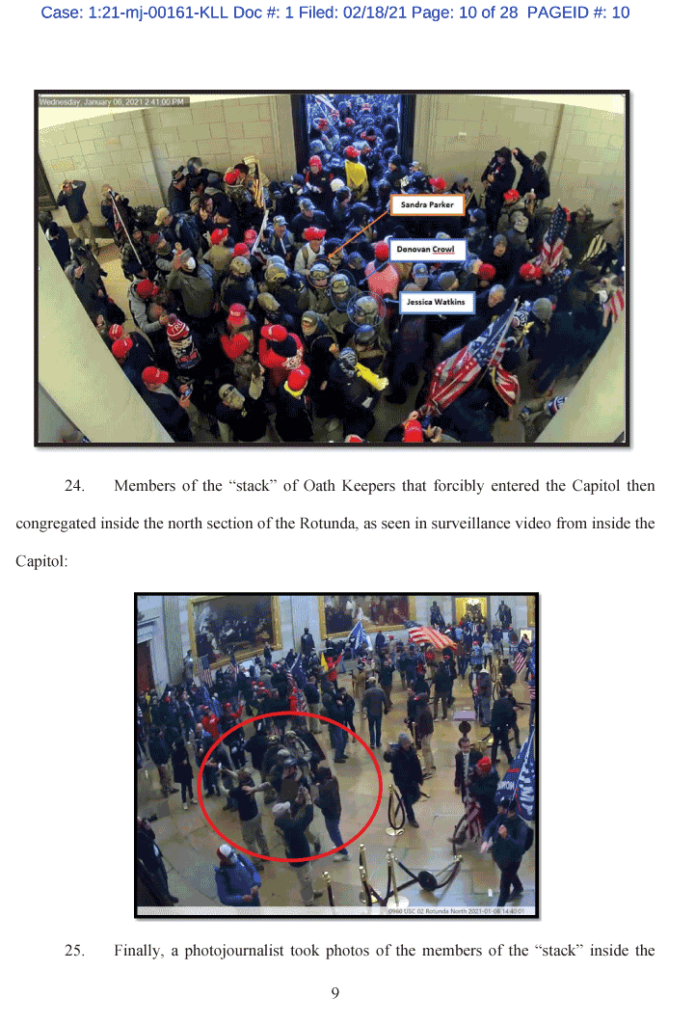
    On Jan. 6, 2021, a large crowd began to gather outside the Capitol perimeter as the Joint Session of Congress got under way at 1 PM. Crowd members eventually forced their way through, up and over U.S. Capitol Police barricades and advanced to the building’s exterior façade. Shortly after 2 PM, crowd members forced entry into the Capitol by breaking windows, ramming open doors, and assaulting Capitol police and other law enforcement officers. At about this time, according to the indictment, Rhodes entered the restricted area of the Capitol grounds and directed his followers to meet him at the Capitol.

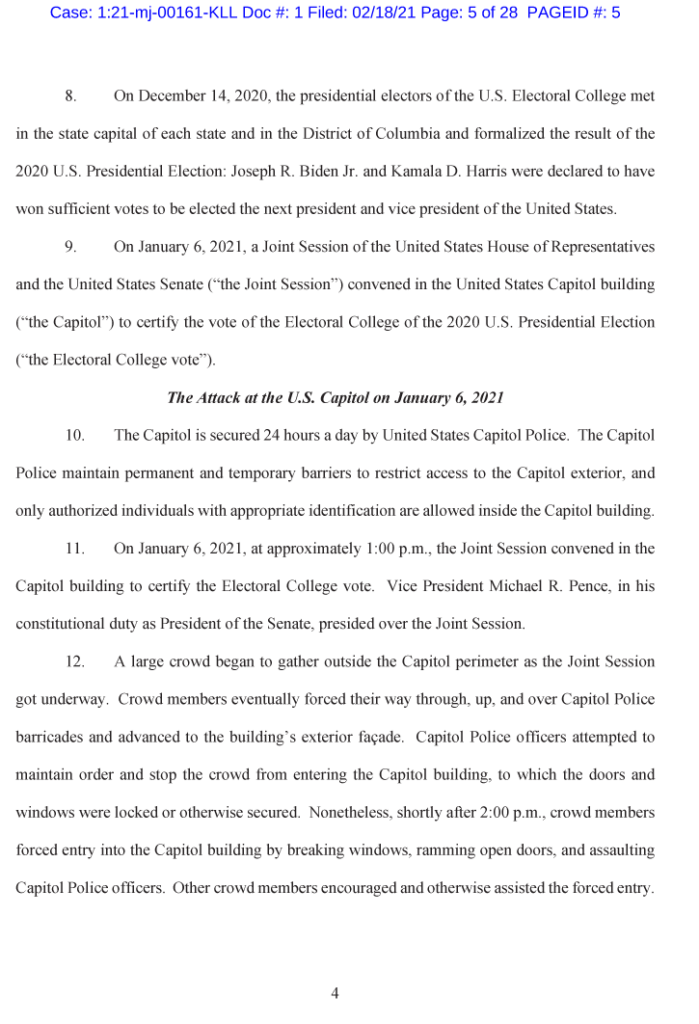
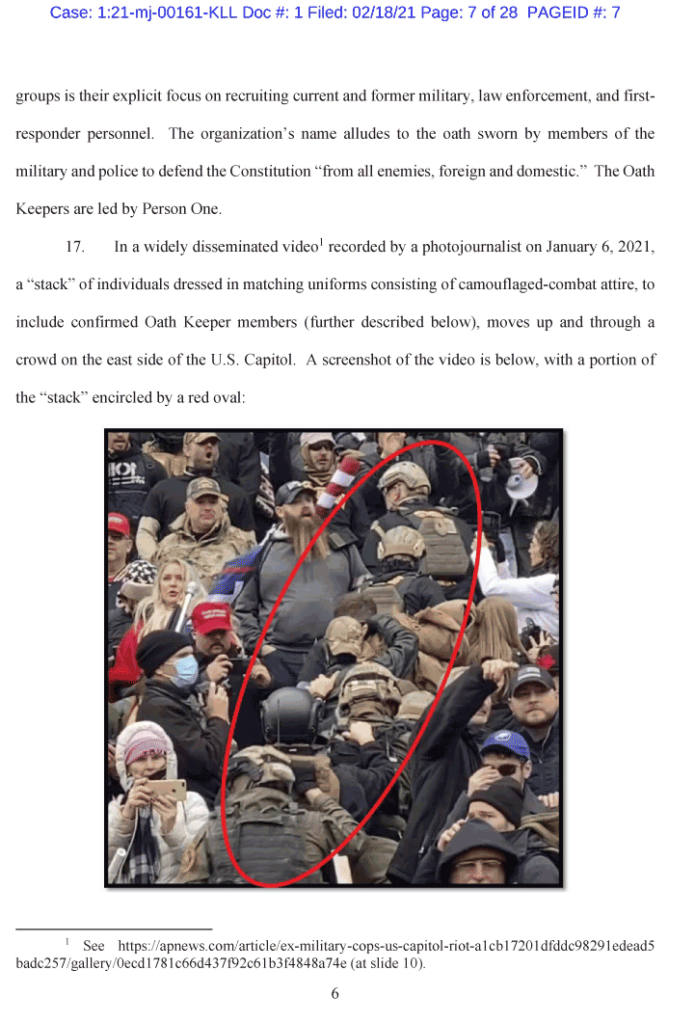
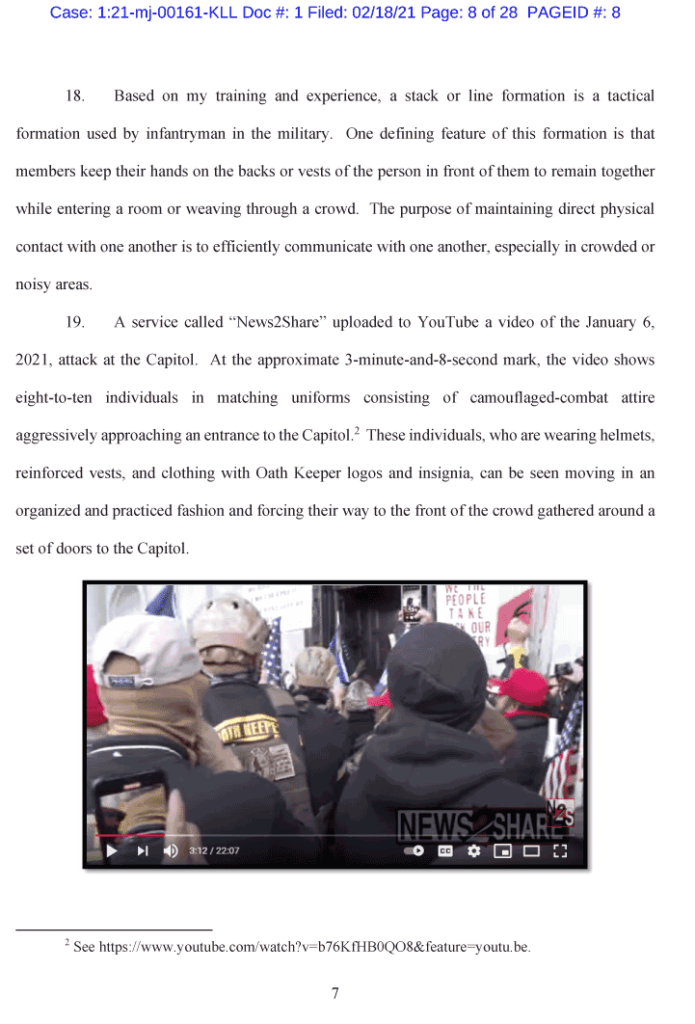
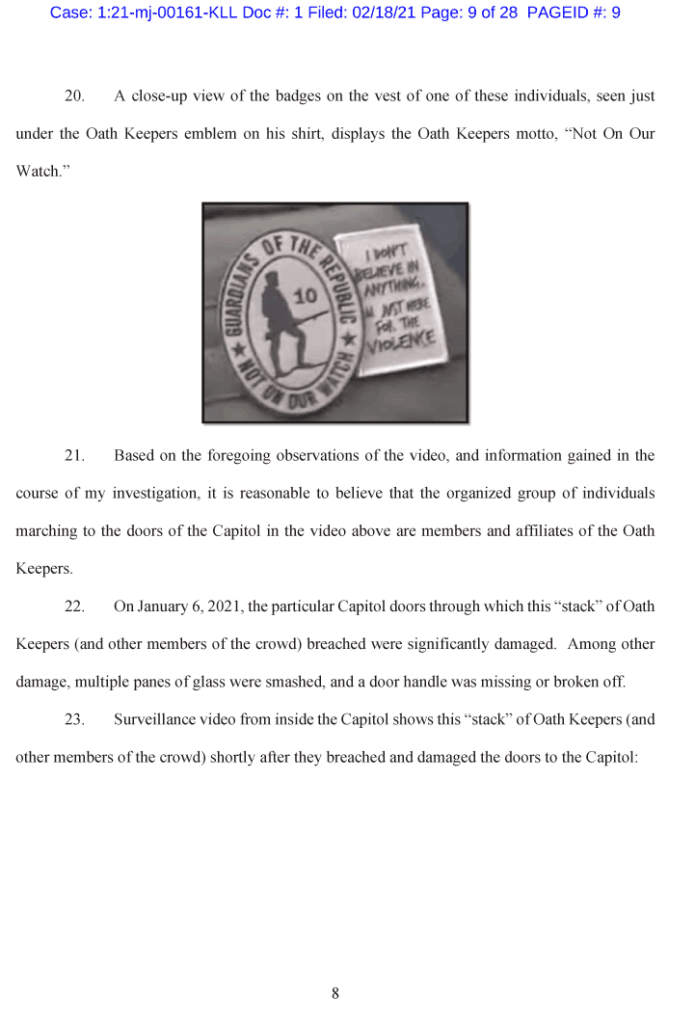
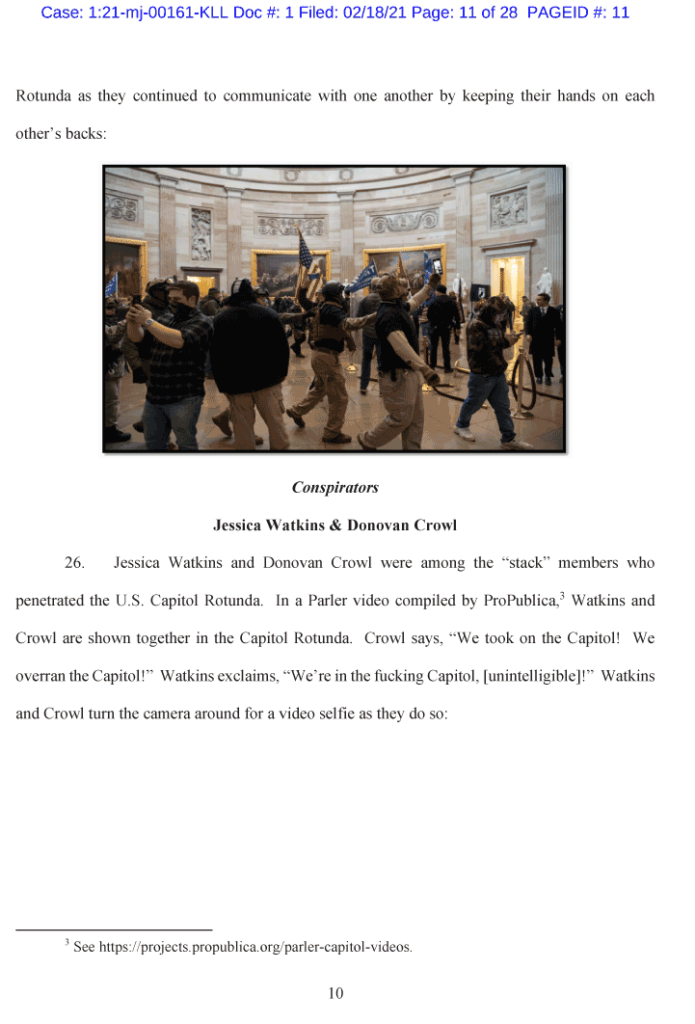
    At approximately 2:30 PM, as detailed in the indictment, Hackett, Harrelson, Meggs, Moerschel and Watkins, and other Oath Keepers and affiliates – many wearing paramilitary clothing and patches with the Oath Keepers name, logo, and insignia – marched in a “stack” formation up the east steps of the Capitol, joined a mob, and made their way into the Capitol. Later, another group of Oath Keepers and associates, including James, Minuta, and Ulrich, formed a second “stack” and breached the Capitol grounds, marching from the west side to the east side of the Capitol building and up the east stairs and into the building.

    While certain Oath Keepers members and affiliates breached the Capitol grounds and building, others remained stationed just outside of the city in quick reaction force (QRF) teams. According to the indictment, the QRF teams were prepared to rapidly transport firearms and other weapons into Washington, D.C., in support of operations aimed at using force to stop the lawful transfer of presidential power. The indictment alleges that the teams were coordinated, in part, by Caldwell and Vallejo.

    The charge of seditious conspiracy carries a statutory maximum penalty of 20 years in prison. A federal district court judge will determine any sentence after considering the U.S. Sentencing Guidelines and other statutory factors.

    This case is being prosecuted by the U.S. Attorney’s Office for the District of Columbia and the Department of Justice National Security Division’s Counterterrorism Section. Assistance was provided by U.S. Attorney’s Offices in the Northern District of Texas and the District of Arizona.

    The case is being investigated by the FBI’s Washington Field Office with assistance provided by the FBI’s Dallas and Phoenix Field Offices. These charges are the result of cooperation between agents and staff across numerous FBI Field Offices, including those in Florida, North Carolina, Ohio, Texas, Arizona, Alabama and Georgia, among other locations.

    In the one year since Jan. 6, more than 725 individuals have been arrested in nearly all 50 states for crimes related to the breach of the U.S. Capitol, including over 225 individuals charged with assaulting or impeding law enforcement. The investigation remains ongoing.

    Anyone with tips can call 1-800-CALL-FBI (800-225-5324) or visit tips.fbi.gov.

    An indictment is merely an allegation, and all defendants are presumed innocent until proven guilty beyond a reasonable doubt in a court of law.


    Here is the Federal Criminal Complaint filed against Sandra Parker, 63 and Bernie Parker, 71, of Morrow, Ohio


  • Milford, Ohio man Indicted in Machine Gun Scheme
    Milford, Ohio man Indicted in Machine Gun Scheme
    Allegedly conspired with two Indiana gun dealers to acquire over 200 fully automatic weapons and re-sell them at a profit
    One of those guns was an M2 .50 caliber belt-fed heavy machine gun, which according to the Indictment, is a vehicle- or ship-mounted weapon that is effective against lightly armored vehicles and low-flying aircraft.

    Indianapolis – Acting U.S. Attorney John E. Childress announced on Friday that Dorian LaCourse, 65, of Milford, Ohio, was indicted by a federal grand jury for his role in a scheme to use his position as Chief of Police for the Addyston Police Department in Addyston, Ohio, to help two federally licensed firearms dealers in Indiana acquire hundreds of machine guns. LaCourse was indicted on charges of conspiracy and making false statements to the Bureau of Alcohol, Tobacco, Firearms, and Explosives (ATF). 

    Acting U.S. Attorney John E. Childress

    Childress also announced today that the two Indiana gun dealers, Johnathan Marcum, 33, of Laurel, Indiana, and Christopher Petty, 57, of Lawrenceburg, Indiana, have been charged with conspiracy for their roles in the machine gun scheme.

    “Federal laws regulating the purchase, transfer or possession of firearms exist to promote public safety,” said Childress. “When people violate those laws, they unacceptably threaten the safety of others. This office will vigorously pursue those who commit federal firearms offenses, regardless of who they are. We expect better from our public servants, and when police officers violate the law, they can expect to be investigated and prosecuted like any other citizen. I am confident that LaCourse’s criminal choices do not represent the vast majority of law enforcement in this country.”

    According to the Indictment, LaCourse and the two Indiana firearms dealers exploited a law enforcement exception to the general federal ban on fully automatic machine guns. The Village of Addyston, Ohio, has approximately 1,000 residents, and the Addyston Police Department has up to 10 officers, most of whom were part-time. However, according to the Indictment, between 2015 and 2019, LaCourse signed multiple letters and other official documents as Chief of Police falsely claiming to the ATF and others that the Addyston Police Department was interested in purchasing or receiving demonstrations of machine guns.

    The Addyston Police Department and Village of Addyston had no intention of purchasing machine guns or receiving demonstrations of machine guns. Instead, these allegedly false statements were a pretense to gain ATF approval for Marcum and Petty to acquire machine guns, which they re-sold to other federally licensed firearms dealers at a profit—of which LaCourse got a portion. According to the Indictment, LaCourse received 11 checks payable to him totaling over $11,500.

    In four instances, LaCourse falsely claimed on ATF forms and other documents that the Addyston Police Department was the actual purchaser of machine guns, including two bulk purchases of a total of 18 guns from German manufacturer Heckler & Koch. On one document required by the German government, which pertained to the importation of the machine guns into the United States, LaCourse is alleged to have falsely stated that the Addyston Police Department was the “end-user” of the guns. In reality, according to the Indictment, Marcum purchased the guns for the purpose of re-selling them—Marcum paid for them, picked them up from the Addyston Police Department when they arrived, and promptly re-sold them at a profit of over $8,000 each.

    In all, the Indictment alleges that through their scheme, LaCourse’s false statements and representations induced the ATF to approve the purchase or importation of approximately 200 fully automatic machine guns. The types of guns acquired ranged from smaller submachine guns to automatic assault rifles, to belt-fed machine guns for military use. One of those guns was an M2 .50 caliber belt-fed heavy machine gun, which according to the Indictment, is a vehicle- or ship-mounted weapon that is effective against lightly armored vehicles and low-flying aircraft. 

    This case was investigated by the Bureau of Alcohol, Tobacco, Firearms, and Explosives.

    “No matter who you are, it is a crime to make false statements to acquire firearms and allow them into the hands of those who cannot legally possess them,” stated Roland H. Herndon, Jr., Special Agent in Charge of ATF’s Columbus Field Division. “LaCourse, Marcum, and Petty all used their positions and knowledge of the system to illegally transfer fully automatic weapons for profit, with no regard for any potential impact that might have on our communities.”

    According to Assistant United States Attorneys Nick Linder and William L. McCoskey, who are prosecuting this case for the government, LaCourse faces up to 5 or 10 years in prison on each charge if indicted and convicted. Marcum and Petty each face up to 5 years.

    An indictment is merely a charge and not evidence of guilt. All defendants are presumed innocent until proven otherwise in court.