

Tag: infections

  • Vaccine floods into Ohio but drop in new covid cases stalls

    Vaccine floods into Ohio but drop in new covid cases stalls

    By Marty Schladen and Ohio Capital Journal

    March 26, 2021

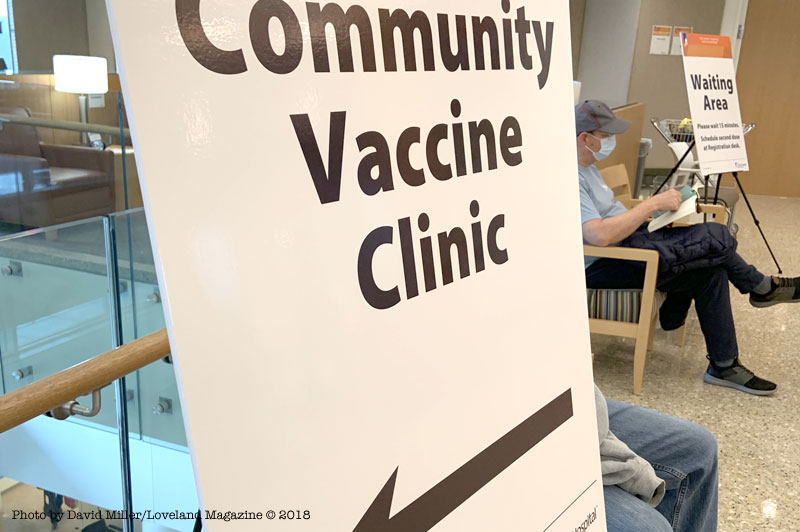
    Ohio got even more good news on the coronavirus vaccine Thursday. But even as doses are flooding into the state, what had been a steady drop in infections has turned into a plateau.

    Gov. Mike DeWine announced that next week — when all Ohio adults will be eligible to be vaccinated — the state will receive 571,000 doses, which he said was “by far and away the highest amount of doses we’ve received.” In fact, it more than quintuples the 100,000 doses a week that the state was receiving in early February.

    The surge has allowed the state to throw open vaccine eligibility to every Ohioan 16 and over starting Monday and it allowed DeWine on Thursday to announce 11 new mass vaccination sites:

    • Knights of Columbus, Lima, 2,500 doses a week
    • Lucas County Recreation Center, 5,000 doses a week
    • Dayton-Montgomery County Convention Center, 5,000 doses a week
    • Celeste Center, Columbus, 5,000 doses a week
    • Summit County Fairgrounds, 5,000 doses a week
    • Southern Park Mall, Mahoning County, 2,500 doses a week
    • Cintas Center, Cincinnati, 5,000 doses a week
    • Wilmington Airpark, 5,000 doses a week
    • Adena Medical Education Center, Ross County, 2,500 doses a week
    • Wayne Street Medical Campus, Marietta, 1,500 doses a week
    • Colony Square Mall, Muskingum County, 1,500 doses a week

    The state also is starting up two mobile vaccination clinics that will visit rural counties in April.

    In all, about a quarter of Ohio adults have now received at least a first dose of the vaccine. Yet progress toward DeWine’s benchmark to remove all remaining health orders has stalled and even gone backward a little since last week.

    DeWine has said once the state drops to 50 new cases a week per 100,000 Ohioans, all the orders come off. But after a long decline, the rate of cases went up from 144 last week to 147 this week.

    While the increase is slight, making it more concerning is that some neighboring states — such as Michigan — are now seeing rapid growth in the number of cases per 100,000.

    Part of that might be because people are tired of pandemic precautions, the weather’s getting nicer and vaccines are more widely available, so some people are abandoning caution. Another reason is that the faster-spreading UK variant of the virus is becoming more predominant.

    “That’s (the variant) we’re seeing the most of,” said Bruce Vanderhoff, chief medical officer for the Ohio Department of Health. “We’ve been expecting a growing presence of these variants.”

    Vaccine reluctance is surely also playing a role. 

    Even though they’ve been eligible to get a shot since January, the portion of Ohioans 80 and over getting at least a first dose only crossed 70% this week.

    “We’re hopeful that these numbers will continue to creep up, move up,” DeWine said of percentages for all age groups.

    Also, some institutions in Ohio haven’t responded to months of repeated offers of vaccines from the state. A frustrated DeWine said he was going to publish the names of 56 nursing homes and 168 assisted-living facilities that have failed to communicate with state officials about the vaccine.

    “I don’t know what else to do,” DeWine said. “I’m worried about the people in these nursing homes” and assisted care facilities.

    So despite the temptation to party like it’s March 2019, state officials are pleading for Ohioans to understand that the pandemic’s still here and still dangerous.

    “We’re in the final stages of this marathon,” Vanderhoff said. “So let’s keep masking and distancing even if you’ve had the chance to roll up your sleeve and get vaccinated.”

  • Coronavirus death toll surpasses 100 in Ohio prisons

    Coronavirus death toll surpasses 100 in Ohio prisons

    Belmont Correctional Institution. Source: ODRC

    More than 100 inmates and workers in Ohio’s prison system have died from COVID-19, state data shows.

    Jake ZuckermanJake Zuckerman is a statehouse reporter. He spent three years chronicling the West Virginia Legislature for The Charleston Gazette-Mail after covering cops and courts for The Northern Virginia Daily.


    Five prison workers (three corrections officers and two nurses) and 96 inmates have died from the disease that has clobbered the Ohio Department of Rehabilitation and Correction since late March when it was first detected in the system.

    Nearly 6,200 inmates have contracted COVID-19, the disease caused by the new coronavirus, though the figure is likely an undercount. After mass testing at Marion and Pickaway correctional institutions detected infections in 80% of inmates, ODRC shifted its strategy away from blanket testing and toward symptom-based testing.

    An ODRC spokeswoman said 461 inmates with COVID-19 have been admitted to the hospital, but those people may have been admitted for other causes.

    The dead inmates were 66 years old, on average.

    At Marion, nearly 2,000 inmates have been infected, 12 of whom died.

    At Pickaway, nearly 1,400 inmates have been infected, 35 of whom died.

    The two prisons are the third and fourth largest COVID-19 clusters in the nation respectively, according to data from The New York Times.

    The virus hit prison workers in force as well, though with much lower morbidity rates. More than 1,100 prison workers were infected, and the union representing them alleged workers were provided insufficient protective equipment.

    Gary Daniels, a lobbyist for the ACLU, said there’s more than just a death toll. As more information emerges about long term damage from COVID-19, including “long haulers” who report debilitating symptoms even six months after infection, he questioned the health services ODRC is providing.

    According to the CDC, coronavirus infections can cause myocarditis (heart inflammation) among other long term symptoms. While the science is still emerging, the heart damage could explain reported long-term symptoms like shortness of breath, chest pain and heart palpitations.

    “How many people in Ohio prisons face this right now?” he said. “You’ve got these 100 people who have died, but that’s nowhere near the whole story.”

    The ACLU has pushed for a broad decarceration that would remove people convicted for drug possession or parole violations — at least temporarily.

    In February, there were nearly 49,000 inmates in Ohio prisons, which were populated well beyond their design capacity even before the pandemic. That figure decreased to slightly above 45,000 by August.

    “It does appear to have plateaued,” Daniels said. “Whether that continues, who knows. Our concern is that after a certain amount of time, we’re going to see that population rise.”

    In mid-May, four inmates filed a class action lawsuit in federal court seeking the forced depopulation of Ohio prisons.

    U.S. District Judge Edmund Sargus Jr., in a ruling last month, rejected motions to dismiss the lawsuit. In a blow to the inmates, however, he also struck down a request for a preliminary injunction. He has not ruled on the issue at large.

    Though it amounted to a loss for the inmates, Sargus signaled some sympathy for the conditions inside.

    “This Court agrees with the other district courts across the country who have found COVID-19 to be an objectively intolerable risk of harm to prisoners when it enters a prison,” Sargus wrote.

    Prisons and jails are near ideal places for the coronavirus to spread given the overcrowding, poor sanitation, and preexisting health complications inside.

    In April, the Ohio Supreme Court dismissed a lawsuit from an HIV-positive inmate who sought release due to COVID-19.

    At the time there were only 272 inmate infections. However, Justice Michael Donnelly wrote in an opinion that Ohio needs to take drastic action to prevent “catastrophe” looming down the line.

    “The whole of Ohio’s government needs to take serious, unprecedented steps to prevent the catastrophe of unmitigated spread of COVID-19 to the tens of thousands of prisoners in Ohio as well as to the tens of thousands of people who are prison employees along with those living in the households of prison employees,” he said.

  • Air quality alert continues into Monday

    Air quality alert continues into Monday

    The Ohio EPA is predicting that the ozone level will be 125 on Monday.

    Predicted Air Quality Index (AQI) for the Loveland Area
    125
    Unhealthy for Sensitive Groups on Saturday
     

    Health Message: Active children and adults, and people with lung disease, such as asthma, should reduce prolonged or heavy exertion outdoors.


    Steps you should take to protect you or your children’s health

    Reduce prolonged or heavy outdoor exertion. Take more breaks, do less intense activities. Watch for symptoms such as coughing or shortness of breath. Schedule outdoor activities in the morning when ozone is lower.

    People with asthma should follow their asthma action plans and keep quick relief medicine handy.


    Do Your Share!

    • Carpool, bike or walk instead of driving.
    • Use your most fuel efficient vehicle and drive gently.
    • Keep your motorcycle in the garage. They don’t have the pollution controls modern passenger vehicles do.
    • Refuel your vehicle after 8 PM; do not top off when refueling and tighten the gas cap.
    • Avoid idling your vehicle. (Avoid drive-thru windows.)
    • Combine trips and eliminate unnecessary vehicle trips
    • Do not use of gasoline-powered lawn equipment
    • Do not use of oil-based paints and stains
    • Never burn leaves or other yard trimmings.
    • Do not use fire pits.
    • Conserve electricity by turning off unnecessary lights.
    • Turn your air conditioner thermostat up and use room fans for cooling.
    • Save the power boating for another day.
    • Initiate an Air Pollution Alert Day policy where you work; whether that be a company you own, an employee, a local government agency you work for, or a school district.

    Sign up  for Enviroflash and Start Receiving Your Air Quality Forecast


    Children and Air Pollution

    Children face special risks from air pollution because their lungs are growing and because they are so active and breathe in a great deal of air.

    Just like the arms and legs, the largest portion of a child’s lungs will grow long after he or she is born. Eighty percent of their tiny air sacs develop after birth. Those sacs, called the alveoli, are where the life-sustaining transfer of oxygen to the blood takes place. The lungs and their alveoli aren’t fully grown until children become adults. In addition, the body’s defenses that help adults fight off infections are still developing in young bodies. Children have more respiratory infections than adults, which also seems to increase their susceptibility to air pollution.

    Furthermore, children don’t behave like adults, and their behavior also affects their vulnerability. They are outside for longer periods and are usually more active when outdoors. Consequently, they inhale more polluted outdoor air than adults typically do.

    Read on at The American Lung Association…


    Take advantage of special savings on energy efficient lighting and other products offered by Duke Energy

    LEDs use up to 90% less energy than traditional bulbs

    LEDs last at least 15 times longer than traditional bulbs