


Tag: insulin costs

  • Diabetes activists applaud drug reforms, say more needs to be done

    Diabetes activists applaud drug reforms, say more needs to be done

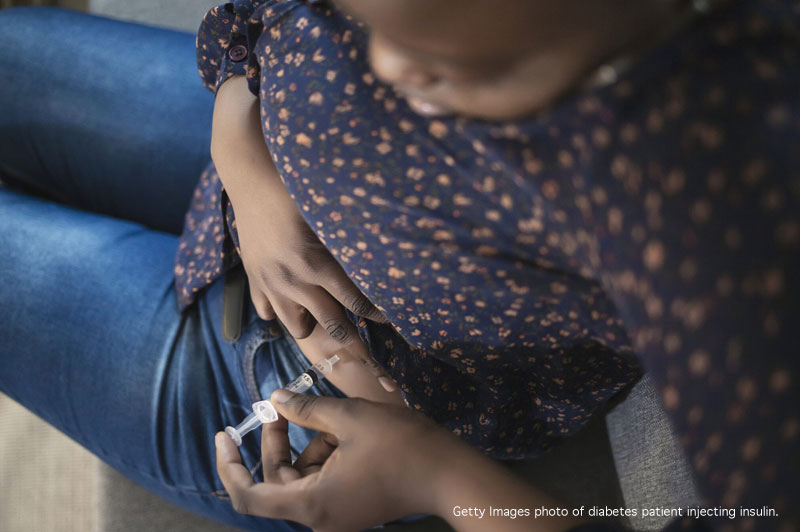
    Getty Images photo of diabetes patient injecting insulin.

    BY: MARTY SCHLADEN – Ohio Capital Journal

    Pricing reforms under a sweeping law signed on Tuesday by President Joe Biden are great for diabetics, but much more needs to be done, an activist said Wednesday.

    As part of the Inflation Reduction Act, monthly out-of-pocket insulin costs for Medicare recipients were capped by the law at $35 a month. Together with capping all drug costs for Medicare patients at $2,000 a year, the new law is being lauded as a boon for seniors struggling to balance their drug costs with all their other expenses.

    Among medicines, insulin is one that is particularly difficult for those who need it to live without. For diabetics, it helps regulate blood-glucose levels that, if left untreated, can cause blindness, nerve and kidney damage and even death.

    But even though it’s been around for a century, insulin prices aren’t as cheap as one might think for a class of drugs that has been researched, manufactured and marketed for so long. In fact, until recently, list prices have been increasing rapidly.

    “The list price of insulin per milliliter in the United States increased, on average, 2.9% annually from 1991-2001, 9.5% per year from 2002 and 2012, 20.7% annually between 2012 and 2016, and 1.5% per year from 2016-2018,” the American Action Forum reported in 2020.

    And that can lead to some excruciating choices if you can’t afford it. The Commonwealth Fund in 2020 reported that among non-Medicare patients, huge numbers had difficulty affording their insulin between 2014 and 2017; from nearly half of the uninsured living below the poverty line to 3% of people with good insurance and who were making five times the poverty level, or nearly $100,000 for a family of four.

     Source: The Commonwealth Fund

    “Bottom line for diabetics, we can’t afford to wait,” said John Kennedy, an advocate with Ohio Insulin 4All, said Wednesday in a press conference hosted by the group Protect Our Care. 

    Kennedy added, “We’re impatient, but our impatience comes from a really good place. It’s because the more time that passes means more diabetics are going to have to make really difficult choices that nobody should have to make; whether to put food on the table or to take the whole dose of their insulin. As we know, about a quarter of all diabetics have said that they ration their insulin supply because they just can’t afford it.”

    For Medicare patients, the Kaiser Family Foundation reports that average monthly out-of-pocket insulin costs increased 39% between 2007 and 2020. Now those monthly costs range from $16 to $116, or $192 to $1,392 a year.

    With average out-of-pocket insulin expenses for Medicare patients at $54 a month in 2020, the $35-a-month cap in the Inflation Reduction Act represents a more than a 50% savings, KFF reported last month.

    While capping those costs — and directly negotiating Medicare insulin prices with drugmakers — is surely welcome news to seniors with fixed incomes, it won’t do much for many other diabetic Americans.

    One reason is that the new law keeps intact the opaque system under which giant drug middlemen extract big discounts from drugmakers in exchange for covering them. The three largest middlemen — or pharmacy benefit managers — in the U.S. control more than 70% of the marketplace and each is owned by a corporation that also owns a top-10 insurance company.

    And because the system isn’t transparent, it’s unknown how much of the rebates the middlemen and their affiliated insurers are pocketing.

    In a paper published last year in the Journal of the American Medical Association’s Health Forum, three researchers at the University of Southern California assed what happened with the prices of 32 insulin products between 2014 and 2018. And despite the fact that drugmakers such as Eli Lilly, Sanofi and Novo Nordisk tend to get most of the blame for rising costs, it shows that others are also culpable:

    • List prices went up by 40% while net, or post-rebate, prices received by drugmakers dropped by 31%.
    • The share of insulin expenditures retained by pharmacy benefit managers such as CVS Caremark, OptumRx and Express Scripts increased by 154.6%
    • The share retained by pharmacies, the largest of which is CVS, increased by 228.8%
    • The share retained by wholesalers such as Cardinal Health, AmerisourceBergen and McKesson increased by 74.7%.

    While he lauded the insulin measures in the Inflation Reduction Act, Kennedy, the diabetes advocate, they were far from sufficient.

    “The way that pricing is done is so hidden; it’s not transparent at all and that’s a big, big, big problem,” he said. “And yes pharmacy benefit managers have played a big role in this secret process — hidden process — that is used to determine what the costs are going to be. But they’re just one player in this game. PBMs certainly share a chunk of the blame, but there’s a lot of blame to go around.”
    Follow Marty Schladen on Twitter.

  • COVID-19 is causing more type 1 diabetes in kids, who will be saddled with high insulin prices

    COVID-19 is causing more type 1 diabetes in kids, who will be saddled with high insulin prices

    Commentary

    by Jennifer Schuerman – Ohio Capital Journal

    As nurses, my husband and I witnessed truly awful and devastating things treating patients on the frontlines of this pandemic. Hundreds of thousands of Americans have died, while the millions who survived, now faced with disability, are left to grapple with the harsh realities of long COVID-19.

    Among those millions of people living with long-term health impacts is our son Carter.

    Four days before the COVID-19 vaccine was available for kids under 12, my 11-year-old son Carter tested positive for COVID-19. He had the common symptoms for the first few days, but as those subsided, I began noticing new ones like extreme thirst and frequent urination. In my gut, I knew it was diabetes. And sure enough, a mother always knows: Twelve days after his COVID-positive test, Carter was officially diagnosed with Type 1 diabetes.

    In less than a month, everything about our lives changed. We don’t have any family history of any type of diabetes, so Carter’s diagnosis came out of nowhere, and we were not prepared. Our days now revolve around his blood sugar levels. Meal times are planned around insulin doses, mornings and evenings have a new medicine routine. Even as nurses, my husband and I could have never anticipated the severity of impact this diagnosis would have on our family.

    I hear fellow nurses say there are more kids coming into the hospital and leaving with a diabetes diagnosis. Many of the newly diagnosed diabetics often had a recent COVID-19 infection. When a recent CDC report found children under 18 infected with COVID-19 are 2.66 times more likely to develop diabetes, it only confirmed the trend I witnessed in my hospital.

    Carter was prescribed two different kinds of insulin, Humalog and Basaglar. Only a couple months into his treatment, our insurance decided it would no longer cover Humalog beginning in January of this year. We had just enough to last us through March. We cannot afford the out-of-pocket costs to keep Carter on the same kind of insulin, so we will need to switch him to a new kind of insulin before his body has even adapted to the current regimen.

    We lose sight of the human cost when we ignore insulin price gouging. At the end of the day, we are putting a price on human life — on a child’s life.

    I realize we are extremely lucky to have health insurance that keeps insulin costs manageable for our family. Since becoming part of the diabetes community, I’ve learned how rare it is to have sufficient insurance coverage and be able to afford insulin at all. As I read the heart-breaking posts from parents pleading for insulin donations in online communities, I think about how one unfortunate diagnosis can send a family to economic ruin through no fault of their own.

    So, when the House passed the Affordable Insulin Now Act last week, I felt like Congress finally listened to the pleas of Americans with diabetes. The bill will cap insulin copays at $35 a month — reducing insulin costs by hundreds each year. In America, around 1 in 4 diabetics have rationed their insulin due to high costs. With nearly 60% of Americans under 17 having been infected with COVID-19, some of them may develop type 1 diabetes. It is more important than ever to do something about insulin prices.

    By lowering the price of insulin and passing other federal prescription drug reforms, we can help existing diabetics and prevent newly diagnosed diabetics, especially kids, from being forced to ration life-saving medication.

    I couldn’t imagine going through this emotional journey with the added stress of not being able to afford the one thing you need to keep your child alive. Type 1 diabetes is a lifelong condition; my son will never escape this. It’s not his fault he caught COVID-19. It’s not his fault that COVID-19 may have caused his diabetes. But he will be forever burdened by the price of insulin.

    We are fortunate to be able to afford Carter’s insulin and supplies. But what about the families who aren’t so lucky? What happens to all of the kids who will eventually age off of their parents’ insurance, and their plans barely cover insulin? We lose sight of the human cost when we ignore insulin price gouging. At the end of the day, we are putting a price on human life — on a child’s life.

    I would do whatever I could to get my child what he needs. I would give up my house, I would give up everything to keep him alive. I don’t know any parent who wouldn’t do the same. Our leaders in Congress must do everything they can, so people with diabetes and their caretakers aren’t left with such impossible choices. Now, it’s up to our representatives in the Senate to stand with parents like me and stop hiding behind the donations of pharmaceutical companies.

    This commentary was first published in the Arizona Mirror.