Tag: Joe Biden

  • Joe Biden diagnosed with a ‘more aggressive form’ of prostate cancer

    Joe Biden diagnosed with a ‘more aggressive form’ of prostate cancer

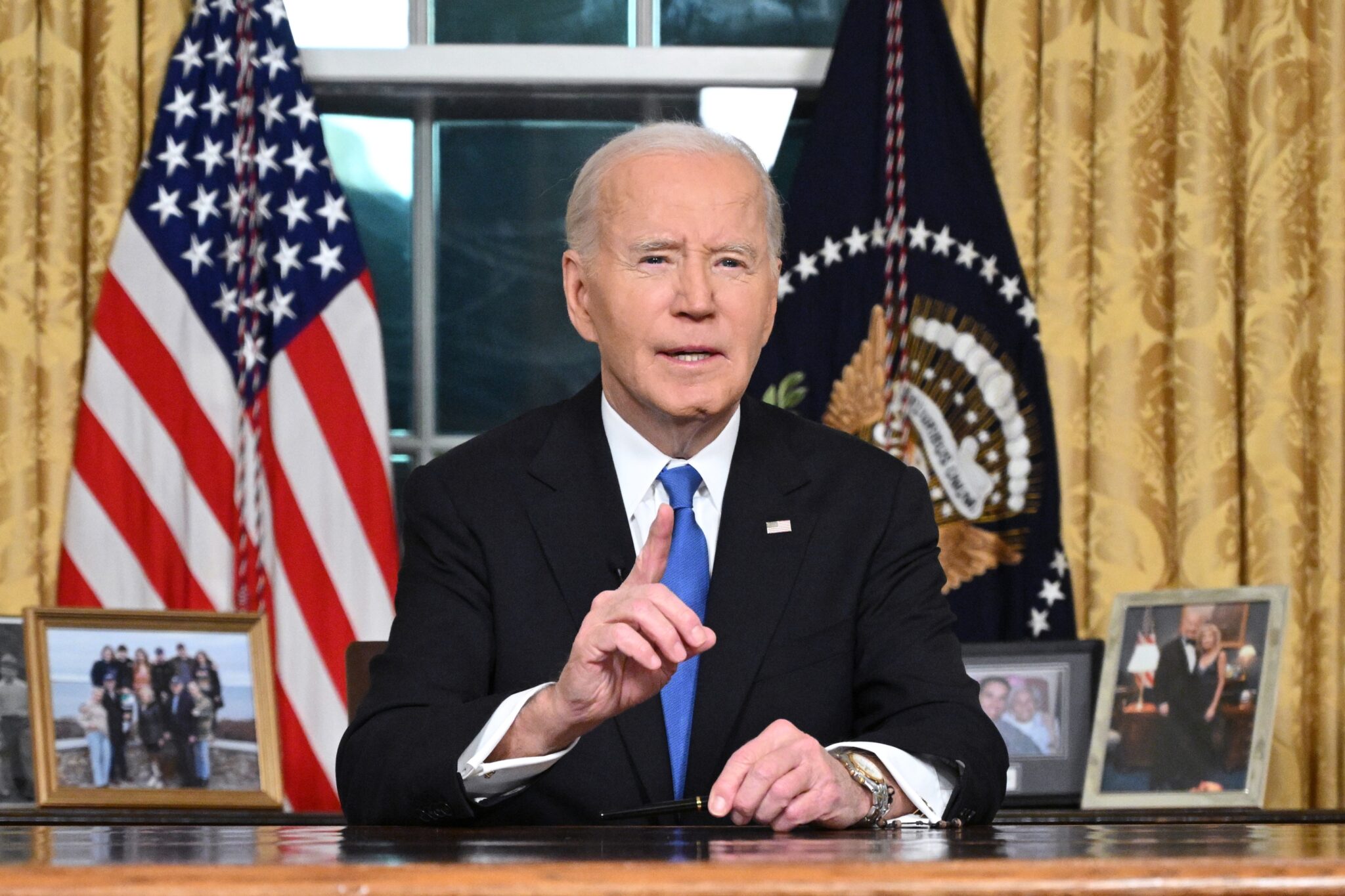
     President Joe Biden delivers his farewell address to the nation from the Oval Office of the White House on Jan. 15, 2025, in Washington, D.C. (Photo by Mandel Ngan – Pool/Getty Images)

    By:  Ohio Capital Journal

    WASHINGTON — Former President Joe Biden has been diagnosed with “a more aggressive form” of prostate cancer, according to a statement from his office on Sunday.

    The statement said Biden, 82, last week was seen for a new finding of a prostate nodule after experiencing increasing urinary symptoms. “On Friday, he was diagnosed with prostate cancer, characterized by a Gleason score of 9 (Grade group 5) with metastasis to the bone,” the statement said.

    “While this represents a more aggressive form of the disease, the cancer appears to be hormone-sensitive which allows for effective management,” it continued. “The President and his family are reviewing treatment options with his physicians.”

    The New York Times had reported on May 12 that a few days earlier, a “small nodule” was discovered on Biden’s prostate that required “further evaluation,” according to a spokesman.

    According to the National Cancer Institute, prostate cancer is slow-growing, the second leading cause of cancer death among men in the United States and the most common cancer.

    ‘Joe is a fighter’

    Statements of support immediately began pouring in on Sunday as word spread of the diagnosis.

    “Doug and I are saddened to learn of President Biden’s prostate cancer diagnosis,” his former vice president and the 2024 Democratic nominee, Kamala Harris, said on X. “We are keeping him, Dr. Biden, and their entire family in our hearts and prayers during this time. Joe is a fighter — and I know he will face this challenge with the same strength, resilience, and optimism that have always defined his life and leadership. We are hopeful for a full and speedy recovery.”

    “Melania and I are saddened to hear about Joe Biden’s recent medical diagnosis,” President Donald Trump wrote on social media. “We extend our warmest and best wishes to Jill and the family, and we wish Joe a fast and successful recovery.

    Minnesota Gov. Tim Walz, a Democrat who was the party’s vice presidential candidate after Biden dropped out of the race and  Harris took his place at the top of the ticket, said on X that Biden was “a truly decent man and a friend.”

    “Gwen and I are praying for President Biden and his family,” he wrote.

    “I am saddened to hear of President Biden’s cancer diagnosis and am wishing him and his family well as he begins treatment,” Maine Republican Sen. Susan Collins wrote on X.

    Pete Buttigieg, the former South Bend, Indiana, mayor who served as Biden’s Transportation secretary after running against Biden, Harris and others in the 2020 Democratic presidential primary, said Biden “is a man of deep faith and extraordinary resilience.”

    “Chasten and I are keeping him, and the entire Biden family, in our prayers for strength and healing,” Buttigieg wrote on X.

    “Joe has been a fighter his whole life. He will prevail. Sending Dr. Jill Biden and their family my absolute support,” Democratic Sen. John Fetterman of Pennsylvania posted on X.

    “This is very sad news. Praying for his recovery,” GOP Florida Rep. Anna Paulina Luna said on X. “We are rooting for President Biden in this fight!” former Florida U.S. Rep. Matt Gaetz wrote, reposting Luna’s post.

    Age a factor in presidential race

    Biden’s doctors said he was fit and healthy enough to be president after evaluations in February, 2024.

    “President Biden is a healthy, active, robust 81-year-old male, who remains fit to successfully execute the duties of the Presidency,” Dr. Kevin C. O’Connor wrote.

    But by that summer, Biden’s deteriorating state  — though not connected to the diagnosis disclosed Sunday — would force him out of his reelection bid.

    Biden dropped out of the race for the presidency on July 21, 2024, creating an unprecedented vacancy atop the Democratic ticket one month before he was scheduled to officially accept his party’s nomination. He endorsed Harris to take his place as the Democratic nominee, and she was nominated by Democrats but lost the election to Trump.

    Biden’s withdrawal came after a weeks-long pressure campaign from party insiders following a disastrous June 27, 2024, debate performance against GOP candidate Trump and rising criticism that he could not mount a winning campaign against the man he had defeated in 2020. Biden appeared frail and confused at several points during the debate, leading to worries he was no longer up to the task of governing.

    After leaving the White House on Jan. 20, Biden kept a low profile and did not make public remarks until April 15, when he criticized the current administration for cutting thousands of employees at the Social Security Administration and rebutted those who have questioned the program’s relevance.

    “In fewer than 100 days, this new administration has done so much damage and so much destruction. It’s kind of breathtaking it could happen that soon,” Biden said. “They’ve taken a hatchet to the Social Security Administration, pushing 7,000 employees — 7,000 — out the door in that time, including the most seasoned career officials.”

    Book publication

    In more recent days, the publication of a book by two political reporters, CNN’s Jake Tapper and Alex Thompson of Axios, sparked controversy by its claims that those in Biden’s inner circle worked to keep his cognitive decline from public view.

    Titled “Original Sin,” the book — based on interviews with what the authors said were more than 200 people, mostly Democratic insiders —  included new details about the presidency, such as Biden apparently failing to recognize movie star George Clooney at a fundraiser in June 2024 in Los Angeles. Biden’s decline was such in 2023 and 2024 that use of a wheelchair was discussed, if he was reelected, the book reported.

    Just Friday, the White House released audio of an interview of Biden by Department of Justice special counsel Robert Hur who issued a lengthy report concluding that while President Joe Biden “willfully retained” classified materials following his time as vice president, he would not be charged with a crime.

    Hur wrote in the 388-page February 2024 report that prosecutors considered “that, at trial, Mr. Biden would likely present himself to a jury, as he did during our interview of him, as a sympathetic, well-meaning, elderly man with a poor memory.”

    Jacob Fischler contributed to this report.

    Jane Norman
    Jane Norman

    As the Washington Bureau Chief of States Newsroom, Jane directs national coverage, managing staff and freelance reporters in the nation’s capital and assigning and editing state-specific daily and enterprise stories. Jane is a veteran of more than three decades in journalism.

    Ohio Capital Journal is part of States Newsroom, the nation’s largest state-focused nonprofit news organization.

    MORE FROM AUTHOR

  • Loveland native Ricky Mulvey appears On CNN as “Finance Expert” on trade war uncertainty

    Loveland native Ricky Mulvey appears On CNN as “Finance Expert” on trade war uncertainty

    David Miller is the Editor in Chief of Loveland Magazine

    OPINION

    by David Miller

    Ricky Mulvey was an Intern and talking head at Loveland Magazine, starting when he was in middle school until he graduated from Loveland High School. Of his amazing accomplishments while with Loveland Magazine was in 2012 when he reported during President Barak Obama’s campaign rally in Cincinnati’s Eden Park and when then Vice-President Joe Biden held a reelection campaign rally at Milford High School.

    In 2024 Ricky was in New York City to receive a Signal Award for best money and finance podcast.

    Ricky is currently a host and senior producer for Motley Fool Money, a daily podcast for stock investors. Weekday episodes offer a long-term perspective on business news with The Motley Fool’s investment analysts. Weekend shows are a mix of investing classes and longer-form interviews. The show is hosted by Dylan Lewis, Ricky, and Mary Long. In 2024, Ricky shared the “Listener’s Choice” 2024 Signal Award for best money and finance podcast.

    In a 2023 podcast, Ricky interviewed Walter Isaacson to talk about the force that is Elon Musk. Ricky interviewed Pixar co-Founder Ed Catmull about AI and storytelling in 2024.

    Ricky lives in Denver with his wife, Samantha Weiss Mulvey. They were married this past January.

    I was always so proud of how far Ricky has come, and now he is in the “Situation Room” with Pamela Brown, influencing the nation and world! His hard work and dedication to professionalism have paid off.

    Ricky appeared on the CNN broadcast on April 18 along with Jean Chatzky the CEO of HerMoney.com.

    Here is Ricky’s appearance on CNN:

    Motley Fool Money is a daily podcast for stock investors. Weekday episodes offer a long-term perspective on business news with The Motley Fool’s investment analysts. Weekend shows are a mix of investing classes and longer-form interviews.

    _____________________

    Ricky Mulvey’s post-game interview at Canton Fawcett Stadium with Loveland High School defensive back Jeff Prifti after his the Loveland Tigers captured the State Div. II Title on December 6, 2013.

  • Where Ohio’s GOP leaders are on the outcome of the election

    Where Ohio’s GOP leaders are on the outcome of the election

    By Marty Schladen – November 9, 2020 (Ohio Capital Journal)

    Some, but not all, Ohio Republican officials on Monday appeared to be distancing themselves from Donald Trump’s unsubstantiated claims that the Nov. 3 election is being stolen from him.

    Trump racked up early leads — particularly in some battleground states where Republican lawmakers refused to allow early processing of mail-in votes. A massive portion of the electorate was expected to take advantage of mail-in voting because of the coronavirus pandemic and some states, such as Ohio, were ready to start processing them weeks before Election Day.

    Also, Trump for months has been discouraging his supporters from voting by mail. So it was widely expected in states like Pennsylvania, Michigan and Wisconsin that most of the early results to come in would be from Election Day voting and would heavily favor Trump. Those would be followed by mail-in ballots heavily favoring former Vice President Joe Biden and would take days to count.

    That’s just what happened, and by late Saturday morning all major U.S. news organizations judged that Biden had built an insurmountable lead in Pennsylvania and projected him to be the winner of the election.

    By Monday afternoon Trump’s allies were talking about legal challenges to the vote in several states, but the Washington Post reported that there appeared to be no central strategy. Meanwhile, many others called on Trump to stop undermining the public faith in the electoral process and concede.

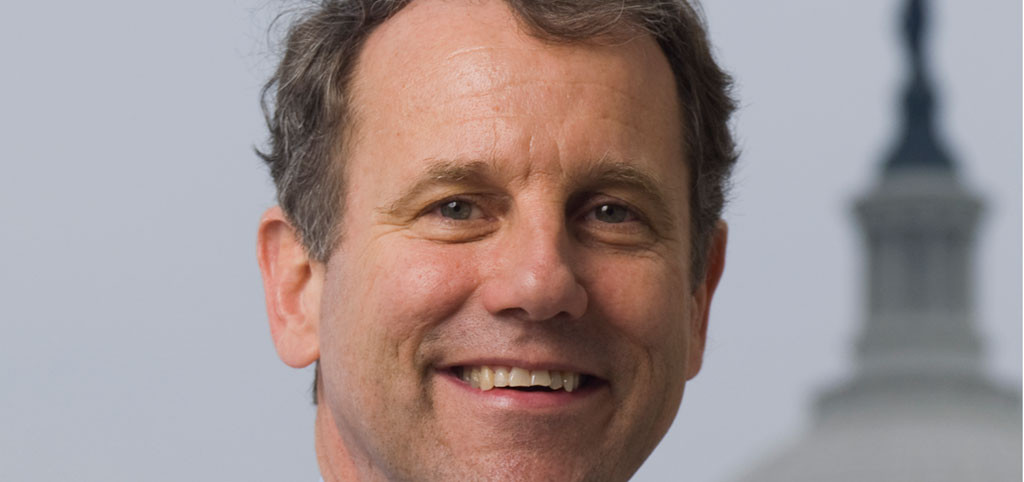
    “We all knew the counting process was going to take longer than usual this year because of the once-in-a-lifetime pandemic and higher voter turnout,” U.S. Sen Sherrod Brown, a Democrat, said over the weekend. “Counting votes and making sure every voice is heard is not fraud — it’s democracy at work. The President’s attacks on our democratic process are dangerous, but we will count every single vote.”

    U.S. Sen Sherrod Brown

    On Sunday, former President George W. Bush became the most prominent Republican to essentially declare the election over when he congratulated Biden.

    Early Monday afternoon, Ohio Gov. Mike DeWine, also a Republican, congratulated Biden, although he said Trump has every right to go to court if he wishes.

    “I congratulate Vice-President Biden,” DeWine said in a statement. “It would appear that President Trump’s legal team will be filing legal actions. The President’s lawyers have every right to present evidence in court on any legal issues or irregularities involving the election, and the courts are the proper place to hear evidence on these issues.  When lawsuits have concluded and election results are certified, it is important for all Americans to honor the outcome.”

    The office of Ohio’s top elections official, Secretary of State Frank LaRose, was more direct when asked if LaRose believed Biden had won.

    “Yes, he does,” his spokeswoman, Maggie Sheehan, said in an email.

    She pointed to an Oct. 6 statement LaRose had made on Fox News.

    “When the results on election night say one thing and then when the results change over the ensuing several weeks, that’s not a sign that something nefarious is happening,” he said. “In fact, quite the contrary. It’s a sign that the legal process is being allowed to play itself out so that every legally cast vote can be tabulated. That’s exactly what we need to do.”

    Meanwhile another Ohio Republican, Attorney General Dave Yost, is following Trump into court. Politico reported Monday that Yost’s office had filed a friend-of-the-court brief with the U.S. Supreme Court challenging a three-day extension for ballots to be received in Pennsylvania. That is one of the matters Trump and his allies are litigating.

    Attorney General Dave Yost

    Yost’s office didn’t respond when asked if the attorney general believed Biden had won the election. But Georgetown University Law Professor Josh Chafetz tweeted that the Supreme Court effort was pointless.

    Yost released a statement saying that the legal action transcends pollitics.

    “This constitutional question will come up again in future elections,” it quoted him as saying. “It is in the best interest of all Ohioans — all of America — to gain a definitive answer, regardless of politics.”

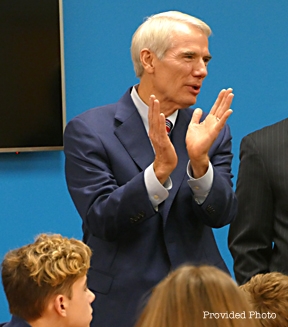
    The office of U.S. Sen. Rob Portman didn’t immediately respond when asked if he believed that Biden had won the election. But over the weekend, Portman refused to criticize Trump for appearing in the White House East Room early Wednesday morning to declare himself the winner.

    U.S. Sen. Rob Portman

    His office referenced a series of tweets posted on Friday that didn’t address whether it was right for a president to call himself the winner of an election in which vast numbers of votes hadn’t been counted.

    The office of Ohio Auditor Keith Faber, an ardent Trump supporter, didn’t respond when asked if he believed Biden had won the election.

    Ohio Treasurer Robert Sprague didn’t answer whether he thought Biden had won, but he urged patience.

    “While news organizations make projections, they do not determine the winner of the Presidential election — the people do,” he said in a statement issued by his office. “That’s why it’s important to allow the elections departments of all 50 states to continue completing their certification processes so the 2020 election can be finalized properly and in accordance with the states’ laws. This process takes time, and it’s in the best interest of our republic to ensure it’s done right, rather than done fast.”


    Marty Schladen

    Marty Schladen has been a reporter for decades, working in Indiana, Texas and other places before returning to his native Ohio to work at The Columbus Dispatch in 2017. He’s won state and national journalism awards for investigations into utility regulation, public corruption, the environment, prescription drug spending and other matters.

  • AP declares Joe Biden is the next president

    AP declares Joe Biden is the next president

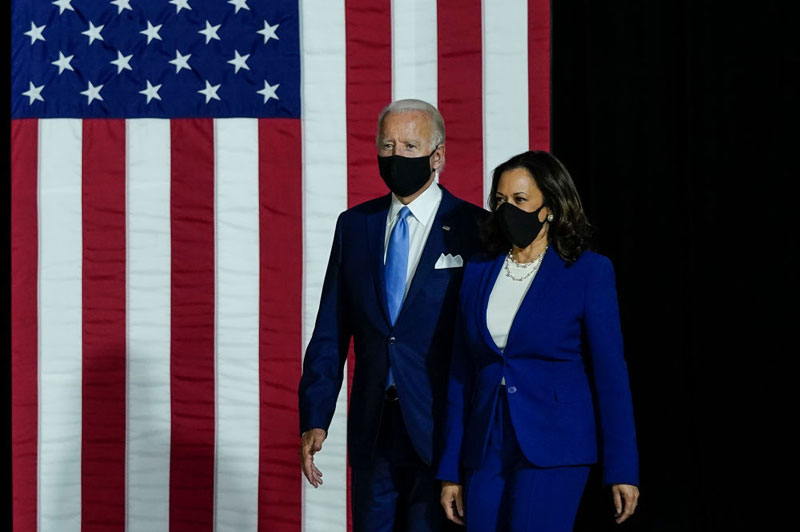
    Former Vice President Joe Biden and his running mate Sen. Kamala Harris. Photo by Drew Angerer/Getty Images.

    By Laura Olson and The Ohio Capital News

    Washington – Democrat Joe Biden’s native state of Pennsylvania on Saturday secured his victory to become the next president of the United States when The Associated Press reported he had gained enough votes there to win the electoral college.

    The AP called Pennsylvania for Biden at 11:25 a.m., which gave the former vice president 284 electoral college votes to 214 for President Donald Trump. That tally includes Arizona, which the AP and Fox News have called for Biden, but other news outlets have not due to the narrow margin and remaining ballots.

    “JOE BIDEN DEFEATS PRESIDENT DONALD TRUMP,” the news organization tweeted.

    “I am honored and humbled by the trust the American people have placed in me and in Vice President-elect Harris,” Biden said in a statement. “In the face of unprecedented obstacles, a record number of Americans voted. Proving once again, that democracy beats deep in the heart of America. With the campaign over, it’s time to put the anger and the harsh rhetoric behind us and come together as a nation. It’s time for America to unite. And to heal. We are the United States of America. And there’s nothing we can’t do, if we do it together.”

    Trump, who was at his Virginia golf course Saturday morning, issued a statement vowing to keep contesting the results, accusing Biden of “rushing to falsely pose as the winner.”

    “The simple fact is this election is far from over,” Trump said in the statement. “Joe Biden has not been certified as the winner of any states, let alone any of the highly contested states headed for mandatory recounts, or states where our campaign has valid and legitimate legal challenges that could determine the ultimate victor.”

    The AP call for Biden came after several excruciating days of mail-ballot counting in a handful of battleground states, where early in-person votes had favored Trump. But an unprecedented number of mail ballots — which Trump had portrayed as fraudulent and urged his supporters not to use — favored Biden, allowing him to overcome deficits in Michigan, Wisconsin, Pennsylvania and Georgia.

    Trump has challenged those results, through lawsuits in those critical states and in a statement from the White House Thursday evening, in which he cast aspersions on the vote-counting process without citing any specific evidence for his claims.

    “This election is not over,” the Trump campaign legal counsel, Matt Morgan, said in a statement after Pennsylvania’s updated vote totals gave Biden a lead on Friday morning.

    Responding to reports that Trump may not concede once the race is called, a Biden spokesman said in a statement Friday: “As we said on July 19th, the American people will decide this election. And the United States government is perfectly capable of escorting trespassers out of the White House.”

    Biden made a short public statement late Friday in Delaware, urging patience with the vote-counting process and expressing confidence that he would ultimately be declared the winner.

    “The numbers tell us a clear and convincing story: We’re going to win this race,” Biden said.

    Ohio Democratic Party Chair David Pepper sent an email to supporters congratulating Biden and Vice President-elect Kamala Harris, and thanking supporters.

    “Today we celebrate the end of the Trump presidency and thank every person in Ohio and across the country who played a role in making that happen,” he said. “You were there when your country needed you most.”

    Even with the presidential result appearing to be clear, there remain ballots that were received by Election Day to be counted in a number of states. As in every election, states will still be receiving ballots from overseas and military voters, and will need to certify their initial vote totals.

    And in Georgia, where Biden also pulled ahead overnight, a recount is expected due to the very narrow margin between the candidates.

    Where do the vote totals stand in Pennsylvania?

    As of 11:30 a.m. Saturday, Pennsylvania’s state election data showed Biden with a lead of 28,393 votes. That narrow lead had been growing since Friday morning, when Biden pulled ahead after trailing Trump in Pennsylvania’s early vote totals.

    The tsunami of mail ballots from more than 2.6 million Pennsylvania voters favored Biden 3 to 1, allowing him a deficit of nearly 700,000 votes late on election night.

    The volume of those ballots in a state that had massively expanded access to mail balloting just last fall, combined with rules preventing county officials from starting to open those ballots until Tuesday morning, resulted in a slow counting process.

    Legal action from the Trump campaign also slowed down Philadelphia’s counting process. A judge ruled in favor of the campaign’s request for closer access to observe the city’s ballot counting, leading to a two-hour pause Thursday and a shift to only use the equipment where observers could watch, the Inquirer reported.

    Philadelphia officials said Friday afternoon they still had 40,000 ballots to tally, estimating it could take several days to finish, according to the Philadelphia InquirerState data showed 76,000 mail ballots left to tally Saturday morning.

    The Trump campaign did win a favorable ruling from the U.S. Supreme Court Friday evening, when Justice Samuel Alito approved a request from Republicans to require late-arriving mail ballots be segregated from the state’s tallying. But the Pennsylvania Capital-Star reported that state officials already had requested county election officials to do so.

    Will Biden’s new lead in Georgia hold?

    Pennsylvania wasn’t the only state where Biden came from behind on Friday: He also had notched a slim lead in Georgia, which had grown to 7,200 votes as of Saturday morning, according to the Georgia Recorder. Mail ballots there had been steadily reducing Trump’s lead in what has been a Republican stronghold, and updated tallies from suburban Clayton County pushed him into the lead.

    But it may not be clear for weeks who has secured the state’s 16 electoral votes. Georgia’s secretary of state told reporters Friday there will be a recount.

    What about Arizona?

    Biden has a shrinking lead in Arizona, where he was ahead of Trump by 20,573 votes Saturday morning. That’s down from a lead of 68,000 votes as of Thursday morning, according to the Arizona Mirror.

    Arizona also was still sifting through stacks of mail ballots at the end of the week. As of Friday morning, Maricopa County had about 140,000 early ballots left to count, plus nearly 6,000 early ballots that required signature verification, and another 16,000 provisional ballots.

    When will Nevada wrap up its count?

    Biden had a lead of 22,657 votes as of Friday, according to the Nevada Current, but the state was still far from finished counting.

    Clark County, Nevada’s most populous county and also its bluest, still had approximately 63,000 mail ballots to process and count as of Friday morning, the Current reported. Additionally, there were 44,000 identification-required ballots and 60,000 provisional ballots to tally.


    Laura Olson

    Laura Olson Laura covers the nation’s capital as a senior reporter for States Newsroom, a network of nonprofit outlets that includes Ohio Capital Journal. Her areas of coverage include politics and policy, lobbying, elections, and campaign finance.

  • The Controversy Surrounding Trump’s Replacement for Ruth Bader Ginsburg.

    The Controversy Surrounding Trump’s Replacement for Ruth Bader Ginsburg.

    Christopher Ball is a longtime Loveland resident and an attorney

    by Chris Ball

    Ruth Bader Ginsburg sat on the United States Supreme Court for 27 years. She authored countless judicial opinions on issues ranging from abortion rights, gender discrimination, and the landmark 2000 case of Bush v. Gore where she penned her now-famous line, “I dissent.” Justice Ginsburg passed away on September 18 from complications of pancreatic cancer. Her death lead to an outpouring of sadness, grief, and celebration of her icon status as a pioneer for the advancement of women’s rights and a brilliant jurist and lawyer. 

    As difficult as it is to do, the American political system must now decide how to proceed in the wake of the vacancy that now sits at the heart of the United States Supreme Court. Republicans and Democrats are forming the battle lines already, in advance of the election on November 3rd. The opening salvos have already gone out. The first one began even before Ruth Bader Ginsburg passed away. 

    According to Ginsburg’s granddaughter Clara Spera, the Justice dictated a statement to her that read: “My most fervent wish is that I will not be replaced until a new president is installed.” The fact that Ginsburg felt the need to utter these words when she knew she was in the last days of her life tell us all that we need to know about the importance with which she viewed the role of the Supreme Court in the coming years. 

    If the 2020 election is indeed a battle for the very future of this country, Ginsburg’s dying wish represents a call to arms in a battle to replace her in the country’s highest court, whose ability to shape law, policy, and affect the everyday lives of the American people has grown exponentially in the past half decade.    

    After initially stating that he would nominate Ginsburg’s replacement the week of September 21st, President Donald Trump pushed back the announcement out of respect for the former Supreme Court Justice’s family.

    On Saturday Trump announced that he will nominate Amy Coney Barrett. Judge Barrett currently serves on the U.S. Court of Appeals for the Seventh Circuit, a position she was appointed to by none other than Trump himself. 

    Trump’s announcement that he would quickly push ahead and nominate a replacement sent Democrats into a frenzy of fervent anger and has kickstarted a non-stop news cycle that may even come dwarf coverage of the Coronavirus. 

    The questions are, how did we come to this, and what could happen if Trump’s nominee is appointed to the Supreme Court? 

    How we got here is harder to explain. Concerns about the power of the Supreme Court and the judges that comprise it have been hotly debated since it was created in 1789. However, the nomination process itself has often been something that gets overlooked when compared to the decisions that the Supreme Court hands down and the way it functions. 

    This all began to change in the late 1980s. In 1986 Antonin Scalia was confirmed in the Senate by a vote of 98-0. However, the failed nomination of Robert Bork in 1987 and the contentious confirmation of Clarence Thomas in 1991 changed the political landscape for Supreme Court nominees irrevocably. Of note, Joe Biden was the Chair of the Senate Judiciary Committee for both Bork’s and Thomas’ confirmation hearings and, as some argue, is the architect behind the transformation of the hearings into a “game of political revenge.” 

    Things only worsened in 2000. That election was so close that the Supreme Court was called upon to weigh in on Florida’s recount. In a razor-thin 5-4 decision the Supreme Court essentially held that George Bush was the victor in Florida, whose electoral votes were enough to win the day and the Electoral College, despite losing the popular vote by nearly half a million ballots. Polls at the time showed that the large swaths of the American people did not lose confidence in the Supreme Court after it decided Bush v. Gore. For their part, Democrats seemed more focused on the Electoral College and George Bush’s ability to win the Presidency despite losing the popular vote

    Another important development came about in 2013 and involved the “Nuclear Option” in the Senate. For decades, voting on Presidential judicial appointments (at any level) was by a super-majority in the Senate, or 60 votes. However, in 2013, Democrat Harry Reid invoked what was dubbed the “Nuclear Option” and lowered the threshold for approving Barack Obama’s appointments to a simple majority of 51 votes. Then, in 2017, Mitch McConnell had the votes to extend this “Nuclear Option” to the confirmation of Supreme Court Justices to confirm Neil Gorsuch’s appointment. Going forward, a nominee for the Supreme Court needed only 51 Senate votes for confirmation.  

    The Supreme Court and the confirmation process again came to national attention in 2016 when Mitch McConnell refused to even allow the Senate to consider Merrick Garland, Barack Obama’s nominee to replace the deceased Scalia. In a 2016 Opinion piece in the Washington Post, McConnell stated: 

    “Given that we are in the midst of the presidential election process, we believe that the American people should seize the opportunity to weigh in on whom they trust to nominate the next person for a lifetime appointment to the Supreme Court.” 

    He later went on to claim that the Senate had the power, under Article II, Section II of the Constitution to withhold its consent on the nomination. In his view, the Senate was right to do so since Barack Obama was in the final year of his second term, and 2017 would see a new President sworn in. Though Democrats were extremely unhappy with this act, there was little they could do to stop it. 

    Hillary Clinton’s 2016 loss to Donald Trump only cemented the belief in some Democrats’ minds that the very systems of elections and government in the United States were flawed on a fundamental level. The focus again centered on the Electoral College that allowed Trump to secure the Presidency despite losing the popular vote by 2.87 million votes. However, this time there was something else. 

    After Trump’s election, the American people seemed to pay more attention to politics and the national media scrutinized his every decision, tweet, and rally. This included his nomination of Brett Kavanaugh in 2018. More than 20 million people watched Kavanaugh’s confirmation hearing, which was “an audience size similar to that for a playoff football game or the Academy Awards.” His life and confirmation hearing were the focus of at least two books that were published in what seemed like real-time, as well as countless articles, opinion pieces, and more television panels than anyone can reckon. This was no doubt due to a confluence of the MeToo Movement, the allegations leveled against him, and the fact that Donald Trump was about to nominate his second Supreme Court Justice (after Neil Gorsuch in 2017). But with Kavanaugh, perhaps more than any other nominee in recent memory, there was a real argument about the fundamental function of the Supreme Court and the process that the President and Senate go through to appoint its Justices. Kavanaugh’s confirmation incited more than just ire from the Democrats, it only further confirmed their belief that now the Supreme Court, too, had become irrevocably corrupted

    Now, with the passing of Ruth Bader Ginsburg and the vacancy it leaves in the Supreme Court, in an election year, the political firestorm of judicial appointments and confirmation will again be at the center of our discourse. 

    But this time it will be different. 

    This is due largely to the confluence of several key factors, which include the Democrats’ disillusionment with the Supreme Court, the Electoral College, the recent contentious nomination proceedings in the Senate, and McConnell’s alleged hypocrisy in blocking a vote on Merrick Garland’s appointment while allowing one on Trump’s pick to proceed.  

    So what can the Democrats do if Trump’s nominee is confirmed? 

    While the Electoral College is frequent fodder for angry Op-Eds and it makes a nice sound bite for talking heads on television, the truth is that it is not going anywhere anytime soon. According to the American Bar Association and The National Archives, “over the past 200 years more than 700 proposals have been introduced in Congress to reform or eliminate the Electoral College” but none have been successful, for one simple reason. To eliminate the Electoral College would require amending the United States Constitution. Since this is unlikely to happen, there is one Constitutionally-recognized way that the Democrats could punish McConnell, Trump, and the Republicans. 

    Court packing.   

    Though the name sounds ominous and illegal, if the Democrats manage to win back the Senate, keep control in the House, and vote Joe Biden into office, it is a term that Americans should begin to get very familiar with. 

    The amount of justices on the United States Supreme Court isn’t fixed by the Constitution. All that Article III, Section I states is that “The judicial Power of the United States, shall be vested in one supreme Court, and in such inferior Courts as the Congress may from time to time ordain and establish.” This provision makes it clear that Congress is the branch of government that is to fix the number of justices on the Supreme Court. 

    The Supreme Court began with just six justices. Through various acts of Congress, the number has grown to as many as ten before settling to the current total of nine. History is replete with examples of how legislative acts have influenced the makeup of the nation’s highest court. 

    And that’s just what Democrats have threatened to do if Biden is victorious and they gain control of all branches of government in November. If Democrats control both houses and the Presidency, it is within their power under the Constitution to expand the number of Justices on the Supreme Court, just as Mitch McConnell has consistently stated that his efforts to block a vote on Merrick Garland and to obtain a vote on Trump’s replacement for Ginsburg are Constitutionally supported. 

    This is why McConnell, Trump, and other Republicans must be very wary of the way in which the voting public (especially independent and undecided voters) view their tactical decisions on this appointment. Current polls show that a plurality of Republicans actually favor waiting until after the election to replace the vacant Supreme Court seat. Susan Collins, a Republican facing a very tough re-election bid in Maine, issued a statement urging the same. Some Never-Trump Republican writers have advised cutting a deal with Democrats wherein Republicans would agree to hold off on naming a replacement in exchange for a promise that Democrats won’t add additional justices should they take the reigns of government in 2021. 

    However, with the recent announcement that Republican Senator Mitt Romney would, indeed, support a vote on Trump’s nominee, McConnell has likely secured all of the Senate votes he needs to push the process forward, and dashed the hopes of any kind of compromise on the issue.  

    As if the November election wasn’t already polarizing enough, the appointment and confirmation of Amy Coney Barrett could play a significant role in mobilizing voter turnout for Democrats. Their donors gave 42 million dollars in a single day following Ginsburg’s passing. 

    All signs point to Trump and McConnell successfully nominating a replacement for Ruth Bader Ginsburg, but they should be prepared for the potential fallout from Democrat and independent voters as well as for an expanded United States Supreme Court if they do.


  • Should Dems Nominate a Woman of Color for Vice President?

    Should Dems Nominate a Woman of Color for Vice President?

    NPR reports that Sen. Amy Klobuchar (D-Minn) is withdrawing her name from consideration as a Vice-Presidential candidate, “calling on the former vice president (Joe Biden) to pick a woman of color.”

    [poll id=”3″]