Tag: Julie Watson

  • Ohio and Loveland’s Remarkable Reptiles

    Ohio and Loveland’s Remarkable Reptiles

    by Julie Watson

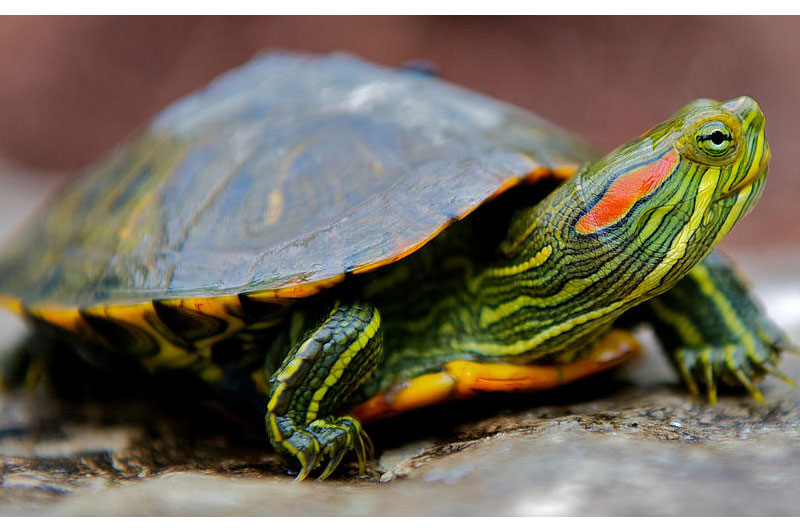
    In last month’s column (April Showers bring Vernal Pools) we talked a lot about Ohio’s native amphibians (frogs, toads, and salamanders). This month I want to talk about Ohio’s native reptiles, most of which can be found in Loveland. Reptiles are cold-blooded (the scientific term is ectothermic), breathe air, and are covered with scales. The buckeye state has over 45 native species of reptiles. 12 of them are turtles.

    Turtles have changed very little in the past 200 million years. These living fossils have been inhabiting the woodlands and waterways of Ohio since the Triassic period. Most turtles have long life spans with some going past the century mark. While turtles have a reputation for being slow, this is really only true of land-based turtles like tortoises and box turtles. They don’t need to be fast because they eat vegetation which they don’t have to chase. Their thick shells and heavily scaled legs protect them from attack. Many aquatic turtles can swim very quickly in order to catch their prey, things like invertebrates, frogs and fish.

    Ohio’s largest and longest living turtle, the snapping turtle, sits in the mud at the bottom of ponds and slow-moving waterways and catches its prey with a lightning-fast chomp. These heavy weights can weigh up to 35 pounds and they will consume anything they can catch and swallow including rodents and birds.

    Believe it or not, Ohio is home to five native species of lizards and one species that has become established (European wall lizard) in and around Loveland. While most of them can only be found in Ohio’s southern counties, populations of the common five lined skink are scattered across the state.

    The remaining native reptiles are snakes. Now, I know what you’re thinking, but keep reading. There are only three venomous (not poisonous) snake species native to Ohio: the northern copperhead, which despite its name, can only be found in a few of Ohio’s southern counties; the eastern massasauga, a short, thick bodied rattlesnake scattered amongst marshes and bogs across the state (including the Loveland area); and the timber rattlesnake found in only a few southern Ohio counties. In general, all three species are nonaggressive unless provoked. If you come across one give it plenty of space.

    The rest of Ohio’s native snake species are both harmless and helpful, often consuming pests. Several of our native snakes grow to be less than a foot long, while the eastern/black rat snake can grow up to six feet in length.

    Due to factors like habitat loss, pollution, and lack of understanding, Ohio’s native reptiles are in trouble. Five species are endangered, which means that they are in danger of being extirpated; four are threatened, meaning that if stress continues or increases the species may become endangered; and 11 are species of concern which means populations are being closely monitored for signs of distress. That adds up to almost half of Ohio’s native reptile population.

    So, how can you and I help our native reptiles? Here are some suggestions:
    Watch the roads. Remember reptiles are cold-blooded (ectothermic) which means they are unable to produce their own body heat. They seek out warm places like roads, sidewalks, and parking lots. If you encounter a snake or lizard avoid it. If it’s a turtle, it may be crossing to find a spot to lay eggs. In this case, if you want to help it across, always take it in the direction it was already headed. Helping snapping turtles can be risky. They can reach everywhere on their body except their tails; however, picking larger ones up by the tail can potentially harm them. After touching any reptile always wash your hands thoroughly.

    Give them space. This holds true when encountering any type of wildlife. Observe from a distance and don’t try to handle them. Generally, if you leave them alone, they will leave you alone.

    Don’t use pesticides, poisons, or sprays. If you poison a food source, toxins will build up in the consumer eventually causing death and/or reproduction defects (as in the case of bald eagles). Also. most reptiles have sensitive skin that easily absorbs harmful chemicals. Besides, many of our native reptiles consume pests and are therefore beneficial to have around.

    Educate yourself. Go to: http://wildlife.ohiodnr.gov for more information. Learn more about Ohio’s amazing reptiles and appreciate them for their beauty and the roles they play.


  • April Showers Bring Vernal Pools

    April Showers Bring Vernal Pools

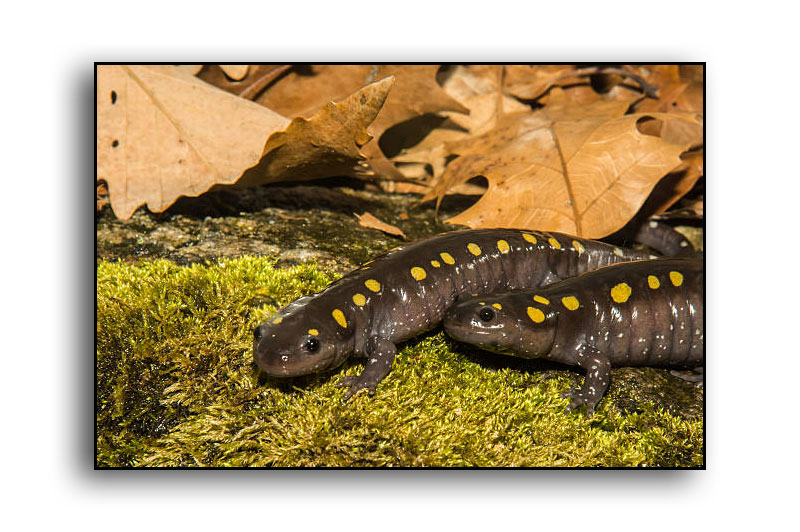
    Breeding salamanders  lack vocal chords, although some species can make clicking or popping sounds with their jaws. There are approximately two dozen species of salamanders that call the Buckeye state home.

    by Julie Watson

    Spring is here! The school year is winding up, the days are getting warmer, and rain is falling. Spring rain is essential.  It waters all the new plant growth, pulls pollen out of the air, and boosts water table and wetland levels.

    All wetlands are important. They help control flooding and provide habitat for a wide variety of plants, animals, and invertebrates. In fact, wetlands often have more biodiversity than most other types of habitats.

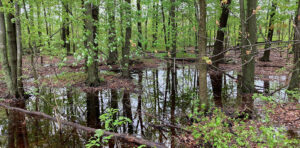
    A vernal pool at the Ohio Sawmill Wetlands Education Area in Dublin, Ohio

    One very special type of wetland that occurs commonly in Ohio is the vernal pool. The word ‘vernal’ refers to anything relating to spring. These shallow pools are filled by melting snow and spring rains. Having no permanent inlet or outlet, they tend to dry out during the summer months. But vernal pools are more than just large puddles. They are crucial habitats hosting a wide variety of species.

    However brief their stay, vernal pools are vital for the survival of many amphibian species. Many frogs, toads, and salamanders use vernal pools as breeding grounds. Some return to lay their eggs in the same vernal pools that they hatched from. Since vernal pools are temporary wetlands, they are free of fish which would prey on their eggs and young.

    The mating calls of many of these frogs and toads often betray the location of vernal pools. Spring peepers and wood frogs are the earliest to start. They can usually be heard before the snow stops flying.

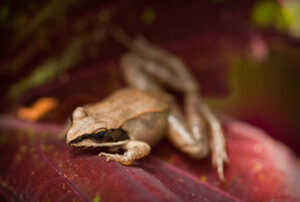
    Wood Frog photo by DDauri Daniel D’Auria – Own work, CC BY-SA 3.0, https://commons.wikimedia.org/w/index.php?curid=10998356

    The tiny wood frog is the toughest amphibian, ranging as far as northern Canada. Unlike other cold-blooded species, they don’t bury themselves during winter months. Instead, they hibernate under leaf litter found on the forest floor. This leaves them vulnerable to freezing. Wood frogs are the only species able to manufacture natural ‘antifreeze’ which keeps their cells from freezing while allowing the area between their cells to turn to solid ice. As much as 45% of a wood frog’s body freezes during the winter. But when winter loses its grip, these cool frogs thaw out and make their way to vernal pools to find a mate.

    In addition to noisy frogs and toads, Ohio’s vernal pools also play host to breeding salamanders. These amphibians lack vocal chords, although some species can make clicking or popping sounds with their jaws. There are approximately two dozen species of salamanders that call the Buckeye state home. However, several species are endangered due to habitat loss. Like their noisier cousins, salamanders are carnivorous predators consuming mostly worms, insects, and other invertebrates.

    Due to the timing of vernal pool appearances, they are often important rest stops for migrating birds and mammals emerging from winter sleeps. They provide fresh, still water and protein rich snacks.

    Listen to Spring peepers…


    Vernal pools are also helpful to us humans. Like all wetlands, they help control flooding by holding onto excess water. In turn, they filter the water making it safer when it is slowly released into the water table. They also absorb large amounts of carbon dioxide from the air, helping to slow climate change.

    In other words, vernal pools are wonderous places that deserve our respect and protection. Although they are still common throughout the Buckeye state, they are only around for a limited time, spring. If you’d like to check out a vernal pool near you, ask your local park system where to find one. If you are lucky enough to find one, please observe from a distance so you don’t disturb the delicate ecosystem.

  • Pollinator Protection

    Pollinator Protection

    by Julie Watson

    Save the Bees. I’m sure you’ve heard or seen such slogans increasingly over the past couple of decades. Of course, I’m all for saving any species, but some of the claims of activist groups on bee decline are a bit frightening. In trying to research the topic of bees and their necessity to humanity’s survival, I found varied and often contradictory reports. Sifting through the data, a few undeniable truths emerged.

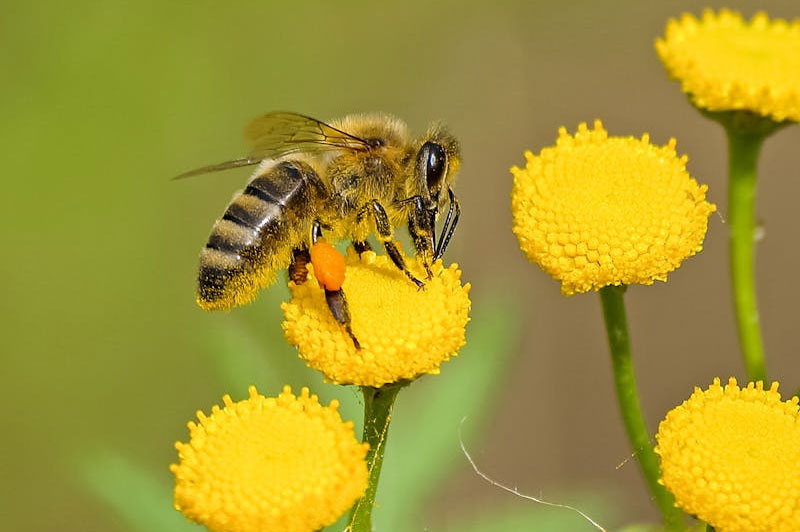
    First of all, honeybees are not native to North America. They were domesticated over 9,000 years ago which precedes the domestication of animals like chickens, pigs, and horses. Honeybees originated in either Asia or Africa and spread to Europe. European settlers brought honeybees to the east coast of North America approximately 400 years ago. They slowly began to make their way across the continent.

    Secondly, although there are 4,000 species of bees native to North America, bees are not the only kind of insect pollinators. Other insects like ants, flies, butterflies, moths, wasps, and beetles do their fair share of pollinating too. Most of these undomesticated, native pollinators have seen sharp population declines since the turn of the century.

    Thirdly, there are many factors contributing to pollinator decline. More study is needed to determine the exact causes of dwindling populations of pollinating insects. However, we do know that many of the world’s important agricultural crops, including most fruits, nuts, and vegetables, are dependent on insect pollinators.

    At this stage of the game, all insect pollinators could use a little human help. Until researchers and scientists can agree on what is causing pollinator decline and how to stop it, what can you as a homeowner do about the situation?

    There are some steps you can take that will make a difference. Some of them are simple. Most of them will have additional benefits for the planet, your person, and your wallet.

    1. Hold off on spring yard word until we’ve had at least 10 consecutive days of 50 degrees or higher. Many pollinators overwinter in the leaf piles and natural debris that accumulate before the snow begins to fly.
    2. Go chemical free. Avoid using man-made chemical pesticides on your lawn and around your home. Not only do they affect whatever they are targeted towards, they also contaminate ground water, affect air quality, and many have been proven to contribute to human health issues like cancer.
    3. Embrace early bloomers like dandelions and violets. These bright bursts of color in your yard provide much needed sustenance to pollinators emerging from winter hibernation.
    4. Plant pollinator-friendly plants and trees that are native to your area. Native species require less water and care, and they will attract native pollinators. If you don’t have much room, use pots, window boxes, or sprinkle them in among your garden plants. If you want to help on a large scale, replace your grass with flowering lawn alternatives (like clover or creeping thyme) or plant portions of your lawn as native meadows. Both will reduce long-term lawn care costs.
    5. Raise your mowing deck. Leaving the grass slightly longer than normal provides shelter and cover for all kinds of pollinators as well as natural pest eaters like lady bugs and lightning bugs. It also means less frequent mowing which can save both time and money.
    6. Provide pollinators with water and shelter. Insect pollinators benefit from shallow pans of water with rocks placed in them that extend above the water surface. This gives them an opportunity to drink without drowning. Pollinator houses, whether storebought or homemade, can provide safety from predators and weather. Many simple plans are available online.

    Here are some resources to help you become a pollinator protector:

    The Ohio Extension Service has a hotline (April 1st – October 31st) for questions about pollinators or gardening (330) 296-6432 or visit go.osu.edu/pchotline.

    Ohio Pollinator Habitat Initiative https://www.ohiopollinator.org/

    The Cincinnati Zoo has a pollinator program. https://cincinnatizoo.org/gardens/plant-for-pollinators/

    Queen City pollinator Project offers education for grades 3 through adults  https://www.queencitypollinatorproject.org/

  • Ohio weather: Everyone jokes about it – by Julie Watson

    Ohio weather: Everyone jokes about it – by Julie Watson

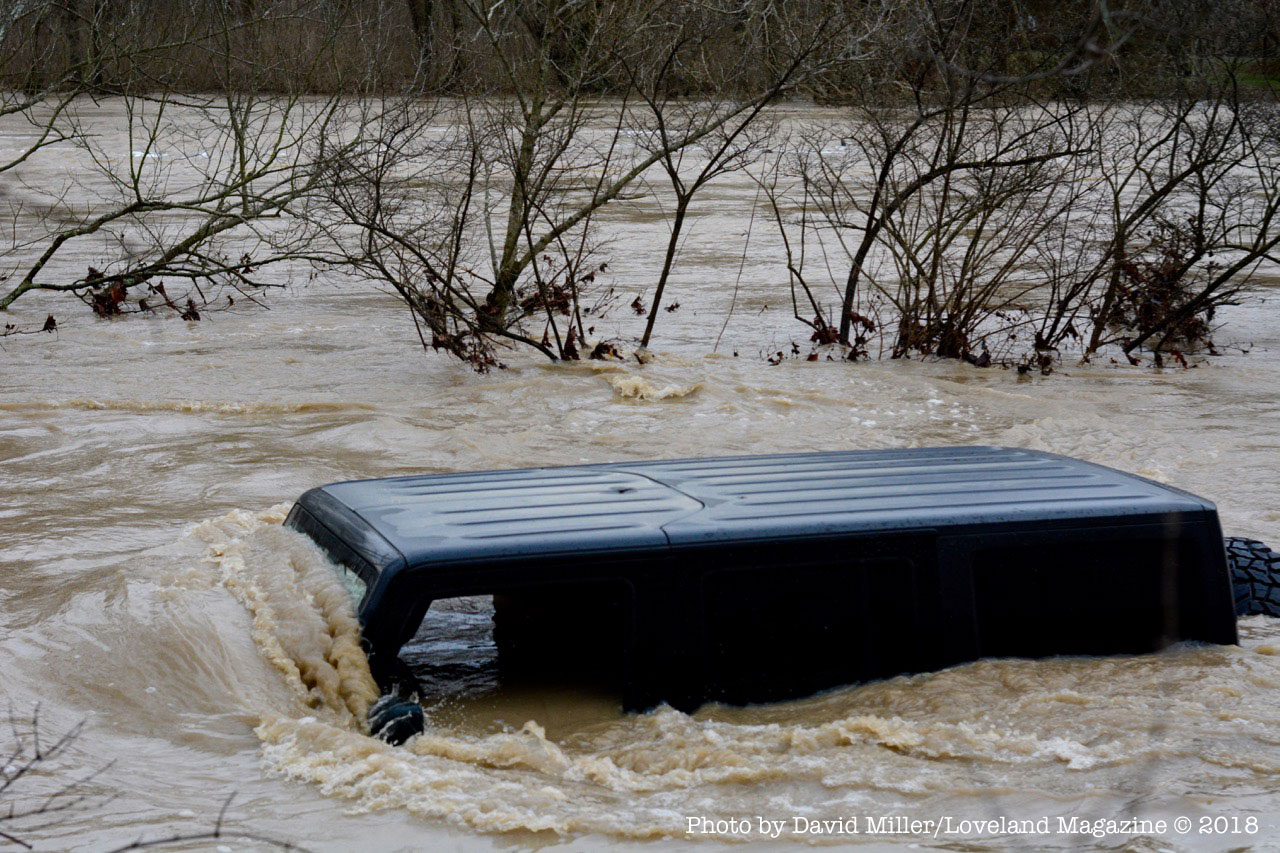
    In 2018, a driver drove his Jeep into the flood waters of East Kemper Road and the occupants had to swim to safety. The automobile remained almost completely submerged overnight and the driver was cited by the Loveland Police because he ignored “Road Closed” signs. (Loveland Magazine file photo)

    by Julie Watson

    Wait five minutes and the weather will change; You can experience all four seasons in the span of a few hours; Mother Nature can’t seem to make up her mind.

    Spring is the season when Ohio weather is the most unpredictable. Spring weather can be downright dangerous, even deadly. Rain and warming temperatures can cause flooding and fog. Changing temperatures can result in strong storms bringing lightning, high winds, hail, and tornadoes. 2024 saw a record breaking 74 tornadoes in the Buckeye State. Six of them were in Warren County alone.

    Here are some tips to stay safe in Ohio weather this spring:

    • Never drive through flood water. Water is the strongest force on earth. Even if flood water appears to be shallow, currents can carry dangerous debris and weaken infrastructure foundations. Water levels can also rise quicker than expected. The National Weather Service slogan ‘Turn around, don’t drown’ is good advice.

    • When driving in foggy conditions reduce your speed accordingly. Be sure to leave plenty of distance between you and vehicles in front of you. If fog is heavy, turn your hazard lights on, and your headlights even if it is daylight. Just remember to use your low beams. High beams will reflect more off of the fog making it even more difficult to see. If fog is too thick, consider pulling off the road.

    Loveland Magazine File Photo (© 2017)

    • In stormy weather, there are some basic rules to remember. If you are at home, keep an emergency storm kit stocked and handy. It should contain a flashlight (with good batteries), bottled water, blankets, hand sanitizer, a first aid kit. You can add more things to it if you choose.

    • When it is storming, avoid touching any device that is plugged in including corded phones. Avoid plumbing and water including washing hands, showering, washing dishes. Stay away from doors and windows that may contain metal.

    • If tornadic activity is expected, go to the lowest level of the building taking your storm kit and charged cell phone with you. If you cannot get below ground level the next best place is in an interior room with no windows, in a bathtub (dry of course), or under a sturdy piece of furniture like a table or workbench. Crouch down and cover your head with your hands.

    • If you are outdoors during sever weather take shelter from hail and high winds. Do not shelter under or near trees. Watch out for blowing debris.

    • During a lightning storm remember that thunder is the sound that lightning makes. If you hear thunder, there is lightning in the area even if you cannot see it. Lightning wants to find the quickest path to the ground, so it tends to strike the tallest object around; do not shelter under trees. If you are the tallest thing around, stay low. Another quick path for lightning to travel is through conductors like metal, water, and electric lines. Avoid touching concrete structures which contain metal rebar. Stay away from water and power lines.

    • If a tornado is near, evacuate all vehicles and find the lowest spot possible, like a ditch (as long as its not filled with water).  Lie flat or crouch down covering your head with a blanket, jacket, or your hands. Do not seek shelter under an overpass or bridge.

  • Winging into Spring with Julie Watson

    Winging into Spring with Julie Watson

    By Cephas – Own work, CC BY-SA 3.0, https://commons.wikimedia.org/w/index.php?curid=10271562

    by Julie Watson

    It’s March, and spring is in the air, literally. No matter if the month came in like a lion or a lamb, look and listen to the skies for evidence. Harbingers of spring are winging their way north as you read this. And no, I’m not talking about robins. Robins don’t actually migrate; they stay in Ohio year-round. So that ‘first robin of spring’ sighting isn’t something to get all worked up about.

    However, in the past two weeks I have seen and heard flocks of Sandhill Cranes, Trumpeter Swans, Turkey Vultures, and most exciting of all, blackbirds. Now, blackbirds may not seem all that great, but keep reading and you’ll find out why they are.

    There are many species of blackbirds, Brewer’s, Grackles, and Cowbirds, just to name a few. They are generally black to brown, medium sized, perching birds, and they stick together. Many different types of blackbirds will congregate and travel together in large flocks during migration; after all, there is safety in numbers. Blackbirds are so gregarious they will even flock with European Starlings from time to time.

    But the reason its so exciting to see blackbirds in Ohio this time of year belongs to one species in particular Agelaius phoeniceus, more commonly known as the red-winged blackbird. These are the true sign of spring, and last week, I saw two of them!

    CC BY-SA 3.0, https://commons.wikimedia.org/w/index.php?curid=308953

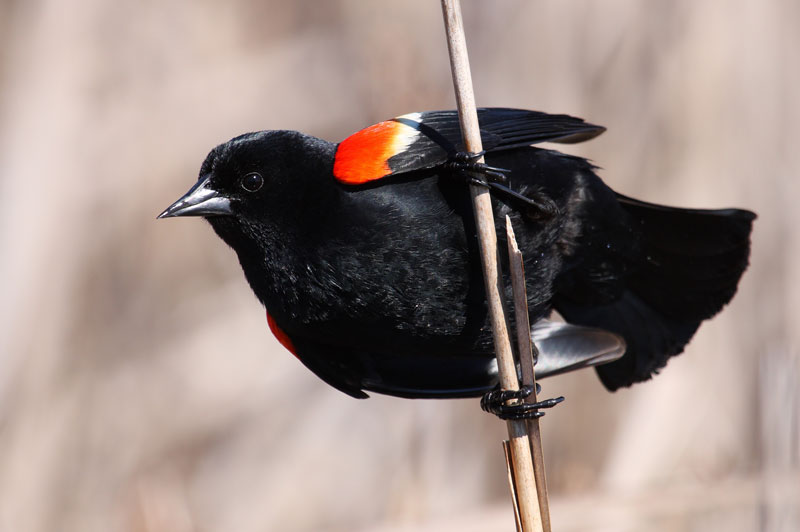
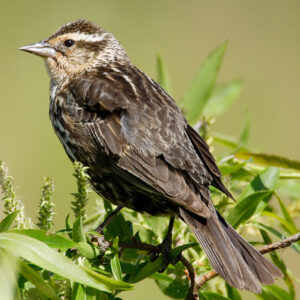
    The females and immature males are slightly larger than sparrows with similar markings. This provides excellent camouflage amongst the cattails and marsh grasses where they nest. As with most bird species, mature males are more showy than the others. Males of breeding age are glossy black with a patch of red at the top of the wing called an epaulet. Sometimes these epaulets are concealed revealing only the yellow stripe that underlines the red.

    Ok, so with all these visual obstacles, how do you know if red-winged blackbirds have returned to usher in spring? This is where listening comes in. Red-wings have a very musical call with notes that sound like running water. It is easily recognized. In fact, it’s one of my favorite bird calls (right behind most owl calls). Check it out: Red-winged Blackbird Sounds, All About Birds, Cornell Lab of Ornithology.

    Males call to attract mates and defend their territory. Their sound can be heard in marshy areas and among farmland all summer long. In fact, some would argue that in addition to crickets, red-wing blackbird calls are the sound of summer.

    Listen to a Red Winged Blackbird

    When those cold March winds blow and snowflakes are flying, it’s easy to doubt that spring is right around the corner. Remember, all you have to do is look and listen to the skies for proof that spring is on its way.

    If you’d like to be able to identify birds, Cornell Lab of Ornithology, a world leader in wild bird research and identification developed the Merlin App. The App went live in 2014. It is free and runs on both Apple and Android devices. Happy birding!

    As spring approaches all of our feathered friends could use a little help. Here’s what you can do:

    • Fill the feeders
    • Provide fresh water
    • Provide shelter from weather and predators near the feeders
    • Keep cats away
    • Put up nest boxes
    • Put bits of string, yarn, hair and fur out in your yard for nesting materials

  • Living or visiting Loveland can be a Naturally Healthy 2025

    Living or visiting Loveland can be a Naturally Healthy 2025

    The Loveland Bike Trail in Loveland’s Historic District

    Photo © David Miller 2025

    by Julie Watson

    Just over half of us have made New Year’s resolutions. The most common ones revolve around physical and mental wellbeing.  Topics like exercise, fitness, and losing weight weigh heavy on our minds. Just as important are issues such as socializing, de-stressing, finding life’s balance, inner peace and others that fall under the mantle of mental health.

    Living in or visiting Loveland, Ohio can mean you are in the perfect place to help you live up to the promises you’ve made to yourself on January 1st.

    If you’ve made a personal health related resolution or goal for 2025, there is a simple and free way to accomplish what you’ve set out to do. I’m talking about nature.

    Research shows that spending even short amounts of time in nature can have positive effects on both mental and physical health. The American Psychological Association purports that spending time in nature can improve mood, and attention while at the same time lowering stress levels. They even claim reduced risk of psychiatric disorders and increased empathy and cooperation. Studies show that exposure to green spaces like parks and trails can increase cognitive development and promote self-control.

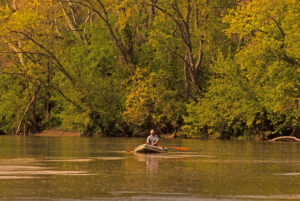
    Photo by David Miller © 2025

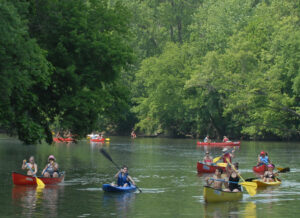
    Hiking, walking, kayaking, canoeing, and jogging are great ways to get some exercise while spending time outdoors. Don’t forget about taking in deep breaths of fresh air which promotes better sleep.

    So how much time do we need to spend in nature to start seeing benefits? One study found that two hours of nature exposure per week led to significant upticks in both mental and physical health. The best part is that the breakdown of those two hours didn’t matter. In other words, the benefits are the same whether the two hours were spent in one block of time or several shorter blocks of time.

    Rafting on the State and National Scenic Little Miami River in the heart of Downtown Loveland. Photo by David Miller © 2025

    Southwest Ohio residents have easy access to many free, fine parks and trails. Check out city, county, and state parks (https://ohiodnr.gov) as well as The Loveland Bike Trail (The Loveland Bike Trail Map Home – The Loveland Bike Trail Map). This trail is paved and offers users over 70 miles of safe exercise. It also connects the Ohio to Erie Trail which connects the Ohio River to Lake Erie. Lake Isabella is a Hamilton County park right on the outskirts of Loveland. Lake Isabella is a quiet 74-acre park on the bank of the State and National Scenic Little Miami River.

    As you can see, opportunities to reach your health and fitness goals for 2025 are plentiful. So, get out into nature for a better you.

    Some tips for enjoying all the benefits that nature can offer this winter:

    • Be sure to check the weather forecast.

    • Dress appropriately. Light thin layers that can be removed as you warm up are best.

    • When temperatures dip, keep sensitive skin like fingers and ears covered.

    • Wear good shoes or boots to keep your feet supported and dry.

    • Beware of snow and ice. Slow down. Invest in walking cleats that slip on over shoes or boots (think Yaktrax).

    • If there is snow and the sun is out, wear polarized sunglasses to help you see while preventing snow blindness.

    • Drink plenty of liquids. It’s easy to get dehydrated in the winter so be sure to drink enough.

    • Prevent chapped lips and hands by using lip balm and lotions that contain sunblock.

    • When possible, go with a friend, not only for safety reasons, but also for accountability.

    • Be sure your cell phone is fully charged. Cold air causes batteries to drain more quickly.

  • Loveland Magazine columnist Julie Watson made her first ‘book’ out of paper and yarn when she was 10

    Loveland Magazine columnist Julie Watson made her first ‘book’ out of paper and yarn when she was 10

    The books are written under the pen name: Mercy Givens

    by Julie Watson

    I’ve wanted to be an author since I was four years old. I made my first ‘book’ out of paper and yarn when I was 10. I wrote my first play when I was in 5th grade. When I was 13, the 1st short story I ever wrote won the jr. creative writing category for the state of Ohio.

    I’ve written everything from poems to newspaper articles to try and become the best writer I could be. I’ve filled notebooks upon notebooks with all kinds of writing. It took 37 years before I published my first book, Almost Home: A Katie Galloway Adventure, Book 1. Book 2 of the Katie Galloway series, Decidedly Courageous, came along three years later. Two years after that I published book 3 of the series, Turbulent Waters.

    These books are works of historical fiction. Many hours of research went into each of them. I not only wanted to get the story’s time period correct, but also the attitudes and circumstances of the day. True, historical facts begin each chapter and help set the stage for the timely events that shape Katie’s world. These books are set in my favorite historical period which includes westward expansion in America.

    Katie Galloway is born into affluence in a world torn by the politics of slavery and civil war. Her life is torn between her mother’s fruitless world of New Orleans’ high society, and her father’s need for financial security on a lonely Texas ranch.

    As the South struggles to rebuild itself during Civil War Reconstruction, Katie comes of age as she searches for hope, truth, and a place to call ‘home’. Along the way she wrangles cattle, founds a school, loses her family, saves a man’s life, and survives the worst smallpox epidemic the world has known.

    Katie’s story is a powerful testament of faith, family, human rights, and tenacity, which transcends all the books in the series. As a lover of history, I truly enjoyed following Katie on her adventures. The books are written under the pen name: Mercy Givens and are for sale on Amazon. Look for more Katie Galloway adventures in the future.

  • Skunk Love

    Skunk Love

    Wallace Keck, Public domain, via Wikimedia Commons

    by Julie Watson

    If you’ve been noticing a foul odor in the air recently, you’re not alone. Unpleasant as it may be there is a natural cause for your nose to be offended. In Ohio, February is breeding season for skunks.

    During this time of year, male skunks will visit several females, and each female may mate with multiple males. A litter of 2-10 kits are typically born furless and blind between April and June. At around six weeks old the young ones are weaned and will accompany their mother on hunts. The young will go their own away at about a year of age when they are mature and ready to breed on their own.

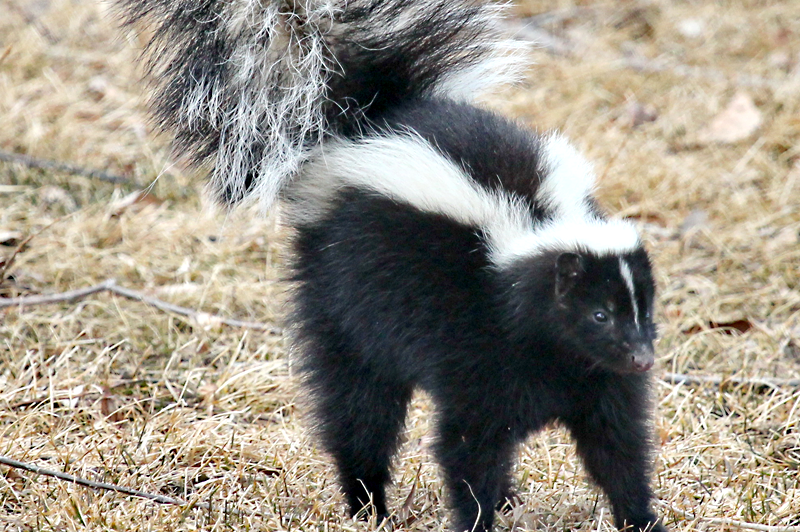
    Although there are several species of skunk throughout the world, only one, the striped skunk (Mephitis mephitis) is native to Ohio. Striped skunks are about the size of a house cat and are easily recognized by their black bodies marked with a white ‘cap’ and two white stripes running down the length of their back. However, there are color variations that exist including, all black, cream, cinnamon, and albino.

    Skunks have five slightly webbed toes on each foot and their front toes are equipped with long, curved claws that allow them to dig. When the ground is soft, they dig for grubs, roots and insects. They also dig dens.

    Claws aren’t the only tool that skunks are equipped with. They have sharp teeth, although skunk bites are rare. They also have thick fur that protects them from stings. But the most infamous tool at a skunk’s disposal is its musk. Although there are other mammals that have musk glands, skunks are the only ones that can project their musk into a spray. Skunks have good aim and can hit their target from about 15 feet away. The musk is oily which makes it persistent and very pungent. Besides the strong odor, a direct hit to the eyes can cause temporary blindness.

    Because a skunk’s anal glands carry only a small amount of musk, spraying is used as a last resort. At the first sign of danger, a skunk will hold up it’s tail as a warning flag. Even if its aggressor is color blind, the black and white contrast is an effective attention getter. Skunks will flee when possible. If either of these tactics don’t work, a threatened skunk will stomp its front feet as another warning. When all else fails, a skunk’s last and most effective line of defense is to spray.

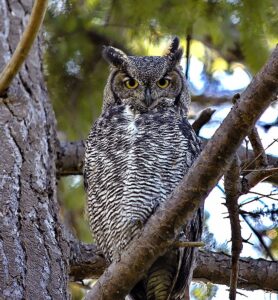
    Great Horned Owl (Wikipedia Creative Commons)

    Most animals learn to leave them alone after an encounter. However, skunks do have natural predators. The most common skunk predator here in Ohio is the great horned owl. Fishers, which are making a comeback in the Buckeye State are also effective skunk predators.

    Skunks are omnivorous meaning they eat both plants and animals. They often eat pests that are harmful to gardens and crops. They will dig up and consume underground yellow jacket nests as well.

    Here are some fun, skunk facts:

    • Because of its staying power, skunk musk was once used in making perfume
    • Striped skunks are found in all 88 Ohio counties
    • Skunks are not true hibernators but may stay in their winter dens for long periods
    • Skunk tracks resemble bear tracks only much smaller
    • Skunks can spray when they are only 1 month old
    • Skunks are very adaptable and can live in several different habitats from farms to urban neighborhoods
    • Skunks make a variety of sounds including chirps, growls, grunts, and squeals
    • Skunks are excellent swimmers
    • Striped skunks are not great climbers, unlike their cousins, spotted skunks who climb trees to raid nests
    • In Ohio it is illegal to release a captured skunk onto another property
    • It is legal in Ohio to own a domesticated skunk as a pet. However, additional permits may be required, and they demand a lot of attention and time.