Tag: Juneteenth

  • Ohio lawmakers are trying once again to remove slavery from state’s constitution

    Ohio lawmakers are trying once again to remove slavery from state’s constitution

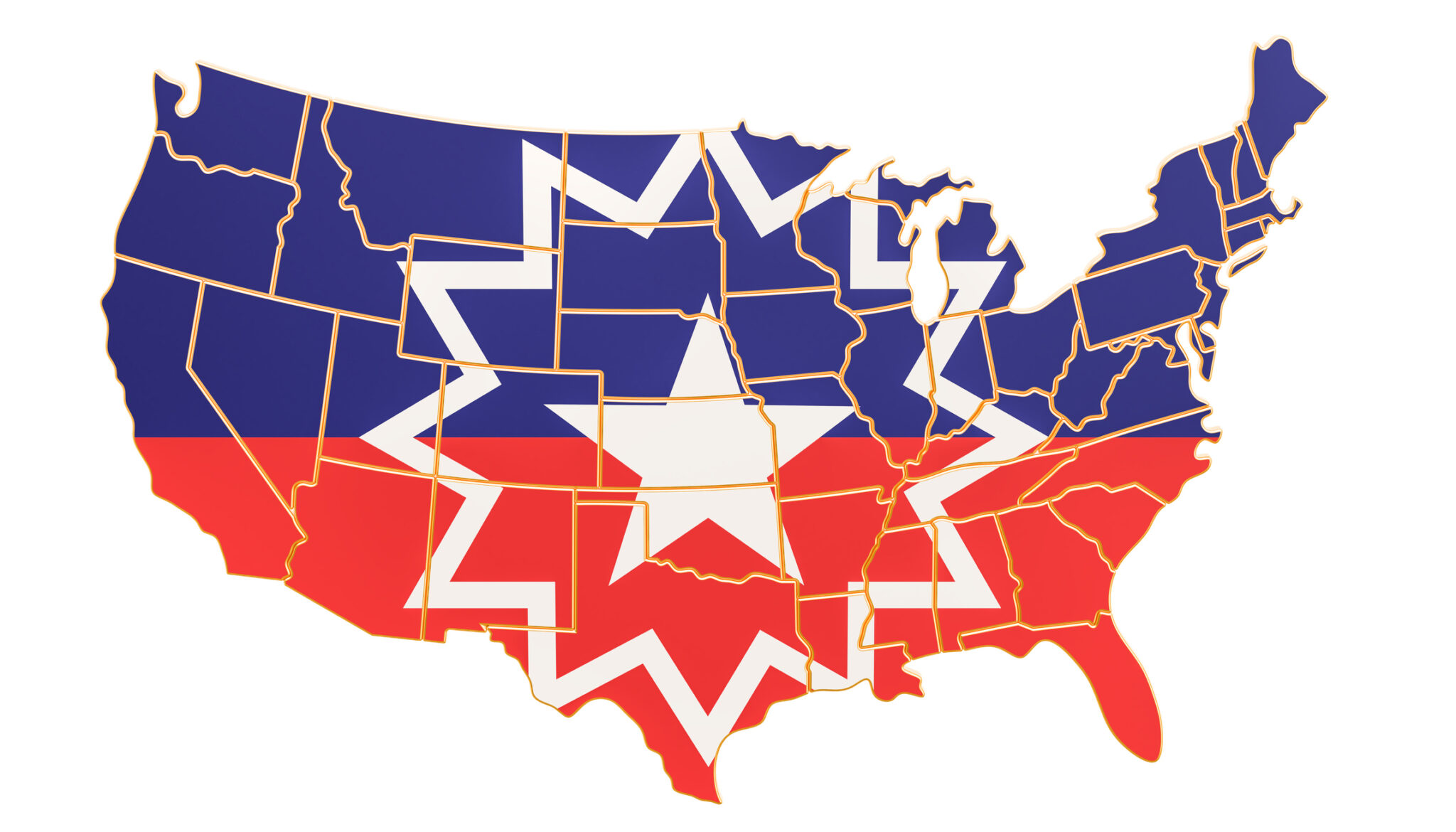
    Juneteenth flag. (Getty images)

    By:  Ohio Capital Journal

    Ohio Democratic lawmakers want to eradicate slavery from the Ohio Constitution.

    State Reps. Dontavius Jarrells, D-Columbus, and Veronica Sims, D-Akron, are working on a joint resolution that would remove slavery from the state’s foundational document.

    “This isn’t political,” Jarrells said Wednesday during an Ohio Legislative Black Caucus press conference. “This isn’t personal. This is a moral overdue journey to change our constitution once and for all. Other states have already done it. We simply want Ohio to live up to this promise of freedom.”

    GET THE MORNING HEADLINES.


    The 13th Amendment to the U.S. Constitution abolished slavery and involuntary servitude, except as punishment for being convicted of a crime. The Ohio Constitution currently says “There shall be no slavery in this state; nor involuntary servitude, unless for the punishment of crime.”

    Seven states have removed the slavery loophole from their constitution — Alabama, Oregon, Tennessee, Vermont, Utah, Colorado, and Nebraska, according to the Abolish Slavery National Network.

    “I submit that slavery and or involuntary servitude in any shape, form or fashion, should be disembodied from the sacred pages of the founding document of our great state,” Sims said. “It is time to remove any exception under any circumstances, slavery is a vile, despicable imposition upon another human being.”

    This is not the first time there have been legislative attempts in Ohio to remove slavery from the state’s constitution. Jarrells had a bipartisan joint resolution that was unable to get out of committee during the last General Assembly. A Senate Joint Resolution was also unsuccessful back in 2020.

    If the House and Senate pass the new joint resolution, it would go to the statewide ballot for the voters to decide.

    Wednesday’s press conference was hosted by members of the Ohio Legislative Black Caucus in honor of Juneteenth, a federal holiday Thursday remembering the end of slavery in the United States on June 19, 1865 — two years after the Emancipation Proclamation.

    “Juneteenth signifies the end of slavery, and it’s a time to celebrate,” said State Rep. Terrence Upchurch, D-Cleveland. “Although we are proud of the progress we have made, that does not negate the fact that there are still several challenges Black Ohioans face across the state. People are still struggling with finding housing, healthy foods, good paying jobs, satisfactory education, fair treatment in the justice system, and so much more.”

    Jarrells introduced House Bill 306 last month, also known as the Enact the Hate Crime Act.

    “It empowers victims with real civil remedies and gives law enforcement clear, enforceable tools to hold perpetrators accountable,” he said. “This bill says that every single person in this state deserves to live without fear, and if you are targeted for who you are, this state will stand with you.”

    State Rep. Darnell T. Brewer, D-Cleveland, talked about recent gun legislation he is working on.

    “Gun violence is devastating our communities,” he said. “We can no longer afford to be silent or inactive.”

    Black youth are 11 times more likely to die from firearm homicide than their white peers, according to Brady: United Against Gun Violence.

    Brewer said he plans on introducing a resolution to encourage responsible gun ownership by promoting safe storage practices to prevent children from accessing guns and a resolution on safe firearm storage education.

    “Gun violence is not just an emergency,” he said. “It’s a daily reality.”Infant mortality, when a child dies before their first birthday, is higher for Black babies compared to white babies. The national infant mortality rate is 5.5 per 1,000 live births for babies and 10.9 for Black babies, according to the Centers for Disease Control and Prevention. The infant mortality rate for Ohio Black babies in 2022 was 13.4 per 1,000 live births.

    “Why do we stop caring about babies after they’re born?” State Rep. Derrick Hall, D-Akron, asked.

    State Rep. Ismail Mohamed, D-Columbus, talked about House Bill 281, a bill that would withhold Medicaid funding from hospitals that do not cooperate with the United States Immigration and Customs Enforcement. State Rep. Josh Williams, R-Sylvania Twp., introduced the bill last month.

    “What this bill does is essentially force medical providers to choose between honoring your oath as medical providers or complying with the state’s political agenda,” Mohamed said. “It will discourage immigrant communities from seeking life saving treatment care out of fear.”

    Mohamed also talked about House Bill 1, a piece of legislation that would place restrictions on foreign ownership of land. State Reps. Angie King, R-Celina, and Roy Klopfenstein, R-Haviland, introduced the bill earlier this year.

    “It is arbitrary,” Mohamed said. “It is discriminatory in its face, and will negatively impact economic development in the state of Ohio.”

    Follow Capital Journal Reporter Megan Henry on Bluesky.


    Megan Henry
    Megan Henry

    Megan Henry is a reporter for the Ohio Capital Journal and has spent the past five years reporting in Ohio on various topics including education, healthcare, business and crime. She previously worked at The Columbus Dispatch, part of the USA Today Network.

    Ohio Capital Journal is part of States Newsroom, the nation’s largest state-focused nonprofit news organization.

    MORE FROM AUTHOR

  • The Hollowness of this Juneteenth a Sober Reality

    The Hollowness of this Juneteenth a Sober Reality

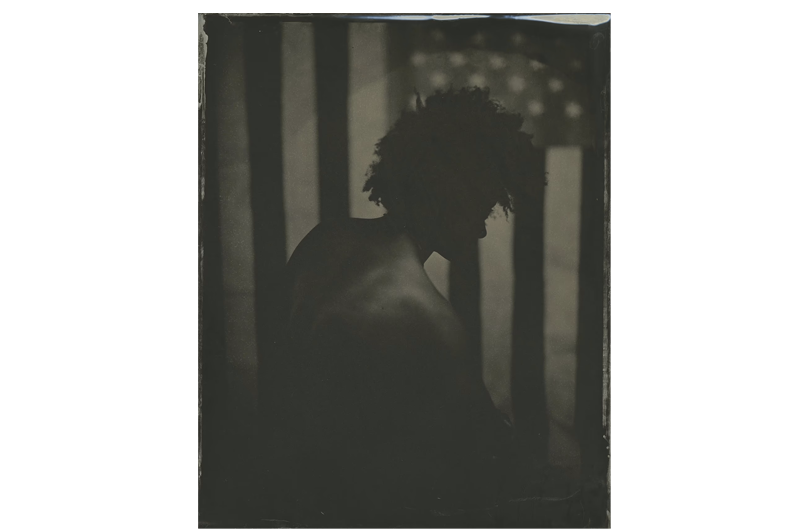
    Image by Rashod Taylor

    An opinion piece emailed to the desk of Loveland Magazine by Vann R. Newkirk II the Senior editor of the Atlantic.

    “The purpose of Juneteenth was always a celebration of emancipation, of the Black community’s emergence out of our gloomy past. But it was also an implicit warning that what had been done could be done again.”
    Five years ago, as the streets ran hot and the body of George Floyd lay cold, optimistic commentators believed that America was on the verge of a breakthrough in its eternal deliberation over the humanity of Black people. For a brief moment, perhaps, it seemed as if the “whirlwinds of revolt,” as Martin Luther King Jr. once prophesied, had finally shaken the foundations of the nation. In 2021, in the midst of this “racial reckoning,” as it was often called, Congress passed legislation turning Juneteenth into “Juneteenth National Independence Day,” a federal holiday. Now we face the sober reality that our country might be further away from that promised land than it has been in decades.

    Along with Memorial Day and Martin Luther King Jr. Day, Juneteenth became one of three federal holidays with explicit roots in Black history. Memorial Day was made a national observance in 1868 to honor soldiers felled during the Civil War, and was preceded by local celebrations organized by newly freed Black residents. The impetus for MLK Day came about with King’s assassination exactly a century later, after which civil-rights groups and King’s closest associates campaigned for the named holiday. Memorial Day and Martin Luther King Jr. Day both originated in times when the Black freedom struggle faced its greatest challenges. Juneteenth—an emancipation celebration popularized during Reconstruction—was codified during what purported to be a transformation in America’s racial consciousness.

    But, like its predecessors, Juneteenth joined the federal-holiday ranks just as Americans also decided en masse that they were done with all that. The 1870s saw the radical promise of Reconstruction give way to Jim Crow; the 1960s gave way to the nihilism and race-baiting of the Nixonian and Reaganite years. In 2024, the election of Donald Trump to a second term signaled a national retreat from racial egalitarianism. In his first months as president, he has moved the country in that direction more quickly than many imagined he would.

    Trump has set fire to billions of dollars of contracts in the name of eliminating “DEI,” according to the White House. His legislative agenda threatens to strip federal health care and disaster aid for populations that are disproportionately Black. The Department of Defense has defenestrated Black veterans in death, removing their names from government websites and restoring the old names of bases that originally honored Confederate officers. The Federal Aviation Administration plans to spend millions of dollars to investigate whether recruiting Black air-traffic controllers (among other minority groups) has caused more plane crashes. The Smithsonian and its constituents have come under attack for daring to present artifacts about slavery and segregation. Books about Black history are being disappeared from schools and libraries. The secretary of education has suggested that public-school lessons about the truth of slavery and Jim Crow might themselves be illegal.

    There were, perhaps, other possible outcomes after 2020, but they didn’t come to pass. The Democratic Party harnessed King’s whirlwinds of revolt to power its mighty machine, promising to transform America and prioritize racial justice. Corporations donned the mask of “wokeness”; people sent CashApp “reparations” and listened and learned. But the donations to racial-justice initiatives soon dried up. The party supported a war in Gaza that fundamentally undercut any claim to its moral authority, especially among many young Black folks who felt kinship with the Palestinians in their plight. When DEI emerged as a boogeyman on the far right, many corporate leaders and politicians started to slink away from previous commitments to equity. Democratic Party leadership underestimated the anti-anti-racism movement, and seemed to genuinely believe that earned racial progress would endure on its own. The backlash that anybody who’d studied history said would come came, and the country was unprepared.

    Trump and his allies spend a lot of time talking about indoctrination and banning DEI. But by and large, the campaign against “wokeness” has always been a canard. The true quarries of Trump’s movement are the actual policies and structures that made progress possible. Affirmative action is done, and Black entrance rates at some selective schools have already plummeted. Our existing federal protections against discrimination in workplaces, housing, health care, and pollution are being peeled back layer by layer. The 1964 Civil Rights Act might be a dead letter, and the 1965 Voting Rights Act is in perpetual danger of losing the last of its teeth. The Fourteenth Amendment itself stands in tatters.

    Five years after Democratic congresspeople knelt on the floor in kente cloth for nearly nine minutes, the holiday is all that really remains. This puts the oddness of today in stark relief. The purpose of Juneteenth was always a celebration of emancipation, of the Black community’s emergence out of our gloomy past. But it was also an implicit warning that what had been done could be done again. Now millions of schoolchildren will enjoy a holiday commemorating parts of our history that the federal government believes might be illegal to teach them about.

    I once advocated for Juneteenth as a national holiday, on the grounds that the celebration would prompt more people to become familiar with the rich history of emancipation and Black folks’ agency in that. But, as it turns out, transforming Juneteenth into “Juneteenth National Independence Day” against the backdrop of the past few years of retrenchment simply creates another instance of hypocrisy. What we were promised was a reckoning, whatever that meant. What we got was a day off.

  • Are you a Black business owner?

    Are you a Black business owner?

    Loveland, Ohio – On June 17, 2021, the Juneteenth National Independence Day Act was signed, officially declaring a federal holiday.

    To celebrate Juneteenth this year, Cassie Mattia would like to host local Black owned business leaders at her Table of Discussions.

    Please contact Cassie if you might be interested in telling the greater Loveland Area about your business.

  • How Loveland Magazine is celebrating Juneteenth

    How Loveland Magazine is celebrating Juneteenth

    Loveland, Ohio – To celebrate Juneteenth National Independence Day, we are singing “Freedom”.

    Learn more about Juneteenth.

    We are also listening to:

    Young protestors during the Birmingham Campaign in Birmingham, Alabama, May 1963. The movement, which called for the integration of African Americans, was organized by Martin Luther King Jr. and Fred Shuttlesworth amongst others. (Photo by Frank Rockstroh/Michael Ochs Archives/Getty Images)

    1A Remaking America: The Birmingham movement, 60 years later

    On May 2, 1963,  hundreds of school-age kids in Birmingham, Alabama, woke up with a plan.  

    Through coded messages broadcast by local radio DJs, they were given the signal to leave the classroom and meet at the park for a peaceful protest against segregation in the city.  

    “My mother said, ‘I’m sending you to school, don’t get in any trouble’,” said Janice Kelsey, who was a 16-year-old high school student in Birmingham at the time.  “I was going to school. I just wasn’t going to stay.” 

    Jeff Drew also participated in the Children’s March. His parents were involved in the Birmingham movement for civil rights and hosted Dr. Martin Luther King Jr. in their home.

    “You cannot imagine the joy of being on one of those buses on your way to jail,” said Drew. “We were nearly dying to participate.” 

    Janice Kelsey and Jeff Drew joined us at the Carver Theater in Birmingham last month for a community conversation on the fight for civil rights then and now. Their actions as students in the spring of 1963 brought national attention—and a new momentum—to the civil rights movement, support for which had been waning as more adults were jailed and reluctant to be arrested.

    Civil rights leaders, including James Bevel, recruited young people to participate in a peaceful demonstration on May 2, 1963 in what became known as the Children’s Crusade. Hundreds of kids were arrested by police for parading without a permit. Images of police dogs and firehoses being used on students in the city highlighted the injustices in Birmingham and prompted President John F. Kennedy to express support for federal civil rights legislation. 

    On our trip to Birmingham, we also spoke to the next generation of activists. Ashley M. Jones is a Birmingham native and the Poet Laureate of Alabama. At 32 years old, Jones is the state’s youngest-ever poet laureate and the first person of color to hold the position. Birmingham Mayor Randall Woodfin also joined us to talk about how the city’s past informs his role today. 

    This conversation was recorded in April as part of our Remaking America collaboration with six public radio stations around the country, including WBHM. Remaking America is funded in part by the Corporation for Public Broadcasting.

  • A curated reading list to become better acquainted with the meaning behind Juneteenth

    A curated reading list to become better acquainted with the meaning behind Juneteenth

    Oxford, OhioThe Juneteenth holiday, commemorates the date enslaved Black people in Galveston, Texas learned of their emancipation, more than two years after the proclamation was issued. The holiday has long been celebrated by African Americans. In 2021, President Joe Biden signed legislation establishing Juneteenth as a federal holiday. Miami University will observe Juneteenth on Monday, June 19.

    Rodney Coates, professor of Critical Race and Ethnic Studies in the Department of Global and Intercultural Studies at Miami University, provided a list of curated books to become better acquainted with the history and meaning of Junteenth.

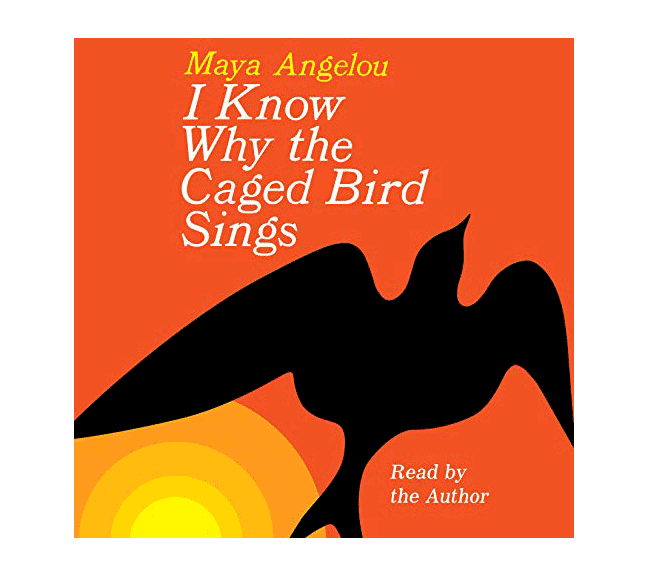
    Coates has selected three books that he references as voices of liberation and jubilation.  “A Voice from the South,” “The Souls of Black Folks,” and “I Know Why the Caged Bird Sings.”

    Coates provides a brief synopsis of each:

    No voice is as proactive, clear, and poignant as that of Anna Julia Cooper, writing her classic, “A Voice from the South,”  21 years after the end of the Civil War, 142 years ago. Her message — the plight, reality, and future of Black people — depended upon the Black woman’s success. For too long, the Church and clergy, the politicians and educators, and even the Black man thwarted these efforts by placing constraints upon the Black woman’s hopes, dreams, and opportunities. Cooper’s “Voice” provides a clarion call not to look back with inflated conceit, but to glean wisdom from experiences, to capture the spiritual essence of our being and to look to the future with hope and trust. This Voice shrugged condescension and victimhood yet shouted determination and “the radical amelioration,” liberation, and regeneration of the Black woman and community. Cooper ends with hope, believing black women shall arrive at the “promised land.”

    Almost a decade after Cooper’s “Voice” was published, W.E.B. Du Bois published “The Souls of Black Folks.” This collection of essays articulated Du Bois’ dreams toward an action plan for Black freedom in the 20th century. He began with a question, “What is it like to be a problem?” A problem complicated by prejudice, lawlessness, and ruthless competition. What is it like to be a Black and an American, two unreconciled selves, two paradoxes, two ends of a spectrum — in one body? Forty years after the promise of emancipation, freedom was still illusive to the freedman. Constantly vilified and condemned, over policed and undervalued, within just one generation, Blacks crafted institutions that provided escapes from the prison of poverty, mediocrity, and complacency. Yet, the soul of Black folks, the spiritual strivings of a people, was made manifest as they went from enslaved person to free, from forced laborers to skilled artisans and farmers. They created thousands of business people, clergy, teachers, and doctors in the process.

    While Black history is marked by progress, resilience, and perseverance, it is easy to ignore the trials, tribulations, and suffering endured by many Blacks over the ages. Maya Angelou’s “I Know Why the Caged Bird Sings” reminds us that it is not always a bed of roses. This is particularly true in this autobiographical work that traces a life often interrupted by tragedy, moving from kin to kin, grandparents to separated parents, and back to grandparents. Being the ugly duckling, battered and abused (sexually, mentally, and spiritually). But after being raped, pregnant, and disgraced, she continued onward. She did not allow these obstacles to drag her into hopelessness and despair. Head held high, she continued to pursue her path, gave birth to a marvelous son, graduated from high school, and the rest is history. So why can the caged bird sing? She dreams of freedom.  

    Lastly, while reading and contemplating the meaning of the Juneteenth holiday, listen to “Blackbird” written by Paul McCartney and featured on the Beatles’ iconic White Album in 1968. A young McCartney was inspired to write the song after meeting civil rights pioneers Thelma Mothershed Wair and Elizabeth Eckford. Wair and Eckford are two members of the Little Rock Nine, a group of nine black students who faced discrimination and the lasting impact of segregation after enrolling in the all-white Little Rock Central High School in 1957, following the Supreme Court’s Brown v. Board of Education decision.

    “Blackbird singing in the dead of night. Take these broken wings and learn to fly. All your life. You were only waiting for this moment to arise. Blackbird singing in the dead of night. Take these sunken eyes and learn to see. All your life. You were only waiting for this moment to be free.” McCartney (1968).

  • DeWine: Juneteenth as state holiday

    DeWine: Juneteenth as state holiday

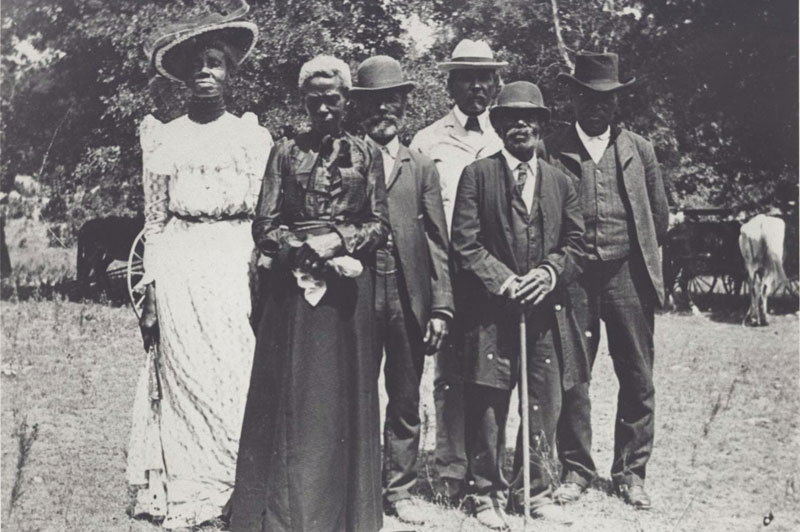
    Celebration of Emancipation Day (Juneteenth) in 1900, Texas

    (By Mrs. Charles Stephenson (Grace Murray) – The Portal to Texas History Austin History Center, Austin Public Library., Public Domain)

    Columbus, Ohio – Ohio Governor Mike DeWine issued the following statement on today’s developments regarding federal legislation making Juneteenth a federal holiday:


    “Juneteenth is the oldest nationally celebrated commemoration of the ending of slavery in the United States. Today, President Biden signed legislation making Juneteenth, June 19th, a federal holiday. This action by the president also makes Juneteenth a state holiday, pursuant to Ohio Revised Code §124.19, which defines state holidays as including ‘any day appointed and recommended by the governor of this state or the president of the United States.’

    “Pursuant to that statute, I also appoint and recommend Juneteenth, June 19th, as a state holiday. I also support legislative efforts to commemorate Juneteenth in the Ohio Revised Code.

    “Because Juneteenth falls on a Saturday, this makes the previous business day, Friday, June 18th, the day the state holiday is commemorated. This means that most state offices will be closed and most state employees will have the day off, with normal exceptions such as hospitals and public safety.”

  • Biden signs law making Juneteenth a new federal holiday

    Biden signs law making Juneteenth a new federal holiday

    Celebration of Emancipation Day (Juneteenth) in 1900, Texas

    (By Mrs. Charles Stephenson (Grace Murray) – The Portal to Texas History Austin History Center, Austin Public Library., Public Domain)

    By Jane Norman and Ohio Capital Journal

    Washington – President Joe Biden on Thursday signed into law legislation declaring a legal public holiday annually on June 19, the date of the end of slavery in the U.S. known as Juneteenth.

    “Throughout history, Juneteenth has been known by many names—Jubilee Day, Freedom Day, Liberation Day,” Vice President Kamala Harris said at the White House signing ceremony. “And today, a national holiday.”

    She noted that the White House was built by enslaved people, and the ceremony was taking place footsteps away from where President Abraham Lincoln signed the Emancipation Proclamation.

    “Today is a day of celebration. It is not only a day of pride. It’s also a day for us to reaffirm and rededicate ourselves to action,” Harris said.

    Formally called the “Juneteenth National Independence Day Act,” the bipartisan legislation sped through the U.S. Senate earlier this week without objection and passed the House on a 415-14 vote on Wednesday night. It means Juneteenth will be recognized as a federal holiday, like Memorial Day or July Fourth. Many states already designate it as a holiday as well.

    All 14 House votes in opposition were from Republicans and included Andy Biggs and Paul Gosar of Arizona; Andrew Clyde of Georgia; Scott DesJarlais of Tennessee; Matt Rosendale of Montana; and Tom Tiffany of Wisconsin. All of Ohio’s U.S. Congressional representatives voted in favor.

    The Office of Personnel Management said the holiday would be observed beginning this year, and so federal offices will be closed on Friday since June 19 falls on a Saturday.

    Also called Emancipation Day, the holiday commemorates the day in 1865 that Union soldiers arrived in Galveston, Texas, and ensured that enslaved people there would be freed. Lincoln had issued the Emancipation Proclamation in 1863, but the news took years to reach Texas and many other places.

    Rep. Sheila Jackson Lee, a Texas Democrat, pushed the legislation for years in the House and gained more than 170 cosponsors.

    “It has been a long journey,” she said on the House floor. “It has not been an easy journey. When we stand here today, we should be reminded of the fact that there were people who continued to experience the whips of a whip for two more years, even as Abraham Lincoln stood in the shining sun in the aftermath of Gettysburg to unite the Union and proclaim the slaves free in 1863.”

    A cosponsor, Rep. Kweisi Mfume, a Maryland Democrat, said that the recognition of Juneteenth “is a reminder that we must continue to move forward in honor and in recognition of ourselves, our families, our neighbors, and the nameless and faceless generations of African Americans that we will never know.”

    Some House Republicans raised questions about the holiday’s cost and the name of the bill.

    Republican Rep. James Comer of Kentucky said that while he would back the measure, the House panel that oversees federal holidays did not have a chance to review it and there was no Congressional Budget Office estimate of the cost.

    He said that a 2014 analysis by the Office of Management and Budget found it cost federal taxpayers $660 million in payroll and holiday premium costs when federal employees were given an extra holiday on the day after Christmas that year by executive order.

    Rep. Danny K. Davis, an Illinois Democrat, responded that “whatever the cost, it will not come close to the cost of slavery.”

    Other Republicans objected to using the term “Independence Day” in connection with Juneteenth, saying it would cause confusion with July Fourth. They suggested instead calling it Emancipation Day or Freedom Day.

    “We support the holiday. But why would the Democrats want to politicize this by co-opting the name of our sacred holiday of Independence Day?” said Rep. Clay Higgins of Louisiana.

    “Why would it not be named the Juneteenth National Emancipation Day? Why would we want to inject conflict about this? I don’t understand this body and the way it moves forward contrary to the best interests of the American people.”

    At the signing ceremony, Biden noted Juneteenth would be the first new national holiday since Martin Luther King Day was enacted nearly 40 years ago, and that signing the bill was “one of the greatest honors I’ve had as president.”

    Lawmakers gathered around Biden as he signed the bill included Democratic Sens. Raphael Warnock of Georgia and Tina Smith of Minnesota, and Rep. Joyce Beatty of Ohio, the chair of the Congressional Black Caucus.

    Also present was Opal Lee, a 94-year-old activist from Texas who has campaigned for the holiday’s recognition for years. Harris put her arm around Lee as Biden signed the bill.

    Biden pointed out that Thursday was the sixth anniversary of the slaying of nine parishioners at Mother Emanuel AME Church in Charleston, S.C., all African Americans, by a 21-year-old man who called himself a white supremacist.

    Biden said the anniversary is “a reminder that our work to root out hate never ends.”