


Tag: K-12 funding formula

  • Honoring Black history and fighting for the future of education in Ohio

    Honoring Black history and fighting for the future of education in Ohio

    A Guest Column by Melissa Cropper and Ohio Capital Journal

    On Feb. 1, as Black History Month began in Ohio’s classrooms and virtual classrooms, Gov. Mike DeWine unveiled his proposed budget for the next two years, which continues the education funding policies that systematically underfund public schools that educate Black students and even shift some of that funding away toward unaccountable, for-profit private schools. 

    Black History Month is an important time for our nation’s educators to focus their curriculum around the contributions that African Americans have made in government, industry, art, science, literature, and every field of human endeavor. However, we do a disservice to our students if we don’t also teach about the harder, more painful history of slavery, segregation, disenfranchisement, and racist violence, and if we do not weave it into our everyday curriculum as deeply as it is woven into the fabric of our country.

    Even then, we are not telling the full story if we teach about these topics as relics of the past, as dark chapters of our country’s past that have ended. Racist structures in our society didn’t cease to exist when the Thirteenth, Fourteenth and Fifteenth Amendments were ratified following the Civil War, or after Brown vs. the Board of Education desegregated schools, or after the 1964 Civil Rights Act, or even after Barack Obama’s historic election. 

    Each of those events has been an important step along the way, but as we are reminded all too often, the vestiges of white supremacy live on in our current institutions. We see it in the over-policing and incarceration of Black, brown, and immigrant communities, we see it in our city neighborhoods that were shaped by redlining, and we see it in Ohio’s school funding system. 

    When we teach Black history, educators can make the connections about how the racial injustices of the past have turned into the systemic racial disparities of the present, and how we can demolish the underpinnings of injustice. There is no better place to start than with our broken school funding policies which underfund and segregate schools with large populations of Black students.

    In Ohio, we underfund schools in Black communities with a school funding formula that was found unconstitutional by the Ohio Supreme Court more than 20 years ago because it relied so heavily on local property taxes that it denied an equitable and adequate education to students in low-income areas. 

    We segregate schools in Black communities with voucher and charter policies that divert students and drain funding from local public schools. Often cloaked in the language of racial justice, vouchers and charter schools have the opposite effect when put into practice. The NAACP has often opposed these policies because they “divert much needed funding for public education to private or charter schools, thereby further dismantling the viability of the public education system and limiting the number of children who would be afforded the opportunity of an adequate and effective education.”

    This vicious cycle of underfunding schools in communities of color, and then punishing them for not being able to meet their students’ needs by underfunding them further, must end. We must stop pitting parents and communities against one another, and instead renew our commitment for high quality public schools for all Ohio students. 

    Last year, the Ohio House passed the Fair School Funding Plan with an overwhelming bipartisan majority, yet the Senate refused to take the issue up. The Plan would have put Ohio on a six-year path toward equitable funding of public schools in Ohio, and would have immediately ended punitive and harmful deductions for vouchers and charter schools from local public school funds. 

    This would ensure that public school districts receive money only for the students who are enrolled to attend but without the added penalty of deducting money due to students opting for private or charter schools. These changes would strengthen schools in Ohio’s cities and in our rural areas, giving students from all backgrounds increased opportunities. Despite the Fair School Funding Plan receiving an 84-8 vote in the House, the Ohio Senate allowed the bill to die without even receiving a vote. 

    DeWine had the opportunity to take the hard work and bipartisan agreement for this new school funding formula and insert it as a framework into his budget proposal. Instead, his proposal continues the status quo which is actively undermining our ability to provide an equitable education.  

    As educators, we can not teach Black History without also being activists in our own realm, fighting for an education system that gives every child, no matter their race or where they live, equal access to a high quality, free public education.
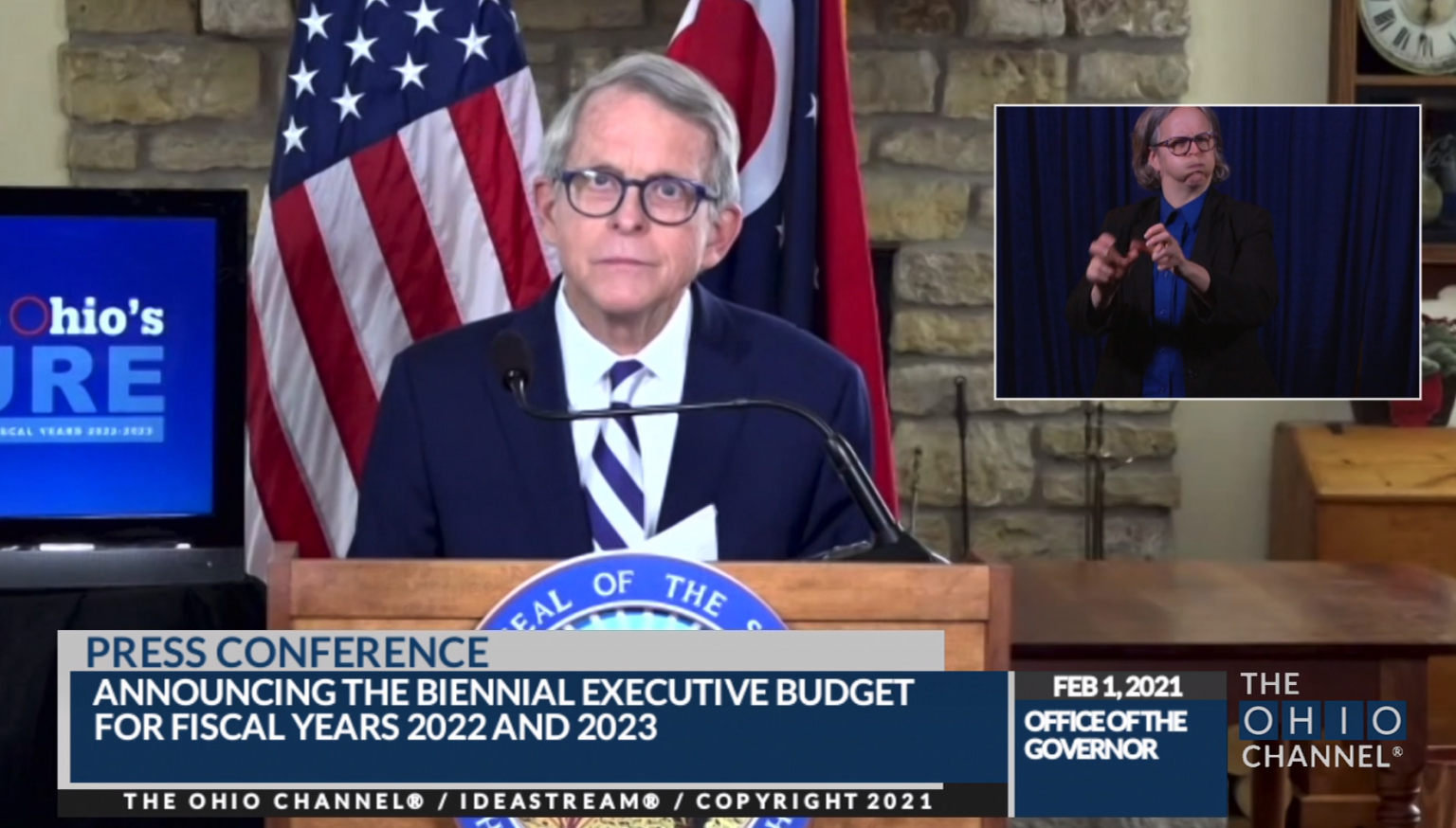
  • What to know about Gov. DeWine’s proposed state budget

    What to know about Gov. DeWine’s proposed state budget

    Funding for Ohio schools would return to levels seen before the pandemic hit

    by By Tyler Buchanan and Ohio Capital Journal

    Ohio Gov. Mike DeWine outlined his administration’s proposed state budget on Monday, calling his plan “truly an investment into our future.”

    Acknowledging this as being an “extremely challenging time in Ohio,” DeWine nevertheless offered an optimistic view of the coming two years and said 2021 in particular would be a year of recovery. 

    The governor emphasized the need for targeted investments toward Ohio businesses, communities and workers as the state continues to deal with a pandemic that has left thousands dead and more than a million seeking unemployment aid at some point in the past year. 

    “We see a bright future ahead,” said Kimberly Murnieks, the state’s chief budget officer, in helping to roll out the budget plan.

    The proposal kicks off months of negotiating with the Ohio legislature, which is tasked with approving a state budget this summer.

    Here are some main takeaways of how the budget affects everyday Ohioans and some details about the next steps in the budget process:

    Big investments in small businesses, expanding broadband access

    At the centerpiece of DeWine’s budget proposal is a new economic recovery plan referred to as the “Investing in Ohio Initiative.”

    The one-time spending plan includes more than $1 billion toward business grants, community infrastructure projects and workforce development. 

    A total of $460 million in grants would go toward bars, restaurants, entertainment venues and other small businesses hit hard by the pandemic, DeWine said. Of this money, $20 million would be specially allocated for new businesses started since the beginning of 2020. 

    Lt. Gov. Jon Husted outlined a number of proposed investments toward improving the state’s workforce training opportunities, benefiting high school students and adult workers alike:

    Another major component of the Investing in Ohio Initiative is $250 million for broadband expansion throughout the state of Ohio. This is an “incredibly important” priority, Husted said, noting that Ohioans without adequate internet access at home have fewer education, health care and telework opportunities. 

    This proposed spending is made available, DeWine said, due to money saved by the state government during the pandemic as well as increased federal spending in Ohio that has freed up additional money. 

    There is one other aspect of the Investing in Ohio Initiative plan.

    DeWine wants $50 million public relations campaign 

    This is a component of the governor’s proposed recovery plan that turned some heads. 

    DeWine hopes to see the state embark on a $50 million marketing campaign to promote the virtues of Ohio to the rest of America.

    The idea, he said, is to convince residents and entrepreneurs living elsewhere to relocate to the Buckeye State. 

    “We want to position Ohio as the place to be,” DeWine said, saying the campaign should highlight the state’s cultures, cities, universities and workplace opportunities.

    No new taxes, but some new fees

    The governor and chief budget officer repeatedly made note of the effort to not propose any new taxes with this budget.

    It does, however, call for increasing some fees that Ohio residents have to pay at the Bureau of Motor Vehicles. The budget proposes a $10 increase on motor vehicle registration fees and a $2 increase on title fees. 

    This would raise millions of dollars benefitting the Ohio State Highway Patrol, which Murnieks said is in need of additional funding to pay for its operations and security responsibilities. (The Patrol provides security at the Ohio Statehouse.)

    Health and Education

    Public health should remain a major funding priority going forward as Ohio navigates the COVID-19 pandemic, DeWine said.

    He mentioned a particular need to invest in better data systems for health departments to process and report public health information. 

    The governor will talk in future detail about the proposed public health spending in his Tuesday pandemic press conference, Murnieks told reporters. 

    Gov. DeWine said his budget would allocate funding toward improving Ohio health departments’ ability to process data and information. The Ohio Department of Health’s COVID-19 dashboard is seen in a screenshot from Monday afternoon.

    The budget proposes a notable increase in state Medicaid spending. Murnieks said this is due to a rise in the number of Ohioans relying on Medicaid during the ongoing health crisis and an expected decrease in federal funding.

    Regarding education, DeWine did not include any changes with the K-12 funding formula in his budget proposal, noting that lawmakers are still debating the issue.

    In sum, funding for Ohio schools would return to levels seen before the pandemic hit. (OCJ covered the education budget proposals in a separate article which you can read here.)

    ‘Rainy day fund’ still untouched

    Throughout the pandemic, DeWine has said the state would not tap into its $2.7 billion “rainy day fund” unless it was absolutely necessary.

    The state opted against doing so for all of 2020, even while instituting hundreds of millions of dollars in cuts to public education last May. 

    Likewise, the state evidently has no intention of using that money in 2021. DeWine did not propose any funds be used from the rainy day fund in his budget proposal.

    Murnieks told reporters that it’s beneficial for Ohio to continue saving it for any future budget catastrophe. She said the state likely would have relied on this money had it not been for the funding assistance provided by the federal government. 

    What’s next?

    The state legislature will now start reviewing the budget proposal.

    The negotiating process begins in the two chambers’ Finance Committees. Eventually, the budget will come to a full vote in the Ohio House of Representatives and the Ohio Senate. Members from both chambers will then hash out any differences before a final budget bill heads to the governor’s desk for approval.

    The budget must be approved by the start of the new fiscal year (July 1), though it’s not uncommon for negotiations to continue past that date with a temporary budget in place.

    More information about the budget proposal is available online at budget.ohio.gov, with information about current state spending available at checkbook.ohio.gov.