Tag: K-12 schools

  • Ohio’s transgender bathroom ban bill could face legal challenges if it passed, attorney says

    Ohio’s transgender bathroom ban bill could face legal challenges if it passed, attorney says

    Getty Images.

    Bathroom ban laws have been challenged in Florida, Oklahoma, Idaho and Tennessee.

    Jean Schmidt (R) who represents Ohio House District 62 is a co-sponsor of HB 183.
    Jennifer Gross (R) who represents Ohio District 45 is a co-sponsor of HB 183.
    Thomas Hall (R) who represents Ohio District 46 is a co-sponsor of HB 183.

    Bill Seitz (R) who represents Ohio District 30 is a co-sponsor of HB 183.

    Adam C. Bird (R) who represents Ohio District 63 is a Primary Sponsor of HB 183.

    BY:  Ohio Capital Journal

    The Ohio House recently passed a transgender bathroom and locker room ban bill, but states that have passed similar bills have gone on to face legal challenges.

    Arkansas, Idaho, IowaKentuckyOklahoma, Tennessee, AlabamaLouisianaMississippiNorth Dakota, Florida, and Utah all have laws on the books that ban transgender people from using the bathroom that aligns with their gender identity in schools.

    These laws have been challenged in Florida, Oklahoma, Idaho, and Tennessee. The U.S. Court of Appeals for the 9th Circuit blocked Idaho’s law in the fall.

    Ohio’s bill would require K-12 schools and universities to mandate that students only be able to use the bathroom or locker room that matches their gender assigned at birth. It would not prohibit a school from having single-occupancy facilities and it would not apply to someone helping a person with a disability or a child younger than 10 years old being assisted by a parent, guardian, or family member.

    The bathroom ban bill, which was tucked into Senate Bill 104 at the end of a marathon House session, heads back to the Ohio Senate for concurrence. The lawmakers are currently on summer break, so that won’t happen anytime soon.

    Ohio Gov. Mike DeWine has indicated he would sign the bill if it came to his desk.

    “As it stands now, I would sign the bill,” he told reporters on Friday.

    Lawsuits would be filed if Ohio passes the bill, said Cleveland attorney Robert Chaloupka.

    “There’s good reason to believe that if the (Ohio) Attorney General decides to defend this case, they’re going to lose, which means we’re spending taxpayer money on something that we have a good sense of how it’s going to go,” he said.

    Chaloupka sees lots of legal challenges with Ohio’s bill.

    “My most critical point about this is who’s going to police this?” Chaloupka asked.

    He thinks this would be especially challenging in a university setting where there are non-traditional students.

    “You’re going to regulate where a 75 year olds trans individual goes to the bathroom?” Chaloupka said.

    The Supreme Court declined to weigh in earlier this year on whether schools can ban transgender students from using a restroom that reflects their gender identity. That denial left in place a U.S. Court of Appeals for the 7th Circuit decision that allowed a transgender middle school Indiana boy to use the boys’ restroom.

    The American Medical Association officially opposes policies preventing transgender individuals from accessing basic human services and public facilities consistent with gender identity.

    “Banning transgender students from freely and safely accessing public places, like bathrooms and changing rooms, sends the message that transgender children do not belong,” Ash Orr, spokesperson for the National Center for Transgender Equality, said in an email. “Everybody should be able to safely access public places without fear of persecution or harassment.”

    Utah’s bathroom ban law — which went into effect in May— applies to K-12 schools and all government-owned buildings.

    “Using the bathroom is a human function that everybody needs to be able to do, and bathrooms can tend to feel like vulnerable spaces, so I think the real concern is that people will feel uncomfortable in a bathroom setting and choose not to use the bathroom at all, which obviously can lead to health issues,” said Equality Utah’s Policy Director Marina Lowe.

    What happened in North Carolina?

    North Carolina was the first state to limit bathroom access to transgender people in 2016 when they enacted a law that banned transgender people from using the restroom that matched their gender identity in most public spaces.

    The backlash was swift and ended up costing the state hundreds of millions of dollars. The NBA moved its 2017 All-Star game from Charlotte to New Orleans. The ACC’s 2016 championship football game was moved from Charlotte to Orlando. Pearl Jam, Bruce Springsteen and Ringo Starr canceled their North Carolina shows.

    North Carolina’s law was repealed in 2017 and ultimately settled in federal court in 2019.

    Follow OCJ Reporter Megan Henry on Twitter.


    Megan Henry
    MEGAN HENRY

    Megan Henry is a reporter for the Ohio Capital Journal and has spent the past five years reporting in Ohio on various topics including education, healthcare, business and crime. She previously worked at The Columbus Dispatch, part of the USA Today Network.

    Ohio Capital Journal is part of States Newsroom, the nation’s largest state-focused nonprofit news organization.

    MORE FROM AUTHOR

  • Ohio lawmakers approve cellphones in school measure

    Ohio lawmakers approve cellphones in school measure

    BY:  Ohio Capital Journal

    Ohio lawmakers signed off on changes to the military seal for high school diplomas on Wednesday. But the bill’s most notable provision was a last minute amendment regarding cellphones in K-12 schools that caught a ride on the non-controversial measure.

    Recently, Gov. Mike DeWine urged lawmakers to address cellphones in classrooms during his state of the state address. Now, about a month later, those changes are headed to his desk.

    Some lawmakers casually refer to the changes as a “cellphone ban,” but that’s a bit of a misnomer. Instead, the law directs every district to develop a written policy aimed at minimizing phone use during school hours and potential distractions during class instruction.

    The bill also includes an exception for students who need a phone to assist in learning or to track a health concern, so long as it is reflected in their individual education plan.

    On the Senate floor, the cellphone provision’s chief backer, Sen. Andrew Brenner, R-Delaware, explained “the legislation does not require districts to adopt a ban on all students’ cell phone use, though that is an option if the school district chooses to do so.”

    He added that those districts with cellphone policies in place don’t need to change them so long as the policy “emphasize(s) minimal use and least amount of distraction.”

    “The language also directs the Department of Education and Workforce to develop a model policy informed by evidence-based research on the effects of smartphones and classrooms, that districts may choose to adopt as their policy if they wish to do so,” Brenner said.

     COLUMBUS, Ohio — JANUARY 10: Newly sworn in State Rep. Beryl Brown Piccolantonio, D-Gahanna. (Photo by Graham Stokes for Ohio Capital Journal) 

    Across the hall in the House, Rep. Tracy Richardson, R-Marysville, emphasized how their approach gives districts direction without being prescriptive.

    “Each school district is required to create their own policy, thus ensuring — and let me make this very clear — local control,” she said.

    Up until this January, Rep. Beryl Piccolantonio, D-Gahanna, was serving as president of the Gahanna-Jefferson School Board, and she described the changes as “critically important.”

    “A frequent issue that was raised to us by staff, and by students, quite frankly, was how difficult it was for staff to enforce their own classroom policies because they didn’t have broader support to back up that enforcement.”

    She praised the measure for giving districts the “flexibility” to develop their own approaches to deal with the issue. Highlighting a recent take your child to work day event where kids debated cellphones in schools, she noted “even some of the students acknowledge the distraction that cellphones have within their classroom.”

    Follow OCJ Reporter Nick Evans on Twitter.


    Nick Evans
    NICK EVANS

    Nick Evans has spent the past seven years reporting for NPR member stations in Florida and Ohio. He got his start in Tallahassee, covering issues like redistricting, same sex marriage and medical marijuana. Since arriving in Columbus in 2018, he has covered everything from city council to football. His work on Ohio politics and local policing have been featured numerous times on NPR.

    Ohio Capital Journal is part of States Newsroom, the nation’s largest state-focused nonprofit news organization.

    MORE FROM AUTHOR

  • Superintendent: Why there were no quarantined students or staff in Loveland Schools last week

    Superintendent: Why there were no quarantined students or staff in Loveland Schools last week

    by David Miller

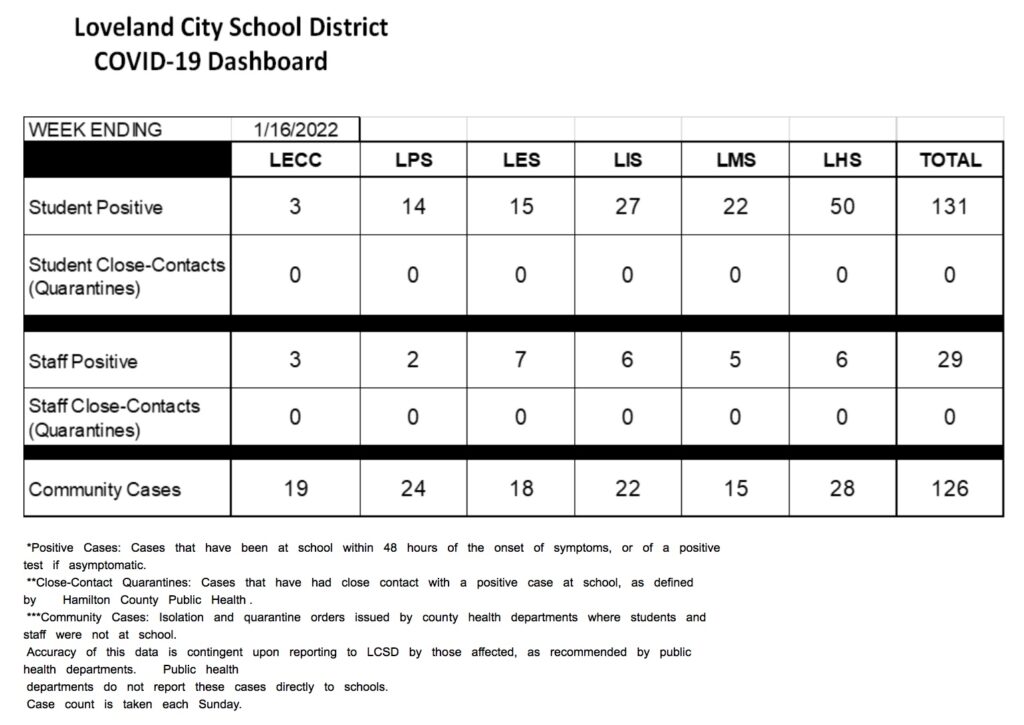
    Loveland, Ohio – After publishing the Loveland School District’s latest COVID 19 Dashboard on Tuesday, January 18, many readers wondered how there could be so many positive cases in the schools but zero students or staff who were quarantined.

    In an email yesterday I asked Superintendent Mike Broadwater: “I have a question that has come up after we published the latest COVID 19 Dashboard image yesterday. People are wondering why there were no quarantine figures on it.”

    Broadwater answered via email saying, “In regards to the Dashboard, there are no more quarantines with the new guidelines set forth by ODH (Ohio Department of Health). The only time you will see a quarantine would be if the family opts to quarantine their child rather than mask to stay. You’ll notice all zeroes with the exception of a few single quarantines since the new guidelines were released.”

    New CDC Guidelines were implemented 1/3/2022 and are reflected in subsequent reporting.

    Readers can view all of the COVID 19 Dashboard reports at this LINK.

    The current District quarantine and mask policy is found on the District website and states:

    Effective November 1, 2021

    The Ohio Department of Health (ODH) has made a few minor changes to the quarantine recommendations for K-12 schools, and these new guidelines should help us keep our students healthy and in the classroom, where they learn best. 

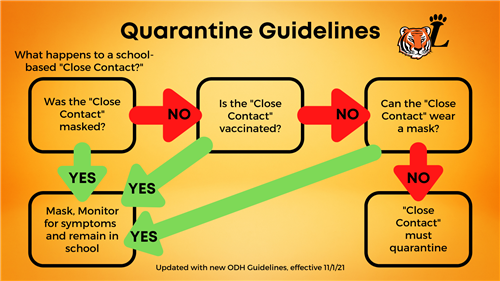
    These guidelines will not change our current masking policy, but will change how we handle situations where a student has been identified as a “close contact/direct contact.” 

    Mask to Stay/Test to Play

    Direct contacts, regardless of vaccination or masking status, may remain in the classroom environment if they do the following:

    • Wear a mask for 14 days after their last date of exposure.
    • Self-monitor, or parent-monitor, for symptoms of COVID-19.
    • Isolate and get tested if they start to experience symptoms associated with COVID-19 (regardless of the level of severity).
    • Consistent with guidance for others quarantining in lower-risk environments, students and staff may discontinue these quarantine procedures after seven days – if they don’t develop symptoms and test negative between days 5-7.

    Direct contacts may continue to participate in extracurricular activities if they do the following:

    • Wear a mask when able. (This includes: transportation; locker rooms; sitting/standing on the sidelines; and anytime the mask will not interfere with breathing, the activity, or create a safety hazard.)
    • Test on initial notification of exposure to COVID-19.
    • Test again on days 5-7. If they are negative at this time, they will test out of quarantine.

    You can read the full policy from the Ohio Department of Health by following this link

    We believe the guidance from ODH will keep our students safe, and in school as much as possible, which has been our goal this year.

  • Centers for Disease Control issues new guidance for return to school

    Centers for Disease Control issues new guidance for return to school

    The Centers for Disease Control issued new guidance Tuesday for back to school protocol.

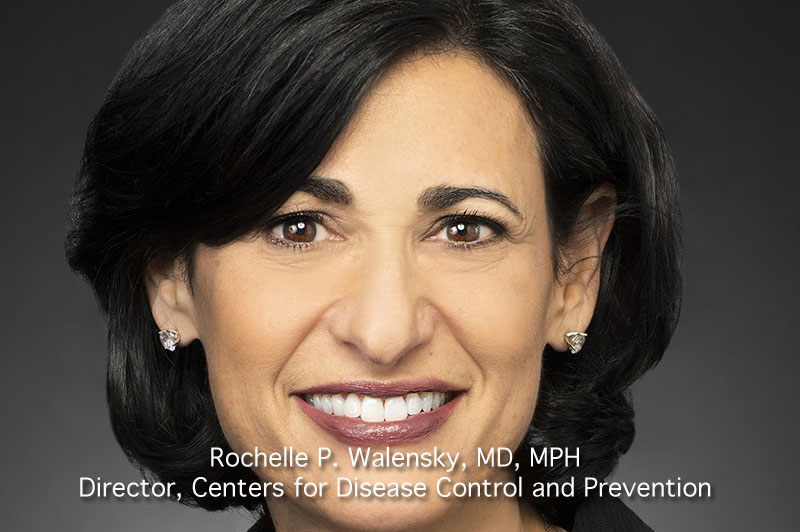
    Rochelle P. Walensky, MD, MPH, Director, Centers for Disease Control and Prevention said in a news conference that new scientific data from recent outbreak investigations show the Delta Covid-19 variation is uniquely, differently from past strains of the virus. Even those who are fully vaccinated may become contagious and spread the Delta variant to others.

    Walensky recommended:

    1) Everyone should get vaccinated and continue masking until fully vaccinated. In high transmission areas of the country, vaccinated individuals should wear masks indoors. This includes schools.

    2) Everyone in K-12 schools wears a mask indoors including students, teachers, staff, and visitors regardless of vaccination status.

    3) Children should return to full-time/in-person learning in the Fall with proper prevention strategies in place.

    4) Community leaders should encourage vaccination and universal masking to prevent further outbreaks in areas of substantial and high transmission.

    Listen to the press conference

    Current Loveland schools mask requirement

    Loveland Magazine –  Jul 28, 2021

  • With school vaccine mandates banned, lawmaker wants mask requirements outlawed, too

    With school vaccine mandates banned, lawmaker wants mask requirements outlawed, too

    State Sen. Andrew Brenner, R-Powell. (Photo from Ohio Senate website)

    By Tyler Buchanan and Ohio Capital Journal

    State Sen. Andrew Brenner, R-Powell. Photo from Ohio Senate website.

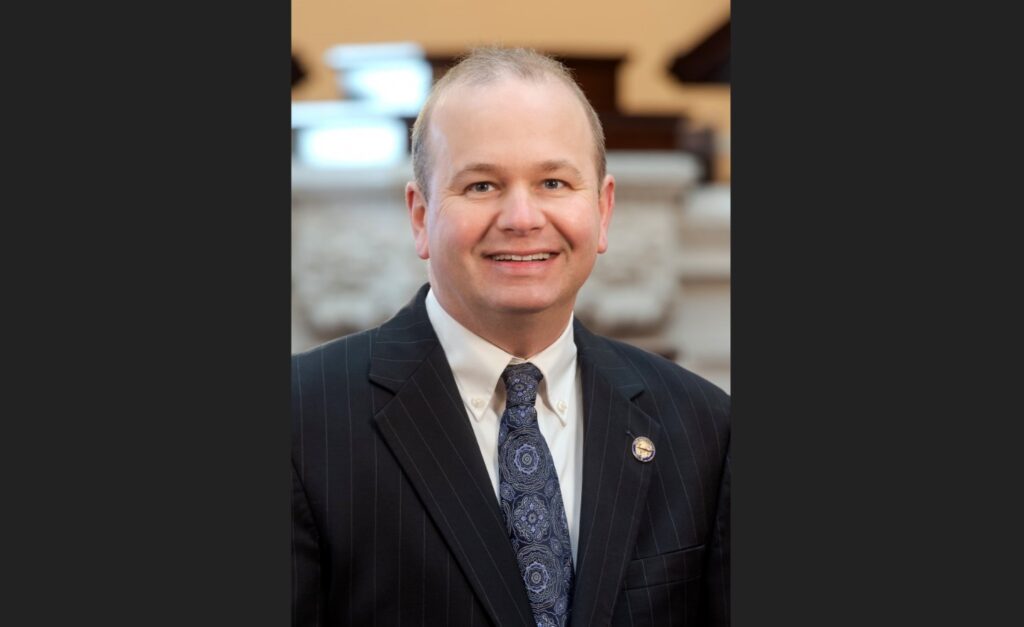
    Ohio schools will soon be barred from mandating that students be vaccinated against COVID-19. A Republican state lawmaker wants to also prohibit schools from mandating students and others wear face masks.

    State Sen. Andrew Brenner, R-Powell. (Photo from Ohio Senate website)

    Senate Bill 209, introduced by state Sen. Andrew Brenner, R-Powell, is unlikely to impact school districts’ decisions for the fall, as lawmakers are on break until after most schools return to class. But the bill reflects continued attempts from those in the Ohio General Assembly to block public mitigation efforts of a virus that has killed more than 20,000 Ohioans to date.

    SB 209 would prohibit the state school board, the Ohio Department of Education or individual school districts’ boards of education from requiring anyone to wear facial coverings in a public education setting.

    K-12 schools and universities would not be able to require masks for students, teachers, staff members or visitors. Masks would not be required for in-class learning, any school athletic event or other school function.

    “An individual may choose to wear a facial covering but shall not be required to do so,” the bill states.

    Such mandates could still come from outside the education system, as SB 209 notes that health departments retain the authority to take “action to prevent the spread of a communicable or contagious disease.”

    A separate provision in SB 209 deals with mask mandates imposed by private businesses. The businesses would be able to require masks, but “shall post notice of the requirement in a conspicuous place.” The notice must “state that an exemption to the requirement exists for individuals that have a documented medical condition that contraindicates the wearing of a facial covering.”

    Brenner helped to enact the recent law barring public schools from issuing vaccine mandates — a law that does not go into effect until mid-October.

    Shortly before lawmakers recessed for the summer, Brenner added the amendment to an unrelated bill involving education for children with parents in the military.

    The Republican supermajorities, which have been critical of public mandates throughout the duration of the pandemic, swiftly approved that bill.

    Gov. Mike DeWine had pledged to veto any bill that would “discourage vaccination,” but nevertheless quietly signed it into law last week

    Ohio Gov. Mike DeWine is seen at a coronavirus press conference in 2020. He had pledged to veto bills that discouraged vaccination. Photo courtesy The Ohio Channel.

    A year ago, when Ohio districts weighed a return to in-person instruction for the 2020-2021 school year, Brenner argued such decisions should be made at a local level, not by the state government.

    “Why would you not trust your local school boards and superintendents who know their schools districts the best, taking information from state and local health departments to be able to determine whether or not their local school districts should be open?” Brenner asked in June 2020.

    The legislature has since taken away local decision-making regarding school vaccine mandates, and under Brenner’s SB 209, the same would be true for mask requirements.

  • DeWine signs bill to temporarily ban school COVID-19 vaccine mandates

    DeWine signs bill to temporarily ban school COVID-19 vaccine mandates

    By Jake Zuckerman and Ohio Capital Journal

    His signature on the bill seems to violate his pledge to veto any legislation that would “discourage vaccination.”

    Columbus, Ohio – Ohio Gov. Mike DeWine signed legislation Wednesday that could block schools from mandating vaccination against COVID-19 for the fall.

    In the dying moments of the final legislative session before a summer recess, lawmakers tacked the vaccine provision as an amendment onto an unrelated bill regarding educational opportunities for military children. The amendment:

    • Forbids public K-12 schools and colleges from requiring any vaccine that has not yet received “full approval” from the U.S. Food and Drug Administration.
    • Forbids the schools from “discriminating” against anyone who has not been vaccinated, which includes infection control provisions like masks and social distancing.
    • Does not apply to hospitals or health care facilities operated by or affiliated with universities.

    It passed on party lines in both chambers, with Republicans in support and Democrats in opposition.

    All three vaccines available for use against COVID-19 are approved under an “emergency use authorization.” The FDA uses this streamlined regulatory process for drugs and vaccines that can be used against an ongoing emergency such as the pandemic, which has killed more than 608,000 Americans to date. The regulators issued the temporary authorization after reviewing clinical trial data on tens of thousands of recipients. The FDA, along with the Centers for Disease Control and Prevention (CDC), continues to monitor safety and efficacy profiles of all three vaccines.

    DeWine announced his approval of the bill without any public comment or fanfare. His signature on the bill seems to violate his pledge to veto any legislation that would “discourage vaccination.”

    Dan Tierney, a spokesman for the governor, played up the bill’s original aims in an email and said DeWine expects looming regulatory approval to nix the issue.

    “The primary purpose of the bill was to enhance educational opportunities for children in military families — a worthy goal,” he said. “The provision you are referring to is limited to vaccines that do not have full FDA approval. We are confident that these vaccines, proven repeatedly to be very safe and very effective, will be approved by the FDA, thus rendering this issue moot.”

    Passage comes amid an ongoing clash between DeWine and fellow Republicans in the legislature regarding public health policy. Earlier this year, lawmakers overrode DeWine’s veto on a broad weakening of state public health laws.

    Meanwhile, Republicans in the House Health Committee are considering legislation that would weaken state vaccination laws and prevent employers, nursing homes, hospitals, colleges and more from requiring vaccination of students and employees. DeWine has said he would veto the bill if it made it to his desk.

    During a hearing on that bill, lawmakers — many of whom have announced their refusal to seek vaccination against COVID-19 and aligned themselves with anti-vaccination activists — invited testimony from a discredited doctor who has claimed vaccines are a “depopulation” and “mass destruction” tool.

    DeWine’s signature furthers an emerging anti-vaccination push from Republican-controlled state legislatures. For instance, the Tennessee Department of Health halted all adolescent vaccine outreach and forced out its top vaccine official this monthunder pressure from Republican lawmakers, according to recent reporting from The Tennessean. Florida Gov. Ron DeSantis recently signed legislation to ban “vaccine passports,”which do not exist in most areas of the country but would theoretically be used by institutions to validate people’s vaccination status.

    Under the new Ohio law signed by DeWine on Wednesday, schools can still technically require immunization against COVID-19 once the federal regulators issue a full-blown authorization. However, Ohio is one of about a dozen states that allows exemptions to school immunization requirements for “reasons of conscience” — something of a catchall term.

    The new law’s sponsors, state Reps. Andrea White, R-Kettering, and Brian Lampton, R-Beavercreek, issued a lengthy statement regarding the help the bill will deliver for military children. They briefly addressed the vaccination issue.

    “By prohibiting our educational institutions from requiring vaccines that are not fully approved by the FDA, we are ensuring that safety is at the forefront of our priorities,” they said.

    The sponsors did not answer whether this means they consider the vaccines to be unsafe.

    Two Democrats on the House Health Committee issued a statement Wednesday evening criticizing the new law, saying it puts “political self-interests” ahead of good health policy.

    “With the arrival of the delta variant, this country is still in the midst of a dangerous pandemic and unvaccinated individuals are at highest risk,” said Rep. Allison Russo, D-Columbus.

    “Public schools and universities deserve to have the flexibility to either require COVID-19 vaccines or establish mitigation procedures they deem appropriate for the circumstances in their communities. Instead, this bill further undermines trust in science and a vaccine that has saved the lives of thousands of Ohioans.”

    This article was updated to reflect the legislation only applies to public schools and universities.

  • K-12 funding boost headed to districts, ACT/SAT opt-out bill headed to the House

    K-12 funding boost headed to districts, ACT/SAT opt-out bill headed to the House

    By Susan Tebben and Ohio Capital Journal

    Columbus, Ohio – The Ohio legislature approved COVID-19 pandemic-related measures to bring more federal monies to K-12 schools, and the House will review another bill to reduce testing requirements for students.

    The Ohio Senate unanimously passed House Bill 170 on Wednesday, with the House promptly agreeing to the Senate’s version of the bill the same day.

    “Parents, teachers and students in the communities that we represent are depending on this,” said state Sen. Teresa Fedor, D-Toledo, during the Senate session on Wednesday.

    The bill provides a total of $857 million to the Ohio Department of Education in federal CARES Act funding to K-12 schools.

    Included in the bill is $7 million for duties performed by the Ohio National Guard during the pandemic, and $173 million for the state Department of Health to expand COVID-19 testing and support.

    Another $154.9 million will go to the Emergency Assistance to Non-Public Schools, and $633 million to the Elementary and Secondary Relief (ESSER) funds.

    The bill also permits the Auditor of State to audit the spending by the Ohio Department of Education and each school district for money appropriated for fiscal year 2021 and funds received via COVID-19 stimulus packages, the CARES Act and the American Rescue Plan.

    A piece of legislation helping students and their schools avoid using standardized testing as a metric of learning is on its way for a full House full vote.

    House Bill 82 was quickly passed out of the House Primary & Secondary Committee this week, moving forward a measure to allow students to opt out of state-funded administration of the ACT and SATs.

    There was no discussion of the bill before it was passed out of committee, but the bill had the support of the Ohio School Counselor Association and the Ohio Education Association. The bill’s sponsors, GOP state Reps. Jon Cross and Don Jones, said the stress of the tests on students and a trend in higher education of making ACT/SAT scores optional for admission make state spending on the tests unnecessary.

    Currently, all high school juniors are required to take a college admission test as part of the state’s College and Work Ready Assessment System. The state pays $40 per student for the ACT and $36.35 per student for the SAT, according to an analysis by the Legislative Service Commission.

    That amounts to $4.9 million in state spending in fiscal year 2019, most of which was used for the ACT.

    Should the bill be passed and go into effect during the 2021-22 school year, the first class to be allowed to opt out would be the class of 2026.

  • DeWine lays out K-12 reopening plans

    DeWine lays out K-12 reopening plans

    Columbus, Ohio – Ohio Gov. Mike DeWine laid out reopening guidelines for state K-12 schools on Thursday, including a mask requirement for teachers, but no such mandate for students.

    DeWine said it is “the state’s strong recommendation” that children from the third grade on wear face masks, but maintained that local control for school districts will be in place as reopenings begin. 

    “A great deal of flexibility is allowed, as it should be,” DeWine said in his Thursday COVID-19 press conference.

    Ohio Department of Education’s 36-page planning guide

    The governor announced that the Ohio Department of Education published a 36-page planning guide that includes recommendations on everything testing to field trips and recess precautions.

    The guidance is specifically noted as “not mandatory” in the documents and emphasized the need for schools and districts to develop and implement their own protocols, while using the information provided by local and state health departments.

    “Planning teams should include school leaders, local health department officials, local school board members, educators, education support professionals, school health professionals, parents, students, community partners and local business leaders,” the planning documents stated.

    In developing coronavirus related-protocols, DeWine said before anyone enters a school facility, parents and school officials should “vigilantly assess” symptoms, and take the temperatures of everyone coming into the schools. In the guidance, outside individuals such as delivery personnel, student teachers and faculty of student teachers are all treated the same as official school personnel. 

    The Loveland District is currently working on models for reopening school in the fall, “which can be adjusted based on the pending guidance from state and local health agencies.”

    The planning guide said flare-ups are considered “expected” by state officials, and warns that school buildings may need to close in the event of said flare-up.

    Schools were told to work with local health departments to develop a testing strategy, thoroughly clean and sanitize schools, and teach and practice social distancing and hand-washing.

    Social distancing in places like school buses will be more difficult, and DeWine said as much distance as is possible will benefit students and staff.

    “(Specific measurements of distance is) all relative and it’s somewhat arbitrary,” DeWine said. “But the more distance you can have the better.”

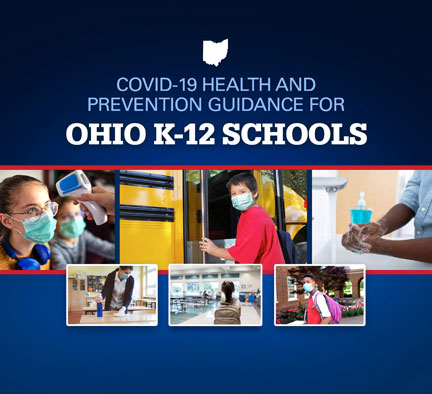
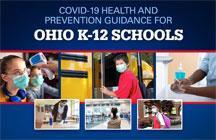
    COVID 19 Health and Prevention Guidance for Ohio K-12 Schools

    Face coverings are required by staff unless it is unsafe or if doing so “could interfere with the learning process,” DeWine said on Thursday.

    Ohio Federation of Teachers Executive Director Melissa Cropper appreciated the moves by the governor, but said the OFT worries about the financial demands of the new protocols.

    “We are concerned that local governments and school districts will have to make decisions about the governor’s recommendations at a time when they are anticipating budget crunches and beginning to make spending cuts,” Cropper said in a statement.

    DeWine said it “is not right for me or (other departments) to micromanage” school buildings or districts.

    The governor did say he plans to meet with House Speaker Larry Householder, Senate President Larry Obhof, and minority leaders to discuss extra funding, along with the use of CARES Act funding.

    Cropper said schools would benefit from HEROES Act funding as well, a bank of about $2 billion in monies for K-12 education, but the act is still awaiting U.S. Senate consideration after passing the House.

    The guidance comes as the state faces continual growth in coronavirus cases, and data showing that cases are passed through the individuals within the area. DeWine noted that 80% of confirmed cases in Montgomery County have been linked to community spread.

  • Continuing business closures in Ohio

    Continuing business closures in Ohio

    The following businesses and operations remain closed as of May 15, 2020, as part of Ohio’s plan to prevent the spread of COVID-19:

    • K-12 schools.
    • Childcare services (permitted to reopen May 31).
    • Restaurants and bars dine-in service.
      • Carry-out and delivery services are permitted.
      • Outdoor dining is permitted.
      • Dine-in service permitted May 21.
    • Older adult day care services and senior centers.
    • Adult day support or vocational habilitation services in congregate settings.
    • Rooming and boarding houses, and workers’ camps.
    • Entertainment/recreation/gymnasium sites.
      • Includes, but is not limited to:
        • All places of public amusement, whether indoors or outdoors, such as:
          • Laser tag facilities, roller skating rinks, ice skating rinks, arcades, indoor miniature golf facilities, bowling alleys, indoor trampoline parks, indoor water parks, arcades, and adult and child skill or chance game facilities remain closed.
          • Gambling industries. (Horse racing is permitted without spectators May 22.)
          • Auditoriums, stadiums, arenas.
          • Movie theatres, performance theatres, and concert and music halls.
          • Public recreation centers and indoor sports facilities.
          • Parades, fairs, festivals, and carnivals.
          • Amusement parks, theme parks, outdoor water parks, children’s play centers, playgrounds, and funplexes.
          • Aquariums, zoos, museums, historical sites, and similar institutions.
          • Country clubs and social clubs.
    • Spectator sports, recreational sports tournaments and organized recreational sports leagues. (Non-contact and limited-contact sports leagues are permitted to reopen May 26.)
    • Health clubs, fitness centers, workout facilities, gyms, and yoga studios (permitted to reopen May 26).
    • Swimming pools, whether public or private, except swimming pools for single households. (Public pools and club pools regulated by local health departments are permitted to reopen May 26.)
    • Residential and day camps.
    • Campgrounds, including recreational camps and recreational vehicle (RV) parks (permitted to reopen May 21).
      • Excludes people living in campground RVs with no other viable place of residence.
      • Excludes people living in cabins, mobile homes, or other fixed structures that are meant for single families and where preexisting residential activity already has been established. (E.g., for people who have part-time preestablished residences at campgrounds for the summer months.)

    For answers to your COVID-19 questions, call 1-833-4-ASK-ODH (1-833-427-5634).


    Your mental health is just as important as your physical health. If you or a loved one are experiencing anxiety related to the coronavirus pandemic, help is available 24 hours a day, seven days a week. Call the COVID-19 CareLine at 1-800-720-9616.

  • Ohio Governor Mike DeWine’s Week in Review

    Ohio Governor Mike DeWine’s Week in Review

    The weekly press release from Ohio Governor Mike DeWine

    For the week ending April 24, 2020

    On Thursday, Governor DeWine and Lt. Governor Husted invited Mark Weir, Ph.D., an assistant professor of Environmental Health at The Ohio State University, to discuss how health risks change as changes are made to the environment.

    Dr. Weir explained that cough or sneeze droplets containing the virus spread through contact with others or contact with contaminated surfaces. He explained that minimizing the spread of the disease as Ohio begins the long process of reopening depends on personal and environmental controls. Personal precautions include interrupting the infection process by practicing good hand hygiene and wearing masks.

    Employers must take precautions by disinfecting surfaces often and maintaining distance between individuals. Finally, facility and building management can help interrupt the infection process by managing airflow and air filters.

    “Since COVID-19 can live up to 72 hours on plastics and stainless steel, it will take a combination of efforts from all of us to interrupt the disease process,” said Dr. Weir.

    On Friday, Governor DeWine announced that members of the newly formed Testing Strike Team, led by former Governors Celeste and Taft, have reached an agreement with Thermo Fisher, a company that makes reagent, that will substantially expand COVID-19 testing capacity in Ohio.

    As a result of collaborative efforts through the Ohio Manufacturing Alliance to Fight COVID-19, Governor DeWine announced that ROE Dental Laboratory in Cleveland will manufacture up to 1 million testing swabs to support Ohio’s testing efforts.

    This testing will dramatically increase Ohio’s ability to test in our priority areas, including nursing homes, hot spots, congregate living settings, food and grocery stores, and essential manufacturing facilities.

    As part of Ohio’s offense strategy, Governor DeWine announced that Ohio has started working with Massachusetts-based Partners in Health. Partners in Health will bring needed resources to Ohio to help increase the ability to trace contact exposure to the virus.

    Additionally, Governor DeWine announced that the state will cover the costs to keep more than 200 youth who are aging out of foster care in the foster care system until the COVID-19 pandemic ends.


    As of Friday afternoon, there were 15,169 confirmed and probable cases of COVID-19 in Ohio and 690 confirmed and probable COVID-19 deaths. A total of 3,053 people have been hospitalized, including 920 admissions to intensive care units. In-depth data can be accessed by visiting coronavirus.ohio.gov.

    For more information on Ohio’s response to COVID-19, visit coronavirus.ohio.gov or call 1-833-4-ASK-ODH.

    • EDITOR’S NOTE: Loveland school buildings are closed to the public, however remote learning is being conducted at the Loveland City School District.