Tag: Kamala Harris

  • Donald Trump is sworn in as president of the United States

    Donald Trump is sworn in as president of the United States

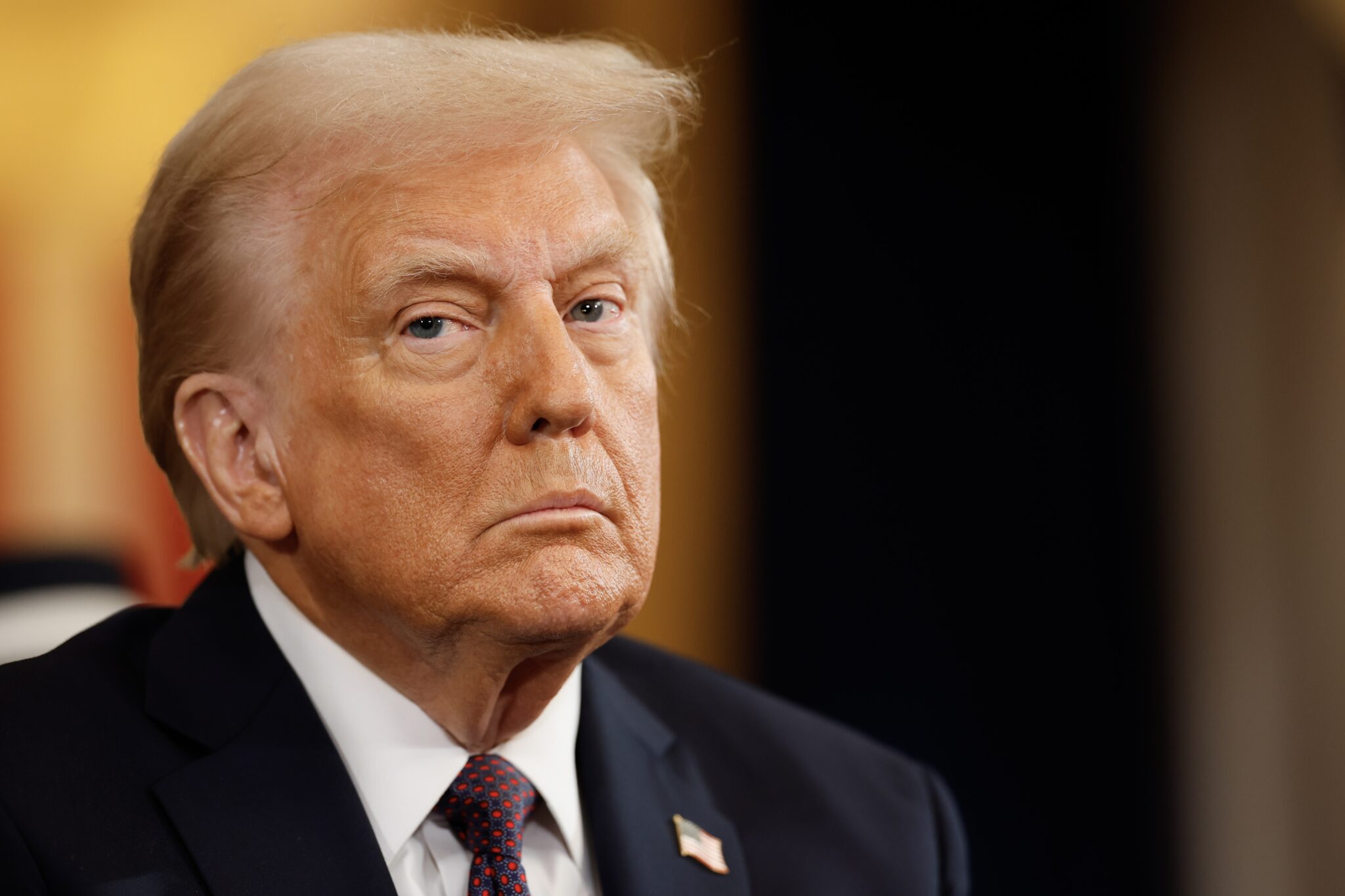
    Donald Trump at his inauguration ceremony in the rotunda of the U.S. Capitol on Jan. 20, 2025 in Washington, D.C. Trump took office for his second term as the 47th president of the United States. (Photo by Chip Somodevilla/Getty Images)

    By:  and  Ohio Capital Journal

    WASHINGTON — Donald Trump took the presidential oath of office for the second time Monday during an inauguration ceremony inside the U.S. Capitol rotunda.

    The swearing-in marked the culmination of a four-year journey for Trump, whom many Republicans distanced themselves from following the Jan. 6 attack on the Capitol, but nonetheless supported during his third campaign for the White House. Trump’s running mate, J.D. Vance of Ohio, was sworn in as vice president.

    “Many people thought it was impossible for me to stage such a historic political comeback,” Trump said during his inaugural address following the swearing-in. “But as you see today, here I am — the American people have spoken.”

    Trump spent much of his speech detailing the executive orders he plans to sign later Monday addressing immigration, energy and more.

    “With these actions we will begin the complete restoration of America and the revolution of common sense,” he said.

    He pledged to declare a national emergency at the southern border, which drew a standing ovation from the audience in the rotunda. He said all illegal entry into the United States would be “immediately halted” and vowed to begin the process of deporting “millions and millions” of undocumented immigrants.

    “As commander in chief, I have no higher responsibility than to defend our country from threats and invasions, and that is exactly what I am going to do,” Trump said.

    Trump defeated the Democratic presidential nominee, former Vice President Kamala Harris, in November’s general election, after receiving 312 Electoral College votes to her 226.

    He also won the popular vote with 77.3 million votes, 49.9%, compared to Harris’ 75 million, 48.4%. Harris attended the inaugural ceremony with her husband, Doug Emhoff.

    The inauguration was supposed to take place outside the Capitol building on the terrace overlooking the National Mall, but Trump announced Friday he wanted it moved indoors amid polar temperatures.

    It was the first time since former President Ronald Reagan’s inauguration the ceremony was held in the rotunda. Looking on along with top government officials was a trio of billionaires — Mark Zuckerberg of Meta, Amazon’s Jeff Bezos and tech entrepreneur Elon Musk.

    Some of the guests and supporters who couldn’t fit inside the rotunda watched on large screens inside the Capitol Visitor Center or at the Capital One Arena in downtown Washington, D.C.

    Trump later in the afternoon was expected to return to the arena, where he rallied with supporters on Sunday, for the traditional inaugural parade that was moved inside.

    ‘The envy of every nation’

    Trump’s first speech of the day, in the Capitol rotunda, focused extensively on his vision for the country, in which he sharply criticized the current condition of the United States while former President Joe Biden listened.

    “The Golden Age of America begins right now,” Trump said, vowing to “put America first” during his next four years in the White House.

    “From this day forward, our country will flourish and be respected again all over the world,” he said, noting that the United States “will be the envy of every nation, and we will not allow ourselves to be taken advantage of any longer.”

    The president, who said he wants to be a “peacemaker” and a “unifier,” pointed to the hostage and ceasefire deal made between Israel and Hamas last week.

    Trump said he would declare a “national energy emergency” later Monday and reiterated his “drill, baby, drill” approach when it comes to oil and gas production.

    He also called for an “External Revenue Service” that would collect “all tariffs, duties and revenues.”

    Trump said he would sign an executive order to “immediately stop all government censorship and bring back free speech to America.”

    He said he wants to create a “color-blind” and “merit-based” society and said “it will henceforth be the official policy of the United States government that there are only two genders: male and female.”

    He also echoed his pledge to take control of the Panama Canal, to rename the Gulf of Mexico to the “Gulf of America” as well as to revert Alaska’s Mount Denali back to “Mount McKinley.”

    Back to campaign rhetoric

    Trump bid farewell to Biden and former first lady Jill Biden after the rotunda ceremony, before they departed on a helicopter. The Bidens were scheduled to travel to California as they began their life after the White House.

    Trump then gave a freewheeling, 35-minute speech in the Capitol Visitor Center’s Emancipation Hall, which event organizers used as an overflow room to accommodate governors, lawmakers’ spouses, the diplomatic corps and others who couldn’t fit inside the rotunda.

    “I just want to say you’re a younger, far more beautiful audience than I just spoke to and I want to keep it off the record,” he said, later adding he gave them the “A+ treatment.”

    Trump’s second speech was more reminiscent of his campaign rallies than the official speech he gave during the rotunda ceremony. He reiterated false claims he’s made about his 2020 election loss to Biden and the Jan. 6 attack on the Capitol that was spurred on by those false statements.

    “I was going to talk about that. They said, ‘Please, don’t bring that up right now. You can bring it up tomorrow.’ I said how about now,” Trump said. “We’re giving you a little more information than we gave upstairs.”

    Trump said he didn’t want to make his first speech “complicated,” he wanted to make it “beautiful and “unifying.”

    “Then, when they said we have a group of people who are serious Trump fans, I said ‘This is the time to tell those stories,’” he said.

    Trump also spoke at length about border security and immigration during his second speech, saying it has become a problem during Biden’s term as president.

    “I think it probably was the number one issue for me back in 2015, 2016,” Trump said. “This border is much worse. We fixed the border. It was totally fixed. There was nothing to talk about.”

    Flags at full staff

    Trump signed several documents in the President’s Room by the U.S. Senate chamber Monday afternoon, including a proclamation that the U.S. flag be flown at full staff for this inauguration and all future inauguration days.

    Then-President Biden ordered U.S. flags to be flown at half staff until Jan. 28, the customary 30-day period, to commemorate former President Jimmy Carter, who died in December.

    Last week, U.S. House Speaker Mike Johnson of Louisiana ordered the flags at the U.S. Capitol to be flown at full staff on Inauguration Day. Some Republican-led states followed suit.

    Last updated 3:46 p.m., Jan. 20, 2025


    Jennifer Shutt
    Jennifer Shutt

    Jennifer covers the nation’s capital as a senior reporter for States Newsroom. Her coverage areas include congressional policy, politics and legal challenges with a focus on health care, unemployment, housing and aid to families.

    Ohio Capital Journal is part of States Newsroom, the nation’s largest state-focused nonprofit news organization.

    MORE FROM AUTHOR

    Shauneen Miranda
    Shauneen Miranda

    Shauneen Miranda is a reporter for States Newsroom’s Washington bureau. An alumna of the University of Maryland, she previously covered breaking news for Axios.

    Ohio Capital Journal is part of States Newsroom, the nation’s largest state-focused nonprofit news organization.

    MORE FROM AUTHOR

  • University of Akron poll shows comfortable lead for Trump in Ohio, dead heat U.S. Senate race

    University of Akron poll shows comfortable lead for Trump in Ohio, dead heat U.S. Senate race

    Getty Images.

    The 2024 Buckeye Poll depicts sharp partisan divisions, but U.S. Sen. Sherrod Brown continues to draw votes from Republicans

    By: Ohio Capital Journal

    A University of Akron Bliss Institute poll released Thursday found Donald Trump running ahead of Kamala Harris in Ohio by seven points, and U.S. Sen. Sherrod Brown holding a slight advantage against his Republican challenger Bernie Moreno.

    The findings are part of the school’s 2024 Buckeye Poll conducted from Sept. 12 to Oct. 24. The survey included 1,241 registered voters with a margin of error of +/- 2.8 percentage points.

    Digging into the details, pollsters noted the wide gender gap many expect to see in the presidential contest nationally didn’t really show up at the state level. They even note Trump holds a nominal 1-point lead among women, although that’s well within the margin of error and 3% remain undecided.

    The poll found independents in Ohio lean toward Trump in the presidential race, but almost a quarter of that group is still undecided. In the Senate race a third of independents still hadn’t made up their mind.

    The survey also sheds light on stark divides in voters’ vision of the country. Partisans on both sides are far apart on issues like economic policy, immigration, abortion, and trans rights.

     U.S. Senator Sherrod Brown speaks to a supporter at a Democratic Party campaign event for Franklin County voters. (Photo by Graham Stokes for Ohio Capital Journal. Republish photo only with original article.) 

    Presidential race

    The Buckeye Poll found 51% of respondents support Donald Trump compared with 44% backing Kamala Harris. Those results include respondents leaning toward a particular candidate — 4% in Trump’s case and 6% for Harris, while another 5% of voters were backing a third party or remained undecided. Trump’s seven-point advantage is beyond the poll’s margin of error, and roughly in line with his actual performance in Ohio in 2016 and 2020, which he won by eight points each time.

    “We’re not surprised at all by the numbers in the presidential race showing Donald trump with a healthy lead over Harris at seven points,” Bliss Institute director and political scientist Cherie Stachan said.

    The poll also broke down respondents’ partisanship on a spectrum running from ‘strong’ to ‘lean’-ing for both parties with independents in the middle. Among voters who identified as independents, 39% are backing Trump as compared to 24% supporting Harris. Another 23% said they were backing neither.

     VANDALIA, OHIO – MARCH 16: Ohio Senate candidate Bernie Moreno greets former President Donald Trump in Vandalia earlier this year. (Photo by Scott Olson/Getty Images) 

    U.S. Senate race

    Strachan described the contest between Brown and Moreno as a “margin of error race.” The Buckeye Poll’s topline result had Brown leading Moreno 46% to 44% — neck and neck given the poll’s margin for error.

    “The one thing that is interesting about the Senate race,” she said, “is that you do have, still, at least in this poll, enough people willing to split their ticket and support the incumbent senator for whatever reason to make it a margin of error race.”

    Based on the overlaps they saw in the poll, Brown earned about three points from respondents who support Trump, but nevertheless plan to vote for the Democratic senator.

    It’s notable, Strachan said, that “Trump’s endorsement has not pushed that challenger over the edge — Moreno has not solidified all of the Republicans despite the Trump endorsement.”

    That shows up a bit in the quality of their responses in the Senate race. Voters’ preferences were a bit squishier, with significantly more ‘lean’ voters than in the presidential race. Brown got strong support from 37% of respondents with another 9% leaning his way. But for Moreno, 30% of respondents said they’re strong supporters, and 14% said they’re only leaning his way.

    “I think that’s just another signal that he may have done some things that may have not been as successful in persuading people that he’s a good candidate,” Strachan said, “or that he’s a candidate that people feel comfortable supporting.”

    As an anecdotal example, she pointed to television ads. Although Moreno and outside groups supporting him have spent heavily attacking Brown, they’ve spent substantially less promoting Moreno — a relative newcomer politically. According to FEC data, independent groups have plowed more than $114 million into attacking Brown, but less than $66 million supporting Moreno.

    GET THE MORNING HEADLINES.

    Polarization

    The Buckeye Poll found Republicans and Democrats sharply divided on several major policy issues. On abortion, immigration, and trans-rights the parties are mirror images of one another in terms of support or opposition.

    Strachan noted those cleavages have become so pronounced and widespread in recent years that political scientists describe the phenomenon as negative partisanship: “I dislike the other side more than maybe I like my own,” Strachan described. “The animosity toward the other side is driving us to stay in our partisan silos more than liking our own.”

    That’s part of what makes Brown’s continued appeal across party lines significant, even if that appeal has put him in a statistical tie.

    “In American politics writ large, it’s becoming increasingly harder to pull off what Brown is doing and getting those voters to split their ticket.”

    Follow OCJ Reporter Nick Evans on Twitter.


    Nick Evans
    Nick Evans

    Nick Evans has spent the past seven years reporting for NPR member stations in Florida and Ohio. He got his start in Tallahassee, covering issues like redistricting, same sex marriage and medical marijuana. Since arriving in Columbus in 2018, he has covered everything from city council to football. His work on Ohio politics and local policing have been featured numerous times on NPR.

    Ohio Capital Journal is part of States Newsroom, the nation’s largest state-focused nonprofit news organization.

    MORE FROM AUTHOR


  • Kamala Harris officially becomes the Democratic presidential nominee

    Kamala Harris officially becomes the Democratic presidential nominee

    By:  Ohio Capital Journal

    WASHINGTON — The Democratic National Committee announced late Monday that Vice President Kamala Harris had secured the support of 99% of delegates to formally become the party’s presidential nominee, following the conclusion of a five-day virtual vote.

    The results, which included a state-by-state breakdown, followed the DNC announcing Friday that Harris had surpassed the number of delegates needed to become the nominee as voting proceeded. She was the only candidate to qualify. The DNC said 4,567 delegates cast their votes for her.

    The next steps will be the certification of the roll call by the convention secretary, Jason Rae, and the acceptance of the nomination by Harris and her running mate, who as of early Tuesday still had not been named.

    There will also be a celebratory roll call at the Democratic National Convention in Chicago later this month.

    “With the support of 99% of all participating delegates in the virtual roll call, Vice President Harris has historic momentum at her back as we embark on the final steps in officially certifying her as our Party’s nominee,” DNC Chair Jaime Harrison and DNCC Chair Minyon Moore said in a statement. “We thank the thousands of delegates from all across the country who took seriously their responsibility throughout this process to make their voices – and the voices of their communities – heard. As we prepare to certify the nomination alongside Convention Secretary Rae, we know that we are all a part of an important piece of history.”

    On the way to Election Day

    Harris and her vice presidential pick will have fewer than 100 days to campaign before Nov. 5.

    She’s undertaking a swing-state tour that has the two holding rallies Tuesday in Pennsylvania, Wednesday in Wisconsin and Michigan, Thursday in North Carolina, Friday in Arizona, and Saturday in Nevada. The Associated Press reported a stop in Georgia was postponed due to Hurricane Debby and the North Carolina appearance could be affected.

    Harris didn’t compete in a Democratic primary campaign this election cycle, which could potentially hamstring her, though she did introduce herself to voters during the 2020 Democratic presidential primary and has held public events throughout her time as vice president.

    Debate over debates

    As of Tuesday it did not appear that Harris and Republican presidential nominee Donald Trump would debate ahead of Nov. 5, which would have given her an opportunity to showcase her policy goals and personality to a broader cross-section of voters.

    Trump and the Biden campaign agreed to two debates — the first in June, which was hosted by CNN and led to a widespread lack of confidence in Biden’s cognition, and a second on Sept. 10, hosted by ABC News.

    The Trump campaign had been noncommittal about debating Harris since Biden announced in July he would step aside as the presumptive nominee and endorsed Harris to take over at the top of the ticket.

    Harris for President Co-chair Cedric Richmond said in a statement released Friday that Trump “needs to man up” and attend the previously agreed to debate on Sept. 10.

    “He’s got no problem spreading lies and hateful garbage at his rallies or in interviews with right-wing commentators. But he’s apparently too scared to do it standing across the stage from the Vice President of the United States,” Richmond said. “Since he talks the talk, he should walk the walk and — as Vice President Harris said earlier this week — say it to her face on September 10. She’ll be there waiting to see if he’ll show up.”

    Trump posted on social media over the weekend that he would only attend a Fox News debate on Sept. 4, though neither the Biden nor Harris campaigns ever agreed to attend a Fox debate.

    “Kamala Harris doesn’t have the mental capacity to do a REAL Debate against me, scheduled for September 4th in Pennsylvania,” Trump posted. “I’ll see her on September 4th or, I won’t see her at all.”

    Who is Kamala Harris?

    Harris was born in Oakland, California, in October 1964. She graduated from Howard University, a historically Black institution of higher education, in 1986 before receiving her law degree from the University of California in 1989.

    Harris worked as a deputy district attorney in Alameda County, California, from 1990 until 1998. Her career as a prosecutor continued when she moved to the San Francisco District Attorney’s office, where she worked as a managing attorney.

    She spent time as the chief of the San Francisco City Attorney’s Division on Children and Families and as the district attorney of San Francisco before California voters elected her attorney general in 2010.

    Residents in the Golden State then elected Harris to the U.S. Senate in 2016, where she stayed until she was sworn in as vice president in January 2021.

    Harris sought the Democratic presidential nomination during the 2020 primary, but dropped out two months before voting began.

    Roll call, keynote speech

    Harris is scheduled to give the convention keynote speech on Aug. 22, the final night of the gathering in Chicago. She’ll likely be speaking to the largest audience she’ll have in person and watching on television until election night.

    That will provide a major opportunity for her to speak directly to the centrist and undecided voters who will determine the outcome of the November elections, including control of the U.S. House and U.S. Senate.

    Should Harris win the Electoral College vote, she will become the country’s first female president, the first president of South Asian descent and the second Black president when she’s inaugurated on Jan. 20, 2025.


    Jennifer Shutt
    Jennifer Shutt

    Jennifer covers the nation’s capital as a senior reporter for States Newsroom. Her coverage areas include congressional policy, politics and legal challenges with a focus on health care, unemployment, housing and aid to families.

    Ohio Capital Journal is part of States Newsroom, the nation’s largest state-focused nonprofit news organization.

    MORE FROM AUTHOR

  • Ohio women lawmakers face misogyny, double standards when campaigning

    Ohio women lawmakers face misogyny, double standards when campaigning

    Despite challenges, they encourage more women to join the cause, ‘change the world’

    By:  Ohio Capital Journal

    When Kamala Harris was announced as the running mate for Joe Biden in the 2020 presidential campaign, the questions about her heritage, ethnicity and even eligibility for office came strongly from the opposition.

    Now that she’s running for the top job following President Joe Biden’s suspension of his reelection campaign, the emphasis on her skin color and her gender has come back fast and furious, just as swiftly as the enthusiasm for her campaign brings big fundraising numbers to the camp.

     A supporter holds a sign as members of the San Francisco Democratic Party rally in support of Kamala Harris. (Photo by Loren Elliott/Getty Images) 

    “The United States has conflicting traditions,” said Dr. Susan Burgess, distinguished professor emerita of political science at Ohio University. “One of rampant racism and misogyny, and another toward greater change and inclusion.”

    U.S. Sen. J.D. Vance of Ohio, the vice presidential candidate alongside former president Donald Trump, added to the rhetoric in a 2021 clip that has been brought back up in light of his new role. In the clip from a Fox News interview, he mentions the fact that Harris (and others) has not birthed any children of her own (she has two stepchildren with First Gentleman Doug Emhoff), and criticizes Democrats as “a bunch of childless cat ladies who are miserable at their own lives and so they want to make the rest of the country miserable, too.”

    The comments don’t surprise those who are a part of or study the history of political campaigns, where sexism and misogyny are “alive and well,” according to Ohio University history professor Dr. Katherine Jellison.

    “A man running for office, I’ve never heard comments about him being a childless cat/dog/fish person,” Jellison said. “These double standards are so blatantly on display and voiced whenever we have a prominent woman running.”

    ‘Attacks on the person, not the policy’

    For women currently in the state legislature, criticism based on gender and family is nothing new. Even in local campaigns, female politicians have been underestimated and questioned on their merits in ways they say they don’t witness in male campaigns.

    The Capital Journal contacted every female state representative and senator in the Ohio General Assembly to talk about their experience campaigning and working in politics. Included in the those who responded were the leaders of the minority side in both chambers, House Minority Leader Allison Russo and Senate Minority Leader Nickie Antonio.

    Consistently, those that responded said they have talked to constituents with all sorts of interests and issues, and worked with local campaigns or in favor of local issues before they worked their way up to state office. Also consistently, it was their community and their families that were their biggest advocates.

     House Minority Leader Allison Russo, left, talks with Senate Minority Leader Nickie Antonio, as they await the start of the Sept. 13, 2023, Ohio Redistricting Commission meeting.
    (Photo by Susan Tebben, Ohio Capital Journal.)

    Often, the women who are now representatives and senators didn’t intend to pursue politics until they were encouraged to or an issue motivated them to action. For most, misogyny wasn’t blatant, but the fact that they worked among a “boy’s club” was still highlighted.

    “People told me I couldn’t win because, you know,” Antonio told the Capital Journal. “And I would make them say what that was, and it was because I was a lesbian.”

    She faced the criticism of being a woman running for office, but called it a “false narrative that some people embrace, that I think they want to hang on to because frankly, I think we’re better at the job.”

    The first time state Rep. Sharon Ray, R-Wadsworth, campaigned back in the early 1990s, she said she knocked on the door of a man in her community. She explained that she was running for local office and had a conversation with him about local issues.

    “At the end he said, ‘You seem nice and all, but I would never vote for a woman,’” Ray said. “I had to tell him, ‘Well you’re in a bad way, because the two people going up for this are both women.’”

    State Rep. Bride Rose Sweeney fought against the fact that not only was she a woman running for office, but she was also a 25-year-old.

    “Most people, when I’d go to the door, thought I was selling Girl Scout cookies,” she said.

    Though she had worked as a staffer in the Statehouse and could point to quotes she’d written for elected officials, she still had to answer questions about her life experience.

    “I was shocked at how many times they didn’t think I was the candidate,” Sweeney said.

    As a single mom who had adopted her children from China, state Rep. Rachel Baker went through a similar struggle to other moms running for office, in that she balanced taking care of her family and campaigning.

    But when Chinese flags appeared around her campaigns signs in the yards of her supporters, put there anonymously in the dark of night, she saw a different side of campaigning.

    It’s such a paradox, (my children) are why I’m doing it, but it’s also why I’m scared to do it.

    – State Rep. Rachel Baker, D-Cincinnati

    Russo – who also ran for a congressional seat in the U.S. House in 2021 against U.S. Rep. Mike Carey – said when she talks to women who are contemplating running for office, putting themselves out there, and even more, putting their family in the public eye is high on the list of reasons not to.

    “It’s that piece that is the hesitation: Am I willing to open up my family for the level of scrutiny and potential for harassment,” Russo said.

    She and other moms who campaigned often had no choice but to bring their kids along as they talked to voters, because of partner work schedules or a lack of alternative child care. Sometimes, that worked to the candidate’s advantage.

    “Voters appreciated that because I’m a real person just trying to balance all the things in my life,” Russo said.

    Still, she was questioned about who would care for her children.

    “I’m pretty sure my male counterparts never got that question,” she said.

    Accidental advantages

    Dealing with heightened scrutiny as a woman in public office can be a struggle, but it can also be something that feels familiar to women who have faced challenges their entire lives and for which women already have coping mechanisms.

    “You can’t change your ethnicity or race or sex,” said state Sen. Paula Hicks-Hudson, D-Toledo. “I am who I am, and therefore you just have to deal with whatever those issues are.”

     COLUMBUS, Ohio — MAY 10: State Rep. Bride Rose Sweeney, D-Westlake, speaks during the Ohio House session, May 10, 2023, at the Statehouse in Columbus, Ohio. (Photo by Graham Stokes for Ohio Capital Journal)

    Nothing can prepare you for “people writing the most heinous things about you,” as Sweeney said of social media attacks, but for many woman public officials, life has prepared them to work harder than might be expected of others.

    “We think that we have to check certain boxes to run, and the reality is most of us are overqualified for office,” Russo said. “The woman candidates that I’ve worked with are incredibly good at putting together teams and networks, and that’s something that I think is very intuitive for women.”

    Antonio said women are often “auditioning long before we see ourselves in that role” as a leader in the community or in politics.

    State Rep. Beryl Brown Piccolantonio, D-Gahanna, feels like “it’s much more relevant that I’m a woman” with the issues in the political spotlight these days, including reproductive health.

    “I don’t think the legislature should be making decisions about people’s health, and the population that is directly impacted, I’m in it,” she said.

    The state representatives and senators who talked to the Capital Journal had their start in smaller ways, whether it be working in the Statehouse, opening their houses for local candidate meet-and-greets, knocking on doors for local campaigns or volunteering in their children’s events. It was those efforts that gave them the inside scoop on the issues that were important to their neighbors and melded them into the community to the point that they would be encouraged to make bigger moves.

    As a divorced young mom going to night school, one thing Ray liked to do with her free time was work on campaigns. In one Wadsworth race, the candidate left the race and after being encouraged to – and seeing an opportunity to help her son get his Boy Scout government badge – Ray decided to run.

    Antonio was miffed after a pitch for her daughter and other Lakewood kids to have a safe place to skateboard fell to an uninterested city council, when the opportunity occurred to her.

    “I came home and I said I’m sick of explaining what’s important in our community,” she said. “I could do that job, and I heard myself say I could do that job.”

    Looking forward, reaching back

    The road to November will be fast-paced for the Vice President and other women running for office, but there’s a sense of hope from public officials that more women will take up the cause, whether it be at a local, state or congressional level.

    The women of the Ohio legislature emphasized the need for anyone seeking the job of representing their community to meet with those constituents, whether at campaign events or at the residents’ front doors.

     State Rep. Beth Liston, D-Dublin, speaks at a rally to protect abortion rights. (Photo from General Assembly website.)

    “When you run for office, you’re often running to represent specific values, and you definitely learn the values of your constituents when you knock on doors,” said state Rep. Dr. Beth Liston, D-Dublin.

    Not only do you get to hear what the community needs from their legislators, but candidates get to explain their “why” when it comes to running.

    “I know because of the sacrifices that I’ve made to be in this position that some lives are better and people’s voices get heard because of the work that I do, and that gets me up and going everyday,” Sweeney said.

    Russo, Ray, Sweeney, Baker, Piccolantonio and Liston are all running for reelection to their districts in the November general election.

    And while the differences may be the focal point of campaigns against candidates in a political climate the public officials acknowledged is divisive and “terrifying” in some ways, those differences are reason enough for women to enter races.

    “I don’t think differences are deficiencies,” Hicks-Hudson said. “I think they add flavor.”

    It’s those who already hold office that can make the difference in whether or not more women come into the political space, too, according to Antonio.

    “I think it’s important for those of us who are in office to encourage it,” the minority leader said. “You have to reach back as you climb, and bring folks with you.”

    Comments like Vance’s “childless cat ladies” statement only serve as motivation for officials like Sweeney who see more women in office as the way to “change the world.”

    “To say that I have no stake in America, that I can’t contribute … (Vance) clearly hasn’t been around a lot of women and doesn’t respect them,” Sweeney said.

    Parsing through the messaging

    Throughout the next three months (and already this election cycle), voters will go through the process of making decisions about who and what they want to choose in the general election. That means parsing through the heavy load of information coming from all sides about how to feel about those candidates and issues.

    As elected officials who have read and distributed their fair share of campaign info, the legislators said it’s important to form opinions based on resources voters trust, and nonpartisan research like voting guides from the League of Women Voters of Ohio.

    But it’s also just as important to base decisions on the issues and values that matter most to each voter, and vet each candidate based on those specific values.

    “I personally think the voters should be able to interact with the people that are wanting to represent them,” Piccolantonio said.

    When it comes to the presidential race, self-reflection and a vision for the future come right along with diligent research.

    We are at a critical time for finding out what the integrity of candidates are. As we go forward with this presidential election, let’s look at what does this country need, what should we be looking for when it comes to our next leader.

    – State Sen. Paula Hicks-Hudson, D-Toledo

    While some people might be looking for parity in representation, Antonio said she thinks some are ready “for a majority of women to be running things to right the ship.”

    Right before Biden announced he would be abandoning his reelection bid, Antonio said she was pulled aside by a man who said, “Look, it’s time, can the women just … I know we’ve made a mess of this, could you just fix this for us?”

    The Senate minority leader said she smiled.

    “I looked at him and I said, ‘We’re working on it.”

    ______________

    Susan Tebben
    Susan Tebben

    Susan Tebben is an award-winning journalist with a decade of experience covering Ohio news, including courts and crime, Appalachian social issues, government, education, diversity and culture. She has worked for The Newark Advocate, The Glasgow (KY) Daily Times, The Athens Messenger, and WOUB Public Media. She has also had work featured on National Public Radio.

    Ohio Capital Journal is part of States Newsroom, the nation’s largest state-focused nonprofit news organization.

    MORE FROM AUTHOR

  • DNC announces Kamala Harris will be the Democratic presidential nominee

    DNC announces Kamala Harris will be the Democratic presidential nominee

    By:  Ohio Capital Journal

    WASHINGTON — Enough Democratic delegates selected Kamala Harris to make her the party’s presidential nominee by Friday, during an ongoing virtual vote that began less than two weeks after President Joe Biden ended his reelection campaign.

    The vote, which will not officially close until Monday evening, was held in advance of the Democratic National Convention, scheduled to take place in Chicago later this month, to assuage concerns about state registration deadlines that begin in August.

    The DNC began laying the groundwork for the virtual nomination months before Biden announced his decision to step aside.

    Harris said on a call with supporters Friday that she was happy to have surpassed the threshold needed to win the nomination.

    “Of course, I will officially accept your nomination next week once the virtual voting period has closed, but already I’m happy to know that we have enough delegates to secure the nomination,” Harris said.

    DNC Chair Jaime Harrison encouraged DNC delegates to keep sending in their ballots during the Zoom call, but said the support for Harris so far has been overwhelming.

    “I am so proud to confirm that Vice President Harris has earned more than a majority of votes from all convention delegates and will be the nominee of the Democratic Party following the close of voting on Monday,” he said.

    “The outpouring of support we have witnessed for the vice president has been unprecedented,” Harrison added. “We knew your ballots would come back quickly. But the fact that we can say today, just one day after we opened voting, that the vice president has crossed the majority threshold and will officially be our nominee next week — folks, that is simply outstanding.”

    The virtual roll call vote began Thursday at 9 a.m. Eastern and will conclude Monday at 6 p.m. Eastern. Harris was the only candidate to qualify.

    The DNC plans to announce the final results afterward, including a state-by-state breakdown.

    One of Harris’ first official acts will be selecting a running mate from a list that holds several governors as well as at least one senator. Her decision will set the tone for the sprint to the ballot box.

    Harris and her running mate are expected to hold rallies in swing states next week, including Pennsylvania on Tuesday, Wisconsin and Michigan on Wednesday, North Carolina on Thursday, Georgia and Arizona on Friday, and Nevada on Saturday.


    Jennifer Shutt
    Jennifer Shutt

    Jennifer covers the nation’s capital as a senior reporter for States Newsroom. Her coverage areas include congressional policy, politics and legal challenges with a focus on health care, unemployment, housing and aid to families.

    Ohio Capital Journal is part of States Newsroom, the nation’s largest state-focused nonprofit news organization.

    MORE FROM AUTHOR

  • Bernie Moreno says migrants “destroyed” Ohio cities but won’t clarify which cities or how

    Bernie Moreno says migrants “destroyed” Ohio cities but won’t clarify which cities or how

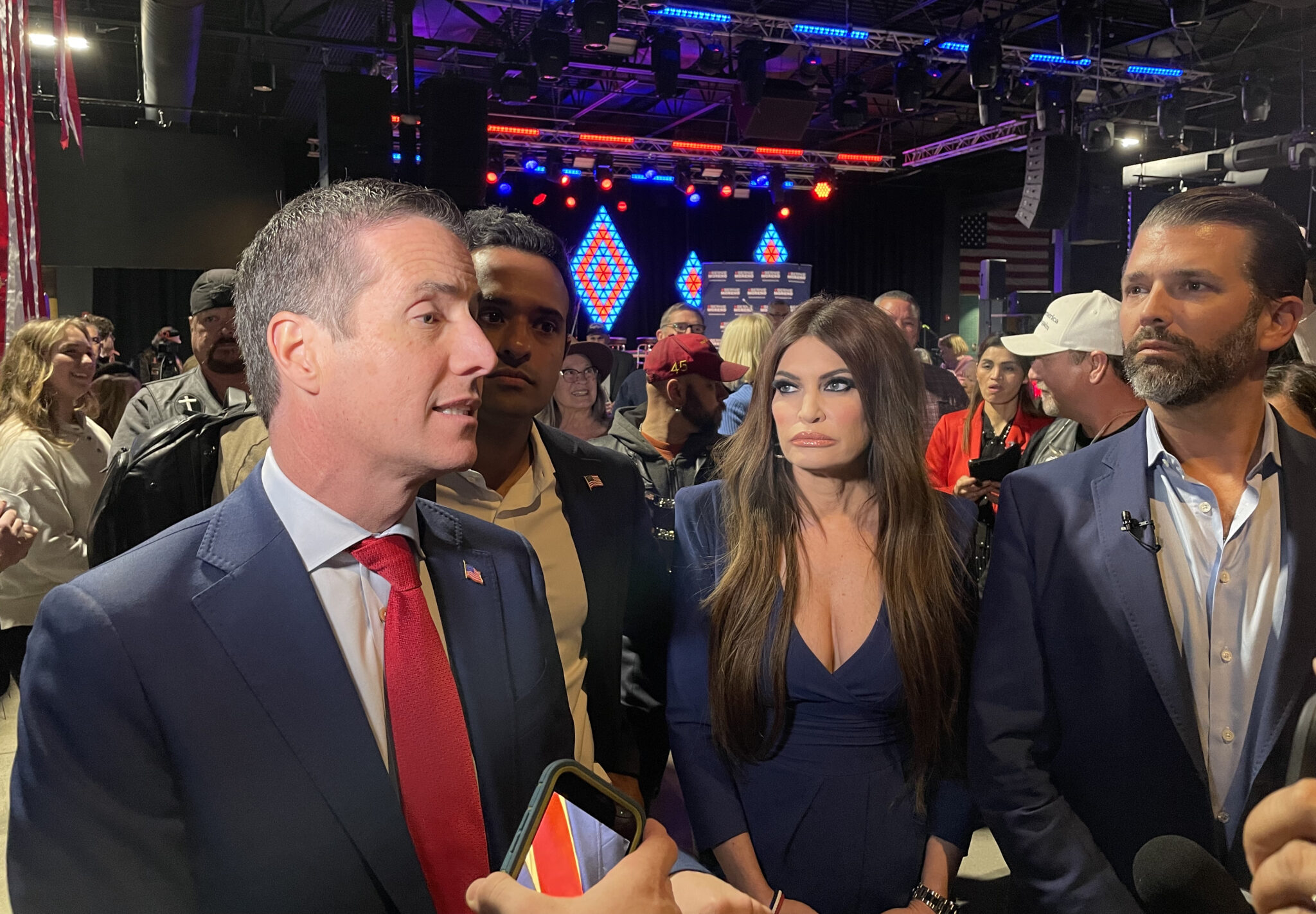
    From left, Bernie Moreno, Vivek Ramaswamy, Kimberly Guilfoyle, and Donald Trump, Jr. speaking before a campaign rally in Butler County. (Photo by Nick Evans, Ohio Capital Journal.)

    BY:  Ohio Capital Journal

    The U.S. Senate campaign of Republican Bernie Moreno took to X last week to claim that because of the current administration’s policies, migrants have “destroyed” Ohio communities.

    However, the campaign didn’t answer when asked to identify a single Ohio city that had been harmed by migration, where the migrants doing the destruction came from, and how the communities had been harmed. The statement also ignores the fact that Moreno, a Cleveland businessman, is himself a migrant.

    Moreno is the Republican nominee for the U.S. Senate seat that has been occupied by Democrat Sherrod Brown since 2007. The race is one of the most closely watched in the country this cycle.

    As his fellow Republicans have, Moreno has tried to stoke fears of migrants following a surge at the southern border, which has since subsided — at least temporarily. Many have also claimed that undocumented migrants commit more crime than the native-born, although research indicates that the opposite is actually the case. And border cities such as El Paso and McAllen have significantly lower crime rates than the average American city.

    Some of the rhetoric has at least seemed to be racist. When former President Donald Trump last year repeatedly said undocumented immigrants “are poisoning the blood of our country,” he seemed to echo Adolf Hitler, who used several versions of the poison-blood metaphor in his racist musings.

    For his part, Moreno hasn’t been shy about using harsh rhetoric about immigration. He has repeatedly referred to what’s happening at the southern border as an “invasion” despite the fact that El Paso has already been the victim of a racist massacre by a man who said he was trying to stop an invasion, and experts worry that it’s only a matter of time before it happens again.

    Playing on fears of undocumented migrants, the Moreno campaign said in an ad, “Brown and Biden won’t keep your family safe.”

    On Wednesday, the Moreno campaign took to X to say, “San Francisco liberal @KamalaHarris and @SherrodBrown destroyed Ohio communities by flooding our state with migrants.”

    However, his campaign didn’t respond when asked which Ohio communities had been destroyed and how.

    But what made the post especially head-scratching is the fact that Moreno is himself a migrant, being born in Colombia in 1967. His family migrated to Florida in 1971.

    Moreno last year said, “We came here with absolutely nothing — we came here legally — but we came here, nine of us in a two-bedroom apartment.”

    It was part of the image he’s tried to cultivate of an immigrant who came to the United States the “right” way as opposed to impoverished Colombians who’ve survived the trek through the Darien Gap, made their way the U.S.-Mexico border and entered without documents.

    However, Moreno’s depiction of his family as a poor one is misleading. In Columbia, his people were wealthy and politically connected, and while the family lived in straitened circumstances the first years they were in the states, things quickly got better.

    His father, Bernardo Moreno Sr., was a surgeon who was educated at the University of Pennsylvania and later served as the Colombian equivalent of the secretary of health, the New York Times reported. He initially worked at low pay in Florida as a surgical assistant, but by 1973, he had full privileges as a surgeon.

    In addition, one of Bernie Moreno’s brothers served as the Colombian ambassador to the United States and another founded a multinational construction empire.


    Marty Schladen
    MARTY SCHLADEN

    Marty Schladen has been a reporter for decades, working in Indiana, Texas and other places before returning to his native Ohio to work at The Columbus Dispatch in 2017. He’s won state and national journalism awards for investigations into utility regulation, public corruption, the environment, prescription drug spending and other matters.

    Ohio Capital Journal is part of States Newsroom, the nation’s largest state-focused nonprofit news organization.

    MORE FROM AUTHOR

  • AP declares Joe Biden is the next president

    AP declares Joe Biden is the next president

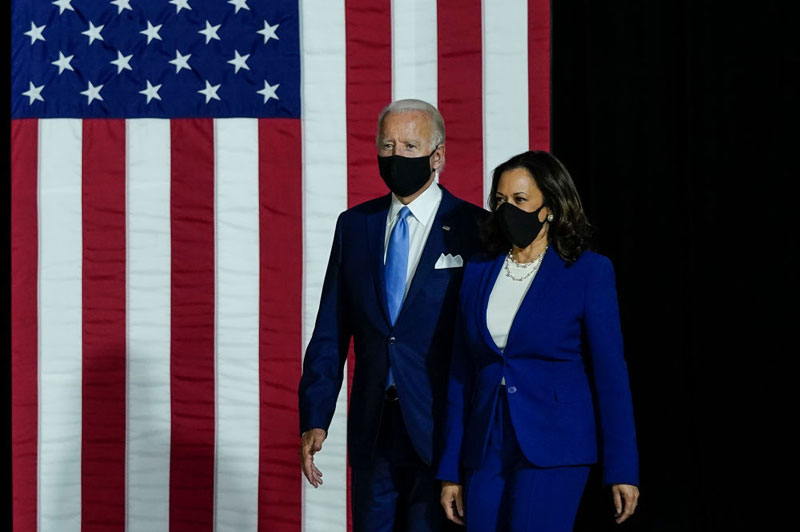
    Former Vice President Joe Biden and his running mate Sen. Kamala Harris. Photo by Drew Angerer/Getty Images.

    By Laura Olson and The Ohio Capital News

    Washington – Democrat Joe Biden’s native state of Pennsylvania on Saturday secured his victory to become the next president of the United States when The Associated Press reported he had gained enough votes there to win the electoral college.

    The AP called Pennsylvania for Biden at 11:25 a.m., which gave the former vice president 284 electoral college votes to 214 for President Donald Trump. That tally includes Arizona, which the AP and Fox News have called for Biden, but other news outlets have not due to the narrow margin and remaining ballots.

    “JOE BIDEN DEFEATS PRESIDENT DONALD TRUMP,” the news organization tweeted.

    “I am honored and humbled by the trust the American people have placed in me and in Vice President-elect Harris,” Biden said in a statement. “In the face of unprecedented obstacles, a record number of Americans voted. Proving once again, that democracy beats deep in the heart of America. With the campaign over, it’s time to put the anger and the harsh rhetoric behind us and come together as a nation. It’s time for America to unite. And to heal. We are the United States of America. And there’s nothing we can’t do, if we do it together.”

    Trump, who was at his Virginia golf course Saturday morning, issued a statement vowing to keep contesting the results, accusing Biden of “rushing to falsely pose as the winner.”

    “The simple fact is this election is far from over,” Trump said in the statement. “Joe Biden has not been certified as the winner of any states, let alone any of the highly contested states headed for mandatory recounts, or states where our campaign has valid and legitimate legal challenges that could determine the ultimate victor.”

    The AP call for Biden came after several excruciating days of mail-ballot counting in a handful of battleground states, where early in-person votes had favored Trump. But an unprecedented number of mail ballots — which Trump had portrayed as fraudulent and urged his supporters not to use — favored Biden, allowing him to overcome deficits in Michigan, Wisconsin, Pennsylvania and Georgia.

    Trump has challenged those results, through lawsuits in those critical states and in a statement from the White House Thursday evening, in which he cast aspersions on the vote-counting process without citing any specific evidence for his claims.

    “This election is not over,” the Trump campaign legal counsel, Matt Morgan, said in a statement after Pennsylvania’s updated vote totals gave Biden a lead on Friday morning.

    Responding to reports that Trump may not concede once the race is called, a Biden spokesman said in a statement Friday: “As we said on July 19th, the American people will decide this election. And the United States government is perfectly capable of escorting trespassers out of the White House.”

    Biden made a short public statement late Friday in Delaware, urging patience with the vote-counting process and expressing confidence that he would ultimately be declared the winner.

    “The numbers tell us a clear and convincing story: We’re going to win this race,” Biden said.

    Ohio Democratic Party Chair David Pepper sent an email to supporters congratulating Biden and Vice President-elect Kamala Harris, and thanking supporters.

    “Today we celebrate the end of the Trump presidency and thank every person in Ohio and across the country who played a role in making that happen,” he said. “You were there when your country needed you most.”

    Even with the presidential result appearing to be clear, there remain ballots that were received by Election Day to be counted in a number of states. As in every election, states will still be receiving ballots from overseas and military voters, and will need to certify their initial vote totals.

    And in Georgia, where Biden also pulled ahead overnight, a recount is expected due to the very narrow margin between the candidates.

    Where do the vote totals stand in Pennsylvania?

    As of 11:30 a.m. Saturday, Pennsylvania’s state election data showed Biden with a lead of 28,393 votes. That narrow lead had been growing since Friday morning, when Biden pulled ahead after trailing Trump in Pennsylvania’s early vote totals.

    The tsunami of mail ballots from more than 2.6 million Pennsylvania voters favored Biden 3 to 1, allowing him a deficit of nearly 700,000 votes late on election night.

    The volume of those ballots in a state that had massively expanded access to mail balloting just last fall, combined with rules preventing county officials from starting to open those ballots until Tuesday morning, resulted in a slow counting process.

    Legal action from the Trump campaign also slowed down Philadelphia’s counting process. A judge ruled in favor of the campaign’s request for closer access to observe the city’s ballot counting, leading to a two-hour pause Thursday and a shift to only use the equipment where observers could watch, the Inquirer reported.

    Philadelphia officials said Friday afternoon they still had 40,000 ballots to tally, estimating it could take several days to finish, according to the Philadelphia InquirerState data showed 76,000 mail ballots left to tally Saturday morning.

    The Trump campaign did win a favorable ruling from the U.S. Supreme Court Friday evening, when Justice Samuel Alito approved a request from Republicans to require late-arriving mail ballots be segregated from the state’s tallying. But the Pennsylvania Capital-Star reported that state officials already had requested county election officials to do so.

    Will Biden’s new lead in Georgia hold?

    Pennsylvania wasn’t the only state where Biden came from behind on Friday: He also had notched a slim lead in Georgia, which had grown to 7,200 votes as of Saturday morning, according to the Georgia Recorder. Mail ballots there had been steadily reducing Trump’s lead in what has been a Republican stronghold, and updated tallies from suburban Clayton County pushed him into the lead.

    But it may not be clear for weeks who has secured the state’s 16 electoral votes. Georgia’s secretary of state told reporters Friday there will be a recount.

    What about Arizona?

    Biden has a shrinking lead in Arizona, where he was ahead of Trump by 20,573 votes Saturday morning. That’s down from a lead of 68,000 votes as of Thursday morning, according to the Arizona Mirror.

    Arizona also was still sifting through stacks of mail ballots at the end of the week. As of Friday morning, Maricopa County had about 140,000 early ballots left to count, plus nearly 6,000 early ballots that required signature verification, and another 16,000 provisional ballots.

    When will Nevada wrap up its count?

    Biden had a lead of 22,657 votes as of Friday, according to the Nevada Current, but the state was still far from finished counting.

    Clark County, Nevada’s most populous county and also its bluest, still had approximately 63,000 mail ballots to process and count as of Friday morning, the Current reported. Additionally, there were 44,000 identification-required ballots and 60,000 provisional ballots to tally.


    Laura Olson

    Laura Olson Laura covers the nation’s capital as a senior reporter for States Newsroom, a network of nonprofit outlets that includes Ohio Capital Journal. Her areas of coverage include politics and policy, lobbying, elections, and campaign finance.