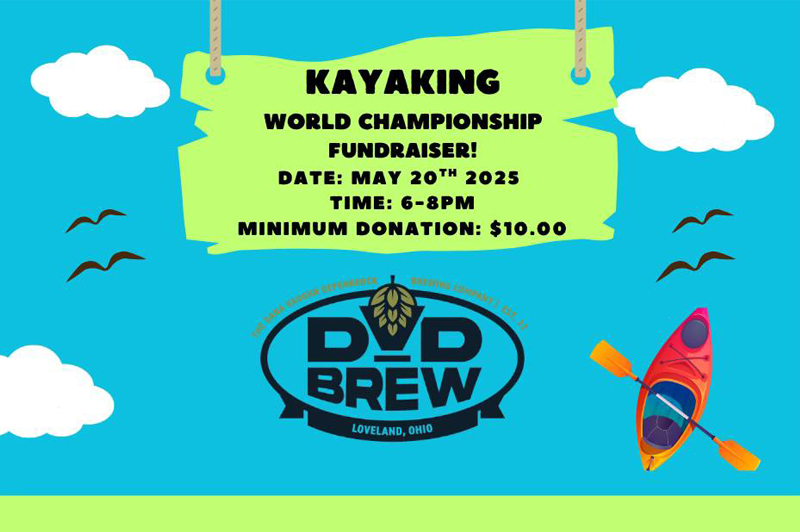
Loveland, Ohio – DVD Brew is calling all kayakers to come in on May 20th for a special event.
FaceBook Photo
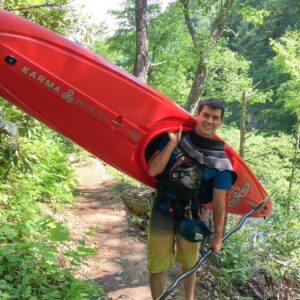
Be part of sending Eric Bartl to the world championship in Germany this summer. Team USA members must raise much of their own money and most of the expenses for representing Team USA at the World Championships will come directly out of Eric’s own pocket.
Thanks to the generosity of Whitewater Warehouse, attendees will receive 20% off paddling accessories discount.
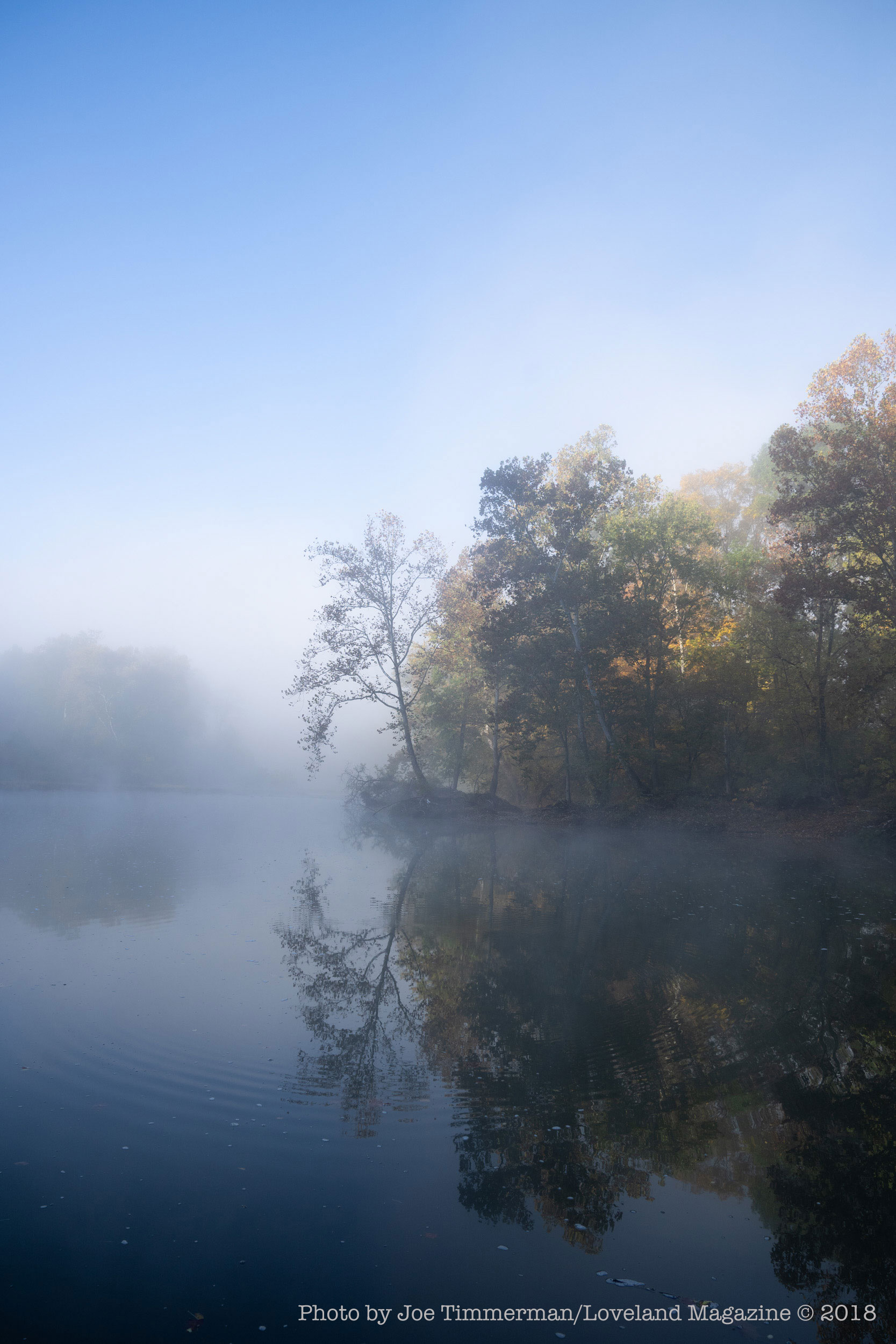
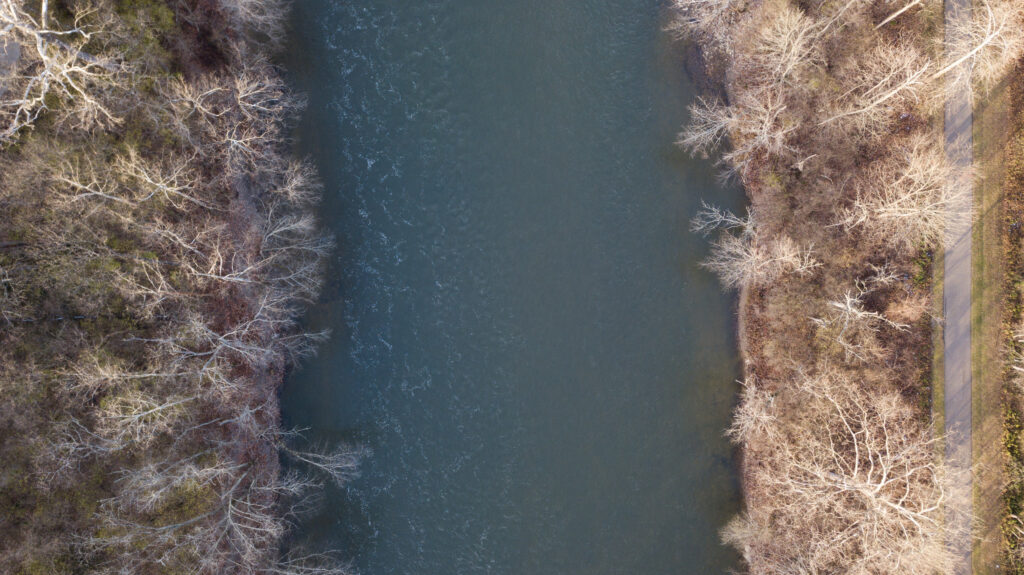
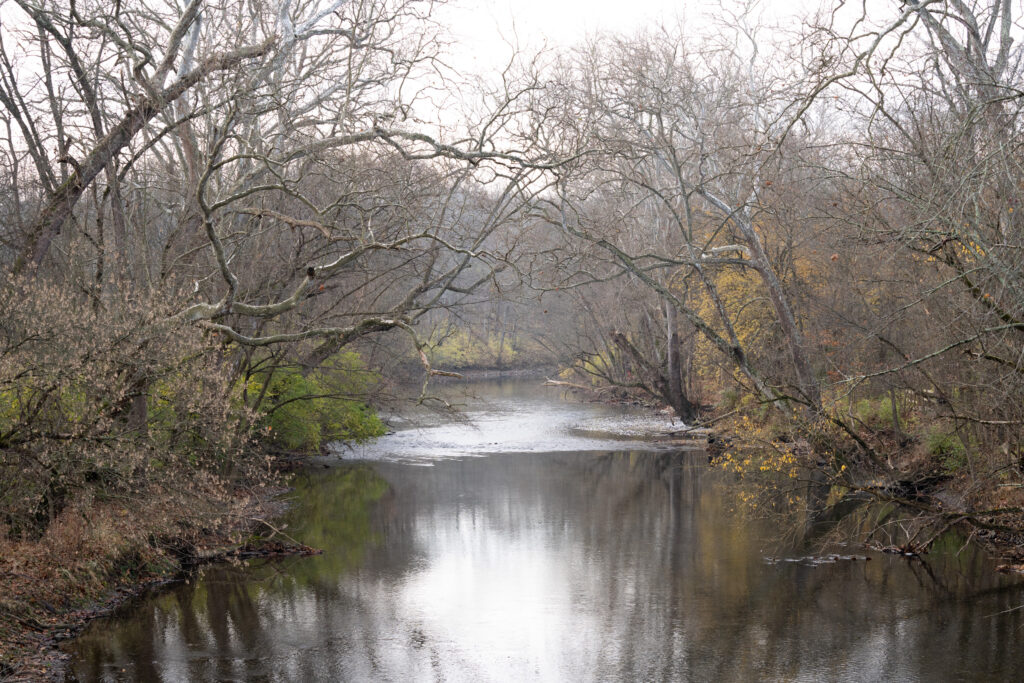
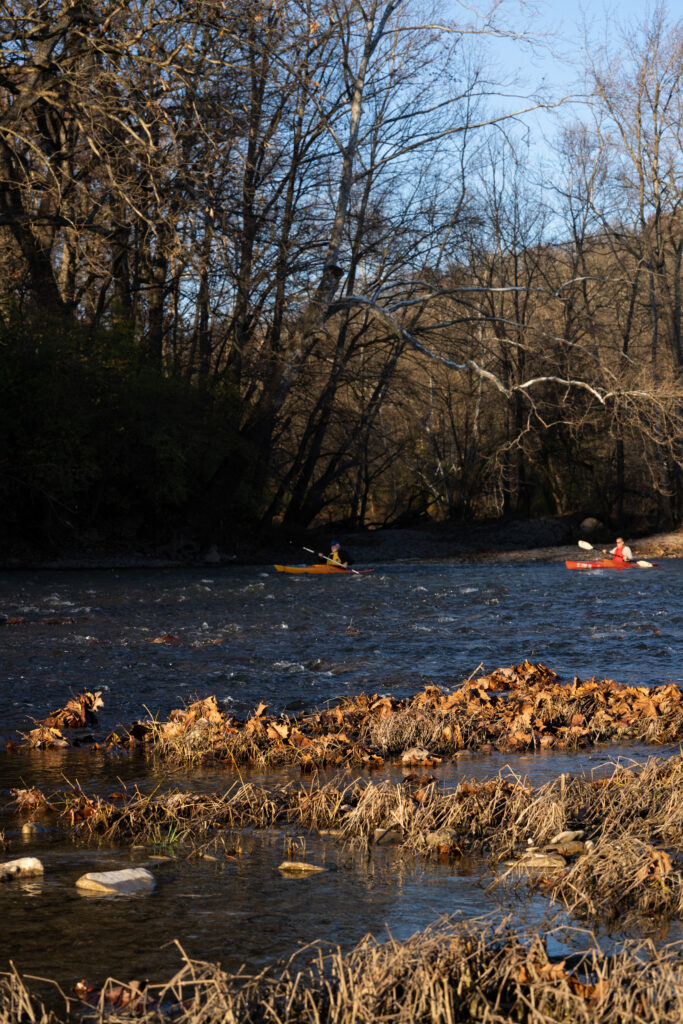
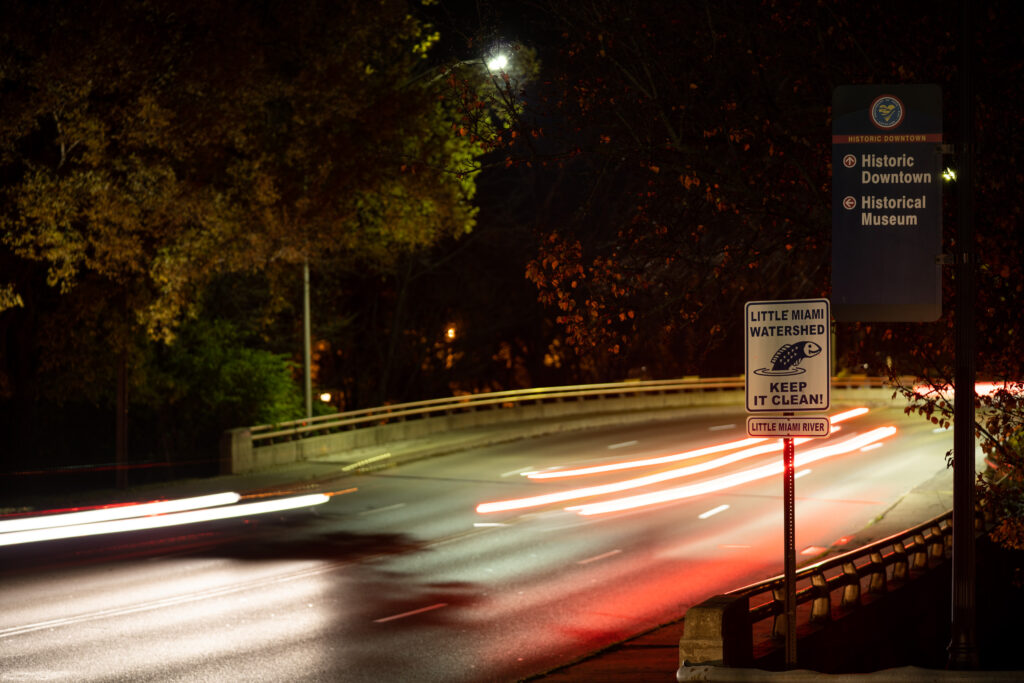
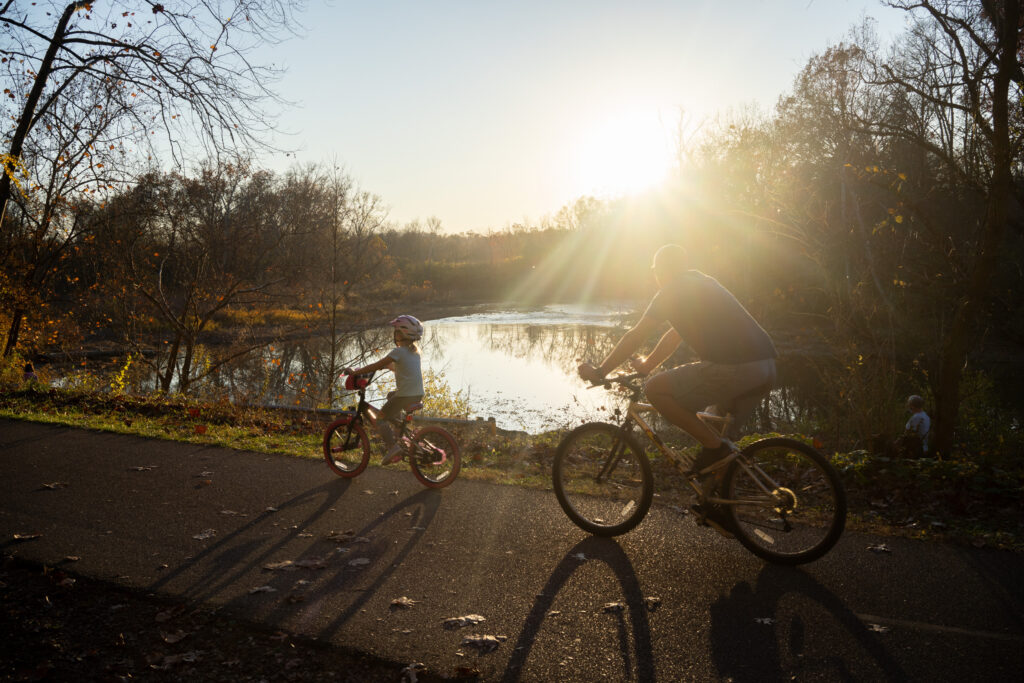
Few leaves are still falling off trees and down the ever-running water of the National Wild and Scenic Little Miami River, where they float through five counties and 111 miles of southwest Ohio, into the Ohio River and toward the Mississippi before eventually finding their way into the Gulf of Mexico. Today, these 111 miles of Little Miami River are the cleanest that they have been in the last 40 years, and as the world may seem largely disconnected due to the coronavirus pandemic, a connection between people over time is helping to create the river’s lasting sustainability.
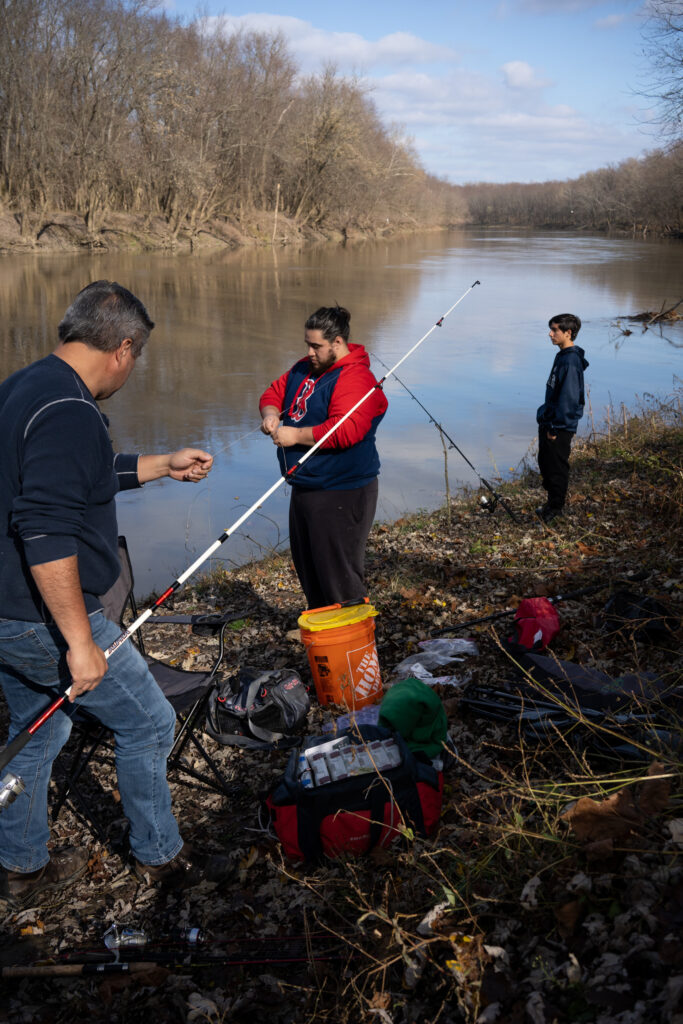
Since the end of the last Ice Age before this land was known as America, humans have lived along the Little Miami River and enjoyed the resources it provides — drinking the water alongside its banks while hunting for fish within, using the clay to build pottery or structures, and floating on the surface in kayaks or canoes like the leaves still do today. In that time, the river has seen many seasons of change, from shifts in human culture alongside its banks through community development to biological diversities in its rich, natural environment, according to the Little Miami Ecology and History report.
When the Little Miami was designated as Ohio’s first State Scenic River and included in the National Wild and Scenic River System in 1973, according to the Ohio Department of Natural Resources, locals had already been active in its conservation and return to sustainability for more than half a decade. The Little Miami Conservancy (LMC), a non-profit organization fueled by passion for the protection of the river, led the effort in Washington to recognize the importance of protecting the Little Miami River as not only a local hidden gem, but as a national treasure.
The lower section of the river runs right through the heart of Loveland, Ohio, where LMC and its current executive director, Eric Partee, is based. Partee’s passion roots from the original director of the conservancy, Glenn Thompson, who in 1967 embodied the idea that their effort isn’t about one single person, but rather about everyone coming together to save the river.
“Someday, a corridor of green will stretch from one end of the river to the other. Individuals and families will enjoy peace and quiet and restoration of spirit that comes with clean water, birds, and trees,” a quote from Glenn Thompson that Partee believes the conservancy has lived up to.
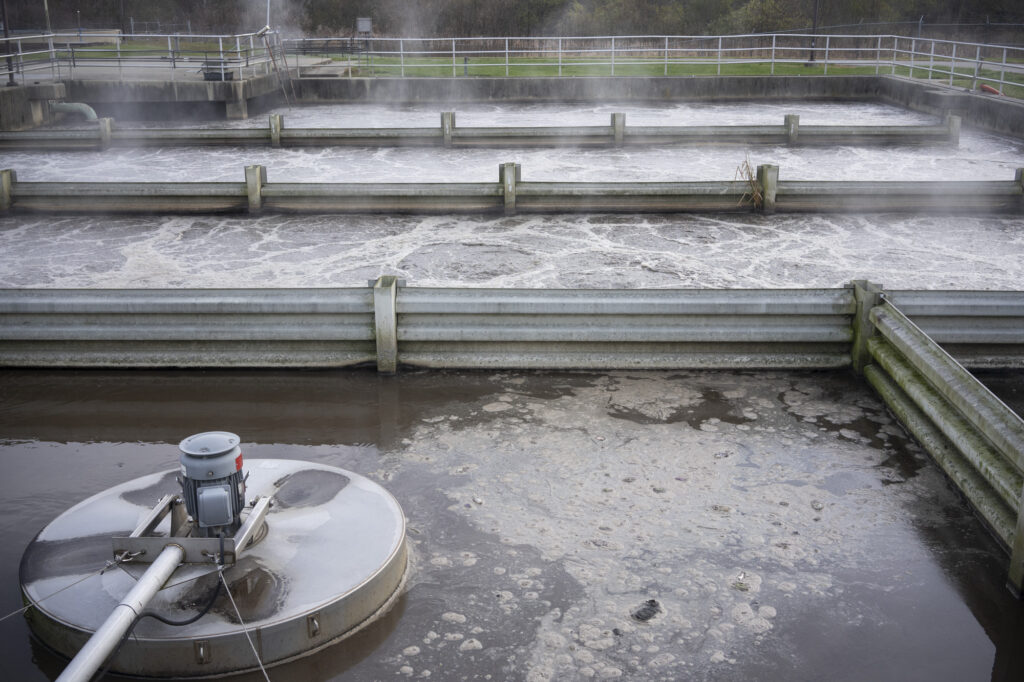
Since its origin, the conservancy has worked with agencies like the Ohio Environmental Protection Agency (OEPA), who records the condition of the Little Miami River every 10 years by sampling fish life. In the 1980s, only 4% of the Little Miami River was in full attainment of water quality health, but in recent years, the chart has flipped, and as of 2007, the river is at 96% attainment of health, according to OEPA research.
“As early as the turn of the century, this river was very well polluted. (There were) a lot of deformed fish, it was not anything close to exceptional,” Partee said in an interview. “It took a lot of discussion, a little bit of arm twisting, and some local funding to fund improvements to the sewage treatment plants to ratchet down on phosphorus, which was the main culprit … when we got the treatment plants to ratchet down on that, biology basically turned around on a dime —from terrible to exceptional.”
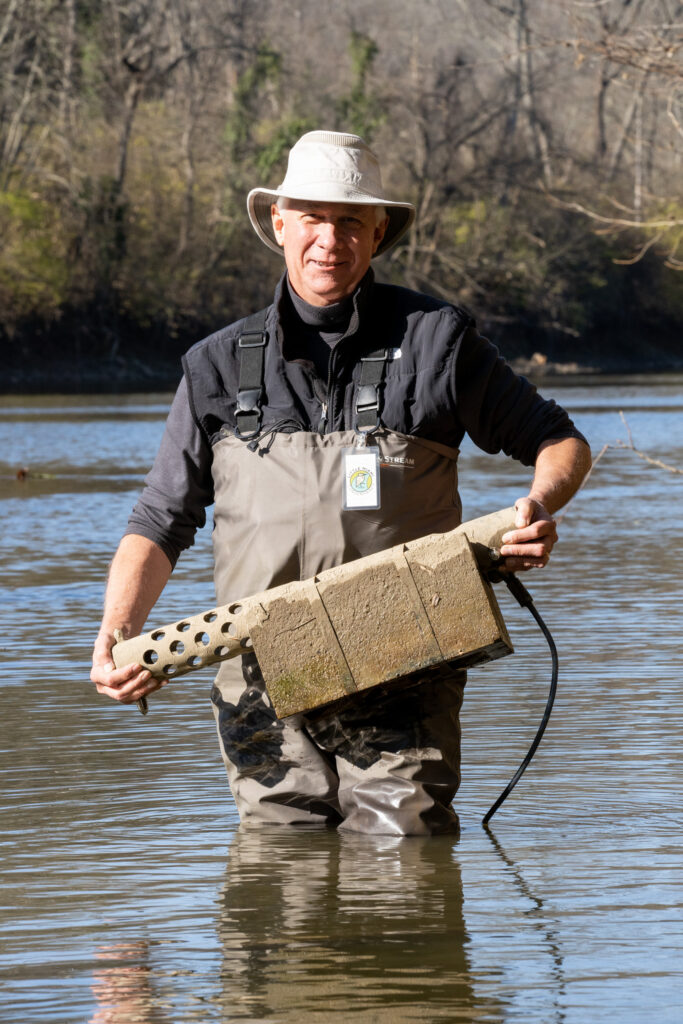
To make sure the river stays healthy, LMC introduced a set of equipment called YSI Water Quality Sondes, which monitor dissolved oxygen in nine locations throughout the length of the entire Little Miami, according to Partee. Each system monitors oxygen every 15 minutes, allowing for constant awareness of river health to prevent a reversion of quality. The conservancy also takes prides in their work on forest restoration through buying riverfront properties, planting trees, removing invasive species, and working collectively to clean up trash in the effort to grow closer to the initial goal of a corridor of green along the riverbank.
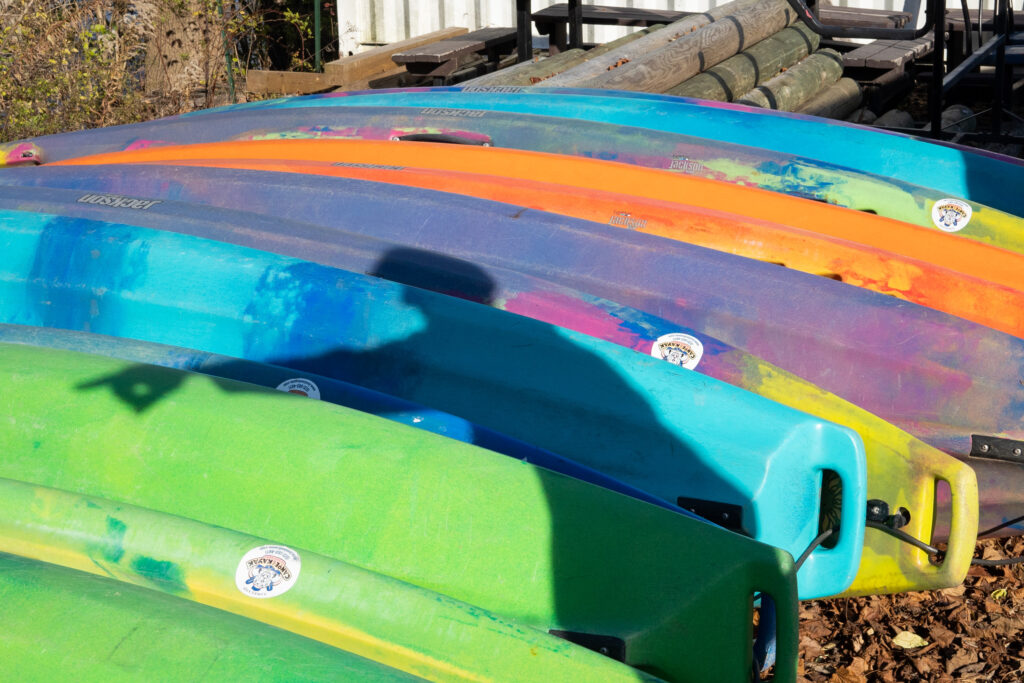
A short walk from the doors of the conservancy is the Loveland Canoe and Kayak Livery, owned by Mark and Robyn Bersani, which is just one of the many businesses along the Little Miami River that rely on its health as their main resource for income. The Bersanis work closely with the conservancy each year by offering and volunteering for cleanups as well as generous donations. This year, along with two other liveries including Rivers Edge and Scenic River, their combined donation to the Little Miami Conservancy’s effort was $56,000, according to Bersani.
“We’re involved from a grassroots portion, to actually helping with cleanups, to keeping an eye on the river, as well as donating and continuing to fund the good work that they do,” Bersani said in an interview. “It comes down to the people that live along the river, people that visit the river, the people in the community, if the river is going to stay clean. This river is very natural, it looks like it did 300 years ago … it is vital that the citizens all realize they have a role in this.”
Up the road at Loveland High School, Amy Aspenwall, an AP environmental science teacher teaches teenagers the importance of environmental awareness through hands-on experiences in places like the Little Miami River.
Perhaps half of the students attending Loveland High School cross over the Little Miami State and National Scenic Little Miami on their way to school each morning.
In an interview over Zoom, Aspenwall talked about the importance of students getting out into nature to actually see how humans fit in the environment, because “if you don’t see it, it’s really not your problem,” Aspenwall said. From understanding food waste to the water drinking system to sewer treatment facilities, her goal is to allow students the opportunity to realize a sense of civic responsibility.
“It’s important for students to start to think of themselves as a bigger picture rather than just someone following teacher instructions,” Aspenwall said. “I want them to start thinking on their own and realize how powerful they are as a consumer.”
Michelle Waller, an environmental specialist in the Division of Surface Water at OEPA, discussed the difficulties the river has faced through poor nutrients entering the river due to excess phosphorus from treatment plants and still faces through agricultural runoff from farms, in an interview over Zoom.
Waller said that placing phosphorus limits on the main stem’s water treatment plants in recent years proved to show major improvements in river nutrients after the OEPA performed sampling, but other negative sources are out of their reach. “We do not have authority over agriculture the way we do with what we call point sources, the treatment plants,” Waller said. “We try to work with local Soil and Water Conservation Districts, they try to get the word out about good farming practices … but there is no real regulatory authority which is a really big problem.”
The majority of land along the Little Miami River is agricultural, unlike other major rivers in Ohio that have industry running alongside their waters. And just like the branches of community that have come together to help preserve the river, many tributary streams and creeks branch out from the Little Miami, though those tributaries can be overlooked.
As most organizations, including the OEPA and LMC, focus their efforts on upholding the exceptional quality of the main stem of the Little Miami River, there is still work to be done in the tributaries. Partee talked about how there just isn’t enough time for LMC to visit every tributary and talk to every landowner. However, near Beaver Creek in Greene County, there is an organization called the Beaver Creek Wetlands Association, which has adopted that very issue. “I think that’s probably the best future for the watershed, to have local citizens dealing with multiple tributaries and try to restore or protect it,” said Partee.
Between the shared relationships of the Little Miami Conservancy, OEPA, local government officials, developers, landowners, non-profits, teachers, and local business owners, a community has come together and worked toward the common effort to make a positive, sustainable change in the health of the river.
The timelessness of the Little Miami River will carry on as long as its water continues to run. And as it always has been, it’s still up to the people alongside the riverbank to make sure that the water runs clean for generations to come. As the late author Nelson Henderson said, and Eric Partee paraphrased when we talked together, “The true meaning of life is to plant trees, under whose shade you do not expect to sit.”
My second feature story in a continuing search for Loveland’s kindest, sweetest people and what they’re made of. What is our DNA match?
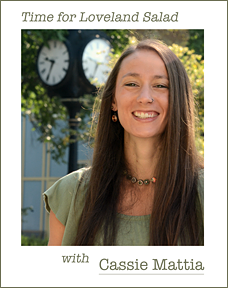
Cassie Mattia is a columnist for Loveland Magazine and lives in Historic Downtown.
Loveland, Ohio– The City of Loveland is known for many things such as its beautiful scenery, its historic buildings, and the famous Loveland Bike Trail, but what a lot of people don’t know is Loveland has become one of the top destination spots in Ohio for families. And the Bersani family is dedicated to that family-friendly atmosphere. What could be better than grabbing an ice cream cone from Loveland Sweets after a sunny afternoon canoeing on the Little Miami River? Well, that’s something Loveland Canoe and Kayak Owners Mark and Robyn Bersani couldn’t agree more with!
Mark and Robyn live right above their canoe and kayak shop on Karl Brown Way in Historic Downtown Loveland with their 5 dogs and their daughter Elena and quite frankly couldn’t be happier with where the journey to owning Loveland Canoe and Kayak has taken them.
The Bersanis knew they had some challenges ahead of them, but were committed to making Loveland Canoe and Kayak a family affair and family-friendly.
“We were not canoeists or kayakers we were outdoors people. We loved being outdoors and doing physical things,” Bersani said, “We were training for the Chicago Marathon in 2003 and we were running on the Loveland Bike Trail and Robyn said ‘Hey the Canoe business is for sale we should buy it! Robyn said ‘I’m off in the summer I don’t like to sit still and we will hire some kids and we will do it!’ We went into the process of negotiation. Initially, we were not going to get it because someone else had a better offer than things fell through and they came back to us and we put together an offer and essentially ‘We bought a Zoo,” Bersani explained. The business was formally owned by Bruce Crutchfield who at one time had a caged chimpanzee at the business named Sam who canoeists and locals fed a regular diet of beer and cigarettes.
The Bersanis didn’t always live in Loveland, in fact, they lived in Buffalo where their parents went to school together, which led them to eventually meet each other in high school.
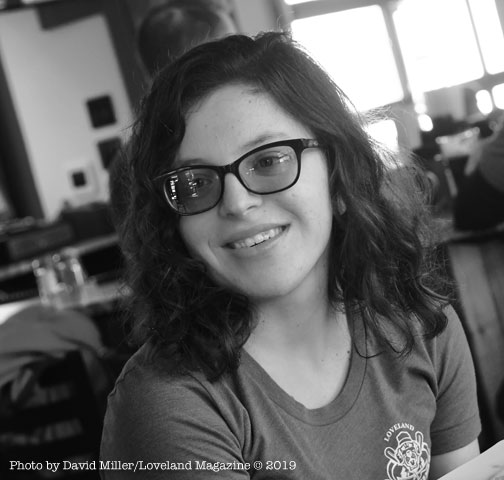
Elena Bersani is not only an incredible hard-worker, an outstanding runner and Loveland’s very own “Sweetheart,” according to her parents, but she also has a soft spot for the Loveland-Symmes Fire Department.
“It took me 7 years to get a date,” Bersani joked, “But it was well worth the wait! We moved to Dallas a year after we got married. I started in Telecom and Robyn started teaching then I got transferred to New Orleans. We moved back up here to Cincinnati not knowing much about it except that we both had driven through it and thought it was beautiful coming from the Kentucky side,” Mark Bersani said, “Robyn started teaching in the Kings district and at that point, I had been in sales for 25 years in Telecommunications.”
After finally closing on the canoe and kayak property right before Memorial Day in 2004, the Bersanis knew they had some challenges ahead of them, but were committed to making Loveland Canoe and Kayak a family affair.
It was a challenge early on because Robyn and I had a vision for the business that was different from what others had seen it as before we took over,” Mark Bersani explained, “We wanted it to be a place where families could come and enjoy nature. At the time people knew the place as a sort of ‘Cabrewing’ venue. It was frustrating at times as we were trying to change the culture and dynamics. It wasn’t always easy but we were committed.”
The Bersani’s daughter Elena admitted at a young age of just 11 years old some of the people that came through Loveland Canoe and Kayak in the beginning quite frankly scared her.
Robyn Bersani was the first to experience what a difference the family-friendly atmosphere they created with Loveland Canoe and Kayak made for many locals and out-of-towners.
“It took 2 or 3 years of education, policy enforcement and talking with the local authorities to see what we could do to achieve our vision of that family-friendly environment,” Mark Bersani said, “People told me if you do away with alcohol your business is going to be gone. I was told if you make the decision to go alcohol free and you stick with it you’re going to have a couple of years that are going to be really difficult and then it’s going to get better because people are going to find out that they can bring their families, sports teams and scout troops because of what the business stands for. People from Loveland started pulling me aside after they saw what we were doing and would tell me thank you for doing this because they used to have to go an hour up the river to do this with their families because they did not want to be around the alcohol and what it brought along with it,” he explained.
Robyn Bersani was the first to experience what a difference the family-friendly atmosphere they created with Loveland Canoe and Kayak made for many locals and out-of-towners.
“Five of the original kids we hired stayed with us for 9 summers because of the atmosphere we created. My principal at Kings called me in the office and I thought she was going to tell me I can’t be a teacher and run the canoe and kayak business and she called me in and said ‘My son needs a job!,” Robyn Bersani said, “It’s the little things like the comments from people saying, ‘Thank you so much this was the best day my son and I have ever had.’ When people get out there on the river they realize how good it makes them feel. Our vision always was to get families out together in nature,” she said.
Robyn Bersani, who has now been a 3rd grade teacher for 28 years at Kings, knows a little something about inspiring our younger generation to not only reach their goals but to not be afraid to try something new even if they don’t succeed at it the first time.
“It took 2 or 3 years of education, policy enforcement and talking with the local authorities to see what we could do to achieve our vision of that family-friendly environment,” Mark Bersani said.
“I always wanted to be a teacher from a young age, but my parents pushed me to do something different, so I got a bachelor’s degree in psychology,” Robyn Bersani explained, “But then I thought to myself what better way to serve the world than to educate children. I want to prove things to the world like there are more important things than how an 8-year-old scores on a standardized test!”
Of course, Robyn Bersani isn’t the only one in the Bersani family making an impact on the Loveland community; both Mark and Elena Bersani do their fair share of helping and encouraging others. Mark is on the board of the Adventure Crew, which is a non-profit where the objective is to get urban kids in outdoor activities.
“We get about 125 kids out into nature and get them to experience things they would never get to experience otherwise,” Mark Bersani said, “This year they have skiing on the curriculum, they ,of course, will have biking on the Loveland Bike Trail and kayaking in the Spring and the Fall. This is all funded through donations and grants.”
“Elena has a place in her heart for firemen so she will make cookies and brownies for them all the time,” Robyn Bersani said.
Mark also takes part in what they call a “River Clean-up,” where they spend the day taking trash out of the State and National Scenic Little Miami River.
“We are big on doing what we can to stop the trash that is thrown into the river. With the River Clean-up, I have found a hot tub, a boat and one time I pulled out 65 tires!”, Marl Bersani said, “People don’t realize that 90 percent of trash and plastic in the oceans comes from rivers and streams. We used to get our dumpster emptied twice a week now it’s once every 4 to 5 weeks, so we have definitely made an improvement.”
Elena Bersani is not only an incredible hard-worker, an outstanding runner and Loveland’s very own “Sweetheart,” according to her parents, but she also has a soft spot for the Loveland-Symmes Fire Department.
“Elena has a place in her heart for firemen so she will make cookies and brownies for them all the time,” Robyn Bersani said, “I think she recognizes how much they have done for our family and our business and of course all they do for the Loveland community. The Fire Department has really looked out for us.”
Elena ran cross country for Kings and made it to State in 2010. She also attended the Art Institute where she focused on her love for baking, which led her to win “Best in Show” for her cannoli’s.
“Both of our girls have worked in the business for a number of years. They have unbelievable work ethics that we tried to instill through our example,” Robyn Bersani said, “It has always been important to us to be good role models and of course get involved in the community. We do a lot of things to somehow give back to the community. We try to donate to the community and local non-profits as much as we can so they can further their causes.”
The Bersani family have also been a part of some very successful fundraisers, such as Paddlefest, where 2,000 people paddle along the Ohio River, in which proceeds go towards the Adventure Crew, and one of Loveland’s most famous events the Frogman 5k. Last year in October the Bersani’s took part in a Film Festival that was held in Loveland’s very own Nisbet Park, where proceeds went towards the Little Miami Conservatory.
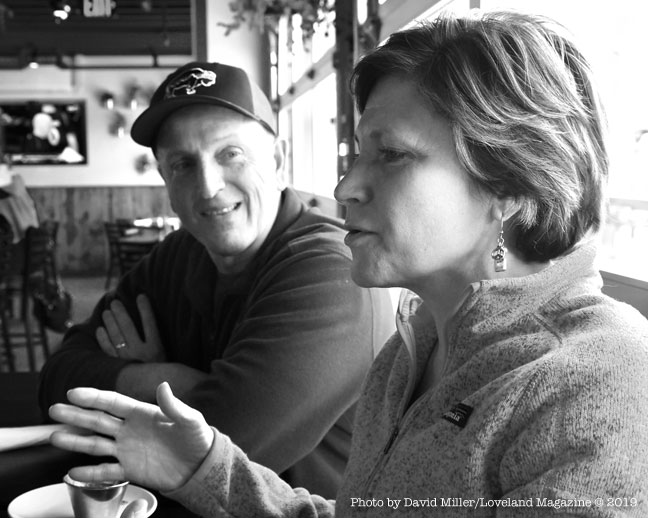
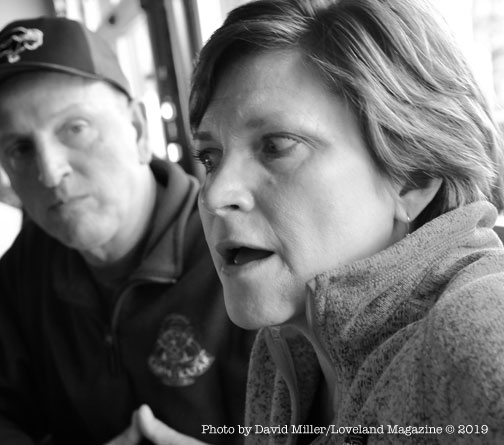
Loveland Magazine columnist Cassie Mattia interviewing the Bersani family. She writes, “Mark and Robyn live right above their canoe and kayak shop on Karl Brown Way in Historic Downtown Loveland with their 5 dogs and their daughter Elena and quite frankly couldn’t be happier with where the journey to owning Loveland Canoe and Kayak has taken them.”
“It’s the big picture. It’s about being involved in the community as a business owner and resident. We want to connect with people and share resources. Everyone in this community really watches out for each other,” Robyn Bersani said, “We love telling the story of Loveland!”
The Bersanis are looking forward to the up and coming canoe and kayaking season and hope to see families from all over Ohio come and experience the beauty of Loveland and the Little Miami River. If you would like to learn more about the Loveland Canoe and Kayak you can visit their Facebook page, their website at lovelandcanoe.com or check out their location at 174 Karl Brown Way.
Read more about the Bersani family adventures…
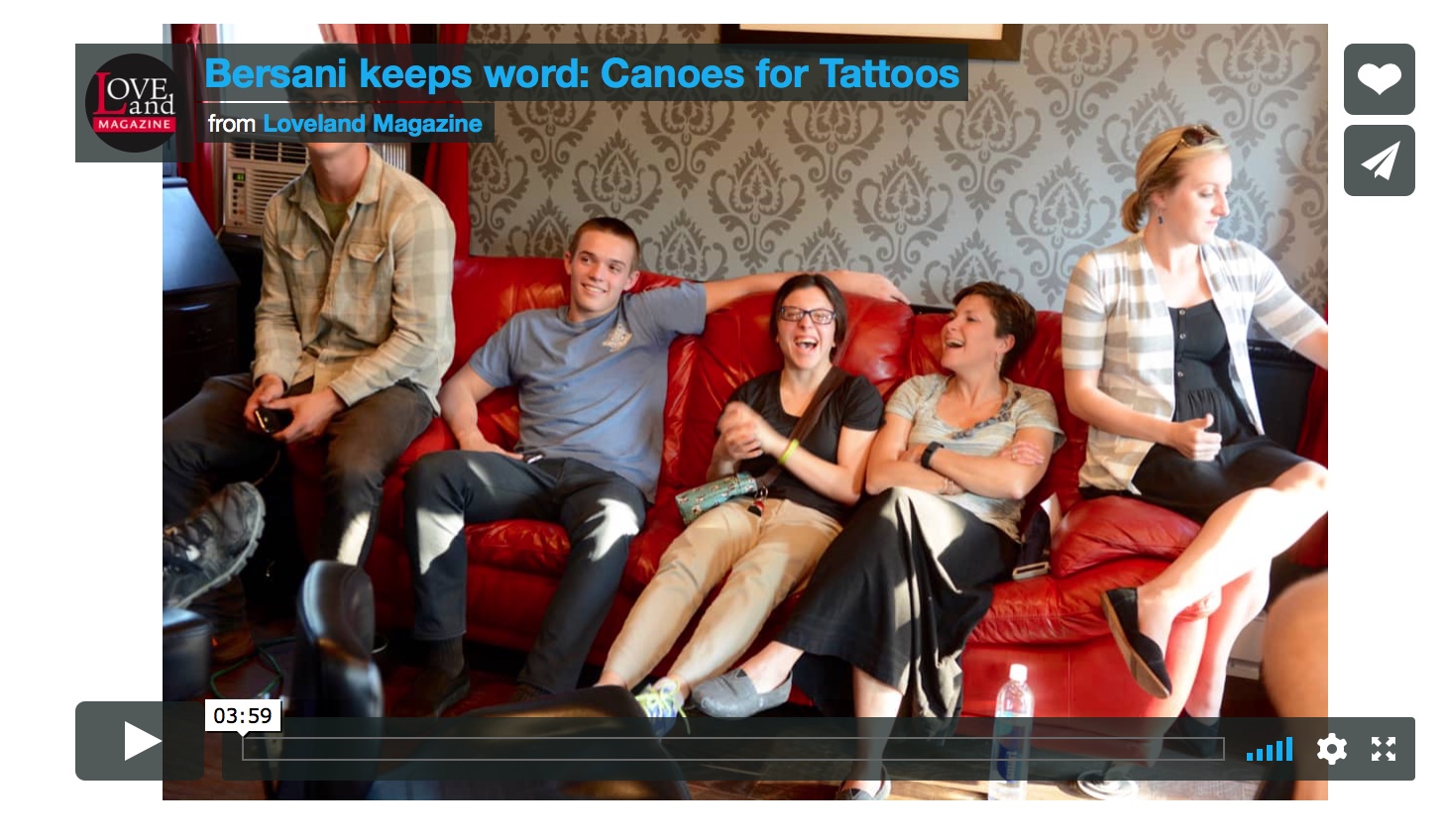
Loveland, Ohio (Nov 9, 2015) – Mark Bersani and his wife Robyn own Loveland Canoe and Kayak on the bank of the State and National Scenic, Little Miami River in downtown. This Summer the weather was not kind to their business. Too much rain and too often, keeping river levels unsafe for canoers and kayakers. Business was dismal.
Mark’s staff made a dare. If they could muster enough customers to match last season, Mark would get tattooed, a tattoo like many of his young staff had already gotten.
This LOVELAND MAGAZINE TV VIDEO is the rest of that story….





 Bersani keeps word: Canoes for Tattoos