Tag: Keith Faber

  • Along with health department, state auditor missed 4,000 COVID-19 deaths during

    Along with health department, state auditor missed 4,000 COVID-19 deaths during

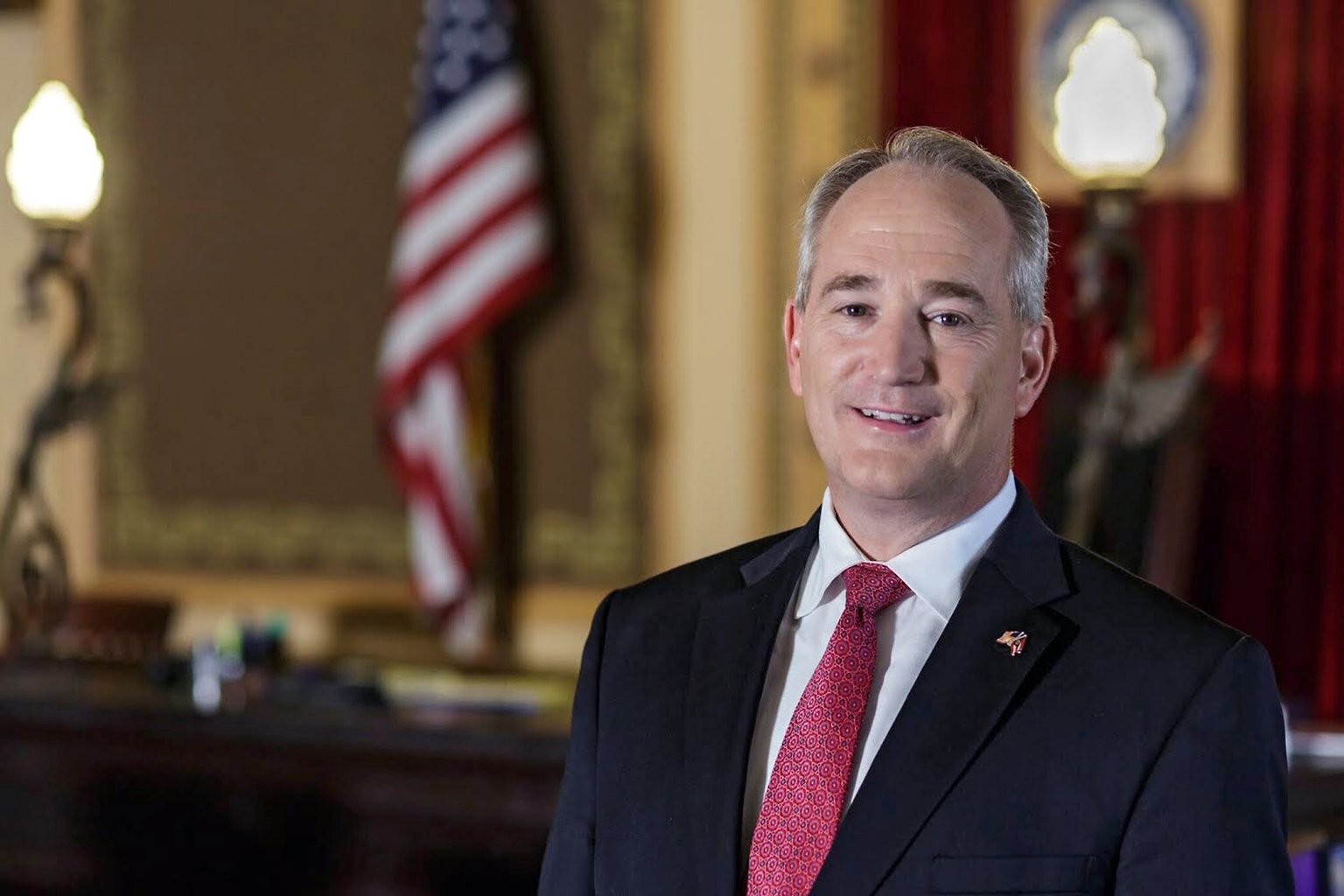
    Ohio Auditor of State Keith Faber. (Official photo)

    The precise nature of Faber’s audit remains shrouded in mystery

    By Jake Zuckerman and Ohio Capital Journal

    The Ohio State Auditor’s months-long investigation into the state health department’s COVID-19 data practices failed to detect the 4,000 newly discovered COVID-19 deaths announced by the Ohio Department of Health last week.

    Auditor Keith Faber’s staff have declined to fully explain how they missed the deaths — which sprung Ohio’s death toll from about 12,000 to 16,000 — or what specifically auditors are investigating.

    Both ODH and Faber’s auditors alike missed a broad swath of pandemic mortality as Ohio, like every other U.S. state, looked for an appropriate policy response for an infectious disease that principally spreads through person-to-person interaction.

    The health department said it first identified a death data problem Feb. 2 before identifying and announcing the finding Feb. 10. Faber’s staff learned about the 4,000 newly discovered deaths that day.

    Faber spokeswoman Allie Dumski claimed last week that the federal Health Insurance Portability and Accountability Act prevented auditors from accessing one of the two databases ODH uses to track COVID-19 deaths.

    She later clarified ODH denied “full access” to the database — the Ohio Disease Reporting System (ODRS). She said auditors “would not have been able to identify this miscount” without full access to the database, i.e. the identities of COVID-19 cases.

    “As part of our audit, we requested full access to the ODRS database and ODH refused that, citing HIPAA and additional conditions of confidentiality related to the data set,” she said.

    ODH Communications Director Arundi Venkayya said the health department cooperated in full with state auditors.

    “ODH provided full access to the ODRS database in the form of a CSV file that was downloaded to ODH computers prior to the Auditor’s onsite visit,” she said.

    Faber’s staff, according to Venkayya, relayed to ODH that this format would be acceptable.

    Upon request, Venkayya also shared emails from state auditors who were seemingly pleased with the data ODH shared.

    “We have had very good cooperation in completing the data analysis component of the audit and, if we’ve not already finished, we were working on finishing up the death certificate examination,” wrote Betsy Bashore, a Faber staffer, in a Jan. 11 email about the audit.

    “As part of our audit process, we typically meet with our client agency to discuss findings to date. We had delayed this with the transition but really would like to get one scheduled as soon as possible. These usually involve leadership and department heads, particularly those people we have interacted with over the past 4 months.”

    Faber did not respond to repeated interview requests over the last week.

    Dumski, responding to the ODH emails, said auditors received anonymized data to protect individual identities. This would have prevented auditors from reconciling ODRS data with death certificate data to uncover the uncounted deaths, she said.

    ODH Director Stephanie McCloud said last week the department started missing most of the 4,000 newly discovered deaths when a November death surge took off. The error, she said, traces back to a single employee’s failure to reconcile the ODRS data with a separate set of death certificate data.

    ODH posts the ODRS data — stitched together from reports from labs, health departments, hospitals and care providers — on its website. It also regularly reconciles it with death certificate data, which is more accurate but less timely than the disease database.

    As the death surge took off, cases started getting missed by this lone employee who failed to notify his superiors, McCloud said.

    Since the news broke, an epidemiology investigator with the department resigned, and the ODH Bureau of Infectious Diseases chief was reassigned.

    The precise nature of Faber’s audit remains shrouded in mystery.

    He announced the probe in July, stating auditors would “examine case numbers of COVID-19.” Confirming the accuracy of the data, he said, will provide “valuable feedback to key policy makers and increased confidence for all Ohioans on how to best mitigate the spread and impact of this virus.”

    The news came amid rumors, amplified by conservatives in media and politics, that health departments were inflating COVID-19 data for political gain. The Ohio House went as far as to pass a “Truth in COVID-19 Statistics” bill. No evidence has been presented to suggest ODH’s data is somehow fraudulent.

    An online survey on the auditor’s website fielded documentation that would indicate an overcount of COVID-19 infections, as opposed to an undercount of deaths. The survey sought respondents who received “test results that were later reversed” or “results for tests the individual did not take.”

    Faber touted the audit at a rally for then-President Donald Trump, who regularly downplayed COVID-19 and claimed its death toll is “exaggerated,” and at a political fundraiser this summer as well.

    His office denied a public records request for survey data and supporting documentation. However, a spokeswoman said if there were any “alarming” findings, auditors would work with ODH to address the issue immediately for the benefit of public health.

    The survey closed Jan. 23. The audit is slated for release in March.
  • Where Ohio’s GOP leaders are on the outcome of the election

    Where Ohio’s GOP leaders are on the outcome of the election

    By Marty Schladen – November 9, 2020 (Ohio Capital Journal)

    Some, but not all, Ohio Republican officials on Monday appeared to be distancing themselves from Donald Trump’s unsubstantiated claims that the Nov. 3 election is being stolen from him.

    Trump racked up early leads — particularly in some battleground states where Republican lawmakers refused to allow early processing of mail-in votes. A massive portion of the electorate was expected to take advantage of mail-in voting because of the coronavirus pandemic and some states, such as Ohio, were ready to start processing them weeks before Election Day.

    Also, Trump for months has been discouraging his supporters from voting by mail. So it was widely expected in states like Pennsylvania, Michigan and Wisconsin that most of the early results to come in would be from Election Day voting and would heavily favor Trump. Those would be followed by mail-in ballots heavily favoring former Vice President Joe Biden and would take days to count.

    That’s just what happened, and by late Saturday morning all major U.S. news organizations judged that Biden had built an insurmountable lead in Pennsylvania and projected him to be the winner of the election.

    By Monday afternoon Trump’s allies were talking about legal challenges to the vote in several states, but the Washington Post reported that there appeared to be no central strategy. Meanwhile, many others called on Trump to stop undermining the public faith in the electoral process and concede.

    “We all knew the counting process was going to take longer than usual this year because of the once-in-a-lifetime pandemic and higher voter turnout,” U.S. Sen Sherrod Brown, a Democrat, said over the weekend. “Counting votes and making sure every voice is heard is not fraud — it’s democracy at work. The President’s attacks on our democratic process are dangerous, but we will count every single vote.”

    U.S. Sen Sherrod Brown

    On Sunday, former President George W. Bush became the most prominent Republican to essentially declare the election over when he congratulated Biden.

    Early Monday afternoon, Ohio Gov. Mike DeWine, also a Republican, congratulated Biden, although he said Trump has every right to go to court if he wishes.

    “I congratulate Vice-President Biden,” DeWine said in a statement. “It would appear that President Trump’s legal team will be filing legal actions. The President’s lawyers have every right to present evidence in court on any legal issues or irregularities involving the election, and the courts are the proper place to hear evidence on these issues.  When lawsuits have concluded and election results are certified, it is important for all Americans to honor the outcome.”

    The office of Ohio’s top elections official, Secretary of State Frank LaRose, was more direct when asked if LaRose believed Biden had won.

    “Yes, he does,” his spokeswoman, Maggie Sheehan, said in an email.

    She pointed to an Oct. 6 statement LaRose had made on Fox News.

    “When the results on election night say one thing and then when the results change over the ensuing several weeks, that’s not a sign that something nefarious is happening,” he said. “In fact, quite the contrary. It’s a sign that the legal process is being allowed to play itself out so that every legally cast vote can be tabulated. That’s exactly what we need to do.”

    Meanwhile another Ohio Republican, Attorney General Dave Yost, is following Trump into court. Politico reported Monday that Yost’s office had filed a friend-of-the-court brief with the U.S. Supreme Court challenging a three-day extension for ballots to be received in Pennsylvania. That is one of the matters Trump and his allies are litigating.

    Attorney General Dave Yost

    Yost’s office didn’t respond when asked if the attorney general believed Biden had won the election. But Georgetown University Law Professor Josh Chafetz tweeted that the Supreme Court effort was pointless.

    Yost released a statement saying that the legal action transcends pollitics.

    “This constitutional question will come up again in future elections,” it quoted him as saying. “It is in the best interest of all Ohioans — all of America — to gain a definitive answer, regardless of politics.”

    The office of U.S. Sen. Rob Portman didn’t immediately respond when asked if he believed that Biden had won the election. But over the weekend, Portman refused to criticize Trump for appearing in the White House East Room early Wednesday morning to declare himself the winner.

    U.S. Sen. Rob Portman

    His office referenced a series of tweets posted on Friday that didn’t address whether it was right for a president to call himself the winner of an election in which vast numbers of votes hadn’t been counted.

    The office of Ohio Auditor Keith Faber, an ardent Trump supporter, didn’t respond when asked if he believed Biden had won the election.

    Ohio Treasurer Robert Sprague didn’t answer whether he thought Biden had won, but he urged patience.

    “While news organizations make projections, they do not determine the winner of the Presidential election — the people do,” he said in a statement issued by his office. “That’s why it’s important to allow the elections departments of all 50 states to continue completing their certification processes so the 2020 election can be finalized properly and in accordance with the states’ laws. This process takes time, and it’s in the best interest of our republic to ensure it’s done right, rather than done fast.”


    Marty Schladen

    Marty Schladen has been a reporter for decades, working in Indiana, Texas and other places before returning to his native Ohio to work at The Columbus Dispatch in 2017. He’s won state and national journalism awards for investigations into utility regulation, public corruption, the environment, prescription drug spending and other matters.

  • In Ohio, you can fight public records battles with one click and $25

    In Ohio, you can fight public records battles with one click and $25

    Don’t be shy. Just the act of following through when government says “no” helps keep public officials on their toes.

    By Dennis Hetzel

    Dennis Hetzel 2018
    Dennis Hetzel is the Executive Director of the Ohio News Media Association and President of the Ohio Coalition for Open Government.

    Ohio’s state and local governments likely hold hundreds of records that might be important to you or your family.

    However, it’s not something you’ll ponder until you urgently need access to documents like birth records, police reports, property records, the minutes of your school board’s last meeting, or any of countless other records in the government’s possession.

    Most government officials are honorable and try to fulfill requests, but that’s not always the case. Sometimes there are legitimate differences of opinion. Sometimes, officials are obstinate and don’t want to supply a record for any number of reasons, including often spurious claims of attorney-client privilege or protecting trade secrets.

    Sometimes, officials are obstinate and don’t want to supply a record for any number of reasons, including often spurious claims of attorney-client privilege or protecting trade secrets.

    Until 2016, the playing field in Ohio tilted heavily in the government’s direction. It was easy for officials to say “no” – even when they should’ve said “yes.”  That’s because they knew that most citizens did not have the financial resources to file a lawsuit and go to court. That was the only available path in contrast to many other states that had developed easy, affordable ways to appeal a records denial.

    Actually, the playing field tilted even more than you might think. If you tried to represent yourself to save money, you were at a huge disadvantage versus government attorneys, many of them quite experienced and crafty in the nuances of Ohio’s public records laws. If you sued a state agency, it was you vs. the attorney general’s office.

    On top of that, it remains extremely difficult under Ohio law, even when you’re right and you win, to get attorney fees reimbursed, so your battle was a crusade that required a fat checkbook.

    In the old days, media outlets willingly took up a lot of battles. Today, with resources stretched thin, dollars are lacking for all but the most critical cases. Our Ohio Coalition for Open Government, of which I’m president, helps organizations and individuals in major cases, but OCOG’s total resources are less than $80,000. One or two protracted court battles would drain us to zero.

    The Ohio News Media Association spent several years telling legislators that it was time to do something.

    The Ohio News Media Association spent several years telling legislators that it was time to do something. Keith Faber, then president of the Ohio Senate, drew on his background as a mediator to suggest a unique-in-America process that just might be the best appeals process in the country.

    Now, for $25 and the time to fill out an online form on the Ohio Court of Claims website, you can appeal a denial. Some cases get resolved with a phone call. Mediation comes next, which can be done remotely so you don’t have to make a trip to Columbus. If mediation fails, you’ll get a ruling that has legal authority. Both sides still have appeal rights.

    The process – nearly two years old now – has worked beyond our expectations. I have a few favorite cases already.

    Now, for $25 and the time to fill out an online form on the Ohio Court of Claims website, you can appeal a denial.

    The top of my hit parade is Shaffer v. Budish, a case in which Cuyahoga County tried to block a reporter’s access to body camera footage in a jail incident by arguing, in part, that the camera revealed confidential “security and infrastructure” imagery.

    The reporter pointed out that the county had let a documentary crew into the jail to film the same allegedly secret area. The court said you can’t have it both ways, and most of what was requested had to be released.

    In Chernin v. Geauga County Park District, the park district tried to make the absurd argument that a letter with complaints and recommendations was not a “public record” under Ohio law even though the document was cited in a public meeting. The citizen got the record.

    What’s important is that citizens now have a fighting chance – no matter their resources or standing.

    Government agencies win their share of cases, too, and that’s appropriate. What’s important is that citizens now have a fighting chance – no matter their resources or standing.

    To check it out, go to https://ohiocourtofclaims.gov/ and click on the “public records” tab. If the information on that website doesn’t answer your questions, OCOG and the ACLU of Ohio both offer online resources to citizens. OCOG also has a legal hotline service for its supporters. (Go to www.ohioopengov.com.)

    Don’t be shy. Just the act of following through when government says “no” helps keep public officials on their toes.

    Loveland Magazine is a member of the Ohio News Media Association which was established in 1933 and is the trade association for more than 250 Ohio daily and weekly newspapers. Their membership includes, The Columbus Dispatch, Plain Dealer, Cincinnati Enquirer, Akron Beacon Journal, Dayton Daily News, and The Toledo Blade.
    In 2013, Loveland Magazine became the first “digital only member” of The Ohio Newspaper Association

    How to Make a Public Records Request to any government agency in Ohio, including your City Hall or School District


      Take Home Tano is about fresh, wholesome food for the frenzied family   Our goal is to meet the needs of busy families.