Tag: latest stories

  • Loveland Police Department has placed automated license plate readers throughout the city

    Loveland Police Department has placed automated license plate readers throughout the city

    by David Miller

    Loveland, Ohio – The Loveland Police Department has placed automated license plate readers throughout the city to capture the “fingerprint” of vehicles.

    According to City Hall, the police will utilize the “latest technology to detect and deter criminal activity” and are using Flock Safety Automated License Plate Readers.

    Automated License Plate Reader (Photo provided by City of Loveland)

    In a news release, City Hall says that approximately 70% of all crimes involve a vehicle. “With the readers, a vehicle fingerprint can be captured: the license plate, make, model, color, and number of times the vehicle has been seen. Alerts are sent to officers for cars wanted in connection with crimes, stolen vehicles, wanted persons, and Amber/Silver Alerts for missing persons. Investigators can use Flock data (stored for 30 days) to identify cars used in crimes.”

    The City says the devices will not be used for traffic enforcement. Alerts are sent to officers for cars wanted in connection with crimes, stolen vehicles, wanted persons, and Amber/Silver Alerts for missing persons.

    Flock Safety Automated License Plate Reading Camera (Image by Flock Safety)

    The City gives this example of how the Flock data could be used: “In 2022, a senior resident with memory issues drove away from home. The family contacted LPD to report a missing person. A search of Flock could have provided a direction of travel. The resident’s vehicle could have been entered into Flock’s database, and officers would be alerted if/when it passed by any Flock license plate reader nationwide.”

    Below is what their “Transparency Portal” says about what data will be maintained and its current usage.

    “Loveland OH PD uses Flock Safety technology to capture objective evidence without compromising on individual privacy. Loveland OH PD utilizes retroactive search to solve crimes after they’ve occurred. Additionally, Loveland OH PD utilizes real time alerting of hotlist vehicles to capture wanted criminals. In an effort to ensure proper usage and guardrails are in place, they have made the below policies and usage statistics available to the public.”

    What’s Detected: Vehicle Fingerprint
    License Plates, Vehicle Make, Vehicle Color, Last Visit Date / Time, Number Of Days Seen
    What’s Not Detected
    Facial recognition, People, Gender, Race
    Acceptable Use Policy
    Data is used for law enforcement purposes only. Data is owned by Loveland OH PD and is never sold to 3rd parties.
    Prohibited Uses
    Immigration enforcement, traffic enforcement, harrassment or intimidation, usage based solely on a protected class (i.e. race, sex, religion), Personal use
    Access Policy
    All system access requires a valid reason and is stored indefinitely.
    Hotlist Policy
    Hotlist hits are required to be human verified prior to action.
    Data retention (in days)
    30 days
    Number of owned cameras
    6
    Vehicles detected in the last 30 days
    163,191
    Searches in the last 30 days
    31
    Hotlists Alerted On
    National Crime Information Center (NCIC) which includes vehicles wanted for crimes, missing and wanted persons, AMBER & Silver Alerts
    _______________________________
  • The what to do and “Why” when under a Boil Water Advisory

    The what to do and “Why” when under a Boil Water Advisory

    by David Miller

    Loveland, Ohio – The loss of positive pressure within a distribution water pipe may allow disease-causing microorganisms from surrounding soil or groundwater to be drawn into the pipe that feeds your home or business.

    The City of Loveland recently issued a Boil Water Advisory for portions of Downtown after a water main break, however, did not simultaneously inform residents or businesses what it meant, what they needed to do, or why they should take important steps to protect their health or the health of customers and employees. Nor did the City tell anyone what risk they were taking if they used the possibly contaminated water coming from the tap.

    “With little to no in-house water treatment, a lot of local restaurants are forced to close for the duration of the advisory. The ones that choose to remain open must bear a significant cost of substitution, for example, by using bottled water. As soon as a BWA is issued, every equipment utilizing water, from the soda machine to the ice machine, needs to be thoroughly cleaned out and all pre-made product from such machines needs to be thrown away.”*

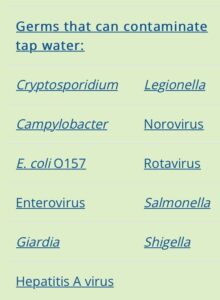
    Germs That Can Contaminate Tap Water

    “Distribution systems are usually under enough pressure so that any cracks let clean water out (at a cost to taxpayers), but prevent dirty water from getting in. When water mains break, however, system pressure drops—and those cracks allow contaminants like viruses to seep in. Water main breaks are thus a key vulnerability that promote waterborne disease.”**

    Read Background:

    Boil water advisory has been issued in Loveland

    Below is what the CDC (Centers for Disease Control) recommends when a boil water notice is issued to residents or food service facilities.

    _________________________

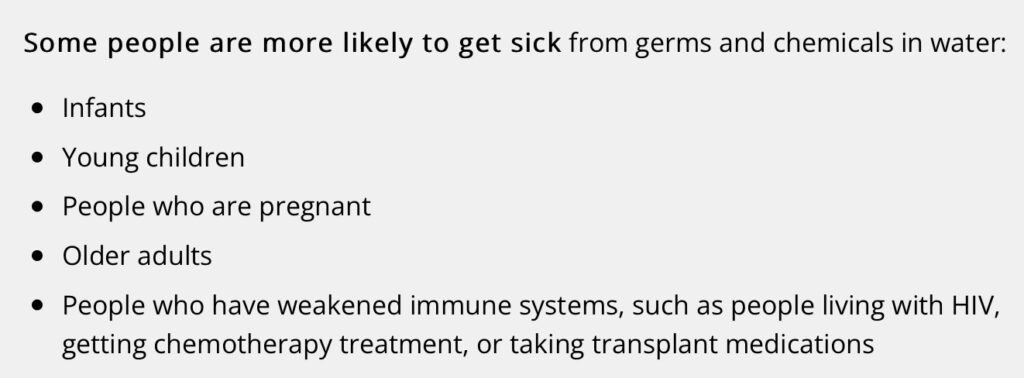
    Drinking water advisories let people know that tap water could be contaminated and make them sick. Advisories tell people, schools, hospitals, businesses, and others about the situation and how to take immediate action, if necessary. Water systems and state or local agencies issue these advisories when they have concerns about water contamination.

    Boil Water Advisory for Residences

    Water Boiling on a Gas Stove, stainless pot.

    If your local health officials issue a boil water advisory, you should use bottled water or boil tap water. This is because a boil water advisory means your community’s water has, or could have, germs that can make you sick.

    Advisories may include information about preparing food, drinks, or ice; dishwashing; and hygiene, such as brushing teeth and bathing. Boil water advisories usually include this advice:

    • Use bottled or boiled water for drinking, and to prepare and cook food.
    • If bottled water is not available, bring water to a full rolling boil for 1 minute (at elevations above 6,500 feet, boil for 3 minutes). After boiling, allow the water to cool before use.
    • Boil tap water even if it is filtered (for example, by a home water filter or a pitcher that filters water).
    • Do not use water from any appliance connected to your water line, such as ice and water from a refrigerator.
    • Breastfeeding is the best infant feeding option. If you formula feed your child, provide ready-to-use formula, if possible.

    Handwashing

    • In many cases, you can use tap water and soap to wash hands during a boil water advisory. Follow the guidance from your local public health officials.
    • Be sure to scrub your hands with soap and water for at least 20 seconds. Then, rinse them well under running water.
    • If soap and water are not available, use an alcohol-based hand sanitizer that contains at least 60% alcohol.

    Bathing and showering

    • Be careful not to swallow any water when bathing or showering.
    • Use caution when bathing babies and young children. Consider giving them a sponge bath to reduce the chance of them swallowing water.

    Brushing teeth

    • Brush teeth with boiled or bottled water. Do not use tap water that you have not boiled first.

    Washing dishes

    • If possible, use disposable plates, cups, and utensils during a boil water advisory.
    • Household dishwashers generally are safe to use if:
      • The water reaches a final rinse temperature of at least 150 degrees Fahrenheit (66°Celsius), or
      • The dishwater has a sanitizing cycle.
    • Sanitize all baby bottles.
    • To wash dishes by hand:
      • Wash and rinse the dishes as you normally would using hot water.
      • In a separate basin, add 1 teaspoon of unscented household liquid bleach for each gallon of warm water.
      • Soak the rinsed dishes in the water for at least one minute.
      • Let the dishes air dry completely before using again.

    Laundry

    • It is safe to wash clothes as usual.

    Cleaning

    • Clean washable toys and surfaces with:

    Caring for pets

    • Pets can get sick from some of the same germs as people or spread germs to people. Give pets bottled water or boiled water that has cooled.
    • If bottled water is not available, bring water to a full rolling boil for 1 minute (at elevations above 6,500 feet, boil for 3 minutes). After boiling, allow the water to cool before use.
    • Boil tap water even if it is filtered (for example, by a home water filter or a pitcher that filters water).
    • Do not use water from any appliance connected to your water line, such as ice and water from a refrigerator.

    Caring for your garden and houseplants

    • You can use tap water for household plants and gardens.
    More Information

    Guidelines for Food Service Facilities During and After a Boil Water Advisory

    During a Boil Water Advisory

    When a boil water advisory is issued that affects a food service establishment and the local health department does not indicate that food service establishments must close, the following precautions should be taken by food service facilities until they are notified by authorities that the advisory has ended.

    General

    • Post signs or copies of the water system’s health advisory.
    • Develop a plan to notify and educate employees about emergency procedures.
      Food Preparation
    • Shut off appliances that use tap water, such as ice machines, drinking fountains, produce misters, bottled water refill machines, soft drink fountains connected to the water supply, and water dipper wells.
    • Discard ice and mixed beverages made with contaminated water.
    • Use packaged ice from approved sources.
    • Use bottled water, boiled water, or water that has been disinfected with bleach for drinking, food preparation, washing produce and cooking.
    • If possible, use disposable plates, cups, and utensils. Hygiene and Cleaning
    • Wash hands with soap and tap water. When you are done washing and drying your hands, use an alcohol based hand-sanitizer and let hands air dry.
    • Commercial dishwashers generally are safe to use if the water reaches a final rinse temperature of at least 165°F–180°F, as determined by your local or state authorities.
    • If you are not able to use disposable plates, cups, and utensils and do not have a dishwasher, wash dishes by hand following these instructions:
    • Wash and rinse the dishes as you normally would using hot water.
      In a separate basin, add 1 teaspoon of unscented household bleach for each gallon of warm water.
      The bleach label should say that it contains 5–9% of sodium hypochlorite. Soak the rinsed dishes in the water for at least 1minute. Let the dishes air dry completely before using again.
    • The local health department may add requirements to protect public health during the boil water advisory, such as modifying food preparation, prohibiting menu items or closing operations. Consult with [health department contact] for specific requirements.

    After the Boil Water Advisory is lifted

    When a food service establishment is notified that the boil water advisory has been lifted and the drinking water supply is safe, the following actions need to be taken.

    • Flush pipes throughout the facility by running each faucet with cold water for [X] minutes.
    • Flush, clean, and sanitize appliances that use tap water (such as beverage dispensers, spray misters, coffee and tea urns, ice machines, glass washers, dishwashers) according to the manufacturer’s instructions.
    • Run water softeners through a regeneration cycle.
    • Flush hot water tanks.
    • Run drinking fountains continuously for [X] minutes to flush the system.
    • Replace and sanitize water filter cartridges according to the manufacturer’s instructions.
    • Take proper steps to flush ice machines by following the manufacturer’s instructions, including:
      • Throw out any remaining ice.
      • Flush the waterline to the machine inlet.
      • Close the valve on the waterline behind the machine.
      • Disconnect the waterline from the machine inlet.
      • Open the valve and run 5 gallons of water through the valve. Dispose of the water.
      • Close the valve.

    ___________________________

    * Impact of Water Main Breaks on Drinking Water for Food & Beverage Establishments

    * Negative Consequences for Public Health

  • City Hall calls two public hearings

    City Hall calls two public hearings

    Loveland, Ohio – City Hall has invited interested parties to attend two public hearings.

    The first is on April 25 and it is about Flood Damage Prevention Regulations. The second hearing is about new proposed Outdoor Lighting Regulations and is on May 9.

    To learn more follow these links:

    CHAPTER 554: OUTDOOR LIGHTING REGULATIONS

    Flood Damage Prevention Regulations

    Both hearings are at Loveland City Hall, 120 West Loveland Avenue at 7 PM.

  • Ohio SOS gives yet another reason to make it a lot harder for voters to amend Constitution

    Ohio SOS gives yet another reason to make it a lot harder for voters to amend Constitution

    [vc_row][vc_column][vc_column_text]

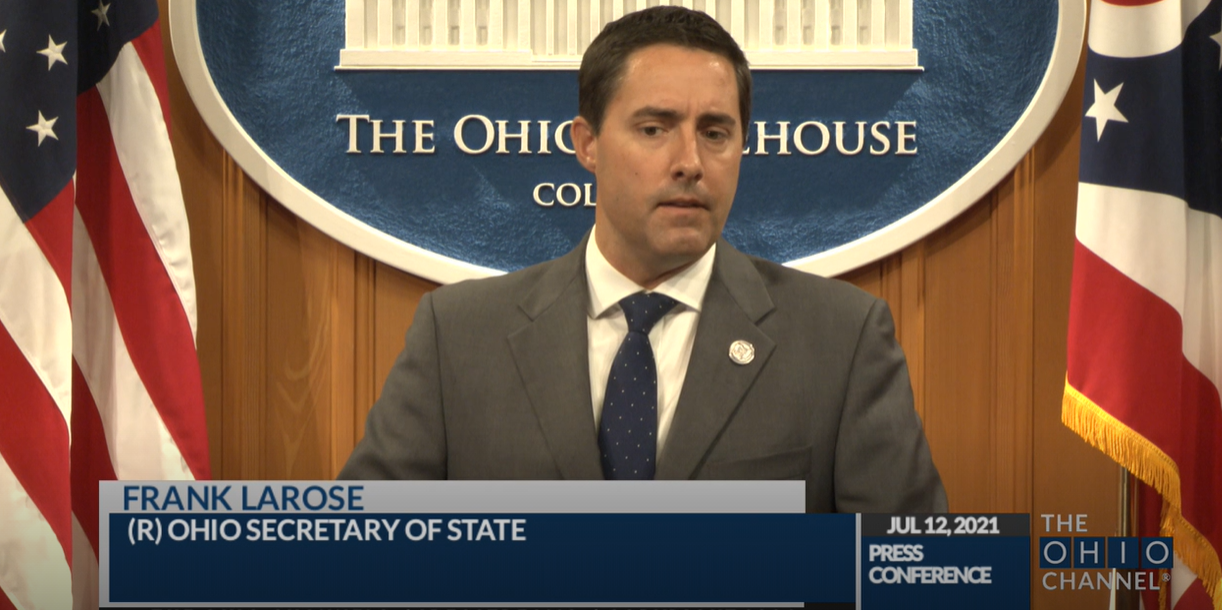
    Secretary of State Frank LaRose announces the referral of 117 cases of alleged voting and voter registration fraud stemming from the 2020 elections. Photo courtesy The Ohio Channel.

    BY:  Ohio Capital Journal

    Ohio Secretary of State Frank LaRose on Wednesday offered another rationale for making it much more difficult for voters to amend the Ohio Constitution. Now he’s saying it’s needed to fight a possible power grab like one that grew out of a massive bribery and money-laundering scandal.

    But LaRose didn’t mention in his op-ed that his name came up repeatedly in a criminal trial related to the scandal and that he appeared to be in close communication with some of its central figures.

    Nor did his office respond when asked whether LaRose ever spoke out against the corrupt utility bailout before the FBI started arresting people in July 2020.

    Slippery explanations

    The secretary of state — who is said to be eyeing a run for U.S. Senate next year — has been pushing to increase the portion of votes needed for a citizen-initiated amendment from 50% to 60%. As he and his allies have, they’ve given a shifting set of reasons for why that’s needed.

    Last November, during a lame-duck session of the legislature, LaRose and state Rep. Brian Stewart, R-Ashville, held a press conference saying that the change was necessary to prevent wanton amendments to the Ohio Constitution by monied special interests. But they didn’t point to any examples of how that had happened in the past.

    Many suspected an ulterior motive.

    LaRose sat on a Republican-dominated redistricting commission that last year ignored seven Ohio Supreme Court rulings saying that the legislative and congressional maps the commission produced violated anti-gerrymandering amendments overwhelmingly approved by Ohio voters. That prompted Maureen O’Connor, the outgoing Republican chief justice, to urge Ohioans to pass new, more-tightly written amendments this year.

    Ohio was also roiled when a highly restrictive abortion law took effect last June just after the U.S. Supreme Court overturned Roe v. Wade and horror stories poured out of abortion clinics and hospitals. An effort quickly started to get an amendment on the ballot protecting abortion rights after other protections easily passed in other states.

    But at last year’s presser, LaRose denied that his goal was to block anti-gerrymandering or abortion-rights amendments. The constitutional change he was advocating was a long-term, fundamental one that he didn’t seek to block such short-term disputes, he claimed.

    Just weeks later, however, Stewart, LaRose’s sidekick at the presser, sent a letter to his GOP colleagues in the House explaining the real reasons for making it harder for Ohioans to amend their constitution: to stop abortion-rights and anti-gerrymandering amendments that appear to be favored by strong majorities of Ohioans.


    [/vc_column_text][vc_raw_html]JTNDYmxvY2txdW90ZSUyMGNsYXNzJTNEJTIydHdpdHRlci10d2VldCUyMiUzRSUzQ3AlMjBsYW5nJTNEJTIyZW4lMjIlMjBkaXIlM0QlMjJsdHIlMjIlM0VIZXJlJTI2JTIzMzklM0JzJTIwdGhlJTIwZnVsbCUyMGxldHRlci4lMjBJdCUyMGFsc28lMjB0aWVzJTIwdGhlJTIwaXNzdWUlMjB0byUyMHJlZGlzdHJpY3RpbmclMjByZWZvcm0lMkMlMjBhbmQlMjByZXNwb25kcyUyMHRvJTIwdGhlJTIwb3JnYW5pemVkJTIwbGFib3IlMjBncm91cHMlMjB0aGF0JTIwcmFsbGllZCUyMGF0JTIwdGhlJTIwT2hpbyUyMFN0YXRlaG91c2UlMjB5ZXN0ZXJkYXkuJTIwJTNDYSUyMGhyZWYlM0QlMjJodHRwcyUzQSUyRiUyRnQuY28lMkZpbGhXTFBpV00wJTIyJTNFcGljLnR3aXR0ZXIuY29tJTJGaWxoV0xQaVdNMCUzQyUyRmElM0UlM0MlMkZwJTNFJTI2bWRhc2glM0IlMjBBbmRyZXclMjBUb2JpYXMlMjAlMjglNDBBbmRyZXdKVG9iaWFzJTI5JTIwJTNDYSUyMGhyZWYlM0QlMjJodHRwcyUzQSUyRiUyRnR3aXR0ZXIuY29tJTJGQW5kcmV3SlRvYmlhcyUyRnN0YXR1cyUyRjE2MDMxMzAzODQ3NDQ1MzQwMTYlM0ZyZWZfc3JjJTNEdHdzcmMlMjU1RXRmdyUyMiUzRURlY2VtYmVyJTIwMTQlMkMlMjAyMDIyJTNDJTJGYSUzRSUzQyUyRmJsb2NrcXVvdGUlM0UlMjAlM0NzY3JpcHQlMjBhc3luYyUyMHNyYyUzRCUyMmh0dHBzJTNBJTJGJTJGcGxhdGZvcm0udHdpdHRlci5jb20lMkZ3aWRnZXRzLmpzJTIyJTIwY2hhcnNldCUzRCUyMnV0Zi04JTIyJTNFJTNDJTJGc2NyaXB0JTNF[/vc_raw_html][vc_column_text]The attempt to rush a bill through lame duck last year failed.

    Now Stewart, LaRose and their allies are trying to pass it through Ohio’s now-unconstitutionally gerrymandered legislature. If it passes, it would put the measure requiring 60% of the vote to amend the state constitution on the ballot. And, since the vote would be under the existing rules, it would require just 50% of the vote to pass.

    Also on the pile of accusations that it’s a naked power grab is that LaRose, Stewart and their allies want to put the measure on the ballot in a low-turnout August election. They’re doing so just months after passing a bill that had LaRose’s support to eliminate such elections as costly and unnecessary — and three months before the abortion amendment is expected to hit the ballot.

    A new reason

    While he’s being accused of attempting a power grab, LaRose says he’s trying to stop them.

    On Tuesday, The Columbus Dispatch published an op-ed in which he furnished yet another reason to make it harder for voters to change the state Constitution. He cited an attempt by former House Speaker Larry Householder to pass an amendment changing the state’s term limits so Householder could stay speaker for another 16 years.

    It was part of a breathtaking scheme in which Householder and his allies took more than $61 million from Akron-based FirstEnergy and other utilities, used the money to make him speaker in January 2019, and then pass and protect a $1.3 billion ratepayer bailout that mostly went to FirstEnergy.

    Fresh off the passage of the bailout, Householder raised millions in early 2020 from FirstEnergy and AEP for his scheme that would allow him to stay longer in office. But it died with his arrest that July.

    It might seem ironic that LaRose would use a corruption scandal to gut a 1912 reform measure that was aimed at curbing corrupt, unresponsive government, but that’s what he argued. He said all it takes to change the Constitution now “is a well-funded, dishonest political campaign and a simple majority vote.”

    LaRose added that Householder planned to call his tenure-extension scheme “Ohioans for Legislative Term Limits, a deceptive name for a constitutional amendment that would more than double his term in office. It should come as no surprise that FirstEnergy Corporation, the company at the center of Householder’s racketeering scandal, agreed to bankroll the amendment campaign.”

    Significant omissions

    While he accused his opponents of “hysterical hyperbole” as he tries to make it 20% harder for voters to succeed in the already difficult process to amend the Ohio Constitution, there were some important things LaRose didn’t say in his Op-Ed.

    For starters, FirstEnergy didn’t only bankroll Householder in 2018 as the now-convicted former speaker elected a team of lieutenants who would hand him the speaker’s gavel. The utility also bankrolled LaRose to the tune of $25,000 that year as he ran for secretary of state.

    It was part of nearly $50,000 that the energy company — which signed a deferred prosecution agreement in the Householder scandal — has given LaRose, the campaign-finance tracker FollowTheMoney.org reports.

    And while LaRose is decrying the bailout now that there have been arrests and convictions, there was reason to know there was something wrong with it well before they took place.

    Insiders knew that somebody was burying Capitol Square in cash throughout the 2019 passage of House Bill 6, the corrupt utility bailout. That was especially true as FirstEnergy dumped what the FBI later determined was $36 million into a blatantly-dishonest-but-successful fight to beat back a repeal.

    Because the funds were non-disclosable 501(c)(4) dark money, it was impossible for the public to know exactly where they were coming from until the feds stepped in and used subpoenas and other special powers to find out.

    But HB 6 was such bad legislation and the campaign to stop the repeal so over-the-top that there was plenty of reason to suspect that somebody was being bought off to pass it. It was a massive corporate bailout that Householder and others were trying to officially declare a tax. Republican lawmakers who didn’t want to cast such a damaging vote described withering pressure from House leadership.

    Former friends

    LaRose’s office didn’t answer Wednesday when asked if the secretary of state ever spoke out against HB 6 before the FBI started making arrests.

    In the Cincinnati corruption trial that ran from late January to mid-March, federal prosecutors presented several communications to the jury that might indicate that LaRose was actually sympathetic to the effort to pass and protect the corrupt bailout.

    On July 23, 2019, as the repeal effort got underway, text messages flew between two prominent figures in the scandal: Matt Borges, the former Ohio Republican Party chairman who was convicted along with Householder; and Juan Cespedes, a lobbyist who pleaded guilty and cooperated with prosecutors.

    Borges told Cespedes he had received “a message from the secretary of state on the ballot-measure issue.”

    The men were hoping for help from LaRose. He’s chairman of the Ohio Ballot Board, which, along with Attorney General Dave Yost, has to approve the language of constitutional amendments before they’re circulated for the hundreds of thousands of needed voter signatures — and before they’re placed on the ballot.

    In the case of the HB 6 repeal, Yost initially sent the language back for revisions, then he and the ballot board approved it. But that wasn’t before the original 90 days opponents had to gather the signatures was whittled down to 53.

    In the end, time ran out before opponents could gather them. But at the beginning of the effort, Borges seemed to be talking to LaRose about what LaRose needed in exchange for his help.

    “LaRose is expecting us to be publicly supportive of him,” Borges said. “Apparently petitioners (for the repeal of HB 6) are going to call on him to step down from the ballot board because of ‘conflicts.’ He can be our friend in this process, so let’s be prepared to speak for him.”

    Continuing communication

    Later in the repeal fight, FirstEnergy’s two top executives discussed asking LaRose’s help with Yost. In addition to hamstringing the petition effort, supporters of the corrupt bailout wanted to have it officially declared a tax, and thus legally exempt from repeal.

    “I’ve been asked by (subsidiary FirstEnergy Solutions) to call Frank LaRose to get Frank to call Dave Yost,” Vice President Michael Dowling texted CEO Chuck Jones, according to messages put into evidence by prosecutors. “If Frank tells Yost that he believes HB 6 is a tax, Yost will come out publicly and say it, which (FirstEnergy Solutions) thinks helps with the Supreme Court. Frank is reluctant to make the call. I have a call in to Frank and I will ask him to do it.”

    LaRose may have been reluctant about making that call. But he apparently wasn’t reluctant to keep talking to the people who funded the scandal he’s now condemning and using as a reason to make it harder for voters to amend the Ohio Constitution.

    In October 2019 — shortly before the repeal effort failed — Jones sent a text to John Kiani, the chairman of the FirstEnergy subsidiary that was to receive $1 billion of the bailout. It indicated that both LaRose and Householder had been providing the FirstEnergy CEO with “private” information on the repeal effort.

    “For what it’s worth, LaRose and Householder think it’s game over,” Jones told Kiani. “But that is a private conversation unless they’ve told you the same thing. And Householder has a ‘quick fix’ anyway.”

    And then in November 2019 — just after the repeal failed — other messages indicated that LaRose wanted to cement a relationship with Kiani, the hard-charging former Enron executive whom Cespedes testified stood to make $100 million off the sale of FirstEnergy’s bailed-out nuclear and coal plants.

    Borges texted Cespedes that LaRose, “told me he wants to get to know Kiani, and I said, ‘Are you sure about that?’”

    Cespedes replied, “He will live to regret that.”[/vc_column_text][/vc_column][/vc_row]

    ____________________________________

    MARTY SCHLADEN

    Marty Schladen has been a reporter for decades, working in Indiana, Texas and other places before returning to his native Ohio to work at The Columbus Dispatch in 2017. He’s won state and national journalism awards for investigations into utility regulation, public corruption, the environment, prescription drug spending and other matters.

    MORE FROM AUTHOR

  • Loveland Goodwill reopens soon

    Loveland Goodwill reopens soon

    [vc_row][vc_column][vc_column_text]Loveland, Ohio – Although she could not give a definitive reopening date, the Ohio Valley Goodwill store in Loveland may open it’s doors again in the next few weeks said Sharon Hannon the marketing director. “Maybe next week, fingers crossed.”

    There is a construction meeting today.

    Hannon said customers should see noticeable improvements as they virtually “gutted” the interior. New lighting is being installed, fresh paint and interior graphics, new restrooms, five new changing rooms, and a new office. The drive-thru donation center has received much attention also. Top to bottom with newly painted ceilings throughout the entire store.

    Ohio Valley Goodwill Industries has described it as their “Flagship Design, and the Loveland location will feature Goodwill’s new “signature colors.” Construction delays affecting most commercial construction projects set back their anticipated March reopening, however, the “retail elves” are busy restocking the shelves.

    “Bells and whistles” are promised for the reopening day with giveaways and sales coupons.

    Here is a sneak peek of what customers can expect…[/vc_column_text][vc_raw_html]JTNDaWZyYW1lJTIwc3JjJTNEJTIyaHR0cHMlM0ElMkYlMkZ3d3cuZmFjZWJvb2suY29tJTJGcGx1Z2lucyUyRnZpZGVvLnBocCUzRmhlaWdodCUzRDQ3NiUyNmhyZWYlM0RodHRwcyUyNTNBJTI1MkYlMjUyRnd3dy5mYWNlYm9vay5jb20lMjUyRmNpbmNpZ29vZHdpbGwlMjUyRnZpZGVvcyUyNTJGMzUwMTUxOTAxMzQxNjA1NyUyNTJGJTI2c2hvd190ZXh0JTNEdHJ1ZSUyNndpZHRoJTNEMjY3JTI2dCUzRDAlMjIlMjB3aWR0aCUzRCUyMjI2NyUyMiUyMGhlaWdodCUzRCUyMjU5MSUyMiUyMHN0eWxlJTNEJTIyYm9yZGVyJTNBbm9uZSUzQm92ZXJmbG93JTNBaGlkZGVuJTIyJTIwc2Nyb2xsaW5nJTNEJTIybm8lMjIlMjBmcmFtZWJvcmRlciUzRCUyMjAlMjIlMjBhbGxvd2Z1bGxzY3JlZW4lM0QlMjJ0cnVlJTIyJTIwYWxsb3clM0QlMjJhdXRvcGxheSUzQiUyMGNsaXBib2FyZC13cml0ZSUzQiUyMGVuY3J5cHRlZC1tZWRpYSUzQiUyMHBpY3R1cmUtaW4tcGljdHVyZSUzQiUyMHdlYi1zaGFyZSUyMiUyMGFsbG93RnVsbFNjcmVlbiUzRCUyMnRydWUlMjIlM0UlM0MlMkZpZnJhbWUlM0U=[/vc_raw_html][vc_gmaps link=”#E-8_JTNDaWZyYW1lJTIwc3JjJTNEJTIyaHR0cHMlM0ElMkYlMkZ3d3cuZ29vZ2xlLmNvbSUyRm1hcHMlMkZlbWJlZCUzRnBiJTNEJTIxMW0xOCUyMTFtMTIlMjExbTMlMjExZDMwODguOTU4MDUxNjIwMDg1JTIxMmQtODQuMjcwMjAxMDI0MzE3MDclMjEzZDM5LjI2NjUxODM3MTY0NzU2JTIxMm0zJTIxMWYwJTIxMmYwJTIxM2YwJTIxM20yJTIxMWkxMDI0JTIxMmk3NjglMjE0ZjEzLjElMjEzbTMlMjExbTIlMjExczB4ODg0MGY4YWJjMDA1ZmMwZCUyNTNBMHg2ZTIzODRhY2IwNzBkMzAlMjEyc0xvdmVsYW5kJTI1MjBHb29kd2lsbCUyNTIwU3RvcmUlMjE1ZTAlMjEzbTIlMjExc2VuJTIxMnN1cyUyMTR2MTY4MTQ4NDYyODA0NiUyMTVtMiUyMTFzZW4lMjEyc3VzJTIyJTIwd2lkdGglM0QlMjI2MDAlMjIlMjBoZWlnaHQlM0QlMjI0NTAlMjIlMjBzdHlsZSUzRCUyMmJvcmRlciUzQTAlM0IlMjIlMjBhbGxvd2Z1bGxzY3JlZW4lM0QlMjIlMjIlMjBsb2FkaW5nJTNEJTIybGF6eSUyMiUyMHJlZmVycmVycG9saWN5JTNEJTIybm8tcmVmZXJyZXItd2hlbi1kb3duZ3JhZGUlMjIlM0UlM0MlMkZpZnJhbWUlM0U=”][/vc_column][/vc_row]

  • Ohioans can still use abortion drug mifepristone, but that could change

    Ohioans can still use abortion drug mifepristone, but that could change

    Loveland, Ohio and Columbus
    Since Roe v Wade was overturned last summer, abortion medication has been under fire as the abortion drug mifepristone is the subject of a federal lawsuit and some states are attempting to restrict access by threatening legal action against retail pharmacies and suppliers of the drug. (Adobe Stock).

    BY:  Ohio Capital Journal

    An abortion drug remains legal in Ohio at the moment, but the legality of mifepristone hangs in the balance after a Texas federal judge suspended the Food and Drug Administration’s approval of mifepristone last week.

    Trump-appointed U.S. District Judge Matthew Kacsmaryk stopped the FDA’s approval of mifepristone, the first in a two-drug regimen of mifepristone and misoprostol taken 24 to 48 hours apart to terminate a pregnancy. The FDA first approved the two-drug regimen in 2000.

    “This is a very direct and targeted attack on a very specific drug for a very specific reason,”said Planned Parenthood of Greater Ohio Public Policy Director Danielle Firsich.

    Mifepristone was used for 9,891 abortions in Ohio in 2021, according to the Ohio Department of Health. The drug was used the most in Franklin County (2,806), Summit County (2,008), and Cuyahoga County (1,643).

    Mifepristone and misoprostol

    There is an alternative regimen for patients who wish to have a medication abortion that involves just the abortion drug misoprostol.

    “It’s still a safe and effective regimen, it’s just not as patient-convenient or patient-centric as the current regimen,” said Planned Parenthood of Greater Ohio’s Chief Medical Officer Dr. Adarsh E. Krishen.

    The mifepristone and misoprostol regimen gives patients more predictability with regard to when a pregnancy is going to end, he said.

    “With the misoprostol regimen, there’s more variation in terms of the timing of when that pregnancy may end, as well as there’s prolonged bleeding after the use of the medication,” Krishen said. “If you are a person who needs to work or do other things in your life, it will be much more complicated and complex for you.”

    With the misoprostol-only regimen, bleeding can last up to one to two weeks after taking the medication, the pain lasts longer, and patients tend to be more nauseous, Krishen said.

    Bleeding stops within a few days, or sooner, with the mifepristone and misoprostol regimen, Krishen said.

    Cramping occurs with both regimens, he said.

    “If you are someone who is seeking abortion care or miscarriage … you will be able to continue to receive the same kind of care with the misoprostol only option,” Firsich said. “The only difference is the frustration, the chaos, and the confusion that decisions like these make.”

    She said decisions like these make patients more hesitant to access abortion care and not understand the rights they have to care.

    “It may make physicians more hesitant to provide certain types of care because they are afraid they may be doing something illegal or something they don’t have the authority to do now because of variations in state, local and federal laws,” Firsich said.

    The Texas federal judge is not targeting misoprostol.

    “(Misoprostol) has many other medical applications far outside of abortion care, so it would be very difficult to target misoprostol in the same way they are mifepristone,” Firsich said.

    Fifth Circuit Court of Appeals

    The United States Department of Justice filed an emergency stay motion with the Fifth Circuit Court of Appeals and is asking the 5th Circuit to respond to its request for a stay by noon on Thursday. Kacsmaryk’s ruling would take effect Friday unless the 5th Circuit puts it on hold.

    “This is notoriously the most conservative appellate court in the country,” Firsich said.

    She believes this ruling will eventually go to the United States Supreme Court.

    Within hours of the Texas ruling on Friday, U.S. District Judge Thomas Rice, ruled mifepristone should continue to be available in 17 states and the District of Columbia. Ohio is not one of those 17 states.

    What Ohio lawmakers, Ohio Right to Life is saying

    Ohio House Minority Leader Allison Russo, D-Upper Arlington, condemned the Texas federal judge’s ruling.

    “The FDA, a trusted federal agency, has determined it is safe for women to use this medication for their health care,” Russo said. “As lawmakers, we should ensure our policies reflect the expertise of trusted medical professionals.”

    State Rep. Beth Liston, D-Dublin, said mifepristone has been proven safe and effective.

    “A woman’s medical decisions should be left between herself and a medical professional. Not a judge in Texas,” said Liston, who has a medical degree.

    State Rep. Anita Somani, D-Dublin, said maternal mortality will increase by taking away access to mifepristone.

    “This ruling opens up the door to other medications like contraception becoming politicized and taken off the market. It is a dangerous precedent and hurts the FDA’s ability to do their job in a nonpolitical fashion,” said Somani, who is an OBGYN at OhioHealth.

    Firsich shares those fears and said “this could lead to an incredible dangerous slippery slope.”

    Ohio Right to Life is praising Kacsmaryk’s ruling.

    “As a young woman carrying a child, I look forward to the day when such rulings are no longer necessary—declaring whether or not human life deserves to be protected,” Ohio Right to Life’s spokesperson Elizabeth Marbach said in a statement.

    Abortion is currently legal in Ohio up to 22 weeks.

    Follow OCJ Reporter Megan Henry on Twitter.

    •••••••••••••••••••••••••••••••••••••

    MEGAN HENRY

    Megan is a reporter for the Ohio Capital Journal.

    MORE FROM AUTHOR


  • Ohio School Safety Center announces keynote speakers for the 2023 Ohio School Safety Summit

    Ohio School Safety Center announces keynote speakers for the 2023 Ohio School Safety Summit

    Registration coming soon!

    Tuesday, July 25, 9 a.m. 

    Dr. Dewey Cornell, Professor at the University of Virginia and developer of the Comprehensive School Threat Assessment Guidelines, (CSTAG), will present on School Threat Assessment as a Safe Fair, and Effective Practice in Ohio Schools, which will describe how to implement best practices and resolve student threats, while maintaining a fair and equitable manner.


    Tuesday, July 25, 2 p.m.

    Dr. Amanda Nickerson, Professor and Director of the Alberti Center for Bullying Abuse Prevention at the University at Buffalo, the State University of New York, will speak about Bullying Prevention and Intervention, including solutions, strategies, and resources to promote a safe school climate.


    Wednesday, July 26, 9 a.m.

    Sgt. William Chapman, a member of the Newtown, Conn. police department, uses his experiences as a Sandy Hook first responder and School Resource Officer to help school districts and law enforcement to develop best practices and will present on Navigating the Unthinkable: A First Responder’s Perspective.


    Wednesday, July 26, 2:45 p.m.

    Dr. Scott Poland, Professor and Director of the Suicide and Violence Prevention Office at Nova Southeastern University, will discuss School Crisis and Liability, including issues involving obtaining parental consent, failure to notify parents, and legal consequences of inadequate threat assessments in schools.


    •••••••••••••••••••••••••••••••••••••

    CONTACT

    The MISSION of the Ohio School Safety Center (OSSC) is to support all Ohio schools and first responders in preventing, preparing for, and responding to threats and acts of violence, including self-harm, through a holistic, solutions-based approach to improving school safety. Using a cross-disciplinary approach, the OSSC will provide resources to schools to enhance their strategies for safety, security, and emergency plan development.

    Our goal is total commitment in supporting all schools in ensuring the safety of students, employees, and visitors through effective policies and procedures, training, and community and interagency involvement.

    There are four main components to our goal:

    • Prevention/Mitigation: Schools can take action to increase the safety and wellbeing of their staff and students. To create a safe and supportive learning environment, schools may institute policies, positive behavior intervention supports, and prevention programs to improve the culture and climate of their building.
    • Preparedness: School leaders should be equipped with all the vital resources, information, and expectations to create a comprehensive safety plan and response protocols for any emergency situation, including natural disasters, violent incidents, and terrorist acts – before, during, and after the event.
    • Response: Assisting schools with the development of their all-hazards response plan is a key element of our goal. Safety and well-being in an emergency depends on how prepared students and staff are and on how everyone responds to a crisis. By being able to act responsibly and safely, school administrators will be able to protect students, staff and facilities. Our office will strive towards ensuring updates on school safety regulations, directives, policy, and deadlines will be communicated on a regular basis so schools can revise and implement the most current criterion and respond accordingly.
    • Recovery: The primary objective of recovery is to provide a caring and supportive school environment so that staff and students can return to teaching and learning as quickly as possible. Creating a system of supports with community social service agencies and local first responders can reinforce the cycle of safety planning and restore the social, emotional and environmental needs of students and staff.
  • Calling all ladies to the Chamber’s LinkedUp Loveland

    Calling all ladies to the Chamber’s LinkedUp Loveland

    Loveland, Ohio – Calling all the ladies! Join us for LinkedUp Loveland on April 26 featuring a wonderful lineup of panelists. Lunch, networking, and professional development!

    Ladies, Join Us this Spring
    Connect with local women, resources and friends

    Join other business women from the greater Loveland area in a friendly networking atmosphere that will focus on personal and professional growth. 

    Our Spring 2023 Panel will feature local women leaders in business:

    “Finding your Personal Brand”
    “How to Maximize Social Media for Your Business”
    “Women’s Professionalism: Putting Your Best Self First”
    Panelists are:

    Tammy Vilaboy, Tat2Marketing

    Meshell Giblin, BusinessDNA Group

    Mary Starvaggi, The Etiquette Advantage

    AGENDA:

    11:15-11:30 a.m.: Registration & Open Networking

    11:30 a.m.: Welcome

    11:45 a.m.: Lunch and panel begins

    1:00 p.m.: closing

    This event is presented by:

    Promoted Post
  • Ohio tax breaks adding up, watchdog says

    Ohio tax breaks adding up, watchdog says

    Loveland, Ohio, and Columbus

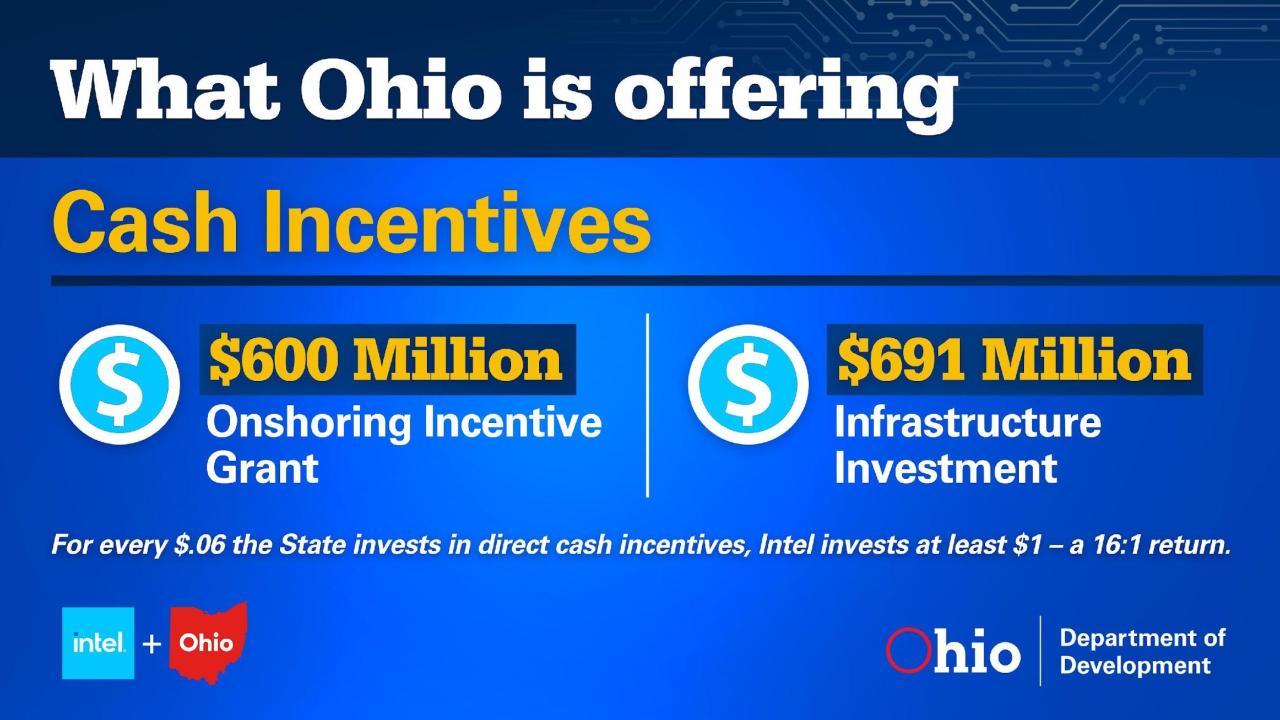
    Part of the incentive package offered to Intel by the state of Ohio. (Screenshot from Ohio Dept. of Development presentation)

    BY:  Ohio Capital Journal

    A new analysis says that 15 new tax breaks — many benefiting wealthy people and corporations — are coming online in Ohio.

    That will swell the total cost of tax breaks in the state to $11 billion a year, equal to 37% of the state’s annual revenue, the report by Policy Matters Ohio said.

    The new breaks will cost the state an additional $450 million a year as the state has ended a process to review the worthiness of its tax breaks, the report said.

    “Tax breaks are ballooning with little oversight,” Zach Schiller, Policy Matters’ research director, said in a written statement. “The General Assembly should restore a tax expenditure review committee, eliminated in the state budget two years ago, and rein in unproductive tax breaks that reinforce inequality in our state.”

    A big portion of the new tax breaks will go to Intel as part of a $2 billion incentive package in exchange for an investment of at least $20 billion to build a chip plant in New Albany and create at least 3,000 jobs. The new jobs are good news for Ohio, but some economic research indicates that in all but a fraction of cases, businesses would make the same location or expansion decisions regardless of the tax incentives they’re given.

    Meanwhile, the poorest Ohioans shoulder a disproportionate share of the state and local tax burden and House Republicans are proposing to make that burden heavier with House Bill 1, which would flatten that state income tax.

    The Policy Matters report said too many Ohio tax breaks favor people and corporations that need them the least.

    “While some tax breaks are well-directed, such as the Earned Income Tax Credit, which provides needed aid to low and moderate-income working families, a host of them should be repealed or cut back,” it said. “The business income deduction, also known as the LLC loophole, disproportionately rewards a small number of high-income individuals and costs an estimated $1 billion a year with negligible economic impact. Owners of data centers such as Facebook, Amazon and Google are receiving a sales-tax exemption worth more than $250 million over two years, though these facilities employ few workers.”

    The report also called out huge tax breaks to drug wholesalers Cardinal Health, McKesson and AmeriSource Bergen. The companies got those breaks even as the state sued them over claims that they fed and profited from Ohio’s opioid epidemic.

    “Suppliers to big drug distributors including Cardinal Health don’t have to pay much or any Commercial Activity Tax, though this was exposed as a tax dodge by the Kasich Administration’s budget director six years ago,” the report said. “Big retailers like Wal-Mart and Target are profiting from the discount on sales tax they collect, as then-taxation department commissioner Joe Testa testified years ago.”

    The report also called on lawmakers to resume evaluations of how effective tax breaks are at achieving their stated purpose. While many of Ohio’s tax breaks have been sold as job creators, the Buckeye State had the third-worst job growth of any state between February 2022 and February 2023, according to the U.S. Bureau of Labor Statistics.

    “Some tax breaks, such as Governor (Mike) DeWine’s proposed low-income housing tax credit, can be beneficial,” Schiller said. “But the General Assembly should set up a mechanism to rigorously scrutinize the tax breaks we have and cut back on unproductive exemptions and deductions that are proliferating in our tax code.”

    ___________________________

    MARTY SCHLADEN

    Marty Schladen has been a reporter for decades, working in Indiana, Texas and other places before returning to his native Ohio to work at The Columbus Dispatch in 2017. He’s won state and national journalism awards for investigations into utility regulation, public corruption, the environment, prescription drug spending and other matters.

    MORE FROM AUTHOR

    ___________________________

  • Cincinnati Enquirer selling semi-auto handguns and “Assault” rifles

    Cincinnati Enquirer selling semi-auto handguns and “Assault” rifles

    Clippings of recent advertisements found in The Cincinnati Enquirer and delivered to local doorsteps.

    Loveland. Ohio – Last Sunday on Mother’s Day, the Cincinnati Enquirer delivered to doorsteps these reports and commentary about gun violence.


    And this advertisement from a local gun dealer.

    Christmas Presents

    Enquirer advertisements from November 24, 2022, urging customers to buy semi-auto handguns, semi-auto shotguns, semi-auto “Assault” rifles, high-capacity 40-round magazines, and high-velocity “NATO” ammo developed for military and police.