High school sophomores: Ready to apply for fall 2022? Click here for the application! Apply by February 8 for priority consideration!
In the late 1960s and early 1970s, there was growing concern too many young people were not prepared to enter the labor market. Ohio responded by creating vocational school districts, which ensured that young people would have a broad range of career options.
By 1970, 22 school districts joined together to form the Hamilton County Joint Vocational School District.
Initially, there were to be two campuses, one on the east side and one on the west, but in 1971 all that changed when Great Oaks acquired the old Army depot in Sharonville. Additionally, 13 more school districts joined the vocational school district. In 1972, the school changed its name to Great Oaks and added a fourth campus with the addition of the Clinton County Air Force Base.
Ohio Senate Republicans rushed through a congressional redistricting map Tuesday introduced to the public less than 24 hours before.
It was passed out of committee 5-2 along partisan lines before being passed by the whole chamber later in the day 24-7, also along partisan lines.
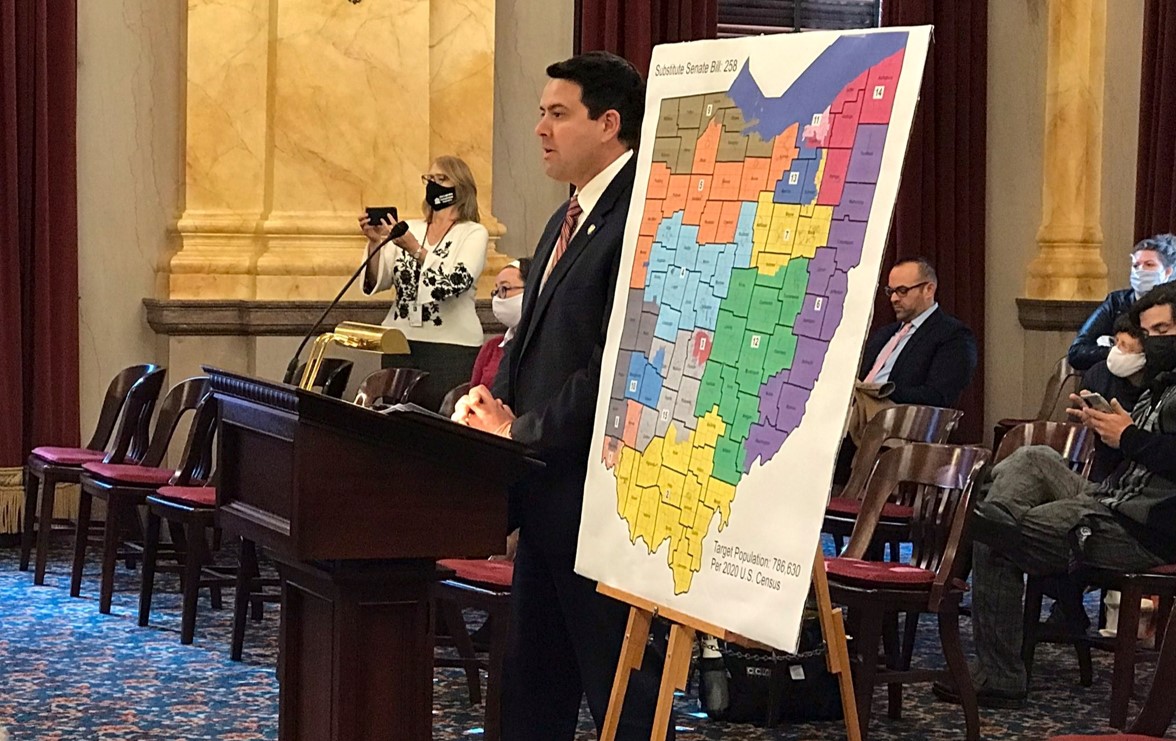
The GOP congressional map passed through the state Senate on Tuesday afternoon. (Right-click to open new tab and enlarge)
The passage came on the same day a committee who had been considering a different map as part of Senate Bill 258, substituted the map that state Sen. Rob McColley, sponsor of the bill, said was spearheaded by Senate President Matt Huffman, along with House Speaker Bob Cupp.
An analysis of the map on Dave’s Redistricting App shows seven Republican districts, two Democratic districts and six districts listed as competitive for being within a 54-46 margin. Five in six of the “competitive” districts lean Republican, and the one that leans Democratic, Ohio’s 13th district, does so by 0.88%.
Senate President Matt Huffman said negotiations had been going on since the census data came out, but that in terms of congressional redistricting, Dems and the GOP were “at loggerheads.”
Huffman accused Democrats of gerrymandering, saying their demand was for a map that had six Dem districts and six Republican ones, which he didn’t think was “within the spirit of the reforms.”
“I think we all pretty much knew where we were at,” Huffman said on Tuesday.
Minority Leader Sen. Kenny Yuko, D-Richmond Heights, had previously said on the Senate floor that he had hoped for better.
“I was hoping for a little more compromise. I was hoping there would be a little more conversation,” Yuko said.
State Sen. Cecil Thomas, D-Avondale, said in an argument against the maps on the Senate floor that it was obvious that the 13-2 maps were gerrymandered in favor of the GOP, and even the Democratically leaning Hamilton County was drawn in favor of Republicans in terms of the next election.
“This supposed competitive district leans Republican by more than 3 points…making it an automatic uphill battle for the Democrat,” Thomas said.
The constitution’s “plain language” was the most important part of determining district lines, as McColley argued on the floor of the Senate. Huffman said there were things they had to interpret, such as the shapes of districts, but issues not explicitly stated in the redistricting rules had to take a back seat.
“In the end, the constitution comes first, and those aspirational things come second,” Huffman said.
Thomas and other Democrats criticized the lack of racial data used in determining the maps, just as supporters of Democratic maps had said GOP maps unfairly split communities, particularly communities of color. Huffman doubled down on the fact that Republicans didn’t use racial data, saying it’s illegal for them to do so unless “there is appropriate evidence presented which requires that.”
He said the maps were drawn with race in mind as a divisive factor.
“(Thomas) is wrong that we simply tried to draw lines having to do with race in this case,” Huffman said.
In Senate Local Government and Elections Committee Tuesday morning, McColley defended the map, Huffman and Cupp by saying he supports it as drafted.
“(Cupp and Huffman) have done an awful lot of due diligence and have done an awful lot of discussions on this map, so anything that I’m going to do is going to be deferring to them,” McColley said.
McColley also seemed to suggest that Ohio could be a swing state in saying district lines shouldn’t be the “end all, be all arbiter” for determining political power and the results of future elections.
“You can look in the legislature, you can look in Congress, you can look other places and realize that in many cases, the shifting sands of politics and the issues of the day ultimately are what decide elections, it’s not just simply because you are a 50.1 (percent lean) or a 49.9,” McColley said. “Given a period of time, these seats could switch back and forth potentially over the course of a decade.”
The map was universally panned by anti-gerrymandering groups like All On the Line and the League of Women Voters and Ohioans who have spoke up in committee hearings since the beginning of the process.
Many complaints, as in previous map hearings, rested on procedure, with testimonies that were put in ahead of the 24-hour advance submission rule being tossed out by their authors, because they pointed to a map that was no longer on the table.
Fair Districts Ohio member Trevor Martin said the abbreviated timeline of last night didn’t allow for a comprehensive review of the maps, only an “eyeball test” of the district lines and shapes.
“We have no idea what we’re looking at, what we’re looking at is a mess,” Martin told the Senate committee. “It’s like you don’t hear us, and it’s infuriating.”
Jen Miller, executive director of the League of Women Voters of Ohio, asked in vain for more hearings because without shape files to look at, zooming on a PDF was their only option, and not the ideal way.
Katy Shanahan, of the Ohio chapter of All On the Line responded for several testifiers when state Sen. Jerry Cirino, R-Kirtland, said the anger and accusations of cheating by the Senate GOP expressed by advocates was “a unique method of persuasion on the part of those who are opposing this bill.”
“So, you’re right, a lot of what you’re hearing today is exasperation, it’s frustration and it’s righteous anger that we have to stand here and beg you to care enough about our democracy to do the right thing and deliver on your campaign promises to give us a fair map and a fair redistricting process,” Shanahan said.
Loveland, Ohio – “So, for all of you who are grocery shopping this weekend, please keep us in mind and up the items you could donate to the Pass It On Food Drive,” said Libby Westerman on Monday evening.
Loveland Magazine was invited to the LIFE Food Pantry on Monday so we could help spread the word about this year’s annual food collection that for the past 20-years has always been scheduled ahead of the holiday season.
Every year, along with the assistance of Loveland City Schools, a food drive takes place to collect items to disburse as Thanksgiving boxes – to clients of the LIFE Food Pantry and other residents in the community as well as holiday bags for later in December.
Westerman is in her third year of organizing the food drive throughout the Loveland schools and wanted to give parents and others in the community a heads-up about participating.
In this LOVELAND MAGAZINE TV video, LIFE Executive Director Linda Bergholz explains how extremely important the event is for the pantry. She said, “As you all know, Thanksgiving is coming up and for us at the food pantry it is an extraordinarily important time of year. Food insecurity has always been important. Food insecurity during a Pandemic is enormous.”
Bergholz introduces Westerman and Nancy Grant who founded Pass It On in 2001 as a way children could give to the community and heal after the 9/11 terrorist attacks.
Grant said twenty years ago, “Well, we can’t change the world, but we can change our little corner of it.” She had this idea to line up the kids down the street and pass the food donations one bag and box, hand-to-hand at a time to one another until it reached the church. A pay it forward so children could feel good about themselves. She thinks it worked after 9/11 and will now – during the Pandemic.
Westerman tells you how you can participate and Grant tells you about the origin, and because of the Pandemic, why it is still so important for the children and our community.
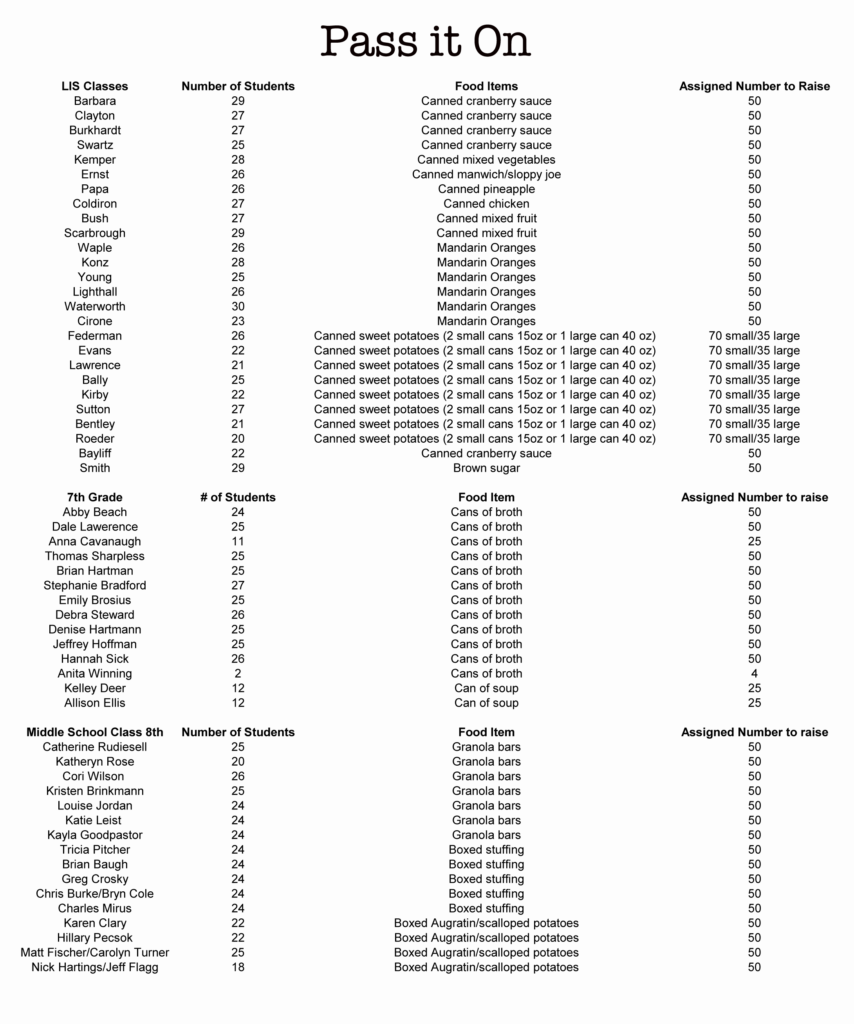
You don’t want to be that parent that opens up a backpack on the morning of the drive and discovers at the bottom an unread note and realizes there are no canned cranberry sauce or Mandarin oranges in the cupboard that your child is supposed to take to school that morning. Each classroom/grade K-8 will have specific items to collect, bring to school, and pass along to the food pantry.
Students at the Loveland Intermediate and Middle schools will walk the food the several blocks to Prince of Peace Lutheran Church down the road from their school where it will be sorted and eventually given away.
This year’s “Pass It On” will be on Friday, November 19th.
This is a heads-up to grandparents and guardians as well because your child can probably only participate if you do some early shopping for them.
Many students and volunteers deliver the donations from the food drive to Prince of Peace Lutheran Church where volunteers sort, date check, organize and assemble a Thanksgiving meal box to go out to area families. The huge effort is to ensure that all our Loveland families and singles will have the items they would need so they can sit down together and enjoy a traditional meal for the holiday.
Each classroom/grade K-8 will have specific items to collect. When your child brings home information about the Pass It On Food Drive, please be generous when you send your donations with them to take to school.
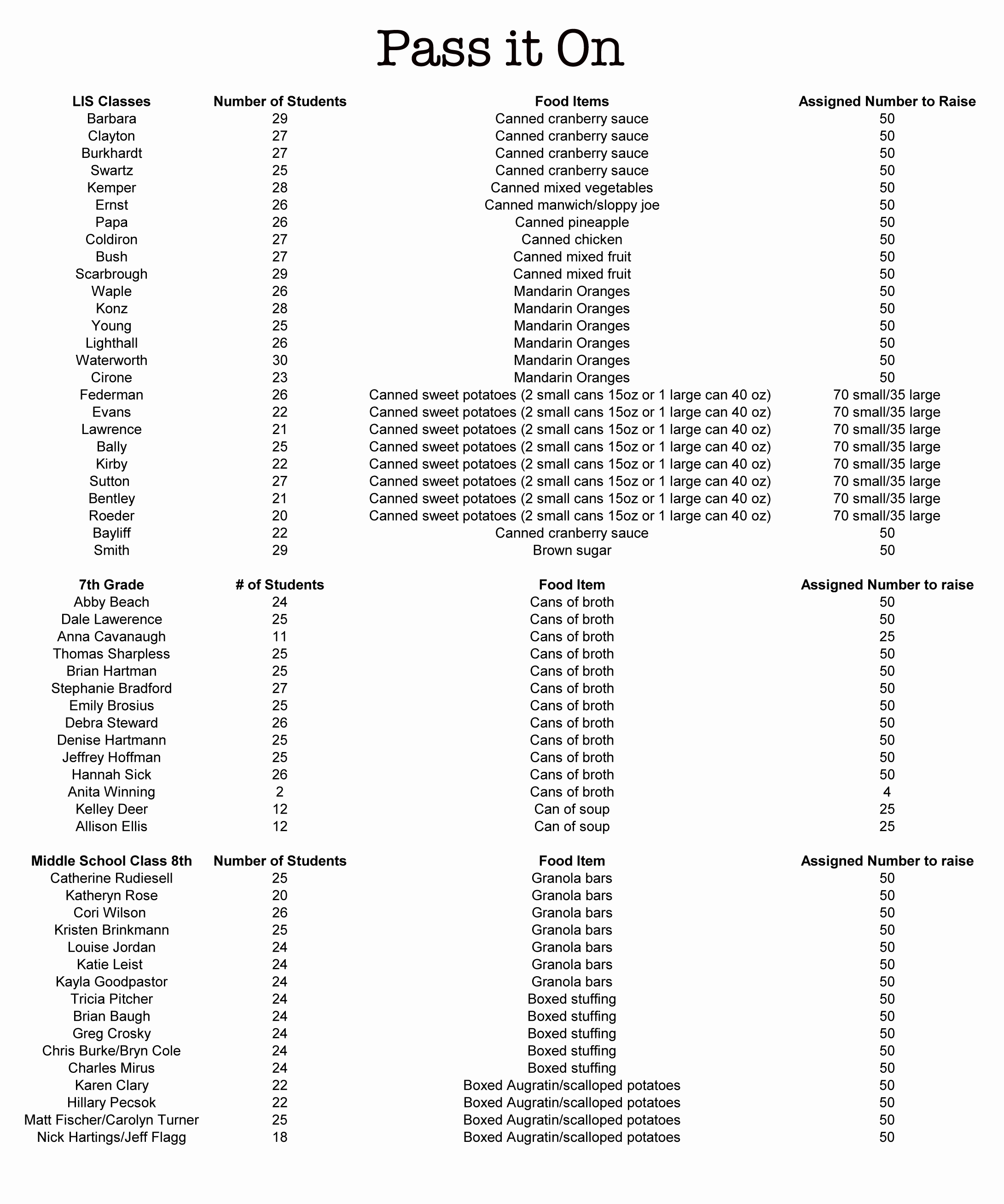
Here is the shopping list. You can also download and print this shopping list to take with you while grocery shopping.
Statehouse Republicans introduced a newly drawn map for Ohio’s districts in U.S. Congress Monday night that maintains a firm GOP majority.
While amendments are possible, the map is poised to pass out of a Senate committee Tuesday with a full Senate session to follow, and House sessions planned for Wednesday and Thursday.
Data behind the map were not made available Monday evening for full analysis, but it appears to show two safely Democratic seats based in Cleveland and Columbus and a majority of others being solidly Republican or leaning Republican and one district that could be a toss-up.
That district is one of three splitting Cuyahoga County, including the southwestern portions of it in a district with all of Medina County and Akron in Summit County.
Hamilton County is also split into three districts, with all of Republican Warren County connected to the city of Cincinnati and an eastern portion of the county included in a district that stretches east out to Meigs County. The map also takes a chunk out of central Hamilton County for a district that stretches along the western Ohio border from Butler up to Darke County.
Click to open in a new tab and view larger
While the center of Franklin County in the map would be a safely Democratic seat, outlying areas in a C-shape along the northern, western, and southern portion would be included in a Republican-leaning district that stretches westward to Clark County and southward to include Clinton, Fayette and parts of Ross County.
The map combines Montgomery County with Greene County and the central part of Clark, creates a district that stretches from Trumbull and Mahoning counties down along the Ohio River on the eastern border to Washington County, and puts Toledo and Lucas County in with Defiance, Williams, Henry, Fulton, Ottawa, Sandusky and Erie counties.
Statehouse Republicans claim the map presents seven competitive districts and noted that it keeps seven of eight of Ohio’s largest cities whole while dividing only 12 counties.
On Twitter, a number of Statehouse Democrats panned the proposal.
Without bipartisan support, Republican legislators could vote through four-year maps. Any maps will have to be approved by Gov. Mike DeWine. If four-year maps go through, court challenges are likely.
State legislative maps passed in September by the Ohio Redistricting Commission are currently before the Ohio Supreme Court after three lawsuits were filed against them. The court has four Republicans and three Democrats. Republican Chief Justice Maureen O’Connor ruled against Ohio’s current maps in 2012, and is considered a possible swing vote.
An analysis of state data shows that 11 months into the vaccine rollout, the ground is still fertile for outbreaks all around Ohio. Of 88 counties in the Buckeye State, only Delaware (71% vaccinated) surpasses the national vaccination rate of 68.5%. In 58 counties, less than half the population is vaccinated, according to data as of Sunday.
Ranked by state, Ohio (56% vaccinated) is the 10th least-vaccinated in the country, according to data from The New York Times.
In Henry County, a rural swath of northwest Ohio, COVID-19 is spreading at more than twice the statewide rate of about 400 infections per 100,0000 residents. About 52% of residents are vaccinated. Health Commissioner Joy Ermie said the spread is not specific to any outbreak or location, it’s just swimming through homes and social events of mostly unvaccinated people.
“The quicker we turn this around, the quicker we’ll see a decrease in our cases,” she said. “It will be a forever cycle if we cannot increase our overall vaccination rates.”
Public health workers in coronavirus-sieged counties said in interviews for this article that it’s time to start accepting that COVID-19 is likely here to stay in some form or fashion, absent a paradigm shift on vaccination.
Several indicated a circular pattern in vaccination; the unvaccinated, by and large, are staying unvaccinated. The vaccinated are fortifying their immune system with booster doses.
“I would absolutely love to say COVID is over in X [number of] months,” Ermie said. “But I feel much more confident that we should take our energy away from, ‘How is this going to end?’ to ‘How can we learn to live with it?’”
Gavin Smits receives a first dose of the Pfizer COVID-19 vaccine. (Photo by David Ryder/Getty Images)
Federal authorities approved the use of vaccines on children aged 5-11 earlier this month, which will likely jumpstart vaccination rates to some extent. In north-central Ohio’s Seneca County, a population of roughly 55,000 people, about 47% of residents are vaccinated. The county’s case rate is nearly twice the statewide average.
About 20 children were vaccinated at a clinic last Tuesday night, according to county health commissioner Anne Goon. She said there hasn’t been any mad rush on vaccines, but she was happy with Tuesday’s crowd.
She said adults in the community have bristled with vaccines, masks, and assorted infection control policy responses to the pandemic. Some parents have refused to have their kids tested after they’re exposed to the coronavirus at school, she said, even if it’s required for an after-school sport.
“We have a portion of our population that just doesn’t think COVID is real,” Goon said. “That it’s just a hoax.”
To Dr. Bruce Vanderhoff, Ohio’s top doctor and director of the state health department, the state is “approaching” a point in the pandemic where coronavirus becomes more of a nuisance than threat to the public welfare. We’re not there yet though as the extra-transmissible delta variant of the coronavirus “relentlessly” seeks out the unvaccinated, he said.
“In some circumstances, what is driving what we’re seeing is low vaccination rates in some communities,” he said. “So we have to continue to focus on the importance of vaccination.”
Vanderhoff, speaking to reporters Friday, offered a more optimistic take on Ohio’s vaccination rate. Among Ohio adults, more than 2 in 3 have now received at least one dose of vaccination. The COVID-19 vaccination rate, he said, has surpassed the rate of Ohioans who get their annual flu shot. It pales in comparison to vaccination against disease like measles or polio, but those vaccines have been around longer and are (mostly) legally required to enroll in school.
Despite Vanderhoff’s optimism, hospitalizations for COVID-19 have increased across every age group over the last week. For people aged 30-39, who are less vaccinated than their elder counterparts, hospitalizations leapt 48% in that time frame. More than 2,700 Ohioans are currently hospitalized with COVID-19, up from less than 2,200 earlier this month.
John Palmer, a spokesman for the Ohio Hospital Association, said the statewide COVID-19 patient census has been increasing by about 60 patients daily as of late.
“Hospitals are operating at high-capacity levels with workforce challenges and any surge will have a devastating impact leading to disruption of health care access for communities,” he said. “Despite three safe, approved and effective vaccines available today to stop this virus we continue to see spread and it’s frustrating to respond to a virus that is preventable.”
All told over about 20 pandemic months, more than 25,600 Ohioans have died from COVID-19, part of the U.S.’ 762,000 dead. More than 82,000 Ohioans have been hospitalized, including more than 10,000 who required ICU care. A staggering 1.6 million Ohioans have been infected with COVID-19.
Mark Cameron, an immunologist at Case Western Reserve University, is not surprised by COVID-19’s resurgence. Even highly vaccinated states like Vermont (82% vaccine started) are wrestling with outbreaks. In Ohio, cold weather makes respiratory viruses more spreadable and drives humans to gather inside instead of outside.
“It’s absolutely unacceptable to operate in a space in which 50-60% of the people are unvaccinated,” he said.
He expressed frustration with a sense of complacency from the public whenever the coronavirus ebbs, and an unwillingness to acknowledge the predictable patterns of disease spread based on low vaccine coverage, weather and human behavior.
“I don’t know what unique to say at this point,” he said. “Here we are risking another impact on our holiday season through sickness, hospitalization and death.”
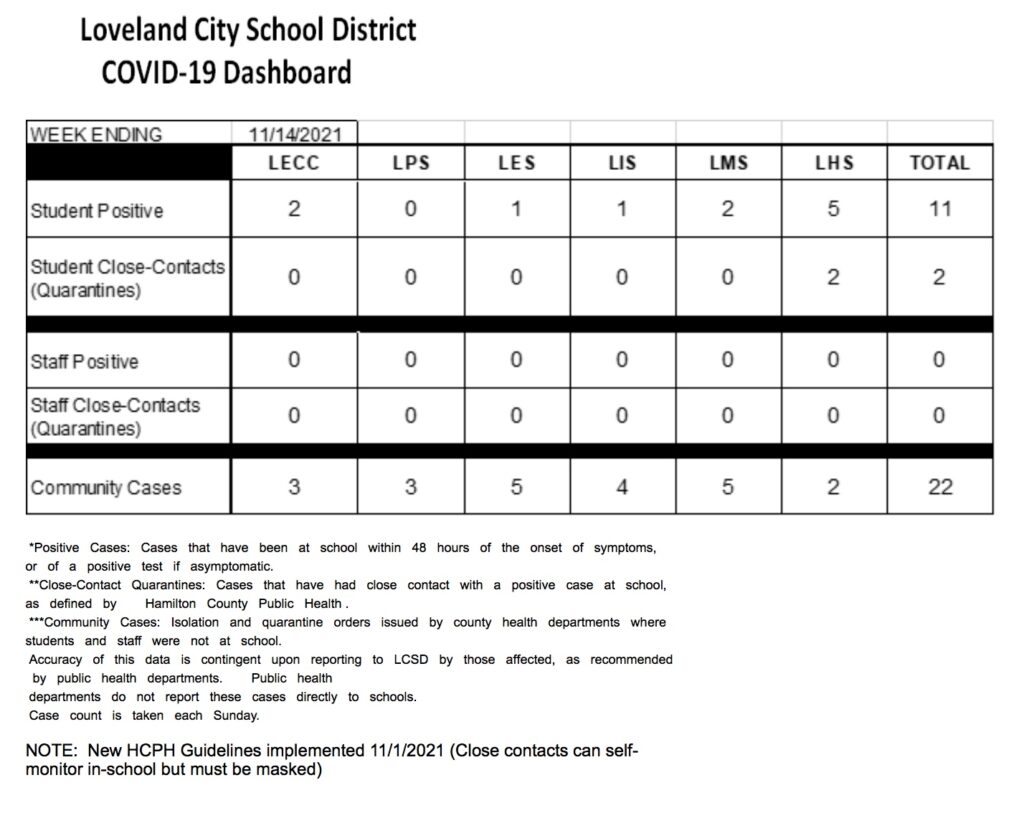
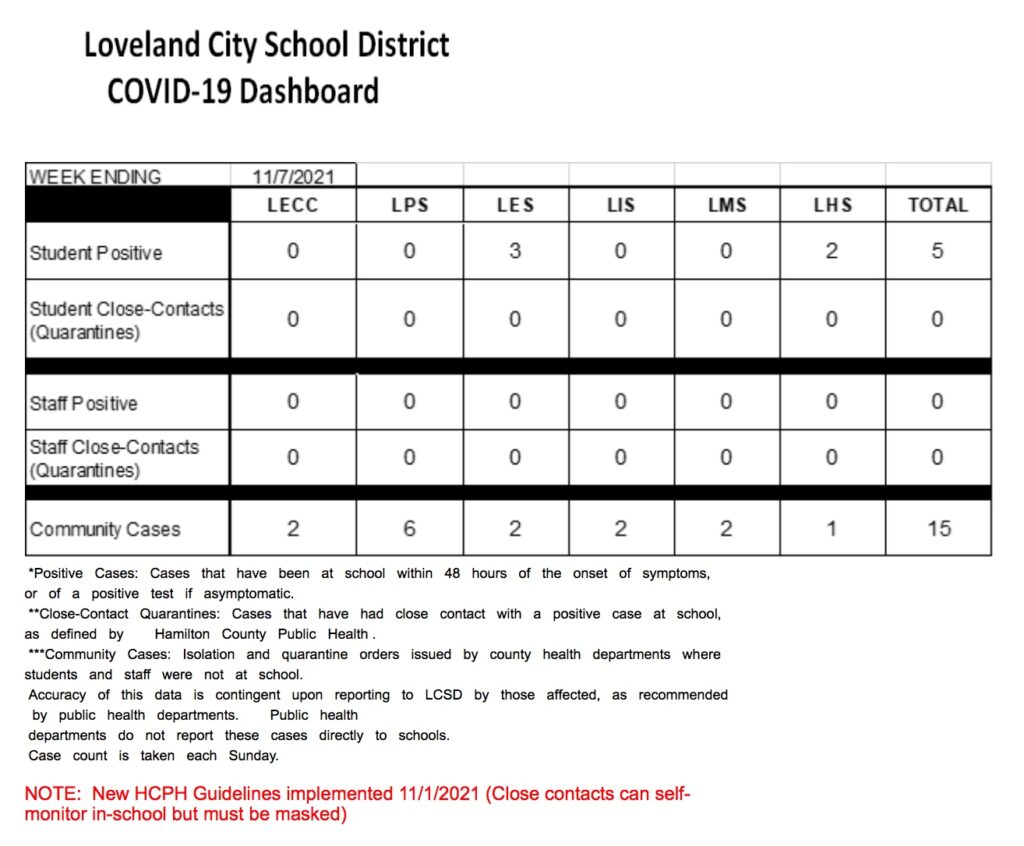
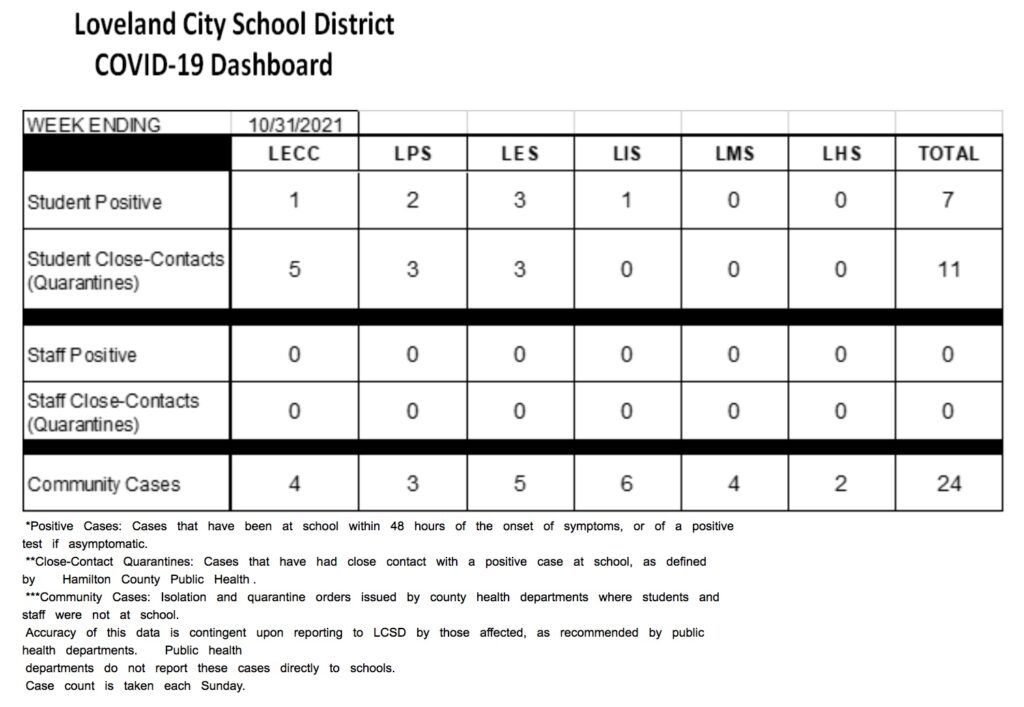
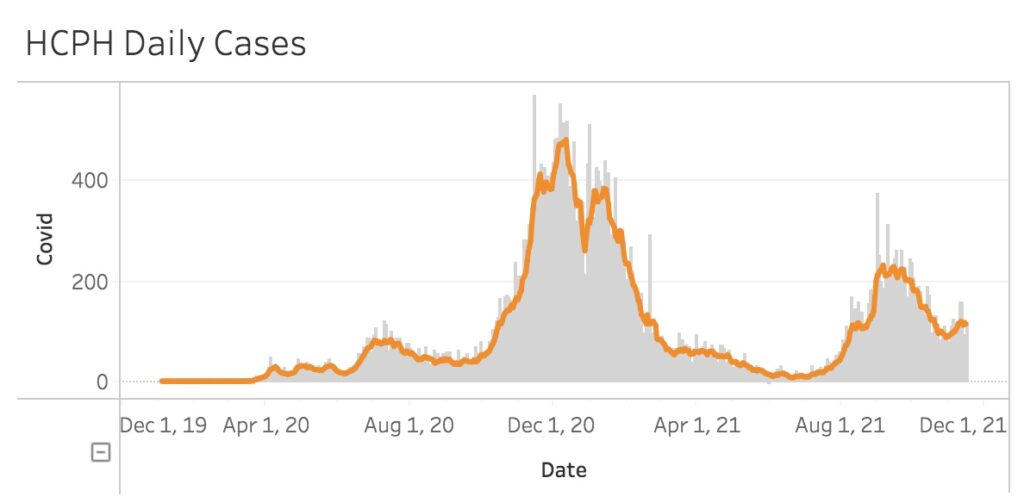
Hamiolton County Public Health 11-16-2021
November 16
Warren County Health Services reported 62 additional COVID-19 cases on Tuesday, along with 60 recoveries.Health Services is monitoring 493 active COVID cases as of Tuesday, 471 of them involving mild illness.
Thirteen (13) people are hospitalized as of Tuesday, one (1) fewer than Monday. One (1) is critically ill, and the remainder have moderate illness. Nine (9) others are moderately ill outside of the hospital.
All but two (2) of Tuesday’s cases involved community spread of COVID-19, as two (2) were reported in a skilled nursing facility.
Warren County Health Services continues to see a significant spike in COVID-19 transmission, with the majority of its new cases arising from workplace exposures, family/household exposures and indoor events/gatherings as the highly transmissible Delta variant remains involved with virtually all local cases.
Sixteen (16) of Tuesday’s cases involved individuals who had been fully vaccinated. Cumulatively as of Tuesday, 1,086 of 44,513 fully vaccinated Warren County residents have tested positive for COVID-19. To date, 1,027 of 1,086 had mild illness, while 41 became moderately ill, two (2) seriously ill and one (1) critically ill. Fifteen (15) passed away, all of them elderly and/or with extensive health issues, seven (7) of them at nursing homes.
Loveland, Ohio – The LMRCA Silent Auction is now LIVE! Start your bidding HERE.
The silent auction is in conjunction with the Chamber’s Annual Awards Dinner, however, you don’t need to attend to win.
Proceeds from the auction will benefit Grant Us Hope, an organization dedicated to youth suicide prevention, and the Little Miami River Chamber Alliance Scholarship fund. Start your holiday shopping early and support these great organizations while you do it.
Please note that there is a “Buy It Now” option if you find something you simply must have!
You can bid on an Apple AirPod, Coach Purses, a Date Night in Loveland, Kings Island passes, a Golf Day at the Oasis, Sports Items, and many more great bargains.
Final Chance to Register to attend the Awards Gala!
Registration closes at noon today!
Each November, The Little Miami River Chamber Alliance says “Thank you” to our businesses for all they do for our community and honor them for enhancing our community and making it a better place to live.
The Annual Awards Dinner is an evening for all area businesses to come together and celebrate their successes and community contributions.
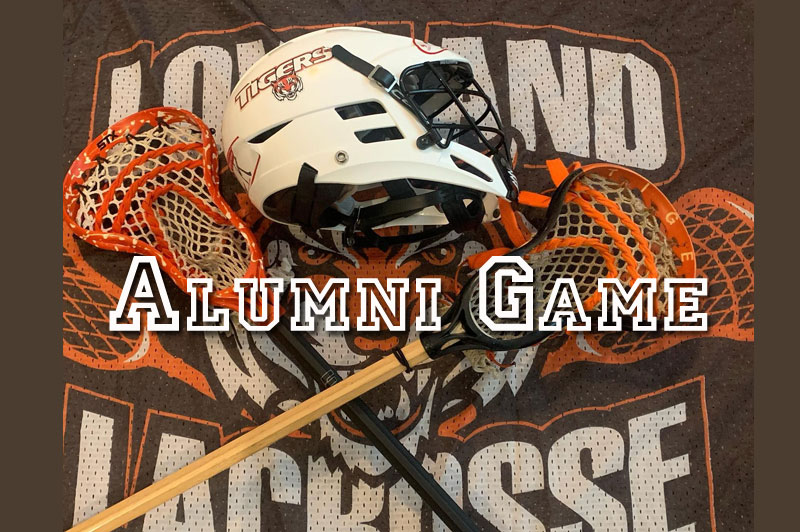
Loveland, Ohio – Coach Mike Cotsonas from Loveland Boys Youth Lacrosse wants to remind the community about the Annual Loveland High School Men’s Lax Alumni Game.
It will take place on November 26 (always day after Thanksgiving) at Tiger Stadium and is sponsored by the youth Lax program.
Mike says it is, “Just a great way to get our boys lax alumni, friends, and family together to celebrate the history, tradition, and success of the program.” He adds, ” The last four years the Loveland alumni game has become the most successful in the area, and we want to keep that tradition alive.”
The event has been renamed the Ben Morrison ‘20 Memorial Classic, and all proceeds go to support the scholarship in his name. No registration or fee is required. Mike said, “Just come on out”.
The organizers will “pass the helmet” and all donations go to support the Ben Morrison Scholarship. “It’s a great cause, and the youth program and the Loveland HS Lacrosse Alumni Association are excited to support this effort to remember one of our own, ” said Cotsonas. “Hope to see you the day after Thanksgiving at Tiger Stadium at Noon.”
Loveland, Ohio – If you are a little Miami River Chamber Alliance member, resident of the Loveland School District, or work in the Loveland area your Valentine Card Design original artwork may be submitted.
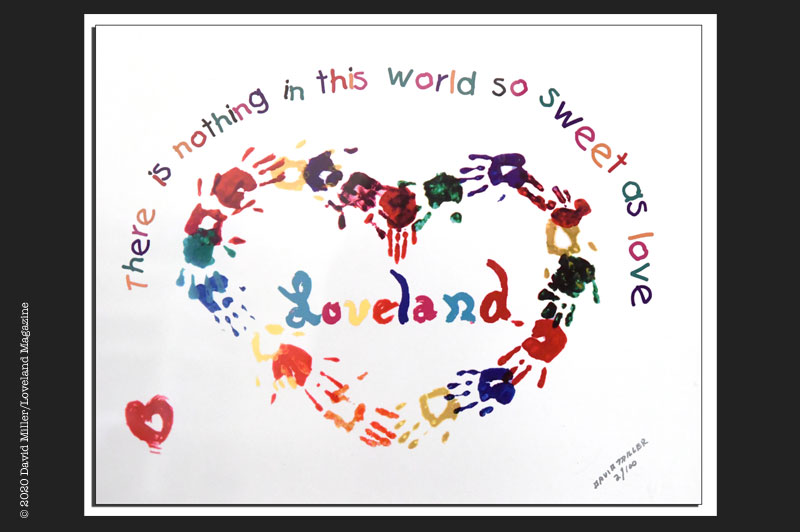
Artwork must reflect or incorporate the theme: “Love is…..” and must also include (or provide space for) the phrase, “There is nothing in this world so sweet as love.”
One-color, two-color, and full-color entries are acceptable. Artwork must be flat (two-dimensional) and reduce proportionately to fit within a 5 inch by 3 ¾ inch space, the size of the printed Valentine’s Day cards.
The submission deadline is November 20, 2021.
Last year’s winner was Cindy Wilmes and she created this video of her taking one of her cards to be stamped at and mailed from the Loveland Post office.
Entry forms and contest rules are available at the Little Miami River Chamber Alliance, 113 Karl Brown Way, Loveland, OH 45140. If you would like one sent to you, call the Little Miami River Chamber Alliance at 683-1544.
The winner will receive design credit on the back of the 2022 Valentine’s Day cards, recognition at the Valentine Kick off, other local recognition, media recognition and two complimentary invitations to the Little Miami River Chamber Alliance Annual Valentine Breakfast. Entries not selected may be picked up after December 10, 2021.
The winning card design will be featured as a “Cover Photo” in Loveland Magazine.
Click below to witness the 2021 Valentine Art and Card Reveal presented to you by LOVELAND MAGAZINE TV!
Watch this interview by Cassie Mattia interviewing the 2021 Valentine Card Designer and Valentine Lady Jeannie Shumaker.
We have more Loveland Magazine TV videos for you to enjoy! Click below to watch now!
This story was updated at 8:19 AM 11-14-21 to reflect that Neal Oury (not Ted Phelps) was not reelected.)
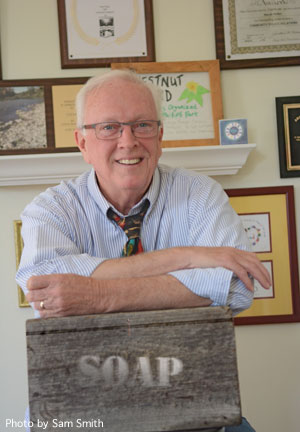
Loveland, Ohio – Resident Tom Scovanner went to the council meeting on Tuesday, November 9, and talked about the conclusions he reached after researching and analyzing the results of the recent City Council election. He began by thanking all those who ran and thanked the two current members who will not return for another term; Vice-Mayor Rob Weisgerber who chose not to run again, and Neal Oury who did not receive enough votes. He thanked Oury and Weisgerber for their service.
After studying the election results, Scovanner shared his interpretation and analysis. He said that the number of “under-votes” showed that residents did not like what they were voting for. “It’s the only conclusion you can make,” he said.
Scovanner said that Loveland voters want independent thinkers, not one size fits all candidates. He said they rejected “block” voting. He said the result of the recent election was a vote of no confidence in the current makeup of the City Council and how it is being led.
He also spoke about analyzing the campaign literature the candidates passed out to the voters.



![[Video Interview] Thousands of Loveland Children will “Pass It On” and you can join them!](https://lovelandmagazine.com/wp-content/uploads/2021/11/pass-it-on.jpg)




![[Video] Tom Scovanner says citizen’s do not want groupthink](https://lovelandmagazine.com/wp-content/uploads/2021/11/feature-tom-s.jpg)