Tag: Laura Olson

  • At-home COVID tests to be covered by insurance — but details still to come

    At-home COVID tests to be covered by insurance — but details still to come

    BY: LAURA OLSON – OHIO CAPITAL JOURNAL

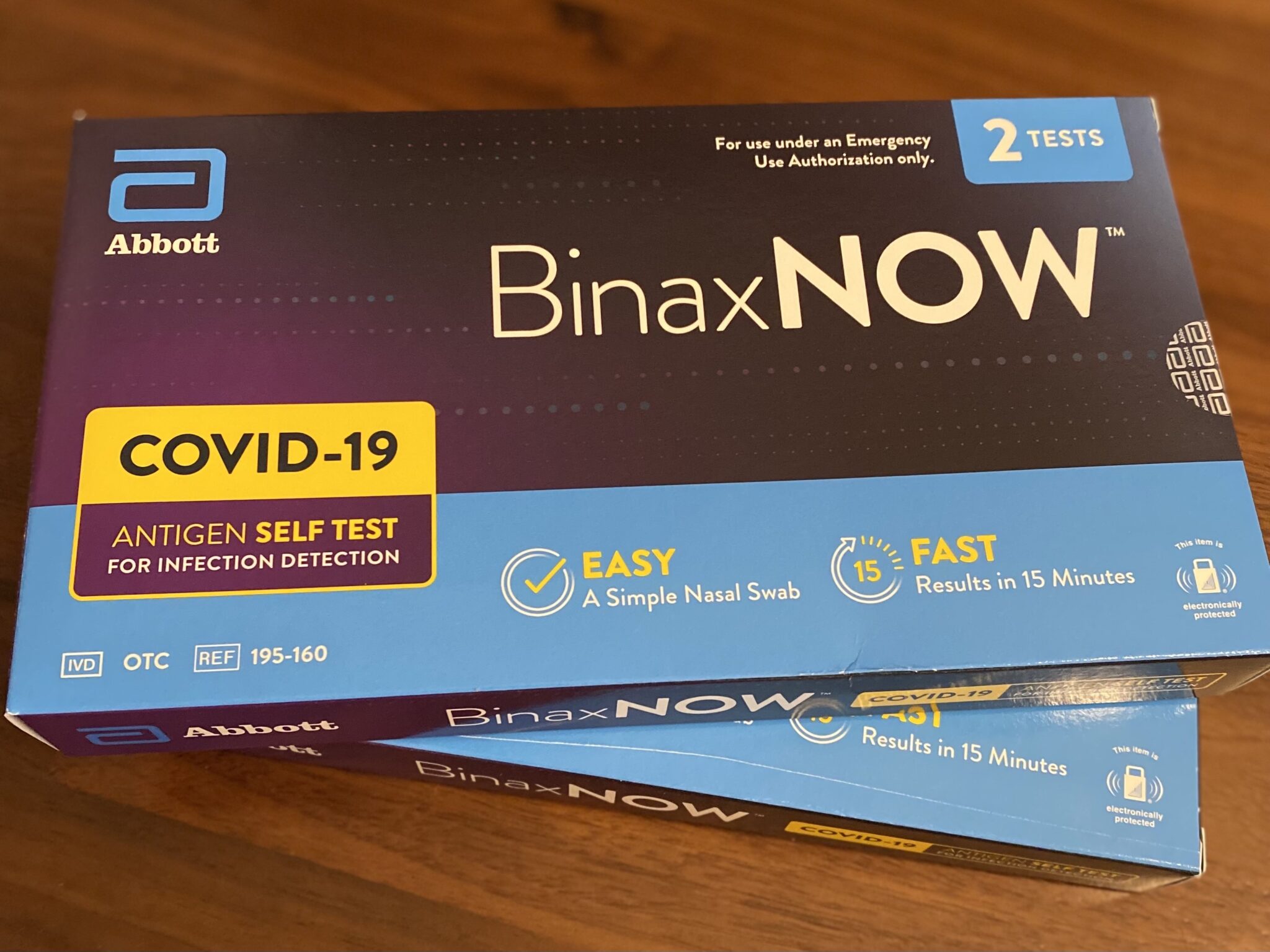
    An at-home COVID-19 test kit. Photo by Laura Olson, States Newsroom.

    Washington, D.C. – State health officials on Thursday welcomed the Biden administration’s plan to require private health insurers to reimburse Americans for the cost of rapid, at-home COVID-19 tests — though the officials also raised questions about whether the process will be burdensome.

    Making those tests more accessible will allow Americans to get results quickly and in the privacy of their own homes. That change may encourage more people to swab their nose when they first notice potential symptoms, experts from the Association of State and Territorial Health Officials told reporters.

    “In this next phase of the pandemic, rapid access to rapid testing will be key,” said Dr. Nirav Shah, director of Maine’s Centers for Disease Control and Prevention, adding that it can help to combat potential surges and to pinpoint infections quickly so antiviral treatments can be used.

    But several challenges could limit the impact of the cost reduction.

    That includes lingering problems with sufficient supplies, uncertainty about the details of the reimbursement process, and questions about any potential effect on the data that’s reaching state and local health departments about infections in their communities.

    Official guidance in January

    Under the proposal that President Joe Biden announced Thursday, three federal departments — Health and Human Services, Labor and the Treasury — will issue official guidance by Jan. 15 that will detail what exactly private insurers must cover when it comes to rapid COVID-19 tests.

    Those insurers already are required to pay for the PCR tests that must be sent to a laboratory for processing and take longer for results.

    The upcoming change requiring insurance coverage of rapid, at-home tests, won’t be retroactive. That means Americans who have been shelling out roughly $25 for a package containing two of the popular Abbott BinaxNOW rapid tests can’t submit receipts for tests they’ve already purchased.

    Other details of that requirement were unclear Thursday, including if there will be any limitations on the number of at-home tests that must be covered.

    While the Biden administration has sought to reduce supply bottlenecks in producing those tests, Shah said some states are still having difficulty acquiring large volumes of the Abbott at-home tests.

    That brand, which has been found to be highly accurate, has been relied on heavily even as more options have come on the market. Part of that demand comes from familiarity: Those administering tests in large settings have become familiar with their use.

    What if you test positive?

    Another challenge with increasing the use of at-home tests will be ensuring that individuals know what to do if they test positive.

    Michael Fraser, ASTHO’s chief executive officer, said state health officials have been discussing whether those at-home tests should include an insert to help explain who to call and other next steps, so that contact tracing can occur.

    “There is some concern that with the increase in at-home testing, getting those results reported to state health departments might be difficult, because the result doesn’t automatically go to public health authorities,” Fraser said.

    However, there won’t be many results to get to state and local health officials if Americans with private insurance balk at fronting the money for tests while they await reimbursement.

    Shah said a more accessible model would be to have individuals show their insurance card at a pharmacy as they would when getting a flu shot or picking up a prescription, rather than being charged at the register.

    Having to pay for the tests, then wait for repayment, “introduces an access challenge for a lot of folks,” he said.

    The Biden administration also plans to boost the number of free at-home tests distributed at community health centers and rural clinics, though those are intended to aid those who are not covered by private insurance.
  • COVID-19 booster shots to roll out starting next month

    COVID-19 booster shots to roll out starting next month

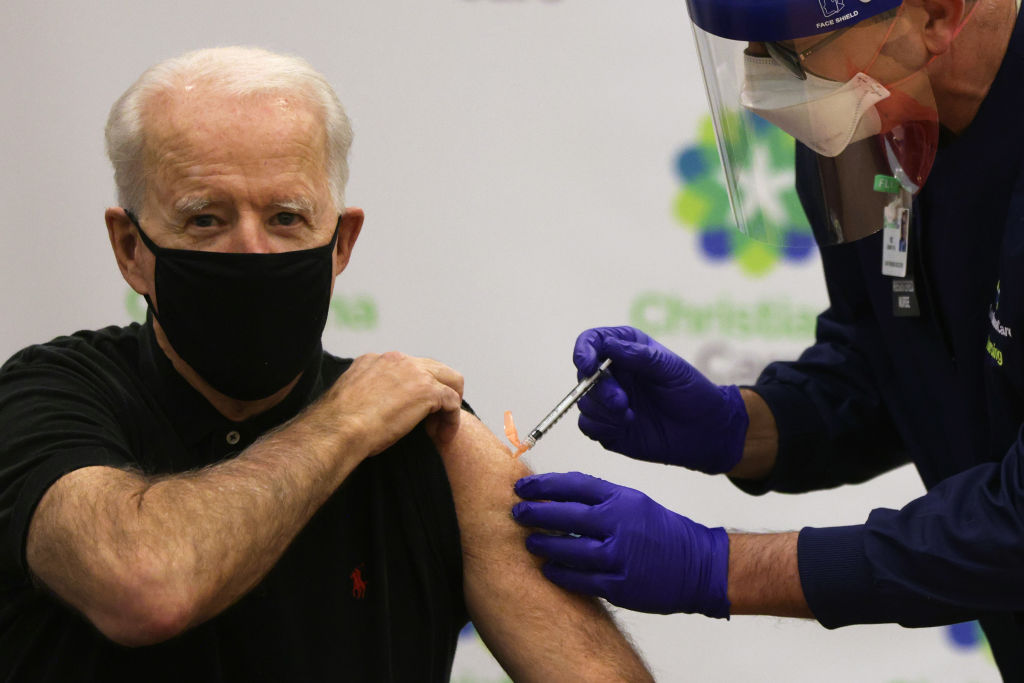
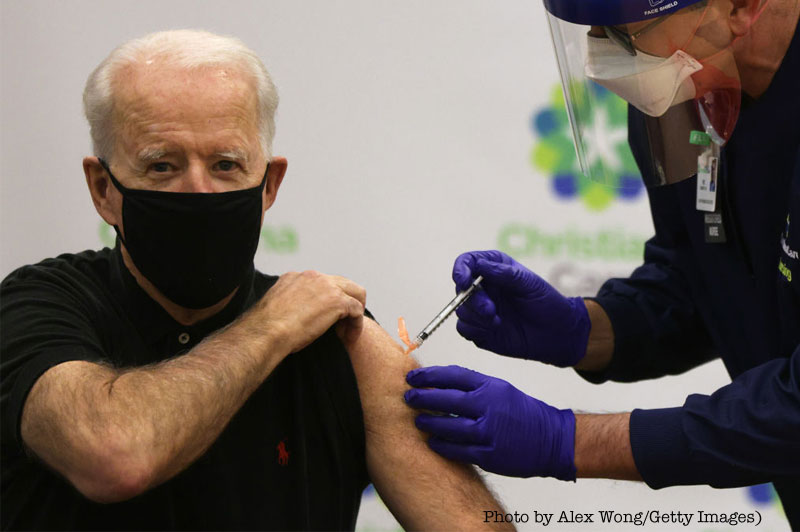
    President Joe Biden receives a covid vaccine. (Photo by Alex Wong/Getty Images)

    BY: LAURA OLSON and Ohio Capital Journal

    Top U.S. health officials announced a plan Wednesday to begin offering COVID-19 booster shots to Americans starting Sept. 20, with the scheduling of the additional shot to be based on when a person was fully vaccinated.

    The new round of jabs will be extended to those who received the two-dose vaccine from either Pfizer or Moderna, and can be taken eight months after an individual’s second dose.

    Dr. Vivek Murthy, the U.S. surgeon general, told reporters Wednesday that recent data makes clear that while the current COVID-19 vaccines have been highly effective against severe disease, hospitalization and death, the protection against mild and moderate disease has appeared to decrease over time.

    “This is likely due to both waning immunity and the strength of the widespread delta variant,” Murthy said, adding that health officials are concerned that the decline in immunity could reduce protection against severe disease and death in the months ahead.

    The more than 13 million Americans who received the one-dose shot from Johnson & Johnson may also need boosters, but will not yet be eligible.

    Federal health officials said they are awaiting data from J&J in the next few weeks before urging additional doses. The J&J shot wasn’t approved until March, so those who received it will not hit eight months past inoculation until November.

    The new booster rollout plan is subject to formal authorization from the Food and Drug Administration and the Centers for Disease Control and Prevention’s vaccine panel.

    Those agencies will hold public meetings before the booster rollout can begin. But officials said they were detailing the booster plan ahead of those meetings in part to give state and local health officials time to prepare for another wave of vaccination logistics.

    State and local health officials again under pressure

    The plan for offering a third shot puts yet another layer of pressure on state and local health departments that have carried out the massive vaccination campaign.

    Those officials are still seeking to boost vaccination rates that have lagged in certain regions amid skepticism and misinformation. Meanwhile, vaccine manufacturers are expected this fall to seek approval for administering shots to children under 12, who so far have not been eligible.

    During Wednesday’s news briefing, Dr. Rochelle Walensky, the CDC director, cited several new studies that tracked vaccine effectiveness, including among New Yorkers across age groups and another following case counts from nursing homes.

    Those studies have shown that protection against severe infection has held up but not against milder infections, she said, adding that other countries, such as Israel, also are starting to see “worsening outcomes.”

    “In the context of all of these studies, different cohorts, different settings across the country, and our international colleagues, we’ve made the decision to plan for these booster doses,” Walensky said.

    The booster shots will be available at roughly 80,000 sites nationally, including 40,000 local pharmacies. As with the other COVID-19 shots, the boosters will be free of charge.

    The CDC had already approved a third COVID-19 shot for some immunocompromised individuals, who may not have received strong protection from the initial doses of the vaccine.

    While the booster plan does not specifically mention other categories of individuals to receive a priority for boosters, the initial vaccine rollout did put certain groups first in line. So the first individuals to hit eight months after their second shot should be those in the earliest priority categories, such as health care workers and nursing home residents.

  • Ohio on track to meet Biden push to make all adults eligible for COVID-19 vaccines by May 1

    Ohio on track to meet Biden push to make all adults eligible for COVID-19 vaccines by May 1

    By Laura Olson and Ohio Capital Journal

    President Joe Biden is directing states to make all adults eligible for the COVID-19 vaccine by May 1, and Ohio Gov. Mike DeWine said over the weekend the state is on track to do that or better.

    Biden’s COVID-19 advisers are projecting that enough Americans in priority groups will be able to access the vaccine by the end of April to allow for the lifting of restrictions on who can access the vaccine.

    Alaska on Tuesday became the first state to open eligibility to anyone age 16 or older.

    The announcement came Thursday on the one-year anniversary of the World Health Organization declaring the COVID-19 outbreak to be a pandemic.

    Earlier on Thursday, Biden signed into law a massive pandemic stimulus bill that includes $20 billion to boost vaccination efforts across the country.

    He also announced Wednesday that his administration secured another 100 million of the one-dose Johnson & Johnson vaccine, after helping to broker a deal in which Johnson & Johnson will team up with drugmaker Merck to produce doses faster.

    More than 81 million vaccines have been administered since Biden took office in January. But state officials seeking to get those shots into arms have been hamstrung by too few doses, antiquated technology for coordinating appointments, and the challenge of securing enough manpower and other resources to meet the demand for vaccinations.

    The administration has launched federally run vaccination sites across the country, and will more than double the number of federal mass vaccination centers. More than 4,000 active duty troops will deploy to support those vaccination efforts.

    The Biden administration also will expand who is qualified to administer shots, adding dentists, advanced and intermediate emergency medical technicians, midwives, optometrists, paramedics, physician assistants, podiatrists, respiratory therapists, and veterinarians.

    The Department of Health and Human Services will launch a new website for individuals to check if they are eligible to volunteer to administer shots.

    Biden also will seek to make it easier for Americans to find a vaccination appointment, announcing plans to launch a federal website by May 1 that will show nearby locations that have vaccines, as well as a 1-800 number for those who lack internet access.

    The administration also says it will deploy technology teams to states that need assistance in improving the websites they’re using to schedule vaccinations.

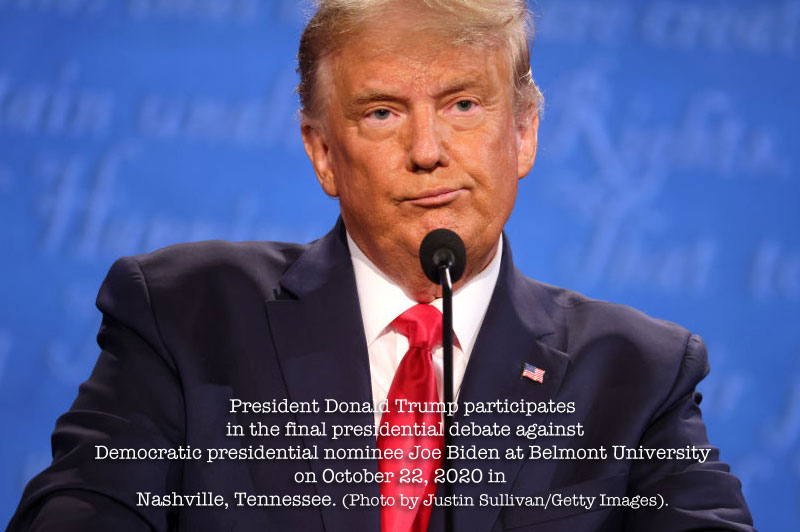
  • How Trump could quickly be removed from office using the 25th Amendment

    How Trump could quickly be removed from office using the 25th Amendment

    By Laura Olson and Ohio Capital Journal

    A rapidly rising number of federal lawmakers are calling for President Donald Trump to be removed from office, either through a process outlined in the 25th Amendment or through impeachment.

    Democratic Ohio U.S. Sen. Sherrod Brown Thursday called for invocation of the 25th Amendment to hold the president accountable for Wednesday’s riots.

    “The cabinet and vice president should immediately invoke the 25th Amendment to remove him from office, to prevent him from doing more damage between now and Inauguration Day,” Brown said in a statement.

    The Democratic leaders of the U.S. House and Senate gave their support to calls for his removal that began Wednesday, after Trump incited the crowd of supporters that swiftly became a violent, destructive mob that ransacked the Capitol.

    House Speaker Nancy Pelosi on Thursday condemned Trump as having “committed an unspeakable assault on our nation,” and said that if the vice president and Cabinet officials do not seek to remove Trump, that Congress may begin another impeachment process.

    “That is the overwhelming sentiment of my caucus,” Pelosi said, calling it an “emergency of the highest magnitude.”

    Amid those mounting pressures for his removal, Trump released a video Thursday, finally acknowledging that “a new administration” will begin later this month and that he would focus on “ensuring a smooth, orderly, and seamless transition of power.”

    He did not acknowledge any responsibility for the riot, and told his supporters: “Our incredible journey is only just beginning.”

    Trump’s tenure is set to end in a matter of days, when President-elect Joe Biden is sworn in on Jan. 20. It’s not clear if House Democrats would be able to act before then to carry out articles of impeachment, but in theory, invoking the 25th Amendment could be done quickly.

    Seventeen Democrats on the House Judiciary Committee signed a letter urging Vice President Mike Pence to invoke the 25th Amendment. That group included Reps. Jamie Raskin of Maryland; Steve Cohen of Tennessee; Ted Deutch of Florida; Joe Neguse of Colorado; Mary Gay Scanlon and Madeleine Dean of Pennsylvania; Greg Stanton of Arizona; Cori Bush of Missouri; and Hank Johnson and Lucy McBath of Georgia.

    Here’s more on what the 25th Amendment says, and when it has been used before:

    Why was the 25th Amendment added?

    The 25th Amendment to the U.S. Constitution was approved in 1967, in the wake of President John F. Kennedy’s assassination. It was intended to clarify succession procedures in the event that the president dies, is removed from office, or is “unable to discharge the powers and duties of his office.”

    What exactly does the amendment say?

    It makes clear that the vice president becomes president if the president dies, resigns or is removed from office, and that a new vice president must be nominated.

    There’s also a section on temporarily transferring presidential authority to the vice president, intended for scenarios like the president undergoing anesthesia for surgery.

    A final section provides for transferring presidential power if the president is unable to fulfill his constitutional role but he or she cannot or will not step aside. That provision requires approval from the vice president and a majority of either the Cabinet or another body that Congress may designate. Congress has never created such a commission, though Raskin introduced legislation to do so.

    The number of Cabinet officials who could be involved in such a discussion shrunk by one Thursday, when Transportation Secretary Elaine Chao — who is married to Senate Majority Leader Mitch McConnell (R-Ky.) — resigned.

    When has the 25th Amendment been used? 

    President Ronald Reagan invoked it once, and President George W. Bush did twice when the men underwent medical procedures. They transferred authority to their vice presidents for a matter of hours, according to the National Constitution Center.

    What about impeachment?

    Trump already was impeached by the House in December 2019 on charges of abusing his power and obstructing Congress. The Senate acquitted him of those charges in February 2020.

    That process is legally complex and typically unfolds over a matter of weeks or months. And Pelosi declined on Thursday to offer a timeline on what comes next. If Trump were to be impeached and found guilty, it would prevent him from being eligible for public office in the future.

    Who has signed on to the efforts to remove Trump from office?

    A tally from CNN shows more than 30 congressional Democrats in support of removing Trump through the 25th Amendment or impeachment.

    Some Republicans have joined. U.S. Rep. Adam Kinzinger, (R-Ill.), has called for Trump’s removal. Maryland Gov. Larry Hogan, another Republican, told reporters Thursday that the country “would be better off” if Trump resigned or was removed.

    Even the president of the National Association of Manufacturers has urged Pence to invoke the 25th Amendment.

    Biden declined to address calls to invoke the 25th Amendment on Thursday, instead blaming the president for inciting a mob, and labeling the rioters as “domestic terrorists.”

  • Congress seals the deal on emergency relief after dispute over Fed lending settled

    Congress seals the deal on emergency relief after dispute over Fed lending settled

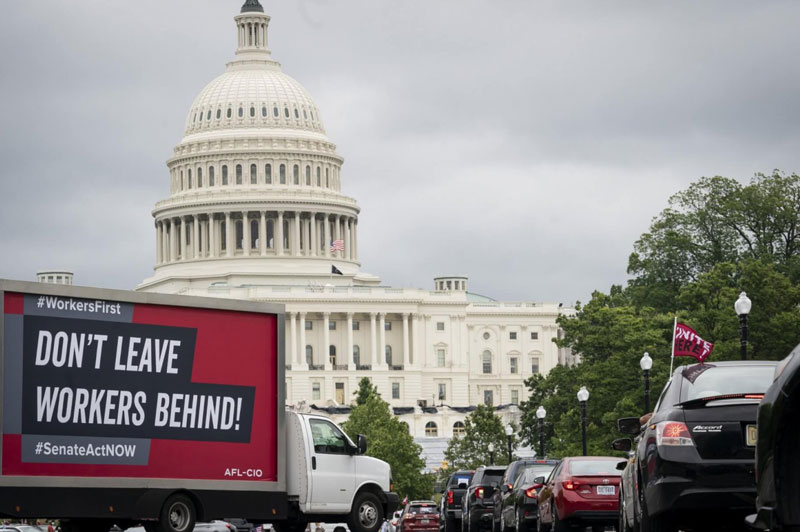
    Protesters take part in the AFL-CIO Workers First Caravan for Racial and Economic Justice near the U.S. Capitol on June 17, 2020 in Washington DC. The caravan circled the U.S. Capitol and national mall while honking their car horns to bring attention to their cause. | Drew Angerer/Getty Images.

    By Laura Olson and Ohio Capital Journal

    Washington D.C. — A deal on a coronavirus relief package finally emerged on Sunday night, after members of Congress resolved a days-long impasse over a provision sought by U.S. Sen. Pat Toomey of Pennsylvania to ensure that several temporary Federal Reserve lending programs will end this year.

    Working through that disagreement over the Fed was a key final piece to hammering out what’s expected to be a $900 billion aid bill, which would be the first major pandemic relief measure to reach the president’s desk since March.

    The Fed provision is just one piece of the massive bill that’s expected to include a $600 direct payment to Americans who received a check earlier this year; $300 a week in  emergency unemployment benefits; an extension of eviction protections; the suspension of student loan payments; additional loans for small businesses; and added funding for food assistance, child care support and coronavirus testing centers and vaccine distribution.

    The text of the bill was not yet available on Sunday night and a final vote is not expected until Monday at the earliest. According to Democratic leaders, it also will include an end to so-called surprise billing for emergency and scheduled health care; $25 billion in rental assistance for struggling families; an enhanced tax credit for low income housing; $82 billion for K-12 schools and higher education; an expansion of Pell Grants for low-income college students; and $7 billion to increase access to broadband.

    To give themselves more time to finish up the massive relief measure, which would be paired up with funding for the government for fiscal 2021, the House and Senate were set to vote late Sunday night on another stopgap spending bill that would prevent a government shutdown, this one running through Monday.

    “We have now reached agreement on a bill that will crush the virus and put money in the pockets of working families who are struggling,” House Speaker Nancy Pelosi (D-Calif.) and Senate Minority Leader Chuck Schumer (D-N.Y.) said in a statement Sunday night.

    Senate Majority Leader Mitch McConnell (R-Ky.) tweeted that an agreement was at hand.

    “As the American people continue battling the coronavirus this holiday season, they will not be on their own. Congress has just reached an agreement. We will pass another rescue package ASAP. More help is on the way,” tweeted McConnell.

    Negotiators in the Democratic-controlled House and Republican-controlled Senate had appeared close to a deal late last week. But those talks stretched on, with the disagreement over Toomey’s Federal Reserve provision cited as a final sticking point.

    Toomey, a Republican who was involved in crafting the CARES Act, said the legislation approved last spring allowed the Fed to create several temporary credit facilities because the financial markets were in danger of freezing up at the height of the economic crisis. Those programs were intended to be temporary and not a long-term expansion of the Fed’s authority, he added.

    But Democrats viewed the language he sought as too broad, and potentially too much of a restriction on the Fed’s power. That led to days of negotiations, and forced Congress to approve another short-term spending bill late Friday as lawmakers scrambled to save the aid package. That stopgap would expire at midnight Sunday.

    Toomey said Sunday morning that the final language was still being drafted, but was narrowed to clarify the programs that would end this year.

    “The Democrats made a fair point. That was too broad. And that might have captured facilities that we didn’t intend to capture,” Toomey told reporters. “So yes, it was narrowed down.”

    Negotiators were unable to resolve disagreements on two contentious provisions: additional aid to state and local governments, which was sought by Democrats, and a GOP-backed proposal to protect employers from COVID-19-related lawsuits by workers who get sick. Both were dropped.

    “We are disappointed that Republicans have refused to recognize the need to honor our heroic frontline workers by supporting robust funding for state and local governments.  State and local governments need much more funding to prevent senseless layoffs and critical service cuts.  The agreement does provide some new targeted funds for government functions that will help ease their budget burdens,” Pelosi sand Schumer said.

    President Donald Trump, who has largely been absent from the negotiations, tweeted late Saturday night, urging Congress to “GET IT DONE, and give (Americans) more money in direct payments.”