Tag: law enforcement

  • Browns Bipartisan  legislation to support First Responders passes Senate

    Browns Bipartisan legislation to support First Responders passes Senate

    by David Miller

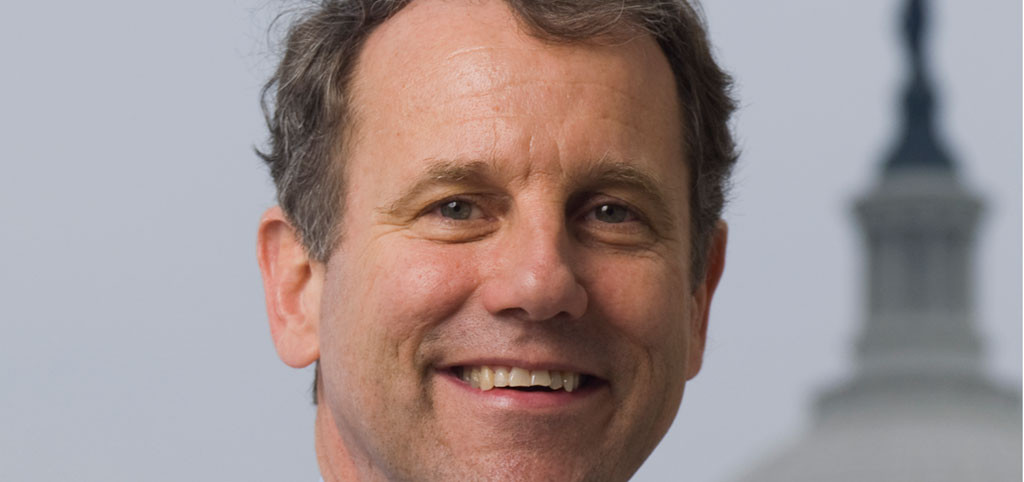
    Washington, D.C. – U.S. Senator Sherrod Brown (D-OH) joined a bipartisan group of colleagues to applaud the unanimous Senate passage of his bipartisan legislation to help police, fire, emergency medical, and 911 personnel cope with the stresses of responding to crisis situations. The Fighting Post-Traumatic Stress Disorder Act of 2023 would establish mental health programs for America’s first responders who often have long-term consequences from providing life-saving services in moments of crisis. Brown first introduced the Fighting Post-Traumatic Stress Disorder Act in May 2022 and reintroduced it in January 2023.

    “Law enforcement officers and other first responders put their lives on the line each day, facing stressful and often dangerous situations, to protect Ohioans. This legislation will ensure that law enforcement professionals have access to the care they need to deal with the trauma they experience on the job, and keep our communities safer,” Brown said.

    U.S. Senator Sherrod Brown

    “Law enforcement personnel, firefighters, emergency medical technicians, and 911 dispatchers routinely encounter high-stress situations, putting them at risk of developing post-traumatic stress disorder (PTSD), which increases the risk of suicide,” according to Brown’s office. The Fighting Post-Traumatic Stress Disorder Act would require the U.S. Department of Justice (DOJ) to establish evidence-based treatment programs for first responders across the country. These programs would be similar to services already available to military personnel who develop PTSD or acute stress disorders. The bill requires the DOJ to consult with stakeholders, including public safety officer organizations, to develop the program, which would be available to serve first responders from communities of all sizes.

    The bill is cosponsored by Senators Chuck Grassley (R-IA) Chris Coons (D-DE), Todd Young (R-IN), Josh Hawley (R-MO), Maggie Hassan (D-NH), John Kennedy (R-LA), Dianne Feinstein (D-CA), Marsha Blackburn (R-TN) and Richard Blumenthal (D-CT).

    Text of the Fighting Post-Traumatic Stress Disorder Act is available HERE.

  • Hamilton County reports new developments in the battle against COVID-19

    Hamilton County reports new developments in the battle against COVID-19

    Loveland, Ohio – The U.S. Food and Drug Administration issued an emergency use authorization (EUA) for the third vaccine for the prevention of coronavirus disease 2019 (COVID-19), according to the Hamilton County Department of Health. The EUA allows the Janssen (Johnson & Johnson) COVID-19 Vaccine to be distributed in the U.S for use in individuals 18 years of age and older. The vaccine is administered as a single dose, which will allow vaccination for more people while also providing opportunities for vaccination for groups requiring special consideration, such as the homebound.

    Expanded Vaccine Eligibility
    In response to this significant increase in the amount of vaccine coming into Ohio, Governor DeWine outlined the individuals who are included in Phase 1C and Phase 2 of Ohio’s vaccination plan which will go into effect on March 4.

    Phase 1C:
    Ohioans with certain occupations and with certain medical conditions not addressed in previous phases.

    Medical Groups Eligible in 1C
    Type 1 diabetes, Pregnant women, Bone marrow transplant recipients, and ALS (Lou Gehrig’s Disease)

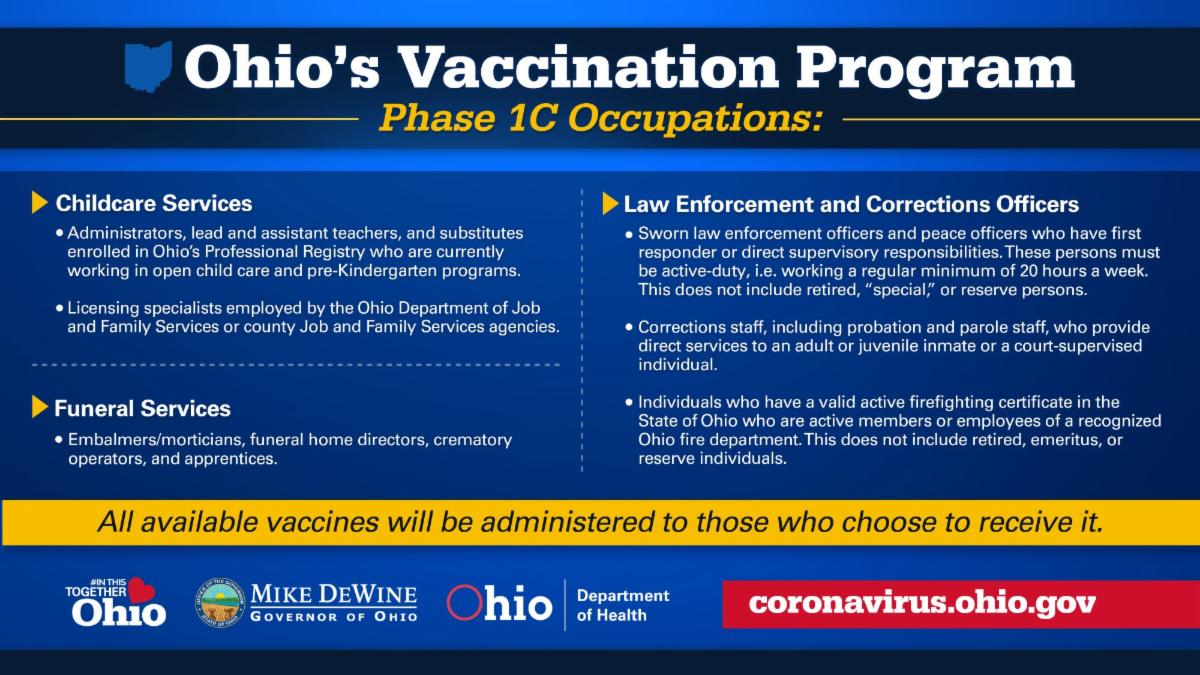
    Occupations Eligible in 1C (see full description in the graphic below)
    Childcare Services, Funeral Services, Law Enforcement, and Corrections Officers
    Follow the hyperlink to read the full press release from the Ohio Department of Health on the expanded vaccine eligibility criteria

    Phase 2:
    Because the risk of more severe reactions and outcomes of COVID-19 increase with age, Phase 2 will open vaccinations based on age, beginning with Ohioans ages 60 and older.

    IF YOU ARE NEWLY ELIGIBLE PER THE EXPANDED GUIDELINES ABOVE:
    The Health Department is asking that you register on their website. They have added these occupations and conditions to the registration that were not previously included.

    Click HERE to re-register*

    If you already registered and do not have a newly eligible occupation or condition per the above you DO NOT need to re-register.*

    Reduced Restrictions
    Last week, Governor Mike DeWine announced that sporting and entertainment events will be able to reopen with 25 percent maximum indoor capacity and 30 percent maximum outdoor capacity, provided they follow established precautions such as mandatory mask wearing for employees and customers, spectator pathways that allow for social distancing, and seating in groups in six-foot intervals of no more than six people from the same household.

    General admission (lawns, standing room, infields) will be permitted if masks are worn and if six-foot distancing can be marked and maintained.  New guidance for proms, banquets, wedding receptions, fairs, festivals, and parades is forthcoming.
    *If you are needing a vaccine appointment please do not unsubscribe. Unsubscribing will disable our ability to contact you for appointments.
    VISIT THE HCPH COVID-19 PAGE
  • I hope Trump fulfills his words in two weeks by stepping aside

    I hope Trump fulfills his words in two weeks by stepping aside

    by Stefanie Badders Laufersweiler

    When Colin Kaepernick knelt on a football field to call attention to disparate treatment and unnecessary deaths of blacks by some law enforcement, there was outrage, especially on social media, about the inappropriateness and disrespect in his protest.

    When a Congressman and minister ended a prayer before Congress with “amen/awoman”, a playful pun meant as a nod to a record number of women (144) taking office in Congress this term, and to the first female House chaplain being appointed, there were cries that the “Radical Left” are ruining our country.

    Yet when Americans stormed the Capitol yesterday, pushing past police and into Senate chambers and offices to disrupt the certification of election results with the intention of demanding that those results be overturned, there was largely silence from those so distraught by a knee and a pun.

    “No More Bullshit” flags hung in my community, in many communities, for months prior to the election.

    On numerous occasions before November, Trump claimed without evidence that widespread mail-in voting would mean a fraudulent election, and many times, including to a rally of supporters in Oshkosh, Wisconsin, in August, he said, “The only way we’re going to lose this election is if the election is rigged.”

    After Biden’s win was made official by Congress last night, Trump said he will leave office on Jan. 20, in the same breath that he again expressed that the election was stolen from him, despite any evidence.

    I find it interesting that so many “Pray for our nation” signs suddenly went up after Biden won the election. Shouldn’t the praying have been happening for our nation all along—no matter the leader, or the election results?

    Subtleties, after a while, take on all the subtlety of a sledgehammer.

    Our divisions are strong. We saw yesterday where unchecked words and actions over time can lead.

    I hope Trump fulfills his words in two weeks by stepping aside for his successor. And I hope we’re learning how vital a role we ordinary citizens play in a transfer of power being peaceful, and a nation moving on, by our actions and words every day.

  • DeWine announces new curfew to try to slow covid spread

    DeWine announces new curfew to try to slow covid spread

    Gov. Mike DeWine is pictured during his statewide address on Wednesday, Nov. 11. Photo courtesy Ohio Channel.


    By Marty Schladen and the Ohio Capital Journal


    Desperate to slow the spread of coronavirus, Ohio Gov. Mike DeWine on Tuesday announced a new curfew intended to decrease person-to-person contacts and new infections.

    The move was greeted with skepticism in some quarters.

    DeWine said that starting at 10 p.m. on Thursday, there will be a 21-day statewide curfew from 10 p.m. to 5 a.m. Bars, restaurants and retail stores will have to close. But there will be exceptions for pharmacies, grocery stores, food delivery, drive-through and pickup service.

    Technically, people who violate the curfew could be charged with a second-degree misdemeanor, punishable by 90 days in jail and a $750 fine. But as he has with other covid-related health orders, DeWine said he he’s not eager to see people charged.

    “We do not expect law enforcement to go pull people over because they’re out beyond 10 o’clock,” he said. “But if they’re seeing something going on, this is a way they can walk up and say, ‘Hey guys, you’re here… there’s a curfew. Why don’t you just go home?’”

    The governor added, “No one’s been charged under these health orders,” he said. “That doesn’t mean they couldn’t be, but they haven’t so far.”

    The curfew comes as Ohio experiences its most alarming spike in coronavirus infections and hospitalizations since the start of the pandemic early this year.

    On Tuesday, state health authorities reported 7,079 new cases over the past 24 hours, a 36% increase over the 21-day average. They also reported 368 new coronavirus hospitalizations, only a little less than the state record of 386 set on Nov. 10.

    The swelling numbers have placed Ohio hospital staffs in a “precarious situation,” said Bruce Vanderhoff, chief medical officer for the Ohio Department of Health. He said medical workers are fatigued from fighting the disease since March and they have to balance that work with living in communities and with families where the virus is increasingly prevalent.

    DeWine said his goal was to reduce the number of person-to-person contacts and thereby stop the virus from spreading. He asked Ohioans to voluntarily do that through such measures as condensing the number of trips they make to the grocery and buying more when they do. At the same time, he urged people to do what they can to remotely maintain emotional connections.

    However, critics noted that the curfew doesn’t go as far as one imposed in the spring. For example, the earlier order imposed limits on how many people can be in stores when they’re open.

    Asked what scientific basis he used in issuing the order, DeWine said, “We know the basic science. The basic science is fewer contacts, less spread.”

    The likely effectiveness of the curfew was disputed by at least one scientist in the field. Kent State epidemiologist Tara C. Smith tweeted that she didn’t know any professionals who thought it would work.

    DeWine, however, might have felt the curfew was as far as he could go. It had the support of the Ohio Restaurant Association, likely meaning that there was some negotiation behind it.

    Also, DeWine is a member of a party led by president who in October visited Circleville and said the media were hyping the virus to hurt his reelection chances. The president predicted the media would stop covering coronavirus on Nov. 4 — the day after the election.

    Covid skepticism runs so deep in elements of the Republican Party that at the same time that DeWine was announcing the curfew, Ohio Senate President Larry Obhof, R-Medina, was testifying in favor of his bill to repeal an earlier health order requiring bars to stop serving at 10 p.m.

    For his part, DeWine said he hopes the curfew will “push more people toward home.”

    “I think if we do these things it gives us a shot at slowing (the coronavirus) down,” the governor said. “Most of what we’re doing and the decisions I’m making are between two bad choices.”


    Marty Schladen

    Marty Schladen has been a reporter for decades, working in Indiana, Texas and other places before returning to his native Ohio to work at The Columbus Dispatch in 2017. He’s won state and national journalism awards for investigations into utility regulation, public corruption, the environment, prescription drug spending and other matters.


  • Great Oaks launches drone piloting certification for first responders

    Great Oaks launches drone piloting certification for first responders

    drone photo of extrication

    Promoted Post

    Drones can save lives. First responders can learn how through a new first-in-the-world certification program for adults at Great Oaks Career Campuses:  Emergency Services Drone Operator.  This program teaches the use of drones for fire fighting, law enforcement, and emergency medical rescue.

    Drone technology can be used during a fire to keep fire fighters safe while viewing the scene, after a fire by investigators, as a set of eyes during vehicle or foot chases, as a tool for search-and-rescue, or in many other ways by first responders.

    The first class of students began on October 5, and included eleven firefighters and emergency services professionals from Sharonville, Norwood, the Village of Woodlawn, and the City of Cincinnati.

    “Great Oaks is pioneering the use of this technology to save lives,” said Great Oaks Fire Academy Commander Johnny Mason.  “An emergency services drone operator needs to know not just how to fly the drone, but how to view and interpret an emergency scene from above.”

    The class offered at Great Oaks is the first course approved by ProBoard to certify students in NFPA 2400, the standard for Small Unmanned Aircraft Systems (SUAS) for Public Safety Operations.  Mason said that during the five-day class, students will plan missions, fly missions, and learn to maintain drones.  They will also hold such training exercises as approaching a suspicious vehicle, conducting search-and-rescue activities, and dealing with hazmat situations.

    During a training demonstration for local officials, Johnny Mason said the timing of launching this class was fortunate.  “Great Oaks is celebrating 50 years this year, and I can’t think of a better way to celebrate than to introduce training in life-saving technology.”

    For more information, contact Great Oaks Public Safety Services at 513.771.1142.

  • Ohio Department of Health receives ALL allocated PPE from the Strategic National Stockpile

    Ohio Department of Health receives ALL allocated PPE from the Strategic National Stockpile

    Locally you can donate Personal Protective Equipment HERE

    Columbus, Ohio – A critical part of our state’s effort to contain and stop the spread of coronavirus disease 2019 (COVID-19) is to ensure our healthcare providers, Emergency Medical Services, law enforcement, and long-term care workers have the equipment they need to protect themselves and those they serve.

    “The supplies we received, and the state’s reserve will not meet the immediate or future needs of Ohio’s healthcare providers and first responders,” said ODH Director Amy Acton, M.D., MPH.

    The increase in people with respiratory symptoms visiting hospitals and needing care is straining our healthcare system’s supply of Personal Protective Equipment (PPE). Ohio requested early and has received our shipment of PPE from the Strategic National Stockpile (SNS). PPE includes gowns, gloves, goggles, and masks. Ohio’s allocation of materiel to the locals was informed by the Centers for Disease Control and Prevention guidance on the allocation of critical resources during a pandemic.

    All shipments have been received by ODH and all will be sent to county locations to ensure local PPE needs are met. Here are the total numbers from the SNS:

    Gowns Coveralls Gloves Face
    Shields
    Surgical
    Masks
    N95
    Masks
    SNS Ohio supplies 107,670 552 493,575 131,808 672,100 271,450


    “The supplies we received, and the state’s reserve will not meet the immediate or future needs of Ohio’s healthcare providers and first responders,” said ODH Director Amy Acton, M.D., MPH. “This shortage is why our message has been to conserve. Industries with PPE are encouraged to donate what they have to their local Emergency Management Agencies.” (Click on link at the top of this story)

    PPE supply inventory is never static as there is always stock coming in and stock going out from different vendors. As a result, these numbers can constantly change.

    For more information on COVID-19, please visit coronavirus.ohio.gov.


    Confirmed Cases in Ohio – 2199
    Number of ICU admissions – 198
    Number of Hospitalizations in Ohio – 585
    Number of Deaths – 55
    Age Range – <1–99
    Median Age – 53
    Sex – Males – 49%*
    Sex – Females – 51%*

    *Last Updated: 03/31/20 (Updated daily at 2 p.m.) *<1% sex not reported


  • Governor DeWine Announces School Safety Working Group Members

    Governor DeWine Announces School Safety Working Group Members

    Columbus, Ohio – Ohio Governor Mike DeWine today announced the members of the Governor’s new Ohio School Safety Working Group.

    Governor DeWine called for the creation of the working group in August when announcing the development of the Ohio School Safety Center, a new statewide office focused on assisting educators and law enforcement in preventing, preparing for, and responding to threats and acts of violence, including self-harm. The working group, which will be led by the Ohio Department of Public Safety, will evaluate current issues regarding school safety and advise the Ohio School Safety Center on its work.

    “Members of this working group all have a common goal of making Ohio’s schools as safe as they possibly can be,” said Governor DeWine. “I’m confident that this group will be a great asset as they work to promote a safe environment for Ohio’s school students and school employees.”

    Members of the Ohio School Safety Working Group include:

      • Tim Armelli, Teacher, Chardon High School
      • Melissa Wervey Arnold, CEO, American Academy of Pediatrics
      • Todd Barnhouse, CEO, Ohio Child Care Resource and Referral Association
      • Bobbie Boyer, Deputy Director of Prevention, Ohio MHAS
      • LeeAnne Cornyn, Director, Governor’s Children’s Initiatives
      • Courtney Ebersole, Program Administrator, Ohio ACBHA
      • Joan Englund, Executive Director, Mental Health and Addiction Advocacy Coalition
      • Dan Flannery, Director, Case Western Reserve University
      • Eric “Yitz” Frank, Director, Agudath Israel of Ohio
      • Dan Girard, Principal, Wilson Hill Elementary, Worthington Schools
      • Dan Grothause, Transportation Supervisor, St. Marys City Schools
      • Kirk Hamilton, Executive Director, Buckeye Association of School Administrators
      • Donna Harrass, Executive Director, Ohio Association of Chiefs of Police
      • Brian Hill, School Psychologist, Ohio School Psychologists Association
      • Lois Hochstetler, Assistant Director of Community Treatment, Ohio MHAS
      • Scott Huddle, Board President, Mad River Local Schools
      • Jeff Hussey, State Fire Marshal, Ohio Department of Commerce
      • Joe Kitchen, Fire Chief, Ohio Fire Chiefs’ Association
      • Jon Kochis, Fairfield County EMA Director, EMA of Ohio
      • Teresa Lampl, CEO, Ohio Council of Behavioral Health & Family Services Providers
      • Nicholas Lashutka, President, Ohio Children’s Hospital Association
      • Sarah LaTourette, Executive Director, Ohio Family and Children First
      • Rick Lewis, Executive Director/CEO, Ohio School Boards Association
      • George Maier, Sheriff, Buckeye State Sheriff’s Association
      • Krista Maxson, Associate Vice Chancellor P-16 Initiatives, Ohio Dept. of Higher Ed.
      • Mark Mecum, Executive Director, Ohio Children’s Alliance
      • Matt Miller, Superintendent, Lakota Local Schools
      • Nichole Miller, President, Ohio School Counselors Association
      • Bradley Paramore, President, Ohio School Psychologists Association
      • Kari Parsons, Executive Director, Ohio School Resource Office Association
      • Mark Porter, Director of Law Enforcement, Ohio Attorney General’s Office
      • Pam Reed, Teacher, Columbus City Preparatory School for Girls
      • Terry Russell, Executive Director, National Alliance on Mental Illness Ohio
      • Angela Sausser, Executive Director, Public Children Services Association of Ohio
      • Marcie Seidel, Executive Director, Prevention Action Alliance
      • Stephanie Siddens, Senior Executive Director, Ohio Department of Education
      • Jeff Staggs, Superintendent, Newcomerstown Exempted Village Schools
      • Joe Suozzi, Director of Safety, Security and Preparedness, Olentangy Local Schools
      • Ben Suver, Director of Law Enforcement Initiatives, Ohio Dept. of Public Safety
      • Dean Tondiglia, Director of Public Safety and Chief of Police, Kent State University
      • Kim Welter, Director of Finance and Policy, Equality Ohio Education Fund
      • Jeff Westhoven, Chief of Program Services, Ohio Facilities Construction Commission

    The Ohio School Safety Center and the Governor’s Ohio School Safety Working Group were created as part of Governor DeWine’s STRONG Ohio plan.

    The working group’s first meeting will be held tomorrow at 10 a.m. at the Ohio Department of Public Safety, 1970 W. Broad Street, in Columbus.


  • DeWine announces development of new sexual assault kit tracking system

    DeWine announces development of new sexual assault kit tracking system

    The “Ohio Attorney General’s Sexual Assault Kit Tracking System” will give those who have undergone a sexual assault forensic examination the option to track the status of their rape kit evidence online.

    Columbus, Ohio – Attorney General Mike DeWine announced Thursday that his office is developing a statewide system that will increase transparency surrounding the collection, submission, and analysis of sexual assault kit evidence in Ohio.

    The “Ohio Attorney General’s Sexual Assault Kit Tracking System” will give those who have undergone a sexual assault forensic examination the option to track the status of their rape kit evidence online.

    “Sexual assault survivors have already gone through unimaginable trauma, and not knowing where their cases stand can be agonizing,” said DeWine. “This new system will empower survivors by giving them the ability to instantly and anonymously find out where their evidence is located and whether or not it has been submitted for testing.”

    By entering a barcode number into the free, online program, survivors who choose to use the system will be able to follow their evidence as it proceeds from collection at a medical facility, to inventory at a law enforcement agency, to analysis at a crime lab, and to storage or destruction.

    By entering a barcode number into the free, online program, survivors who choose to use the system will be able to follow their evidence as it proceeds from collection at a medical facility, to inventory at a law enforcement agency, to analysis at a crime lab, and to storage or destruction.

    New legislation introduced by State Senator Stephanie Kunze (R-Hilliard) and State Representative Dorothy Pelanda (R-Marysville) seeks to require all agencies involved in the chain-of-custody of sexual assault kits to participate in the tracking program.

    “As we continue to help and encourage victims of sexual assault to rebuild their lives, it is imperative that we provide them the ability to check the status of the testing of their rape kits quietly and discreetly,” said Senator Kunze. “Affording them the opportunity to do so in a safe, secure manner ensures their privacy. We can allow survivors to continue moving forward with the option to check on the progress to help with the emotional healing and journey to moving forward from their horrific experience.”

    “Attorney General DeWine and his office have demonstrated tremendous leadership and diligence when it comes to this issue. The bills introduced this week in the House and Senate represent a crucial next step in the process,” said Representative Pelanda. “I look forward to working with Attorney General DeWine, my great colleague Senator Kunze, and my brothers and sisters in the House of Representatives as we move forward with this legislation.”

    The advisory group will include victim advocates, sexual assault nurse examiners, law enforcement, prosecutors, and representatives from hospital associations and crime laboratories.

    DeWine is also creating an advisory group to study best practices and provide advice on how Ohio’s tracking system should operate. The advisory group will include victim advocates, sexual assault nurse examiners, law enforcement, prosecutors, and representatives from hospital associations and crime laboratories. The members of the advisory group, who will be announced at a later date, will give special consideration to protecting the privacy of survivors who use the system.

    “We are excited to see this initiative coming from the Ohio Attorney General’s Office,” said Rosa Beltre, executive director of the Ohio Alliance to End Sexual Violence. “It is important to reform how rape kits are handled and tracked in the state of Ohio, despite the many challenges and difference of opinion. We collectively can choose to do nothing because of funding and road blocks, or as we have done today, we can choose to take steps within our circle of influence to make a difference. We owe this to every survivor in our state.”

    The development of the program, as well as any maintenance and equipment, will be financed through Victim of Crime Act (VOCA) funding. VOCA funds, which are administered by the Ohio Attorney General’s Office, are from federal settlements, fines, and fees and must be used to enhance victim rights and services.

    “This new tracking system will also help ensure that an accumulation of untested rape kits never happens in Ohio again,” said Attorney General DeWine. “Survivors expect their kits to be submitted for analysis in a timely manner, and this new program will increase accountability and transparency throughout the entire process.”

    To date, Attorney General DeWine’s SAK Testing Initiative has led to 5,071 hits in the Combined DNA Index System (CODIS), and hundreds of attackers have been prosecuted according to DeWine’s office. In response to the success of the initiative, new law was enacted in 2015 requiring that law enforcement agencies in Ohio submit sexual assault kit evidence to a crime laboratory within 30 days.


  • BCI Facial Reconstruction Created of Summit County John Doe

    BCI Facial Reconstruction Created of Summit County John Doe

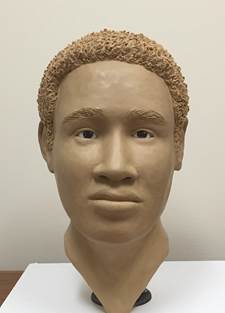
    Columbus, Ohio – Ohio Attorney General Mike DeWine, Summit County Medical Examiner Dr. Lisa Kohler, and Twinsburg Police Chief Christopher J. Noga today unveiled the forensic facial reconstruction of a man whose skeletal remains were found more than 20 years ago.

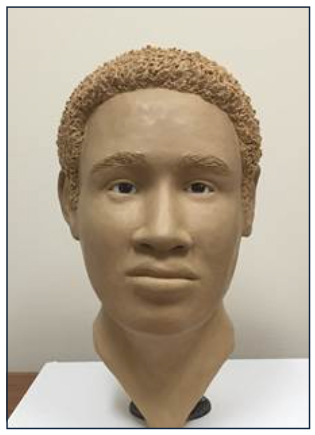
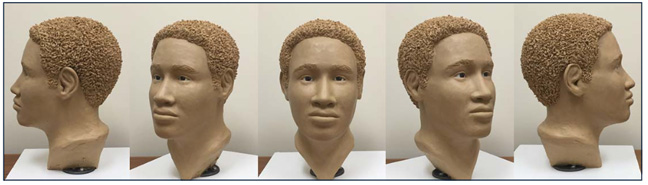
    The clay model was created by a forensic artist with the Attorney General’s Ohio Bureau of Criminal Investigation (BCI) in an effort to help Summit County authorities identify the man.

    Summit County John Doe

    “This person is someone’s son, and there is a family out there who loved him.  Now we need the public’s help to find this person’s loved ones some answers,” said Attorney General Mike DeWine. “This facial reconstruction we recently started doing at BCI is a new tool we hope will lead to positively identifying remains in cases like this one.”  

    His remains were found on February 18, 1982 behind a business at 3047 Cannon Road in Twinsburg. He is believed to be an African American male between 20 and 30 years old and approximately 5’6″ tall. Additional details such as weight, hair, or eye color are unknown.

    Items such as hairstyle are the artist’s estimations to complete the reconstruction and should not be considered significant markers for identification. 

    More than 900 law enforcement agencies today received this bulletin in an effort to bring widespread attention to the case.

    “While his remains were discovered in 1982, we believe that his death occurred approximately a year and half before that,” said Chief Christopher J. Noga. “We are really hoping people take a good look at this BCI facial reconstruction.  It may lead to us being able to finally identify him.”  

    BCI’s forensic artist is available to assist local law enforcement with the creation of forensic facial reconstruction models to help identify unidentified skeletal remains. This is the second facial reconstruction created by BCI in northeast Ohio, and the fifth reconstruction statewide. A Greene County Jane Doe was identified as a Florida woman following BCI’s creation of a clay model in December 2016.  A Jane Doe reconstruction and John Doe reconstruction were created for two separate, still-unidentified decedents in Marion County earlier this year, and the clay model of a John Doe in an unsolved Akron investigation was created in July.

    Missing Persons Unit analysts can also provide case review, investigative assistance, link charts, and mapping.
    BCI also offers the Ohio LINK (Linking Individuals Not Known) Program, a free service to police, coroners, and families of missing individuals. The LINK Program was established through the Attorney General’s Office in 1999 to help match DNA taken from family members of missing individuals to DNA from unidentified remains.  Samples of DNA submitted by family members as part of the LINK Program are compared only to DNA samples of unidentified remains submitted through similar programs nationwide. There are currently 194 open cases in the Ohio LINK database.

    For tips about this Summit County John Doe case or for information about BCI’s Missing Persons Unit call 855-BCI-OHIO (855-224-6446).


  • Attorney General DeWine announces enhanced efforts to investigate skimmer crimes

    Attorney General DeWine announces enhanced efforts to investigate skimmer crimes

    In a recent case, BCI agents assisted an Ohio law enforcement agency in identifying more than 700 victims.

    Columbus, Ohio – Ohio Attorney General Mike DeWine announced today that cyber crime agents with the Attorney General’s Ohio Bureau of Criminal Investigation (BCI) now have a new tool to help local law enforcement agencies investigate crimes involving credit card skimmers. 

    Through the use of new technology, the BCI Cyber Crimes Unit now has the ability to extract data from a majority of credit card skimmers, which criminals use to steal credit card or debit card information from unsuspecting cardholders. The skimmers are often hidden on ATM and gas pump card readers and allow identity thieves to steal card information. 

    The technology that is now in use at BCI allows agents to pull data from credit card skimmers in a “forensically sound” manner to aid local law enforcement in identifying both the suspects and victims involved.

    The technology that is now in use at BCI allows agents to pull data from credit card skimmers in a “forensically sound” manner to aid local law enforcement in identifying both the suspects and victims involved. 

    In a recent case, BCI agents assisted an Ohio law enforcement agency in identifying more than 700 victims of a single skimmer device.

    “With just a simple swipe of your credit or debit card, skimmers put your name, card number, and other data into the hands of identity thieves so that they can go on a shopping spree,” said Attorney General DeWine. “Investigations to track down the source of a skimmer can be very complex, but by making this new tool available to local law enforcement, we hope to help authorities identify these cyber criminals before they have the chance to use the card information they’ve stolen.”

    Tips to avoid becoming a victim of a credit card skimmer include: 

    • Check for fake overlays, which are devices that identity thieves place over existing ATM/gas pump card readers. Most fake overlays are secured by tape. Try wiggling or pulling on the reader before inserting your card. If the device comes off, it is most likely a skimmer overlay.
    • Check for damage or foreign objects inside the card reader.
    • Check for a gas pump security seal. Some gas stations place stickers on gas pumps that will turn void if the inside of the gas pump has been tampered with. 
    • Use a credit card instead of a debit card.  If you must use a debit card, run the transaction as credit, if possible.
    • If a pin code is required to complete the transaction, cover up the pin pad with your other hand. Thieves sometimes place small cameras in card readers to obtain pin code information.
    • Pay inside at the cashier instead of paying at the pump.
    • Monitor your credit card and bank accounts regularly.

    Law enforcement officers interested in more information on how BCI can assist in skimmer cases can call 855-BCI-OHIO (855-224-6446).