Tag: leadership skills

  • I want others with disabilities to have opportunities like I had

    I want others with disabilities to have opportunities like I had

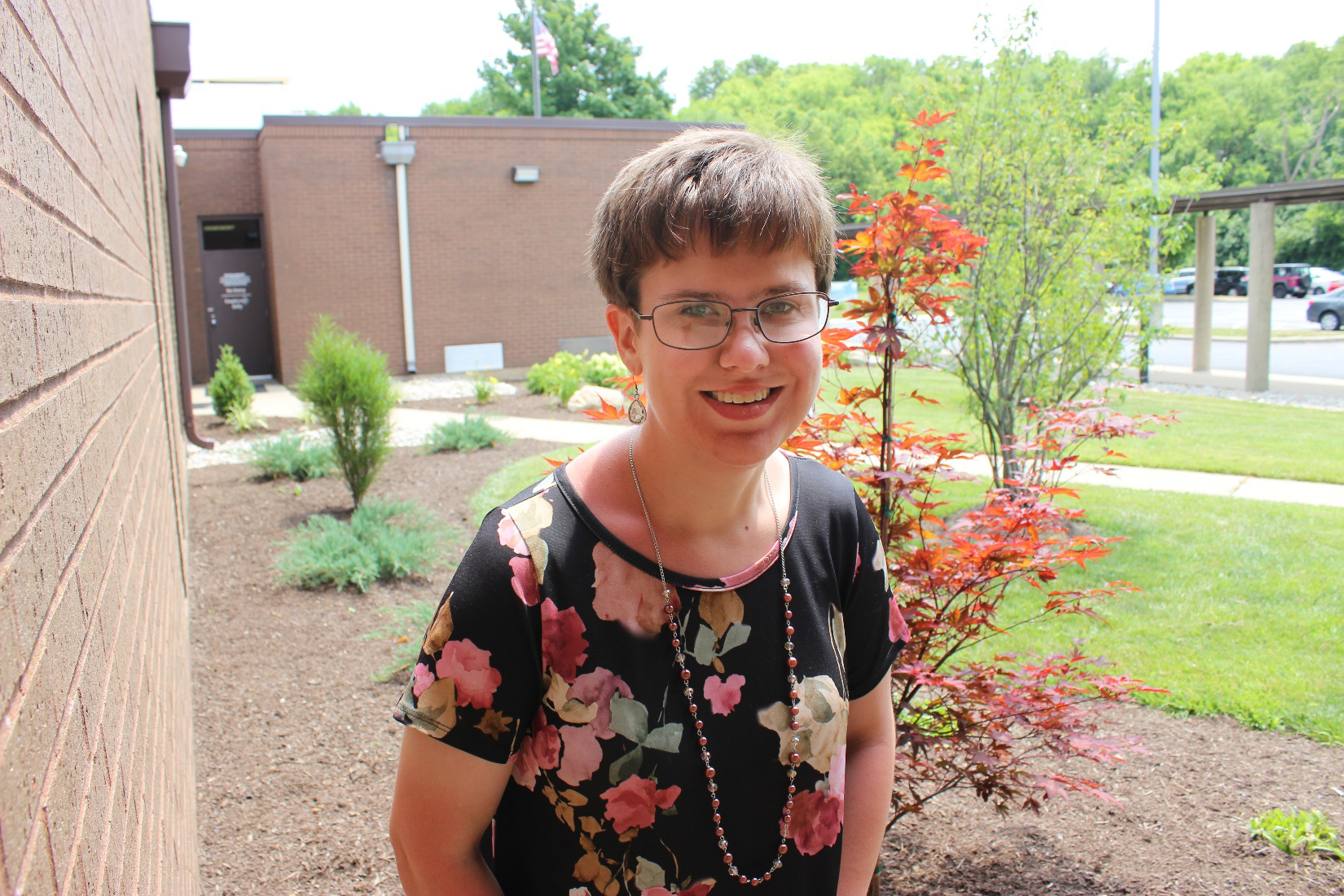
    by Courtney Hineman

    March is Developmental Disabilities (DD) Awareness Month which makes it the perfect time to share how my community created opportunities for me and partly because of that, I’ve been able to flourish. As someone who lives with a developmental disability, I want others with disabilities to have similar opportunities for employment, leadership, and friendship.

    When I was younger, I got to be a part of a summer work program through the Butler County Board of Developmental Disabilities (BCBDD). My first job was cleaning toilets and tables at Barn N Bunk, and I cleaned at Camp Campbell Gard as well. Later, I worked at the East Butler YMCA at the customer service desk.

    I really enjoyed getting to interact with people and learn new things. For many people with disabilities, building friendships or gaining leadership skills can be difficult. For me, these work experiences helped create opportunities for both leadership and friendship. I feel my past work  experiences lead me to the job I have now because I was able to learn how to interact with customers and show others that I’m a hard worker.

    Sometimes, it can be hard for people with disabilities to develop friendships. For me, Best Buddies helped bridge that gap. Best Buddies is an international organization that matches people with and without disabilities for friendship. Through Best Buddies I have learned how to grow in a relationship with a friend, I’ve been able to try new things, and I’ve learned leadership skills. One of my favorite experiences through Best Buddies was painting pumpkins with my new friend.

    Through Best Buddies, I have attended leadership trainings which helped me in my role as Community Outreach Advocate at BCBDD. At those leadership trainings we learned how to share our story. We learned how to write a speech and how to present in front of others. This has given me confidence not only at work but also in my personal life. I now know that I can speak up for myself and that sharing my experience can help others with disabilities and their families.

    These opportunities helped me tremendously. You can create that for someone in your community. I hope that you take the time this month and every month to give someone with a disability an opportunity to grow in their skills and help them live the best life they can live.

  • I felt the tears welling behind my eyes and willed them not to escape

    I felt the tears welling behind my eyes and willed them not to escape

    There is value in having no child feel rejected and invisible in their own school. If I can help it, none of them will.


    A story by a Loveland resident presented by Loveland Magazine in collaboration with the Loveland Diversity Advisory Board

    A sharp pain startled me. Something had pelted my head. Whatever it was ricocheted to the floor with a hollow plink. I rubbed the back of my skull and looked around trying to determine what had hit me. As I did, I took another sharp blow, this time to the cheek, followed again by a distinct plinking sound. The next shot hit my shoulder. Then my neck. Finally one of the projectiles flew past my face and I was able to identify what was being hurled toward me. 

    It was a penny. 

    I looked in the direction from which the projectiles originated and saw a lunch table of my fifth grade peers laughing, trying to look inconspicuous in the conspicuous way guilty ten year-olds have a tendency to do.

    “Did she pick them up?” one whispered.

    “Shhhhh! She’s looking over here,” the other said, waving his hand in the universal sign to keep it down.

    More giggles.

    x

    I sheepishly rubbed my cheek, which by now was smarting and red. I looked down at the floor where several pennies lay in a telltale scatter at my feet. 

    Another sharp pain.

    “Pick up the pennies, Jew,” someone from the table jeered, just loud enough for me to hear.

    I felt the tears welling behind my eyes and willed them not to escape. No one would see me cry. Despite my best intentions, a tear leaked out, betraying me as it rolled down my injured cheek. Its saltiness stung against the broken skin.  

    x

    The perpetrators weren’t the school’s “bad” kids. They weren’t the “troublemakers.” They weren’t the kids who wadded up the stiff brown paper towels, wet them, and threw them up on the bathroom ceiling where they’d stick and harden like cement. 

    These were the kids who raised their hands to read aloud from the social studies textbook when the teacher asked for volunteers.They attended PSR at the church down the street from my house where a giant tree sprouted pink blossoms each spring before dropping her petals in a sudden heap. These were the kids who, if I’d told a teacher, would elicit the response of ‘Well now that doesn’t sound like them. I’m sure they meant nothing by it. Have you tried ignoring it?’

    x

    The lone tear fell onto the lunch table, a solitary puddle on the faux wood facade. Pennies? What does that even mean? I pondered this question silently, focusing intently on the fallen tear to prevent more from spilling out. I felt ashamed and embarrassed. I never mentioned it again. 

    This was the first time it happened, but it wouldn’t be the last.  

    At ten years old, I didn’t understand the deeply anti-Semitic implications of these kids’ actions. As an adult, I know they picked up on these stereotypes somewhere. I feel confident that the hateful message was learned outside of school, however subtly transmitted. Maybe slips of the tongue by their parents. Maybe from the innuendos presented in the news channel their family watched. Maybe from friends whose families held biases. But what about what they learned–or didn’t learn–while they were in school? What was the message there?

    There was nary a mention of Jewish people in my elementary school. Despite a small population of Jewish students, the curriculum had settled into a comfortable rhythm they saw no need to update. I remember clearly how each year my teachers were startled when they learned that I didn’t have a Christmas tree. 

    “What do you mean?” my second grade teacher asked incredulously. “Everyone has a Christmas tree,”  And so it went. 

    x

    I accepted my lot early. I dutifully completed my “Letter to Santa” assignments each December prior to “Christmas Break” where I’d take home the ornament I had to make for my non-existent tree. In the spring, I mustered up fake gusto to color oil pastel Easter egg cut-outs. I completed the multiplication worksheets asking how much tinsel Jane needs to trim her Christmas tree and conducted the science experiments on decorating Easter eggs with various substances, bright red beet juice staining my hands for days. 

     The message coming from the school was clear: one specific religion was the universal norm. Obviously, I was different. That made me a target. 

    I share this with you to illustrate that representation matters. While some may disagree, they are likely the ones who have never been in a situation where they were the “other.”

    Representation doesn’t mean anyone has to alter their own convictions or feel put on the defensive. It doesn’t mean one side is right and the other is wrong, that there’s a hidden agenda, or that any one lifestyle is being attacked. 

    What it does do is allow students to learn that the world is full of people whose beliefs, values, and opinions differ from their own. It means the students who aren’t part of the status quo feel a sense of belonging. At its best, it fosters mutual understanding and civility. Representation neither promotes one lifestyle, race, or religion, nor detracts from another. All representation does is to allow students to see that there are different ways of being and that there is validity in who we ALL are. 

    x

    While I cannot change my school experience, we owe it to our own kids the opportunity to explore diversity through equal and prominent representation. If you’re a minority, there is value in seeing someone like yourself; if you’re in the majority, there is value in seeing that there’s an actual living, feeling human being behind the label. Most importantly, there is value in having no child feel rejected and invisible in their own school. If I can help it, none of them will.


  • Wenstrup now accepting applications for U.S. Service Academies for Class of 2025

    Wenstrup now accepting applications for U.S. Service Academies for Class of 2025

    From the office of Ohio Congressman Brad Wenstrup:

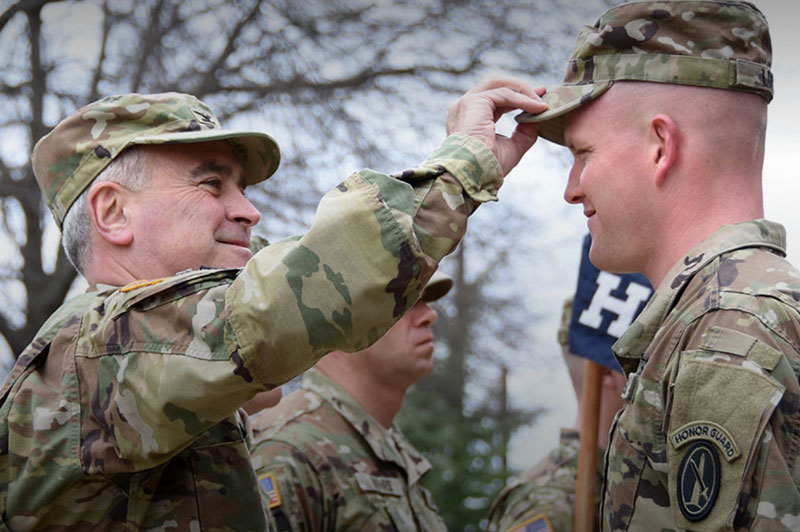
    As a Member of Congress, I have the privilege of nominating exceptional young people for admission to the U.S. Military Academy at West Point, the Naval Academy, the Air Force Academy and the Merchant Marine Academy, known collectively as the U.S. Service Academies.  My office also works with students interested in the Coast Guard Academy. The U.S. Service Academies offer opportunities for motivated young men and women to serve their country while receiving an excellent education and developing valuable leadership skills.  In place of tuition, the Academies require military service after graduation.

    If you’re interested in attending a U.S. Service Academy, check out the resources below. If you have any questions, please contact Annie Cummins in my Cincinnati District Office: (513) 474-7777.

    Pathway to an Academy Nomination

    Admission to the U.S. Service Academies is highly competitive and selective, as is the process of securing a nomination. Here are some things to consider on your pathway to a nomination and, ultimately, admission to an Academy:

    Academic Achievement:

    The U.S. Military Academies are looking for candidates who have a strong record of academic achievement. Your high school GPA and class rank are important indicators of your academic record, as are the kinds of courses you take. Consider taking more challenging courses (like AP/Honors classes, math and science classes, etc.) whenever possible.

    Leadership and Service:

    Candidates for the Academies must demonstrate outstanding leadership both in and outside of the classroom. Participating in extracurricular activities like athletics, clubs, and community service organizations can help you develop and hone your leadership skills.

    Summer Programs:

    The U.S. Military Academy, the U.S. Air Force Academy, and the U.S. Naval Academy each offer a variety of summer programs for prospective applicants. Participating in one or more of these programs is a great way to become acquainted with life at the Academies. Click on the links below to learn more about these opportunities.

    U.S. Military Academy at West Point
    The Summer Leaders Experience
    Sports Camps
    STEM Programs

    U.S. Air Force Academy
    Summer Seminar
    Sports Camps 

    U.S. Naval Academy
    Summer Seminar
    Summer STEM Program
    Sports Camps

    Academy Day

    Interested in joining a service academy?

    Stay tuned for upcoming Academy Day dates.

    Applying for an Academy Nomination

    To be considered for a nomination to one of the United States Service Academies for the graduating class of 2025, your application must be received by the Cincinnati District Office by 5:00 p.m. on September 25th, 2020.  Your completed file must contain the following:

    1.         Completed Application Form

    2.         High School Transcript – Transcript must include all course work, GPA, and class rank.

    3.         Standardized Test Scores – Please provide official scores from the ACT or SAT, or both, as reflected on a school transcript or in official documentation from ACT or SAT.

    4.         High School Recommendation – Please provide a letter of recommendation written by your Guidance Counselor or High School Principal.

    5.         Letters of Recommendation – Please provide 2 additional letters of recommendation.

    6.         Community & School Activity List – Please list all school, athletic, and community activities and other significant accomplishments/awards.

    7.         Essay – Please provide an essay (300 words or less) outlining why you want to attend a United States Service Academy and then serve in the military as a commissioned officer.

    8.         Interview – All applicants will be required to attend an interview session conducted by our Academy Panel.  Dates, times, and locations will be determined at a later date.

    9.         Photograph – Please provide a current 5×7 photograph.

    10.       Deadline – Send the above information by September 25, 2020.

    The nomination materials referenced above are SEPARATE AND DISTINCT from the application materials you must submit directly to the Academies.

    Please make sure to also begin your pre-candidate file with each Academy to which you plan to make application.

    Click here to access my office’s 2020 Academy Nomination Application form.