Tag: legislation

  • What will DeWine sign? Lawmakers passed more than 30 bills on last day of session

    What will DeWine sign? Lawmakers passed more than 30 bills on last day of session

    BY: NICK EVANS – Ohio Capital Journal

    Barring an emergency, Ohio’s lawmakers have headed home for the holidays. That puts the ball in Gov. Mike DeWine’s court to sign or veto the final burst of legislation passed in the Statehouse. If the governor does nothing, legislation will take effect without his signature. But he has ten days after receiving the bills — not counting Sundays — to take action if he chooses.

    He’ll have a lot to work through between now and then. During the legislature’s overnight final session, they approved more than 30 pieces of legislation now heading to the governor. The highlights have gotten extensive coverage, but there was a lot of other legislative action as well.

    Thursday, DeWine’s office received a raft of 24 bills. The deadline for action on those is January 3.

    Here’s what passed:

    HB 513: Tax deduction for cigarette wholesalers when retailers fail to pay. A late amendment tacked on prohibitions for local tobacco regulations.

    HB 45: Began as a two month amnesty window for delinquent state taxes. Amendments appropriated $6 billion in federal COVID relief.

    HB 66: Numerous tweaks to local taxing authority and reporting as well as $30 million for minor league sports teams.

    HB 254: Established domestic violence fatality review boards.

    HB 558: Modified state’s donated drug repository program

    HB 107: Revised Ohio’s elevator laws

    HB 343: Modified crime victim’s rights

    HB 353: Ohio’s “Testing Your Faith Act” which directs higher ed institutions to develop accommodations for students who need to be absent for religious reasons.

    HB 392: Authorized transport of police dogs injured in the line of duty. An amendment made provisions for riding in a fifth wheel trailer and mounting safety devices on a windshield.

    HB 578: Created new specialty license plates and memorial highway designations.

    HB 567: Required common pleas courts post their docket online.

    HB 504: Raised penalties for disrupting religious services.

    HB 545: Privileged peer support communications.

    HB 554: Allowed state board of education to issue temporary licenses to teachers with expired certificates or licenses.

    HB 281: Updated statutory terms related to people with disabilities or suffering from mental illness.

    HB 569: Allows higher ed institutions to offer scholarships to people serving as family caregivers.

    HB 575: Set policy for regulating the solvency of fraternal benefit societies.

    HB 35: Permitted Ohio mayors to solemnize marriages.

    HB 279: Shortened timeline for filing certain wrongful death claims.

    HB 487: Altered bidding process for Ohio ballot printing contracts to allow out of state vendors/printers to participate.

    HB 462: Prohibited “swatting

    HB 150: Establish a rural practice incentive program to pay student loans for attorneys working in public offices or underserved communities.

    SB 63: Allowed county probation offices to accept credit card payments. A House amendment added on a new liquor permit for auto-sports facilities.

    SB 131: Required the issuance of certain occupational licenses if a person has experience in that field in a different state.

    SB 202: Prohibited restricting parental rights due to the parent’s disability. House amendments gave lawyers credit toward judicial eligibility for out of state practice time and created a bail study task force.

    SB 302: Made changes to the state unemployment compensation system.

    SB 288: Made numerous changes to the criminal code.

    SB 33: Changed Community Reinvestment Area policy to allow greater deduction to 529 education savings plans.

    SB 164: Altered animal cruelty laws and prohibited shelters from using gas chambers to put down pets.

    SB 16: Increased penalties for assault or menacing when the victim is a first responder. The measure also gave local governments explicit authorities when dealing with a riot or mob and prohibited any limitations on firearm rights due to a state of emergency.

    HB 405: Clarified rules of county hospital boards, gave coroners access to a law enforcement database and allowed treasurers to send bills electronically.

    HB423: Designated the American Soap Box Derby Ohio’s official gravity racing program.

    HB 501: Made a series of changes related to township authorities including allowing them to regulate small solar facilities.

    HB 509: Updated numerous occupational licensing provisions.

    HB 458: Began as a measure eliminating August special elections except for Congress. The Senate amended the bill to include strict new photo-ID requirements for voters as well as tighter limitations on returning absentee ballots.

    HB 364: Changed application process for sewer and water infrastructure surcharges

    Plaudits and veto calls

    Already, forces are gearing up inside the statehouse and out urging Gov. DeWine to veto certain measures. Others are lending their support.

    Attorney General Dave Yost applauded the anti-swatting legislation saying, “these prank calls are designed to do one thing — cause a panic.” The Ohio Association of Election Officials meanwhile thanked lawmakers for a $7.5 million appropriation for electronic poll books.

    Democrats zeroed in on a different part of the same bill. The measure would disqualify developments using the federal low income housing tax credit from using a state credit for rehabbing historic buildings.

    “These provisions, added at the eleventh hour of a lame duck session, were added with zero input from developers and affordable housing advocates. The policies are bad for Ohioans and bad for Ohio business,” they wrote in a press release.

    Democrats also urged DeWine to veto HB 458 which would impose strict new photo ID requirements for voters.

    At the city level, mayors have criticized the bill barring local tobacco regulations. The city of Columbus approved a flavored tobacco ban just days before state lawmakers acted. And the mayors might be in luck. DeWine has hinted at a potential veto, citing his past work fighting big tobacco.

    Clarification: an earlier version of this story stated DeWine’s deadline for vetoing any legislation was December 26. That calculation was incorrectly based on when the legislature passed legislation rather than when DeWine receives it.

    Follow OCJ Reporter Nick Evans on Twitter.

  • AARP Ohio calls on lawmakers to pass legislation to provide dementia training to first responders

    AARP Ohio calls on lawmakers to pass legislation to provide dementia training to first responders

    AARP Ohio also asks the General Assembly to support bills that benefit Ohio’s 50 plus population as they age in place

    Columbus, Ohio – Today, AARP called on Ohio lawmakers to pass House Bill 23, commonsense legislation that would help Ohio’s family caregivers who have a loved-one with Alzheimer’s Disease or other dementia. The bill would develop education and require training for first responders addressing difficult situations for individuals with dementia.

    The bill will

    • help develop and train the peace officers and specified emergency medical service personnel to recognize the key signs of Alzheimer’s and related dementia
    • train peace officers and specified emergency medical service personnel to appropriately interact with persons living with dementia
    • educate peace officers and specified emergency medical service personnel on how to best intervene in situations where these individuals may be at risk of abuse and neglect.

    “The symptoms of dementia aren’t always consistent, or even easily recognizable. You know the ones providing care or have provided care for someone with dementia need all of the help and support they can get,” said Veronica McCreary Hall, a retired nurse, an AARP Ohio volunteer and former family caregiver for her father, who was diagnosed with Alzheimer’s Disease. “Ohio’s first responders can play a critical role in keeping them safe and protected.”

    There are an estimated 220,000 individuals living with Alzheimer’s disease and dementia in Ohio, with a projection to see nearly a 20% increase in those living with Alzheimer’s and other dementias by 2030. 421,000 family caregivers bear the burden of the disease in Ohio, with 614 million hours of unpaid care.

    “Mandatory training for first responders will help protect vulnerable Ohioans with Alzheimer’s Disease or other related dementia, while giving their families peace of mind,” said Holly Holtzen, state director for AARP Ohio. “Passing this legislation is a step in the right direction and could impact hundreds of thousands of lives.”

    AARP Ohio also supports additional legislation that will benefit Ohioans and help keep them safe and secure.

    • House Bill 305/Senate Bill 220
      This bipartisan bill would cap the price of insulin at no more than $35 for a 30-day supply.
       
    • House Bill 461
      House Bill 461 will establish a private room per-day rate to be added to a facility’s daily Medicaid rate.  Medicaid will pay facilities an additional reimbursement for each resident housed in a private room. Nursing facilities will be incentivized to offer single-occupancy rooms, ultimately increasing safety in nursing home residents.
       
    • House Bill 625/Senate Bill 325
      The quality of resident care and nursing home operations and performance is often related to rates and reimbursements. AARP Ohio is urging lawmakers to pass legislation that would increase Medicaid rates in 2023 for nursing homes. The bill would also be a major benefit for nursing facilities, as incentive payments may be related to direct staff retention.
       
    • House Bill 419
      Elder abuse is on the rise, yet it often goes unreported. AARP urges the passage of this legislation to ensure mandatory reports are filed.
  • Loveland Area lawmaker says baby born of rape, incest ‘still has the right to life’

    Loveland Area lawmaker says baby born of rape, incest ‘still has the right to life’

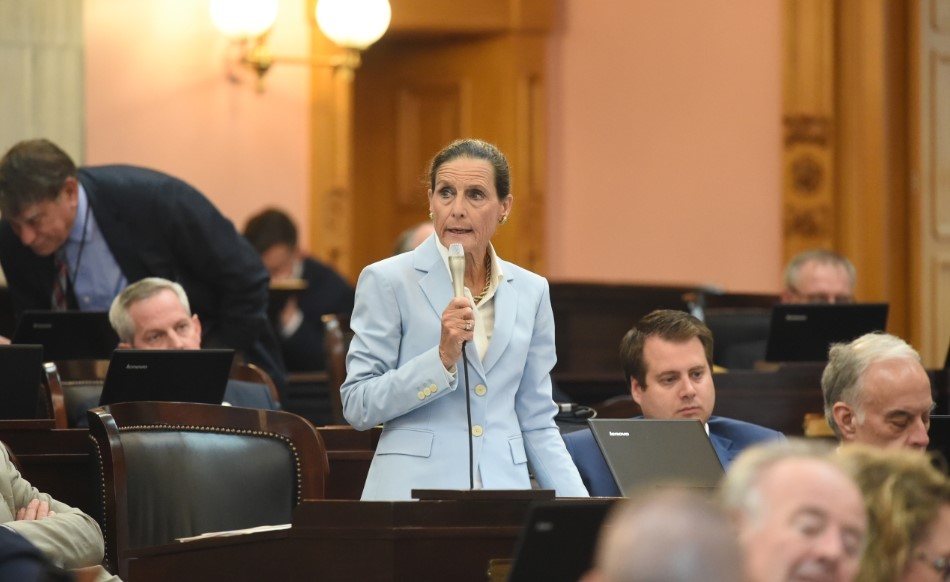
    State Rep. Jean Schmidt speaks on the floor of the Ohio House. Photo from the Ohio House website.

    BY: JAKE ZUCKERMAN –  Ohio Capital Journal

    The sponsor of legislation that would ban nearly all abortions in Ohio said babies conceived via rape or incest still have a right to life.

    Rep. Jean Schmidt, a Loveland area Republican, said on conservative talk radio earlier this week that her bill is likely to pass in the legislative session after the November elections.

    “I do believe we have the votes in both chambers, and we have the full support of the governor on this bill,” she said.

    The bill also creates a new misdemeanor crime of “promoting” abortion, for those who make, sell or distribute drugs or devices used to perform illegal abortions. Schmidt said in the interview this could be used to target some of the companies (including in Ohio) that have announced they will cover costs of employee travel to seek an abortion as needed.

    When pressed by 700WLW host Bill Cunningham on whether Ohio should pass legislation banning birth control pills or condoms, she said she’ll listen to both sides of the debate.

    House Bill 598, which Schmidt introduced, would ban most abortion in Ohio. Current Ohio law allows for abortions up to six weeks after a woman’s last period. The proposed legislation does not provide exceptions for pregnancies conceived by rape or incest.

    Providing any abortion under the bill could lead to a fourth degree felony charge. The law allows the accused to mount a defense, however, if they only did so to save the life of the mother. That physician would need to provide written certification of the woman’s medical need along with that of another physician from a separate practice.

    Likewise, the legislation requires at least two physicians present during the abortion: one to perform the abortion in the manner that provides the “best opportunity for the unborn child to survive,” and another to care for the fetus.

    Schmidt drew national attention in April when she referred to a hypothetical 13-year-old’s pregnancy spawned by rape as an “opportunity.” Her recent comments, however, come after the U.S. Supreme Court last week overturned a landmark 1973 ruling that established a constitutional right to abortion. That decision wiped out the federal protection and returned control over abortion to the states.

    A spokesman for Gov. Mike DeWine did not dispute Schmidt’s characterization of DeWine’s support for her bill, and noted that the governor has previously expressed support for conceptually similar legislation. Senate President Matt Huffman, R-Lima, said this week he expects an abortion ban of some sort to pass in late 2022.

    Schmidt’s remarks indicate no signs of a softened position, and a sense of opportunity after the removal of a major roadblock to restrictive abortion laws. They, and Cunningham’s questions, have been edited here for length and clarity.

    Cunningham: What about rape and incest [as a potential exception to a ban on abortion]?

    Schmidt: “Rape and incest is an ugly, ugly, ugly act of violence, and that woman is truly harmed and scarred, and those wounds will never go away and we need to make sure that she has all of the love and help and support. But to end the pregnancy of the child is not going to erase those wounds or those scars. That child still has the right to life.”

    So, as a leader in the House of Representatives, you would not vote to ban birth control pills in Ohio?

    “You know, that’s another issue for another day, and I’m going to have to listen to both sides of that debate. But right now, what I’m really concerned about is the life of the child, and the fact that we have the opportunity in Ohio to protect it from its conception until its natural death. That’s what I’m most excited about.”

    Would you vote against gay marriage in Ohio?

    “You know, Bill, that’s another decision for another day. The issue right now is abortion, and that’s one I want to make sure sees its end in Ohio in a very quick fashion.”

    [Cunningham for 90 seconds talks about various alternatives to surgical abortion, ending in a statement that companies are starting to “pay” their employees $4,000 to travel to more liberal states that allow them to obtain an abortion and other “workarounds”.]

    Do you know what I’m saying?

    “If those companies want to do that, they better make sure that they’re complying with the laws of the states that allow them to do that. Because in House Bill 598, it says anybody that promotes an abortion will be under the issues of criminal activity. They might have a problem with sending somebody outside the state with a paycheck in hand, because that would be – in some legal eyes – promoting abortion.”

    Follow OCJ reporter Jake Zuckerman on Twitter.

  • Ohio HB 616: This type of legislation and mentality must be met head-on and forcefully resisted and debunked

    Ohio HB 616: This type of legislation and mentality must be met head-on and forcefully resisted and debunked

    Aaron West

    by Aaron West

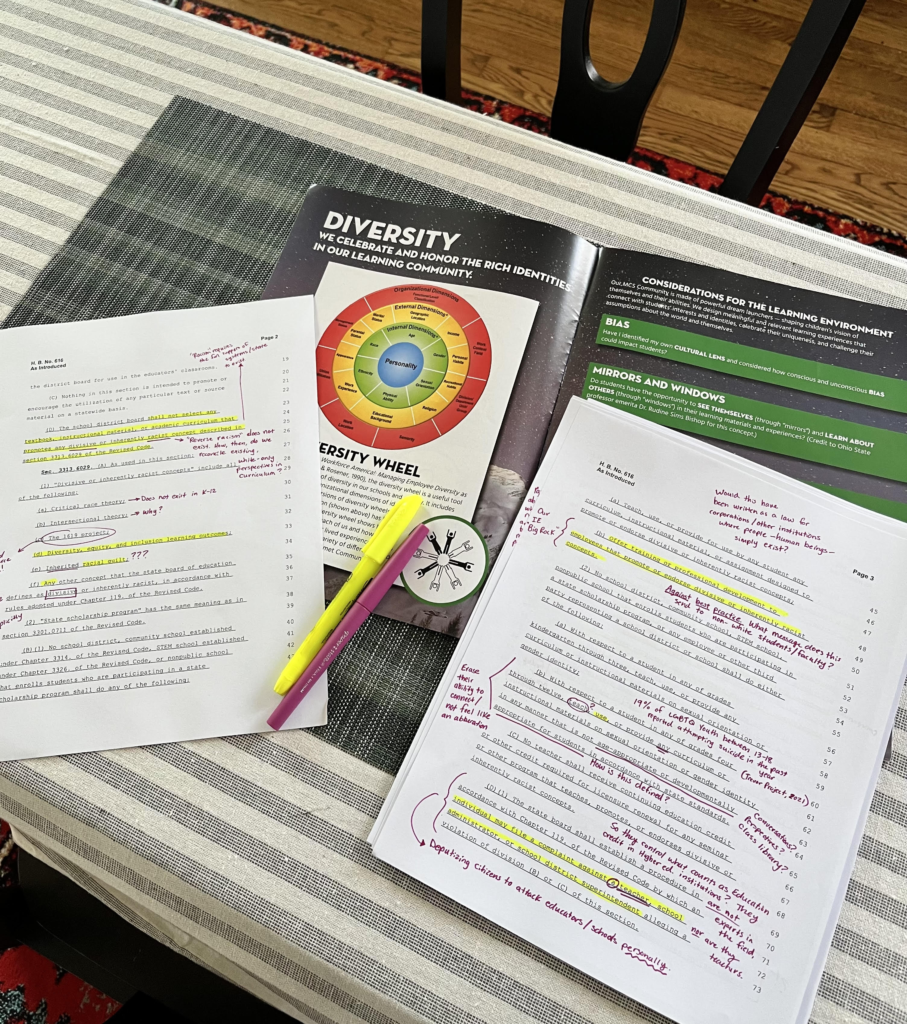
    At the beginning of each school year, I teach my students how to annotate. I want them to pay close attention to what they read, and I encourage them to ask questions about it. Today, I had to practice what I teach. I grabbed a highlighter and every teacher’s friend (a felt-tipped pen) all because of one proposed bill: Ohio HB 616.

    If you aren’t familiar, this bill copies and pastes direct lines from both Florida’s recently-passed ‘Don’t Say Gay’ bill and a litany of other bills passed by certain legislatures attacking Critical Race Theory (which doesn’t exist in K-12 classrooms), “divisive” concepts, and anything that might make anyone feel “guilty.” 

    I have read all 18 pages of this bill and placed here for you two particular ones next to an open copy of my district’s Inclusion guide. I want to show you, firsthand, just how antithetical this is to the field of education. Culturally-responsive education that acknowledges students’ identities is best practice—and we will be at risk of losing our licenses and funding for it should this bill—or any similar form of it—pass. We will be targeted and discharged for doing what is actually right by the professional standards in our field.

    We will be targeted and discharged for doing what is actually right by the professional standards in our field.

    In this bill, you’ll find vague language that isn’t defined; the enabling of any citizen to personally report teachers, administrators, and superintendents for discipline; the threat of punishment for including diversity/equity/inclusion training for staff or students; and consequences for using any curriculum (including my own classroom library) that includes any “divisive” or “racist” (here meaning “non-white”) perspectives or concepts.

    Most personal to me, this bill needlessly includes language whose intention is to further alienate and marginalize LGBTQ+ youth. For the first twenty-six years of my life, I was afraid to admit that I was gay. Had my experience in school (and elsewhere) been different, more representative, that may have been different. I may have been healthier and felt like there was a place for me, my identity—as I was.

    I don’t know if this bill will make it through a committee or whether it will ultimately be passed, but here’s what I do know.

    • 19% of LGBTQ+ youth ages 13-18 reported attempting suicide at least once in 2021 (The Trevor Project)

    • Some form of this bill, and more of the like, will continue to crop up—in Ohio and elsewhere across the U.S.

    • This type of legislation, and really, these mentalities, must be met head-on and forcefully resisted and debunked.

    • We must continue to vote en masse. In every election—locally and otherwise. Vote for people who will not make a culture war of the most vulnerable lived experiences. Vote for your teachers, your medical professionals, your neighbors who are Black or gay or some other “divisive” subset. Inclusion at the elected level is an antidote to the misguided assumption that this is desirable or even acceptable to most.

    • It’s important to remember that one of the noblest goals of quality public education is to make space for all; it is about more seats at the proverbial table. This bill seeks to send a chilling reminder that—still, in 2022—so many must raise their voices as though to ask permission to simply exist or belong.

    If you live in Ohio, you can make your voice heard on this bill by contacting the following:

    House Speaker Robert Cupp (R): (614) 466-9624

    Caucus Minority Leader Allison Russo (D): (614) 466-8012

    Other Ohio House Representatives

    Rep. Jean Schmidt (R-Loveland) Co-introduced HB 616 with Rep. Mike Loychik

    Rep. Mike Loychik (R-Bazetta) Co-introduced HB 616 with Rep. Jean Schmidt

  • Commentary by Rob Moore: Making it harder to be a substitute teacher might not do what you think

    Commentary by Rob Moore: Making it harder to be a substitute teacher might not do what you think

    COMMENTARY

    by Rob Moore

    On Monday, Representatives Adam Bird and Don Jones introduced Ohio House Bill 583, legislation to tighten regulations on educator licensing for substitute teachers. The bill increases the educational threshold for substitute teachers from a more broad requirement of a “post-secondary” degree to a more specific “bachelor’s” degree while creating some exceptions to this rule.

    The exceptions the bill puts forth are mainly age-related: allowing people with associate’s degrees and at least 21 years since birth to be a long-term substitute teacher, allowing people who served in the military and who have elapsed 21 years since birth to be a long-term substitute teacher, allowing people with sufficient bachelor’s degree coursework and who have spent 21 years on earth to be a substitute teacher. The bill also allows people who have spent five years as an educational assistant to be a long-term substitute.

    The bill also authorizes the state board of education to create rules for issuing educator licenses for people who do not hold bachelor’s degrees that can be used for a year.

    While the section that allows the state board of education to set rules for temporary licenses could result in a loosening of licensing requirements, overall the bill represents a tightening of licensing requirements for substitute teachers. Rather than just requiring a post-secondary degree, which could include associate’s or other non-bachelor’s degrees, the new bill raises the requirement for substitute teacher licensure to those who hold bachelor’s degrees then carves out specific exceptions for people without bachelor’s degrees.

    Increasing requirements for substitute licensure could have a few different impacts. The central goal is likely to improve quality of education provided by substitute teachers. Presumably, someone with a bachelor’s degree can provide better quality education than someone without one, with obvious exceptions, for example people without bachelor’s degrees who are trained in education compared to people with bachelor’s degrees in other fields. 

    Unfortunately, little evidence exists to confirm to us that degree attainment will lead to better teachers. While there is limited evidence that having a math or science degree may help with math or science teaching, degree attainment overall has not been definitively linked to better outcomes for students. If we can’t find this evidence for teachers, we should be even more dubious about a supposed connection between degree attainment and student outcomes for substitute teachers.

    On top of this, the bill will likely have labor market impacts for educators. Tightening requirements for substitute teachers will decrease the supply of qualified substitute teachers, which will drive up the wage needed to attract them as schools vie for a shrinking pool of substitutes. This effect could be stronger than it would be for teachers since substitutes are often actively considering competing offers from different schools, thus making their options more competitive than teachers.

    On top of this, making it harder to hire substitutes could create perverse incentives for schools. If substitute teachers are more scarce or expensive, it could cause administrators to limit the ability of teachers to take sick days or otherwise take time off.

    While raising the bar for substitute teachers makes intuitive sense, interventions like this need to be based on evidence, and the evidence of the impact of degree attainment on substitute teachers is basically nonexistent. We can hope that if substitute teachers are required to have higher educational attainment than before, that we would at least build in funds to assess the intervention after it is implemented.

  • Ohio Republicans push to waive training, permit requirements to carry concealed guns

    Ohio Republicans push to waive training, permit requirements to carry concealed guns

    BY: JAKE ZUCKERMAN and Ohio Capital Journal

    Both chambers of the Ohio General Assembly are plodding forward on legislation to waive training requirements to carry a concealed weapon.

    While current law allows state residents to openly carry a weapon, it only allows those 21-and-up to obtain a concealed carry permit after completing an 8-hour training course and passing a background check.

    House Bill 227 and Senate Bill 215, which contain some important differences, would waive these permitting requirements, including the training

    The effort, if successful, would continue Ohio’s steady relaxing of its gun laws over the last 20 years, which has included launching the concealed carry program in 2004 that required 12 hours of training; passing “pre-emption” legislation in 2006 which blocks cities from enacting gun laws stricter than those at the state level; and removing the duty to retreat (passing “stand your ground”) in 2020, which removed the requirement for a person to seek retreat before responding to a perceived attack with deadly force.

    On Thursday, the House Government Oversight Committee held its fourth hearing on the permitless concealed carry legislation.

    Over several hours, members of Moms Demand Action, an anti-gun violence advocacy group, made their case against the bill. They argued it will inevitably increase rates of gun violence. The Ohio Attorney General’s Office reports roughly 1,200 concealed carry applications are denied each year for reasons set in code, like criminal histories, civil or temporary protective orders, or others.

    What, they asked, will happen to those applicants if there’s no more licensing process?

    “It allows guns in the pockets of lowlifes,” said Sieglinde Martin, an MDA member.

    Micaela Deming, an attorney with the Ohio Domestic Violence Network, said domestic violence misdemeanor convictions and protective orders are the second highest reason that would-be gun owners fail background checks. Waiving the permitting requirements, she said, would mean the loss of a key screening mechanism to remove guns from these domestic offenders.

    Gun lobbyists and enthusiasts argued that the public safety threat is overblown. Law breaking gun possessors, they said, will continue to break laws regardless of how strict or lax they are. The bill is about enshrining Ohioans rights under the Second Amendment of the U.S. Constitution.

    “I don’t think there’s anything in the bill that says, ‘If you’re prohibited from carrying a [concealed] firearm, suddenly now you can’ — if you’re prohibited, you’re prohibited,” said Rep. Shane Wilkin, a cosponsor of the bill and committee chairman overseeing its hearings, in an interview.

    “Those that are going to carry that are not mindful of the law regardless of what it is, are going to carry regardless.”

    After the hearing, Wilkin said he didn’t know if the bill would be up for a vote at its next hearing but said he wouldn’t rule it out.

    Lawmakers on the committee were generally warm to the legislation. Rep. Phil Plummer, R-Butler Twp., said it’s “kind of bizarre” that it’s legal to openly carry a weapon in Ohio, but becomes illegal if you put on a jacket that covers it.

    Rep. Don Jones, R-Freeport, needled one witness who said states that legalized permitless concealed carry experienced higher levels of violent crime than those that did not. He asked whether that could be the effect of other legislation like legalizing marijuana for recreational use.

    The Senate Veterans and Public Safety Committee, meanwhile, has held two hearings on similar legislation from Sen. Terry Johnson, R-McDermott.

    A key difference from the House version: The Senate bill would also establish procedures for a pretrial immunity hearing for people facing criminal charges or a civil lawsuit related to their use of force in purported self-defense.

    The hearing, which would come before any trial, provides a substantial advantage to the accused: It would tell the court to assume the accused used force in self-defense and requires prosecutors (in a criminal case) to prove beyond a reasonable doubt or plaintiffs (in a civil lawsuit) to provide “substantial evidence” that the person did not use force in self-defense.

    If the prosecutor or plaintiff fails in this, the accused would be considered immune from the charge or lawsuit. If they succeed, the proceedings will then move toward a trial.

    Although bill proponents say otherwise, courts have generally held that licensing requirements to carry concealed weapons do not violate the Second Amendment.

    In a 2003 Ohio Supreme Court opinion (that preceded Ohio’s first concealed carry law), Justice Paul Pfeifer, writing for the majority, was blunt in a majority opinion.

    “(The law) does not unconstitutionally infringe the right to bear arms; there is no constitutional right to bear concealed weapons,” he wrote.

    In 2008, the U.S. Supreme Court issued a major opinion, now seen as a Second Amendment landmark decision, overturning a Washington D.C. law that prohibited residents from owning a firearm in their homes. However, Supreme Court Justice Antonin Scalia, an icon in conservative legal and political circles, noted in his majority opinion that the right to bear arms isn’t infinite.

    “Like most rights, the right secured by the Second Amendment is not unlimited,” he wrote.

    “(There is no constitutional) right to keep and carry any weapon whatsoever in any manner whatsoever and for whatever purpose.”

    Ohio Attorney General Dave Yost is responsible by law to handle some of the administrative work in Ohio’s concealed carry program. In a statement, a spokesman said Yost has not yet taken a position on either bill and is actively monitoring them.

    “By any measure, Ohio’s concealed-carry licensing system has succeeded in combining safeguards that protect the public and provisions that uphold Americans’ right to bear arms and protect themselves,” he wrote in the 2020 annual report on the program.

    Twenty-one states allow inhabitants (residents only in North Dakota) to carry a concealed weapon without a permit, according to a count from the U.S Concealed Carry Association. This includes neighboring states of West Virginia and Kentucky.

  • Abortion ‘trigger bill’ coming to Senate committee

    Abortion ‘trigger bill’ coming to Senate committee

    BY: and Ohio Capital Journal

    A piece of legislation meant to go into effect if federal abortion rights protections are overturned will start its path through the Ohio legislature this week.

    Senate Bill 123 is set to appear in the Ohio Senate Health Committee on Wednesday morning.

    If passed, the bill would then await court challenges of the U.S. Supreme Court’s Roe v. Wade decision, the ruling that legalized abortion nationwide. If challenges to Roe were successful, Ohio could then quickly ban abortion.

    There is an exception in the bill for abortions when there is serious risk to the pregnant person’s life, but written certification of the necessity is required, and “appropriate neonatal services for premature infants must exist at the facility where the physician performs or induces the abortion.”

    Currently, abortion is legal in the state of Ohio up to 22 weeks gestation.

    The proposed legislation would also ban “as the crime of promoting abortion” possessing, selling or advertising “drugs, medicine, instrument or device to cause an abortion”

    “Promoting abortion” is one of a few crimes defined under the bill, and would be a first-degree misdemeanor if passed. “Abortion manslaughter” would be a crime under the bill, treated as a first-degree felony punishable with a minimum of four to seven years in prison for “purposely taking the life of a child born by attempted abortion who is alive when removed from the…uterus.”

    As with other attempted legislation on abortion in the state, the punishment primarily lands on the physicians, leaving those having the abortions legally cleared and even able to file a wrongful death lawsuit if an abortion is performed in violation of the proposed legislation.

    A physician could have their license revoked if found guilty of “abortion manslaughter,” “criminal abortion,” or “promoting abortion.”

    The language regarding “abortion manslaughter” is reminiscent of language in a different abortion-related bill seeking to punish doctors after “botched abortions.” That bill seeks to prohibit inaction by doctors in the case of “failed” abortions, however, state data shows failed abortions are very rare.

    Of abortions reported at 19 weeks or more gestation in the state’s most recent data — which was available at the time the botched abortion bill was presented — only one pregnancy was found to be viable.

    The Senate legislation isn’t the first “trigger ban” that has been introduced in the General Assembly in the recent past. Last spring, a House bill was introduced by former state Rep. John Becker, also aiming to take effect if Roe v. Wade was overturned.

    Abortion-rights advocates are planning to rally together at the Ohio Statehouse at 12:30 p.m. on Tuesday, the day before the committee meets to consider the trigger ban.

    “With the stark reality that Ohio could be the next state where abortion is entirely inaccessible, now is the time to show up and fight for our communities,” said Aileen Day, communications for Planned Parenthood Advocates of Ohio, in a statement.


    Susan Tebben is an award-winning journalist with a decade of experience covering Ohio news, including courts and crime, Appalachian social issues, government, education, diversity and culture. She has worked for The Newark Advocate, The Glasgow Daily Times, The Athens Messenger, and WOUB Public Media. She has also had work featured on National Public Radio.

  • House passes bill creating new criminal charges for protesters

    House passes bill creating new criminal charges for protesters

    Photo by Sam Smith for Loveland Magazine of racial justice rally in Inwood Park, Cincinnati – Sunday, March 31st, 2020

    By Jake Zuckerman and Ohio Capital Journal

    Ohio House Republicans passed legislation Friday that would expand the definition of “obstruction of justice” broadly enough to capture protest activity, according to social justice activists and civil rights advocates who testified against the bill. 

    The legislation would qualify failing to follow a “lawful order from a law enforcement officer” as the obstruction of justice.

    It also prohibits a person from interfering with or obstructing a police officer at work with “reckless disregard” as to whether the action diverts or obstructs the officer’s attention. This includes entering or placing an object somewhere that’s large enough that the officer cannot reach a person outside the area.

    Republicans said the legislation establishes basic protections for officers after a year of increasing violence and tumultuous social justice protests.

    Democrats said the legislation is unhelpful and divisive. Rep. Jeff Crossman, D-Parma, said it “fans the flame of culture wars and is yet another dog whistle about race.”

    Crossman offered an amendment to exempt anyone from charges who uses or threatens to use force against an officer if they’re “acting in good faith” to prevent death or serious bodily injury. The amendment failed on party lines. 

    Additionally, the legislation would prohibit a person from throwing any object or substance at an officer “with intent to distract.”

    The bill largely addresses conduct that’s already illegal under Ohio law, according to analysis from the Legislative Service Commission. It provides prosecutors more charges they can impose on alleged violators.

    The expanded obstruction of justice charges would be second-degree misdemeanors, or fifth-degree felonies if they cause physical harm to a person. Second-degree misdemeanorconvictions can yield sentences up to 90 days. Fifth-degreefelonies yield sentences between six and 12 months.

    After a Minneapolis police officer murdered George Floyd, an unarmed black man suspected of using a fake $20 bill, on camera last summer, massive racial justice protests formed around the country. Activists criticized racial profiling and the excessive use of force from officers unto people of color.

    Some of the initial protests descended into violence and looting. However, researchers reviewed 2,400 demonstrations nationwide between May and August 2020 and found fewer than 220 (about 7%) turned violent.  

    Regardless, Republican-controlled legislatures around the U.S. have introduced and passed different proposals to expand on or build new charges that can be filed against protesters. A more extreme proposal in Ohio sought to expand citizens’ rights to shoot in perceived self-defense during a “riot” — a loosely defined term in Ohio law.

    “This bill is not an anti-peaceful protest bill,” said Rep. Shane Wilkin, R-Lynchburg, one of the lead sponsors. “The key word is peaceful.”

    The version of the bill advanced by the House Criminal Justice Committee on Thursday is significantly narrower than what was introduced. “Taunt[ing]”an officer would have qualified as the obstruction of justice under the original bill draft.

    Republican Reps. Jeff LaRe of Violet Twp. and Wilkin sponsored the proposal. In their written testimony to the committee, they denied any intent to infringe upon individuals’ rights to free speech and assembly. They said it’s about protecting law enforcement officers.

    “Peaceful protests have turned violent when bad actors who are not involved in a police matter begin to taunt, harass, and overall interfere with law enforcement officers performing their duties,” they wrote.

    Racial justice groups, public defenders, the ACLU, religious organizations focused on social justice and the libertarian Americans for Prosperity spoke out against the bill.

    “The language in this bill will prevent innocent bystanders from exercising their Sixth Amendment rights per the U.S. Constitution,” said Tom Roberts, president of the NAACP Ohio Conference.

    “With the excessive force issues among our law enforcement here in Ohio and across the country, the timing of this bill is inappropriate and insensitive to many communities of color.”

    Advocacy groups representing police and prosecutors testified in support of the bill. Preble County Sheriff Mike Simpson, representing the Buckeye State Sheriffs’ Association, claimed some people seized on the unrest last summer as “an avenue to promote violence.”

    House Bill 22, he said, would outlaw “diversionary tactics” from those seeking to distract, disrupt and impede law enforcement.

    Analysts with the Legislative Service Commission, which conducts policy research for lawmakers, found the legislation will increase the number of offenders being sentenced to prison and may lengthen some terms. This could increase annual prison costs by between $3,000 and $4,000 per offender.

    Thomas Quinlan — who formerly served as Columbus chief of police, including during the protests last summer — testified in support of the bill on similar lines.  

    In May, U.S. District Judge Algenon Marbley issued a blistering, 88-page opinion prohibiting Columbus police from using tear gas, pepper spray, batons and rubber bullets against nonviolent protesters. He found officers used force “indiscriminately” and without provocation.

    “This case is the sad tale of police officers, clothed with the awesome power of the state, run amok,” he wrote.

    Just seven proponents testified in support of the bill, compared to more than 100 who opposed it, as noted by Ohio Legislative Black Caucus President Rep. Thomas West, D-Canton, in a statement after the vote.

    He said the bill “further sows the seeds of fear” by attempting to criminalize the right to protest.

    “This bill, not to mention similar legislation pending before this body, takes Ohio in the opposite direction of progress,” he said. “HB 22 will not promote the safety and security of our officers and of individuals exercising their First Amendment rights. It will only create more tension and potential for conflict.”

    The bill now goes to the Senate for consideration.

  • State education testing shows declines, may be waived in new legislation

    State education testing shows declines, may be waived in new legislation

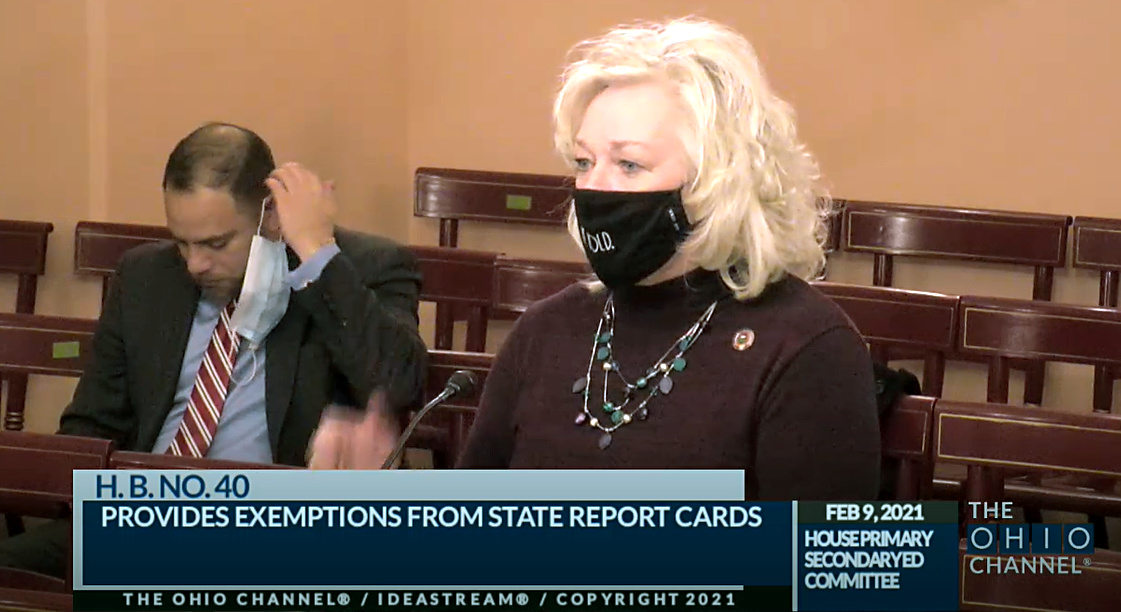
    Ohio state Rep. Lisa Sobecki testifies before the House Primary & Secondary Education Committee on Tuesday, on a bill seeking waivers on state and federal testing.

    by Susan Tebben and Ohio Capital Journal

    As state officials look for solutions to an education gap caused by the COVID-19 pandemic, two pieces of legislation introduced Tuesday hope to give more leniency on state and federal testing.

    Rep. Lisa Sobecki, D-Toledo, is a co-sponsor with Rep. Jeffrey Crossman, D-Parma on House Bill 40, to make exemptions for students in taking state report cards.

    The bill would waive state testing for the 2021-2022 school year and direct the Ohio Department of Education to seek a waiver for federal testing, as well as holding school districts harmless on state report cards to determine funding levels and eligibility for EdChoice private school vouchers and academic distress commissions.

    “We do need to see where our kids have been left behind, but I don’t need a test that’s going to tell us something after the kids have left,” Sobecki told the House Primary & Secondary Education Committee.

    She said the waiver of testing “appears to have broad, bipartisan support” within the legislature.

    Bipartisan support for state testing waivers came in the same Tuesday meeting, in the form of a separate bill brought by Republican state reps. Kyle Koehler and Adam Bird, to ask for many of the same things, including state and federal testing exemptions.

    “I am not asking to waive test requirements because we don’t need to know how testing will go,” Koehler told the committee. “I think we know it’s not going to go well. Students are going to be behind.”

    In further support of testing pressure relief, State Board of Education member Dr. Christina Collins released a proposed resolution directing the ODE limiting the use of state testing, and to “include a district designation of online, hybrid, or in-person on school building and district level report cards.”

    In the resolution, Collins writes that COVID-19 “has affected every student in Ohio, disrupting the structure of teaching and learning and emphasizing children’s dependency upon adults for nurture, protection and providing for health and well-being.”

    Along with the district designation, the board member asks that a disclaimer on state reports say that data “are for the purpose of understanding how learning was impacted as a result of extreme circumstances.”

    Earlier in the day, ODE Superintendent Paolo DeMaria said the test scores coming out of a pandemic’s worth of learning styles emphasize the need for students to get back to in-person instruction.

    DeMaria acknowledged a lower participation rate in the state testing, saying the ODE promoted a “safety first” mentality in taking the tests. But from the testing that did occur, the state saw an 8% increase in kindergarten-readiness scores considered “not on track.”

    Third-grade English Language Arts proficiency scores were also lower, which was also shown in a study released by the Ohio State University’s John Glenn College of Public Affairs.

    This third-grade test is set to occur this year starting from March 22 to April 23, part of why Sobecki said their legislation needs to be quickly moved through the statehouse and set up to be signed by the governor.

    “It’s February, folks,” Sobecki said.

    DeMaria, and the study itself, noted that the declining scores were even lower in minority and economically disadvantaged groups.

    State reports also showed a decrease in enrollment of 3%, particularly in pre-school and kindergarten.

    DeMaria spoke during Gov. Mike DeWine’s Tuesday press conference, in which he spent most of the time presenting the progress of vaccinating school teachers and personnel, something that the state started this month. While the state continues to vaccinate those 70 and older, they set aside some of the approximately 100,000 per week the state receives to give to school districts.

    Also on Tuesday, DeWine added a new project for school districts across the state, asking them to come up with an individualized plan to help students catch up on last year’s losses.

    “We need to be bold in our ideas, and we need to work with the Ohio General Assembly,” DeWine said, adding that a total of $2 billion in federal funding has been made available to schools to help with this problem.

    DeWine left the decisions up to the individual districts, but offered examples such as longer school years, longer school days, summer classes, tutoring, or even remote options as ways to fill the education gap.

    Districts have until April 1 to make their plans public and accessible to the General Assembly.

  • Bill attacking Ohio health department’s COVID-19 power dies

    Bill attacking Ohio health department’s COVID-19 power dies

    Ohio Senate President Larry Obhof

    By Jake Zuckerman and Ohio Capital Journal December 23, 2020

    A legislative attempt to cripple the Ohio Department of Health’s legal authority to respond to pandemics died a quiet death Tuesday evening after the Senate President opted against attempting to override a gubernatorial veto.

    This puts a lid — for 2020, at least — on a months-long effort from Republicans to wrest “ultimate authority” in matters of quarantine and isolation from the ODH director, as it exists in state law.

    Senate Bill 311 would allow lawmakers to vote down public health orders, such as the statewide mask mandate.

    It would also prevent ODH from issuing a statewide or regional quarantine or isolation order against people who have not been exposed to or diagnosed with an infectious disease. Legal experts say this would preclude the health department from issuing stay-at-home orders, as it did this Spring.

    The legislation formed a wedge between Republican lawmakers and GOP Gov. Mike DeWine, who vetoed the bill earlier this month after calling the proposal a “disaster.” Lawmakers have pushed a string of different attempts to weaken ODH’s public health power since April.

    Lawmakers passed the bill despite opposition from the Ohio Hospital Association, the Ohio State Medical Association, and public health officials. They said the bill would weaken the state’s ability to respond to COVID-19, which has killed 8,252 Ohioans since March.

    Senate President Larry Obhof, R-Medina, spoke to reporters late Tuesday night after the final full voting session of the 133rd General Assembly. He said passing separate legislation designed to force ODH to treat large and small businesses more equitably in the event of another shutdown was a viable alternative to a veto override. The House would need to approve this by year’s end.

    The Senate passed SB 311 with 20 votes, leaving none to spare on the 3/5 majority needed to override. Four Republican senators — Matt Dolan, Peggy Lehner, Stephanie Kunze, and Kirk Schuring — joined with Democrats to oppose the bill.

    However, the political calculations change. A single vote flip wouldn’t have made much difference on passage but could torpedo the veto override outright, which must begin in the Senate per constitutional rules.

    It would also have needed 60 votes in the House, a more complex endeavor.

    The House passed SB 311 with 58 GOP votes, two shy of the override threshold. Three likely yes votes were absent at the time.

    However, activists have since worried about two Republicans they called “weak links” in the override chain — Reps. Gayle Manning and Dave Greenspan, both of whom voted against a more robust version of similar legislation this Spring.

    During interviews earlier this month, they both declined comment on whether they’d vote to override the veto.

    A rash of COVID-19 cases among House lawmakers also scuttles the whip count. At least seven House lawmakers have contracted COVID-19 in December. The Cincinnati Enquirer reported at least 13 House legislators were absent from voting Tuesday, including six Republicans.

    Obhof described the legislation passed Tuesday as a pragmatic compromise, although he still supports SB 311. He said the thinned-out House Republican caucus was a factor in his decision, but not the driving force.

    “The House hasn’t had 60 Republican members in in weeks,” he said. “That’s not why we didn’t pass it, but I think it is an important background fact when you see some members clamoring for that and demanding that.”

    The bill was the subject of tremendous pressure. House lawmakers accused Obhof of stalling on the bill. Activists, some of whom were armed, did as well when they showed up outside his home Sunday calling on him to pass the legislation.

    Any member can introduce similar legislation when the next General Assembly convenes next year, although the entire process would have to restart.