Tag: lethal injection drugs

  • Ohio House holds first hearing for new nitrogen gas death penalty method

    Ohio House holds first hearing for new nitrogen gas death penalty method

    Ohio would join four other states that explicitly permit nitrogen hypoxia for executions if the bill passes

    BY: Ohio Capital Journal

    House lawmakers have begun hearings on a controversial new execution method known as nitrogen hypoxia. The protocol, used in Alabama for the first time recently, subjects a prisoner to a high concentration of nitrogen which causes them to eventually suffocate. Right now, four states explicitly allow nitrogen hypoxia and four other allow for “lethal gas” generally. Outside of Ohio, Nebraska lawmakers are considering the approach as well.

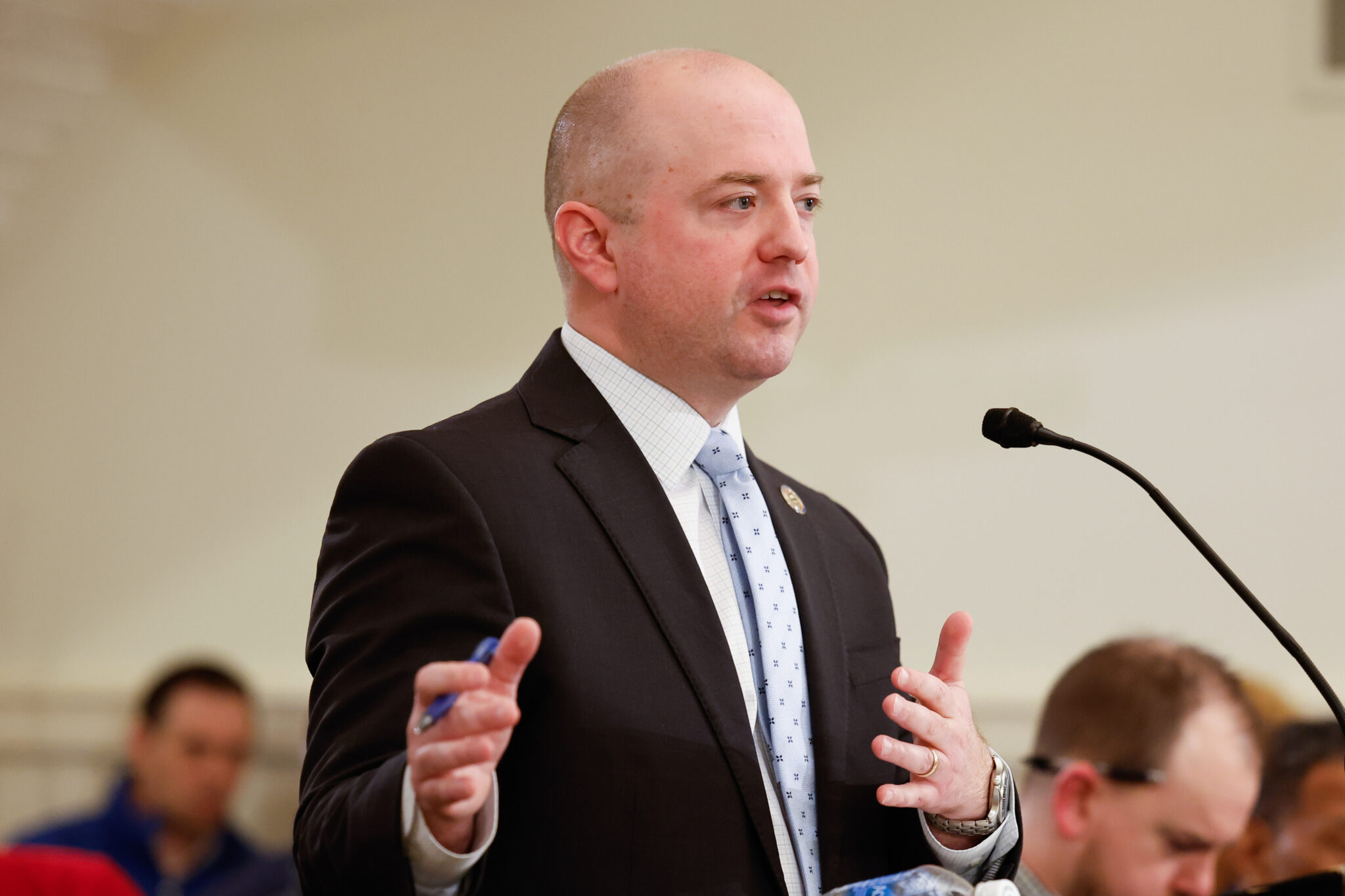
     State Rep. Phil Plummer, R-Dayton. State Rep. Phil Plummer, R-Dayton. (Photo by Graham Stokes for Ohio Capital Journal. Republish photo only with original article.) 

    In its initial hearing, Reps. Brian Stewart, R-Ashville, and Phil Plummer, R-Dayton, presented the proposal as procedural update rather than a wholesale change. Currently there are almost 200 people on death row in Ohio, but executions have been on hold since 2018.

    “We have a situation today where for six years, we have refused to carry out capital punishment — in violation of the law,” Stewart argued. “It is the law. And until this body votes to do something different, then we need to give (the Ohio Department of Rehabilitation and Corrections) the tools to carry out these sentences.”

    “Plan B”

    For the most part, Stewart sought to downplay the additional execution method. He cited an example of an inmate requesting nitrogen hypoxia, and defense attorneys arguing they believed the process is “humane” and “completely painless.”

    The inclusion of nitrogen hypoxia, Stewart argued, is a way to break up the backlog. Assuming lethal injection is available, death row inmates could select the method of their choice, and in the event that lethal injection drugs are unavailable, nitrogen hypoxia would allow executions to continue.

    “In our view nitrogen hypoxia is a plan B,” Stewart described. “It is a set of suspenders to go along with the belt. It would be preferable to continue using lethal injection, but we need to do something.”

    Stewart and Plummer presented their idea as a value-neutral response to a stated lack of lethal injection drugs. “Despite his decision to delay the executions,” Plummer said, “Governor DeWine has indicated that the legislature could address this issue by authorizing an alternative method.”

    Stewart dismissed criticism of Alabama’s “botched” nitrogen hypoxia execution as death penalty abolitionists speaking in sensational terms. An AP reporter who viewed the execution described Kenneth Smith thrashing and gasping as prison officials administered the gas. Stewart acknowledged their bill isn’t likely to change the minds of people who already oppose the death penalty.

    “Respectfully, though, I think there’s another bill for that,” Stewart said, referring to measures in the Ohio House and Senate that would abolish the death penalty.

    “This bill is saying we have the law that we have, and until we change it, we need to find a way to carry out what juries have already imposed,” he said.

    Pushback

    While some inmates may have requested nitrogen hypoxia and some defense attorneys have looked favorably on the protocol, it’s acceptance isn’t universal. The American Veterinary Medical Association, for instance, OK’d the procedure under some circumstances for euthanasia of chickens, turkeys and pigs. For all other mammals, though, the panel warned it’s inappropriate and likely to cause distress.s

    “Now, if we’re going to use gas, which, frankly, our veterinarians will not use on our animals, why would we use that on human beings?” state Rep. Michele Grim, D-Toledo, asked.

    Stewart argued it’s “vastly more humane” than the violence that put inmates on death row in the first place. He added that in countries where assisted suicide is legal, nitrogen hypoxia is one of the approaches people use.

    State Rep. Bill Seitz, R-Cincinnati, meanwhile, said the problem with Ohio’s capital punishment system is the length of time it takes to pursue appeals. “That is the problem in a nutshell,” he said, “plus the unavailability of the three-drug injection.” But he noted if the U.S. Supreme Court hasn’t explicitly blessed the protocol, the proposal might just lead to more appeals.

    “To my knowledge,” he said, “the United States Supreme Court has only signed off on hanging, electric chair, firing squad, and lethal drug injection as being constitutional — don’t violate the Eighth Amendment.”

    “I believe what you’re saying about nitrogen hypoxia,” Seitz added, “but it hasn’t yet been blessed, if you will.”

    Stewart argued the likelihood of nitrogen hypoxia passing muster in the court is high, but added their preferred method remains lethal injection. Notably, nothing about the long and complex appeals process unique to death penalty cases will change under Stewart and Plummer’s measure.

    Follow OCJ Reporter Nick Evans on Twitter.


    Nick Evans
    NICK EVANS

    Nick Evans has spent the past seven years reporting for NPR member stations in Florida and Ohio. He got his start in Tallahassee, covering issues like redistricting, same sex marriage and medical marijuana. Since arriving in Columbus in 2018, he has covered everything from city council to football. His work on Ohio politics and local policing have been featured numerous times on NPR.

    Ohio Capital Journal is part of States Newsroom, the nation’s largest state-focused nonprofit news organization.

    MORE FROM AUTHOR

  • Ohio’s AG Yost wants to “kickstart” the state’s stalled capital-punishment system

    Ohio’s AG Yost wants to “kickstart” the state’s stalled capital-punishment system

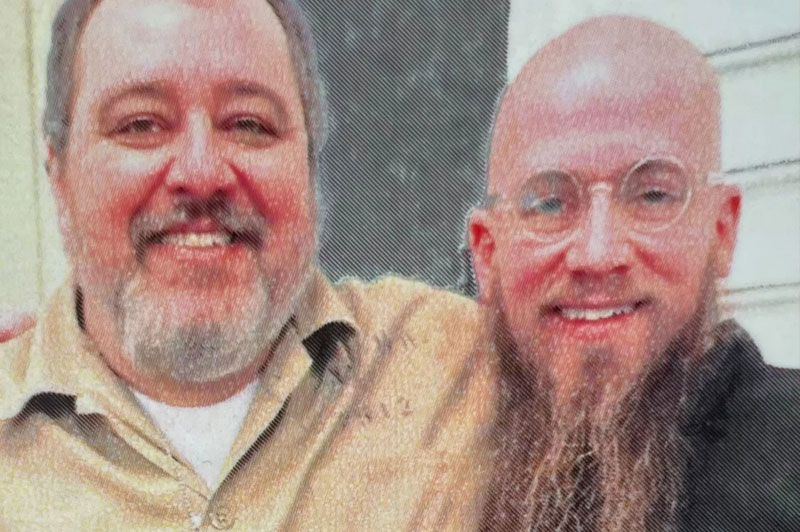
    Kenneth Smith, left, embraces his spiritual advisor, the Rev. Jeff Hood. (Courtesy Rev. Jeff Hood)

    After an experimental execution of inmate, Kenneth Smith, and he was pronounced dead at the William C. Holman Correctional Facility in Atmore, Alabama just six days ago, Ohio Attorney General Dave Yost today issued a press release urging “kickstarting” the execution of Ohio Death Row inmates.

    After the Alabama execution, Alabama Attorney General Steve Marshall said, “Alabama has done it, and now so can you. And we stand ready to assist you in implementing this method in your states”.

    Smith’s spiritual adviser, the Rev. Jeff Hood, who’d previously expressed concern that the method could be inhumane, witnessed the execution and described it in more graphic terms, saying it was “the most horrible thing I’ve ever seen.”

    Smith, wearing a tight-fitting mask that covered his entire face, convulsed when the gas was turned on, “popped up on the gurney” repeatedly, and gasped, heaved and spat, Hood said.

    “It was absolutely horrific,” he said. – (CNN)

    A Press Release from Ohio Attorney General Dave Yost:

    AG Yost, Other Elected Officials Propose Legislation to Address Issues in Ohio’s Capital-Punishment System

    Ohio Attorney General Dave Yost

    (COLUMBUS, Ohio) — Ohio Attorney General Dave Yost, together with state Reps. Brian Stewart and Phil Plummer and Executive Director Lou Tobin of the Ohio Prosecuting Attorneys Association, today announced the introduction of legislation to permit the use of nitrogen hypoxia as a method for carrying out the death penalty.

    The bill is aimed at kickstarting the state’s stalled capital-punishment system.

    “There must be accountability for offenders convicted of the most heinous crimes and prisoners who continue to flout the law behind bars,” Yost said. “The pursuit of justice is a journey, and closure remains elusive for victims’ families until a sentence is fully executed. Ensuring that the consequences align with the severity of an offense is essential to providing solace to grieving relatives.”

    Nitrogen hypoxia drew national attention last week when Alabama used this method to carry out the death sentence of murderer Kenneth Eugene Smith – the first state to employ nitrogen, a colorless and odorless gas, in an execution. With this procedure, a condemned inmate breathes only nitrogen, leading to oxygen deprivation, which results in rapid unconsciousness and death.

    Ohio last carried out an execution by lethal injection on July 18, 2018, more than five years ago. Multiple reprieves have been granted, in part due to the reluctance of pharmaceutical suppliers to provide lethal injection drugs to the Ohio Department of Rehabilitation and Correction for executions.

    Attorney General Yost hopes that nitrogen — widely available and easily sourced — can break the impasse of unavailability of drugs for lethal injection.

    Under the new legislation — sponsored in the House by Stewart, R-Ashville, and Plummer, R-Dayton — manufacturers, suppliers, and distributors that provide lethal injection drugs to the state would receive indefinite confidentiality, instead of the current two-year confidentiality. Suppliers of nitrogen for executions would receive similar confidentiality.

    “As long as capital punishment remains the law in Ohio, the law should be followed – and duly enacted sentences should be carried out to give victims’ families the justice and finality they deserve,” Stewart said. “Providing an additional method for carrying out capital punishments is necessary to ensure Ohio can continue to impose these sentences in response to the most heinous crimes committed in our state.”

    Added Plummer: “By using nitrogen hypoxia, we are giving the system an additional resource for holding accountable those who have committed heinous crimes. It is time that we stop postponing executions and give the families of victims the closure that they deserve.”

    Tobin echoed those thoughts.

    “We will continue to work to ensure that the death penalty is fair, that it is accurate, and that defendants receive the due process that they deserve,” he said. “We want fairness and justice for the victims also. This legislation is about providing closure for victims and for their families.”

    Yost highlighted shortcomings in the state’s capital-punishment system in the “2022 Capital Crimes Report,” released last year. An annual mandate under state law, the report provides a procedural history and other details on every case resulting in a death sentence since 1981, the year Ohio reinstated the death penalty.

    From 1981 to Jan. 30, 2024, a total of 336 criminals convicted in Ohio received a combined 341 death sentences, the report said. Only 56 sentences — one in six — have been carried out.

    In releasing the report, Yost emphasized the need to broaden the death penalty conversation and give a voice to victims’ families. Among those he has engaged in the discussion is Norman Stout, husband of Mary Jane Stout, who was murdered by David Stumpf during a May 1984 robbery near the couple’s home in New Concord, Ohio.

    The Stouts allowed Stumpf and Clyde Wesley into their home to use their phone. While Wesley ransacked the house, Stumpf shot Mr. Stout twice in the head, leaving him seriously wounded, and then shot Mrs. Stout four times, killing her.

    Mr. Stout, now 93, has been seeking justice for his wife for nearly four decades, only to see Stumpf’s execution postponed several times. Mr. Stout has said he plans to witness Stumpf’s execution — currently scheduled for Aug. 13, 2024 — but he worries that his advanced age might preclude him from seeing justice prevail.

    –30–