
Tag: Little Miami State Park

  • Open letter to Loveland City Hall about proposed parking garage from Citizens for Rights of the Ohio River Watershed

    Open letter to Loveland City Hall about proposed parking garage from Citizens for Rights of the Ohio River Watershed

    Dear Loveland City Council Members,

     Citizens for Rights of the Ohio River Watershed (CROW) is an organization that advocates for rights of communities dwelling within the watershed to protect the health, biodiversity, and safety of the Ohio River Watershed ecosystem. Government permits that put the fragile balance of this ecosystem at risk not only affect the functioning of the watershed as a living system, they deprive local communities from exercising their democratic rights to protect their own health and safety.  

    CROW joins the Sierra Club Miami Group in urging Loveland City Council to hold a public hearing before Loveland City Council takes a vote on the proposed downtown parking garage. Addressing the parking situation in Loveland should rightfully include all stakeholders in the discussion. 

    Some questions to consider:

    1. The Little Miami State Park, located within the beautiful and historic Little Miami River valley, has been designated as a federal and state scenic river. It is protected because of its high water quality, panoramic setting, and the many historic sites that can be found along its banks. In accordance with the provisions of chapter 1547 of the Ohio Revised Code, the Miami Valley Scenic Park has an Advisory Council representing local interests. Has this Advisory Council been consulted about the ecological viability of this proposed structure? 

    2. The Little Miami River traverses an ecologically vulnerable flood plain. Trail volunteers report the never-ending battle of keeping the trail free of conditions that cause flooding on parts of the trail-clogged culverts, erosion caused by bridge embankments, and other obstacles that interrupt the flow of water away from the trail surface. Even a few inches of rainfall can cause permanent flood damage. With the ground’s inability to absorb or impede the flow of water, the consequences can be disastrous. We can further expect Increased microbursts and flooding due to climate change. If you have done a geotechnical survey to study the subsurface conditions of the soil, was this survey conducted before or after a rainfall? Has a thorough environmental impact study been done? How many trees will need to be cut down to make room for this structure? Trees increase the permeability of the forest soils, preventing erosion and flooding. Other potential environmental impacts: Contamination due to increased particulate matter, increased noise pollution in Loveland, the potential increase in stormwater runoff from asphalt surfaces and bulldozed ground, and the laying down of detention basins, new water and sewer lines.

    3. If we really need a parking lot for bikers, have alternative proposals for downtown parking been considered? Since the garage would be 100 feet from the Little Miami River bike trail, presenting a potential environmental risk, why not locate the parking garage 1000 feet away from the flood plain? Bikers are fit enough to drop their bikes at the trail head and park their cars 1000 feet away. 

    The Citizens for Rights of the Ohio River Watershed (CROW) appreciate your consideration of our concerns, our questions, and our request. 

    Signed: Jeanne Nightingale, Jessica Schultz, Jim Schenk, Bill Cahalan, Deborah Jordan, Mary Aguilera, Susan Vonderhaar, Nikki Orlemann, Lynn Hamamoto, Frank Collins, Sue Brungs

  • Regional stakeholders weigh in on Loveland’s proposed parking garage

    Regional stakeholders weigh in on Loveland’s proposed parking garage

    Photo of the Little Miami River in downtown Loveland by David Miller

    All Stakeholders Must Weigh In on Proposed Parking Garage

    by Jeanne Nightingale, Citizens for Rights of the Ohio River Watershed (CROW),  Sierra Club Miami Group,  League of Women Voters Natural Resources Committee, Woman’s City Club of Greater Cincinnati

    The Little Miami State Park, located within the beautiful and historic Little Miami River valley, has been designated as a federal and state scenic river. It is protected because of its water quality, panoramic setting, and the many historic sites that can be found along its banks. The historic City of Loveland has become the gateway to the linear park trail that meanders 50 miles along the river valley, a popular destination for cyclists, paddlers, and hikers. 

    It is not surprising that Loveland’s business community welcomes the opportunity to accommodate out-of-town visitors to the scenic park by building a parking garage 100 feet from the Little Miami River trail head. Since downtown parking is scarce, such a facility would be convenient for customers frequenting the growing number of restaurants, shops, and businesses that make this charming old town an even greater tourist attraction.

    And yet, what is an asset for some is a liability for others. The residents of Loveland have been given no chance to weigh in on the proposed two-story 270-space garage parking garage in the heart of their town and adjacent to the confluence of two natural waterways, the Little Miami River and the O’Bannon Creek. There is a growing concern among many Loveland residents that such a structure would destroy the very scenic park that attracts tourists in the first place. 

    By law, and in accordance with the provisions of chapter 1547 of the Ohio Revised Code the Ohio, the Ohio Department of Natural Resources (ODNR) is charged with appointing an Advisory Council representing local interests to assess the ecological viability of building such a structure within reach of the Little Miami State Park. Nevertheless, the City Council of Loveland has proceeded – with zero community input – to apply for millions of dollars in government grants to build the garage behind Loveland’s City Hall.  

    The Little Miami River, in fact, traverses an ecologically vulnerable flood plain. Trail volunteers report their never-ending battle of keeping the trail free of conditions that cause flooding on parts of the trail-clogged culverts, erosion caused by bridge embankments, adjacent developments, and other obstacles that interrupt the flow of water away from the trail surface. Even a few inches of rainfall can cause permanent flood damage. With the ground’s inability to absorb or impede the flow of water, the consequences can be disastrous. And yet, no data-driven environmental impact studies have been done to date.  

    Mature trees – vital for maintaining the permeability of the forest soils and preventing erosion and flooding – will need to be cut down to make room for this imposing concrete structure. Have wet weather studies been done to assess the impacts of increased stormwater runoff from the bulldozed ground, demolished building and asphalt surfaces, or the discharge from the requisite catch basins and storm sewer pipes needed to manage stormwater overflows? What would be the measure of air pollution due to increased particulate matter as well as increased noise pollution? Have any of these environmental concerns have been addressed?

    Communities that dwell within natural watersheds have the legal right to participate in constructive dialogue and debate on matters that put the health, biodiversity, and safety of the ecosystem in which they live at risk. Loveland City Council must hold a public hearing before it takes a vote on the proposed downtown parking garage. Addressing the parking situation in this unique town should rightfully include all stakeholders in the discussion. 

  • Repairs ahead to Nisbet Park restrooms

    Repairs ahead to Nisbet Park restrooms

    Loveland, Ohio – The City was notified in November that its NatureWorks Grant application was approved by the Ohio Department of Natural Resources (ODNR). The grant amount of $18,294 will

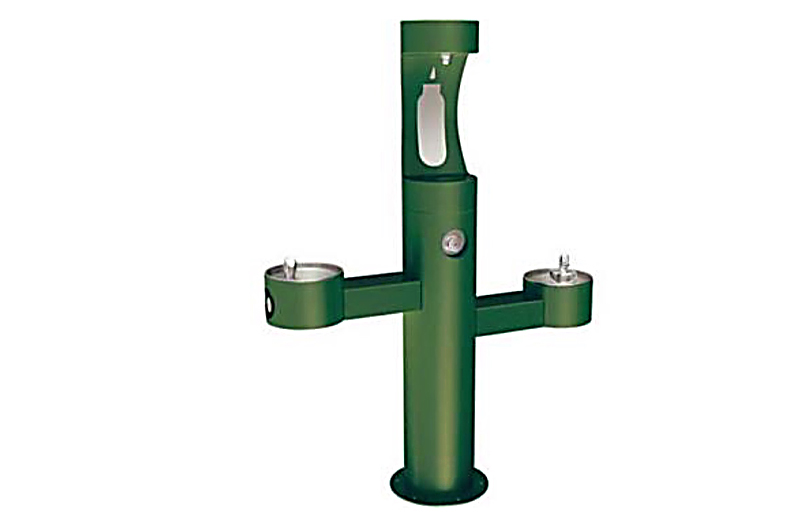
    include a local match of $6,098 to complete repairs to the Nisbet Park restrooms. Repairs include roofing, exterior doors, interior/exterior painting, skylights, and lighting. Also included in the project, is a new ADA compliant drinking fountain with bottle filler.

    Nisbet Park is the heart of what local folks have always called the  “Loveland Bike Trail”, and where the Little Miami Scenic Trail was first paved in 1989. Construction of the first paved miles of the Little Miami Scenic Trail began in Loveland and headed north into Warren County to Morrow. For decades the park and its related parking were the most accommodating spot on, and perhaps still the most popular place to access the trail. The trail runs parral to the Little Miami River along much of its length, a State and National Scenic and Wild River.

    Dedicated on December 20, 1991, the Little Miami Scenic Trail runs from Spring Valley in Greene County to the limits of Terrace Park. The Little Miami Scenic Trail is the third-longest paved trail in the United States, running 78.1 miles (125.7 km) through five southwestern counties. Most of the trail runs along the banks of the Little Miami River, in a dedicated, car-free corridor known as Little Miami State Park. The Little Miami Scenic Trail is signposted as State Bike Route 1 south of Xenia and State Bike Route 3 throughout. It is the backbone of a nearly continuous network of paved multi-use trails, centered on the Miami Valley area, that stretches 330 miles (530 km) and connects the Cincinnati, Dayton, and Columbus metropolitan areas. The Little Miami trail is an incrementally growing section of the Buckeye Trail and North Country National Scenic Trail, while the trail south of Xenia also forms the southern leg of the Ohio to Erie Trail. Together with the Ohio Department of Natural Resources, the local governments of Xenia and Yellow Springs purchased land along the abandoned railroad from 1973 to 1983. In 1979, the land became an Ohio State Park. The Loveland Bike Trail was added to the state park in 1984*

    *From Wikipedia, the free encyclopedia


  • Where to get your “FREE” 2018  Loveland Bike Trail Map

    Where to get your “FREE” 2018 Loveland Bike Trail Map

    Affectionately called the “Loveland Bike Trail” it is the Little Miami State Park and it is 70 miles long with connections to well over 100 miles.

    Walk, bicycle, run, canoe, kayak, swim, eat and drink along the State and National Scenic Little Miami River.

    Free parking, picnic tables, rest rooms, easy access, coffee, ice cream shops, restaurants and entertainment have made Loveland, Milford, Newtown, Miami Township & Lebanon excellent staging areas.

    CLICK HERE FOR HOW TO GET YOUR FREE MAP

    CLICK TO SEE (Front) THE MAP LARGE

    CLICK TO SEE (Back)THE MAP LARGE