Tag: local news

  • Funeral arrangements for Coach Darnell Parker

    Funeral arrangements for Coach Darnell Parker

    EDITOR’S NOTE: This story has been updated to reflect that there is visitation at Vineyard Church from 10 AM until the service at 11 AM.

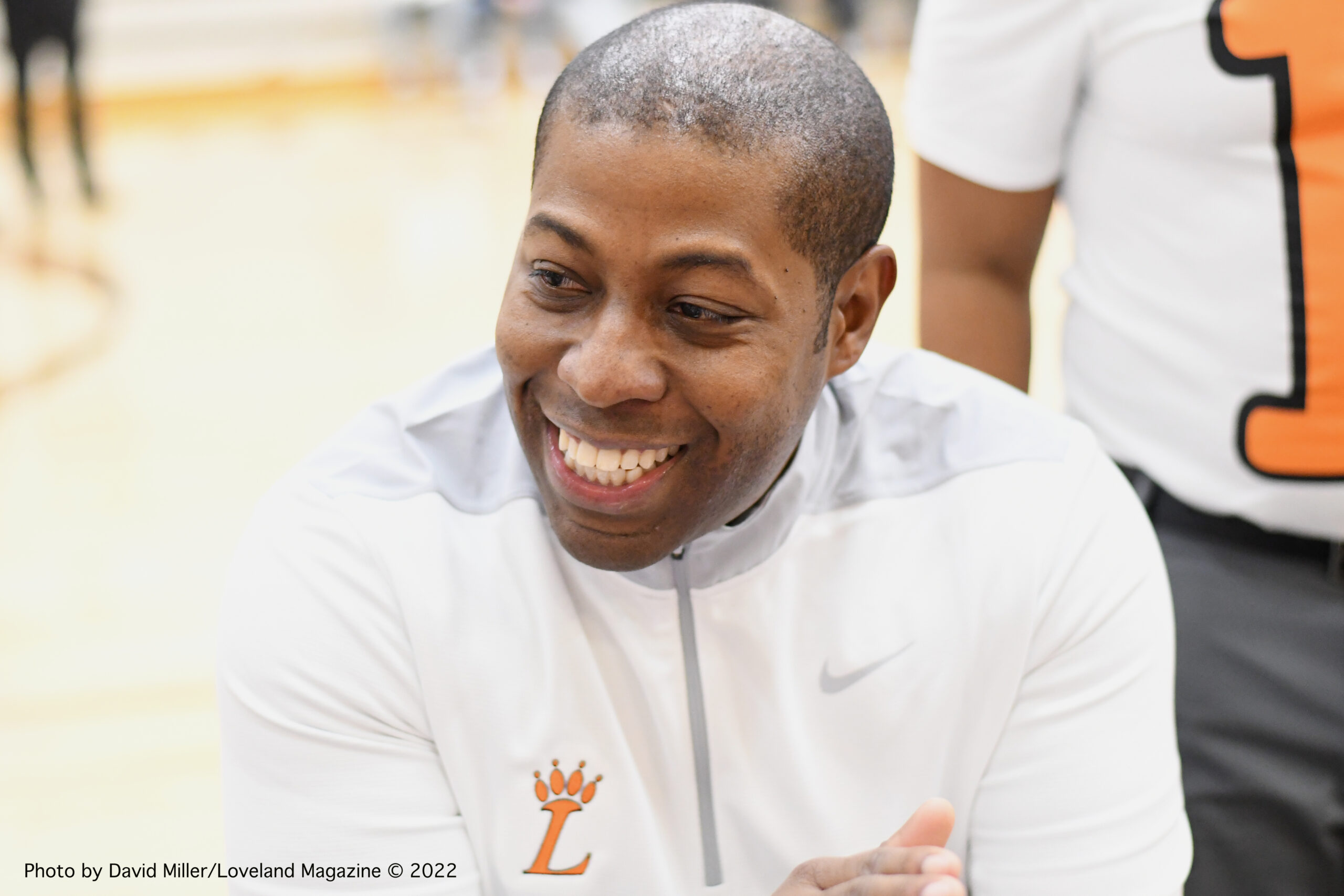
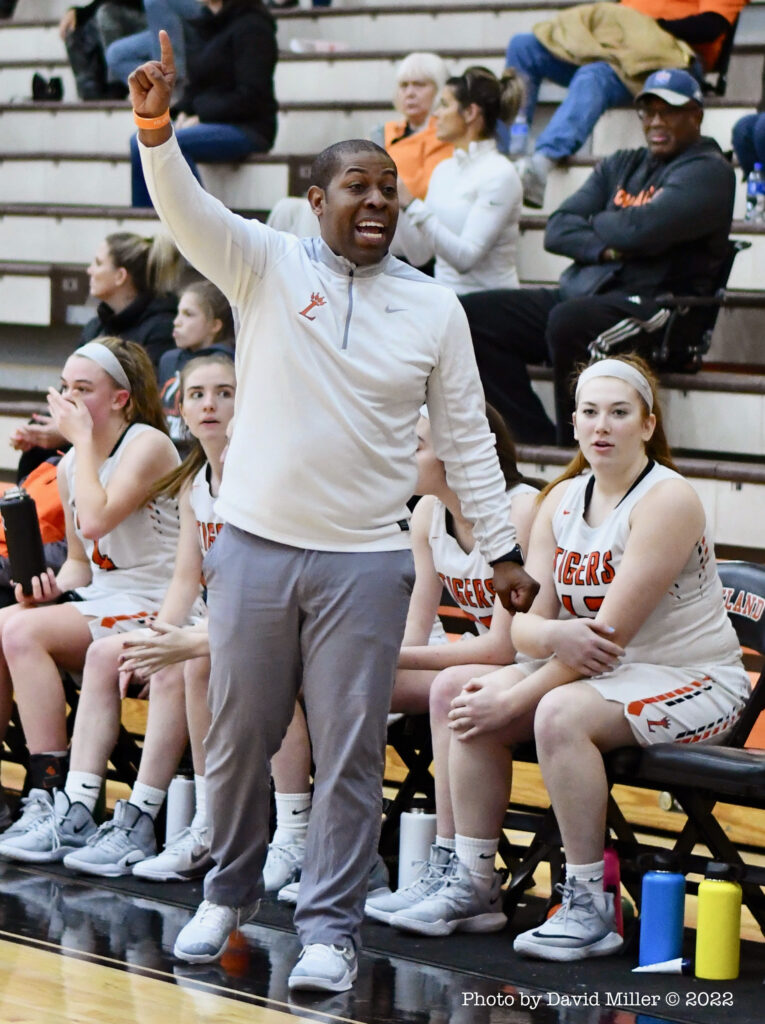
    Loveland, Ohio – The beloved head coach of the Loveland High School Women’s Basketball team Darnell Parker succumbed to cancer on Sunday, July 24, 2022.

    Here are the funeral, visitation, and celebration events for Coach Parker:

    Family & Friends:

    The funeral will be held Saturday, July 30th at 11 AM at Vineyard Church located at 11340 Century Circle East in Springdale. (MAP)

    Visitation will be at Vineyard Church from 10 AM until the service at 11 AM.

    Family & Friends:

    A Celebration of Life will be held on Saturday, July 30th from 2 until 4 PM at Loveland High School located at 1 Tiger Trail.


    Here are stories and videos produced by Loveland Magazine and Loveland Magazine TV

    [Video] Hugs for Coach Parker Night at Loveland High School

    What’s in Loveland’s DNA Featuring Darnell Parker!

    “Eat Out to Help Out” Loveland’s Coach Darnell Parker!

    Darnell Parker Fundraiser Tee Shirts

    A Tribute to Coach Darnell Parker and his Loving Tigers

    L.H.S’s Coach Parker Gives Sneak Preview of 2020-2021 Season!

    LHS’s Coach Parker is Stronger Than Ever…and so are his Tigers!

    L.H.S’s Coach Parker Gives Sneak Preview of 2020-2021 Season!

    “Rolling Mondays” Part 2 was a Success too!

    Pre-game interview: LHS Tigers headed to District Finals

    LHS’s Head Women’s Basketball Coach Reaches 100 Wins!

    Loveland High School Basketball Programs Look to Change School History!

    Community Rally’s Around LHS’s Coach Parker at Opening Night of “Rolling…

    Pre-game interview: LHS Tigers headed to District Finals

    Hug Coach Parker before his cancer surgery

  • Republicans in Congress shy away from campaigning on national abortion platform

    Republicans in Congress shy away from campaigning on national abortion platform

    BY: JENNIFER SHUTT – Ohio Capital Journal

    WASHINGTON — Republicans, hoping to flip control of Congress in the November elections, appear to have decided against campaigning on a unified abortion platform that would specify exactly what conservatives plan to do if given control of the U.S. House and Senate.

    Yet Republicans in Congress have written dozens of proposals that, if passed, would restrict abortion nationwide. GOP lawmakers this session have introduced more than 153 abortion-related bills that party leaders could point to as evidence of what Republicans would try to pass on the national level if they trounce Democrats at the polls.

    They include legislation that would define life as beginning at the moment of fertilization, prohibit insurance coverage for abortions, and make it a crime punishable to up to five years in prison for doctors who perform abortions after a heartbeat is detected, generally at about six weeks.

    But so far, Republicans have opted against a cohesive national campaign strategy on abortion, following the decision by the U.S. Supreme Court in June to overturn the landmark 1973 Roe v. Wade case. Many Senate Republicans are brushing aside questions about whether they would take up a nationwide abortion bill, citing as a hurdle the Senate filibuster that means bills need 60 votes to advance.

    Republican leaders are leaving it up to each House or Senate candidate to tout their own bills and views while the party wrestles with whether the matter should be left solely to state lawmakers or if Congress has a role to play.

    “It’s one thing that we are debating within the conference,” Iowa Republican Sen. Joni Ernst said of a nationwide abortion bill. “But at the same time, most of us do believe that the Dobbs decision was the right decision, and it’s returning that authority to our state and local governments. That’s our system of federalism.”

    Rep. Cathy McMorris Rodgers, a Washington Republican who has become one of her party’s leading voices on abortion, said during a brief interview the GOP won’t put forward a nationwide abortion policy ahead of the midterms.

    “We’re not in a position to move anything and the U.S. Supreme Court really sent it back to the states,” she said.

    But McMorris Rodgers didn’t rule out Republicans pushing nationwide legislation after the election if they regained control of Congress.

    “Not before the election,” she said, later adding “Well, yeah,” when asked if Republicans would put forward legislation afterward if they won.

    Back to the states

    Some Republicans have repeatedly said their opinion of the ruling on abortion in Dobbs v. Jackson Women’s Health Organization is that it sent the issue back to the states. Others have said it’s a topic for Congress to debate as well.

    The Supreme Court’s decision overturning the constitutional right to an abortion that stood for nearly 50 years said “the authority to regulate abortion is returned to the people and their elected representatives.”

    House GOP Whip Steve Scalise, a Louisiana Republican, said during a press conference in June shortly after the ruling was released that the decision “finally allows states and Congress to” pass new abortion legislation.

    But House GOP Leader Kevin McCarthy, of California, when asked what exactly Republicans would do on abortion, was vague, saying “we will continue to look wherever we can go to save as many lives as possible.”

    McCarthy did mention a bill from Missouri Republican Rep. Ann Wagner, though he didn’t say exactly which of her bills he’d bring up.

    Wagner is the primary sponsor of legislation that would require doctors to provide health care to “any infant born alive after an abortion” or attempted abortion. But she’s also sponsored several other bills related to abortion.

    Congress passed a similar bill, from Ohio GOP Rep. Steve Chabot, two decades ago. The legislation, titled the Born-Alive Infants Protection Act of 2002, passed the House on a voice vote and the Senate by unanimous consent.

    Senate Republicans insist there’s little chance of abortion legislation moving ahead.

    Florida GOP Sen. Rick Scott, chair of the National Republican Senatorial Committee, said he expects every candidate will decide how they want to talk about abortion.

    Fellow Floridian Sen. Marco Rubio, who is in a tight race against Democratic House Rep. Val Demings, said “Republicans will have different views about what restrictions and what the law should be.”

    “There are issues that are relevant to it that we can have a debate on here, but we have a filibuster that would make it impossible to pass a bill into law,” Rubio said.

    Louisiana Republican Sen. John Kennedy, who faces a relatively easy reelection campaign in the deeply red state, agreed with Rubio that any GOP abortion legislation is unlikely to move past the filibuster.

    “There aren’t 60 votes to do anything on the floor of the United States Senate with respect to abortion, pro abortion, anti-abortion, just anything to do with abortion,” Kennedy said.

    “What folks who feel strongly on both sides of the issues need to do now is go back to their states and, not put on a show, but put on the case,” he continued. “They’ve got to convince their state legislatures.”

    Retiring Missouri Sen. Roy Blunt said the issue belongs at the state, not the federal level.

    “I’ve always thought the best place to deal with this was at the state legislative level and that’s what I still think,” Blunt said.

    Senate Minority Leader Mitch McConnell, a Kentucky Republican, has said it’s “possible” that a GOP-controlled Congress could pass a nationwide abortion ban, though he’s sought to downplay the likelihood.

    McConnell said he would absolutely keep the chamber’s legislative filibuster in place, meaning the only way a nationwide abortion bill could get through is with a Republican super majority or some Democratic support.

    “We don’t want to break the Senate and that’s breaking the Senate,” he said of removing the filibuster.

    Referendum on abortion?

    The vastly different views on abortion as well as party leaders’ approach to campaigning on the issue has led Democrats to turn the midterm elections into something of a referendum on abortion.

    “This fall, Roe is on the ballot,” President Joe Biden said the day the Supreme Court released its decision overturning the 1973 Roe v. Wade ruling that established abortion as a constitutional right. “Personal freedoms are on the ballot. The right to privacy, liberty, equality, they’re all on the ballot.”

    Biden added that this November, voters “must elect more senators and representatives who will codify a woman’s right to choose into federal law once again, elect more state leaders to protect this right at the local level.”

    Tying the results of the midterm elections to abortion could be risky for Democrats, especially considering the president’s party almost always loses seats during the midterm elections.

    But the vast majority of Democrats have echoed Biden, telling voters that this November has become about more than who controls the U.S. House and Senate.

    “This is the future that MAGA Republicans clamor for; where women and same-sex couples are branded as second-class citizens,” Senate Majority Leader Chuck Schumer said on the floor. “If they succeed, they’ll take our country down a dark path from which there may be no return.”

    Democrats in Congress have voted on bills showing exactly how the party hopes to ensure patients throughout the country can terminate a pregnancy, or travel freely to states where the procedure remains legal.

    They’ve also brought up bills to ensure the right to same-sex and interracial marriages as well as the right to decide if and how to use contraception.

    Republican leaders, for the moment, don’t plan to say exactly which bills they’d vote on if they regain control of Congress.

    “They’re very nervous,” Virginia Democratic Sen. Tim Kaine told States Newsroom. “And their polling should tell them that, because we’re seeing this as dramatically affecting the polls in a number of our races.”

    Kaine played down the idea that making the midterms something of a referendum on abortion access could be problematic if Republicans regain control of Congress and then say the results show American voters want a nationwide abortion law.

    “Oh, they’re gonna do that anyway. Rock solid guarantee, no matter how the election goes,” Kaine said. “We’re very certain that’s coming and we’re trying to do all we can electorally and otherwise to head that off.”

    While Kaine expects voters will pick representatives based on more than abortion, he does expect the Supreme Court’s decision will drive voter turnout for Democrats.

    “And that’s why my Republican colleagues do not want to be talking about this or create any kind of a party plan that everybody’s supposed to go for,” he said.

    Senate Majority Whip Dick Durbin, an Illinois Democrat, criticized Republicans for not being clear with voters about how they plan to address abortion if given control of Congress.

    “The Republicans, if you’ll notice, have been surprisingly quiet, in my estimation, in reaction to Dobbs,” Durbin said. “I think they understand that these opinions may serve their base, but they don’t serve the party or the electorate at large.”

    Maryland Democratic Sen. Chris Van Hollen said the abortion ruling is one of a number of critical issues that voters will focus on this year, though he added, “it’s not the only issue on the ballot.”

    “I think the Dobbs decision is one of them, reproductive freedom is certainly a part of that. But it will also be a referendum on the kind of government you want, whether you want extremists like the MAGA crowd in the Congress,” Van Hollen said. “And it’s also going to be a debate on what we’re doing that’s within our power to reduce prices, like cutting the costs of prescription drugs.”

    Sen. Bob Casey, a Pennsylvania Democrat, said “most Americans know there’s a fork in the road and there’s basically two choices.”

    151 bills

    So far this Congress, Republicans have introduced 153 bills addressing abortion, with 94 in the House and 59 in the Senate.

    Wagner’s bill has the most co-sponsors with 203 GOP backers.

    Other legislation with broad Republican backing includes a bill from New Jersey Rep. Christopher Smith that would permanently prevent the federal government from spending money on abortions with an exception for rape, incest or the patient’s life. The legislation would also prohibit qualified health plans from including coverage for abortion, according to a summary.

    West Virginia Rep. Alexander Mooney sponsored a bill that would define life as beginning at “the moment of fertilization, cloning, or other moment at which an individual comes into being.” The bill clarifies that “nothing in this Act shall be construed to authorize the prosecution of any woman for the death of her unborn child.”

    And legislation from Pennsylvania Rep. Mike Kelly would make it a crime for health care providers to perform abortions after a heartbeat is detected, typically around six weeks. Doctors who perform the procedure would face up to five years in prison, a fine, or both if convicted.

    The bill creates an exception for a patient whose life is endangered by a physical diagnosis or injury, but not a “psychological or emotional” one.


  • Here is the Coach Darnell Parker smile Ohio and the Tri-State are talking about

    Here is the Coach Darnell Parker smile Ohio and the Tri-State are talking about

    Loveland, Ohio – The beloved head coach of the Loveland High School Women’s Basketball team, Darnell Parker succumbed to cancer Sunday. As hundreds of condolences pour in from schools and individuals from around Ohio and the Tri-State, many remember and mention his endearing smile.

  • [Video] The ABC’s of LIFE Food Pantry’s  Back to School Backpack Drive

    [Video] The ABC’s of LIFE Food Pantry’s Back to School Backpack Drive

    by David Miller

    Loveland, Ohio – Who doesn’t remember being a kid and you get the fresh new box of crayons, Terri Carter answered when I asked her why the LIFE Food Pantry does their Back to School Backpack Drive each year. She continued, “It’s a new start. It’s a new year. It’s a new backpack filled with supplies.”

    It’s early, but it’s never too early to help Loveland Area children be ready to head to their first day of Fall classes. You can help them go back with the same things and confident attitude that their more affluent classmates will have. Terri explains why in the interview.

    Carolina Maurer added, “With dignity. With new school things.”

    Terri is the President of the food pantry and Carolina coordinates their back-to-school program. I spoke to both today at the food pantry in Shoppers Haven to find out what they are doing and how you can help. I’m pretty sure after watching them answer questions, you will be willing to pitch in.

    Check the. “Amazon Wish List” for the Backpack Program.

    Follow the Pantry on FaceBook.

    Follow and join the LIFE Food Pantry Volunteers.

    Visit the Pantry’s website to find out more about receiving assistance for yourself or your children, volunteering, or the instructions to hold a food drive in your place of worship, workplace, or friendly neighborhood.

  • ‘Look beyond our age:’ Three Democratic teenagers run for Ohio House

    ‘Look beyond our age:’ Three Democratic teenagers run for Ohio House

    Sam Cao, 17, at left, seen with Sam Lawrence, 19, at right. The two teenaged Sams are running as Democrats for seats in the Ohio House. Source: Sam Lawrence.

    BY: JAKE ZUCKERMAN Ohio Capital Journal 

    Sam Cao worked out a plan with his principal and superintendent. They had to figure out how Cao could potentially balance constituent work in the Ohio House of Representatives with classwork at Mason High School.

    At Miami University, Sam Lawrence mulled a similar plan for his upcoming sophomore year. Ohio University’s Rhyan Goodman is likely doing the same for his junior year.

    The three Democrats would be quite young for elected office. Cao is 17 but turns 18 before Election Day, which allows him to run; Lawrence is 19; Goodman was 19 when he announced his run in February.

    If elected, they could shape state policy on everything from Ohio’s $74 billion biennial budget, civil and criminal justice, women’s rights, gun policy and countless others. All three are running in districts where Republicans have recently won with commanding margins, leaving them with uphill paths to office.

    They can serve in wars and vote. They can’t lawfully buy a drink. And they don’t think their age should preclude them from public office.

    “The one thing I’d like to point out is it’s not no experience; it’s different experience,” Lawrence said.

    “I would like to ask every one of our legislators if they were attending school while all these terrible school shootings are happening. They were not in school when we had these high-powered assault weapons that could mow down tens of children at a time. Those people don’t have those life experiences.”

    Some current incumbents started their terms just a few years older. Sen. Niraj Antani, R-Miamisburg, started in the House in 2018 at 23 years old. Rep. Jena Powell, R-Arcanum, first won in 2018 at 24. Rep. Thomas Hall, R-Madison Twp., won office in 2020 at 25. Rep. Bride Rose Sweeney, D-Cleveland, won in 2018 at 26.

    Several (older) Democrats asked about the youthful insurgents rebuffed concerns of a lack of life or work experience from the candidates. They also rejected the trend as any signs of a party unable to attract more established candidates. Instead, they characterized it as a reflection of members of a new generation who are aghast at increasingly extreme legislation coming from the Statehouse and inspired enough to seek to affect change on their own.

    “They’re going to be limited based on their life experiences, but at the same time, there is something romantic about it,” said Dennis Willard, a Democratic political consultant.

    “In a sane world, this might seem insane. But were not living in a sane world with the Ohio Legislature. I know who I’d vote for.”

    There’s some historical precedent too. U.S. Sen. Sherrod Brown, the dean of Ohio’s struggling Democratic Party, won his first state House race at 21 in 1974. In 2000, 18-year-old Derrick Seaver won a seat as a Democrat (he switched parties a few years later).

    In an interview, Seaver, now 40 and the director of the San Jose Chamber of Commerce, expressed ambivalence about teenagers running for office. Youth has its perks — young people can be listeners and learners who bring new perspectives to older and pastier general assemblies. Plus, the media attention they attract can make the difference in tough races.

    However, they’re less situated to understand the nuances or interconnectedness of public policy, he said. Plus, if they lose an election, they don’t have a college degree or developed work experience to fall back on.

    “I will say that since that time, and I don’t want this to come across as discouraging, but certainly I feel that maybe I should have waited until I was older,” he said.

    Sam Cao

    Ohio’s new 56th House District contains swaths of Warren County including the cities of Lebanon and Mason. More than 62% of its voters are Republican, according to Dave’s Redistricting App.

    The incumbent, Rep. Paul Zeltwanger, was among the first Republicans to openly embrace conspiracy theories surrounding COVID-19 and later joined in a quixotic and failed gambit to impeach Gov. Mike DeWine. Constitutional term limits preclude him from seeking reelection.

    Cao grew frustrated when COVID-19 grew so prevalent in the county that his high school closed its doors when it ran out of healthy substitute teachers. He tried to contact Zeltwanger, to no avail. Then he tried to contact the Democrat running for the seat, only to learn no such person exists. He credits his AP Government teacher with encouraging him to take a shot for himself.

    To prepare, he’s looking to history. For one, there are his role models — Brown, the U.S. Senator; Robert Kennedy, the liberal icon and former U.S. Attorney General; and William Proxmire, another U.S. Senator who famously replaced the demagogic Sen. Joe McCarthy and declared his predecessor a “disgrace to Wisconsin, to the Senate, and to America.”

    Cao has also been seeking guidance from the last four Democrats who tried and failed to win the seat.

    “You know what you’re entering, kid?” he said, relaying their advice.

    “We call this the arena for a reason. You’re a minnow. And sharks come in. These legislators at the Statehouse, they’re not playing with you. They could eat you up.”

    His path to the general election ballot is no guarantee — he’s facing Joy Bennett, a freelance writer, in the looming Aug. 2 primary.

    In an interview, he boiled his policy goals down to three items. For one, he wants to vote against abortion restrictions and gun rights expansions, which are likely to come in the GOP-dominated legislature. For two, he wants to improve the state’s infrastructure — one example being a lack of roads leading to his own high school, the largest in the state, causing regular traffic jams. Third, he wants to support legislation introduced by Sen. Tina Maharath (another young and Asian-American Democratic lawmaker) to develop curriculum teaching Asian-American history in school classrooms.

    “Look beyond our age,” Cao said. “I know our age is like, the wow factor or the pizazz factor about who we are as candidates, but I want you to look at the policies. I want you to look at what values we stand for.”

     Sam Lawrence, at left, and Sam Cao at right. Source: Sam Lawrence.

    Sam Lawrence

    In Hamilton County, Lawrence is running against Rep. Sara Carruthers, a two-term incumbent Republican. It’s a similarly tough district for Democrats — more than 60% of its voters are registered Republicans, according to Dave’s Redistricting App.

    His goals in office include protecting abortion access for women, legalizing and taxing marijuana for recreational use, bringing intrastate train access to Ohio, and expanding clean energy generation like wind and solar in Ohio.

    He said a House full of only 19-year-olds would likely destroy the state. But having a few of them around has its value — who better to represent the interests of young Ohioans? Who better to understand the realities of seeking student loans in an inflationary economy? Or evaluating recently passed legislation that allows teachers to carry arms in Ohio, which he called “incredibly unpopular” among young people.

    He considers former presidential candidate and current U.S. Secretary of Transportation Pete Buttigieg a role model. He has knocked on doors for House Minority Leader Allison Russo, D-Columbus, and volunteered for Congressman Tim Ryan’s U.S. Senate Campaign as well.

    “Something everyone should know about us: We are taking this extremely seriously,” he said. “There is a reason that this Democratic process is in place. There is a reason that, by law, you are allowed to run at my age. There is a reason that people have won at my age. I think we should test that theory.”

    Rhyan Goodman

    Of the three teenagers, Goodman has the best shot at winning as far as the raw demographics go. His Athens County district splits 52-45 for Republicans.

    He’ll face Rep. Jay Edwards, R-Nelsonville, a successful fundraiser and former member of House leadership seeking his fourth term in office. Edwards has won in a landslide every election since 2016.

    Goodman doesn’t have any campaign website that could be located. He did not respond to calls or text messages seeking an interview.

    According to The Athens News, he registered to run in February at 19 years old using his college dormitory as his residence.

    His nascent political career has already met scandal. In April, he resigned from Ohio University’s student senate before facing an impeachment trial. According to The New Political, a student publication, Goodman was accused of coordinating an effort to remove former Treasurer Simar Kalkat from her position. He allegedly encouraged student senators to accuse Kalkat of intimidation.

  • Hamilton, Clermont, and Warren Counties now have “High” COVID-19 community spread

    Hamilton, Clermont, and Warren Counties now have “High” COVID-19 community spread

    Loveland, Ohio – The Centers for Disease Control and Prevention (CDC) has classified Hamilton, Clermont, and Warren Counties as having “High” COVID-19 community spread. The CDC looks at the combination of three metrics — new COVID-19 hospital admissions per 100,000 population in the past 7 days, the percent of staffed inpatient beds occupied by COVID-19 patients, and total new COVID-19 cases per 100,000 population in the past 7 days — to determine the COVID-19 community level.

    (K)N95 masks that are good quality and fit are important to protect yourself and others. (CDC Image)

    Immediate recommendations from Hamilton County Public Health:

    • Wear a well-fitting mask indoors in public, on public transportation, and in crowded outdoor areas regardless of your vaccination status.

    • Stay up to date with COVID-19 vaccines.

    • Get tested if you have symptoms.

    • If you are at high risk for severe illness, consider taking additional precautions. Talk to your doctor to find what works best for you.

    • Stay home if you are sick.

    Community Resources

    TestAndProtectCincy.Com has a list of vaccination locations, PCR testing sites, Test-To-Treat testing sites, and where you can find at-home testing kits.vFind out more by visiting: HCPH.org/COVID19

    COVID-19 Testing Locations in Clermont County

    Upcoming Vaccine Clinics in Clermont County

    Warren County Covid 19 Vaccine Info

    No-Cost Home Test Kits

    Request an At-Home Test Kit

    At-home COVID-19 test kits can be requested from the federal government and shipped (USPS) to residential addresses.  For information on how to store and use at-home tests, and other helpful tips, visit CDC.gov.

    BinaxNOW Test Kits:  BinaxNOW test kits have an expiration date that differs from the product label.  Please read this update to see the extended expiry of your testing kit.

    For guidance on the proper way to use your BinaxNOW testing kit, watch the below step-by-step video. For other brands, please refer to the instructions included in the test kit.

    Watch this demonstration on how to use at-home test kits:

  • Scone Cash Players live at Plaid Room Records in Historic Downtown

    Scone Cash Players live at Plaid Room Records in Historic Downtown

    Loveland, Ohio – Scone Cash Players are celebrating the reissue of their debut album, Blast Furnace!, with an in-store performance at Plaid Room Records in Historic Downtown Loveland, Ohio on Friday, August 12th.

    Pick up the LP and have it signed!

    Shop closes at 7 PM.
    Doors re-open at 7:30 PM.
    Show at 8-9 PM

    Tickets $10

    Get tickets IN-STORE or HERE.

    Family owned and completely independent, we are proud to offer personal, high quality service along with a vast selection of over 45,000 new and used LPs!

  • Rare Corpse Flower Showing Signs of Impending Bloom at the Cincinnati Zoo

    Rare Corpse Flower Showing Signs of Impending Bloom at the Cincinnati Zoo

    The Amorphophallus titanum in Wilhelma Botanical and Zoological Gardens, Stuttgart

    Photo by Lothar Grünz via Wikipedia

    Cincinnati, Ohio – The horticulture team at the Cincinnati Zoo & Botanical Garden has been waiting and watching the rare corpse flower that arrived three years ago from the Chicago Botanic Garden for signs that it’s ready to bloom.  What they’ve seen in the past few days gives them hope that the horrible smell, described as being similar to a decaying corpse, and fantastic flower that they’ve been waiting for could be coming soon!

    “We’ve all heard how bad the smell is, but it’s just one of those things that you want to experience in order to describe it in your own words,” said Cincinnati Zoo horticulturist Jerome Stenger. “And the fact that the occurrence is so rare, sometimes just blooming once in a decade, makes everyone want to see it.”

    The smell only lasts 24 – 36 hours, which should be bearable even to the people who work in the Zoo’s education building where Morticia, the name that Cincinnati Zoo social followers picked for the plant, is located.

    “The odor, color, and temperature, which can rise to 98 degrees, of the flower are meant to attract pollinators that are attracted to dead animals,” said Stenger.  “Since the Discovery Forest greenhouse isn’t crawling with dung beetles and flesh flies, we are trying to get our hands on some pollen so we can help Morticia pollinate!”

    Once the flower has bloomed and pollination is complete, the flower collapses. In addition to its unique, sporadic, and stinky blooms, the plant itself can grow to a massive 15 feet tall with leaves as big as 13 feet wide.

    Visitors are welcome to come see Morticia in the Zoo’s Discovery Forest.  The Zoo, and Discovery Forest, are open daily from 10 AM to 5 PM during the Summer Adventure presented by Cincinnati/NKY Honda Dealers. Members may enter at 9 AM.  There is no additional charge to see this amazing plant.

  • LIFE Food Pantry needs your help filling the shelves

    LIFE Food Pantry needs your help filling the shelves

    Click to learn more about the Pantry, how to donate your food, or how to conduct a food drive

    Applesauce

    Carrots,

    Canned

    Chicken,

    Canned Chili

    Chili beans

    Cooking oil

    Ensure/Boost

    Flour

    Fruit cocktail/Mixed Fruit

    Hearty Soups

    Juice ( Large not individual size)

    Kidney beans

    Canned Peaches

    Peanut Butter

    Pinto beans

    Ramen noodles

    Refried Beans

    Spaghetti Sauce

    Sugar

    Personal Care

    Body Wash

    Deodorant – mens and women’s

    Shampoo

    Conditioner

    Diapers – size 5 and 6

    Pull Ups – 3T-4T, 4T-5T

    Women’s Depends All Sizes

    Paper Goods:

    Paper Towels

    Kleenex

    Diaper Wipes

    Flushable Adult Wipes

  • Ohio Supreme Court strikes down congressional maps for second time

    Ohio Supreme Court strikes down congressional maps for second time

    Pictured is the Thomas J. Moyer Ohio Judicial Center where the Ohio Supreme Court meets. Photo courtesy Wikimedia Commons..

    BY: SUSAN TEBBEN – Ohio Capital Journal


    For the second time, the Ohio Supreme Court rejected a map for congressional districts in the state.

    The court ruled that the map violated the constitution by favoring one political party over another irrespective of election results across the state.

    “We hold that the March 2 plan unduly favors the Republican Party and disfavors the Democratic Party in violation of the (Ohio Constitution),” the majority decision reads.

    The 4-3 decision reflected the other decisions the court has made on redistricting: Chief Justice Maureen O’Connor voted to reject the maps, along with Justice Michael Donnelly, Justice Melody Stewart and Justice Jennifer Brunner. Justices Sharon Kennedy, Patrick DeWine and Patrick Fischer all dissented in the case.

    In ruling against the partisanship in the congressional map, the court called out the commission for creating Democratic districts with razor-thin advantages, while the Republican-leaning seats “comfortably favor Republican candidates.”

    In the most recent congressional map, only three Democratic-leaning seats have more than 52% Dem advantage, whereas all Republican-leaning seats have more than 53% GOP advantage.

    “Considering that Democratic candidates have received about 47% of the vote in recent statewide elections, this probable outcome represents only a modest improvement over the (previously) invalidated plan,” according to the court decision.

    The court pushed back against arguments made by Ohio Redistricting Commission members, including Senate President Matt Huffman and House Speaker Bob Cupp, both of whom have left the commission since then, replaced by state Sen. Rob McColley and state Rep. Jeff LaRe.

    The legislative leaders and their replacements on the commission tried to argue they were not obligated to correct “legal defects” in the original congressional plan while revising the plan.

    “The commission’s constitutional duty is to adopt a congressional district plan to replace the original, invalidated plan,” the court majority wrote. “Indeed, the commission has a constitutional duty to remedy the defects in the previous plan.”

    Huffman, Cupp, McColley and LaRe said fixing the “defects” would “incentivize” Democrats to vote against the plan, and called the article setting forth anti-gerrymandering rules a “safety valve of sorts” for the ORC to adopt a plan that didn’t have to align with the same redistricting rules as the General Assembly.

    “No constitutional language suggests that the voters who approved Article XIX intended to allow the prohibitions against partisan favoritism and unduly splitting governmental units to be avoided so easily,” the majority ruled.

    The lawsuit was filed in March, after the Ohio Supreme Court turned down calls to reject the maps in a previous lawsuit on congressional redistricting. The court said because its previous decision to reject the first congressional map was final, challengers had to file a new lawsuit to challenge the second version.

    The supreme court rejected the first map on the same grounds as the second rejection: partisan favoritism.

    In their dissent to the majority decision, Kennedy and Patrick DeWine said they would have left the plan in place as constitutional and allow its use for the 2024 primary and general elections.

    Kennedy and DeWine said because they would have held that the first congressional map “did not unduly favor Republicans and was constitutional,” they would have done the same for the second plan.

    DeWine, who is Gov. Mike DeWine’s son, has recused himself from any court cases regarding holding the ORC members in contempt of court due to his father’s participation as a commission member. However, he has refused calls for his recusal in all redistricting cases because of his father’s involvement in the process.

    Fischer joined the dissent, but wrote separately to argue that map challengers “do not even meet the lower clear-and-convincing evidence burden of proof or the even lower preponderance-of-the-evidence burden of proof” that the second congressional map unduly favored Republicans.

    He also criticized the process conducted by the state supreme court, saying a lack of hearings “undoubtedly raises concerns among the public regarding this court’s lack of transparency.”

    “This court’s misguided rush to decide these cases has resulted in an unnecessary and truncated procedure that has effectively tied this court’s hands and rendered it unable to make a fully informed decision,” Fischer wrote.

    The court gave the General Assembly 30 days to pass a new map, and if they can’t, the Ohio Redistricting Commission will have another 30 days to do so.

    Since the May primary, which included congressional races, already occurred, a new congressional plan’s impact will go forward to 2024 elections.

    The legislature is currently on summer break, set to come back in the fall. Huffman’s spokesperson did not respond to a request for comment on the ruling, or if they would be reconvening the GA early to deal with the issue.

    A spokesperson for Cupp said the office was reviewing the decision.

    The ORC’s co-chair, Democratic state Sen. Vernon Sykes joined Senate Minority Leader Kenny Yuko in saying the court “made it clear that Republicans have repeatedly used the redistricting process to give themselves an unfair advantage.”

    “Once again, we are ready to follow the law and give Ohioans the fair maps they demanded,” Sykes and Yuko said in a statement. “We hope this time our Republican colleagues will join us, instead of trying to run out the clock.”

    A spokesperson Ohio Secretary of State Frank LaRose, the state’s chief elections officer and a member of the redistricting commission, said LaRose’s office had received the ruling and had a legal team reviewing the decision.

    The League of Women Voters, one of the two parties who challenged the congressional maps, praised the decision and hoped for swift and public action to adopt new congressional maps.

    “We agree that the congressional map is beyond a reasonable doubt gerrymandered, and we stand ready to work with the mapmakers to see a map produced that truly upholds the will of the voters for a free and fair election,” said Jen Miller, executive director of the LWV of Ohio.

    Follow OCJ Reporter Susan Tebben on Twitter.