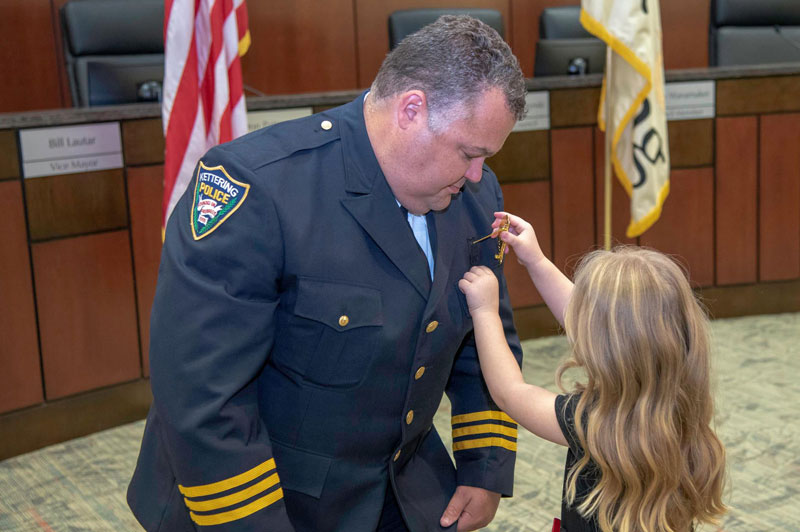
Michael J. Gabrielson being promoted to Kettering Department Captian on November 20, 2019
Loveland, Ohio – Michael J. Gabrielson, current Assistant Chief of Police with the Kettering Police Department, has been chosen as the Loveland Police Department’s new Chief of Police.
Gabrielson will begin his employment with the city on August 1.
Sue Madsen, who has served as the city’s Safety Director since April when former Chief Sean Rahe retired, will assist with Gabrielson’s onboarding according to a release by the City.
“My family and I have been blessed throughout my law enforcement career and we absolutely see Loveland in that same light. It is an honor to be selected as chief and become part of an exceptional and successful agency. I am eager to join a flourishing community with outstanding schools, beautiful parks, and a thriving business district — all serviced by an incredible city with hardworking and dedicated employees,” said Gabrielson in the City press release.
“Gabrielson brings more than 28 years of experience as a certified peace officer in the State of Ohio and more than 20 years as a law enforcement instructor to his new role. He has served the citizens of Kettering since 1993, where he began as a patrolman. His responsibilities as the Assistant Chief at Kettering included leading one of two major divisions of the department with special focus on patrol operations, administrative support, community relations, and criminal investigations.”
Gabrielson holds a Master’s Degree in Criminal Justice Administration from Tiffin University and has pursued ongoing education through the Northwestern University Center for Public Safety.
“We are very excited to have Mr. Gabrielson join the Loveland Police Department,” said Loveland City Manager David Kennedy. “After an extensive interview process, he is the right candidate to lead the department. He has a robust background in building internal and external relationships, and I believe he will be a strong asset to the Loveland community and to our police officers’ development. Thank you to all who assisted in the candidate interview process.”
Hey y’all! Our summer sale at Plaid Room Records is here! During RSD we always run 15% off in-store, but we’ve never had the fulfillment capacity to extend that sale to online the same weekend. After some discussion here and a ton of folks asking, we decided to extend that 15% off sale to online customers Sunday through Tuesday! Our warehouse team has also been putting some pressure on me to try to clear some of our overstock so they can continue to operate normally. So, here’s the deal:
EVERYTHING (excluding pre-orders) IN THE STORE IS 15% OFF! No code required, the discount will auto-apply at checkout.
ALL DOUBLE DISCOUNTED ITEMS There are some serious deals in here – I hope y’all find something that’s been on your list!
**Discounts are applied one at a time. For example, a $100 item discounted 30% and then 15% would be ($100 – 30% = $70). Then, it would be ($70-15% = $59.50). $59.50 would be the item’s price before tax.
Scratch And Dent Section On Website Now! As many of you have seen over the last few years, distributors don’t always get product to us in perfect shape. When my team is receiving product, they do their best to separate out the damaged products. In the past we’ve listed some of this product online, usually with the word [DAMAGED] in the title. We’ve historically usually only listed products where we have 3 or more copies that arrived damaged. Now we will be listing tons more titles, even if we only have one copy. The scratch and dent “collection” is available on the site on the menu “Shop Only In Stock” -> “Scratch and Dent Deals”. I’ll drop the link below and sort by the newest added so you can see what’s there. Scratch And Dent
Loveland, Ohio – For area residents choosing to celebrate freedom and independence this 2022 Independence Day, here is some information from City Hall.
A kid zone with photo opportunities, a mini petting zoo, performers and more will occur 4-6:30 PM in Nisbet Park. Lawn games will be available from 4-9:30 PM in front of City Hall and Fountain Greene (in front of the Fleet Feet store).
At 7 PM, the parade will leave from Loveland Elementary School (600 Loveland Madeira Road), turn on West Loveland Avenue, and travel through the downtown district, ending at the intersection of State Route 48 and East Loveland Avenue. If you or your organization would like to be in the parade, registration is open through June 30.
The band Color Blind will perform from 8-10 PM at the Nisbet Park Amphitheater. This “high-energy party band” performs songs from the 1970s to current radio hits.
The fireworks display will begin at 10 PM and be visible across the downtown area.
Parking shuttles will be transporting eventgoers continuously from 4-11 PM. Shuttle pick-up locations will be at Loveland High School (1 Tiger Trail) and the Loveland Early Childhood Center (6740 Loveland-Miamiville Road). Drop-off locations will be at Riverside Drive and Third Street.
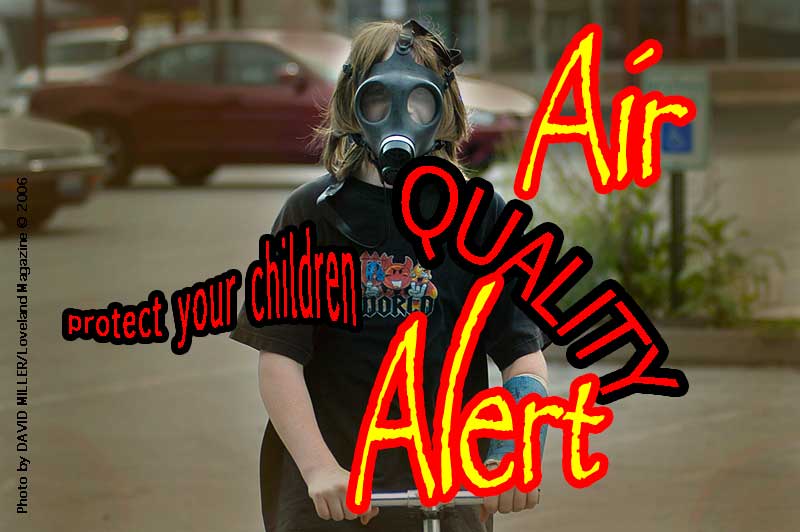
Loveland, Ohio – The Southwest Ohio Air Quality Agency has announced an Air Quality Alert for the Loveland Area, including Butler, Clermont, Hamilton and Warren counties in Ohio and Boone, Campbell and Kenton counties in Kentucky.
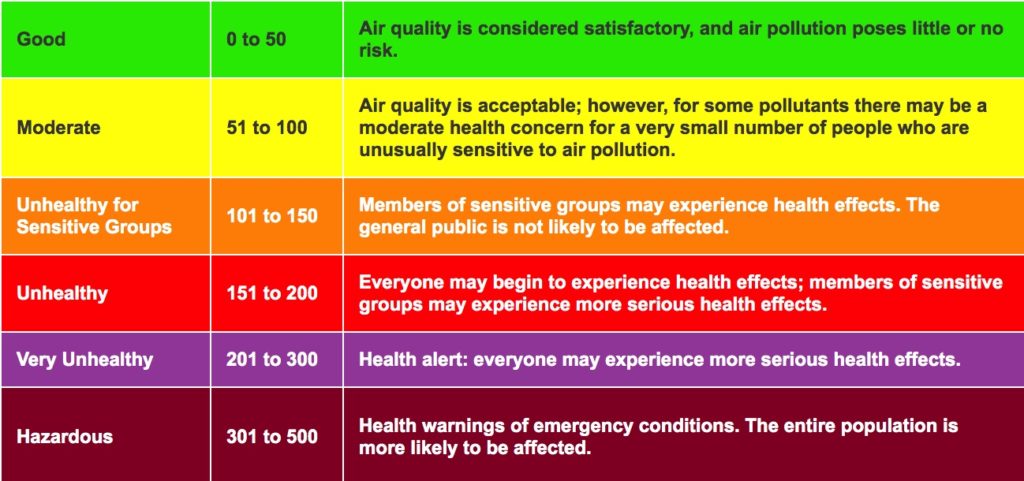
The air quality index is predicted to be 101 on Tuesday which is “Unhealthy for Sensitive Groups”.
Active children and adults, and people with respiratory diseases, such as asthma, should be avoiding all outdoor exertion; everyone else, especially children, should limit outdoor exertion.
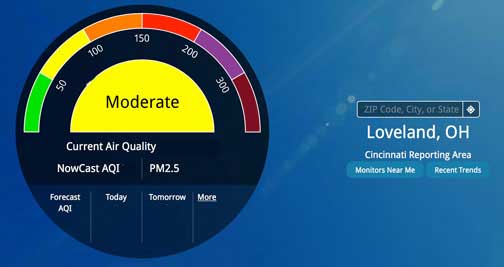
You can track the air quality in real-time by clicking the image below.
Do Your Share! Take these precautions:
• Take the bus, carpool, bike or walk instead of driving • Refuel your vehicle after 8 p.m.; do not top off when refueling and tighten the gas cap • Avoid idling your vehicle • Combine trips or eliminate unnecessary vehicle trips • Keep your vehicle maintained with properly inflated tires and timely oil changes • Avoid use of gasoline-powered lawn equipment on Air Quality Alert days • Avoid use of oil-based paints and stains on Air Quality Alert days • Never burn leaves or other yard trimmings • Always burn clean, seasoned wood in outdoor fire pits, fireplaces and wood stoves • Do not use fire pits or fireplaces for non-essential home heating on Air Quality Alert days • Conserve electricity
I just wanted to point out that Ohio has a special/primary election (state legislative offices) scheduled for Aug 2. You can request your mail-in ballot now by going here (link below) and printing out the request to mail in once you fill out the form. They start accepting absentee ballots on July 6, so if you send in your request this week you should get your ballot in plenty of time to mail it off. It's always best to take your absentee ballot directly to the post office counter when mailing it and ask them to postmark it, so there's no question your vote will count (they don't automatically postmark everything anymore).

Below is the link to make your absentee ballot request.

ohiosos.gov/elections/voters/absentee-ballot/
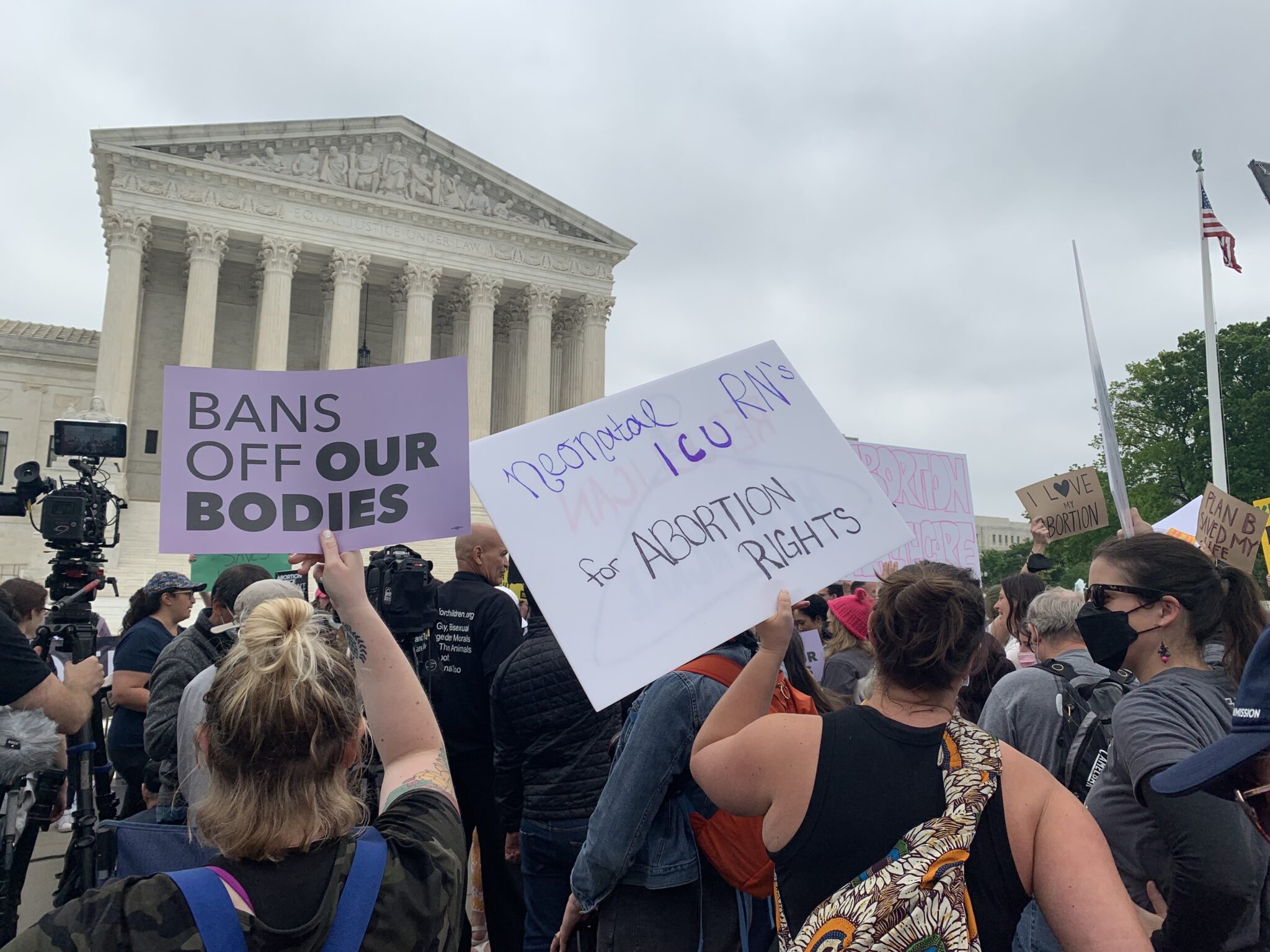
As Ohio Attorney General Dave Yost filed court motions to enact Ohio’s six-week abortion ban, a motley bunch of protesters gathered near the Ohio Statehouse on Friday in a tiny sliver of shade cast by the William McKinley statue.
They held signs declaring “abortion is healthcare” or “abortion is a human right.” Another read “our democracy, it is broken.”
Ohio Attorney General Dave Yost. (Photo by Justin Merriman/Getty Images)
Cheri Wells stood next to her one-year-old daughter, Lux, who was strapped into a stroller.
“I brought my daughter down here because this absolutely has everything to do with her, too,” she said.
“It’s taking away her rights to overturn Roe vs. Wade, as well,” she said. “I mean, it’s all about controlling women, period.”
Advocates surge ahead
Advocacy groups and leaders for and against abortion spoke out on the U.S. Supreme Court’s ruling overturning the nationwide right to abortion included in Roe v. Wade.
Religious and anti-abortion groups praised the decision that overturned abortion legalization that had been in place since the early 1970s, and continued their push for prohibitions in Ohio.
“Ohio Right to Life encourages our pro-life legislative majorities and Governor DeWine to be ambitious and end abortion once and for all in our great state,” said anti-abortion lobby Ohio Right to Life’s president Michael Gonidakis.
The anti-abortion groups have state leaders on their side, as Gov. Mike DeWine promised backing for the six-week ban that has been tied up in federal court, and Attorney General Yost put the wheels in motion for that ban to become effective.
In a motion filed less than an hour after the Dobbs decision was released by the U.S. Supreme Court, Yost’s office asked to dissolve the injunction that kept the state abortion ban from going into effect in 2019 when it was passed by the Ohio General Assembly.
“Because there exists no just reason for delay, defendants respectfully request this court immediately dissolve the preliminary injunction and dismiss this case,” Yost wrote in the motion to the U.S. District Court for the Southern District of Ohio.
Later Friday night, a court granted the motion, and Gov. Mike DeWine signed an executive order permitting the Ohio Department of Health to set rules for the law.
Those in the pro-abortion realm are not sitting on their laurels after the much-anticipated decision came through.
In a Friday afternoon press call, members of Planned Parenthood of Ohio said while the ruling had been expected, even before a draft opinion leaked to the public, the results were no less devastating.
“Ohioans should not have to figure out how to safely provide health care for themselves,” said Iris Harvey, president and CEO of Planned Parenthood of Greater Ohio. “It’s an attack on your rights, an attack on your privacy and your freedom.”
Though abortion is now legal at six weeks rather than 20 weeks after a missed period, pro-abortion advocates maintained a message that until a court rules or another ban is put in place, abortion is still legal in the state of Ohio.
Case Western Reserve University law professor Jessie Hill, who has worked on cases defending reproductive rights, said there “are still legal moves to be made” and lawyers intend to continue pursuing options.
One way in which Hill said abortion advocates can move forward is by giving advice that is protected under the First Amendment.
“The state can not, as a general matter, ban truthful, factual information,” Hill said.
Working within the state’s legal system is also in the playbook to keep abortion legal.
“Our in-state strategy ensures that we protect the Ohio Supreme Court, which has been a backstop for securing reproductive justice,” said Rhiannon Carnes, co-founder and co-executive director of the Ohio Women’s Alliance Action Fund.
The group is working with partners to “implement harm reduction measures to ensure that people who need an abortion can obtain the essential health care they deserve,” according to a statement by the OWA. A “voter education plan is also” being launched as the August 2 primary and November general election approach.
“We are all coming together to build independent political power against those stigmatizing abortion and forcing their political objective on our lives and bodies,” Carnes said in the statement.
One Small Step
In the Ladies Gallery at the Ohio Statehouse, a group of anti-abortion activists held a press conference to applaud the Dobbs decision. The room, set aside to honor the achievements of women in Ohio politics, regularly hosts events of all kinds, but the setting wasn’t lost on the speakers.
Beth Vanderkooi of Greater Columbus Right to Life described abortion as a “systemic injustice” meant to discriminate against women.
“True advocates for women’s rights would work together to bring down these injustices rather than tell women that their path to equality, to liberty and to freedom, rests on the dismembered bodies of their dead children,” she said.
The organizers sought to cast Friday’s decision as a watershed achievement for civil rights, comparing it to the reversal of Dredd Scott and Plessy and invoking the words of Martin Luther King, Jr. They also propped it up as a landmark historical event on the order of the moon landing or D-Day.
“It’s one small step for babies,” Created Equal vice president Seth Drayer insisted, “one massive leap for humankind, because Dr. King famously said that injustice anywhere is a threat to justice everywhere.”
While abortion advocates prepare for their next moves, Created Equal’s president Mark Harrington said their fight was far from over. Invoking Winston Churchill, he called the Dobbs decision “the end of the beginning.”
That posture certainly means advocating for greater restrictions or even the elimination of abortion at the state level, but given Justice Clarence Thomas’ suggestion that the court should next revisit rulings on the legality of same-sex marriage and relationships, as well as contraceptives, some worry the right to an abortion is far from the only one under threat.
Despite promising continued action, Harrington distanced his organization from Thomas’ remarks.
“The idea that one justice which we may or may not agree with on these other issues, says that from the bench in his opinion, doesn’t really matter unless the court actually has a case,” Harrington said. “And there’s no future that I can see where that’s actually going to occur in the short term.”
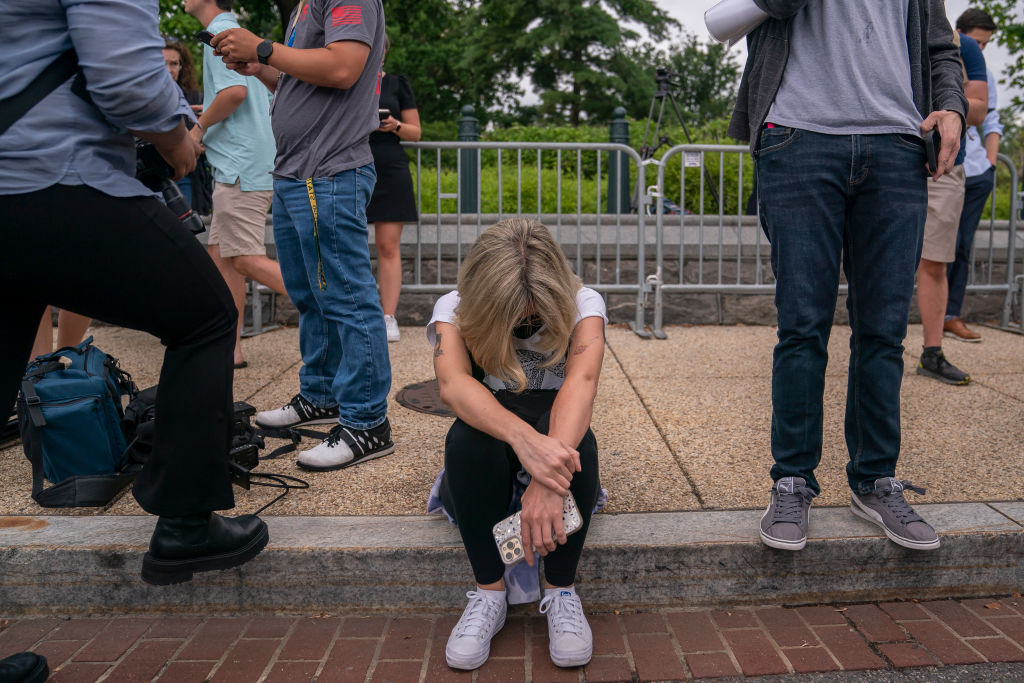
While Harrington and others who spent years fighting abortion look to the future with the wind in their sails, people like Cheri Wells are looking ahead with uncertainty. The leak of Justice Samuel Alito’s draft opinion in Dobbs may have undercut the shock of the decision, but the despair is just as deep.
“For some reason, in the back of my mind,” she said, “I thought someone was gonna save us.”
Now that Roe v. Wade has been overturned by the U.S. Supreme Court, the Ohio legislature is set up to move forward with abortion bans in the state.
The U.S. Supreme Court ruled Friday morning that “The Constitution does not confer a right to abortion; Roe and Casey are overruled; and the authority to regulate abortion is returned to the people and their elected representatives.”
Legislative leaders said they were prepared to wait until the decision was released before moving forward with legislation to eliminate abortion services. As of Friday night, abortion is legal in Ohio up to six weeks into a pregnancy.
“The most important thing that Ohioans need to know today is that abortion is still legal in Ohio,” said Kellie Copeland, executive director of Pro-Choice Ohio. “There are nine clinics across the state and several in neighboring states that can safely and legally provide abortion care for patients. Today’s ruling is devastating, but it is not the end.”
Gov. Mike DeWine agreed that it would be “prudent” to wait until the Dobbs decision was made, and implement the previously-passed six-week abortion ban before moving on to new legislation.
“While noting those conditions, the Governor has expressed support for additional legislation depending on the details of the Dobbs decision,” a spokesperson for DeWine told the OCJ.
The Ohio Policy Evaluation Network, a group of researchers working with The Ohio State University, the University of Cincinnati and Case Western Reserve University, said in a fact-sheet that it expects Ohio to ask for immediate implementation of the six-week abortion ban enacted in 2019.
The ban does not include exceptions for rape or incest, and only allows doctors to present an “affirmative defense,” legal arguments that could only come into play after a doctor has been charged with an offense, if the life of the pregnant person was at risk at the time of the abortion. The defense only works if the abortion happened in a hospital, and does not allow for risks that involve mental health.
Columbus-area OB/GYN Dr. Anita Somani said a ban at six weeks could eliminate the chance of an abortion before a pregnant person is aware of the pregnancy.
“If you don’t know you’re six-weeks pregnant, and you find out at eight or 10 weeks, then you have to look at going to a neighboring state,” Somani said. “At that point, you have to have money and time, as a patient, when you may have other children or just can’t afford it.”
The most recent abortion trigger ban, House Bill 598, was introduced by state Rep. Jean Schmidt, R-Loveland, would make abortion a fourth-degree felony, and promotion of abortion a misdemeanor offense.
The charges are targeted at the medical professionals providing the abortions, and provides no exemptions for cases of incest or rape. “Affirmative defenses” would be allowed in cases where the pregnancy presented a serious risk to the pregnant person.
Civil lawsuits could also be filed against physicians who perform abortions under the bill, and medical licenses could be at risk.
Senate President Matt Huffman celebrated the decision as “a long overdue turning point in our nation’s history.”
“I look forward to reviewing the specific details in the opinion, so that as we move forward, any legislation we pass in the Ohio Senate follows the guidance of the court, protecting life, and upholding the Constitution,” Huffman said.
House Speaker Bob Cupp said in a Friday statement that the “process of reviewing the decision is underway, including what steps should be taken at the state level and the timeline for doing so.”
“We will be working closely with Governor DeWine, Attorney General Dave Yost and our colleagues in the Ohio Senate on this matter,” Cupp’s statement read.
DeWine has been consistently pro-life in his support of legislation and funding choices, including an executive order that allocated $3 million in Temporary Assistance for Needy Families (TANF) dollars to organizations who assisted pregnant Ohioans without promoting abortion as an option.
Attorney General Dave Yost said the decision “returns abortion policy to the place it has always belonged: to the elected policy branches of government.”
“Roe was poorly reasoned, a doctrine of shifting sands that invited perpetual litigation,” Yost said in a statement.
Meanwhile, the impacts of abortion bans in the state could create significant health care barriers and increased transportation costs to access care, according to researchers. These impacts could disproportionately impact low-income communities and people of color.
Iris Harvey, CEO and president of Planned Parenthood of Greater Ohio, said the Supreme Court decision will give politicians power over Ohio bodies, including how they receive care.
“This dangerous and chilling decision can have devastating consequences in Ohio, forcing people to travel hundreds, sometimes thousands, of miles for care or remain pregnant,” Harvey said in a statement.
WASHINGTON — The U.S. Supreme Court on Friday overturned the 1973 Roe v. Wade ruling that established abortion as a constitutional right.
The decision by five of the Court’s nine justices will allow each state to set its own abortion laws, leading to a patchwork of access throughout the country. The result is expected to be an uptick in the number of women traveling out of state for abortions, as well as unsafe abortions in states where the medical procedure will now be banned or heavily restricted.
“We hold that Roe and Casey must be overruled,” Justice Samuel Alito wrote in his opinion, joined by Justices Clarence Thomas, Neil Gorsuch, Brett Kavanaugh and Amy Coney Barrett.
Chief Justice John Roberts filed a separate opinion concurring in the judgment about the Mississippi law at the center of the case, making that a 6-3 ruling, but not about overturning the constitutional right to an abortion, making that a 5-4 ruling.
“The Constitution makes no reference to abortion, and no such right is implicitly protected by any constitutional provision, including the one on which the defenders of Roe and Casey now chiefly rely — the Due Process Clause of the Fourteenth Amendment,” Alito continued.
“That provision has been held to guarantee some rights that are not mentioned in the Constitution, but any such right must be ‘deeply rooted in this Nation’s history and tradition’ and ‘implicit in the concept of ordered liberty.’”
Justice Stephen Breyer wrote the dissent in the case for himself, Elena Kagan and Sonia Sotomayor.
“With sorrow — for this Court, but more, for the many millions of American women who have today lost a fundamental constitutional protection — we dissent,” he wrote.
The new status of abortion access on a state-by-state basis, Breyer wrote , “says that from the very moment of fertilization, a woman has no rights to speak of. A State can force her to bring a pregnancy to term, even at the steepest personal and familial costs.”
Breyer later added, “Whatever the exact scope of the coming laws, one result of today’s decision is certain: the curtailment of women’s rights, and of their status as free and equal citizens.”
Twenty-two states have laws that would restrict when and how a patient can terminate a pregnancy, according to the Guttmacher Institute, a reproductive health and rights organization.
Arizona, Michigan and Wisconsin are among the 10 states that have pre-Roe abortion bans that are now expected to take effect. Thirteen states — including Idaho, Louisiana, Missouri and Tennessee — have laws enacted since Roe that will be “triggered” by the court’s decision.
A dozen states, including Maine, Maryland, Nevada and Washington, have laws that would protect abortion access up to the point of viability, usually 22 to 24 weeks into a pregnancy.
Colorado, the District of Columbia, New Jersey, Oregon and Vermont have laws that protect abortion access throughout a pregnancy, according to the Guttmacher Institute.
Thomas targets birth control, same-sex marriage
Justice Thomas wrote his own concurring opinion, arguing that since the court has overturned the constitutional right to an abortion, which was grounded in the 14th Amendment and the due process clause, other cases that have been rooted in the same right to privacy could all be reconsidered.
Those include:
The Griswold v. Connecticut case from 1965 that said states couldn’t bar married couples from making private decisions about birth control use.
The Lawrence v. Texas case from 2003 that said states couldn’t criminalize consensual sexual relations between same-sex partners.
The Obergefell v. Hodges case from 2015 that legalized same-sex marriage.
“For that reason, in future cases, we should reconsider all of this Court’s substantive due process precedents, including Griswold, Lawrence, and Obergefell,” Thomas wrote.
Thomas also wrote of the Dobbs case that “The resolution of this case is thus straightforward. Because the Due Process Clause does not secure any substantive rights, it does not secure a right to abortion.”
Reaction pours in
The Center for Reproductive Rights, which brought the case to the Supreme Court, rebuked the Republican-nominated justices for ending the right to an abortion.
“The Court’s opinion delivers a wrecking ball to the constitutional right to abortion, destroying the protections of Roe v. Wade, and utterly disregarding the one in four women in America who make the decision to end a pregnancy,” said Nancy Northup, president and CEO of the Center for Reproductive Rights.
“Utter chaos lies ahead, as some states race to the bottom with criminal abortion bans, forcing people to travel across multiple state lines and, for those without means to travel, carry their pregnancies to term — dictating their health, lives, and futures. Today’s decision will ignite a public health emergency,” Northup continued.
Susan B. Anthony Pro-Life America, an anti-abortion group, celebrated the decision, while its president called for “an entirely new pro-life movement” to begin.
“Today’s outcome raises the stakes of the midterm elections. Voters will debate and decide this issue and they deserve to know where every candidate in America stands,” Marjorie Dannenfelser said in a statement. “Federal as well as state lawmakers must commit to being consensus builders who advocate for the most ambitious protections possible.”
Mississippi ban
The court heard two hours of arguments in December in Dobbs v. Jackson Women’s Health Organization, which arose after Mississippi enacted a law that banned the vast majority of abortions after 15 weeks of pregnancy.
U.S. Solicitor General Elizabeth B. Prelogar, who argued on behalf of the federal government as a “friend of the Court,” said that the “real-world effects of overruling Roe” and the 1992 Planned Parenthood v. Casey decision that affirmed the right to an abortion “would be severe and swift.”
“Nearly half of the states already have or are expected to enact bans on abortion at all stages of pregnancy, many without exceptions for rape or incest,” Prelogar said. “Women who are unable to travel hundreds of miles to gain access to legal abortion will be required to continue with their pregnancies and give birth, with profound effects on their bodies, their health and the course of their lives.”
Mississippi Solicitor General Scott G. Stewart argued the nine justices should not only uphold Mississippi’s 2018 law, which had yet to go into effect, but overturn the two cases that have kept abortion access legal for nearly 50 years.
“Roe versus Wade and Planned Parenthood versus Casey haunt our country,” he said. “They’ve poisoned the law.”
Abortion rights history
The Supreme Court first ruled that a pregnant person has a constitutional right to abortion in the 1973 Roe v. Wade case that stemmed from a Texas woman being unable to access an abortion in her home state. The decision was 7-2.
Justice Harry Blackmun wrote that the right to an abortion stemmed from the right to privacy under the 14th Amendment. But the court ruled that a person’s fundamental right to terminate their pregnancy must be weighed against the government’s interest in protecting the person’s health and potential life.
The court established a trimester framework that determined when and how governments could impose regulations on abortion access.
In the 1992 Planned Parenthood v. Casey case, a 5-4 ruling, the court upheld a constitutional right to an abortion. But the decision overturned the trimester framework, instead setting viability, about 22 to 24 weeks into a pregnancy, as the line for government regulation.
The court said a person had a right to an abortion before viability without undue interference from the government. After reaching a point of viability, states can regulate abortion as long as it doesn’t affect a person’s health or life.
In the plurality opinion, Justice Sandra Day O’Connor wrote that “Some of us as individuals find abortion offensive to our most basic principles of morality, but that cannot control our decision. Our obligation is to define the liberty of all, not to mandate our own moral code.”
In a dissenting opinion, Justice Thomas wrote for himself, Antonin Scalia and two others that they would have overturned Roe v. Wade, saying the issue in the case was “not whether the power of a woman to abort her unborn child is a ‘liberty’ in the absolute sense; or even whether it is a liberty of great importance to many women. Of course it is both.”
“The issue is whether it is a liberty protected by the Constitution of the United States. I am sure it is not,” he wrote.
Will court survive a ‘stench’?
During oral arguments in December in the Mississippi case the justices ruled on Friday, Justice Sotomayor expressed concern over how the court overturning cases that established abortion access as a constitutional right would impact its reputation.
“Now, the sponsors of this bill, the House bill in Mississippi, said we’re doing it because we have new justices. The newest ban that Mississippi has put in place, the six-week ban, the Senate sponsor said we’re doing it because we have new justices on the Supreme Court,” Sotomayor said.
“Will this institution survive the stench that this creates in the public perception that the Constitution and its reading are just political acts?”
Justice Kagan questioned whether the court overruling Roe and Casey would lead Americans to view the court as “a political institution that will go back and forth, depending on what part of the public yells the loudest or changes to the court’s membership.”
And Justice Breyer read from a decision the entire Supreme Court issued in Casey about when and how justices should overturn watershed cases to avoid a situation that “would subvert the Court’s legitimacy.”
“They say overruling unnecessarily and under pressure would lead to condemnation, the Court’s loss of confidence in the judiciary, the ability of the Court to exercise the judicial power and to function as the Supreme Court of a nation dedicated to the rule of law,” Breyer read.
The Mississippi law at the center of the argument allowed abortions after 15 weeks in cases of “severe fetal abnormality” or medical emergency, but it did not include exceptions for rape or incest.
At the time Mississippi Gov. Phil Bryant signed the bill in March 2018, the 15-week threshold was the earliest abortion ban in the nation.
That has since changed, with several states enacting laws restricting abortion below that benchmark, including an Oklahoma law that makes abortion a felony punishable by up to 10 years in state prison, a maximum fine of $10,000, or both.
Abortion rights organizations have filed lawsuits to stop many of those new laws from going into effect on the basis that they violated the constitutional right to an abortion that the court undid this week.
Politico leak
The Supreme Court majority opinion released Friday is similar to a draft version, led by Justice Alito, that was leaked to Politico in early May.
The leak was broadly criticized by Republicans, who at the time didn’t want to talk about the implications of the court overturning Roe, while Democrats rebuked the conservative justices for the expected decision.
Senate Majority Leader Chuck Schumer, a New York Democrat, held a floor vote in May on a bill that would have codified a nationwide right to an abortion.
That legislation couldn’t get past the chamber’s 60-vote legislative filibuster.
Maine Sen. Susan Collins and Alaska Sen. Lisa Murkowski, both Republicans who expressed frustration with how the Trump-nominated justices portrayed their view of Roe as a settled precedent during their confirmation processes, voted against the bill.
West Virginia Democratic Sen. Joe Manchin did as well.
Manchin said in a statement Friday that he was “deeply disappointed that the Supreme Court has voted to overturn Roe v. Wade.”
“I trusted Justice Gorsuch and Justice Kavanaugh when they testified under oath that they also believed Roe v. Wade was settled legal precedent and I am alarmed they chose to reject the stability the ruling has provided for two generations of Americans,” Manchin continued.
• Take the bus, carpool, bike or walk instead of driving • Refuel your vehicle after 8 p.m.; do not top off when refueling and tighten the gas cap • Avoid idling your vehicle • Combine trips or eliminate unnecessary vehicle trips • Keep your vehicle maintained with properly inflated tires and timely oil changes • Avoid use of gasoline-powered lawn equipment on Air Quality Alert days • Avoid use of oil-based paints and stains on Air Quality Alert days • Never burn leaves or other yard trimmings • Always burn clean, seasoned wood in outdoor fire pits, fireplaces and wood stoves • Do not use fire pits or fireplaces for non-essential home heating on Air Quality Alert days • Conserve electricity